This Simple Step Helps Confederate Rose Bloom Longer This Fall In Georgia
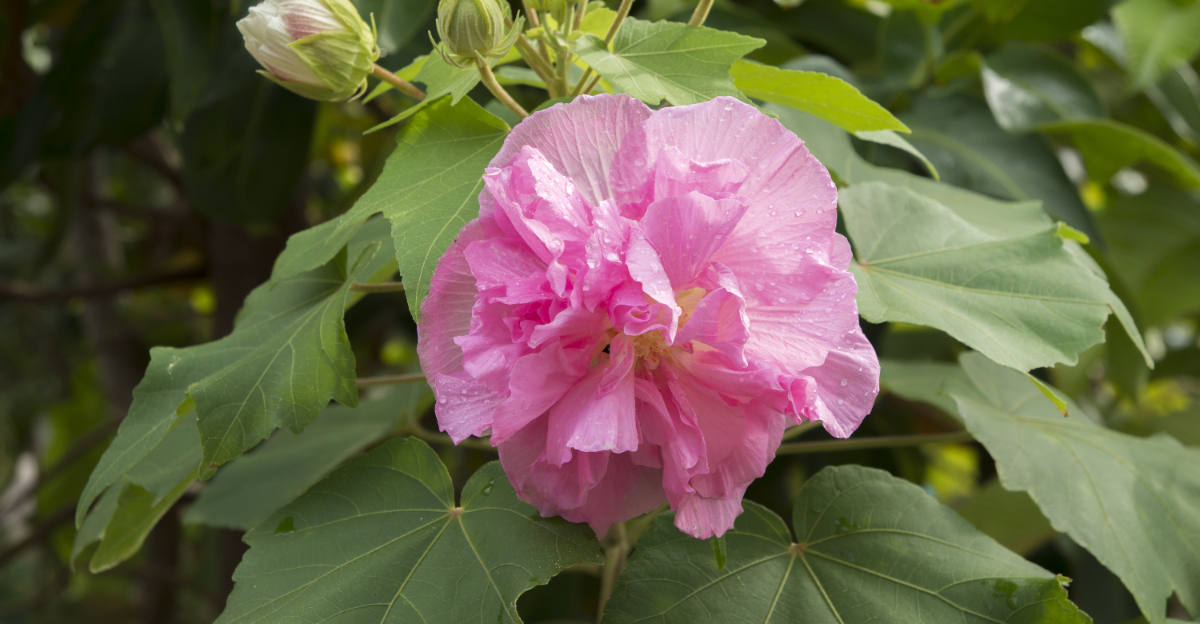
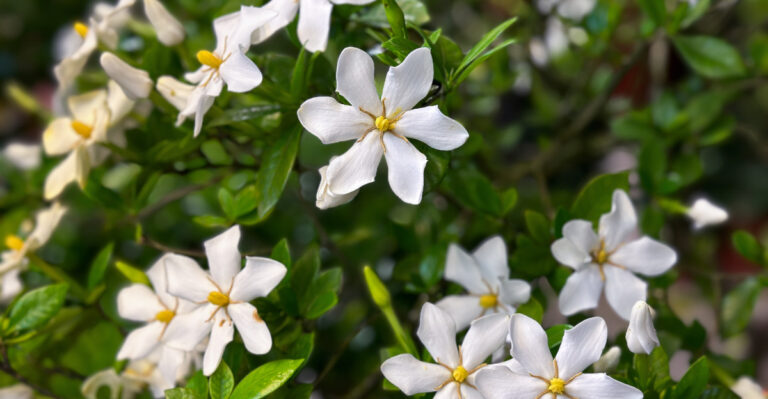
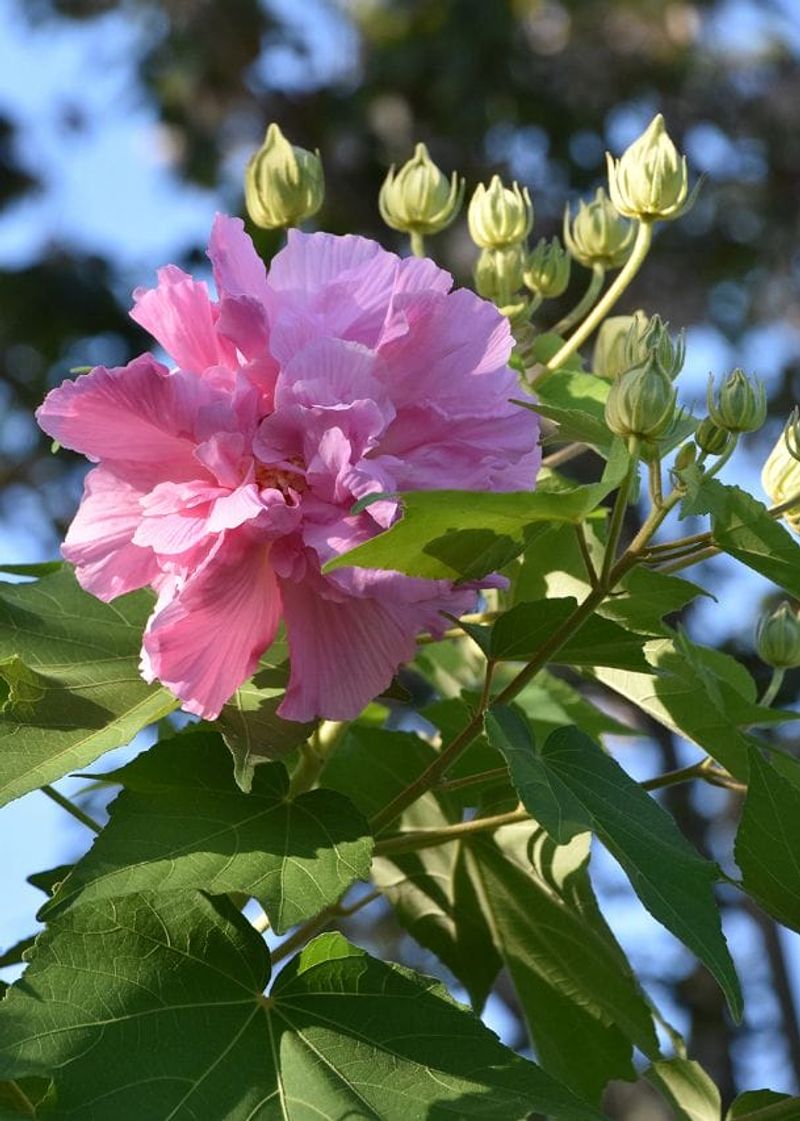
Georgia gardens always seem to get one more burst of color before the growing season begins to wind down. Confederate rose is often the reason, opening its biggest blooms just when many other flowers are fading away.
The plants that put on the best display in fall rarely get there by chance. A little attention before blooming reaches full swing can have a noticeable payoff later.
It is an easy job to overlook because the shrub still looks healthy at the end of summer. By the time fewer flowers begin appearing, the opportunity has already passed.
Taking care of this one task now helps the plant focus its energy where it matters most.
When autumn arrives, you’ll be rewarded with bigger, longer-lasting blooms instead of wishing you had acted a few weeks earlier.
1. Remove Spent Flowers To Encourage More Blooms
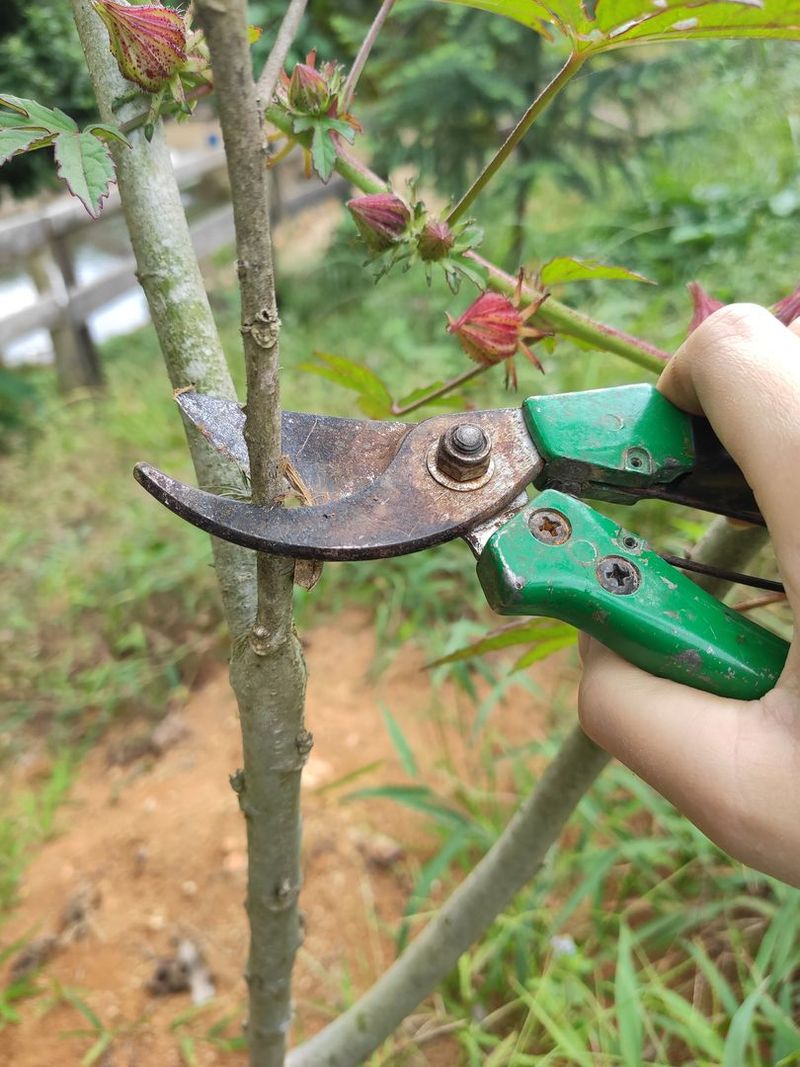
Faded blooms left on the plant are basically a signal to stop producing. Confederate Rose responds well when you remove spent flowers regularly.
Snipping them off tells the plant that its job is not finished yet.
Use clean pruning shears and cut just below the base of the spent bloom. Do this every few days during peak bloom season.
You will likely notice fresh buds forming within a week or so.
Deadheading works because the plant stops putting energy into forming seeds. Instead, that energy goes back into new flower production.
It is a simple habit that pays off quickly.
You do not need any special tools or products. A basic pair of garden scissors works fine.
Just be consistent and check the plant often.
In Georgia, the fall bloom window runs roughly from late September through November, depending on weather. Keeping up with deadheading during this window can noticeably extend the show.
Missing even a week can let the plant shift focus away from blooming.
Start deadheading as soon as the first flowers begin to fade. Build it into your weekly garden routine.
2. Water Thoroughly During Dry Spells
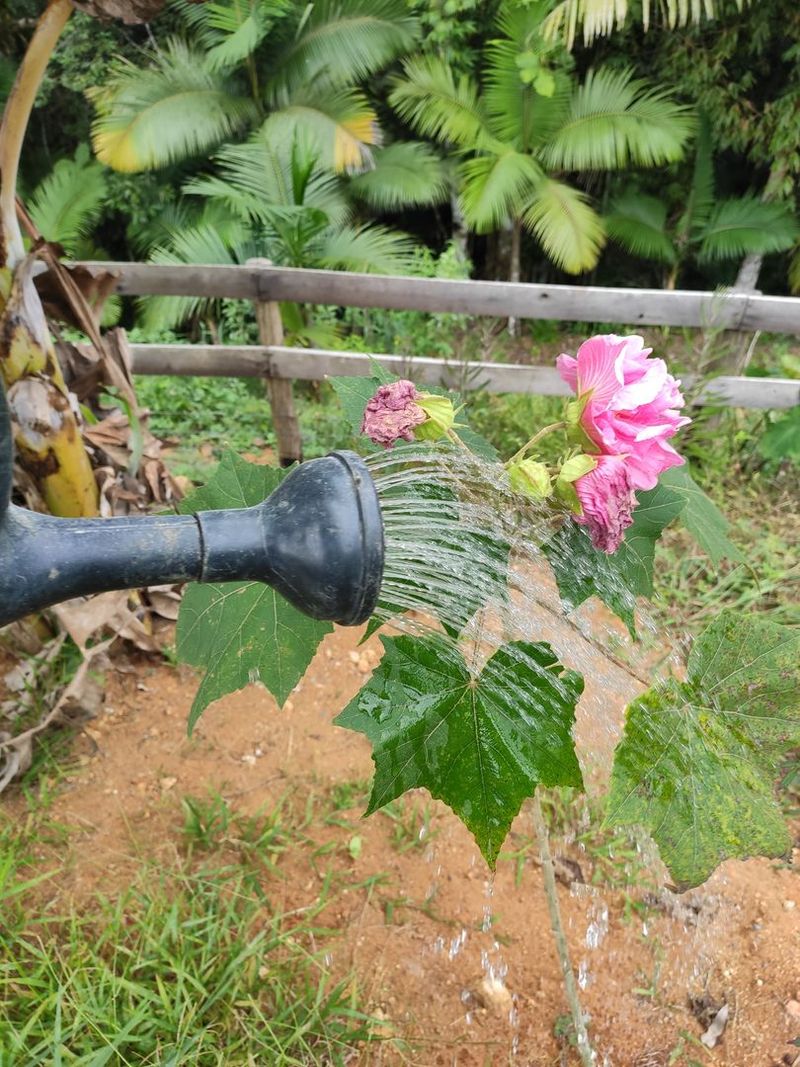
Dry soil is one of the fastest ways to cut a bloom season short. Confederate Rose is a thirsty plant, and it shows when it does not get enough water.
Leaves droop, buds drop, and blooming slows down noticeably.
Watering deeply once or twice a week works better than light daily sprinkles. Deep watering encourages roots to grow further down into the soil.
Shallow roots dry out faster and stress the plant more quickly.
Check the soil before watering. Stick your finger about two inches into the ground near the base of the plant.
If it feels dry at that depth, it is time to water.
Morning watering is generally a better choice than evening. Wet foliage overnight can invite fungal issues.
Watering early gives leaves time to dry out during the day.
During Georgia’s fall months, rainfall can be unpredictable. Some weeks bring plenty of rain, while others stay dry for long stretches.
Keeping an eye on rainfall totals helps you decide when to step in with the hose.
Your Georgia Garden Changes Every Week. Your Plan Should Too.
Gardening in Georgia changes quickly throughout the season. Every Friday you’ll receive a simple weekly plan showing exactly what to plant, prune, fertilize, harvest, and protect so you never miss the right timing.
Avoid letting the soil go completely dry between waterings. Confederate Rose can handle some drought, but extended dry periods during bloom season take a real toll.
3. Spread Mulch To Hold Soil Moisture
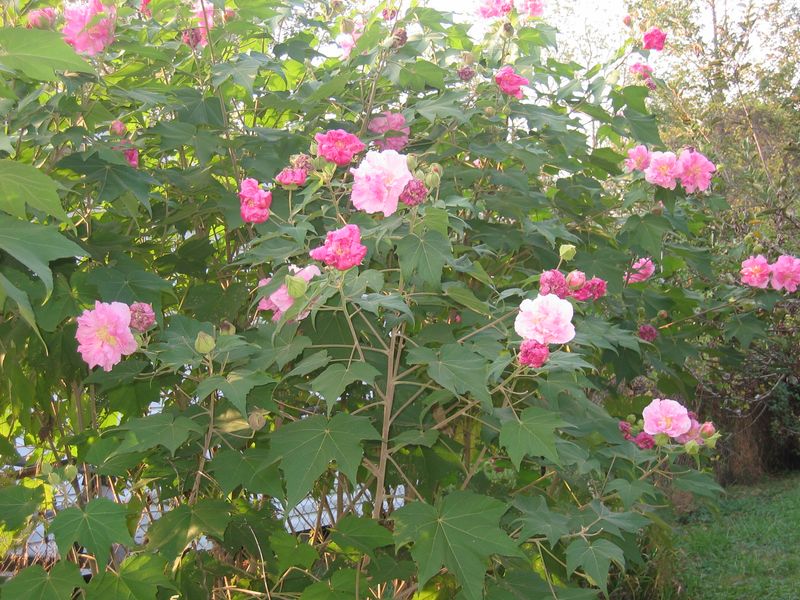
Mulch is one of the easiest tools a gardener has, and it makes a real difference for Confederate Rose in fall. A good layer of mulch slows down soil moisture loss between waterings.
That steady moisture supply helps the plant keep blooming longer.
Spread two to three inches of mulch around the base of the plant. Keep it a few inches away from the main stem to avoid moisture buildup directly against the bark.
Wood chips, shredded leaves, or pine straw all work well.
Mulch also helps regulate soil temperature. As fall nights get cooler, the insulated soil stays warmer longer.
Warmer roots help the plant stay active and continue producing blooms.
Organic mulch breaks down over time and adds nutrients back into the soil. That is a slow but real benefit for the plant.
Topping up the mulch layer each season keeps it working effectively.
Weeds compete with Confederate Rose for water and nutrients. A solid mulch layer cuts down on weed growth significantly.
Fewer weeds mean more resources going straight to the plant.
Applying mulch in early fall sets the plant up well for the rest of the bloom season. It is a low-effort step with noticeable results.
4. Grow It In Full Sun
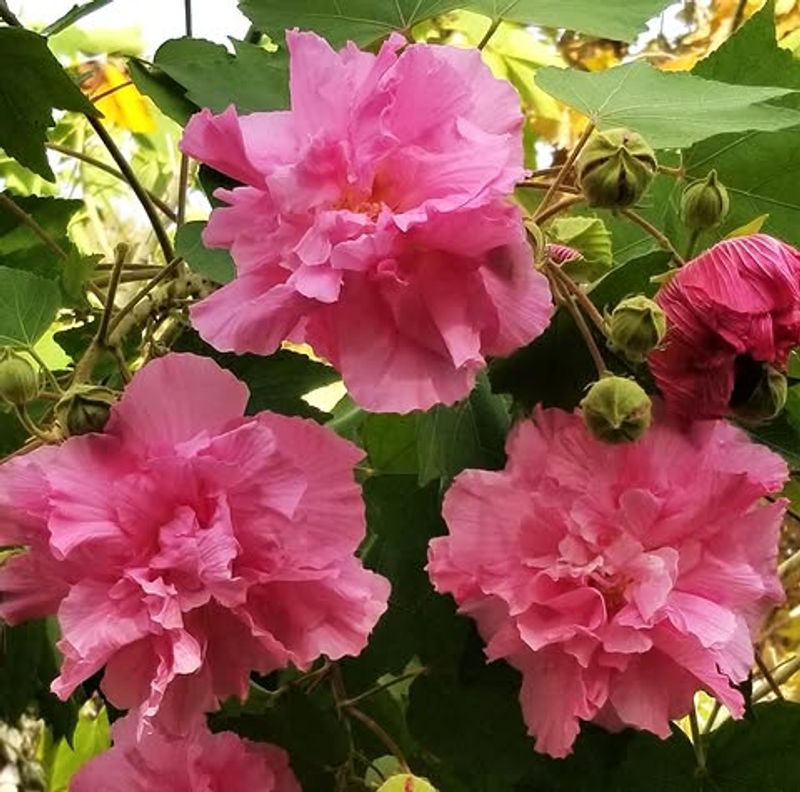
Sunlight is not optional for Confederate Rose. Without enough of it, the plant stretches, produces fewer flowers, and blooms later than it should.
Full sun means at least six hours of direct light each day.
Afternoon shade might seem helpful during hot summers, but in fall it can actually limit bloom production. The days get shorter as September and October roll in.
Every hour of sunlight counts more during that time.
If your plant is growing under a large tree or near a fence that blocks light, consider whether it can be moved or if nearby branches can be trimmed. Even an extra hour of sun per day can improve blooming noticeably.
Confederate Rose planted in open, sunny spots tends to grow taller and fuller. More leaf surface in the sun means more energy produced for flower development.
Shaded plants simply cannot match that output.
South-facing garden beds are often the best spots in the yard for sun-loving plants. They catch the most consistent light throughout the day.
If you have a choice, that is where Confederate Rose tends to perform best.
Across the South, gardeners often find that plants tucked along sunny fence lines or open borders bloom more reliably.
5. Avoid Too Much Nitrogen
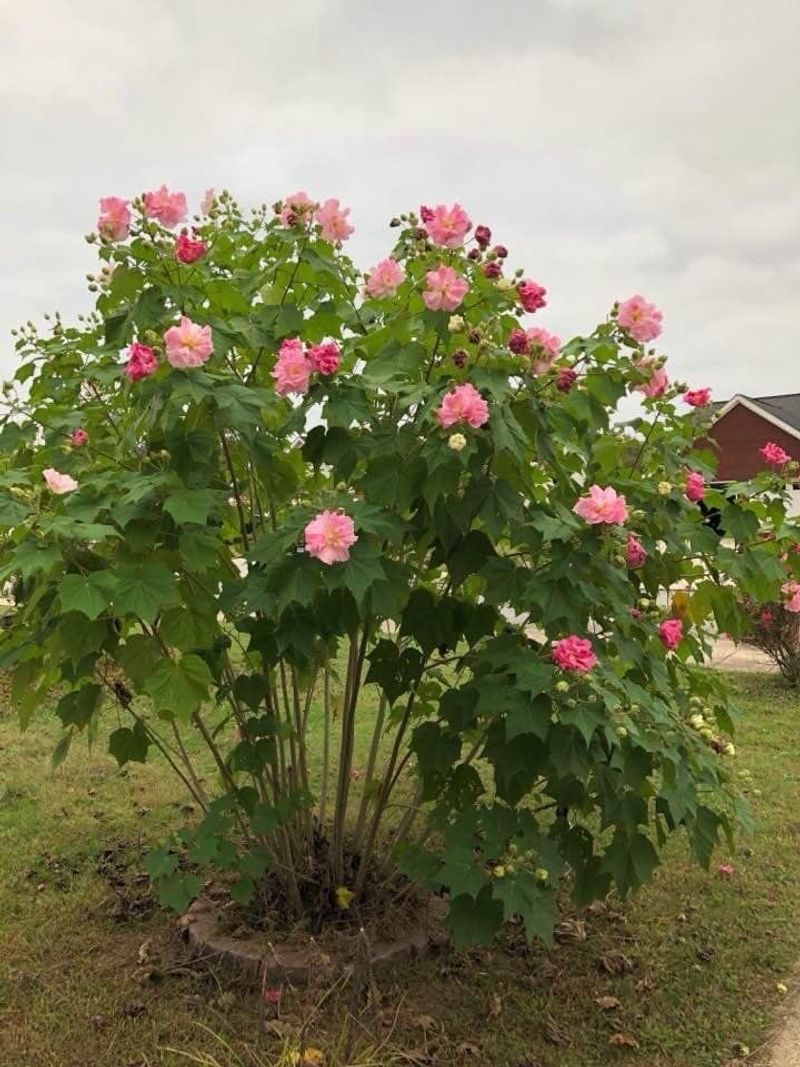
Fertilizer seems like it should help a plant bloom more, but with Confederate Rose, too much nitrogen can backfire. Nitrogen pushes leafy, green growth.
When the plant is busy growing stems and leaves, it puts less effort into producing flowers.
Heavy nitrogen applications in late summer or fall can shift the plant’s focus right when you want it blooming. You end up with a lush, green shrub that looks healthy but is not putting out many flowers.
That is a frustrating trade-off.
If you want to feed Confederate Rose in fall, look for a fertilizer with a lower first number on the label. A balanced or bloom-boosting formula with more phosphorus than nitrogen is a better fit for encouraging flowers.
Go easy on the amount as well. A light feeding is usually enough.
Overdoing any fertilizer in fall can also stress the plant as temperatures drop.
Compost is a gentler option that releases nutrients slowly. Working a small amount into the soil around the plant gives it a mild nutrient boost without the surge of nitrogen from synthetic fertilizers.
Skip the heavy feeding schedules during fall entirely if you are not sure what to use. Confederate Rose is not a heavy feeder.
6. Support Tall Stems As They Grow
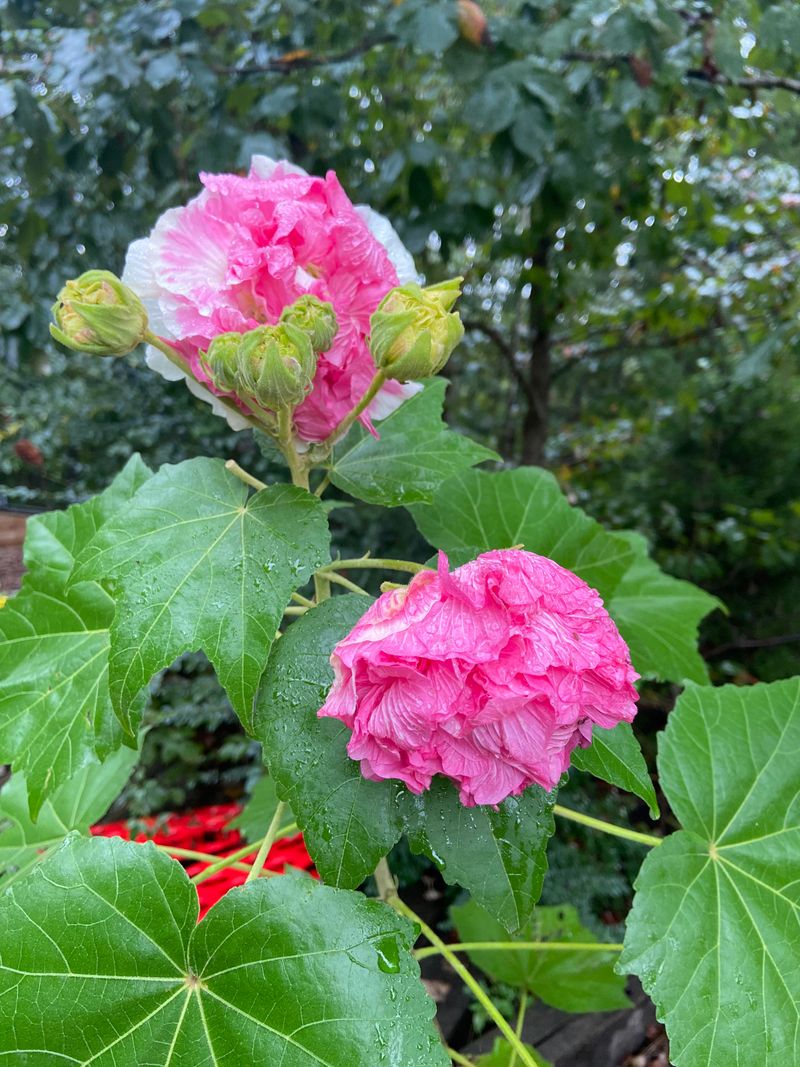
Confederate Rose can grow surprisingly tall, sometimes reaching eight feet or more by fall. Those long stems loaded with flowers get heavy fast.
Without support, they bend, snap, or lean so far that blooms end up hidden or damaged.
Staking tall stems early in the season prevents problems later. Bamboo stakes or wooden garden poles work well for most plants.
Push the stake firmly into the ground near the stem and tie loosely with soft twine or garden tape.
Avoid tying too tightly. A little movement in the wind actually helps strengthen the stem over time.
Rigid ties that lock the stem in place can cause rubbing and damage the outer layer of the stem.
In areas that get strong fall winds, supporting multiple stems is worth the extra effort. A plant that tips over mid-season loses blooms and may not recover its upright form before the season ends.
Some gardeners build a simple cage from wire fencing around the base of the plant. As stems grow, the cage holds them upright without individual staking.
It is a practical option for large, multi-stemmed plants.
Check your supports after any heavy rain or wind event. Stakes can shift and ties can loosen.
7. Check Leaves For Japanese Beetles
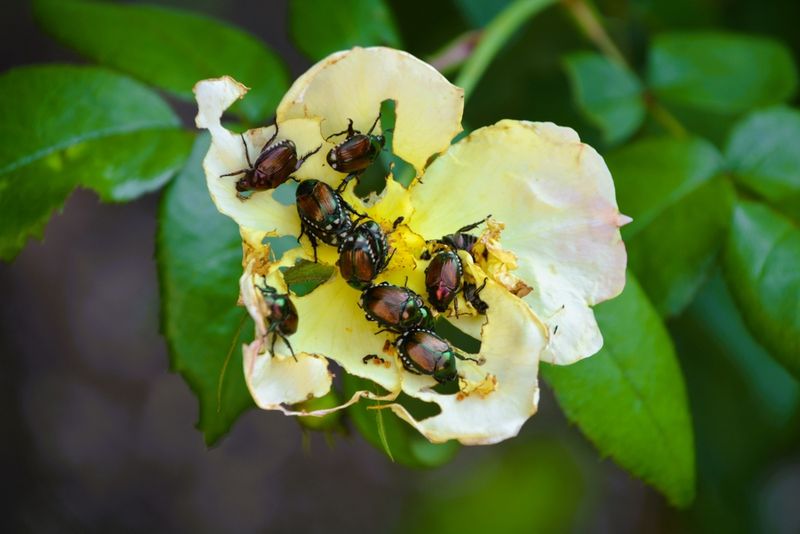
Japanese beetles are a real nuisance for many flowering plants, and Confederate Rose is not off their list. These shiny, copper-and-green insects chew through leaves and can stress the plant enough to slow blooming.
Catching them early makes a big difference.
Walk around the plant and flip over a few leaves to check for beetles or feeding damage. Ragged, lace-like holes in the leaves are a clear sign they have been active.
Catching an infestation early gives you more options for managing it.
Hand-picking is one of the most straightforward approaches. Drop beetles into a bucket of soapy water and dispose of them.
It takes a little time but avoids putting chemicals on a plant that is actively blooming.
Japanese beetle traps are available at garden centers, but place them away from the plant itself. Traps can attract more beetles to the area, which sometimes makes the problem worse near the plant you are trying to protect.
In Georgia, Japanese beetles are most active from late spring through midsummer, but populations can linger into early fall. Checking leaves regularly through September is a good habit.
Catching stragglers before they cause serious damage keeps the plant healthier longer.
A stressed plant with heavy leaf damage puts less energy into flowers.
8. Clean Up Fallen Foliage Before Winter
Once Confederate Rose finishes blooming and leaves begin to drop, what you do next matters more than most people realize. Fallen foliage left on the ground can harbor fungal spores and pests that carry over into the next growing season.
Cleaning it up breaks that cycle.
Rake up dropped leaves and spent stems from around the base of the plant. Bag them and dispose of them rather than adding them to a compost pile, especially if the plant showed any signs of disease or pest activity during the season.
Clearing the ground also removes hiding spots for insects that might overwinter near the plant’s roots. A tidy base going into winter gives the plant a cleaner start in spring.
It is a small step with a real payoff.
After cleaning up, add a fresh layer of mulch around the base. Mulch protects the roots from hard freezes, which can occur in parts of the South even in mild winters.
A two to three inch layer is enough for most areas.
Do not cut the plant back too aggressively in fall. Leaving some stem height above ground can help protect the crown from cold.
Heavier pruning is better saved for late winter or early spring once the risk of hard freezes has passed.