The Meaning Behind Seeing A Spotted Lanternfly In Your Ohio Yard
A spotted lanternfly in an Ohio yard is not a moment to observe and move on from. It is a moment to act on, and the action matters more than most people who encounter one for the first time understand.
Spotted lanternfly is an invasive species with a track record in Ohio that has been building for several years. A sighting in a yard means the population has reached that area.
It means the host plants nearby are already being assessed. And it means the window for slowing local spread is open right now, not next week.
The meaning behind a spotted lanternfly sighting is ecological, practical, and urgent in equal measure. This is not a pest that rewards patience or casual observation.
What to do in the minutes after spotting one, and why that response matters beyond the individual yard, is worth knowing before the next one appears.
1. Treat The Sighting As An Early Warning
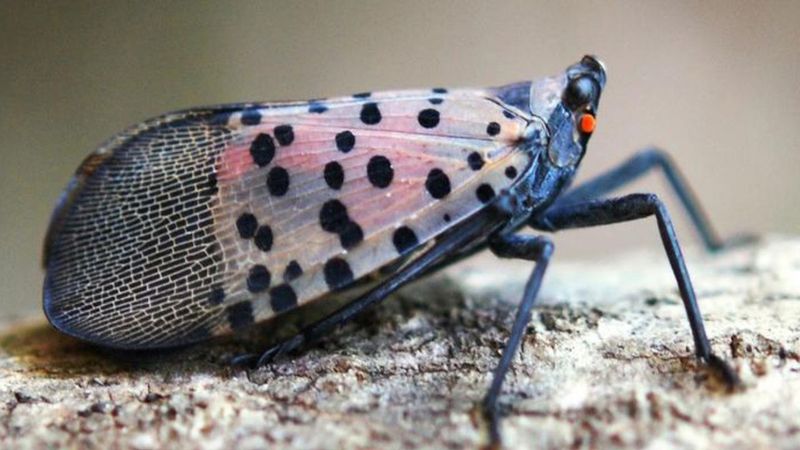
One spotted insect landing near your Ohio patio or jumping off a tree trunk near a parked car is worth paying attention to, even if you are not certain what it is. A single adult or late-stage nymph could mean several things.
It may have hitchhiked on a vehicle, trailer, or piece of outdoor furniture from an area with established activity. It may also reflect local movement from a population already present in the wider neighborhood.
Noticing one individual is not the same as confirming a breeding population on your property. Adults move among many different plants and rarely stay on the first surface where they are spotted.
However, a single sighting is a reasonable signal to inspect the rest of your yard more carefully.
Look for patterns over the following days. Recurring sightings on the same branches or clusters of insects feeding together suggest more than just an accidental visitor.
So does a sticky coating on surfaces beneath a particular tree. Egg masses on fences, stone walls, or tree trunks are a stronger sign of nearby breeding activity.
One insect is a prompt to observe, not a reason to panic. Treat it as an early nudge to start looking closer.
2. Confirm The Insect Before Taking Action
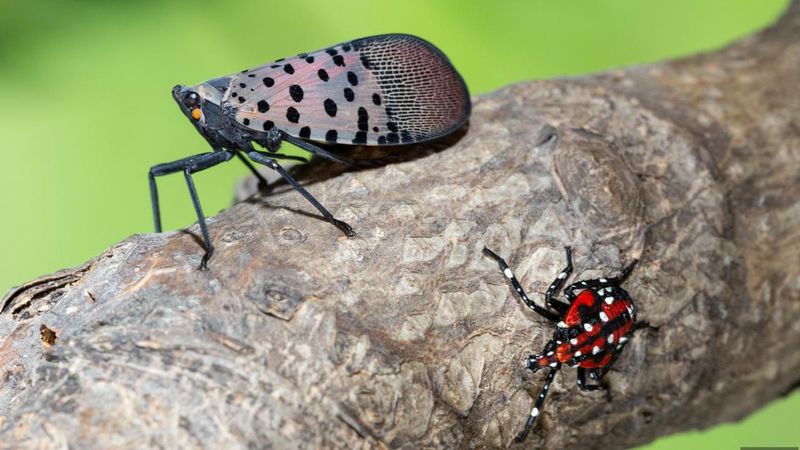
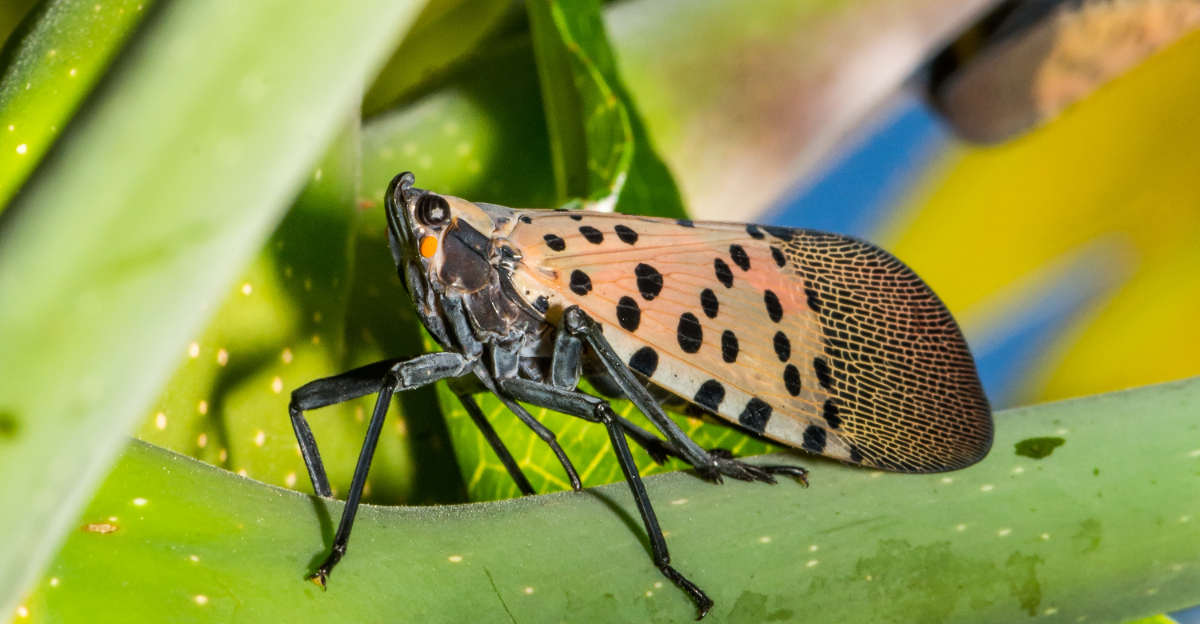
A quick flash of red hind wings or a pair of gray-brown forewings covered in black spots can stop you mid-step in the garden. Adults measure roughly an inch in length.
Their forewings are gray or light brown with neat black spots toward the base and a darker, patterned tip section. The vivid red hind wings stay tucked and hidden while the insect rests, so many people only see the spotted outer wings at first glance.
Early nymphs are black with white spots and are quite small. Later nymphs develop red patches alongside the black and white coloring.
Adults are most commonly observed during late summer and into fall, though exact timing can shift with weather and location.
One common mistake is assuming that any spotted or patterned insect must be a spotted lanternfly. Moths, native planthoppers, and even certain damaged leaves can cause confusion.
Your Ohio Garden Changes Every Week. Your Plan Should Too.
Gardening in Ohio changes quickly throughout the season. Every Friday you’ll receive a simple weekly plan showing exactly what to plant, prune, fertilize, harvest, and protect so you never miss the right timing.
Compare what you see with photographs published by the Ohio state agriculture department or a university extension service. Take a clear photo showing the folded wings, body shape, and the plant surface the insect is resting on.
Accurate identification is the foundation of every good next step, so do not skip it.
3. Check Nearby Trees For More Clues
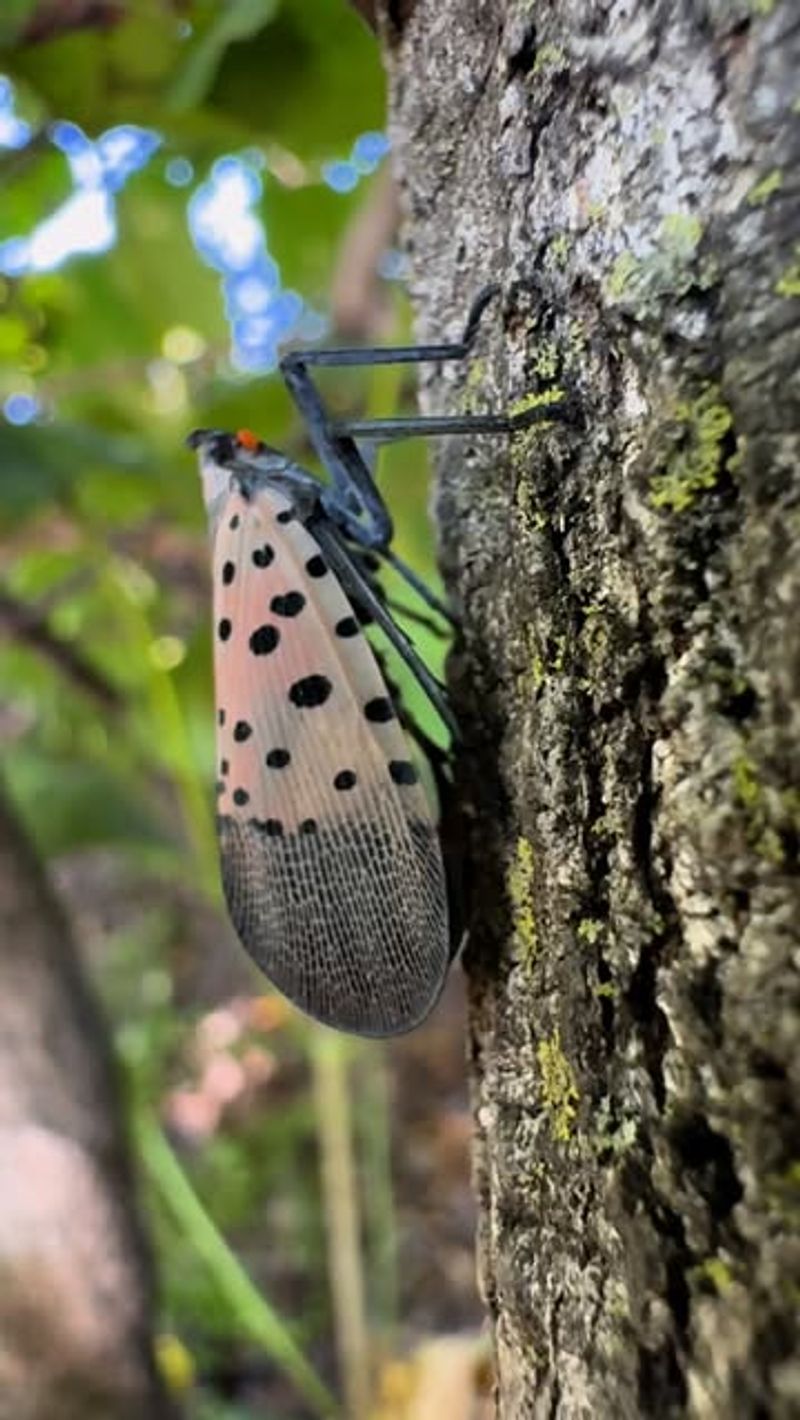
Walking slowly around your Ohio yard and running your eyes along trunks, vines, and branch tips can reveal a lot more than a single glance from the porch. Lycorma delicatula feeds on a wide range of woody plants.
Documented hosts include tree of heaven, grapevines, maples, black walnut, fruit trees, hops, and several others.
Not every host faces the same level of risk, and the degree of feeding impact depends heavily on insect numbers, plant health, and how long feeding continues.
Adults and nymphs sometimes gather in groups along stems or at the base of a trunk, particularly in late summer. They may also stay higher in the canopy, making them harder to spot from ground level.
Check the undersides of large branches and the junctions where vines meet a support structure.
Egg masses are one of the most reliable clues. Fresh masses look like rows of eggs covered by a smooth, gray, putty-like coating.
As they age, the coating dries and may crack, resembling dried mud. Egg masses appear on tree bark but also on stones, fences, grills, trailers, and outdoor furniture.
Compare anything suspicious with official images before drawing conclusions. Not every muddy smear or gray streak on bark is an egg mass.
4. Watch For Sticky Residue And Dark Mold
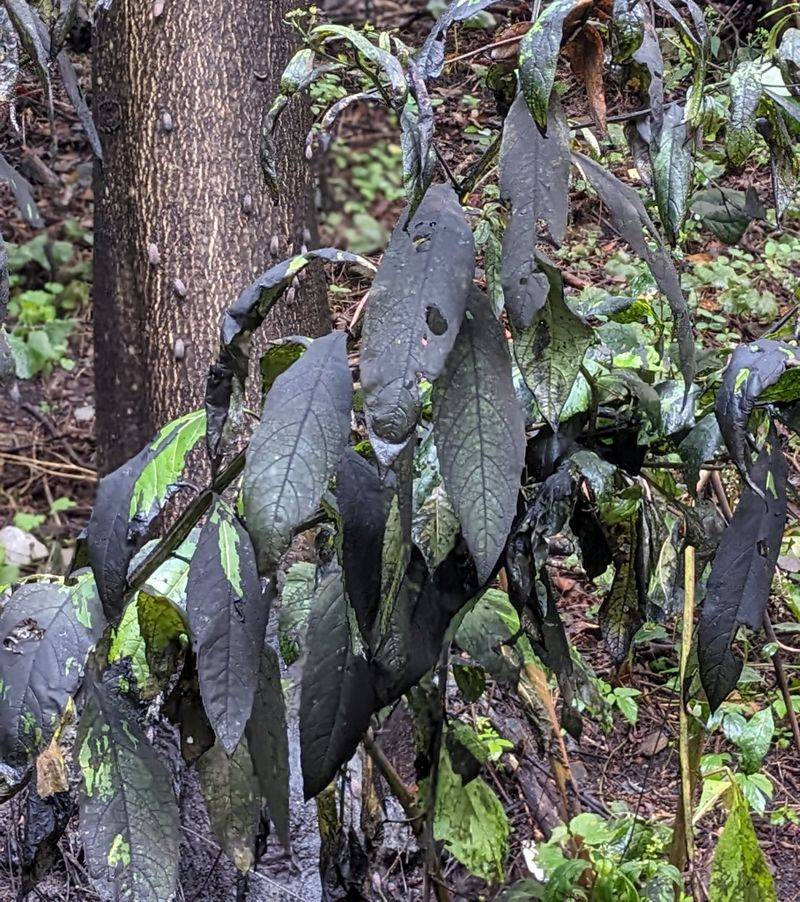
A patio chair that feels oddly tacky, a shiny coating on leaves below a maple, or a darkened patch of bark that was not there last month are all worth investigating. Spotted lanternflies release a sugary, sticky substance as a byproduct of feeding.
This liquid, called honeydew, can coat leaves, bark, decks, vehicles, and any object sitting beneath an active feeding site.
Honeydew attracts ants, wasps, yellowjackets, and other insects drawn to the sugar. If you notice a sudden increase in wasp activity around a particular tree or section of fence, look upward for clusters of feeding insects.
A fermented or slightly vinegar-like odor has also been associated with heavy honeydew accumulation near active feeding groups.
Sooty mold is a dark fungal growth that develops on top of the sugary residue rather than feeding directly on plant tissue. A thick coating can reduce the amount of light reaching the leaf surface.
Keep in mind that aphids, scales, and other sap-feeding insects also produce honeydew. Not every sticky surface or dark patch was caused by this particular species.
Look above the affected area for the source before drawing conclusions. Concentrated feeding in one spot is a stronger signal than a single sticky leaf.
5. Search For Tree Of Heaven Close By
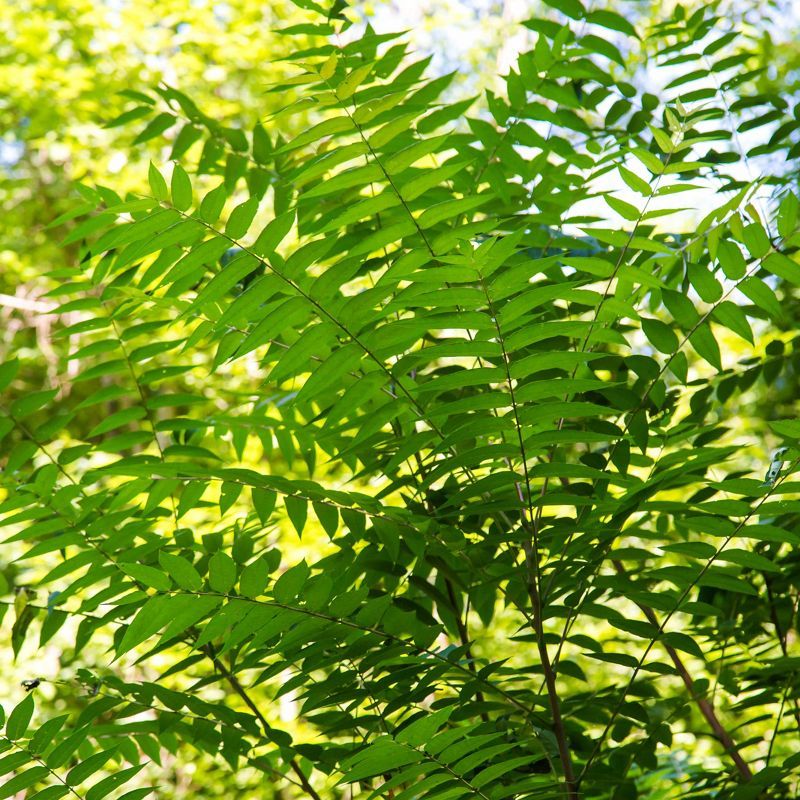
An unfamiliar tree growing along your fence line, a road edge, or a disturbed corner of your property may be worth a second look.
Tree of heaven, known botanically as Ailanthus altissima, is a preferred host and tends to grow quickly in disturbed Ohio soils, roadsides, and fence rows.
Its presence near a sighting increases the chance that spotted lanternflies have a reliable food source close by.
Identifying it correctly matters before taking any action. Tree of heaven has long compound leaves with many leaflets, often between 11 and 25 per leaf.
The leaflet edges are mostly smooth, but small glandular teeth appear near the base of each leaflet. Crushed foliage gives off a strong, unpleasant odor.
Native sumacs, black walnut, and hickories also have compound leaves and are sometimes confused with this species. Compare carefully with a reliable botanical guide or extension resource.
Cutting the trunk alone is not an effective management approach. Established trees tend to respond by sending up vigorous root sprouts from the base and surrounding soil.
A planned removal strategy based on current extension or forestry guidance is more effective. Removing tree of heaven does not guarantee that spotted lanternflies will leave, since they feed on many other plants in the landscape.
6. Photograph The Sighting Before It Moves
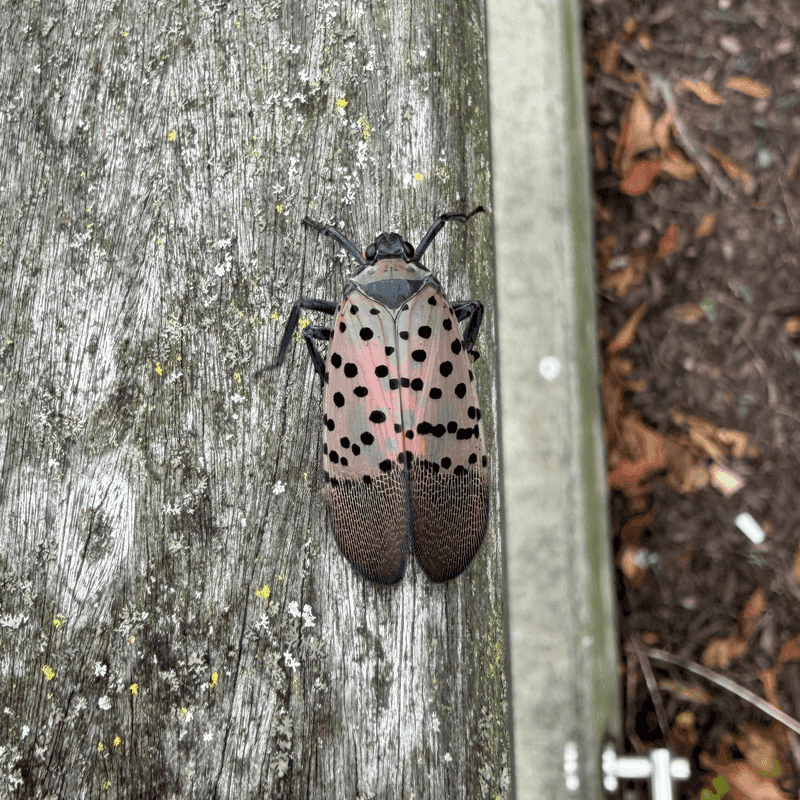
Raising your phone camera slowly before the insect jumps is the smartest move you can make in that first moment. A clear photograph serves multiple purposes.
It gives you something concrete to compare with official identification guides. It also creates a record you can share with a local extension office or a certified arborist if you want a professional opinion.
Try to capture several angles when the insect stays still. A photo of the folded forewings showing the spot pattern is useful.
If the wings open briefly, capturing the red hind wings adds strong confirmation. Include the plant surface, any nearby honeydew residue, or egg masses in the frame when possible.
Note the date, your general location, the plant the insect was resting on, the number of insects you observed, and the approximate life stage.
A blurry image taken from several feet away rarely supports reliable identification. Placing a common object nearby for scale, such as a coin or a pen, can add useful context as long as you can do so without losing the insect.
Avoid handling it with bare hands. While it is not known for biting or stinging, unnecessary handling can cause it to jump and disappear before you get a usable image.
Good documentation makes every follow-up step easier.
7. Report The Find To Ohio Officials
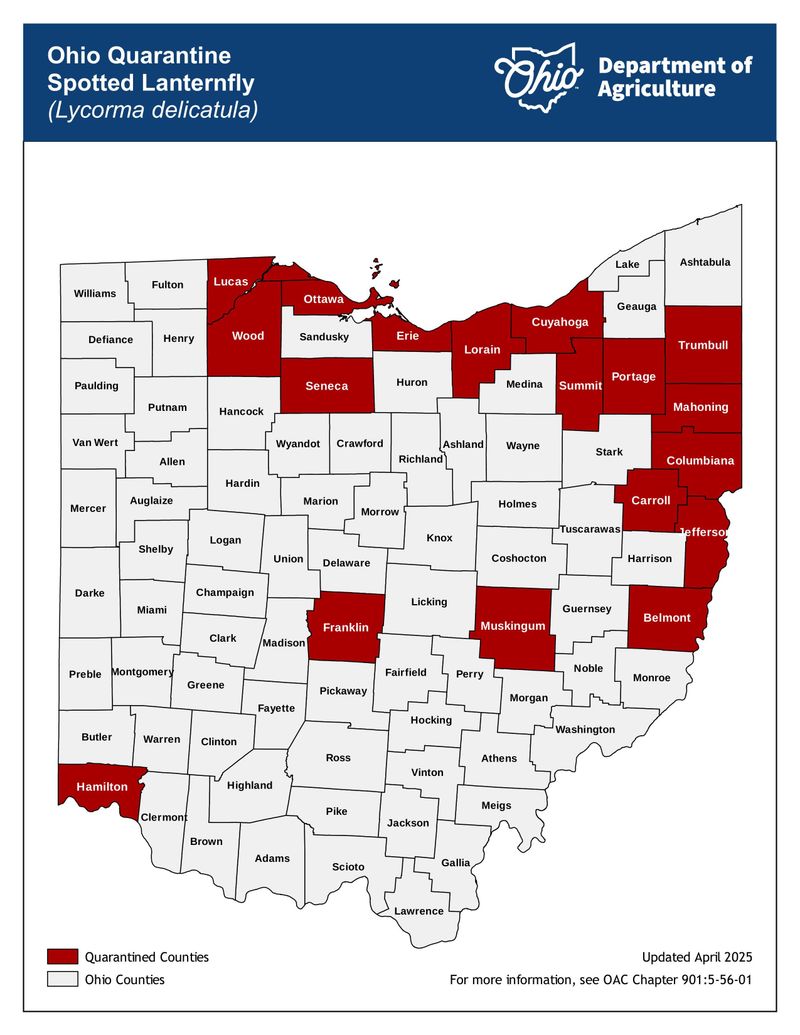
Pulling up the current state agriculture department website is the right move, rather than relying on a two-year-old social media post. Do this once you have a photograph and a reasonable identification.
As of mid-2025, the Ohio Department of Agriculture has expanded its spotted lanternfly response significantly. The entire state is under a statewide quarantine order, meaning movement restrictions apply to regulated articles across all counties, not just a limited group of them.
Residents who believe they have found a spotted lanternfly are encouraged to report sightings through the state agriculture department’s current online reporting tool. Reporting helps officials track the spread and update management resources.
Check the ODA website directly for the most current reporting method, since tools and contact options are updated as the program evolves. Do not rely on older county-specific hotlines or forms that may no longer be active.
The quarantine focuses heavily on preventing accidental movement of the insect and its egg masses on vehicles, equipment, and outdoor items. Residents are not legally required to report every individual insect spotted in a yard.
But voluntary reports from homeowners contribute meaningfully to the state’s tracking efforts. When in doubt about what to do next, contacting your local extension office is a practical and reliable option for current guidance.
8. Protect Your Yard From A Wider Infestation
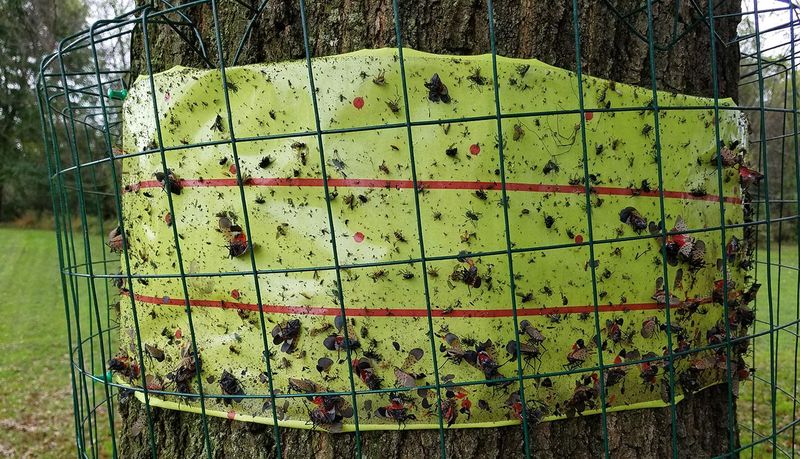
Before loading anything into a vehicle or moving it to another property, take a few minutes to check every surface carefully.
Spotted lanternflies and their egg masses travel easily on vehicles, trailers, firewood, grills, outdoor furniture, play equipment, stone, pallets, and stored lumber.
A quick inspection of undersides, joints, and flat surfaces before you move an object is one of the most effective ways to avoid spreading activity to a new location.
Egg masses can be scraped off hard surfaces and placed in a sealed bag with hand sanitizer or rubbing alcohol before disposal. This method is currently supported by several university extension programs.
Individual insects can be removed by hand or with a cup and firm surface. Contact insecticides labeled for this species may affect exposed individuals but typically do not provide lasting control on their own.
Systemic products require careful selection because some affect pollinators and other beneficial organisms. Always read the label and follow current extension guidance before applying anything.
Sticky tree bands have been used to capture nymphs moving up trunks, but they also trap beneficial insects and small animals. Any band should include protective wire screening and must be checked and cleared frequently.
Heavily affected grapevines or valuable landscape plants may benefit from professional advice. One careful sighting, followed by solid identification and a thorough inspection, is a great start.
Responsible handling of outdoor objects is the most practical response any homeowner can offer.