Why Some California Butterflies Are Skipping Gardens Without This One Native Plant
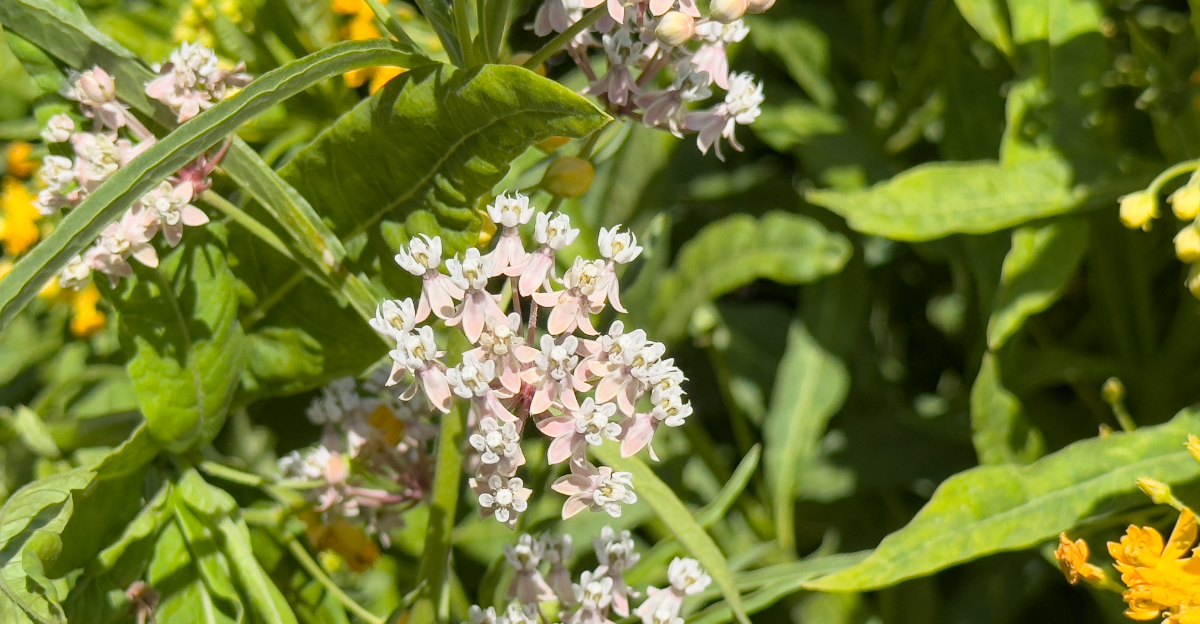
A butterfly garden can be full of color and still miss the plant that matters most. Some California butterflies are not simply looking for nectar when they visit a yard.
They need very specific plants to support the next generation, and without them, even a beautiful garden may offer little reason to stay.
One native perennial plays an especially important role by providing both seasonal flowers and something far more valuable for reproduction.
Its presence can turn a decorative planting into genuine habitat, giving certain butterflies a place to complete a crucial part of their life cycle.
The plant also fits naturally into water-conscious landscapes once established, making it useful beyond its wildlife value.
If butterflies keep passing through without lingering, the missing piece may not be another bright bloom. It could be the one native plant their young depend on.
1. The Native Plant Monarchs Actually Need
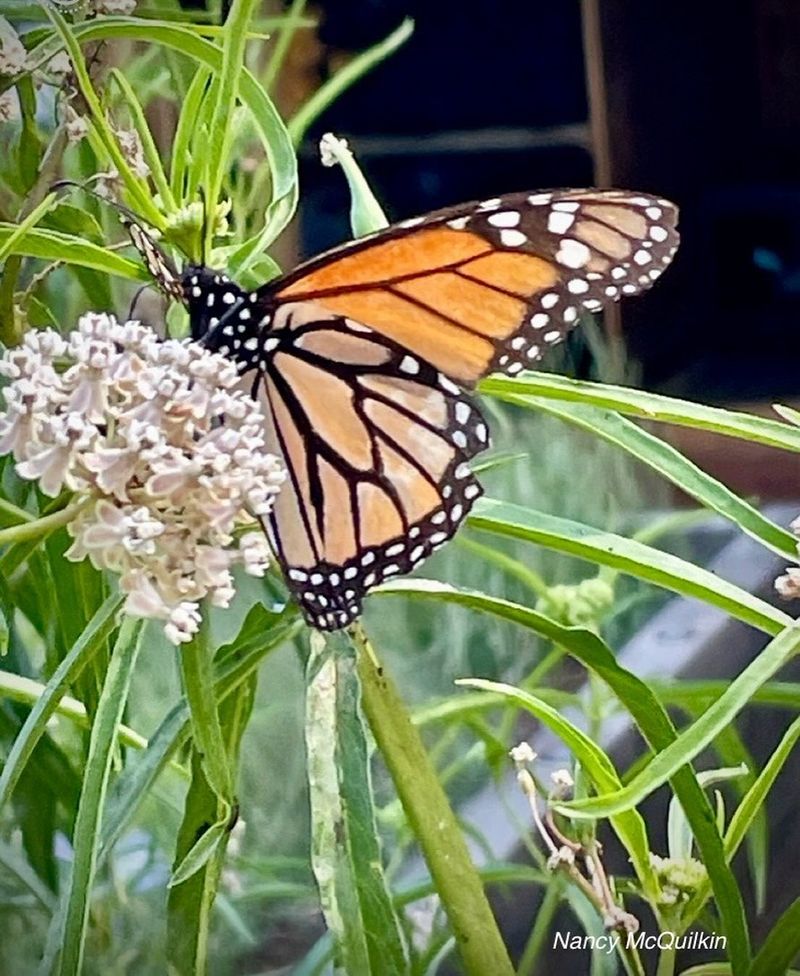
Not all flowers are created equal when it comes to supporting monarch butterflies. Narrowleaf milkweed, or Asclepias fascicularis, is one of the few plants that monarchs truly cannot live without.
It grows naturally across much of California, from the Central Valley to coastal hillsides and dry inland slopes.
What makes it so special is a combination of chemistry and structure. The plant produces a milky, bitter sap called latex that contains compounds called cardenolides.
These compounds are toxic to most animals, but monarchs have evolved to handle them. In fact, caterpillars store these chemicals in their bodies as a defense against predators.
No other common garden flower offers this kind of relationship. Lavender, zinnias, and coneflowers can provide nectar, but they cannot support the full monarch life cycle.
Monarchs need milkweed specifically for egg-laying and caterpillar feeding. Without it, reproduction simply does not happen.
Native milkweed also supports other insects beyond monarchs. Milkweed bugs, milkweed beetles, and certain native bees all rely on this plant.
Adding it to your garden creates a small but powerful ecosystem. Even a single plant can attract noticeable butterfly activity within a few weeks of blooming.
2. Why Butterflies Keep Searching For Milkweed
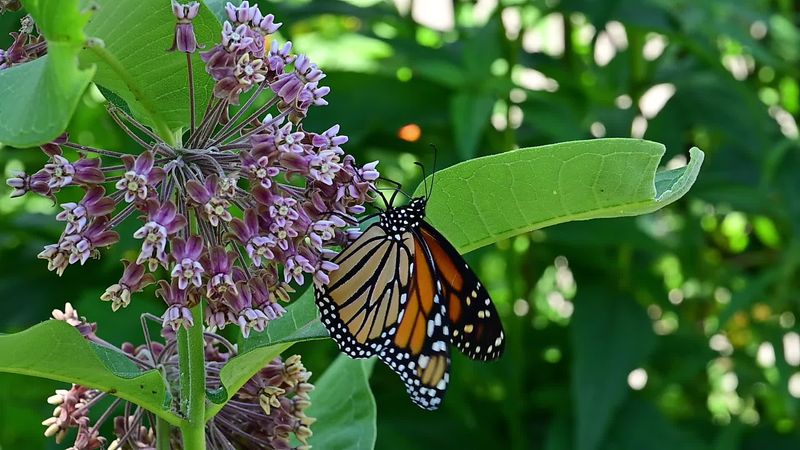
Monarchs do not wander randomly. Their search patterns are actually guided by scent, color, and memory passed down through generations.
When a monarch cannot find milkweed, it keeps flying, sometimes covering dozens of miles before locating a single plant. That is a lot of energy spent on a search that could end in your backyard.
Female monarchs are especially driven. During breeding season, they fly low to the ground, scanning for the specific leaf shape and scent of milkweed.
They will bypass roses, sunflowers, and even native wildflowers to keep looking. The urge to find milkweed is that strong.
Urban and suburban development has removed huge amounts of native milkweed from the landscape. Fields that once held thousands of plants have been replaced by pavement, lawns, and non-native plantings.
This forces butterflies to search longer and harder for what they need.
Home gardens can fill that gap in a meaningful way. A yard with even two or three milkweed plants becomes a reliable stop on the monarch’s route.
Your California Garden Changes Every Week. Your Plan Should Too.
Gardening in California changes quickly throughout the season. Every Friday you’ll receive a simple weekly plan showing exactly what to plant, prune, fertilize, harvest, and protect so you never miss the right timing.
Over time, butterflies return to the same spots year after year. Planting milkweed is one of the most direct ways a homeowner can support butterfly populations.
3. Narrow Leaves Hiding A Major Butterfly Magnet
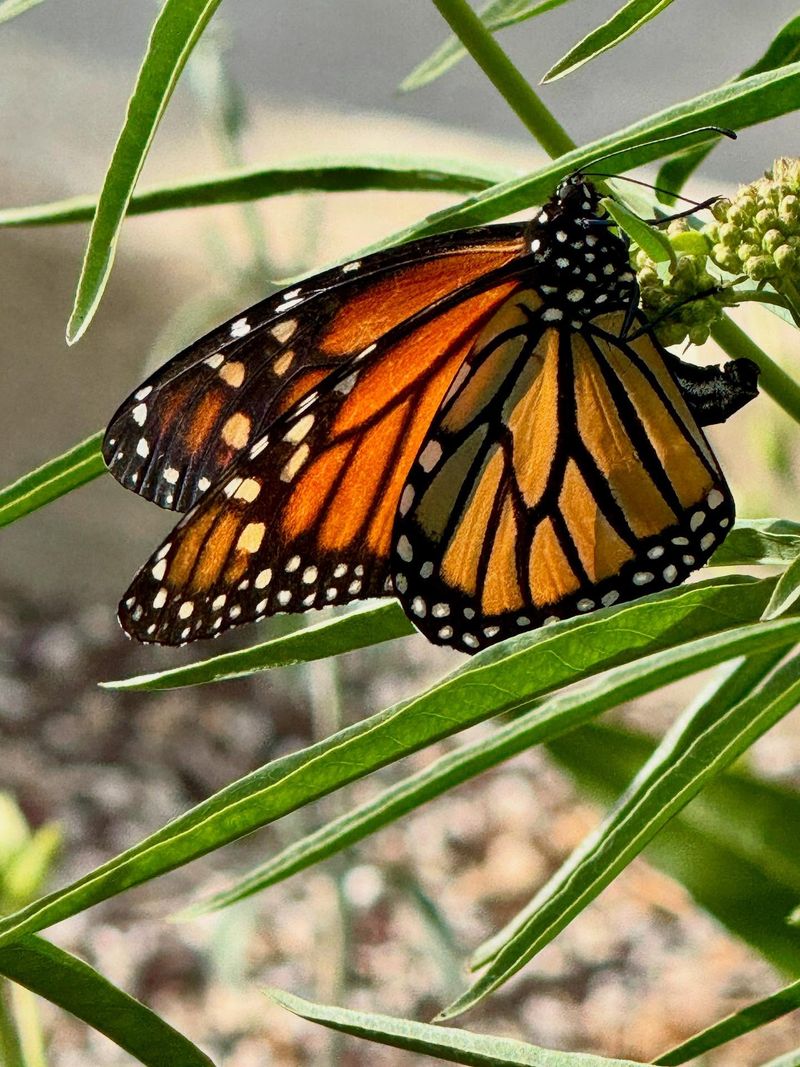
At first glance, narrowleaf milkweed does not look like much. Its leaves are long, thin, and almost grass-like, which makes it easy to overlook in a garden bed.
But do not let its modest appearance fool you. This plant is one of the most effective butterfly attractors you can grow in a dry, sunny yard.
The narrow leaves are actually part of what makes this species so well-adapted to California’s climate. They lose less water than wide, flat leaves, which helps the plant survive hot summers with minimal irrigation.
That is great news for water-conscious gardeners who want to support wildlife without running up a water bill.
When narrowleaf milkweed blooms, usually from late spring through summer, it produces dense clusters of small flowers. Each cluster holds dozens of tiny blooms that release a sweet scent.
Butterflies, bees, and even hummingbirds pick up on that scent from surprising distances.
Planting narrowleaf milkweed among other native perennials creates a naturalistic look that fits right into a low-water garden design. Pair it with purple sage, buckwheat, or native grasses for a layered effect.
The butterflies will find it quickly, and your garden will look like it belongs to the landscape around it.
4. Monarchs Using It For More Than Just Nectar
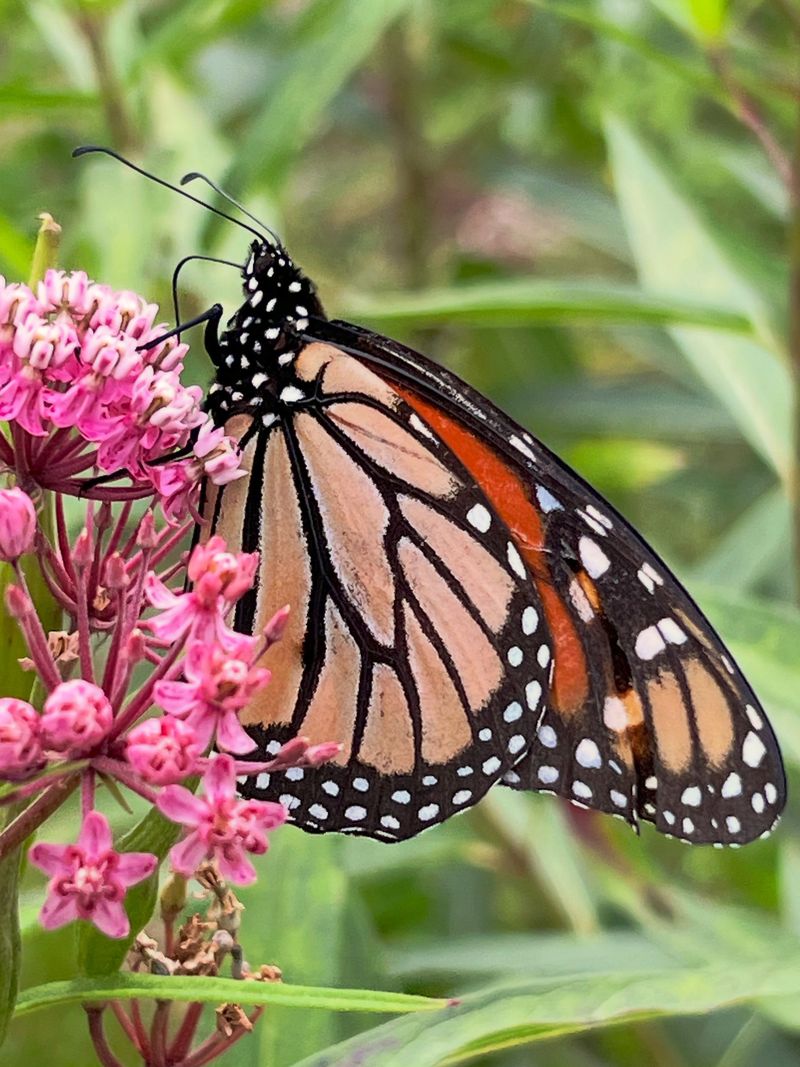
Most people think of butterflies visiting flowers for nectar, and milkweed does offer that. But monarchs have a much deeper relationship with this plant than a quick sip of sugar.
They use milkweed as a rest stop, a nursery, and a chemical pharmacy all at once.
Adult monarchs absorb cardenolides from milkweed nectar and reinforce the chemical protection they already carry. This makes them taste terrible to birds and other predators.
A monarch that feeds regularly on milkweed is better protected than one that feeds only on other flower species.
Milkweed also serves as a gathering spot. During migration, monarchs tend to cluster in areas where milkweed is plentiful.
Seeing five or ten butterflies on a single plant is not unusual when the timing is right. These clusters allow males and females to find each other, which supports breeding activity during the migration window.
The plant even provides physical shelter. Its sturdy stems and dense flower clusters give butterflies a place to rest during windy or cool afternoons.
On warm days, you might see a monarch simply sitting on a milkweed stem, wings open, soaking up the sun. That kind of behavior shows just how much trust these insects place in this one native plant.
5. Tiny Caterpillars Calling This Plant Home
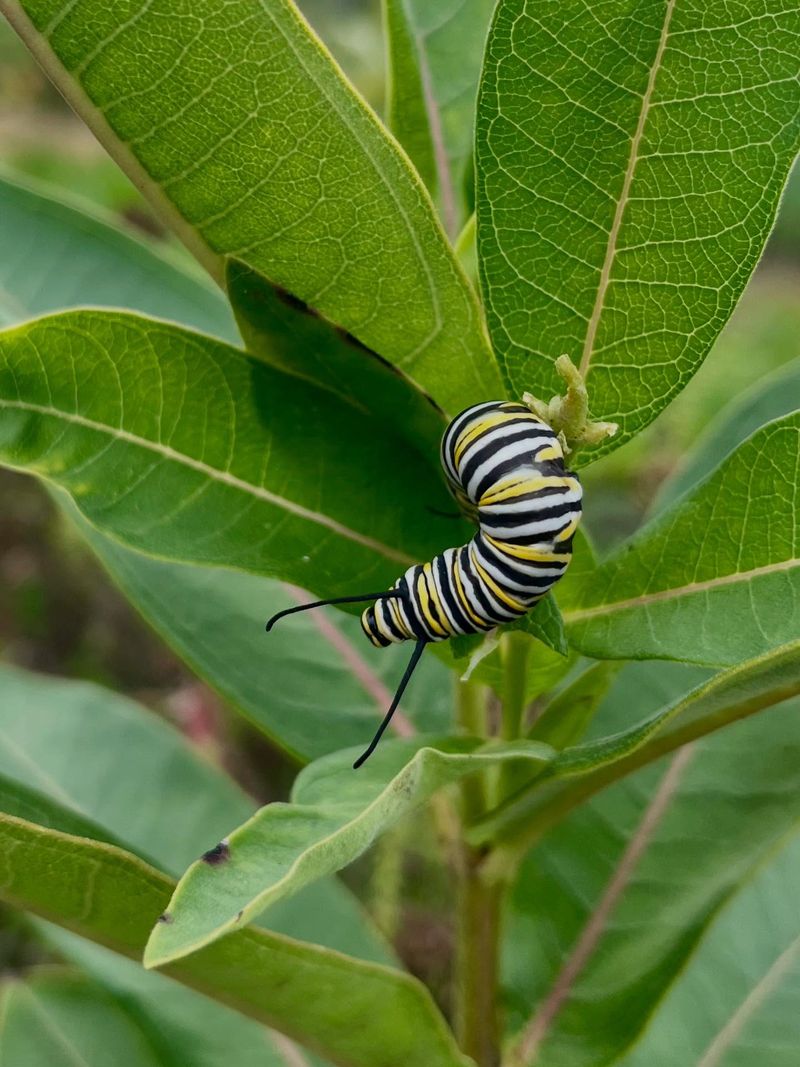
Few garden sights are as exciting as spotting a tiny monarch caterpillar on a milkweed leaf. These little striped creatures, banded in yellow, black, and white, spend their entire larval stage on milkweed plants.
Without the plant, the caterpillar stage simply cannot happen.
Female monarchs lay their eggs on the underside of milkweed leaves. Each egg is about the size of a pinhead, so they are easy to miss.
Once hatched, the caterpillars start eating immediately. They munch through leaves quickly, and a small plant can support several caterpillars at once before needing time to regrow.
The latex in milkweed leaves is what makes caterpillars so bold. As they eat, they build up toxins in their bodies.
By the time they form a chrysalis and emerge as adult butterflies, they are already protected. That protection stays with them for life.
Watching caterpillars grow on a backyard milkweed plant is one of the most rewarding wildlife experiences a gardener can have. You can track their progress from tiny hatchling to plump caterpillar to glittering green chrysalis.
Planting two or three milkweed plants gives caterpillars enough food to complete their growth without stripping a single plant bare.
6. Summer Blooms Bringing Butterflies In Fast
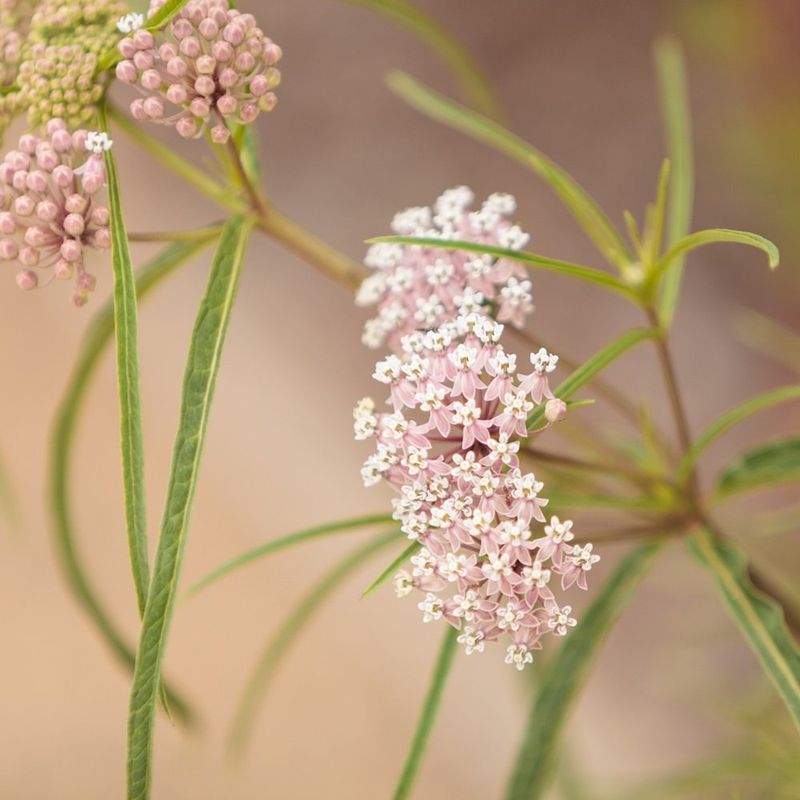
Timing matters a lot in butterfly gardening, and narrowleaf milkweed has excellent timing. It typically begins blooming in late spring and continues through late summer, which lines up almost perfectly with monarch migration and breeding seasons.
That overlap is not a coincidence.
The flowers themselves are small but packed with nectar. Each bloom in a cluster produces a drop of sweet liquid that butterflies access with their long, tube-like mouthparts.
On a warm summer morning, a blooming milkweed plant can attract multiple butterfly species within just a few hours.
Beyond monarchs, other native butterflies also visit milkweed flowers. Queens, painted ladies, and swallowtails have all been spotted nectaring on this plant.
That makes it a multi-species magnet, not just a single-butterfly specialty plant. A garden with milkweed in bloom is a busy, lively place from June through August.
One practical tip for gardeners is to let the plant bloom fully before deadheading or trimming. Cutting flowers too early removes the nectar source right when butterflies need it most.
After blooming, the plant produces seed pods that split open and release silky seeds on the wind. Letting some pods go to seed helps the plant spread naturally across your yard over time.
7. Skipping Milkweed Means Missing Part Of The Life Cycle
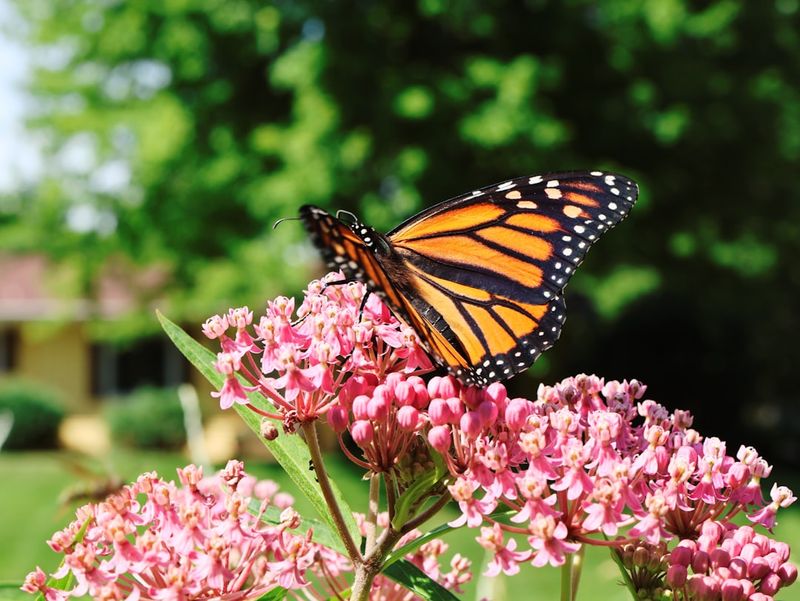
A garden full of colorful flowers but no milkweed is like a nursery with no cribs. It might look great, but it is missing the most essential piece.
Monarchs cannot complete their life cycle without this plant, and that fact has serious consequences for their population numbers.
Each stage of the monarch’s life depends on milkweed in a different way. Eggs need the leaf surface for attachment.
Caterpillars need the leaves for food. Even the chrysalis is sometimes attached to milkweed stems, though monarchs will also use nearby structures.
The adult butterfly returns to milkweed for nectar and to begin the cycle again.
When milkweed disappears from a region, monarch numbers in that area drop noticeably within just a few seasons. Studies tracking monarch populations in areas with low milkweed availability have shown significant declines in breeding success.
The connection between plant availability and butterfly numbers is direct and well-documented.
Restoring milkweed to home gardens is one of the most practical conservation steps available to everyday people. You do not need a large yard or a special permit.
A single container with a milkweed plant on a sunny patio can serve as a breeding stop. Every plant added to the landscape helps close the gap left by habitat loss across the region.
8. Sunny California Gardens Giving It The Perfect Spot
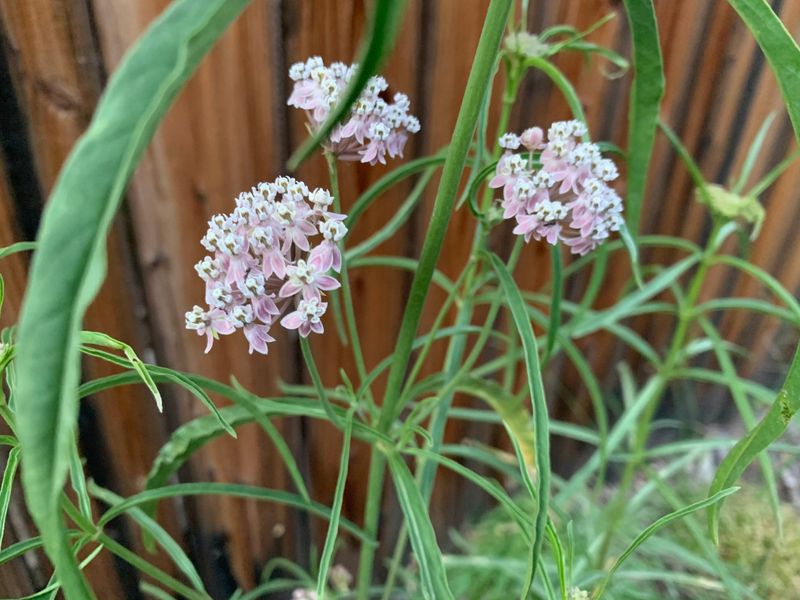
Good news for gardeners: narrowleaf milkweed is one of the easiest native plants to grow here. It thrives in full sun, tolerates poor soil, and once established, needs very little water.
That makes it an ideal fit for the dry, sunny conditions found across most of our state’s residential landscapes.
Planting milkweed is straightforward. Choose a spot that gets at least six hours of direct sunlight each day.
Dig a hole slightly larger than the root ball, place the plant at the same depth it was growing in the pot, and water it in well. After the first growing season, it becomes largely self-sufficient.
In northern regions, milkweed may go dormant in winter and return in spring from its root system. In warmer southern areas, it may stay green year-round.
Either way, the plant is low-maintenance and highly rewarding. A small investment of time and money pays off in seasons of butterfly activity.
Pairing milkweed with other native plants like coyote brush, native buckwheat, or California poppy creates a habitat garden that supports the full food web. Butterflies, bees, birds, and beneficial insects all benefit from a well-planned native planting.
Your garden becomes more than just pretty. It becomes a working piece of local habitat.