The Watering Mistakes Ruining Oregon Petunias Before Summer Is Even Over
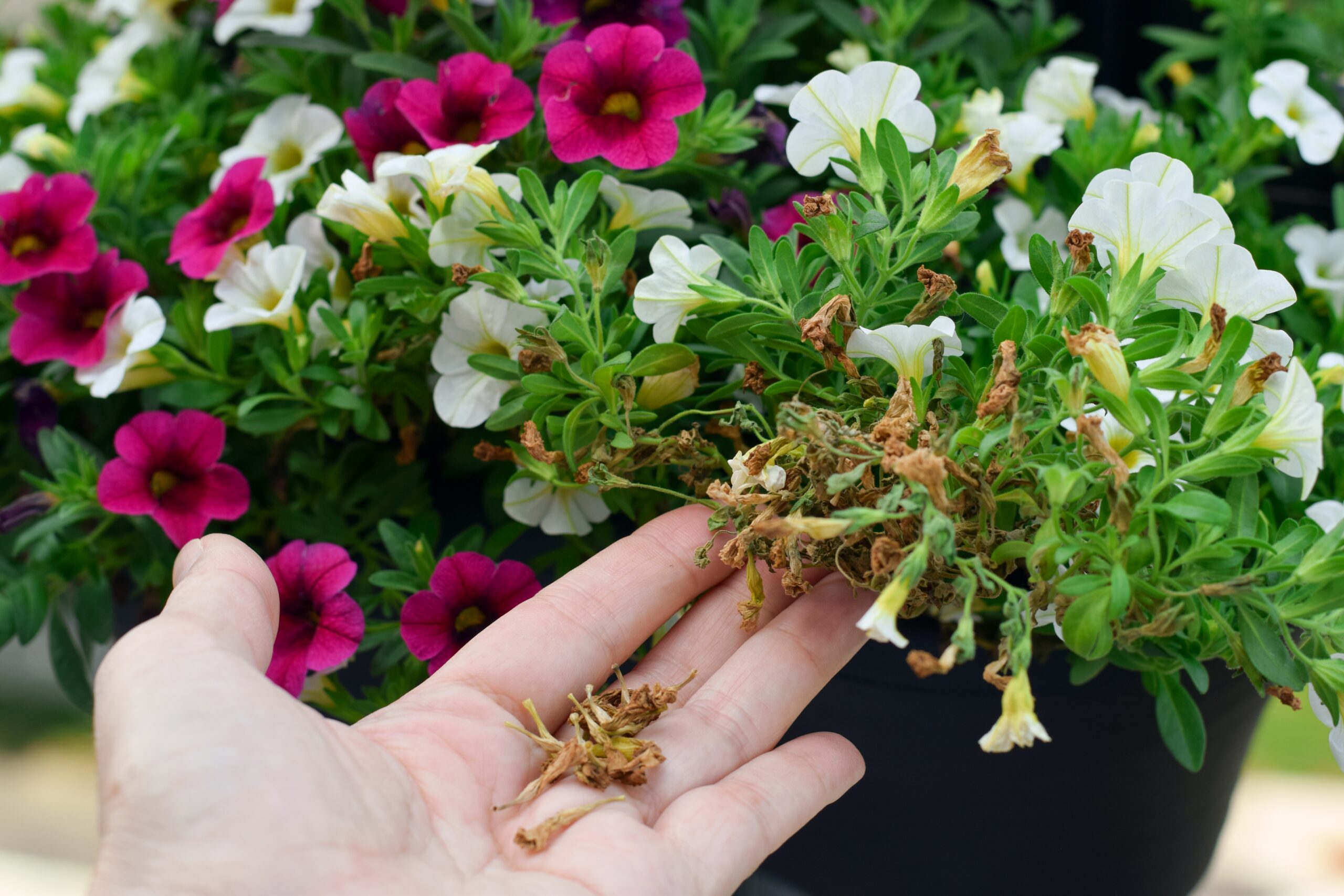
Petunias can start looking worn out long before Oregon summer actually ends. Flowers shrink, stems get sparse, and leaves may yellow even when the plants are being watered regularly.
The problem is often not a lack of effort. It is how that water is reaching the roots and how long the soil stays wet afterward.
Containers make things trickier because they can dry quickly on hot afternoons, then remain soggy after a heavy soak. Garden beds have their own challenges, especially when the surface looks dry while deeper soil is still holding moisture.
That can lead to a cycle of stress that slowly weakens blooming. Petunias respond best when their roots get consistent moisture without sitting in saturated soil.
If the plants are fading early, the watering routine may be doing more damage than the summer heat itself.
1. Giving Petunias Tiny Sips Every Single Day
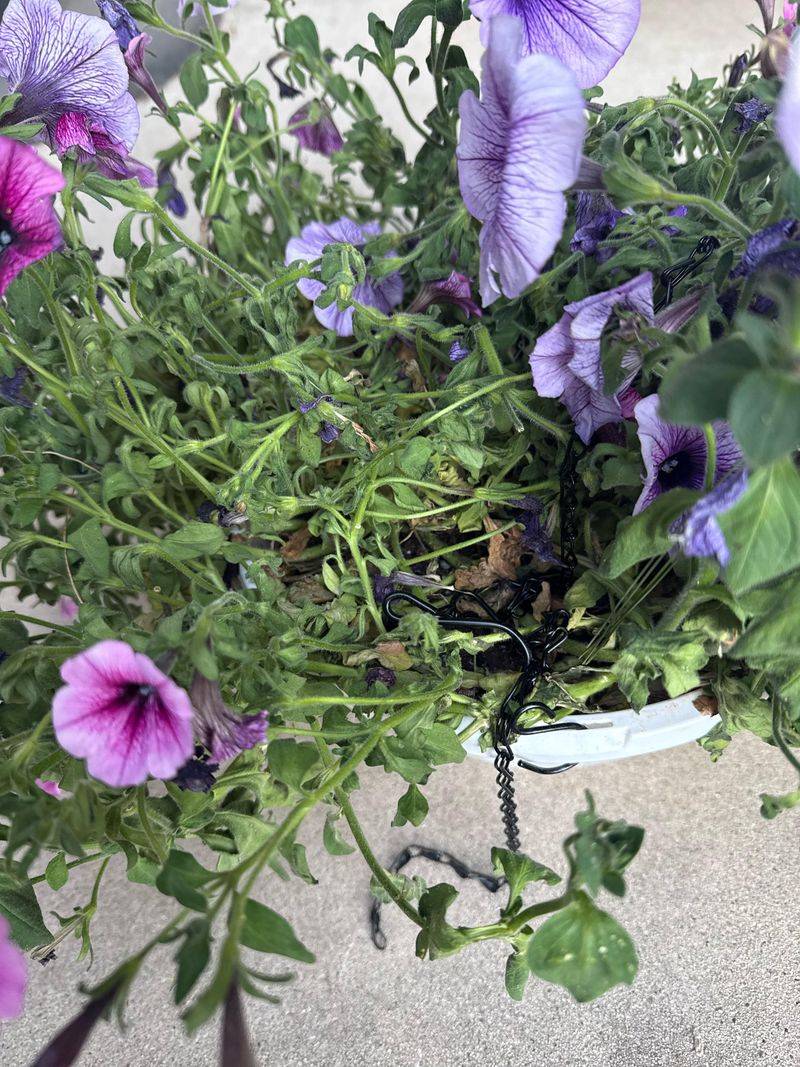
A lot of gardeners think watering a little bit every day is the safe, responsible choice. It feels attentive and caring.
But for petunias, frequent shallow watering is one of the most common mistakes that quietly weakens the plant over time.
When you only wet the top inch or two of soil, the roots never have a reason to grow deeper. They stay close to the surface, where they are exposed to heat, quick drying, and stress.
Shallow roots make plants fragile and much more likely to wilt on hot days, even when you just watered them that morning.
Petunias do much better with deep, thorough watering done less often. Soaking the soil deeply, at least four to six inches down, encourages roots to follow the moisture downward.
Deeper roots are more stable, more drought-tolerant, and better able to support heavy blooming all season long.
A good rule of thumb is to water thoroughly, then wait until the top inch of soil feels dry before watering again. In mild weather, that might mean every two to three days.
In heat, it could be daily, but still done deeply. Check the soil with your finger before reaching for the hose.
That one small habit change can make a noticeable difference in how strong and full your petunias look by midsummer.
2. Letting Hanging Baskets Dry Out By Afternoon
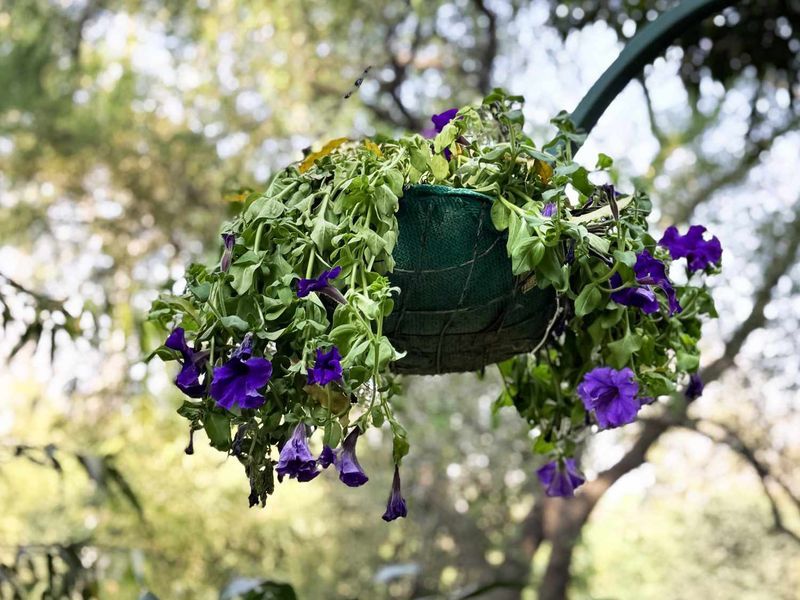
Hanging baskets are one of the most popular ways to grow petunias, and they are also one of the easiest ways to accidentally stress them out.
Because baskets are elevated and surrounded by air on all sides, they lose moisture much faster than pots sitting on the ground.
On a warm day, a hanging basket can go from moist to bone dry in just a few hours. By the time afternoon rolls around, the roots may already be suffering from heat and dehydration.
When this happens repeatedly, the plant puts its energy into survival rather than blooming, and flower production drops fast.
The fix is simple but requires consistency. Water hanging baskets in the morning so the roots start the day fully hydrated.
On hot days, check them again by midday. If the soil feels dry an inch below the surface, water again.
Your Oregon Garden Changes Every Week. Your Plan Should Too.
Gardening in Oregon changes quickly throughout the season. Every Friday you’ll receive a simple weekly plan showing exactly what to plant, prune, fertilize, harvest, and protect so you never miss the right timing.
Do not wait for the flowers to droop before acting.
You can also help retain moisture by adding a layer of coco coir or peat moss to the top of the basket. Some gardeners use self-watering inserts or reservoirs that sit inside the basket and release water slowly.
These work really well for petunias in Oregon during dry summer stretches. The goal is to keep the roots consistently moist, not wet, and never completely dry.
3. Soaking Roots Until They Stay Soggy
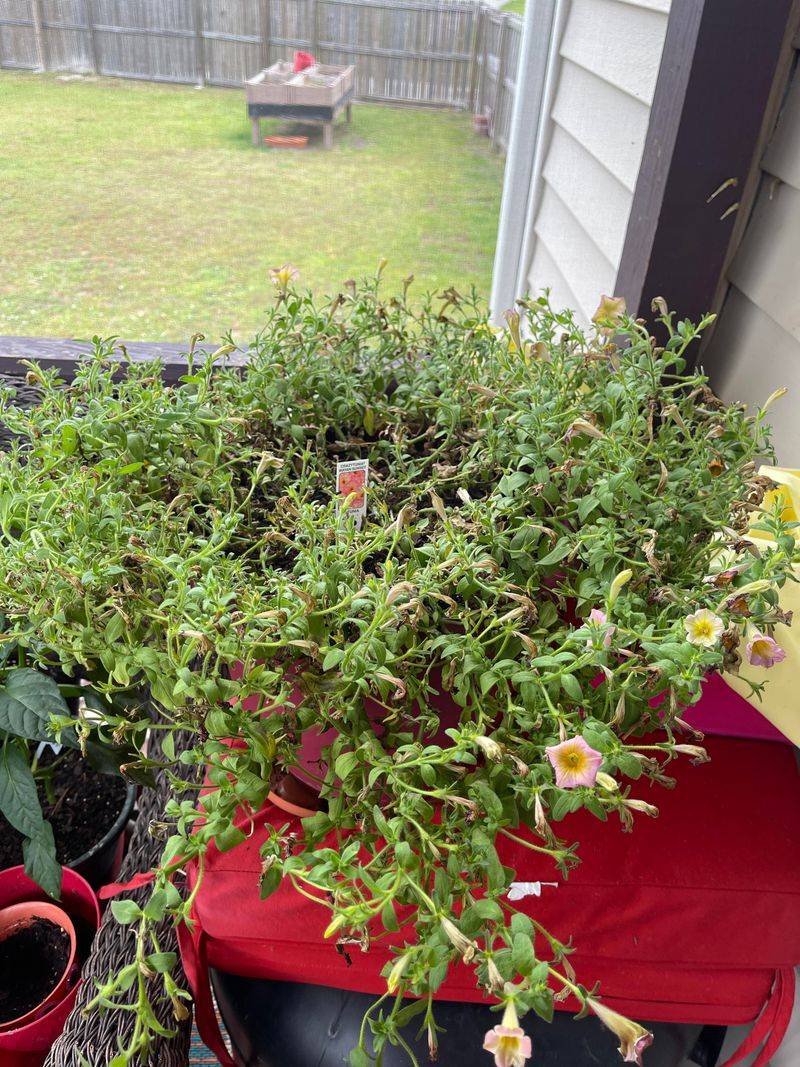
Overwatering is just as harmful as underwatering, and it is actually the more common mistake among well-meaning gardeners. When soil stays soggy for too long, roots cannot get the oxygen they need to function.
Without oxygen, roots begin to break down, and the plant starts to show signs of stress pretty quickly.
Yellow leaves are often the first warning sign. The plant may also look wilted even though the soil is clearly wet.
That is a confusing situation, but it makes sense once you understand that damaged roots cannot move water upward through the plant, no matter how much water is sitting around them.
Good drainage is the number one defense against soggy roots. Always use containers with drainage holes.
Never let pots sit in standing water for more than an hour after watering. If you are planting in the ground, make sure the bed is not in a low spot where water collects after rain.
Adding perlite or coarse sand to your potting mix improves drainage significantly. A mix that drains well still holds enough moisture for petunias to thrive, it just does not hold so much that roots are left sitting in puddles.
Before watering, push your finger an inch into the soil. If it still feels damp, wait another day.
Learning to read the soil rather than following a fixed schedule protects roots from being overwatered all season.
4. Watering Leaves Instead Of The Soil
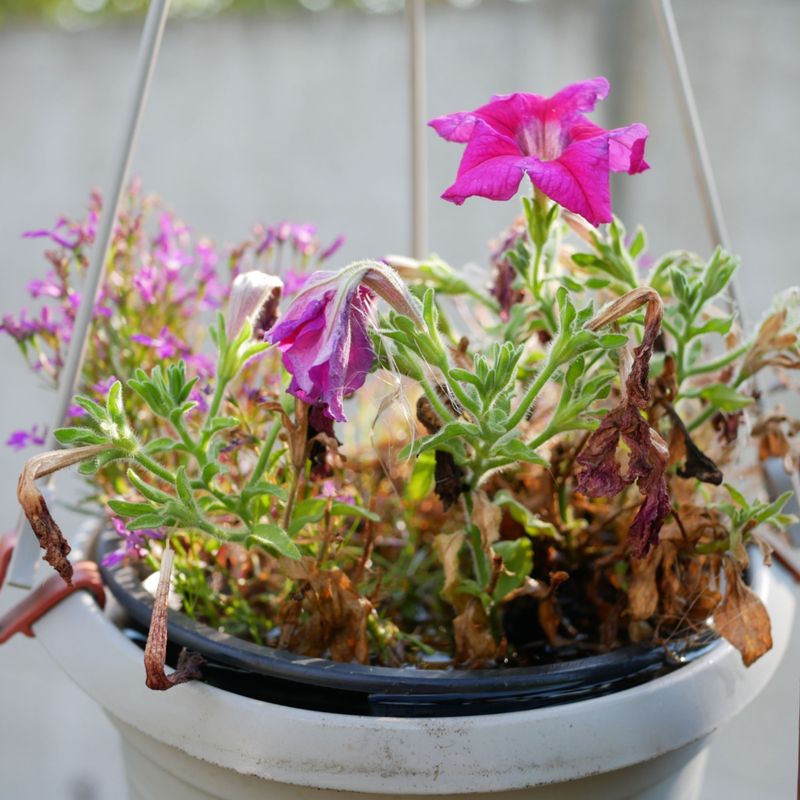
Grabbing the hose and giving the whole plant a good spray feels efficient and satisfying. But when water lands on petunia leaves and flowers instead of going straight to the soil, it can cause more problems than it solves.
Wet foliage in warm weather creates the perfect conditions for fungal diseases like powdery mildew and botrytis. These diseases spread quickly and can ruin the appearance of your petunias within days.
Flowers that get repeatedly soaked may also turn mushy and drop off early, cutting your blooming season short.
The better approach is to water at the base of the plant, directing the water toward the soil and roots where it is actually needed. A watering wand with a gentle head makes this easy, even for hanging baskets.
Drip irrigation is another excellent option for garden beds, since it delivers water directly to the root zone without wetting anything above ground.
If you use a sprinkler system, try to adjust it so it waters early in the morning. That gives leaves time to dry before temperatures drop in the evening.
Damp foliage overnight is a much bigger problem than damp foliage at 7 a.m.
Taking a few extra seconds to aim your water at the base of each plant rather than over the top is a simple habit that pays off in healthier, longer-blooming petunias all the way through summer.
5. Waiting For Flowers To Wilt Before Watering
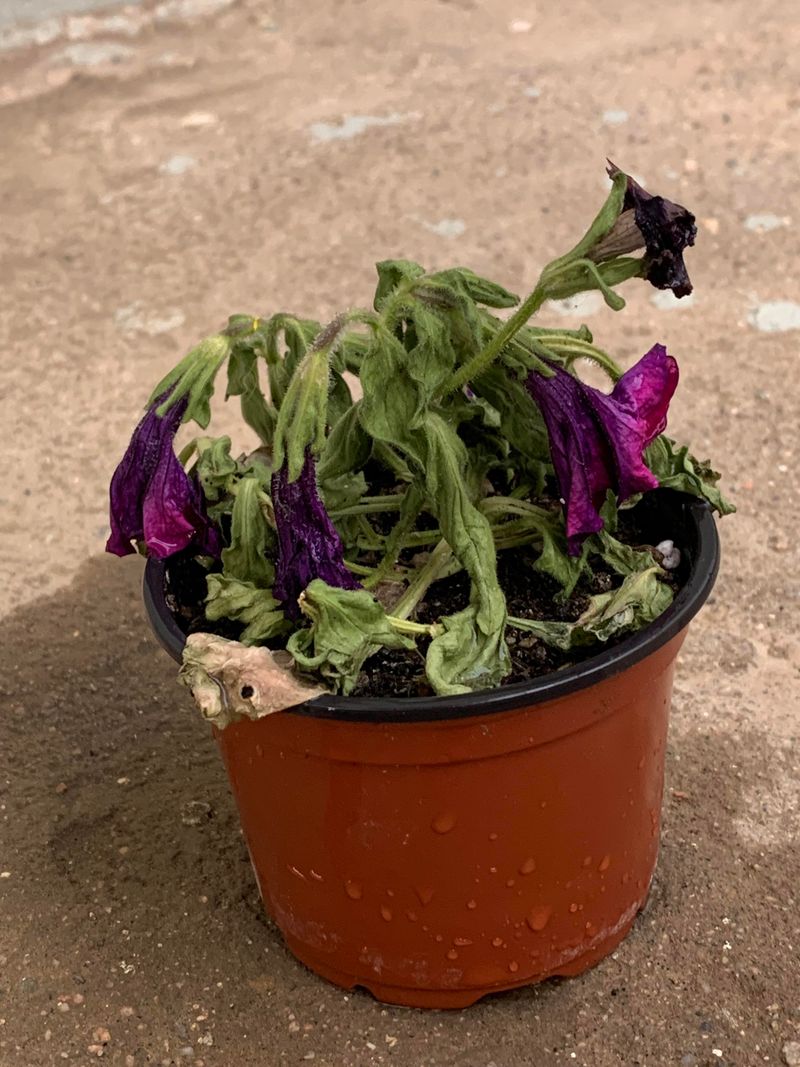
Some gardeners use wilting as their signal to water. It seems logical.
If the plant looks thirsty, give it a drink. But by the time petunias visibly wilt, they have already been under serious stress for a while, and that stress adds up over a whole season.
Repeated wilting and recovery cycles weaken the plant gradually. Each time a petunia wilts severely, it uses energy that could have gone toward producing new flowers.
Over time, bloom production slows, stems become less vigorous, and the plant looks more tired and sparse than it should at that point in summer.
Wilting is not always a reliable sign of thirst, either. Petunias can also wilt from heat stress even when the soil is moist.
Watering a plant that is already adequately hydrated just because it is drooping in afternoon heat can make things worse by pushing the soil toward soggy conditions.
A much more reliable method is to check the soil moisture directly. Push your finger about an inch into the soil near the base of the plant.
If it feels dry at that depth, it is time to water. If it still feels moist, leave it alone and check again tomorrow.
Getting into this habit removes all the guesswork and helps you respond to what the plant actually needs rather than how it looks at a glance. Consistent soil checks lead to consistently happy petunias.
6. Using The Same Schedule During Every Heat Spell
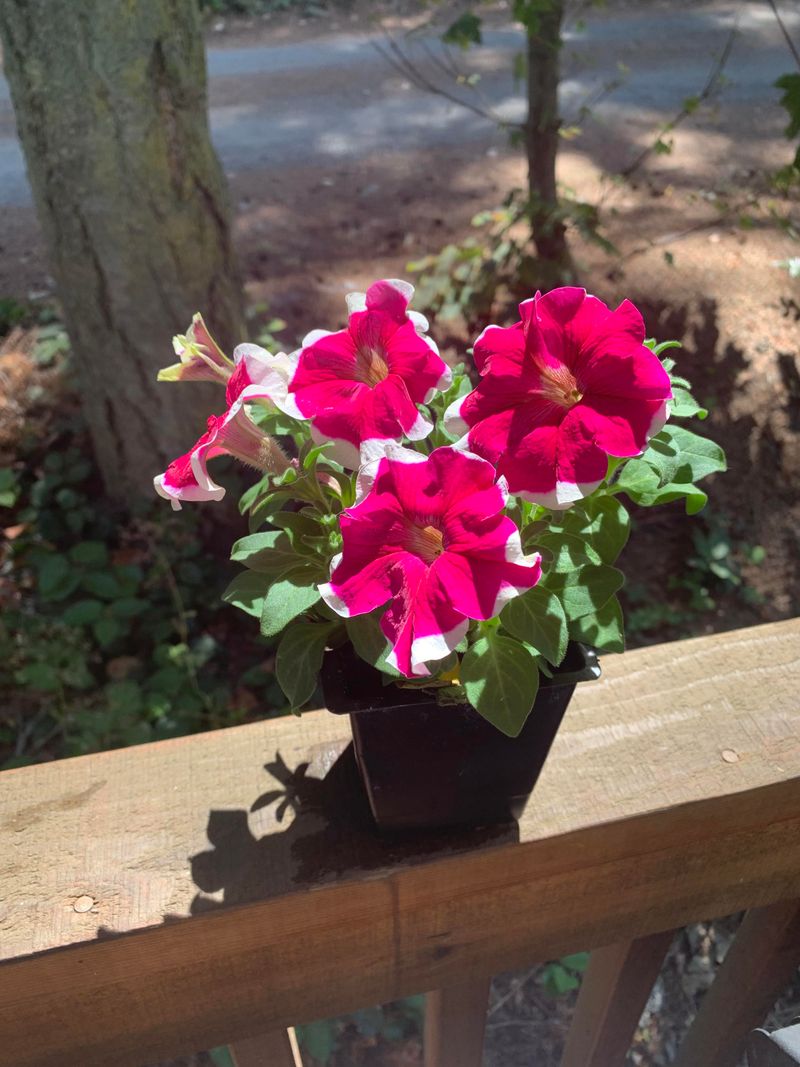
Sticking to a fixed watering schedule feels organized and responsible. Water on Monday, Wednesday, and Friday, no matter what.
But petunias do not follow a calendar, and neither does the weather. When a heat spell hits, a schedule that worked fine last week can become dangerously insufficient almost overnight.
During a heat wave, soil dries out much faster than usual. Temperatures above 85 degrees can pull moisture from containers in just a few hours.
A plant that was fine on a three-day watering schedule may need water every single day, sometimes twice, when temperatures climb into the 90s or higher.
Oregon summers can swing between mild and scorching within the same week. That kind of variability means gardeners need to stay flexible and responsive rather than locked into a routine.
Checking the soil every morning during a heat spell takes less than a minute and can prevent a lot of unnecessary plant stress.
Pay attention to the forecast. When you know hot days are coming, water deeply the night before or early in the morning so roots start the day fully hydrated.
Use mulch around the base of garden-bed petunias to slow evaporation. Move potted plants to a spot with afternoon shade if the heat is extreme.
Adjusting your approach based on actual conditions rather than a fixed schedule is one of the most effective things you can do to keep petunias blooming strong through the hottest parts of summer.
7. Forgetting Small Pots Dry Out Much Faster
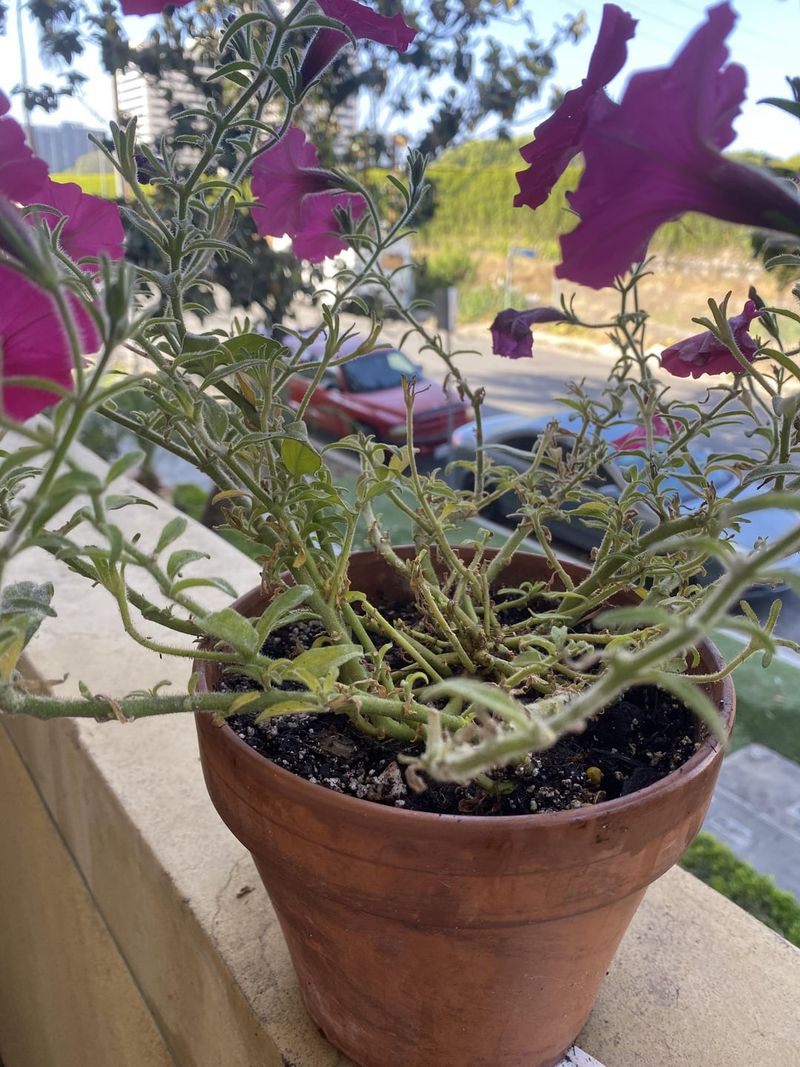
Not all containers behave the same way, and pot size makes a much bigger difference than most people realize. Small pots hold very little soil, which means they hold very little water.
In warm weather, a four-inch or six-inch pot can go from freshly watered to completely dry in just a few hours.
Petunias are vigorous, thirsty plants. Their roots fill containers quickly and use up available moisture fast.
When you put a petunia in a small pot, you are setting up a situation where you almost have to water daily just to keep up. Miss one afternoon check, and the plant can be in serious distress by evening.
Upsizing your containers is one of the easiest ways to reduce watering stress for both you and your plants. A twelve-inch or fourteen-inch pot holds far more soil and moisture, giving the roots more buffer between watering sessions.
Larger containers also stay cooler in summer heat, which helps roots stay healthy longer.
If you love the look of small pots, try grouping several together. Pots clustered close together create a bit of shade for each other and slow down evaporation.
You can also use terracotta saucers to catch and hold a little extra water at the base. Self-watering pots are another great option for small-space gardeners.
Understanding how container size affects moisture levels helps you plan smarter and keeps petunias looking their best all season without constant emergency watering.
8. Watering At Night And Leaving Foliage Damp
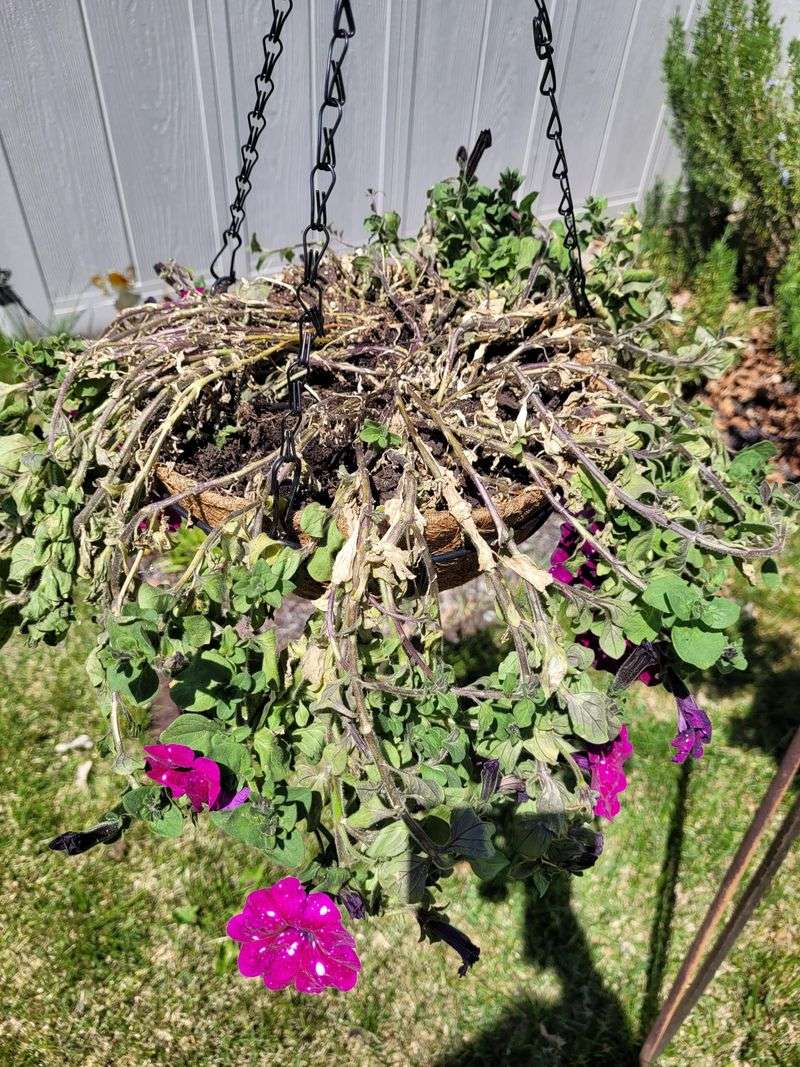
Evening watering feels convenient. The day is winding down, the air is cooler, and it seems like a relaxing way to end a gardening session.
But watering petunias at night, especially if the leaves and flowers get wet, sets up conditions that fungal diseases absolutely love.
When foliage stays damp through the night, fungi have hours of perfect, cool, moist conditions to spread. Diseases like gray mold and powdery mildew can take hold quickly and spread from plant to plant.
Once a fungal problem gets established, it is hard to reverse, and it can cut your blooming season significantly short.
Morning is by far the best time to water petunias. Watering in the early morning gives the soil a full drink before the heat of the day arrives.
Any water that splashes onto leaves has time to evaporate as temperatures rise, so foliage goes into the evening dry and much less vulnerable to disease.
If morning watering is not always possible, try to water in the early afternoon on cooler days so leaves still have time to dry before dark. Always aim the water at the base of the plant rather than over the top.
A watering wand or drip system makes this easy and precise. Small timing adjustments like shifting from evening to morning can dramatically improve the overall health of your petunias and help them stay lush and flower-filled straight through the end of Oregon’s summer season.