Plants That Keep California Gravel Paths Cooler Without Taking Them Over
Gravel paths look fantastic in a California garden, clean, low maintenance, and very much in keeping with the dry-climate aesthetic so many homeowners are going for right now. The one thing nobody really warns you about is how hot they get.
Exposed stone and hardscape absorb heat all day long and radiate it right back out, turning a beautiful garden path into something that feels like a convection oven by mid-afternoon.
The good news is that the right plants along the edges can genuinely help, providing shade and transpiration that takes the edge off that heat in a surprisingly noticeable way.
The catch is that plant selection matters a lot here. Vigorous spreaders and ambitious groundcovers will happily creep right onto the walking surface given half a chance.
What you actually want are plants with a little more restraint and a lot more style.
1. Pine Muhly Keeps The Edge Light And Airy
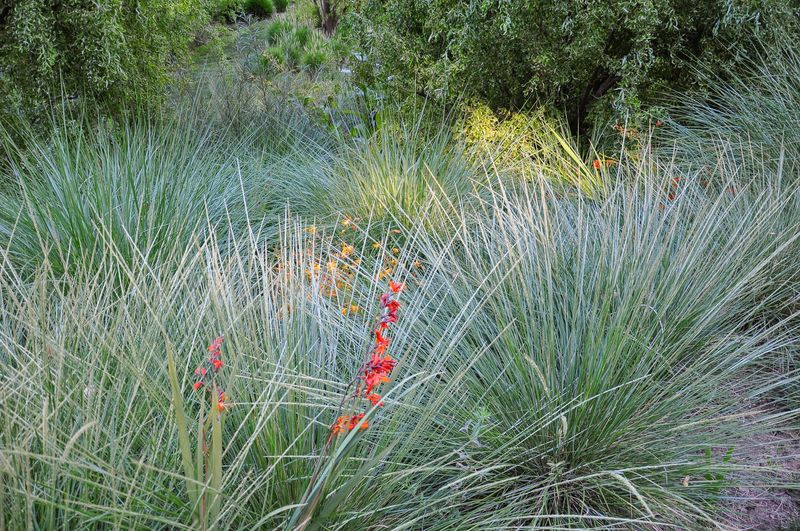
Fine-textured grasses can do something that broad-leafed plants sometimes struggle with near gravel: they soften a hard edge without pushing onto the walking surface.
Pine muhly (Muhlenbergia dubia) is a compact, clumping ornamental grass native to the southwestern United States and northern Mexico.
Its narrow, almost needle-like foliage stays in a tidy mound rather than spreading outward the way a creeping groundcover might.
Mature plants typically reach around two to three feet tall and wide, making pine muhly a manageable choice for relatively narrow planting strips beside a path.
In California, it performs well in full sun and handles heat and drought once established, which suits many inland and foothill gardens.
Coastal gardens with mild summers can also support this grass without much difficulty.
Water needs are low after establishment, and pine muhly does best in well-drained soil. Unlike some of its larger Muhlenbergia relatives, it does not tend to self-seed aggressively or form broad colonies under typical garden conditions.
Feathery flower plumes appear in late summer and fall, adding movement and a soft glow along the path edge. Some light trimming in late winter can help refresh the clump before new growth begins.
Gardeners in hotter inland parts of California may find that pine muhly handles reflected heat from gravel better than many other ornamental grasses of similar size.
2. California Fescue Brings Soft Shade To Gravel
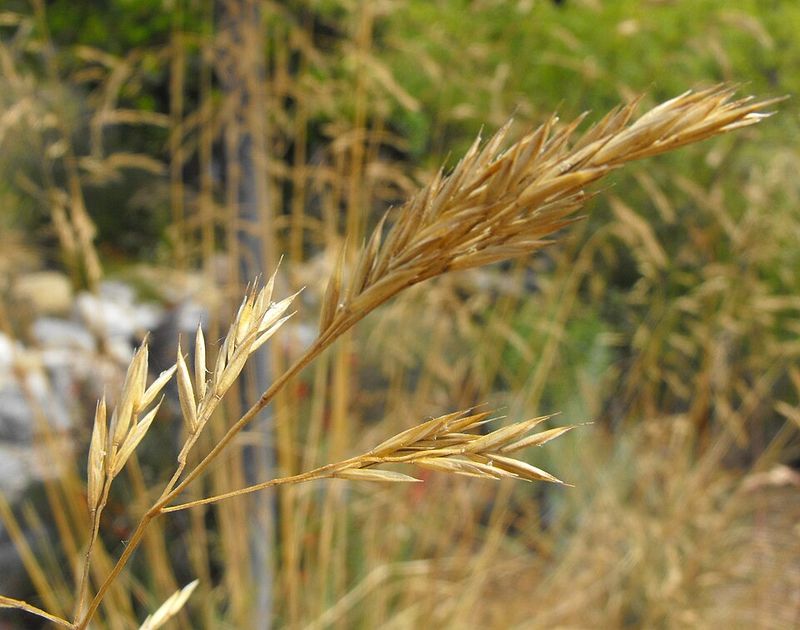
Some bunchgrasses have a way of making a gravel path feel less harsh simply by standing nearby. California fescue (Festuca californica) is a native bunchgrass with gracefully arching foliage that creates a rounded, fountain-like form.
That arching habit means the leaf tips can extend slightly over a path edge, providing a small amount of localized shade on the gravel surface without the plant actually spreading onto it.
Mature clumps typically grow around two to three feet tall and two to three feet wide.
California fescue is well suited to partially shaded spots and can struggle in prolonged intense heat, which makes it a better fit for coastal gardens, oak woodland edges, and north-facing exposures in inland California.
Your California Garden Changes Every Week. Your Plan Should Too.
Gardening in California changes quickly throughout the season. Every Friday you’ll receive a simple weekly plan showing exactly what to plant, prune, fertilize, harvest, and protect so you never miss the right timing.
Afternoon shade or protection from the harshest summer sun can help it stay looking its best in warmer parts of the state.
Water needs are low to moderate once the plant is established, though it appreciates occasional deep watering during dry summers. The soil should drain reasonably well because standing water can cause problems for the roots.
Flower stalks rise above the foliage in spring, adding seasonal interest without making the plant look unkempt. Removing spent stalks keeps the edge tidy.
Because this is a true bunchgrass, it stays in a clump and does not send out runners, making it easier to manage beside a gravel surface than spreading alternatives.
3. Foothill Penstemon Adds Color Without The Sprawl
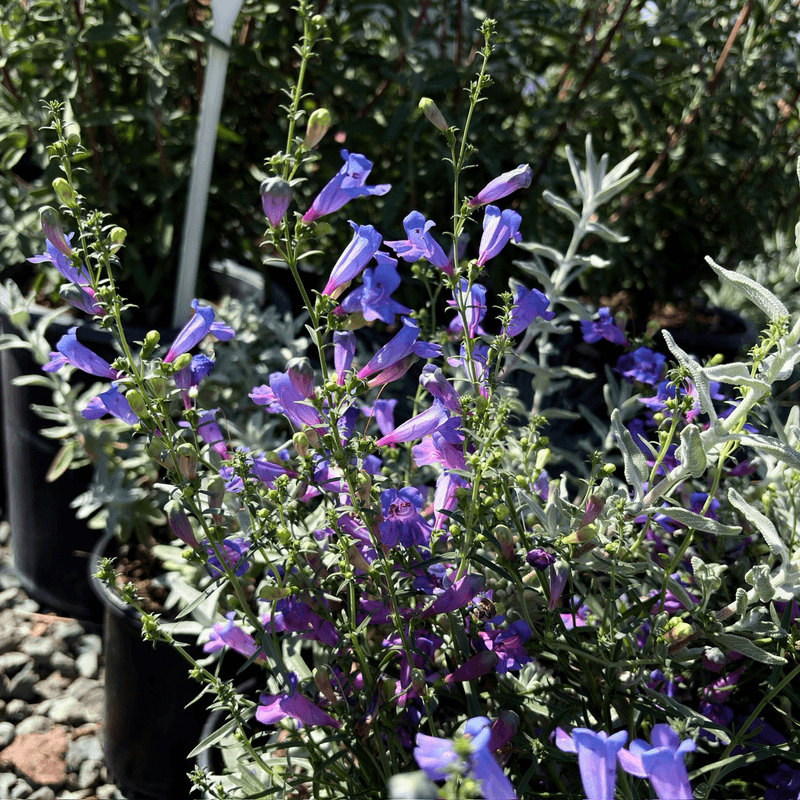
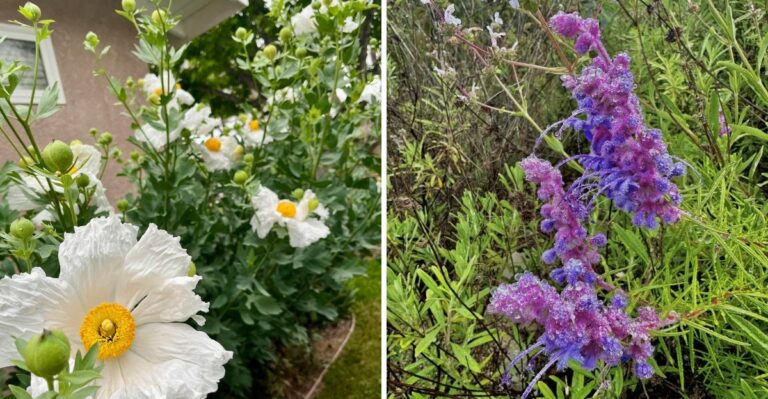
Blue-purple flowers beside pale gravel create one of the more striking color contrasts in a garden, and Penstemon heterophyllus ‘Margarita B.O.P.’ delivers that combination with a growth habit that does not readily take over a walking surface.
This cultivar, developed from California-native foothill penstemon, produces vivid blue to violet flowers on upright stems through late spring and into summer, drawing pollinators to the path edge.
‘Margarita B.O.P.’ tends to grow roughly one to two feet tall and about one to two feet wide, making it a reasonable choice for planting strips that cannot accommodate a larger shrub.
It performs best in full sun with excellent drainage, which suits the conditions found beside many gravel paths.
Like most penstemons, it is sensitive to heavy, poorly drained soils, so amending clay soil or choosing a raised bed situation can improve results.
Water needs are low to moderate once established, and it handles the dry summers typical across much of California without much supplemental irrigation. The plant does not behave like a creeping groundcover, so it is unlikely to spread aggressively across gravel.
That said, some gardeners cut it back lightly after the main flowering period to encourage a second flush of blooms and keep the form tidy. Seedlings may occasionally appear nearby, but they are easy to remove before they become established.
The compact upright form makes this penstemon a sensible option where flower color is wanted without the commitment of a sprawling plant.
4. Autumn Sage Keeps A Compact, Flowering Form
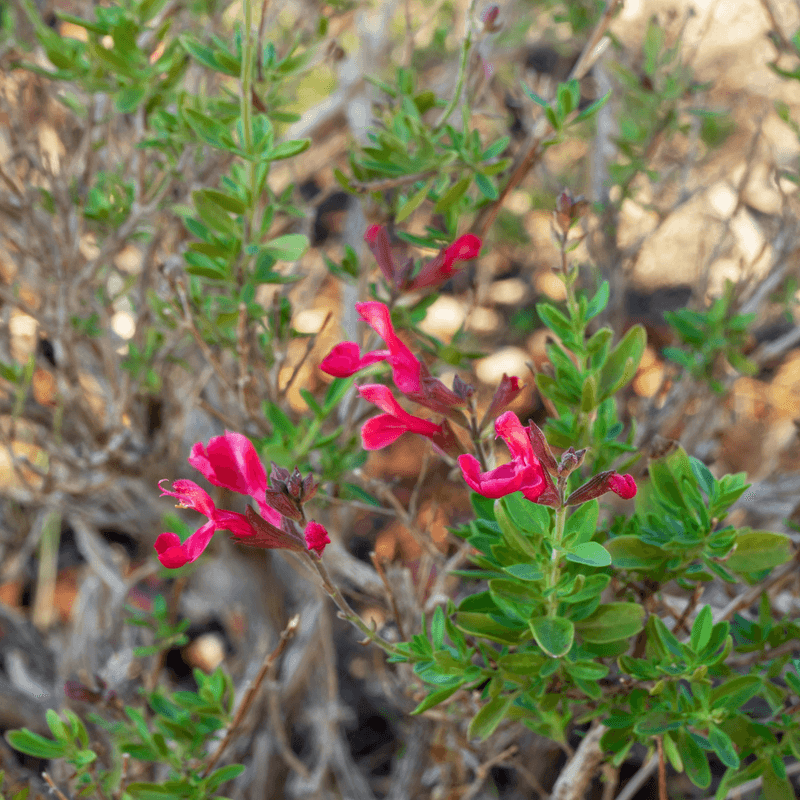
Reliable flowering shrubs that stay relatively small are not always easy to find for gravel path edges, but autumn sage selections in the Salvia greggii and Salvia x jamensis group fill that role well in many gardens.
These plants produce tubular flowers in shades ranging from red and coral to pink and soft yellow, depending on the cultivar.
Flowering can continue for extended stretches in suitable climates, particularly in mild coastal and inland valley areas of California.
Most autumn sage selections reach roughly one to three feet tall and one to three feet wide at maturity, though size can vary meaningfully between cultivars.
That variation is worth keeping in mind when choosing a plant for a narrow strip beside a path, because some selections are more compact than others.
Full sun and well-drained soil suit these plants best, and they have low water needs once established, which fits the dry-summer conditions found across much of California.
Pruning plays a practical role in keeping autumn sage looking tidy beside a gravel path. Light shearing after a major flowering period can encourage fresh growth and a denser, more contained form.
Without occasional trimming, some plants may develop a slightly open or sprawling shape over time.
These are not native plants, but they are well adapted to California’s Mediterranean-style climate and have been widely used in low-water landscaping across the state.
Their manageable habit and long season of color make them a sensible choice for framing a gravel path.
5. Santa Cruz Island Buckwheat Frames The Path Naturally
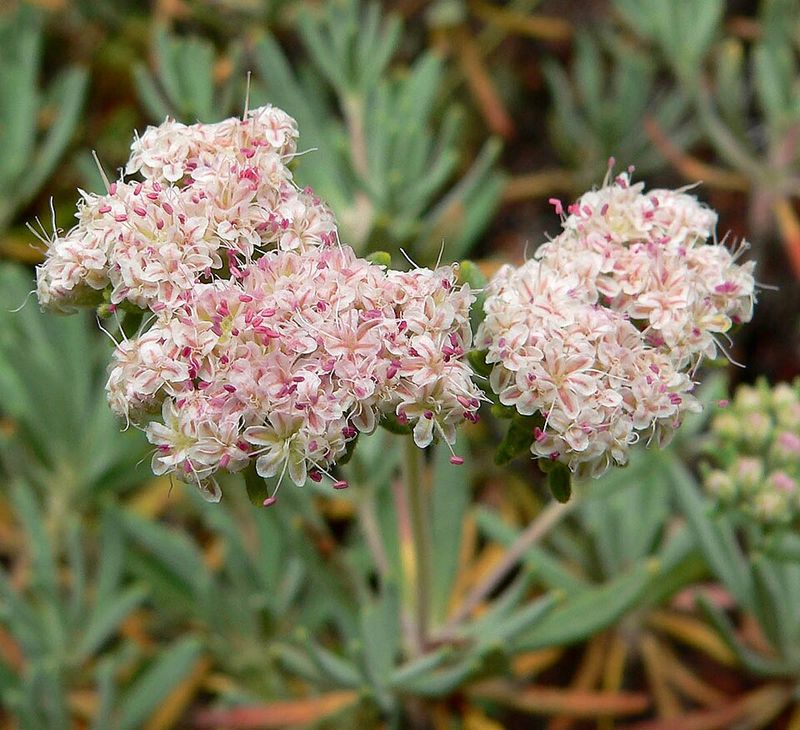
Evergreen structure beside a gravel path can be hard to achieve in a low-water garden without reaching for plants that eventually crowd the walking surface.
Santa Cruz Island buckwheat (Eriogonum arborescens) offers that structure in a shrub form that stays upright and manageable rather than creeping outward like a groundcover.
It is native to the Channel Islands off the coast of California, and it has earned a strong reputation in drought-conscious landscapes on the mainland as well.
Mature plants typically grow around three to four feet tall and three to five feet wide.
That spread means Santa Cruz Island buckwheat needs a planting area with enough room to develop naturally, and it works best where the path edge has some width to accommodate a small to medium shrub.
Full sun and sharp drainage are important, and it does well in the sandy or rocky soils often found near gravel paths. Overhead irrigation or poorly drained clay soil can cause problems over time.
Clusters of small white to pink flowers appear in spring and summer, attracting native bees and other pollinators. The flower heads often age to a warm rust color that provides visual interest into fall.
Because this is a true shrub rather than a spreading groundcover, it frames the path edge with a distinct vertical presence. Occasional light pruning can help maintain a tidy shape, though heavy cutting is generally not recommended.
Its California native status also means it supports local wildlife alongside its ornamental value.
6. Desert Mallow Adds Warm Color Without Crowding
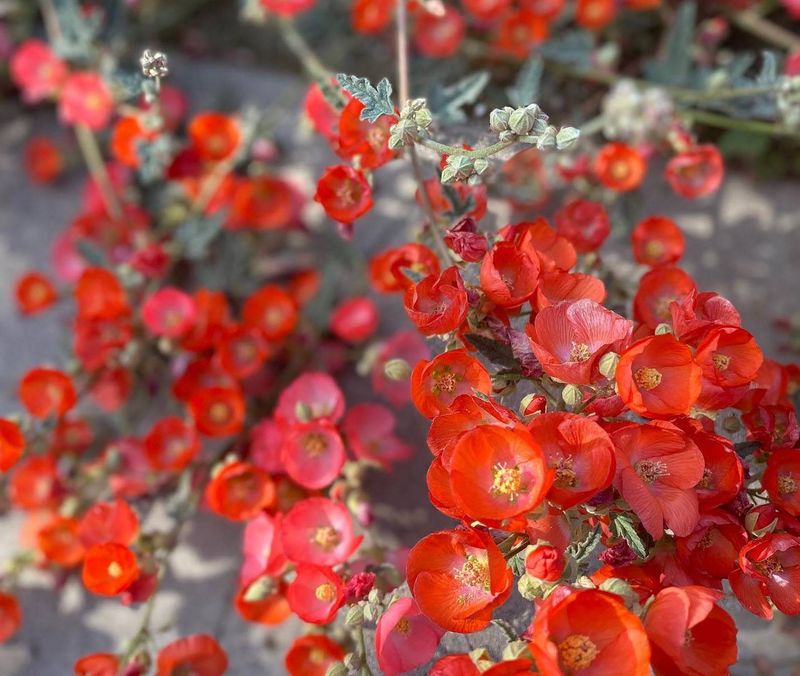
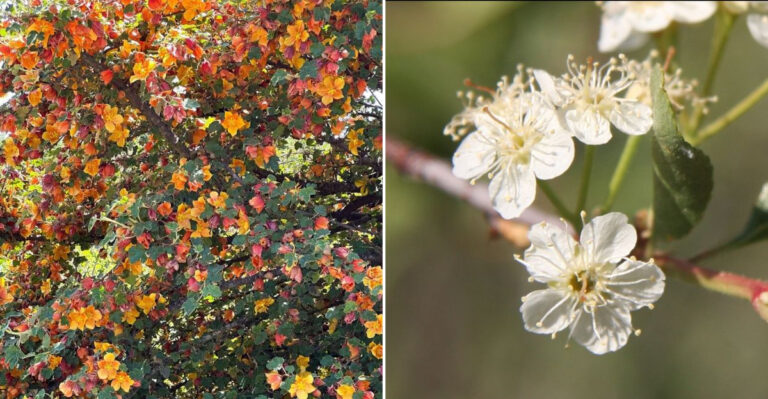
Warm orange flowers rising above silver-gray foliage can make a gravel path edge feel genuinely inviting rather than just utilitarian. Sphaeralcea ambigua ‘Louis Hamilton’ is a desert mallow selection that brings that color combination to sunny, well-drained gardens.
The cup-shaped flowers appear on upright stems and can attract hummingbirds and native bees, adding movement and life to what might otherwise be a static edge.
Mature plants typically reach around two to four feet tall and two to three feet wide, though growth can vary depending on soil richness, water availability, and sun exposure.
‘Louis Hamilton’ performs best in full sun with excellent drainage, and it handles the heat and aridity found in many inland, desert-adjacent, and foothill areas of California.
It is not a plant for heavy clay or regularly irrigated garden beds, because those conditions can shorten its lifespan considerably.
Water needs are low once established, making it a practical option for dry-summer landscapes.
The plant does not behave like a groundcover and does not readily spread across gravel, but it can develop a somewhat loose or open form over time without any maintenance.
Cutting it back by about half in late winter or early spring can encourage fresh, compact growth and a cleaner appearance through the growing season.
Some gardeners in California treat it as a short-lived perennial and replace it every few years when the plant begins to look woody.
Its warm color and upright habit make it a lively addition beside gravel without overwhelming the path.
7. Rosada Coral Bells Brighten Shadier Path Edges
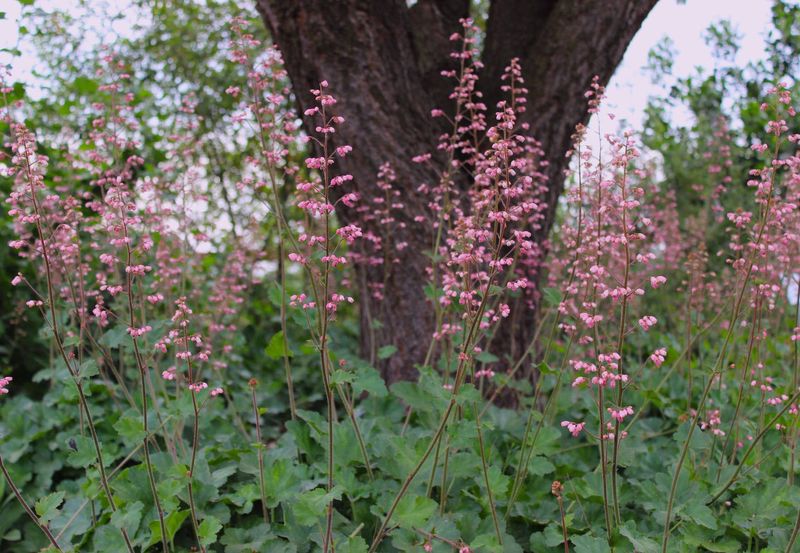
Not every gravel path in California sits in blazing full sun.
Paths running beneath a tree canopy, along a north-facing fence, or through a courtyard with afternoon shade create a different set of planting conditions, and that is where Heuchera ‘Rosada’ can find a comfortable home.
This coral bells selection produces a low, basal rosette of attractive foliage that stays relatively compact and does not run or spread the way a creeping groundcover might.
Heuchera ‘Rosada’ typically grows around eight to twelve inches tall in leaf and spreads to roughly twelve to eighteen inches wide. Slender stems rise above the foliage in spring and early summer, carrying small pink flowers that attract hummingbirds.
The foliage provides year-round interest in mild climates, and the plant can handle dry shade reasonably well once established, which is a useful quality in gardens where summer irrigation is limited.
Partial shade or filtered light suits this plant better than intense afternoon sun, particularly in the hotter inland regions of California.
In coastal California, where summer temperatures stay more moderate, it may tolerate brighter conditions without much stress.
Well-drained soil is still important, even in shadier spots, because Heuchera roots can struggle in consistently wet conditions.
Unlike the sun-loving plants elsewhere in this list, ‘Rosada’ fills a specific niche for shaded or partially shaded path edges where other low-water options may be limited.
Light removal of older or tattered leaves can keep the rosette looking tidy through the seasons.
8. Coral Aloe Brings Sculptural Form To Sunny Gravel
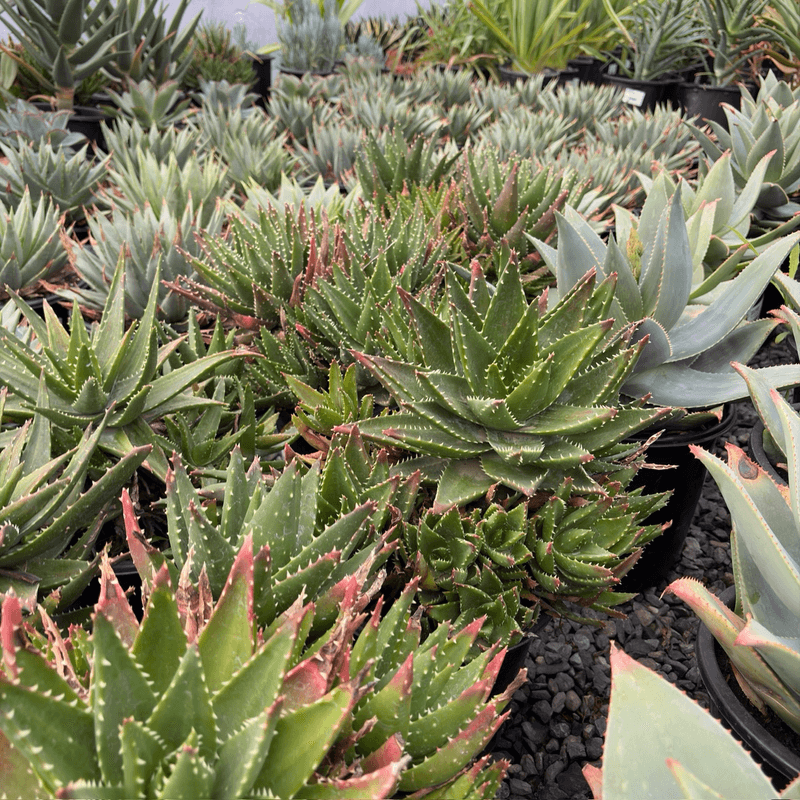
There is something visually satisfying about a smooth, symmetrical succulent rosette sitting beside pale gravel in the California sun.
Coral aloe (Aloe striata) delivers that architectural quality without the sharp spines found on many other aloe species, making it a more manageable choice near a walking surface.
Its leaves are broad, smooth-edged, and a soft blue-gray to gray-green, creating a quiet but striking contrast against gravel or decomposed granite.
Mature plants typically grow around eighteen to twenty-four inches tall and roughly two feet wide, though they can vary somewhat depending on growing conditions.
Coral aloe does well in full sun to light shade and requires excellent drainage, which suits the well-drained conditions that typically surround a gravel path.
It is notably drought tolerant once established, and it fits naturally into the low-water landscapes that have become more common as water conservation has grown in importance across the state.
Tall coral to orange-red flower spikes appear in winter and early spring, attracting hummingbirds during a season when few other plants are blooming.
Because coral aloe forms a single rosette or slowly clusters into a small group of offsets, it does not spread aggressively across a path.
Gardeners can remove offsets to keep the planting compact if needed. One important regional note: coral aloe is sensitive to hard frost and performs best in mild climates, including coastal areas and warmer inland valleys.
It is not a reliable choice for California gardens that experience regular freezing temperatures in winter.