Can You Remove A Street Tree Growing In Front Of Your California Home?
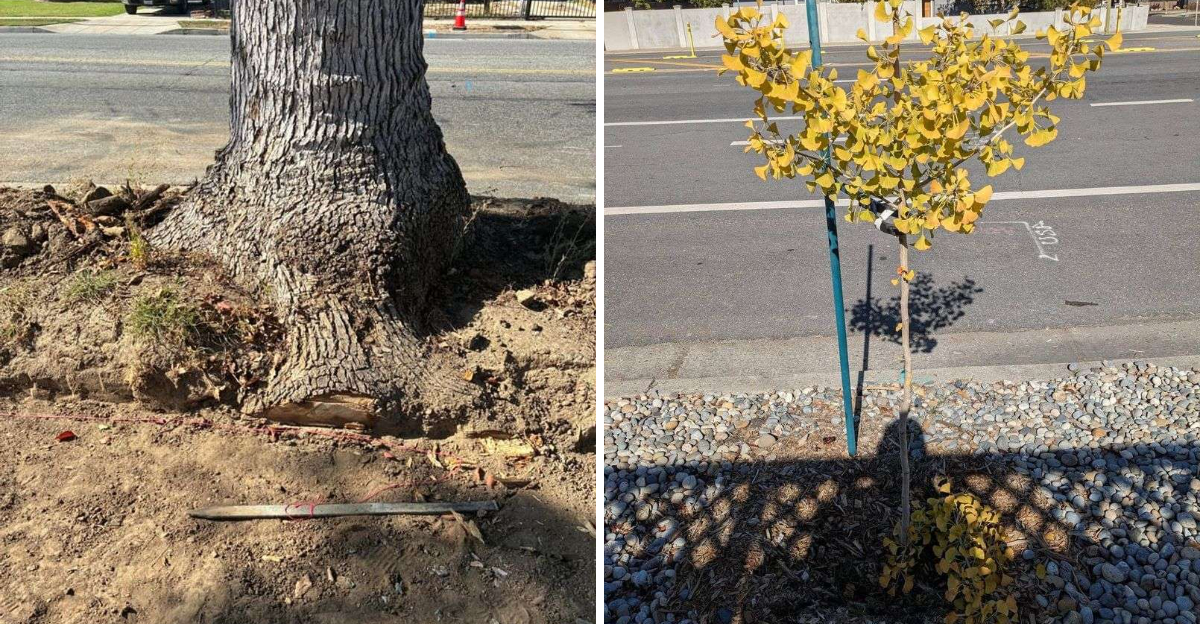
That tree between your sidewalk and curb may feel like part of your front yard.
You rake around it. You water it. Its roots may even be lifting the pavement you walk across every morning.
Then one day, removal starts sounding reasonable. That is where California homeowners can get into trouble.
A tree can sit directly in front of your house while still falling under city or county control. Local rules may govern pruning, removal, replacement, and even which contractor can touch it. Private-property trees can carry protections too.
So can you simply hire an arborist and take it out? Usually, not until you know exactly whose rules apply.
The answer can depend on the public right-of-way, your local tree ordinance, the tree’s protected status, and the reason you want it removed. A hazardous tree may follow one process. A healthy but inconvenient tree may follow another.
Before the saw starts, there is paperwork worth finding.
One phone call can save a very expensive mistake. And a replacement bill later.
1. Confirm Who Owns The Street Tree
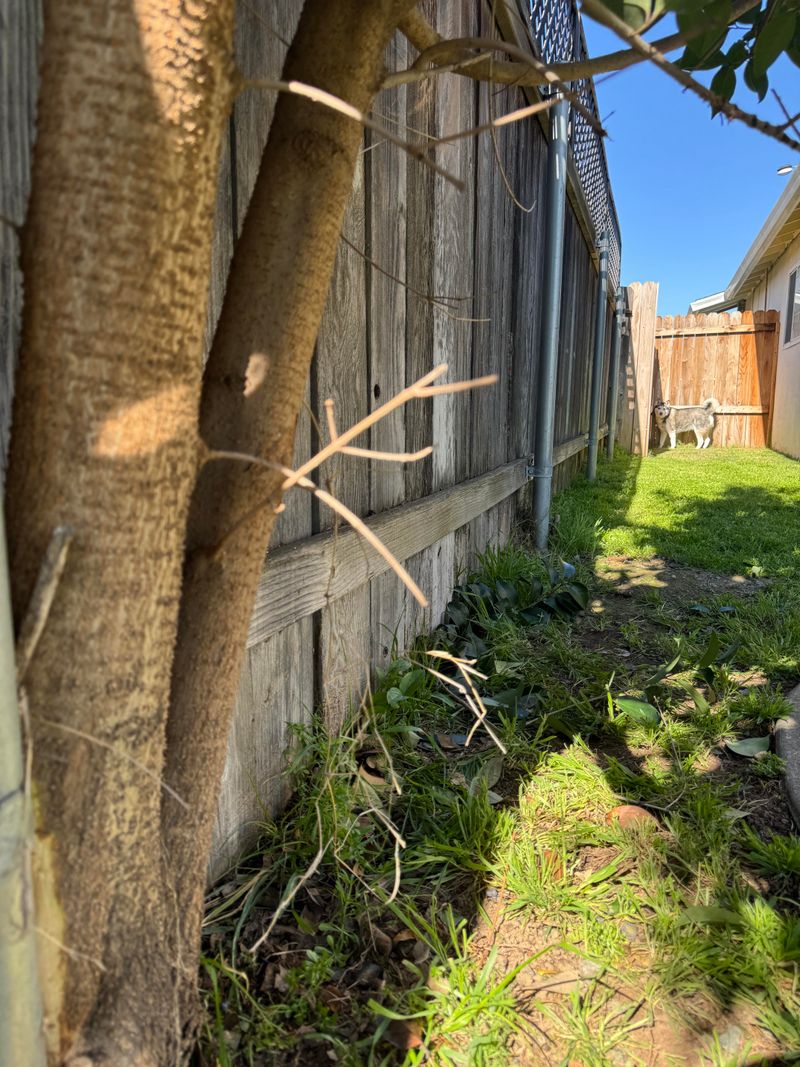
A curbside tree can look private simply because you have cared for it for years.
That does not tell you who controls the tree.
Start by locating your property boundary and checking how your city defines street trees. Parcel maps, title documents, and local public works maps can help, but the important question is jurisdiction rather than who happens to mow the strip around the trunk.
In many California communities, trees between the curb and sidewalk sit within the public right-of-way and fall under municipal street-tree rules.
The underlying land ownership can be more complicated than that, so avoid assuming the city owns every inch or that you control it because your deed reaches farther than expected.
Call the urban forestry, transportation, or public works office and give them the exact address. Ask them to confirm whether the tree is a city street tree, a privately maintained tree in the right-of-way, or a private tree subject to separate protections.
Get the answer in writing when removal is being considered.
That distinction determines what comes next, including permits, inspections, replacement requirements, and who pays for the work.
The tree may be ten feet from your front door.
Legally, that still does not make the chainsaw decision yours alone.
2. Check The Public Right Of Way
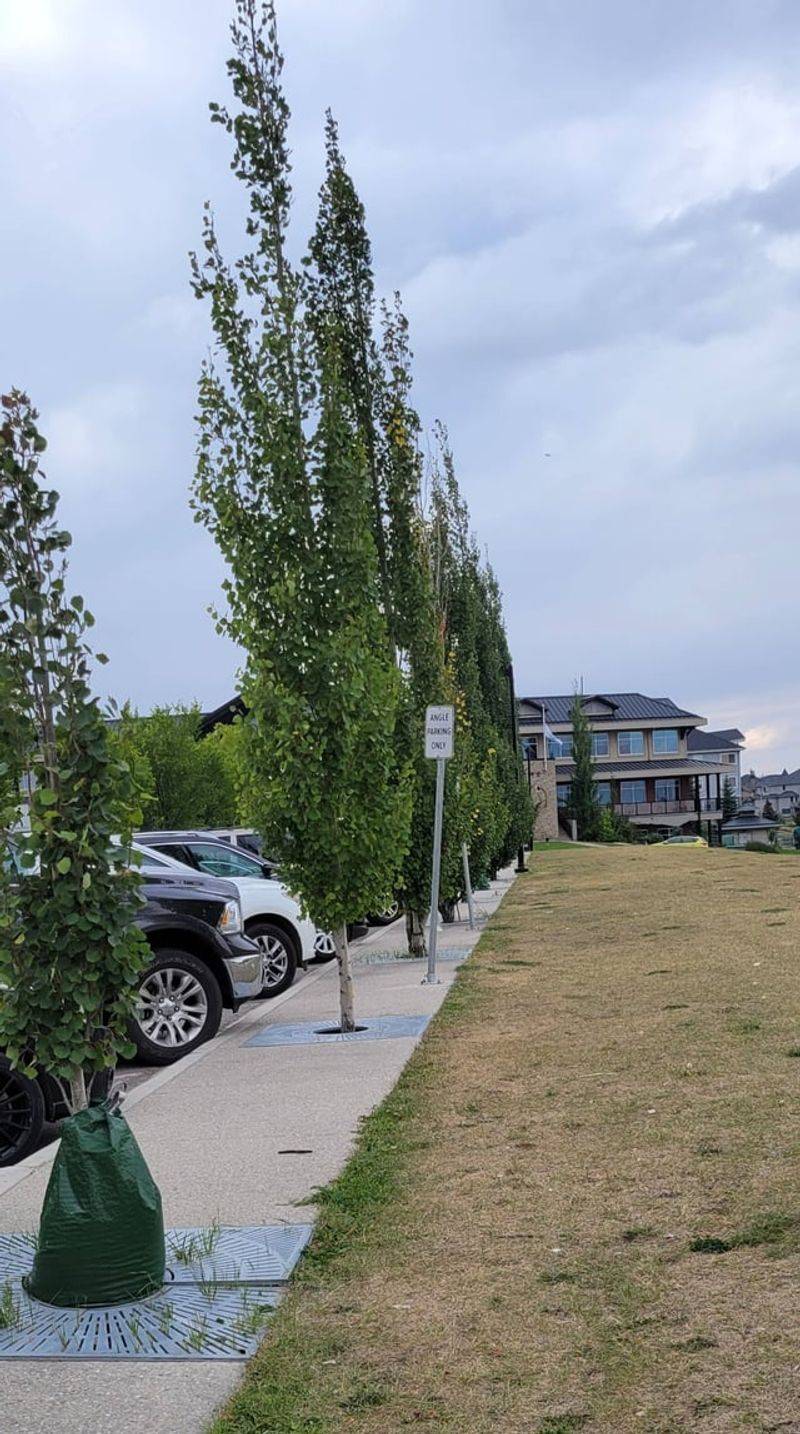
The narrow strip beside the street can carry more legal weight than its size suggests.
A public right-of-way gives a government agency authority over uses needed for streets, sidewalks, utilities, and related public purposes.
Street trees inside that area are commonly regulated even when an adjacent property owner handles routine landscaping.
San José, for example, identifies street trees as trees in the public right-of-way between the curb and sidewalk, with the right-of-way extending farther from the curb in some locations.
The city requires a permit before a property owner prunes, removes, or plants a street tree.
That is why mowing, watering, sweeping leaves, or repairing nearby landscaping does not automatically give you removal authority.
Your California Garden Changes Every Week. Your Plan Should Too.
Gardening in California changes quickly throughout the season. Every Friday you’ll receive a simple weekly plan showing exactly what to plant, prune, fertilize, harvest, and protect so you never miss the right timing.
Check the right-of-way before hiring anyone.
Your city’s GIS portal may show useful boundaries, but a map should not replace direct confirmation when an expensive removal is involved. Public works or urban forestry staff can usually tell you which agency manages the tree.
State law adds another reason for caution.
California Penal Code section 384a prohibits cutting or removing plant material from state or county highway rights-of-way, public land, or land belonging to someone else without the required authorization, subject to listed exceptions.
The curb may look like the edge of your responsibility.
It is not always the edge of someone else’s authority.
3. Read Your City Tree Ordinance
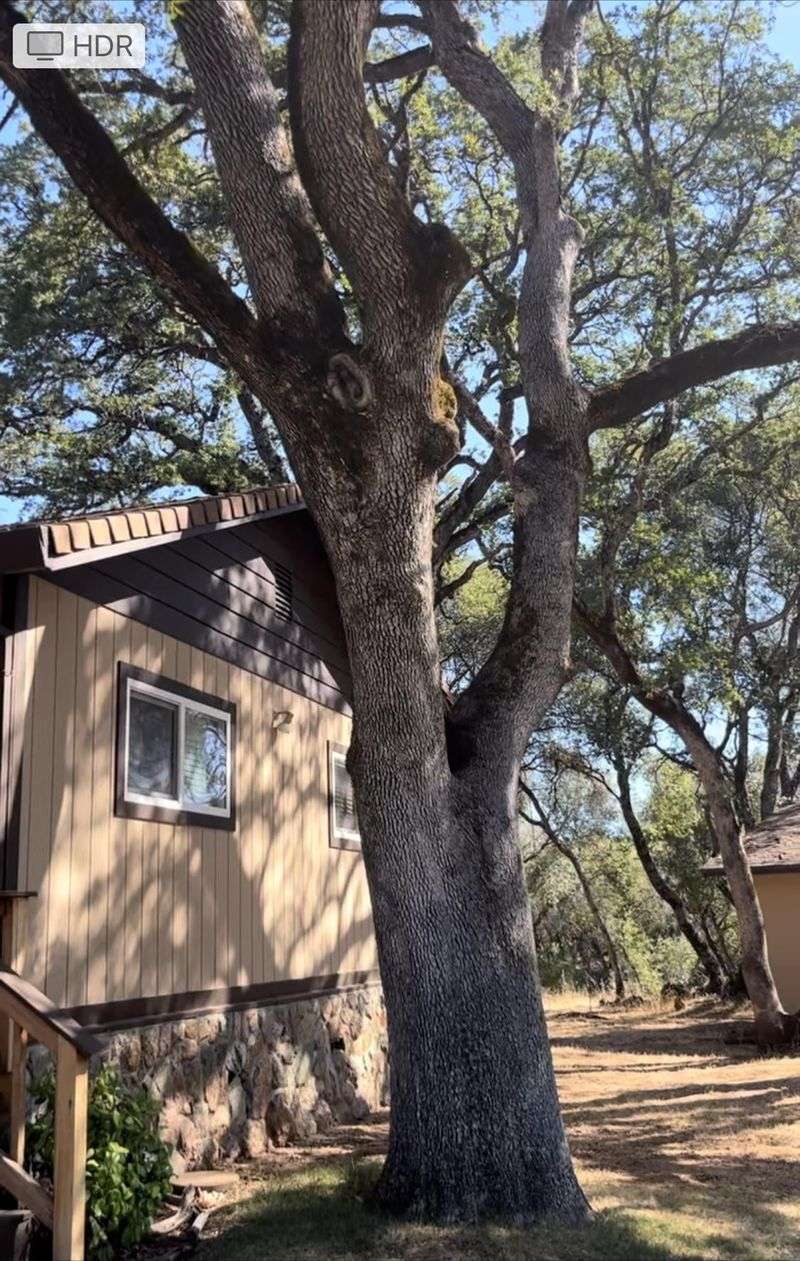
Two California cities can look nearly identical from the sidewalk and have completely different tree rules.
That is why the municipal code matters more than a neighbor’s story.
Search your city’s official website for street tree, urban forestry, protected tree, heritage tree, or tree removal.
Then read the section that applies to your exact situation. Some ordinances regulate only public trees. Others also protect private trees based on species, size, location, or historical designation.
San José requires permits for street trees and also regulates certain private trees, including heritage and ordinance-size trees.
San Francisco requires a permit to remove a street tree and also protects qualifying Significant Trees on private property near the public right-of-way.
Los Angeles has its own process covering parkway trees and specified protected native trees and shrubs.
Those examples are useful precisely because they are different.
Do not search only for the tree species. Check trunk-size thresholds, location definitions, permit triggers, and any special heritage or native-tree provisions.
A tree can be entirely on your lot and still need approval before removal.
The safest assumption is not that every California tree is protected.
It is that local rules deserve a five-minute check before thousands of dollars of work begins.
4. Apply Before Cutting Or Removing
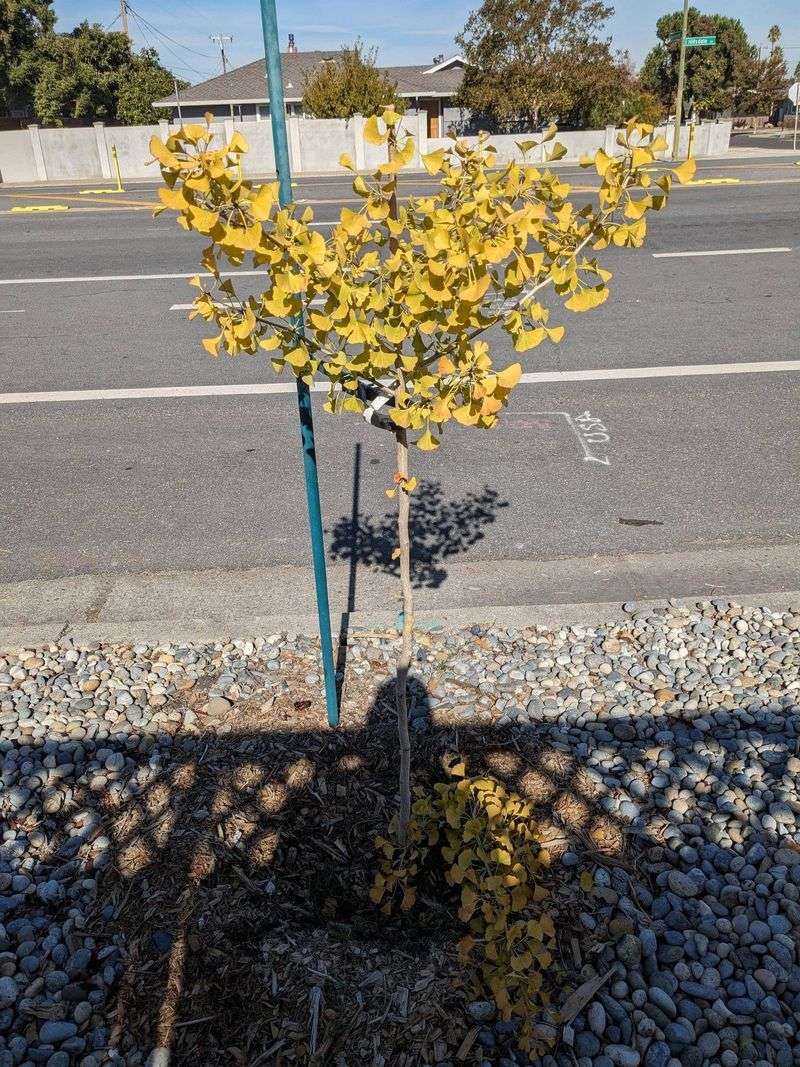
A tree service estimate is not the same thing as permission to remove the tree.
Get approval first.
Street-tree removal applications commonly ask for the address, tree location, reason for removal, photographs, and other supporting material.
The city may inspect the tree before making a decision, and some applications take much longer than homeowners expect.
Los Angeles currently requires an Urban Forestry Division removal application for parkway trees, with supporting documentation and a service request number.
Its published application says processing can take roughly 90 to 120 days after complete materials are accepted.
San Francisco also requires a street-tree removal permit and may ask for proof of damage, while warning that sidewalk, sewer, or other property damage does not automatically mean removal will be approved.
San José requires a permit before street-tree removal and uses an inspection and public-notice process for qualifying requests.
That makes written approval important.
Do not rely on a casual phone conversation, a contractor’s assumption, or the fact that another tree disappeared from the block last year.
Once the permit arrives, read the conditions before scheduling work. The city may specify replacement trees, notice periods, approved work standards, or other requirements.
Paperwork is not the exciting part of tree removal.
It is still much cheaper than discovering afterward that the tree was never yours to authorize.
5. Document Hazards And Property Damage
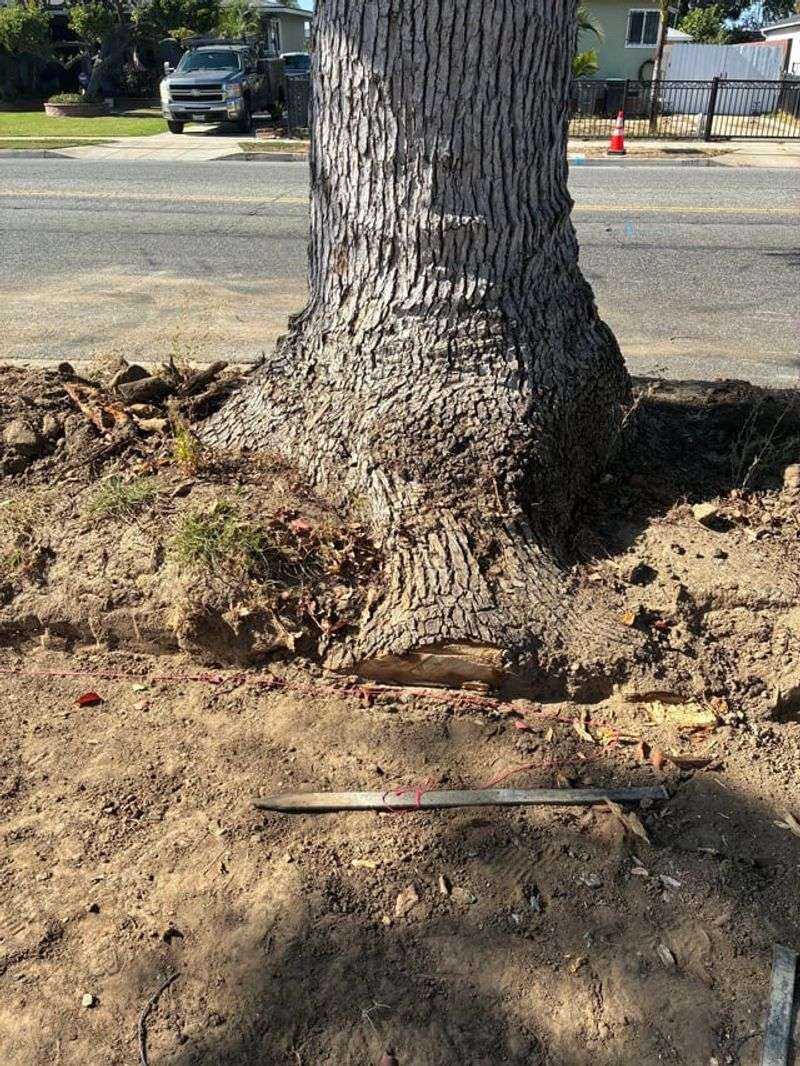
Cracked concrete tells a stronger story when the city can actually see it.
Document the problem before submitting a removal request.
Take wide photographs showing the tree in relation to the house, sidewalk, curb, driveway, and street. Then take close photographs of lifted pavement, damaged hardscape, visible root conflicts, broken limbs, or other specific concerns.
Keep dates with the photos.
A certified arborist’s assessment can add useful technical detail when the concern involves structural defects, declining condition, or a potential hazard.
Not every city requires an arborist report for every request, but a professional evaluation can help separate a real tree-risk issue from a problem that may have another solution.
Do not exaggerate.
A cracked sidewalk does not automatically prove the entire tree must come out. Root pruning, pavement repair, or other mitigation may sometimes be considered first.
San José, for instance, lists specific removal criteria that include hazardous condition, certain utility conflicts, and extensive concrete or sewer damage under defined circumstances.
Utility conflicts deserve separate reporting too. Branches near electrical lines should be handled through the utility or the appropriate agency, not by an unapproved homeowner pruning session.
Organized evidence makes the conversation easier.
A folder containing photos, dates, repair records, and professional observations gives reviewers something concrete to evaluate.
“That tree is driving me crazy” may be emotionally accurate.
It is not much of a permit application.
6. Ask Who Handles Emergency Trees
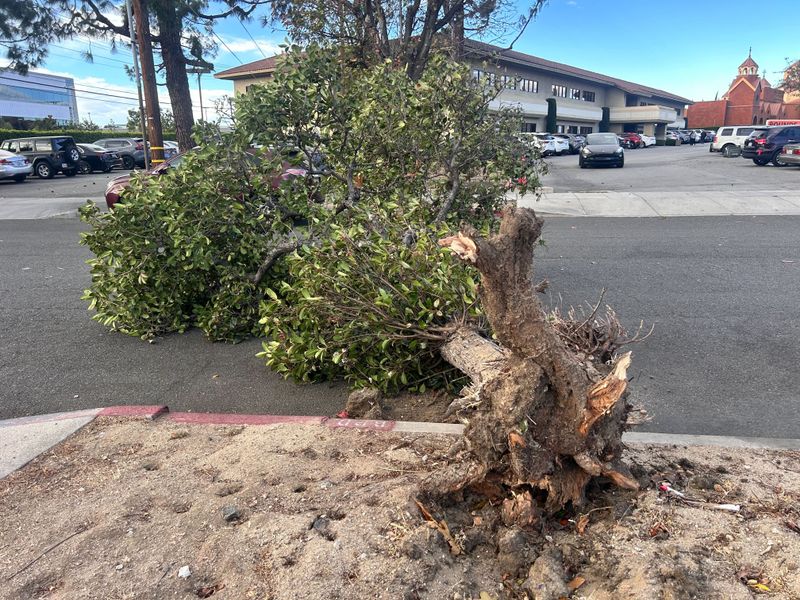
A split limb over a parked car changes the pace of the conversation.
Emergency tree hazards deserve immediate reporting, but they do not automatically give a homeowner permission to start cutting a public tree.
Use the emergency or service-request system your city provides. San José directs residents to 311 for roadway hazards such as broken tree limbs and tells residents to contact the City Arborist for hazardous street or heritage trees.
Other California cities route reports through public works, urban forestry, or local 311 systems.
Take photographs from a safe distance before crews arrive, provided doing so does not put you beneath a hanging limb or near electrical lines. Record the case number and keep any written response from the agency.
For a tree that has already fallen into a roadway, struck utility lines, or created an immediate threat to people, use the appropriate emergency services and utility contacts.
Do not climb, cut, or approach a tree tangled in energized lines.
Billing and responsibility also vary locally. Some agencies handle hazardous public trees themselves. Other situations may leave certain costs with the adjacent property owner or permit applicant.
Ask who is authorizing the work before hiring an emergency contractor.
A storm can turn a slow permit question into a same-day safety issue.
It still does not turn public property into a do-it-yourself project.
7. Expect Replacement Requirements
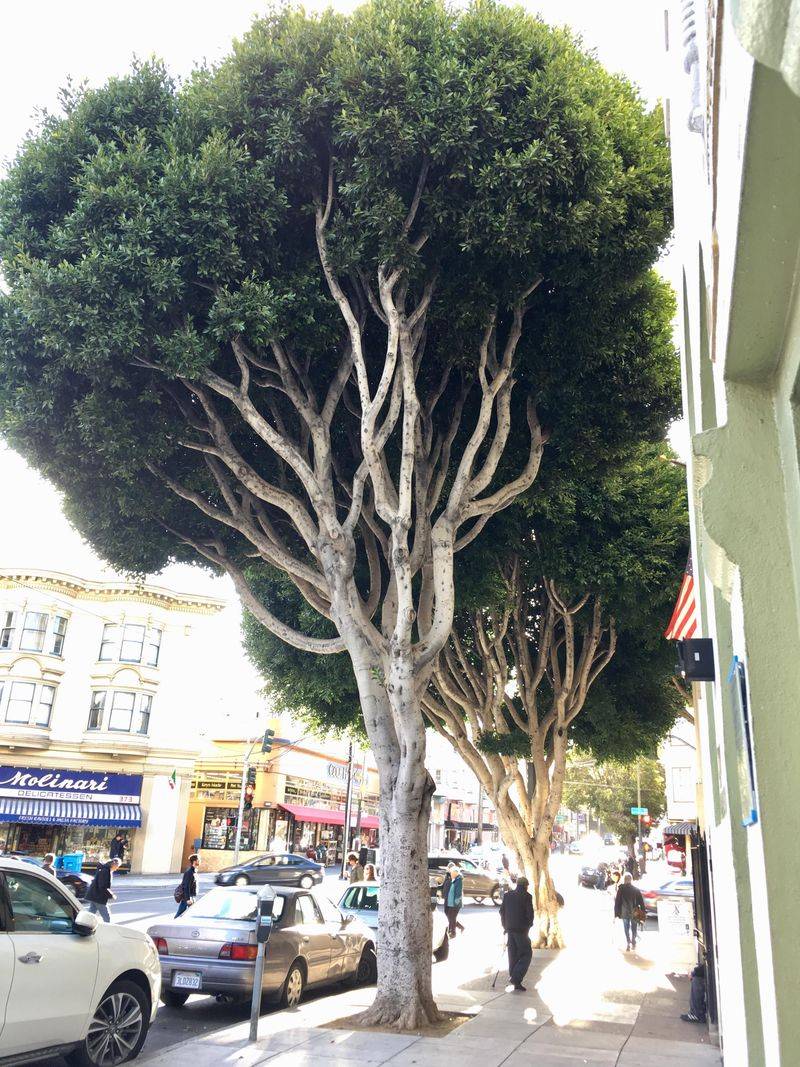
Removal approval can come with a second surprise after the stump is gone.
The replacement tree.
Many California cities use replacement planting to preserve street canopy when removals are approved. The exact requirement can depend on tree size, location, project type, and local ordinance.
Sacramento says private parties seeking permission to remove a city street tree for reasons other than public safety may be required to provide for replacement as part of the permit process.
San José’s street-tree process also identifies the number of replacement trees required before an approved removal permit is issued. Its separate private-tree rules use replacement ratios for regulated removals.
San Francisco states that an applicant with an approved street-tree removal permit is responsible for removal costs and for purchasing and planting the replacement tree.
Ask about this before accepting the permit.
The city may control species, container size, planting location, timing, and spacing around utilities or driveways. In some programs, an in-lieu payment may be available when a replacement cannot reasonably fit on site.
That means the real removal budget may include more than a crew and stump grinder.
Find out what has to grow there next.
The old tree may be leaving.
The planting strip is not necessarily becoming permanently vacant.
8. Call The City Before Hiring An Arborist
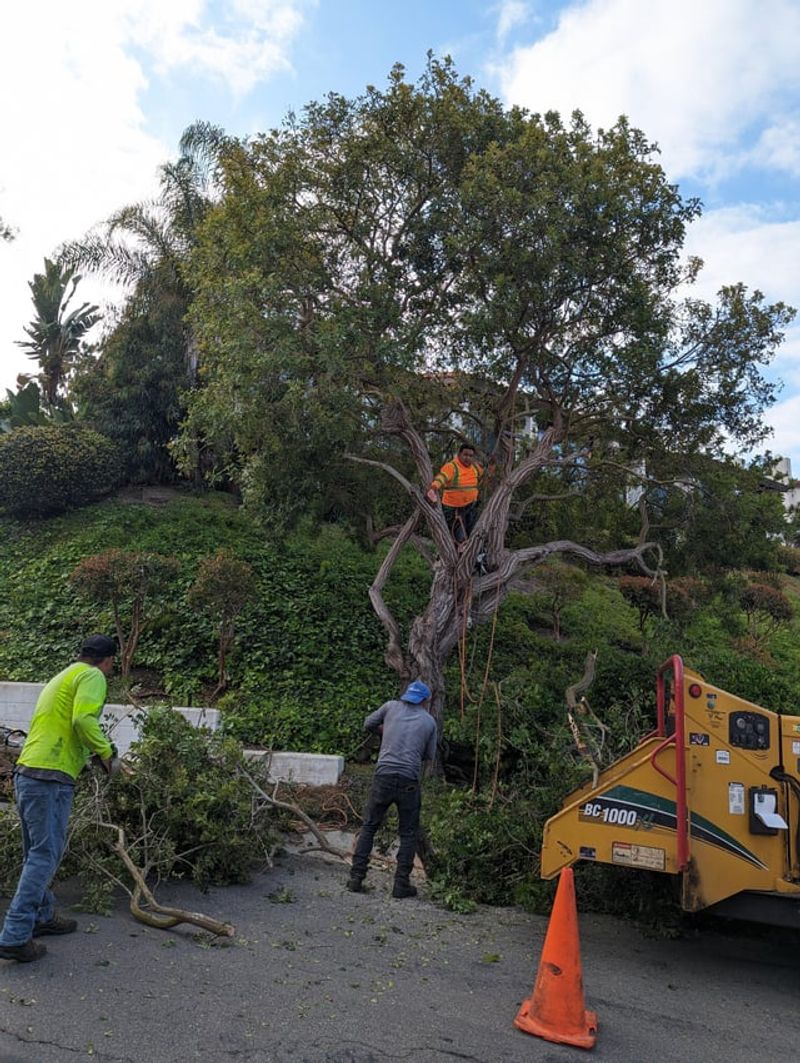
The safest first call is usually not to the company holding the chainsaw.
Start with the agency that regulates the tree.
Give urban forestry, transportation, or public works your address and ask three things: who has jurisdiction over the tree, what approval is required for pruning or removal, and what process applies to the problem you are reporting.
Write down the answer and follow up electronically when possible.
Then bring in a certified arborist when you need a condition assessment, risk evaluation, or documentation for the permit. Once the city has explained its criteria, the arborist can evaluate the tree with those requirements in mind.
Only after approval should the removal contractor enter the sequence.
That order matters because unauthorized work can bring both local penalties and broader legal consequences.
San José warns that illegal pruning or removal of a street tree can result in fines reaching $15,000 per tree.
California Penal Code section 384a separately makes certain unauthorized cutting or removal of plant material on public land, highway rights-of-way, or someone else’s land a misdemeanor punishable by up to a $1,000 fine, county jail time, or both.
Your city may impose additional restoration or replacement obligations.
So the practical answer to the headline is yes, sometimes a street tree can be removed.
Just make the city call before the tree-service call.
That order can save the most expensive cut in the entire job.