Tomato Leaves Curling While Still Green? Here’s What It Means
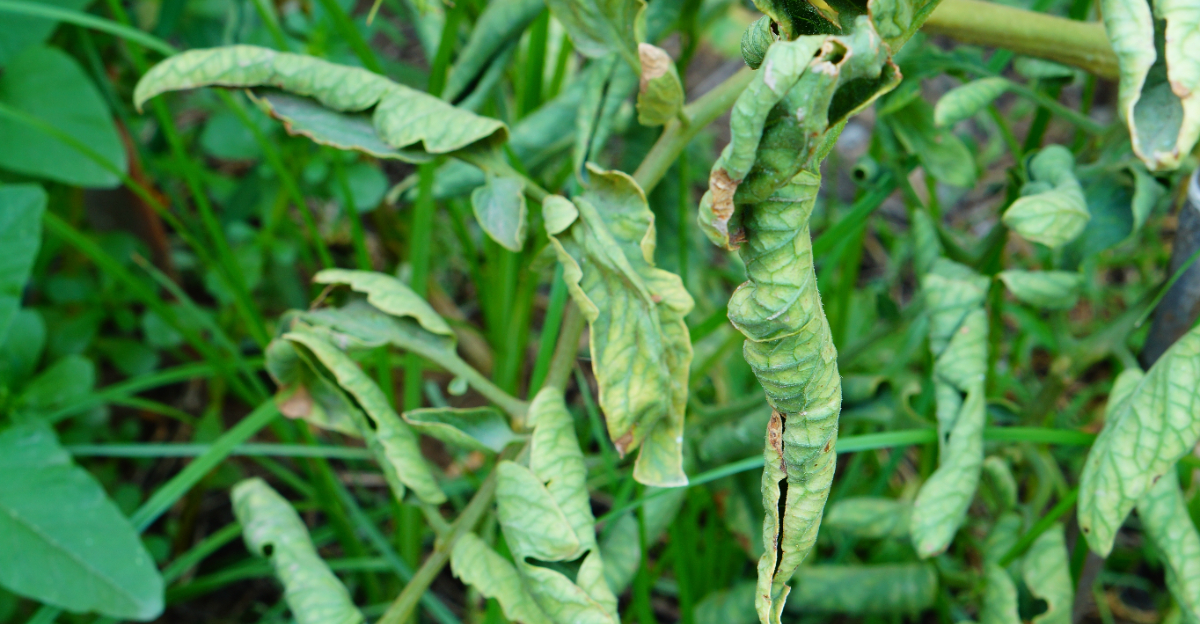
Curling leaves rarely scream disaster, though they never stay quiet either. Green foliage twisting into tight fists always signals something underneath.
Panic sets in fast, especially when no yellowing or spotting appears. Every curl tells a story, and your plant is already speaking. Texture changes before color does, and that sequence matters most.
Heat stress moves fast, tightening leaves within just a few hours. Nitrogen imbalance works quietly, reshaping growth before symptoms fully show. Watering habits shift plant behavior faster than most gardeners expect.
Nothing about this problem stays still, it shifts hour by hour. Small signals now prevent bigger losses later in the season. Waiting costs you fruit, vigor, and eventually the whole harvest.
Your tomatoes are talking right now, and ignoring them isn’t an option.
A Subtle Clue Your Plant Is Trying To Tell You Something
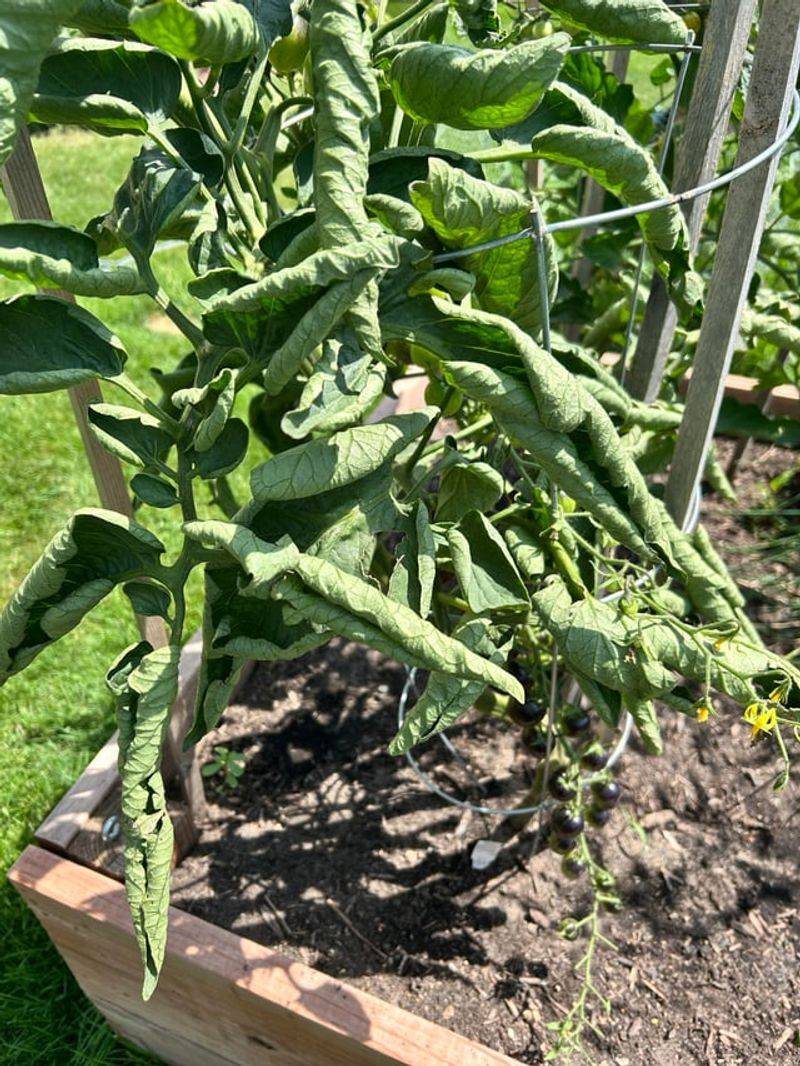
Green tomato leaves that curl are not random. Your plant is sending a message, and learning to read it changes everything about how you garden.
Leaf curl is a protective response. When something stresses a tomato plant, the leaves fold to reduce surface area exposed to that stress.
Think of it like a person crossing their arms in the cold. The plant is trying to hold onto moisture or block out too much sun.
The curl usually starts at the bottom of the plant and moves upward. If only the lower leaves curl, that tells a different story than if the top ones are affected.
Pay attention to the direction of the curl too. Leaves that roll upward from the edges suggest one cause, while downward curling often points to another.
Tomato leaves curling while still green is almost always a sign of stress, not disease. That distinction matters because the fix is very different in each case.
Touch the curled leaves. If they feel firm and healthy, the plant is likely just reacting to its environment. Soft or brittle texture adds a new layer to the puzzle.
Noticing these small details early gives you a huge advantage. The sooner you catch the cause, the faster your plant bounces back and gets back to making tomatoes.
Environmental Stress Factors That Cause This Reaction
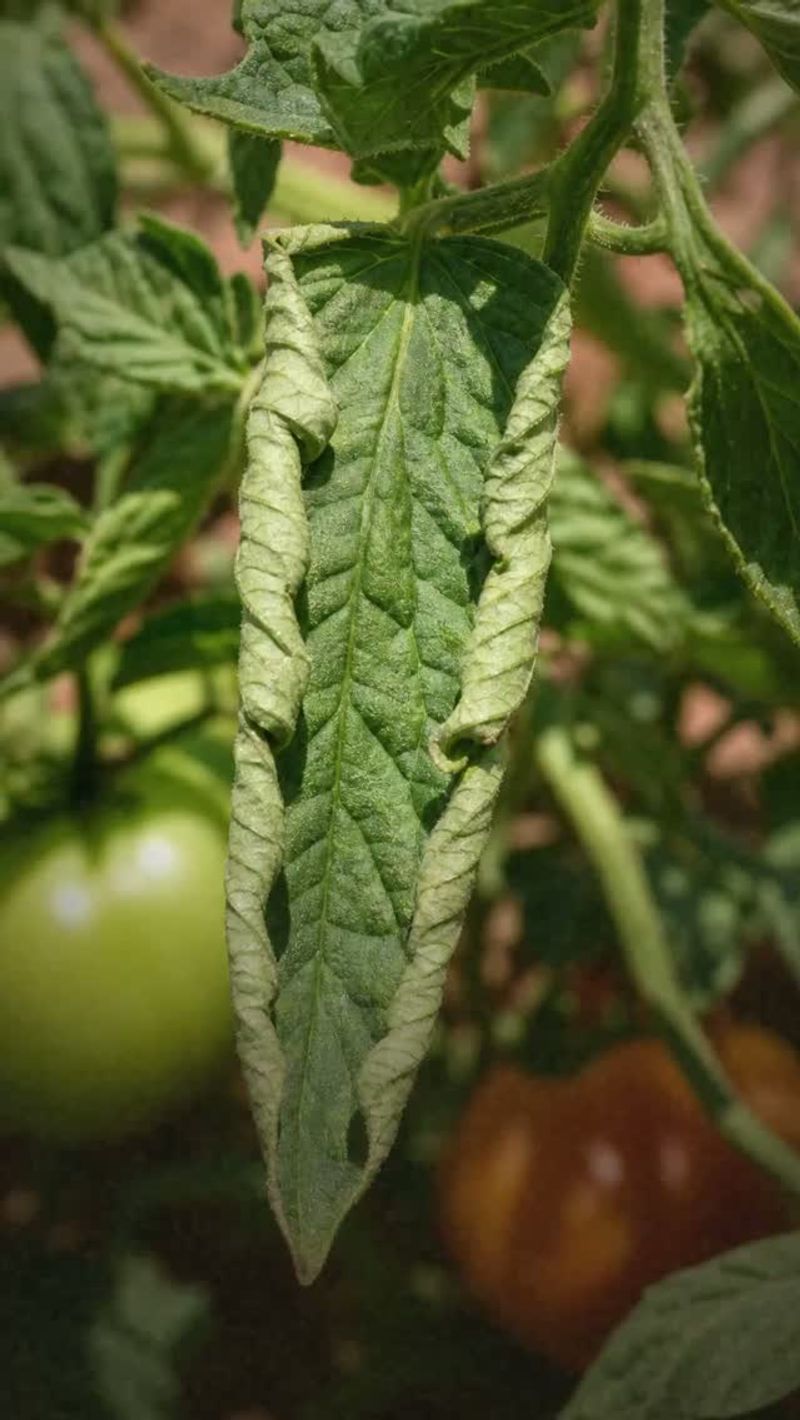
Blazing afternoon sun hits your garden and the tomato leaves roll up tight. That is not a disease. That is your plant doing exactly what it was designed to do.
Heat and intense sunlight are the most common reasons for tomato leaves curling while still green. The plant curls its leaves to slow down water loss through a process called transpiration.
Temperatures above 85 degrees Fahrenheit can trigger this response quickly. You might notice the curl getting worse in the afternoon and easing up by morning.
Wind is another underrated factor. Dry or hot wind pulls moisture from leaves faster than roots can replace it, so the plant curls to protect itself.
Overwatering causes curl too, which surprises most gardeners. When roots sit in soggy soil, they struggle to absorb oxygen and cannot deliver water properly to the leaves above.
Underwatering is the flip side of that problem. Dry soil means less moisture reaching the leaves, so the plant conserves what it has by curling inward.
Check your soil before watering. Stick your finger two inches deep. If it feels damp, hold off. If it feels dry, water slowly and deeply at the base of the plant.
Environmental stress curl usually fixes itself once conditions improve. A little afternoon shade cloth or consistent watering can make a dramatic difference within just a day or two.
The Difference Between Heat Curl And A Deeper Problem
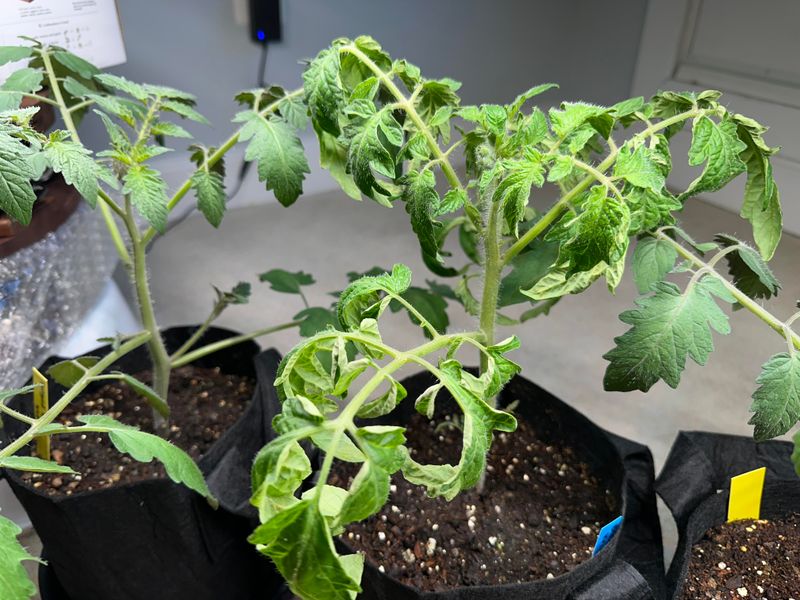
Not every curl is a simple reaction to hot weather. Some curls signal something more serious happening beneath the surface of your plant.
Heat curl is temporary and usually affects the whole plant evenly. The leaves bounce back once the temperature drops or you water the plant well.
A deeper problem looks different. Leaves that stay curled even in cool morning hours are waving a bigger flag for your attention.
Tomato yellow leaf curl virus and tomato mosaic virus both cause persistent leaf curling, though only one spreads through insects. Neither can be reversed once the plant is infected.
Viral curl often comes with other clues. Look for mottled coloring, stunted new growth, or leaves that look crinkled rather than simply rolled at the edges.
Physiological leaf roll falls into a completely separate category. This one is harmless and common in indeterminate tomato varieties, especially after heavy fruit set or pruning.
With physiological roll, the lower leaves curl upward along the midrib. The plant looks otherwise healthy, grows normally, and produces fruit without any issue.
The key question to ask yourself is simple: is the curl getting worse over time? Heat curl stabilizes or improves. Viral or disease-related curl tends to spread and worsen steadily.
Catching the difference early helps you decide whether to treat the environment or remove the plant entirely before the issue spreads to neighboring tomatoes.
Pest Activity That Can Trigger The Same Symptom
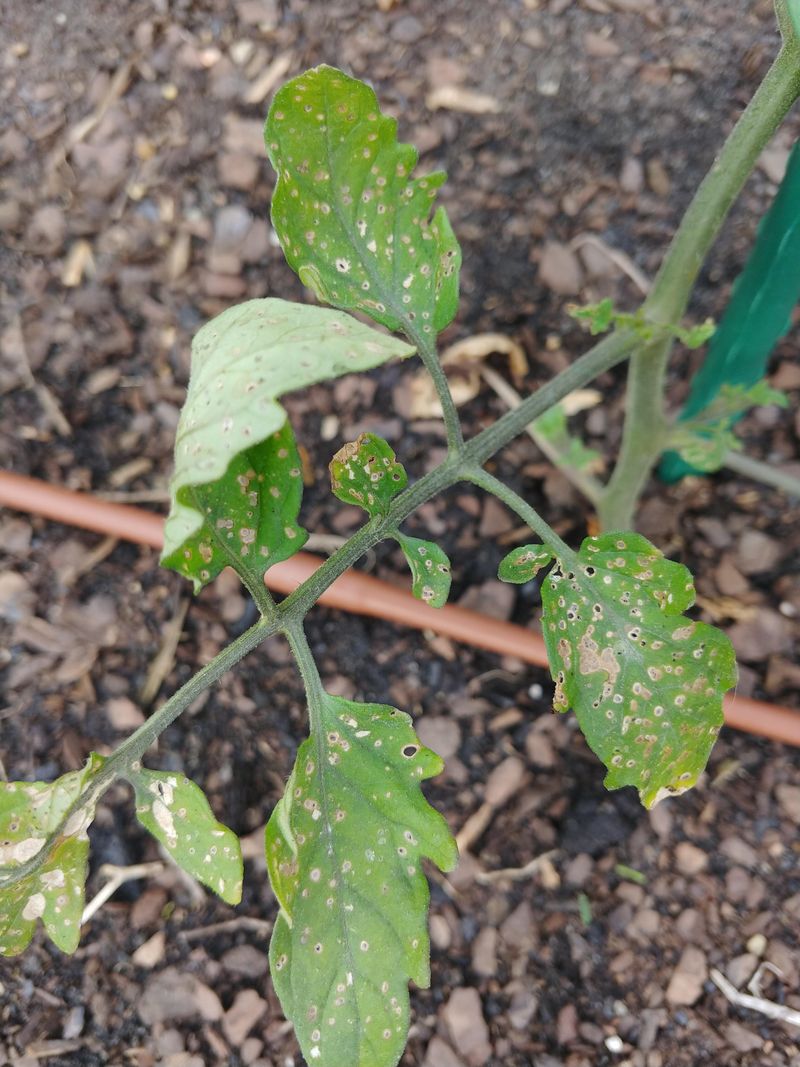
Flip a curled tomato leaf over and look closely. What you find on the underside might completely change your diagnosis.
Aphids are tiny, soft-bodied insects that cluster on new growth and leaf undersides. They feed by sucking sap from the plant, which causes leaves to curl and distort.
You might spot them as small green, yellow, or black dots. A sticky residue called honeydew on the leaves is another giveaway that aphids are present.
Spider mites are even smaller and harder to spot. Look for fine webbing and a dusty appearance on the leaf surface, especially during hot and dry weather.
Broad mites and russet mites also cause curling in tomatoes. Russet mite damage often starts at the bottom of the plant and moves upward over several weeks.
Tomato psyllids are another culprit. These jumping insects inject a toxin as they feed, causing a condition called psyllid yellows that curls and stunts the plant significantly.
The curl from pest damage tends to be irregular. Some leaves twist, some roll, and the damage pattern often clusters around new growth at the top of the plant.
A strong spray of water from a garden hose can knock aphids off quickly. For mites, neem oil or insecticidal soap applied to the undersides of leaves works well and is safe for edible plants.
Nutrient Issues Worth Ruling Out First
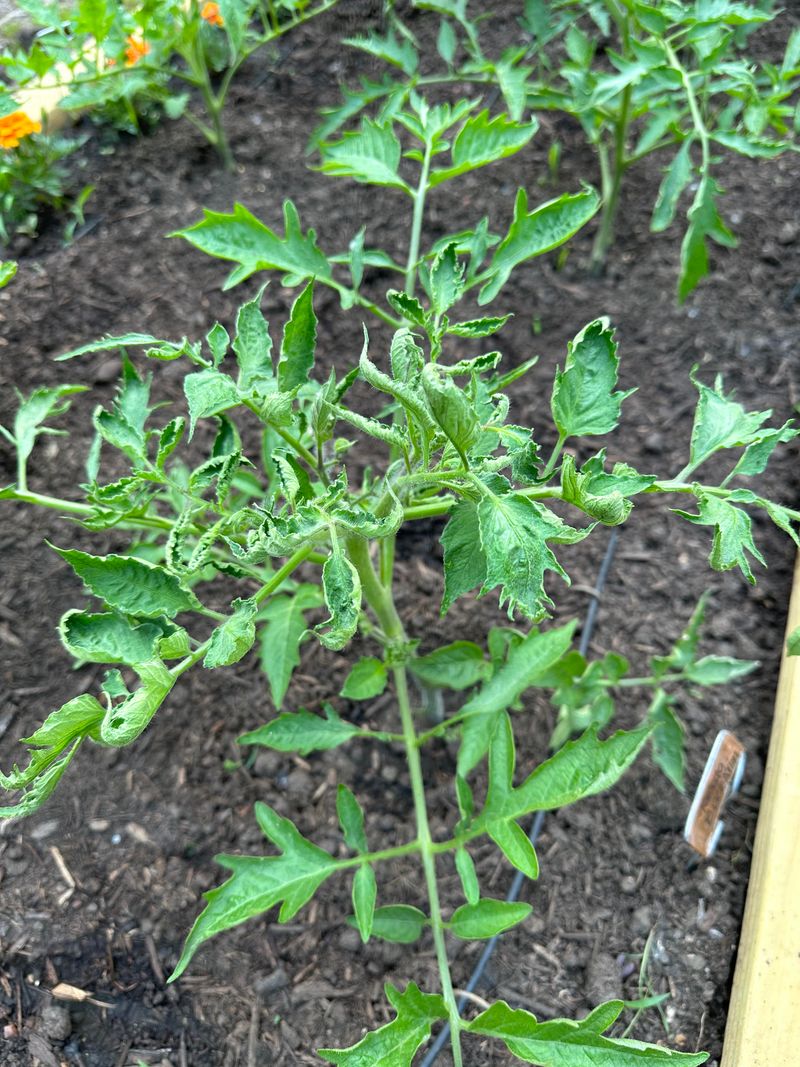
Soil that looks fine on the surface can still be missing something critical. Nutrient imbalances are a sneaky cause of tomato leaf curl that many gardeners overlook.
Calcium deficiency is one of the most common offenders. Without enough calcium, cell walls weaken throughout the plant, and leaf edges can curl or turn brown as a result.
Calcium might actually be present in your soil. Inconsistent watering prevents roots from absorbing it properly, so the plant still shows deficiency symptoms.
Magnesium deficiency shows up as yellowing between the leaf veins, especially in older leaves lower on the plant, and can appear alongside curling in advanced cases.
Too much nitrogen is another issue worth considering. Excess nitrogen pushes rapid leafy growth, and that fast growth can cause leaves to curl inward as they develop unevenly.
Phosphorus deficiency affects root health, which then limits the plant’s ability to take up water and other nutrients. Curled leaves combined with dark purple undersides point to this problem.
A simple soil test from your local garden center takes the guesswork out of the equation. Knowing your soil’s exact nutrient levels saves you money and prevents over-correcting.
When adding fertilizer, always follow label directions carefully. More is not better with tomatoes, and over-fertilizing can create new problems while you’re trying to solve the original one.
Steps To Confirm What’s Really Happening
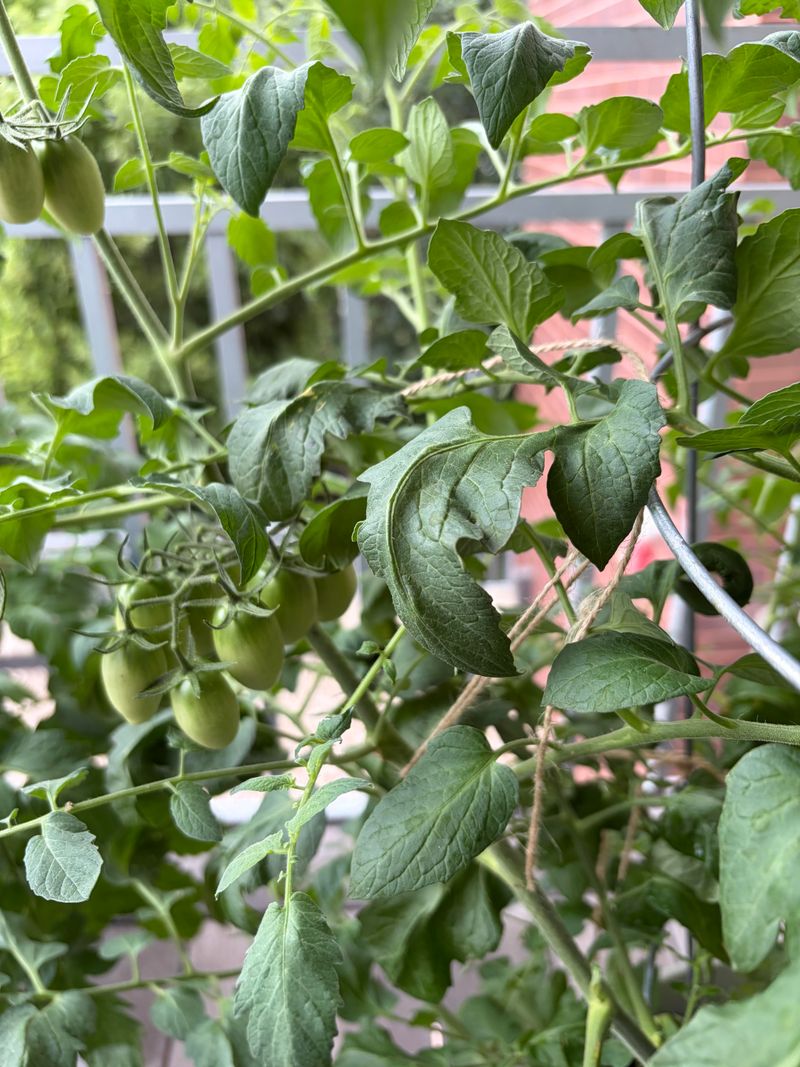
Guessing at a plant problem wastes time and can make things worse. A simple step-by-step check gives you a real answer fast.
Start by observing the timing of the curl. Does it appear in the afternoon heat and ease up by morning? That pattern almost always points to environmental stress.
Next, check the entire plant from the bottom up. Note which leaves are curling and whether the curl is uniform or scattered across different sections of the plant.
Flip the leaves and inspect the undersides with a magnifying glass if you have one. Look for insects, webbing, sticky residue, or any unusual texture or color changes.
Feel the soil at the base of the plant. Dry soil paired with curling leaves means your watering schedule needs adjustment. Wet, compacted soil suggests drainage issues.
Look at the newest growth at the top of the plant. Healthy new leaves on an otherwise curling plant usually confirm environmental stress rather than a spreading disease or infestation.
Take a photo of the affected leaves and bring it to your local cooperative extension office or garden center. These resources are free and staffed by people who know your local growing conditions.
Once you identify the cause of your tomato leaves curling while still green, act quickly and consistently. Most causes respond well to treatment when caught early, and your plant can recover beautifully with the right care.