Native Pennsylvania Shrubs Replacing Privacy Fences In Suburban Yards
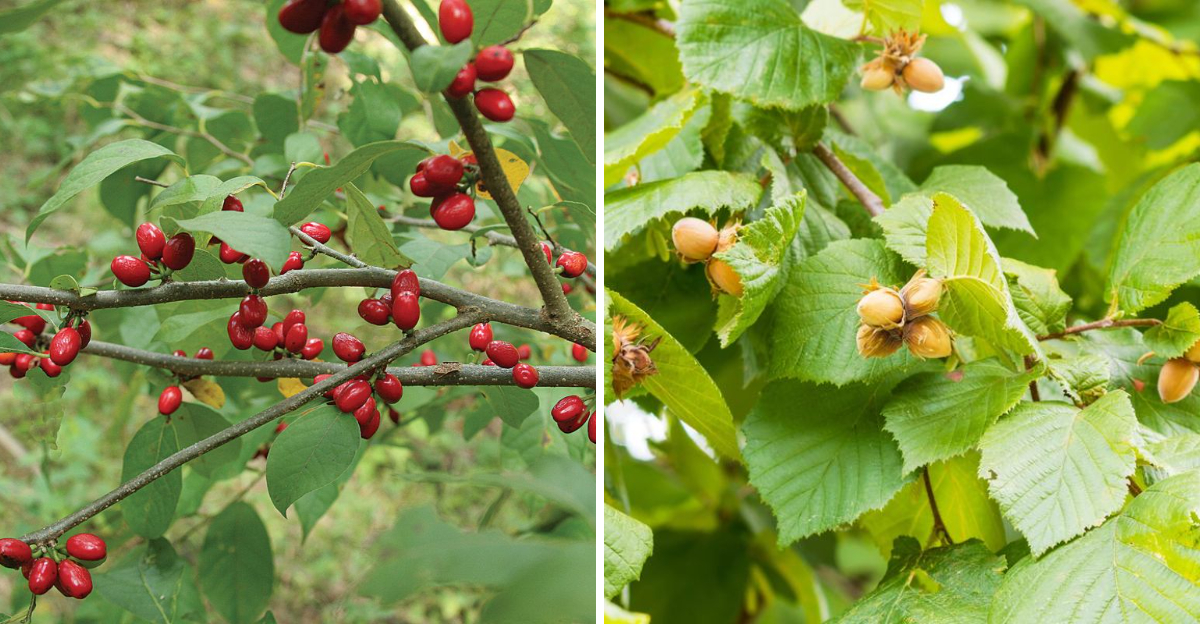
Privacy fences have been the default solution for suburban Pennsylvania yards for decades. They work, they’re immediate, and they clearly define a boundary.
But they also require maintenance, they age, they cost significantly more than most homeowners expect upfront, and they contribute nothing to the local ecosystem while they’re doing their job.
A growing number of Pennsylvania homeowners are choosing a different approach. Native shrubs planted as living privacy screens are showing up in suburban yards across the state, and the people who have made the switch are consistently enthusiastic about the results.
Real privacy that builds over time, seasonal interest that no fence panel can offer, and a landscape feature that actively supports local birds, pollinators, and beneficial insects rather than simply occupying space.
The native shrubs that work best for this purpose are tougher and more versatile than most homeowners expect, and several of them reach privacy hedge proportions faster than people assume.
Here are the native Pennsylvania shrubs that suburban homeowners are choosing over privacy fences and exactly why they’re worth considering for your yard.
1. Arrowwood Viburnum (Viburnum Dentatum)
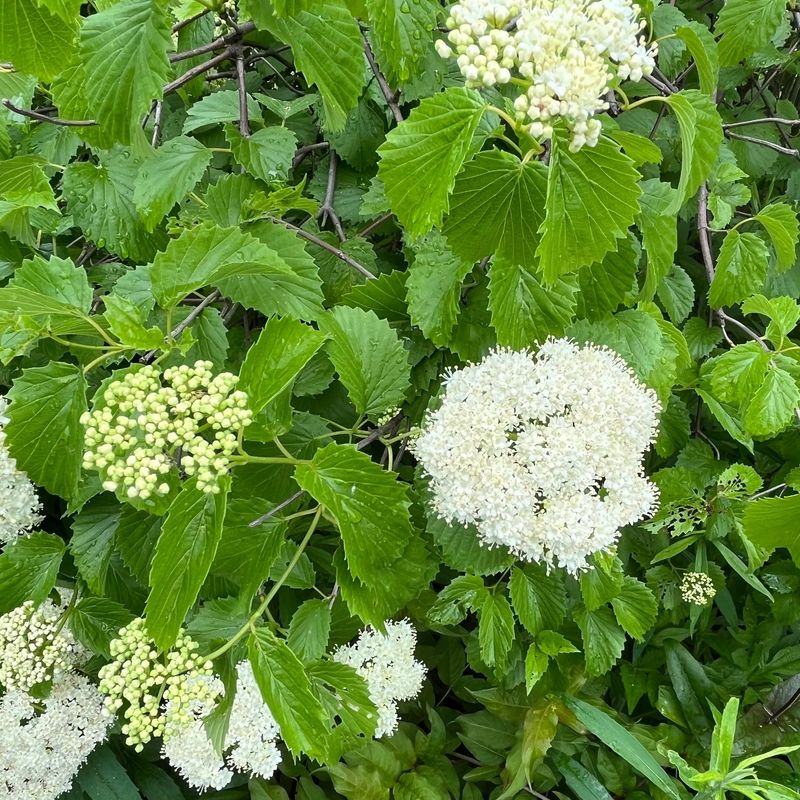
Few shrubs do as much heavy lifting in a yard as Arrowwood Viburnum. Homeowners across Pennsylvania love it because it grows tall and thick without much fuss.
It forms a dense, multi-stemmed wall of branches that blocks sightlines from neighbors and passing cars naturally and beautifully.
In spring, the shrub bursts into clusters of small white flowers that smell lightly sweet. Those blooms attract pollinators like bees and butterflies, making your yard feel alive.
By fall, the flowers give way to clusters of blue-black berries that birds absolutely love. Robins, cedar waxwings, and bluebirds often flock to Arrowwood Viburnum before winter arrives.
Arrowwood Viburnum typically grows between six and ten feet tall and just as wide. That size makes it ideal for planting in a row along a property line.
Space plants about four to six feet apart to get a solid screen within two to three growing seasons.
One thing that makes this shrub special is how adaptable it is. It handles both full sun and partial shade without complaint.
It also tolerates clay soil, which is common in many Pennsylvania suburban yards. Water it regularly during its first summer, and after that it pretty much takes care of itself.
Did you know that Native Americans once used the straight, hard stems of this shrub to make arrows? That is exactly where the name “Arrowwood” comes from.
Beyond its historical charm, this shrub is a practical, wildlife-friendly, and low-maintenance choice for any homeowner ready to trade a wooden fence for something truly alive.
2. Winterberry Holly (Ilex Verticillata)
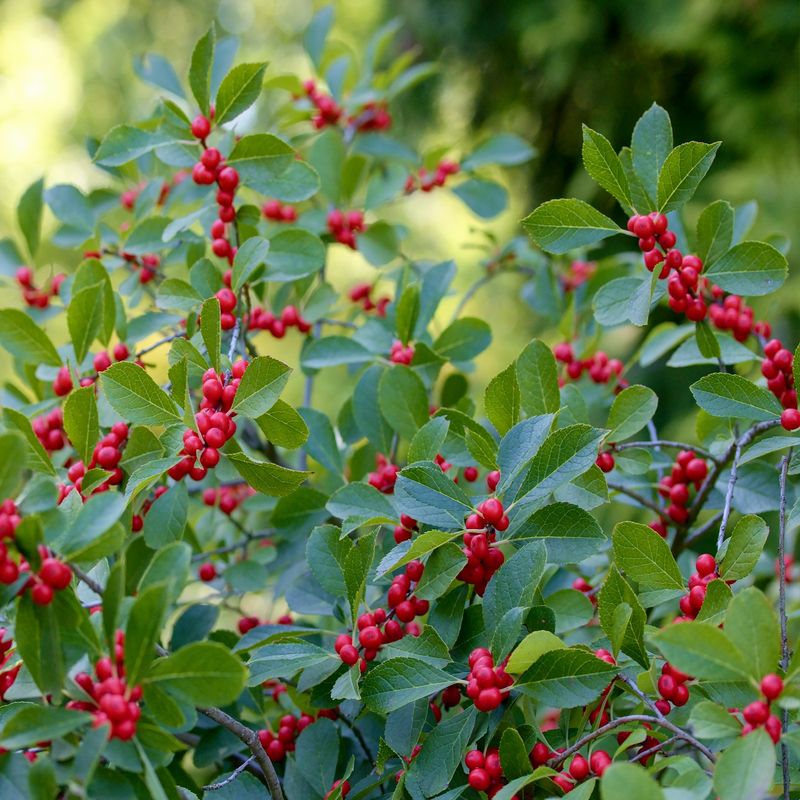
Walk past a Winterberry Holly in January and you will stop in your tracks. When almost every other plant looks gray and bare, this shrub explodes with hundreds of tiny, brilliant red berries that cling to its branches like ornaments.
It is one of the most striking native plants you can grow in a Pennsylvania yard, and it earns its place in any privacy planting.
Your Pennsylvania Garden Changes Every Week. Your Plan Should Too.
Gardening in Pennsylvania changes quickly throughout the season. Every Friday you’ll receive a simple weekly plan showing exactly what to plant, prune, fertilize, harvest, and protect so you never miss the right timing.
Winterberry Holly is a deciduous holly, which means it drops its leaves in fall. But that is actually when it looks most impressive.
The bare branches loaded with red berries create a bold, eye-catching display from October all the way through February. Birds like robins, mockingbirds, and bluebirds feast on those berries throughout the cold months.
For privacy screening, plant Winterberry Holly in a mixed row with evergreen shrubs. Since it loses its leaves in winter, pairing it with something like Eastern red cedar or native hollies gives you year-round coverage.
On its own, it works best in yards where summer privacy is the main concern. This shrub really shines in wet or moist areas of your yard where other plants struggle.
Rain gardens, low spots near downspouts, and areas near ponds are perfect homes for Winterberry Holly. It tolerates soggy soil far better than most shrubs.
One important detail: you need both a male and a female plant for berries to form. Most garden centers sell them as matched pairs.
Plant one male for every three to five female plants and you will have a berry-covered hedge that wows the whole neighborhood every single winter.
3. Ninebark (Physocarpus Opulifolius)
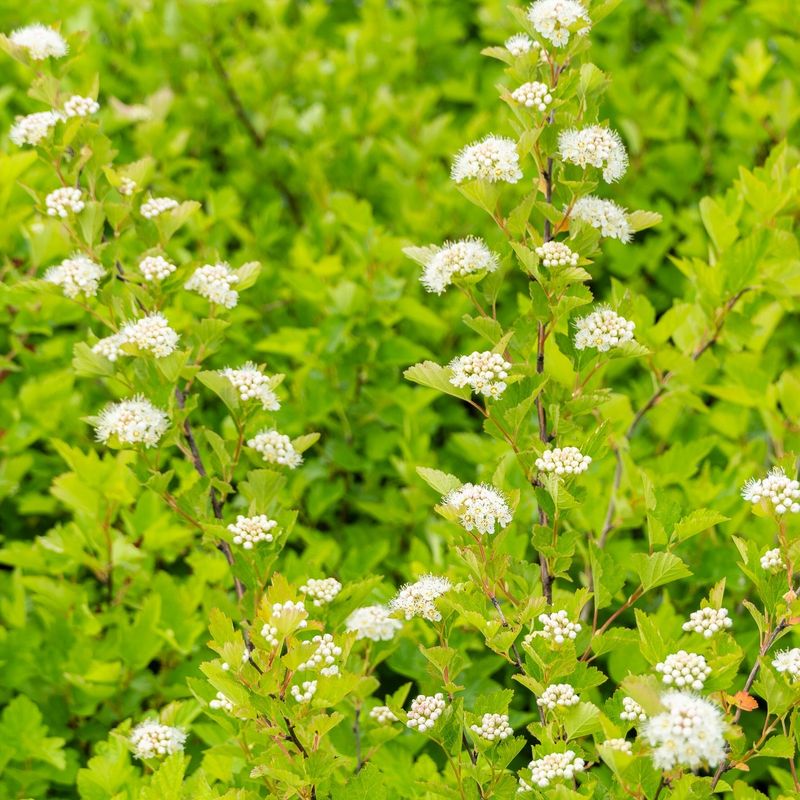
Ninebark is the kind of shrub that rewards you no matter the season. Its arching branches create a full, rounded shape that fills in gaps along a property line quickly.
Garden centers often stock both green-leafed and deep burgundy-leafed varieties, giving homeowners a fun choice depending on the look they want.
The name “Ninebark” comes from the way the bark peels back in multiple papery layers, revealing reddish-brown wood underneath. It is a subtle but interesting detail that makes the shrub stand out even in winter when the leaves are gone.
If you look closely at the branches on a cold morning, you will see why people find this plant so fascinating up close.
In late spring and early summer, Ninebark produces clusters of small white or pinkish flowers that cover the tips of its arching branches. Those flowers attract native bees and butterflies.
Later in the season, reddish seed clusters develop and provide food for birds heading into fall.
One of Ninebark’s biggest selling points is its toughness. It grows in full sun or partial shade and handles clay, sandy, or loamy soil without skipping a beat.
It also tolerates dry conditions once established, which makes it a smart pick for yards that do not get regular watering.
Ninebark grows six to ten feet tall and wide, making it a solid screen on its own. Plant it in a staggered row for the best coverage.
Prune it lightly after flowering each year to keep it shaped and encourage fresh growth. For a low-effort, high-impact native hedge, Ninebark is hard to beat.
4. Serviceberry (Amelanchier Species)
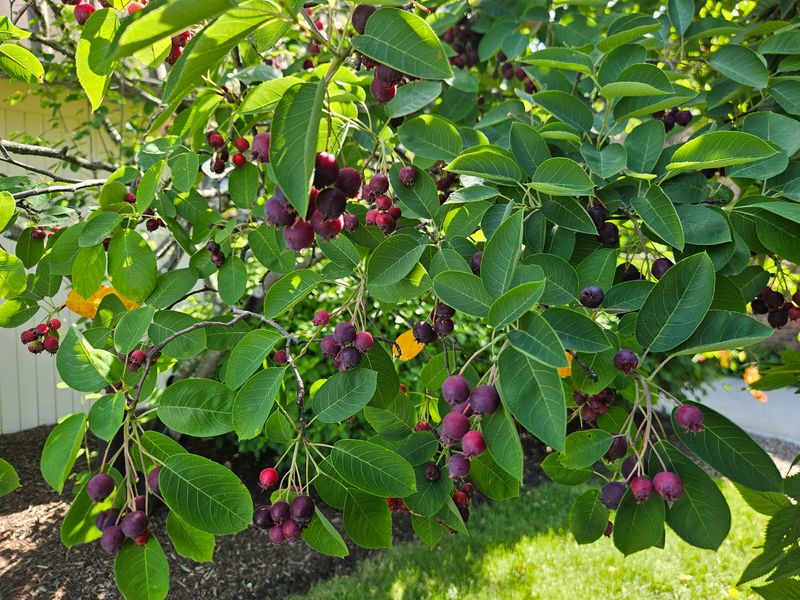
Serviceberry might just be the most underrated native plant in Pennsylvania. It grows as a large multi-stemmed shrub or small tree, and it delivers something beautiful in nearly every season.
Homeowners who plant a row of Serviceberry along their property line get privacy, color, and wildlife habitat all in one package.
Spring arrives with a burst of delicate white flowers, often blooming before most other plants have even woken up. Those early blooms are a lifeline for native bees and early-emerging butterflies.
By June, the plant produces small purple-red berries that taste sweet, similar to blueberries. Kids and adults enjoy picking them, but so do birds like cedar waxwings, catbirds, and orioles, so you may need to act fast if you want any for yourself.
Fall brings another round of color when the leaves shift to shades of orange, red, and gold. Even in winter, the smooth gray bark and graceful branch structure give the yard a quiet elegance.
Few native plants offer this kind of four-season appeal. Serviceberry grows well in full sun to partial shade and adapts to most Pennsylvania soil types. It reaches heights of eight to fifteen feet depending on the species and growing conditions.
For a privacy screen, plant multiple shrubs about five feet apart and let them grow together into a natural hedge.
Because Serviceberry attracts such a wide variety of wildlife, it pairs beautifully with other native shrubs in a mixed planting. Combine it with Arrowwood Viburnum or Ninebark for a layered, textured border that looks great and hums with life from March through November.
5. Spicebush (Lindera Benzoin)
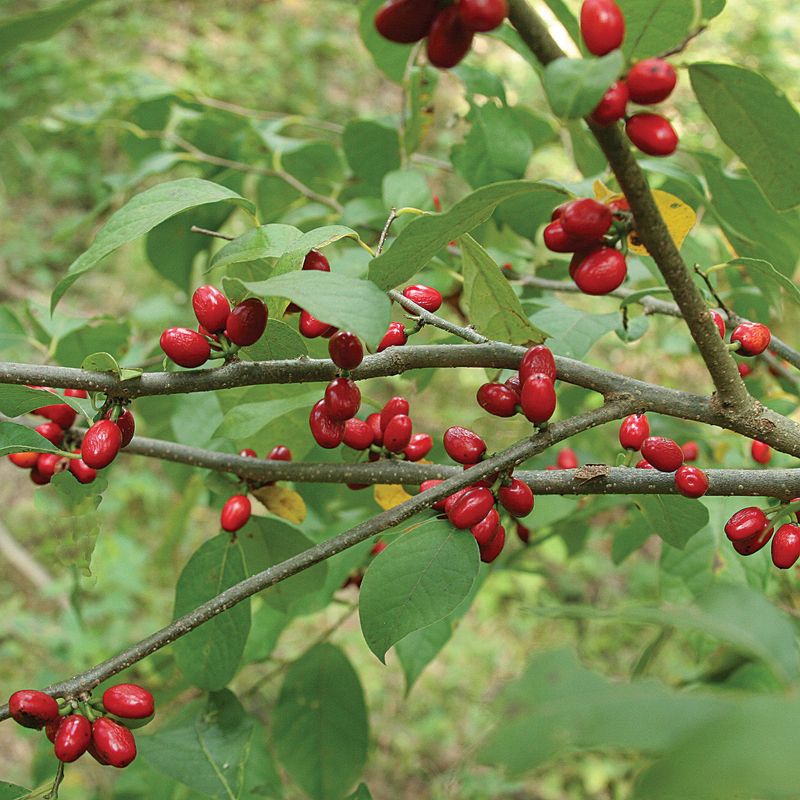
Crush a leaf of Spicebush between your fingers and you will get an instant whiff of something warm and spicy, almost like a mix of allspice and cinnamon.
That aromatic quality is one of the first things people notice about this native Pennsylvania shrub, and it makes planting a hedge of Spicebush a genuinely sensory experience.
Spicebush is a champion of shady spots. While many privacy shrubs need full sun to thrive, Spicebush grows happily under the canopy of tall trees where other plants give up.
If your yard has a shaded side that needs screening, Spicebush might be exactly what you have been searching for.
In early spring, tiny clusters of yellow flowers appear on bare branches before the leaves emerge. They are small but cheerful and signal that warmer days are coming.
By fall, female plants produce bright red berries that are a critical food source for migrating birds, especially the spice-loving Veery and Wood Thrush. The leaves turn a warm golden yellow before dropping, adding one last splash of color to the season.
Spicebush is also the host plant for the Spicebush Swallowtail butterfly, one of Pennsylvania’s most beautiful native butterflies.
Planting a row of Spicebush in your yard essentially rolls out a welcome mat for this striking black-and-blue butterfly to complete its life cycle right in your backyard.
It grows six to twelve feet tall and spreads gradually into a dense thicket. For a privacy screen in a shaded yard, plant Spicebush about four feet apart and allow it to fill in naturally. Minimal pruning and no extra fertilizer needed.
6. Blackhaw Viburnum (Viburnum Prunifolium)
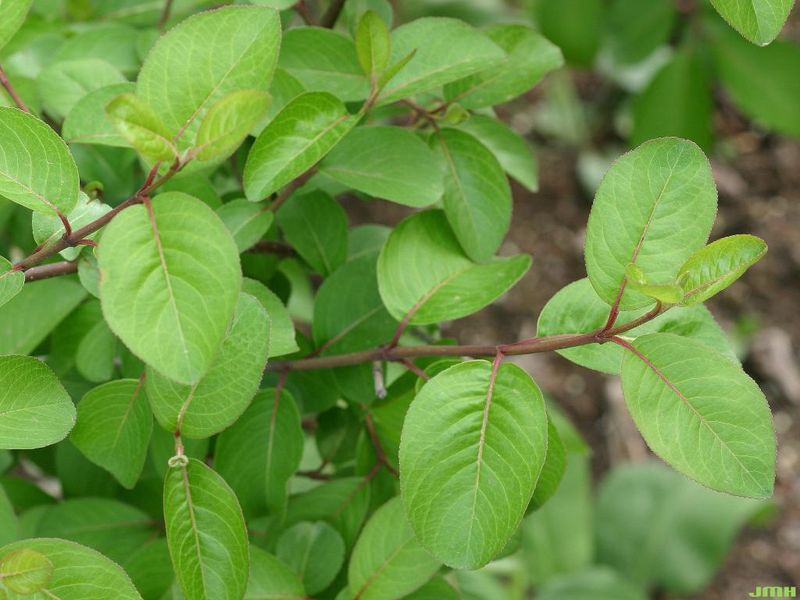
Blackhaw Viburnum has an old-fashioned charm that makes it feel right at home in a classic Pennsylvania suburban yard. It grows with a thick, layered branching structure that naturally forms a dense, informal hedge without much shaping or fuss.
Over time, it becomes a reliable and attractive privacy screen that looks like it has always been there.
Spring brings flat-topped clusters of creamy white flowers that draw in native bees and other pollinators. The blooms are showy without being overwhelming, giving the yard a refined and natural look.
After the flowers fade, the shrub sets small blue-black berries that ripen by late summer and early fall.
Those berries are a real treat for wildlife. More than 35 species of birds have been recorded eating Blackhaw Viburnum berries, including bluebirds, thrushes, and mockingbirds.
Deer and foxes also browse the fruit in wooded suburban areas. If you want your yard to feel like a mini wildlife refuge, this shrub is a smart addition.
Come fall, the leaves shift to beautiful shades of burgundy, red, and purple before dropping for winter. The branching structure left behind is dense enough to still provide some visual screening even without leaves, especially when planted in a row.
Blackhaw Viburnum grows twelve to fifteen feet tall and eight to twelve feet wide. It tolerates both sun and shade and adapts to a variety of soil conditions common in Pennsylvania yards.
Prune it lightly in late winter to maintain shape. For a natural-looking, wildlife-rich hedge that delivers flowers, berries, and fall color, Blackhaw Viburnum checks every box.
7. American Hazelnut (Corylus Americana)
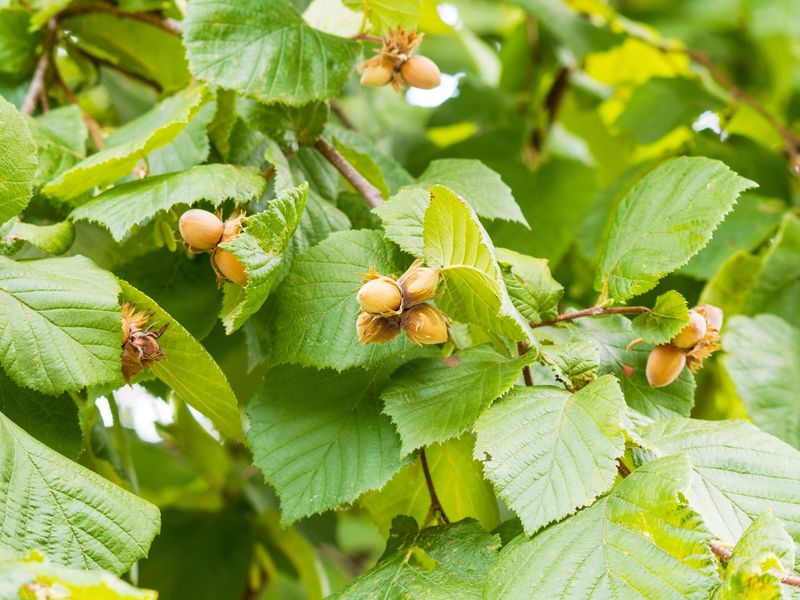
There is something wonderfully old-world about growing a hazelnut hedge in your backyard. American Hazelnut has been part of Pennsylvania’s landscape for thousands of years, and it brings that deep-rooted sense of place right into a modern suburban yard.
Beyond its history, it is genuinely one of the most productive and wildlife-friendly shrubs you can plant.
American Hazelnut grows in a wide, multi-stemmed form that spreads gradually into a dense thicket. Plant a row of them along a property line and within a few years you will have a leafy, layered screen that blocks views effectively from spring through fall.
The large, rounded leaves fill in quickly and create a lush green wall during the growing season.
In late summer and early fall, the shrubs produce clusters of small round nuts wrapped in leafy husks. Squirrels, deer, wild turkeys, and many bird species go after those nuts eagerly.
If you want to enjoy some yourself, harvest them just before the squirrels do. They taste rich and slightly sweet, similar to store-bought hazelnuts, and can be used in cooking and baking.
Early spring brings another reward: long, dangling catkins that appear before the leaves and provide early pollen for native bees waking up from winter. It is a small but meaningful contribution to the local ecosystem at a time when food sources for pollinators are scarce.
American Hazelnut grows eight to twelve feet tall and equally wide. It handles full sun to partial shade and adapts to most soil types found in Pennsylvania. Water it well during the first season and it will grow strong and independent from there.