The Real Reason Geranium Leaves Turn Yellow
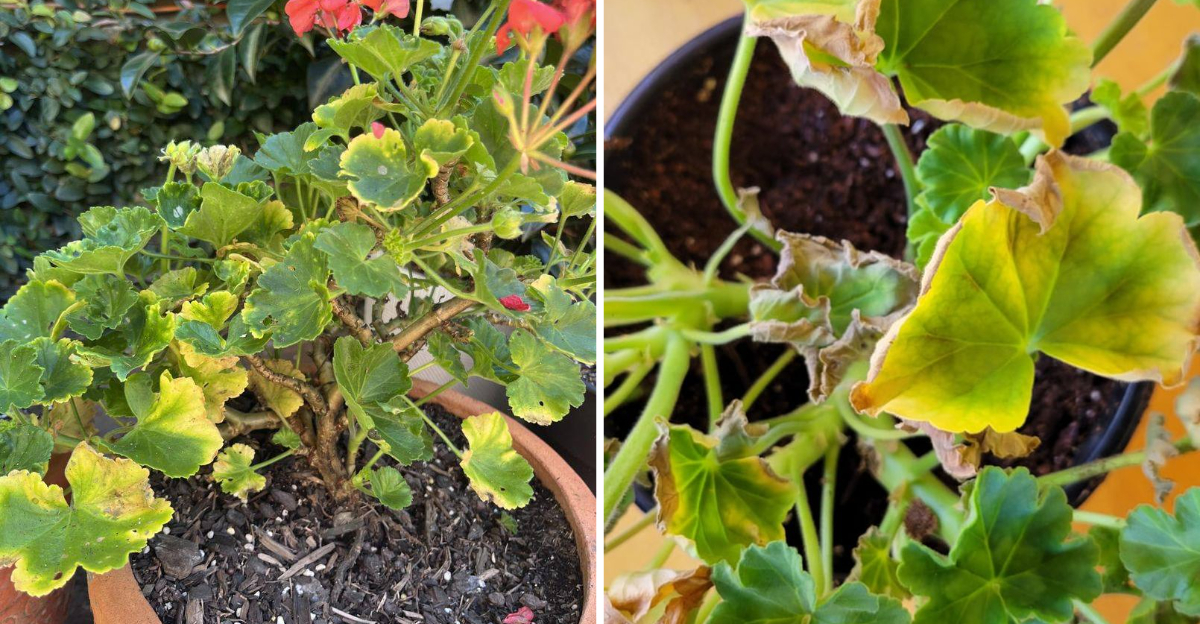
Your geranium leaves just turned yellow overnight, and panic sets in fast. Something feels wrong before you even touch the soil.
Truth is, disease rarely plays any role here at all. A daily habit quietly drives this shift, and you would never guess it.
Consistency feels safe, yet instinct says otherwise here. That trust, ironically, becomes the plant’s biggest threat. Roots struggle in silence, and leaves yellow first because something underground goes wrong.
Heat speeds up the damage you cannot see coming, and nothing about this problem stays hidden for long. Every yellow leaf marks a choice you made without noticing.
Recovery starts the moment you spot the real cause. Ignore this signal, and your entire geranium pays the price.
A Common Symptom With One Root Cause Behind It
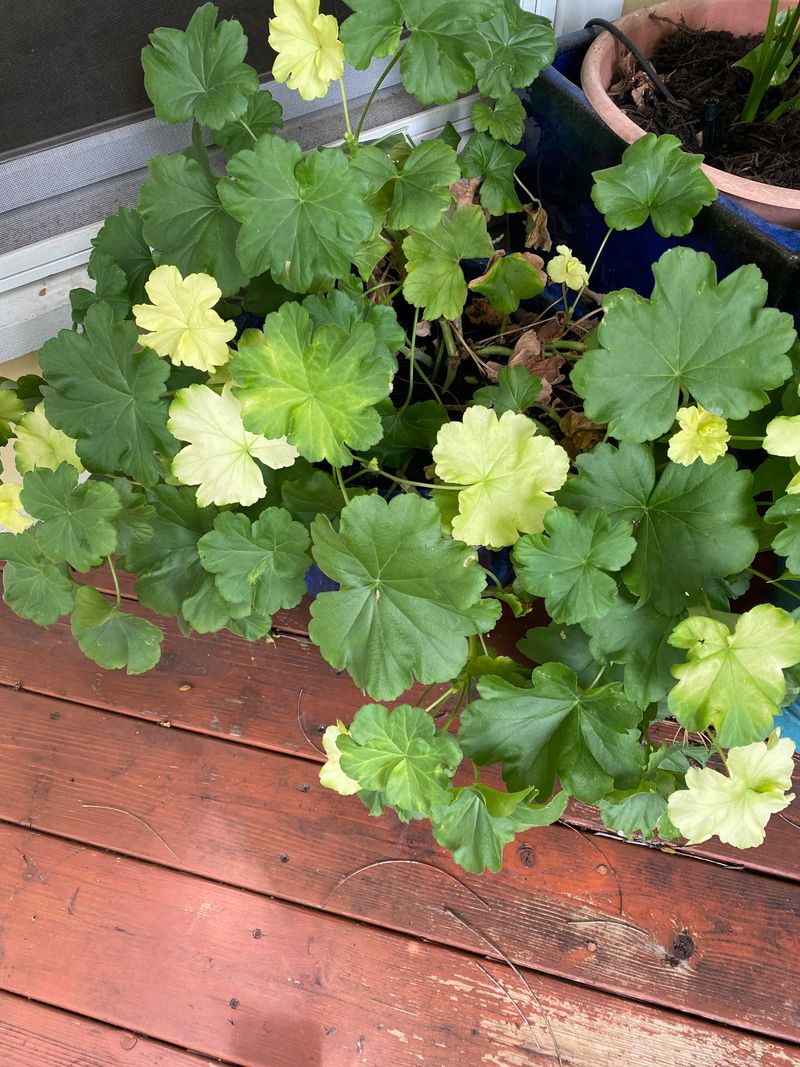
Yellow leaves on a geranium feel like a mystery, but they rarely are. The plant is sending a signal, and that signal almost always points to one thing.
Overwatering is the leading cause of yellow geranium leaves across the board. Gardeners often assume yellowing means the plant needs more water, which makes the problem spiral fast.
Geraniums thrive in dry, sunny climates similar to the Mediterranean. They evolved in dry, sunny conditions and are built to handle drought far better than soggy soil.
When roots sit in wet soil too long, they cannot pull in oxygen. Without oxygen, root cells begin to break down, and the plant cannot absorb nutrients properly.
Nutrients like nitrogen and iron stay locked out, even when the soil is full of them. The leaves respond by turning yellow because chlorophyll production drops sharply.
Chlorophyll is the green pigment that powers photosynthesis. When it disappears, the leaf loses its color and eventually its function.
Many gardeners water on a schedule instead of checking soil moisture first. That habit, while well-meaning, ignores what the plant actually needs on any given day.
The fix starts with understanding that geranium leaves turn yellow as a stress response. The stress, in most cases, is rooted in moisture that has nowhere to go.
Recognizing overwatering as the root cause changes everything about how you care for these plants. One shift in your routine can stop the yellowing before it spreads further.
Overwatering Is So Easy To Miss With Geraniums
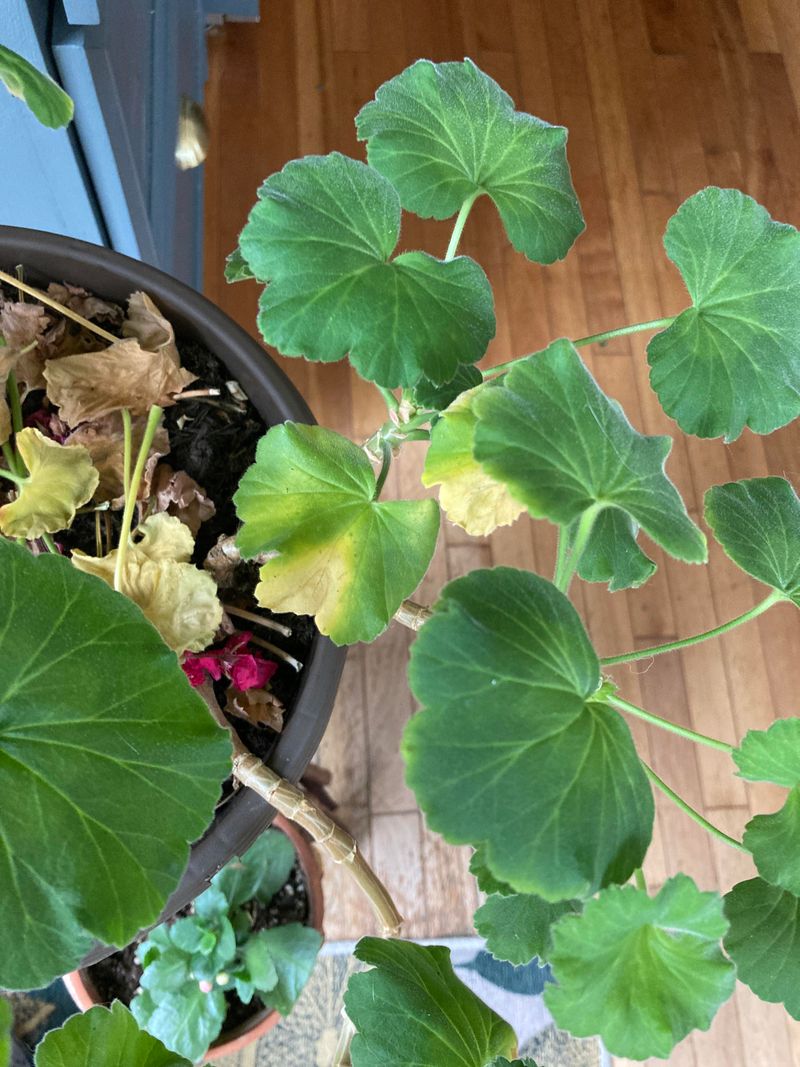
Overwatered geraniums often look thirsty at first glance, which throws most people off. The leaves droop, the color fades, and your instinct screams water it more.
That instinct is wrong, and acting on it makes things significantly worse. Overwatering and underwatering can look almost identical from the outside.
Geraniums store water in their stems, so they can go longer between waterings than most flowering plants. Their thick stems act like a small reservoir during dry spells.
Because of this, they rarely show drought stress quickly. You might think the plant is struggling when it is actually just fine and managing moisture on its own.
Outdoor geraniums face another challenge: weather changes. A rainy week can soak the soil just as much as a careless watering session would.
If you are watering on a fixed schedule during a wet stretch, the soil never gets a chance to dry out. Roots stay submerged in moisture for days at a time.
Container geraniums are especially vulnerable because pots trap water with nowhere to drain. A pot without proper drainage holes turns into a slow-motion problem for the roots below.
Even pots with holes can hold moisture too long if the soil mix is too dense. Heavy potting soil compacts over time and slows water movement dramatically.
Spotting overwatering early means looking below the surface, not just at the leaves. Stick your finger two inches into the soil before you ever reach for the watering can.
Excess Moisture And Its Effect On Root Function
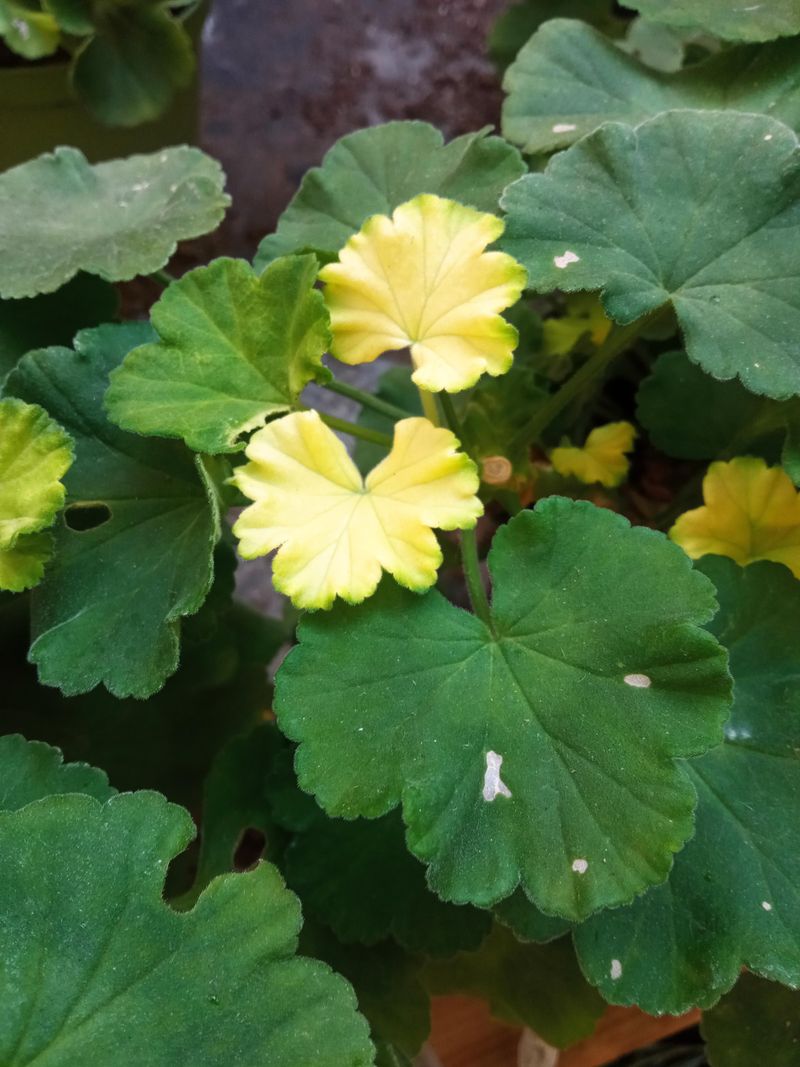
Roots need air just as much as they need water. Most people picture roots as simple tubes that suck up moisture, but the reality is far more complex.
Healthy roots breathe through tiny pores in the soil. When water fills every air pocket, those pores close off and roots are left gasping.
Root cells begin to break down within a day or two in fully saturated soil. The breakdown is fast, quiet, and invisible until the damage shows up in the leaves above.
Damaged roots cannot transport nutrients from the soil to the rest of the plant. Even a fertilized, nutrient-rich pot becomes useless if the roots cannot function properly.
Nitrogen is the first nutrient to show a deficiency through yellowing leaves. Without it, the plant cannot produce enough chlorophyll to keep leaves green and healthy.
The yellowing usually starts on older, lower leaves first. Those leaves are farthest from new growth and get cut off from nutrients first when supply runs low.
A secondary problem follows quickly: root rot. Fungal pathogens that thrive in wet conditions move in once root tissue weakens.
Root rot spreads through the root system and eventually cuts off water flow entirely. The plant looks parched even when sitting in soaking-wet soil.
Understanding this chain reaction explains why geranium leaves turn yellow so suddenly after a stretch of heavy rain or an overzealous watering week. The roots give out before the leaves do.
Signs Your Watering Routine Is To Blame
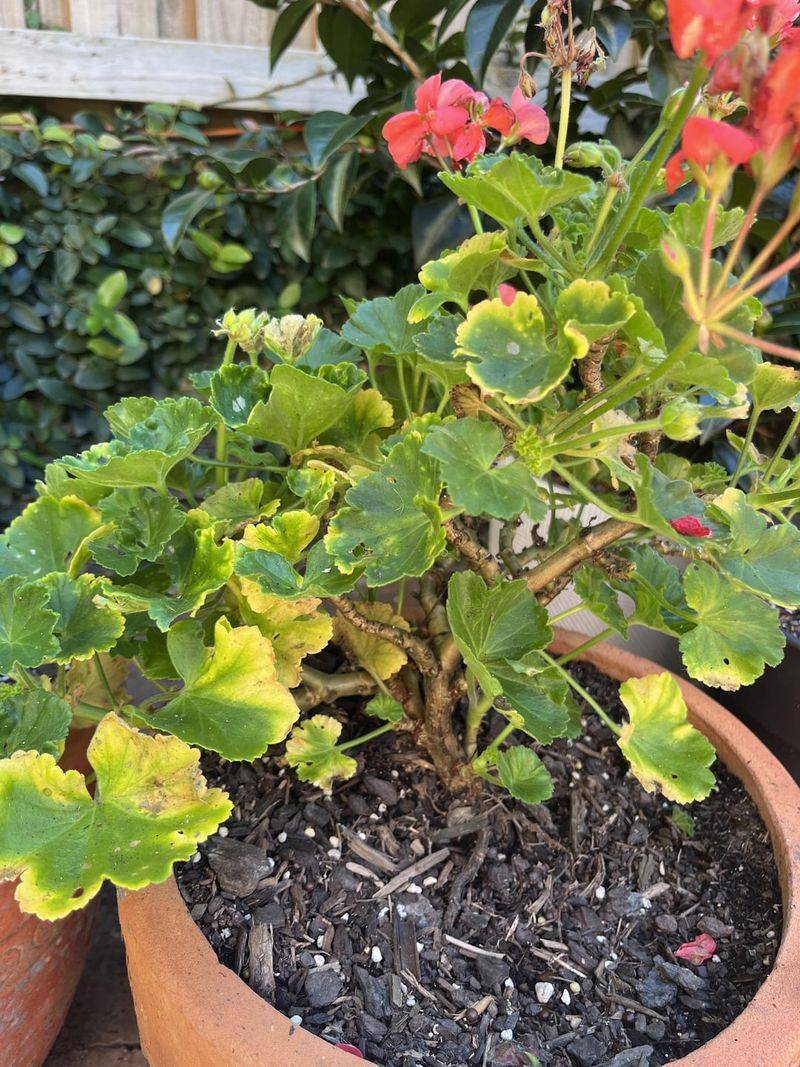
Your watering can might be the problem, and your geranium is already trying to tell you. Knowing the specific signs helps you confirm the cause before changing anything.
The most obvious clue is yellowing that starts at the bottom of the plant. Lower, older leaves go yellow first because the plant sacrifices them to protect new growth.
Check the soil right after you notice the yellowing. If it feels wet or even slightly damp more than two inches down, overwatering is very likely the issue.
Another red flag is a sour or musty smell coming from the soil. That odor means anaerobic bacteria are active, which only happens in consistently waterlogged conditions.
Look at the stem base near the soil line. A soft, mushy, or discolored stem base is a strong indicator that root rot has already started.
Pull the plant gently from its pot and examine the roots. Healthy roots look white or tan and feel firm; damaged roots appear brown, slimy, and fall apart easily.
Wilting alongside yellowing is another clue worth noting. A plant that wilts even though the soil is wet is almost certainly dealing with root damage from excess moisture.
Pay attention to how often you water without checking conditions first. Watering every two days regardless of weather or soil state is a routine that geraniums often struggle with.
Once you recognize these patterns, the path forward becomes much clearer. Geranium leaves turn yellow as a cry for balance, not abundance.
Adjustments That Stop The Yellowing From Spreading
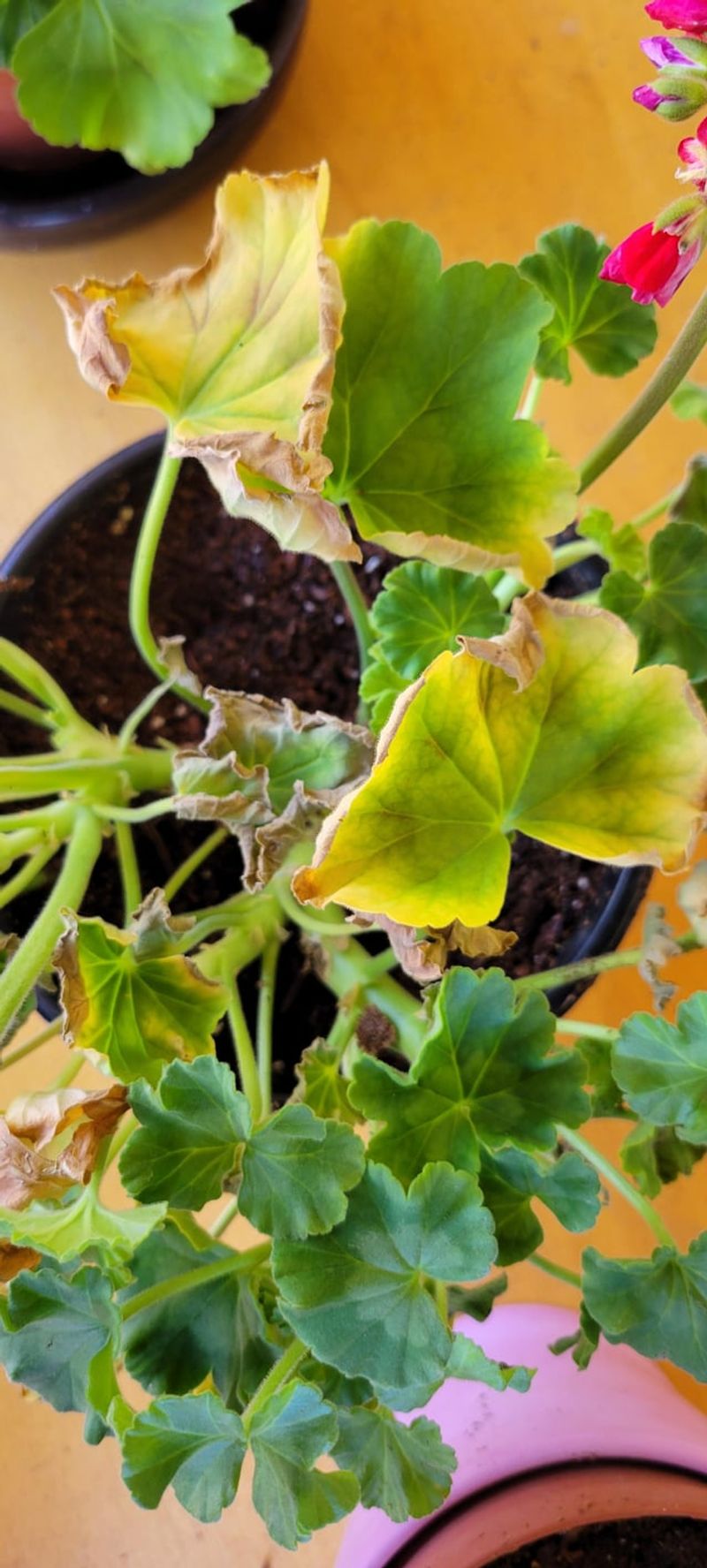
Catching overwatering early means you can turn things around without starting over. A few targeted changes make a real difference within a week or two.
Start by letting the soil dry out completely before watering again. Skip a full watering cycle and see how the plant responds over the next few days.
Move the pot to a sunnier spot if possible. More sunlight speeds up soil drying and gives the roots a chance to recover in better conditions.
If the soil feels compacted or holds moisture too long, consider repotting. A mix of standard potting soil and perlite in a roughly 2:1 ratio drains much faster.
Perlite is lightweight volcanic glass that creates air pockets in soil. Those pockets keep oxygen flowing to the roots even after a thorough watering session.
Make sure every pot has drainage holes at the bottom. A single small hole is rarely enough for a mature geranium in a large container.
Remove any yellow leaves you spot right away. Leaving them on the plant wastes energy that healthy green leaves could be using for recovery.
Cut back on fertilizer during recovery. Stressed roots cannot process extra nutrients, and over-fertilizing a struggling plant creates more problems than it solves.
Switch to a finger-test watering method going forward. Only water when the top two inches of soil feel completely dry to the touch.
Small changes stack up fast, and your geranium will reward consistent attention with fresh, vibrant green growth within a few weeks.
Steps To Bring Your Geraniums Back To Green
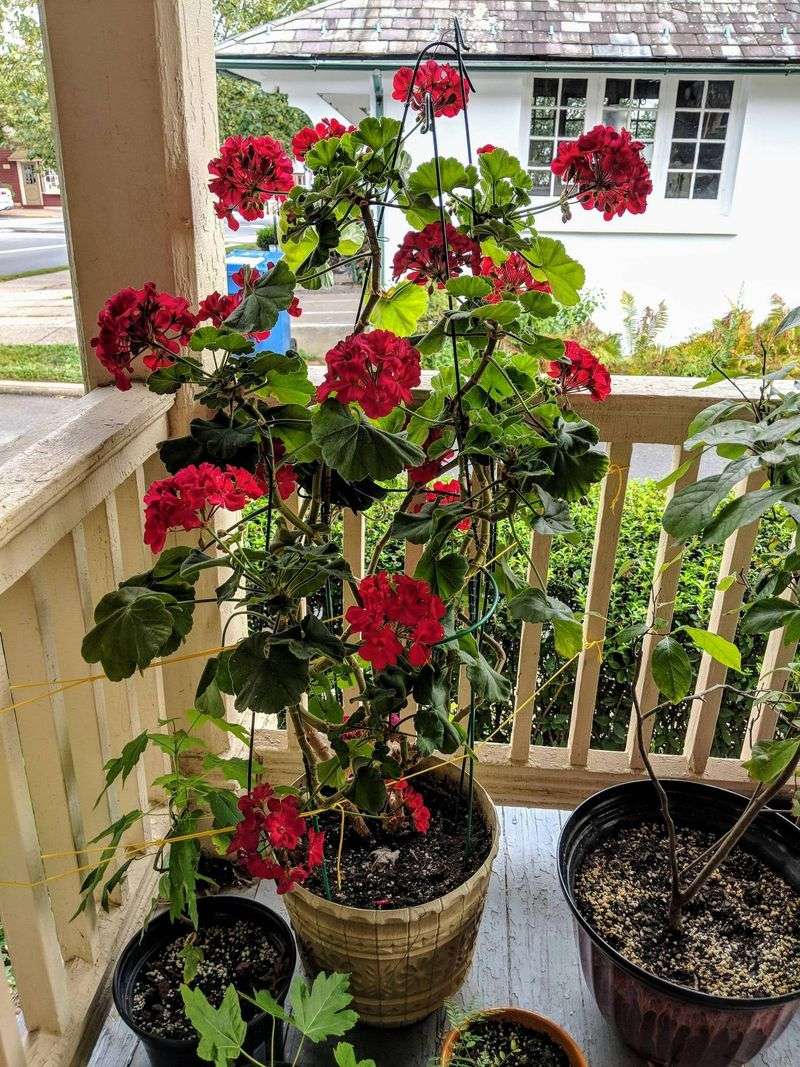
Recovery is very much possible, and geraniums are tougher than they look. With the right steps taken in the right order, most plants bounce back within a few weeks.
Begin by removing the plant from its pot to inspect the root system. Shake off old soil gently and rinse the roots with clean water to see their true condition.
Trim away any brown, slimy, or mushy roots using clean scissors. Cutting back damaged tissue gives the healthy roots room to grow without competition from decaying material.
Let the trimmed roots air dry for about 30 minutes before repotting. A brief drying period helps close off cut ends and reduces the chance of further fungal spread.
Repot into fresh, well-draining soil in a clean container. Avoid reusing old soil that may still harbor the fungal pathogens that caused the original root damage.
Place the newly potted plant in bright, indirect light for the first few days. Direct sun immediately after repotting can stress a plant that is already working hard to recover.
Water lightly once after repotting and then wait. Resist the urge to water again until the soil has dried out at least two inches deep.
Watch for new green growth over the following two weeks. Fresh leaf buds appearing near the top of the plant are a reliable sign that the roots are functioning again.
Geranium leaves turn yellow as a warning, but they also grow back green as a thank-you. Treat the root cause, and your geraniums will reward you beautifully.