Why Your Christmas Cactus Looks Tired And Wrinkled By Late Summer
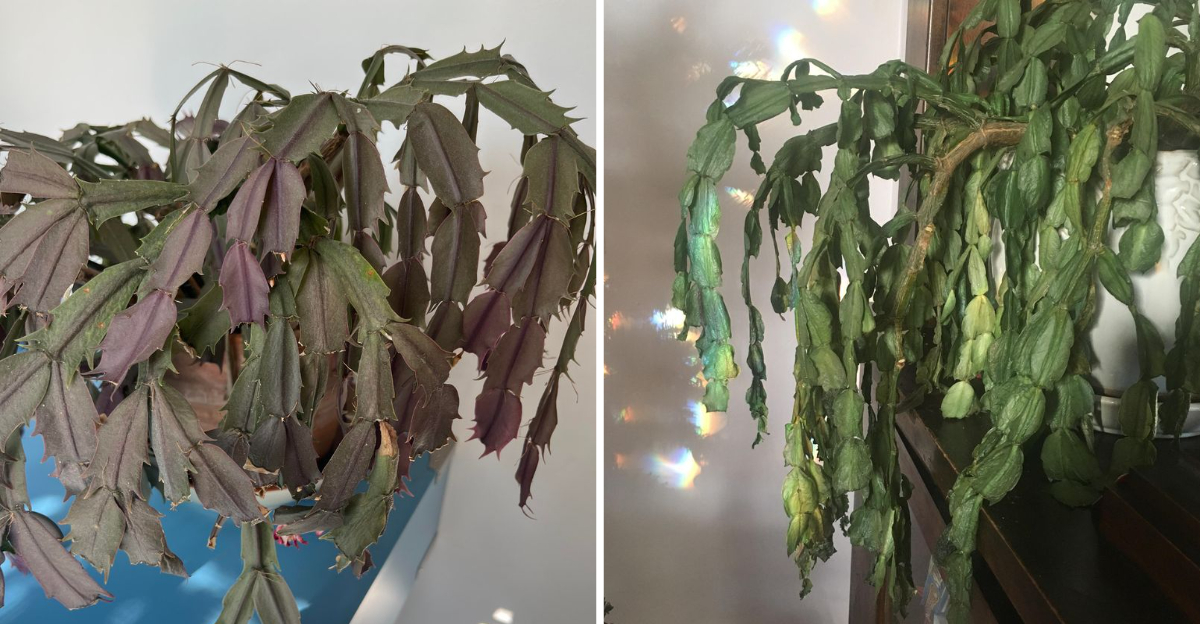
Your Christmas cactus should be thriving in late summer, yet something about its leaves looks off. Segments that once stood plump and glossy now hang limp, curling inward like they’re bracing for a blow that hasn’t landed yet.
Nobody warns you how fast a healthy plant can slide into this state, and the damage builds momentum before you notice it. Underneath that wrinkled surface, stress signals have been quietly building for weeks, rewriting how the plant stores water.
Roots, light exposure, and a few small habits you never questioned all play a part, and most people blame neglect when that’s rarely the real cause. Late summer heat doesn’t just wilt leaves, it triggers changes inside the plant most owners never see coming.
Every wrinkle tells a different story depending on where it appears and how fast it spread.
Heat And Transpiration Working Against Your Plant
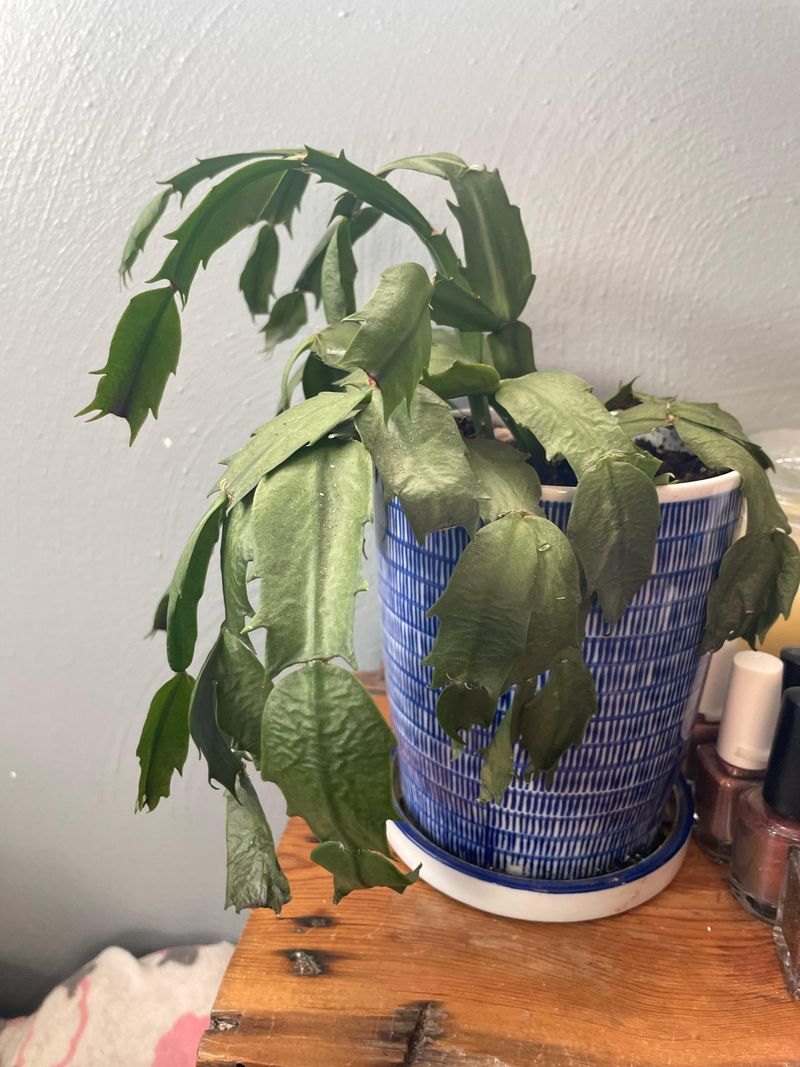
Summer heat is sneaky, and your Christmas cactus feels every degree. When temperatures climb above 90 degrees Fahrenheit, your plant starts losing moisture faster than its roots can replace it.
This process is called transpiration, and it works like sweating. The plant releases water vapor through tiny pores in its stems to cool itself down.
The problem is that Christmas cactus stems store water in their flat, fleshy segments. When transpiration outpaces water intake, those segments start to shrink and wrinkle.
Hot, dry indoor air makes things even worse. Air conditioning pulls humidity out of the air, which speeds up water loss from the plant’s surface.
A Christmas cactus sitting near a vent or a sun-baked window is losing moisture from two directions at once, losing moisture from two directions at once, heat above and dry air around it.
Unlike desert cacti, this plant comes from humid Brazilian rainforests. It didn’t evolve to handle long stretches of dry, scorching conditions.
The wrinkling you see isn’t just cosmetic. It’s the plant physically deflating as its internal water reserves drop below a healthy level.
Moving the plant away from direct heat sources is the first smart step. Even a few feet from a sunny window can make a meaningful difference in how fast moisture escapes.
Think of your Christmas cactus as a sponge that’s slowly being wrung out by the season. The goal is to slow that process before the plant loses too much ground to recover quickly.
Signs Your Cactus Is Losing Water Too Fast
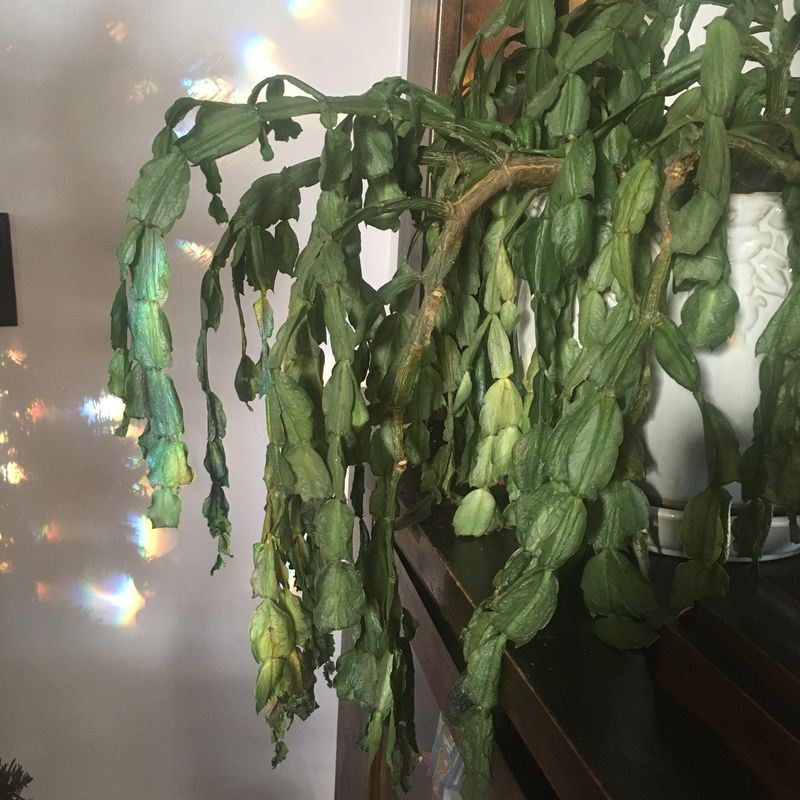
Segments that turn rubbery and start to pucker are the first red flag worth paying attention to. Healthy Christmas cactus segments feel firm and slightly plump, kind of like a grape compared to a raisin.
When water loss outpaces absorption, the segments lose their internal pressure. That pressure is what keeps them looking full and green.
You might also notice the stems drooping or bending at the joints. This happens because the tissue connecting each segment weakens when moisture levels drop too low.
Another sign is a dull or grayish color on the stems. A well-hydrated plant has a rich, deep green color that almost looks glossy in good light.
Check the soil moisture before assuming the plant just needs water. Sometimes the soil feels moist but the roots can’t absorb fast enough to keep up with surface evaporation.
Root-bound plants also struggle more in summer heat. When roots are cramped, they have less surface area to pull in moisture efficiently.
Pay attention to how quickly the soil dries out between waterings. If you’re watering every three days and still seeing wrinkled stems, something else is going on.
Pest damage can mimic dehydration symptoms too. Spider mites and mealybugs both damage stem tissue, making segments look deflated even when water is available.
Knowing which signs point to water loss versus other issues helps you respond correctly. Misreading the signals can lead to overwatering, which creates a whole new set of problems for your Christmas cactus.
Watering Habits That Make Summer Stress Worse
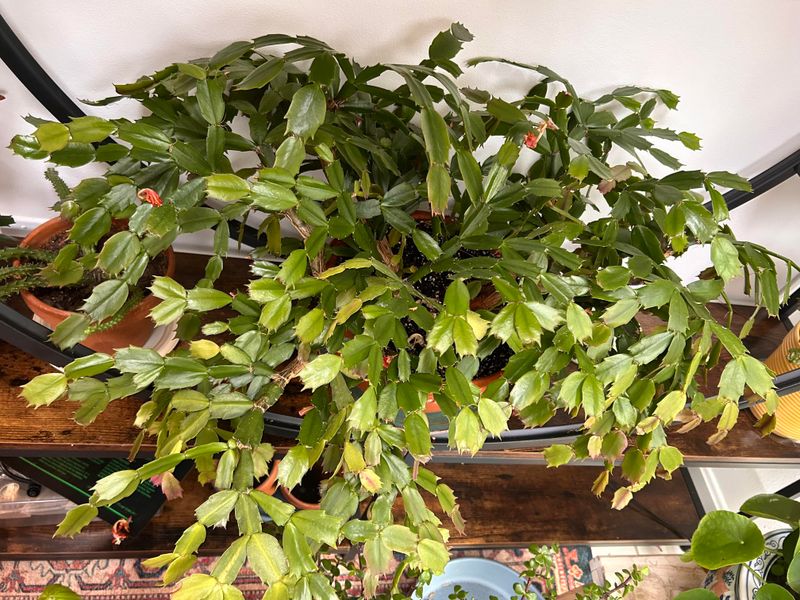
Watering on a fixed schedule sounds responsible, but it can actually hurt your plant in summer. Soil dries out at different rates depending on temperature, humidity, and pot size.
Sticking to a once-a-week routine during a heat wave means your plant goes thirsty for too long. Flexibility matters more than consistency when conditions keep shifting.
On the flip side, watering too often causes root rot, which makes the wrinkling problem even worse. Rotted roots struggle to deliver moisture even when you water consistently.
The finger test is your best friend here. Push your finger about an inch into the soil, and water only when that top layer feels dry to the touch.
Using cold water straight from the tap can shock the roots. Room-temperature water absorbs into the soil more evenly and doesn’t stress the root system.
Pots without drainage holes trap water at the bottom, which suffocates roots over time. Good drainage matters for a healthy Christmas cactus in every season.
Terracotta pots dry out faster than plastic or ceramic ones. If you use terracotta in summer, you may need to check moisture levels more often than usual.
Misting the stems lightly can help replace some of the surface moisture lost to dry indoor air. Just avoid soaking the stems, which can invite fungal issues.
Rethinking your watering approach is one of the fastest ways to reduce summer stress. Small changes in how and when you water add up to big improvements for your Christmas cactus.
Light Exposure That Quietly Wears It Down
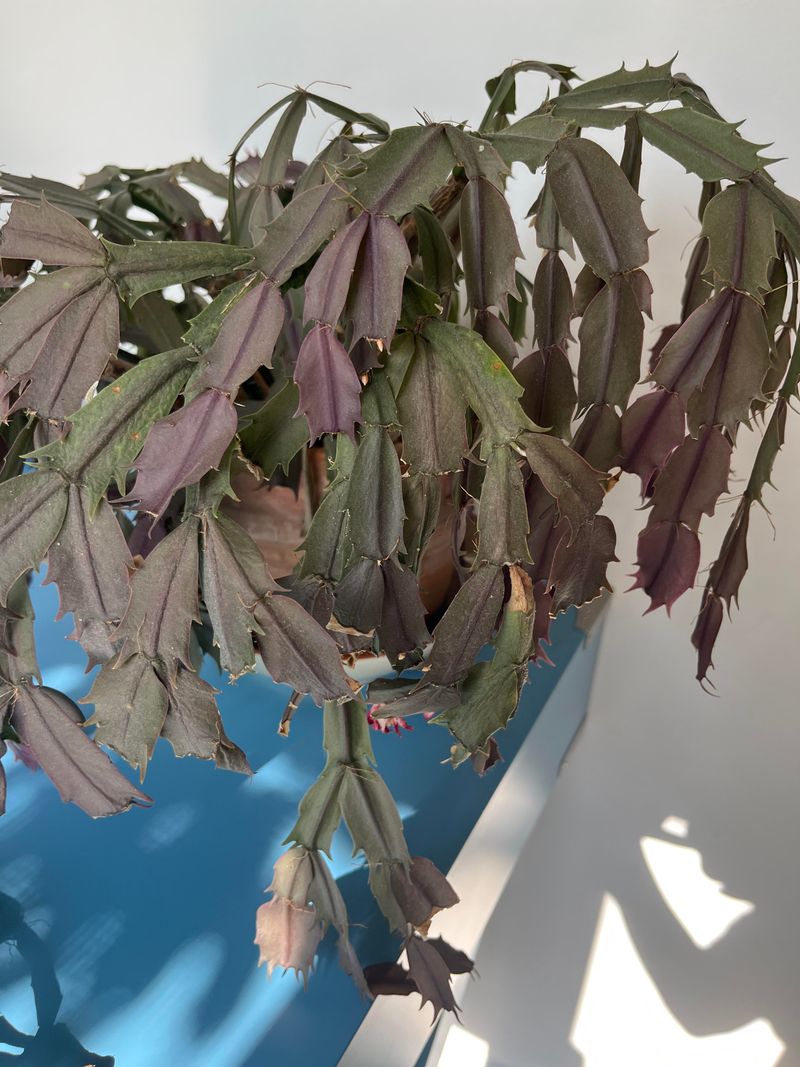
Bright summer sun looks cheerful, but your Christmas cactus is not a fan. Too much direct sunlight causes the stems to bleach out, turning pale green or even yellowish.
This plant thrives in bright, indirect light, the kind you’d find under a forest canopy. Direct afternoon sun in July is far more intense than what it’s built to handle.
Sun-stressed stems lose water even faster than shaded ones. The extra heat from direct rays accelerates transpiration and speeds up that tired, wrinkled look you’re seeing.
South-facing windows are the biggest culprits during summer months. The angle of the sun sends harsh rays directly into the room for hours at a stretch.
Moving the plant two to three feet back from a sunny window makes a noticeable difference. You’re still giving it plenty of light without the scorching intensity.
Sheer curtains are an easy and affordable fix. They diffuse the light beautifully while keeping the room bright and the plant comfortable.
East-facing windows are actually ideal for summer placement. Morning light is softer and cooler, and the plant gets a break from intense rays by midday.
Grow lights are worth considering if natural light options are limited in your home. They allow you to control intensity and duration without worrying about seasonal sun angles.
Light is one of those factors that sneaks up on you because the damage builds gradually. Catching and correcting the exposure early keeps your Christmas cactus from wearing down through the whole season.
Small Adjustments That Bring Back Its Fullness
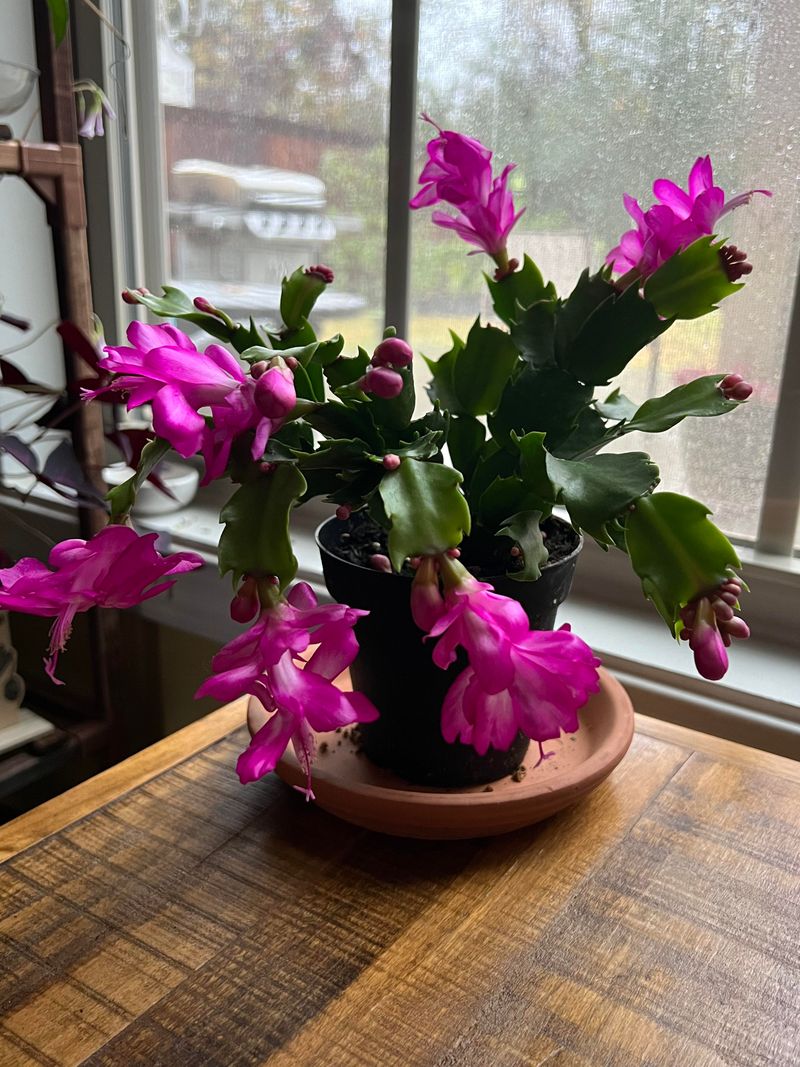
Recovery doesn’t require a complicated plant care routine or expensive products. A few targeted changes can restore your Christmas cactus to its full, plump appearance within weeks.
Start by moving it to a cooler spot with indirect light. Reducing heat exposure is the single fastest way to slow moisture loss and let the plant stabilize.
Adding a small humidifier nearby creates a microclimate the plant actually enjoys. Aim for humidity levels between 50 and 60 percent for the best results.
A pebble tray filled with water placed under the pot also raises local humidity. As the water evaporates, it creates a gentle mist around the plant’s base.
Check the roots when you notice persistent wrinkling despite good watering. If the plant is root-bound, repotting into a slightly larger container gives the roots room to work better.
Use a well-draining potting mix designed for cacti or succulents. Regular potting soil holds too much moisture and can suffocate the delicate root system over time.
A diluted balanced fertilizer applied once in early summer can help the plant maintain energy reserves. Skip feeding during peak heat, as stressed plants don’t absorb nutrients well.
Pruning a few of the longest stem sections after summer can encourage bushier, healthier regrowth. It sounds counterintuitive, but trimming actually redirects energy to the plant’s core.
Small, consistent steps beat dramatic interventions every time. Your Christmas cactus is resilient, and with the right support, it will bounce back looking better than ever.
What Changes Once Cooler Weather Returns
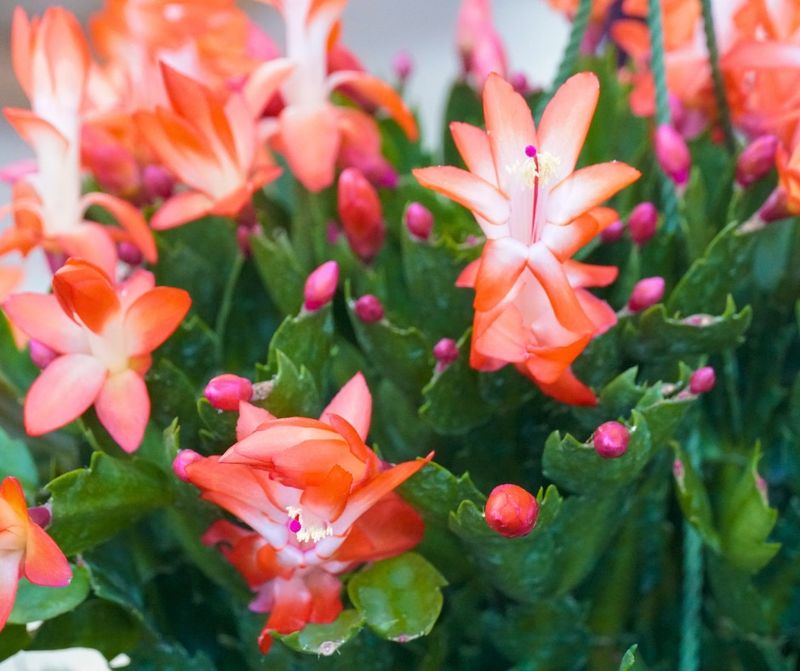
Fall arrives and your Christmas cactus starts to turn itself around. The stems start to plump back up, the color deepens, and the plant looks like it just woke up from a long nap.
Cooler temperatures slow transpiration significantly. The plant stops losing moisture so fast, which means its water reserves can finally rebuild.
Shorter days also play a big role in what happens next. Christmas cactus needs longer periods of darkness to trigger blooming, and fall naturally provides that shift.
Around September and October, you can start the budding process intentionally. Keep the plant in a spot that gets 12 to 14 hours of darkness each night for about six weeks.
Nighttime temperatures between 50 and 60 degrees Fahrenheit are ideal for bud formation. A cool bedroom or an enclosed porch works perfectly for this stage.
Resist the urge to move the plant once buds appear. Changing location or light direction after buds form causes them to drop before they open.
Watering frequency can increase slightly as temperatures drop and the plant becomes more active. Watch the soil closely and adjust based on how fast it dries.
The exhausted, wrinkled plant from August transforms into something completely different by November. That dramatic recovery is one of the most satisfying things about growing a Christmas cactus long-term.
Understanding the full seasonal cycle helps you support your Christmas cactus through every phase. The tired summer look is just a chapter, not the whole story.