Why Hydrangea Flowers Are Suddenly Turning Green
You planted them for the color, picturing a border full of soft pastel clouds. Those big, rounded blooms were supposed to glow pink or blue all summer long, turning heads every time someone walked by.
Then one morning you walk past with your coffee, mug in hand, and something looks off. The petals have quietly shifted toward a soft, leafy shade you did not order, and no amount of blinking brings the old color back.
Most gardeners panic a little at this point, convinced something has gone wrong overnight. They reach for fertilizer, extra water, or the pruning shears, and that instinctive reaction often makes things worse instead of better.
The shrub is not in trouble, and there is no need to reach for drastic fixes. What you are seeing is a normal chapter in the flower’s life, shaped by timing, sunlight, temperature, and a few habits woven into your own garden routine.
The Petals You Love Are Not Actually Petals
Here is the plot twist that surprises almost every hydrangea owner: those showy pink, blue, or white blooms are not petals at all. They are sepals, the leaf-like structures that normally sit under a flower and protect the bud.
Because sepals are modified leaves, they carry the same green pigment machinery that leaves do. Chlorophyll sits quietly in the background, hidden beneath the bright pigments that give the bloom its signature color.
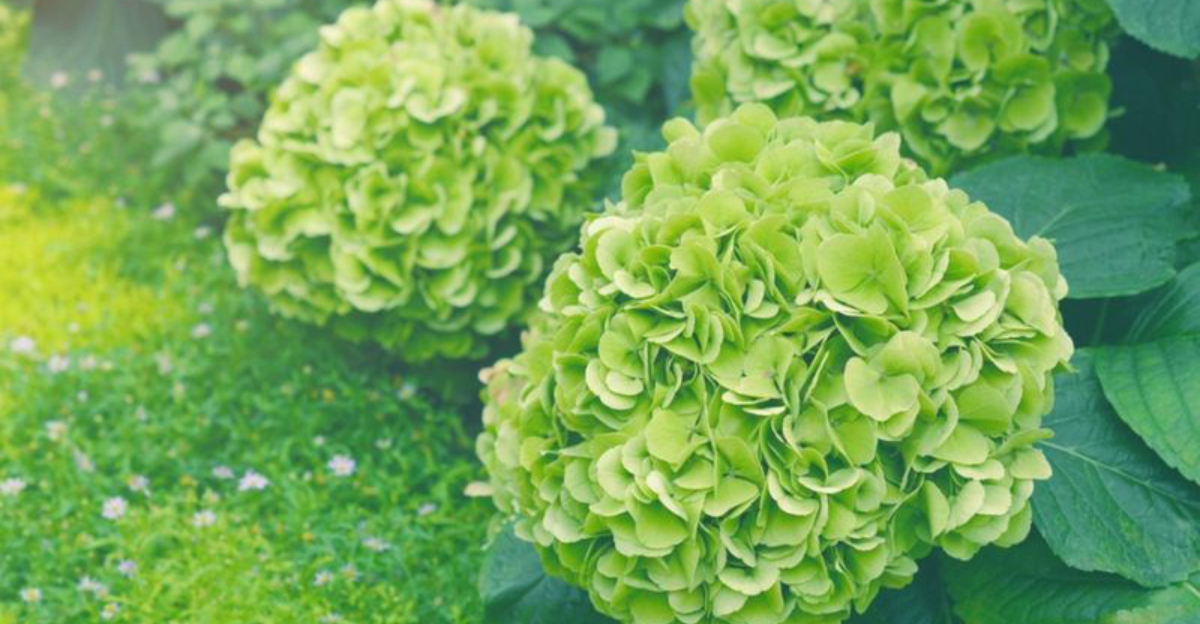
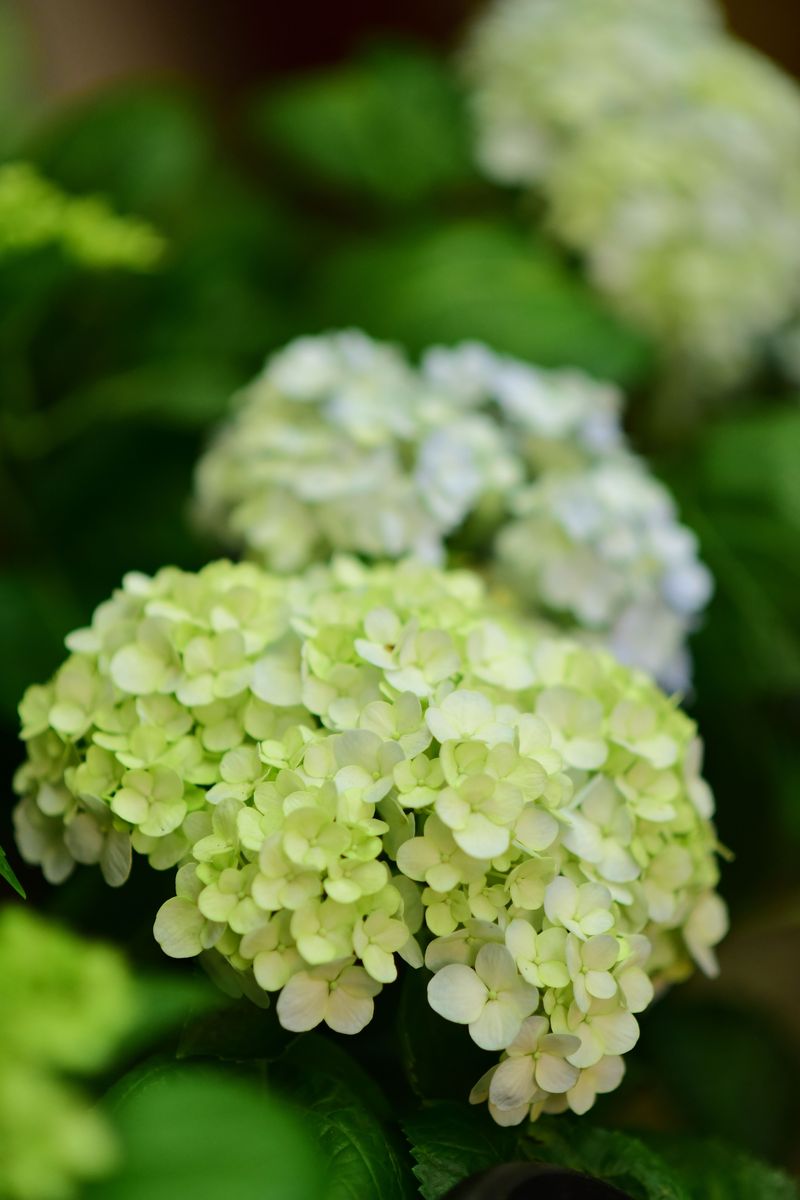
When a hydrangea first opens, it often shows a pale lime tint before the color pigments fully develop. That early green is a preview of what the structure really is underneath the show.
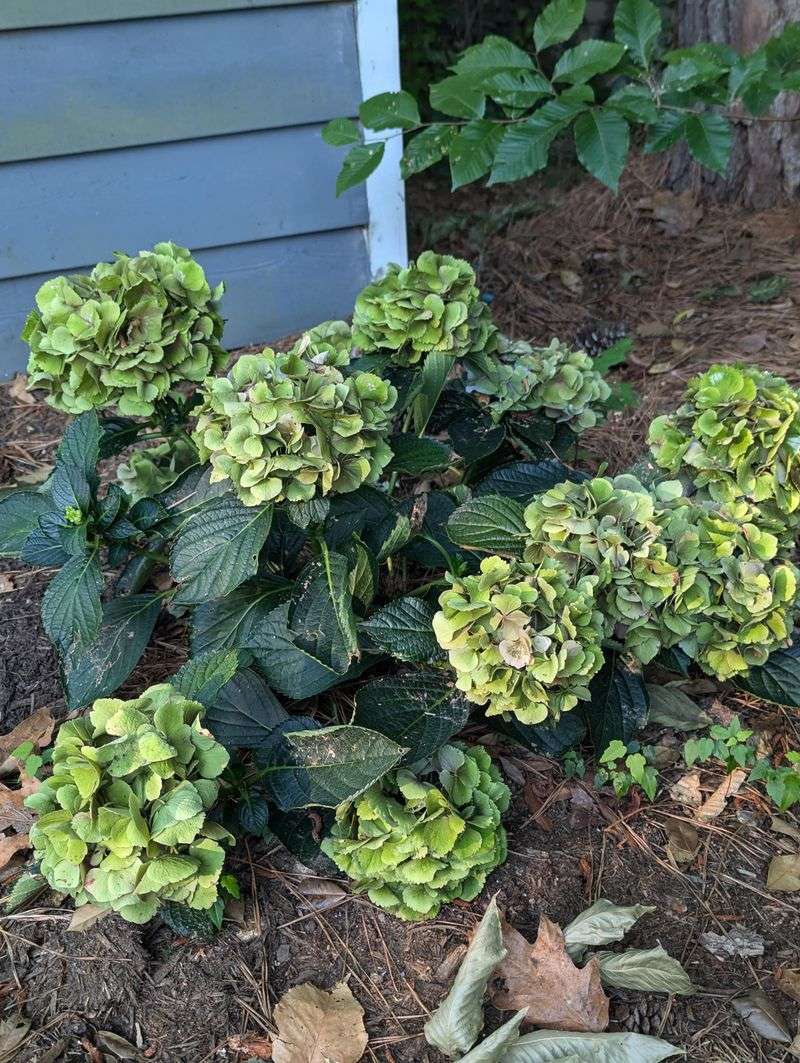
As the season moves along, the colorful pigments break down while the chlorophyll stays put or even ramps back up. The result is a bloom that drifts from rosy to sage, sometimes with streaks of both at once.
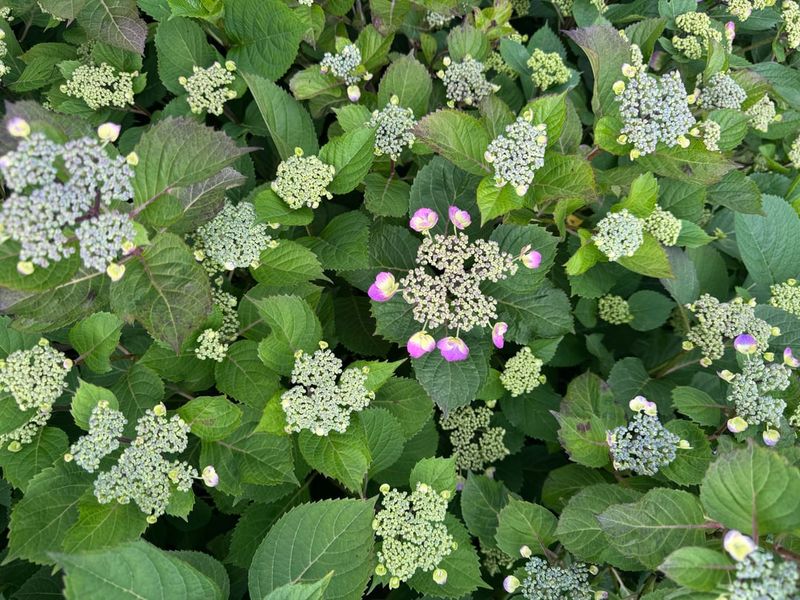
Real flowers do exist on the plant, by the way. They are the tiny, almost unnoticeable buttons tucked in the center of the cluster, and they handle the actual pollination work.
Knowing this changes how you react. Green sepals are not a sign of neglect or disease, they are the plant showing its true botanical nature.
Florists have known about it for years and sell these antique green blooms at a premium. Once you see them as a feature rather than a flaw, the whole shrub looks different.
Late-Season Aging Is The Usual Suspect
Ask a longtime gardener about green hydrangeas and they will usually shrug and say one word: August. Timing explains most color shifts, and it explains them without any drama.
A hydrangea bloom typically holds its bright color for about four to six weeks after opening. After that window, the pigments called anthocyanins begin to fade, much like a beach towel left out in the sun.
Chlorophyll, meanwhile, is far more stable. It hangs around long after the flashy pigments have packed up, which is why the aging bloom settles into green rather than white.
Many varieties then keep evolving. Green shifts toward burgundy, dusty rose, or papery tan as autumn cools things down, giving you a second act of color that some people prefer to the first.
If your blooms turned green in June, aging is probably not the answer, and you should look at heat or light instead. Late July through September, though, is prime territory for this natural fade.
Track the dates in a notebook or your phone for one season. You will start to notice the pattern repeats almost like clockwork every year.
Rather than fighting it, plenty of gardeners plan around it. They pair hydrangeas with late-blooming perennials like asters or sedum so the border still sings while the shrub goes quietly vintage.
The plant is simply finishing what it started, and next spring it begins the cycle again.
Heat Waves And Harsh Sun Speed Up The Fade
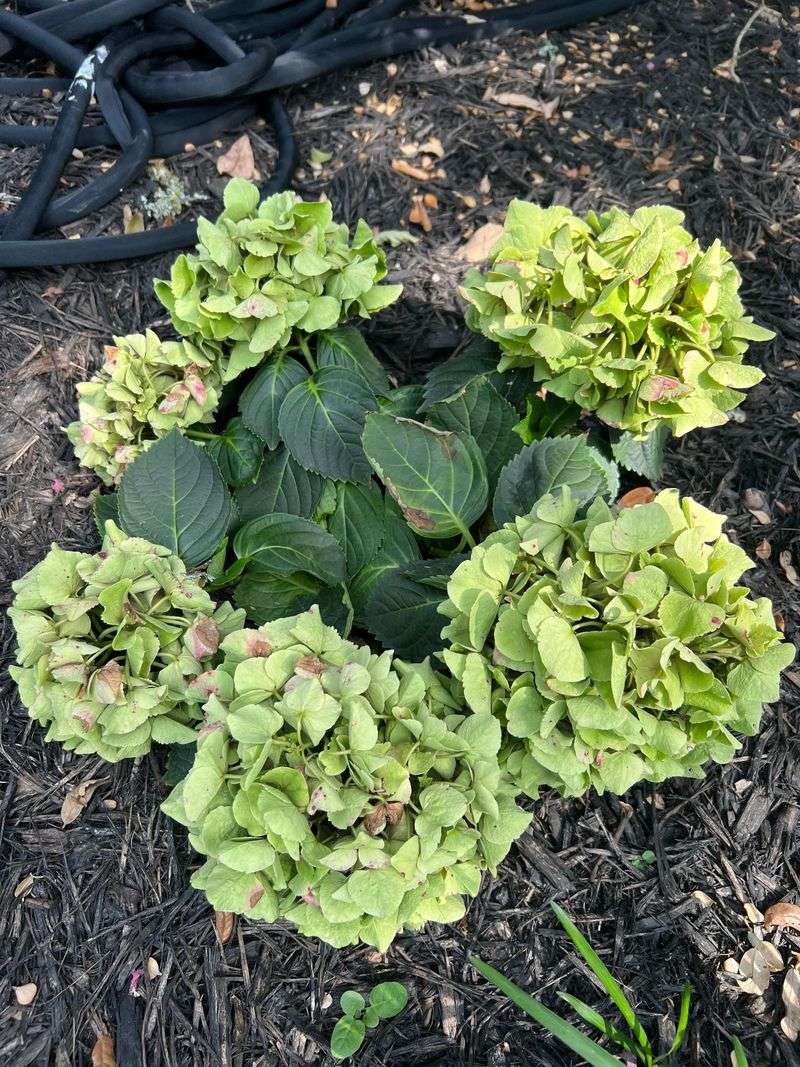
Picture a stretch of ninety-degree afternoons with no cloud cover. Your hydrangea feels every hour of it, and the blooms show the receipt.
High temperatures break down anthocyanin pigments faster than usual. What might have been a six-week color run gets shortened to three, and green surfaces early.
Direct afternoon sun makes the effect stronger. Hydrangeas evolved as woodland-edge shrubs, so they prefer bright morning light with shade once the day gets fierce.
Water stress adds another layer. When roots cannot keep up with what the leaves are releasing, the plant redirects resources away from maintaining showy color and toward basic survival.
You can soften the impact with a few simple moves. A two to three inch layer of shredded bark mulch keeps root-zone soil cooler and holds moisture through hot spells.
Deep watering beats frequent sprinkling. One long soak every three or four days encourages roots to grow downward, where the soil stays cooler and damper.
Temporary shade cloth during a heat wave sounds fussy, but gardeners in hot climates swear by it. Even a patio umbrella angled over the shrub for a week helps.
For a long-term fix, consider relocating a struggling plant in early spring or fall to a spot with dappled afternoon shade.
Cooler, steadier conditions will not stop aging, though they do let you enjoy the original color noticeably longer each season.
The Fertilizer Habit That Backfires
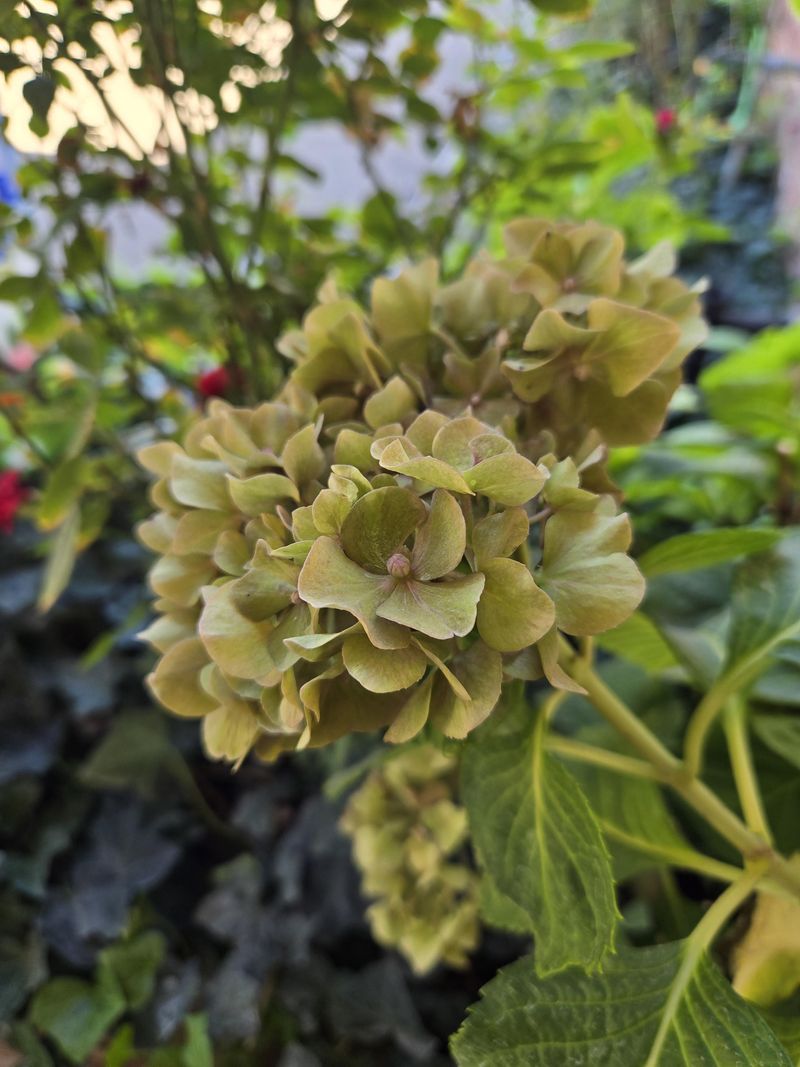
Well-meaning gardeners often reach for plant food the moment blooms look tired. Unfortunately, that instinct can push the color even further toward green.
Nitrogen tells a plant to build foliage. Feed a hydrangea a high-nitrogen product and it responds by pumping out leafy growth, including greener sepals and lush stems with fewer standout blooms.
Lawn fertilizer is the sneakiest offender. Granules that drift into a nearby bed, or runoff after watering the grass, deliver a nitrogen jolt nobody intended.
Check the three numbers on any bag before you spread it. Something like 24-4-8 is built for turf, and that first number is far too high for a flowering shrub.
A balanced slow-release formula applied once in early spring is usually plenty. Look for roughly equal numbers, or a blend where phosphorus and potassium are not overshadowed.
Timing matters just as much as the product. Feeding in midsummer encourages soft new growth that struggles in heat and rarely improves flower color anyway.
If you suspect overfeeding, skip the fertilizer entirely for a full season. Water normally and let the plant reset, since hydrangeas are not heavy feeders to begin with.
Compost is a gentler alternative. A one-inch topdressing in spring feeds the soil slowly without the sudden nitrogen surge.
Give it a year and you should see blooms holding their intended color longer, with sturdier stems supporting them.
Soil pH Steers Blue And Pink, But Not Green
Every hydrangea conversation eventually lands on soil pH, and for good reason. Acidic soil below about 6.0 unlocks aluminum for the roots and produces blue blooms, while alkaline soil above 7.0 gives you pink.
What surprises people is that pH has almost nothing to do with the green shift. You can have perfect blue-making conditions and still watch those flowers turn sage in August.
Green comes from chlorophyll showing through, and chlorophyll does not care about aluminum availability. Fiddling with your soil will not stop the seasonal change.
Where pH does help is intensity. Well-tuned soil gives you a richer starting color, and a deeper blue or hotter pink simply takes longer to fade into green.
Buy an inexpensive soil test kit and check before you amend anything. Guessing leads to overcorrection, and sudden swings stress roots.
To push toward blue, gardeners use aluminum sulfate or elemental sulfur applied in small amounts across several weeks. For pink, garden lime raises pH gradually.
Keep in mind that white varieties like Annabelle and most panicle types ignore pH entirely. Their blooms open white and drift to lime green regardless of soil treatment.
Container growers have the easiest control since potting mix is a small, manageable volume.
Treat pH as a tool for vibrancy rather than a cure for greening, and you will save yourself frustration.
Turning The Green Phase Into An Advantage
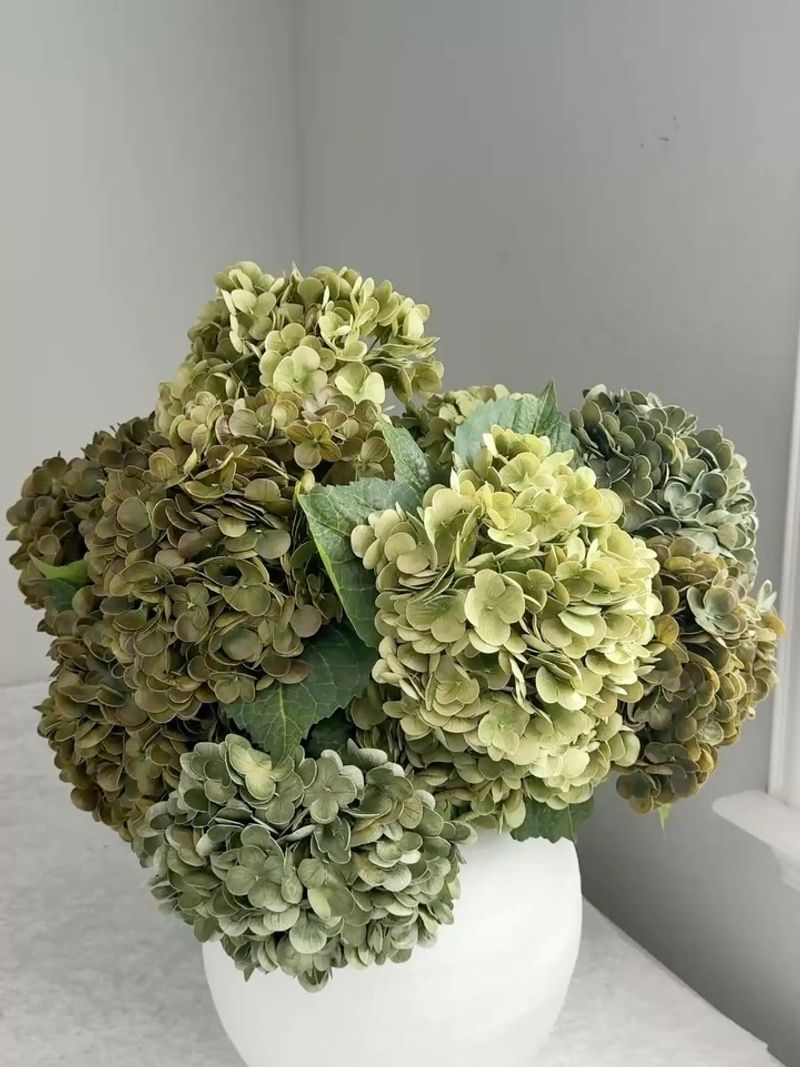
Florists charge real money for what your backyard is producing for free. Antique green hydrangea heads are a wedding and autumn arrangement staple, prized for that soft, vintage look.
Green blooms also happen to dry beautifully. Because the color comes from stable chlorophyll rather than fragile pigments, dried heads hold their shade for months indoors.
Cut them at the right moment for best results. Wait until the sepals feel slightly papery between your fingers, usually late summer, then snip stems about twelve to eighteen inches long.
Strip the leaves and stand the stems in a vase with two inches of water. Let the water evaporate naturally and the blooms dry slowly without shriveling.
Keep them out of direct sunlight during the process. A dim corner or closet shelf preserves the color far better than a bright windowsill.
Out in the garden, resist the urge to prune everything off. Many hydrangeas set next year’s buds on old wood, and cutting hard in late summer removes those future flowers.
Leaving faded heads on the shrub through winter also adds structure. Snow settling on those domes is one of the quiet pleasures of a cold-weather garden.
Come spring, trim back to the first fat pair of buds and let the cycle restart. Seen this way, green is not a problem to solve. It is a bonus season your hydrangea hands you every single year.