Barn Spiders Become Easier To Spot Around Georgia Homes In September
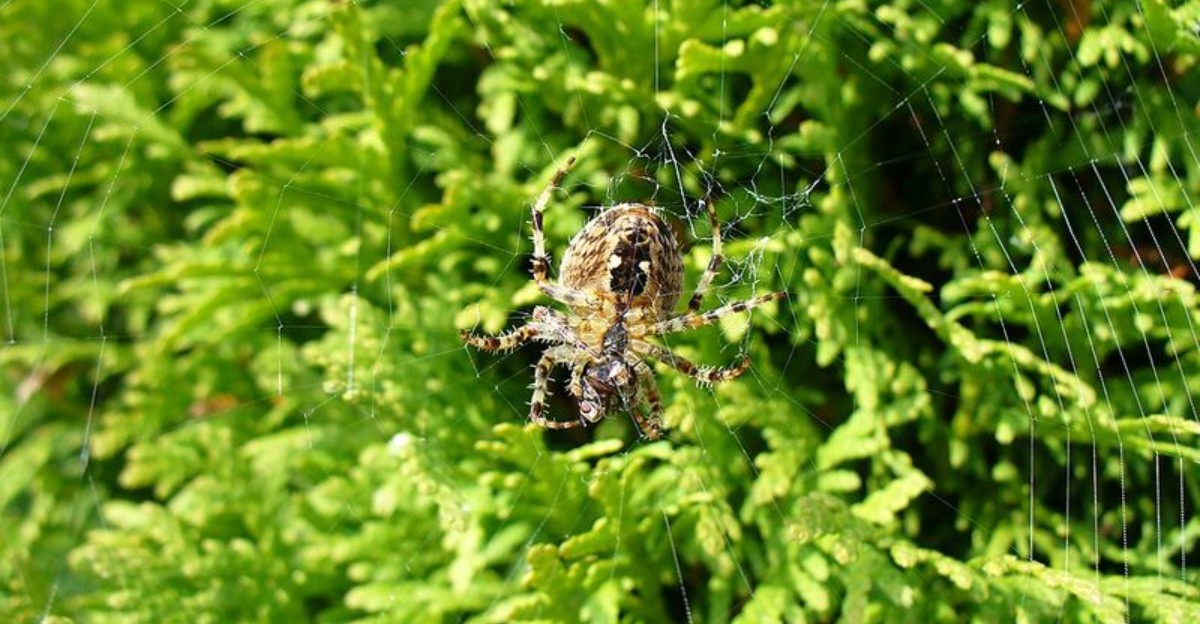
September can make barn spiders seem as though they appeared overnight, even when they have been nearby for weeks. Their growing webs suddenly become much harder to miss.
By early fall, these spiders are larger and mature females are especially noticeable around buildings after dark.
That seasonal growth explains why you may start finding impressive webs near porches, sheds, and other quiet spaces. Around Georgia homes, September evenings can keep this nighttime activity easy to observe.
Their size may look intimidating, but their web building is simply part of their normal fall routine.
Watch from a comfortable distance and notice how different the same web looks after sunset. Many barn spiders remain hidden during daylight hours.
Once you understand their September pattern, those sudden evening appearances become far less mysterious.
1. September Makes These Large Spiders Easier To Notice
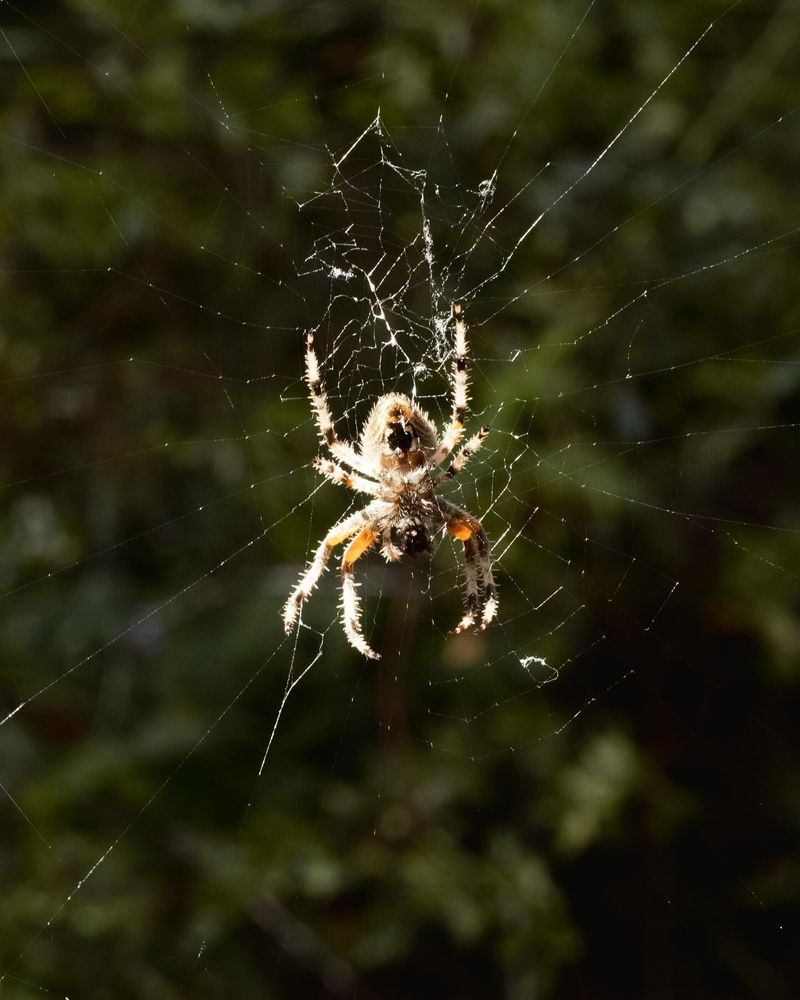
Size is the giveaway. A barn spider you never noticed in July can look startling by mid-September, simply because it finally finished growing.
Orb weavers hatch small in spring and molt several times through the warm months. Each molt adds body length, so late-season females often reach close to an inch across including their legs.
Bigger bodies need bigger webs, and bigger webs get placed in more open spots.
That shift matters more than people realize. A young spider can tuck a small web into a corner, while a mature female needs room to stretch a wheel-shaped web two feet wide or more.
Open doorways, gaps between porch posts, and the space above patio furniture all become fair game around Georgia homes.
Cooler evenings also push people outdoors again after a brutal summer, which increases the odds of running into one.
Numbers are not necessarily rising. Spiders that were already there simply became visible.
Egg-laying season adds another layer, since females feed heavily in late summer to build up energy for their egg sacs. A well-fed female looks noticeably plump, which makes her stand out even more against a porch light.
Once you know what is driving the change, September webs feel routine instead of alarming.
2. Barn Spiders Often Build Webs Around Porches
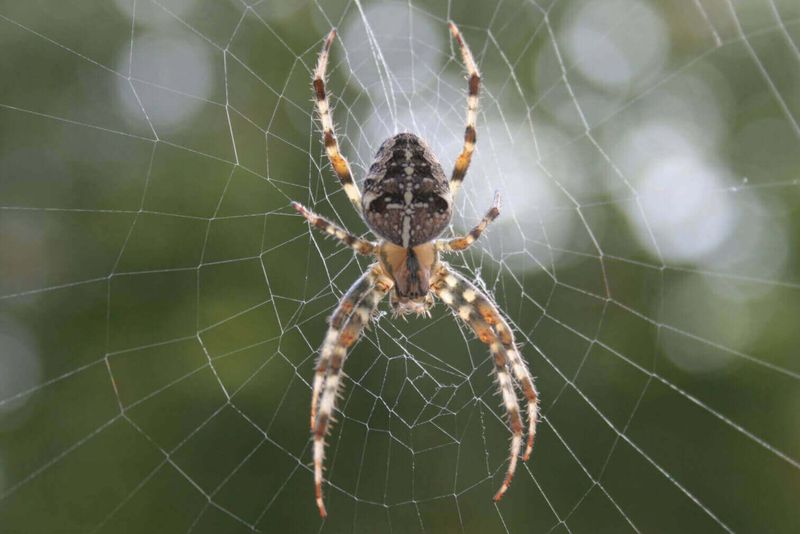
Porches are prime real estate for an orb weaver. Sheltered overhangs block wind and rain, and the open span between posts gives silk plenty of anchor points.
Barn spiders earned their name honestly. Old barns, sheds, and stables offered the same setup: covered space with wide gaps and steady insect traffic.
Modern carports and covered decks work just as well.
Check the usual spots and you will start spotting patterns. Door frames, railing corners, window casings, and the underside of eaves all show up repeatedly.
Anywhere two solid surfaces sit a few feet apart, a female may try her luck.
Height plays a role too, since most webs hang at chest or head level where flying insects cruise past.
Walking face-first into one is unpleasant but harmless.
Around Georgia neighborhoods with mature trees and older wooden porches, sightings tend to be more common than in newer subdivisions with sparse landscaping. Insect availability drives the difference more than the house itself.
Your Georgia Garden Changes Every Week. Your Plan Should Too.
Gardening in Georgia changes quickly throughout the season. Every Friday you’ll receive a simple weekly plan showing exactly what to plant, prune, fertilize, harvest, and protect so you never miss the right timing.
If a web sits in a bad spot, gently sweeping it down usually convinces the spider to relocate. She may rebuild nearby, but rarely in the exact same place after repeated disturbance.
Leaving one web intact on a quiet corner is often the easiest compromise.
3. Outdoor Lights Bring Insects Close To Their Webs
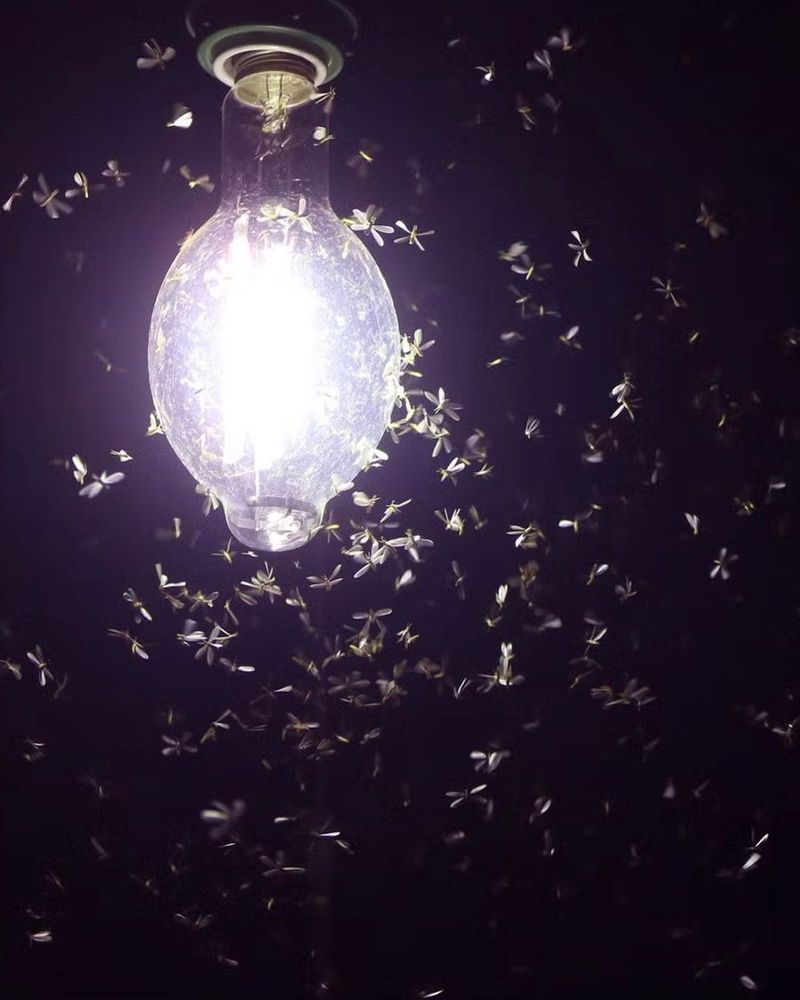
Porch lights do the hunting for them. Moths, midges, and beetles drift toward the glow all night, and a web placed in that flight path stays busy.
Spiders do not understand electricity, but they respond to results. Webs that catch food get rebuilt in the same area, while empty ones get abandoned.
Over a few nights, the best-lit corners collect the biggest spiders.
That explains why one side of a house seems loaded while another stays clear. Light placement, not luck, usually accounts for the difference.
Homeowners who want fewer webs near the front door have a simple option worth trying. Switching to warm-toned or amber bulbs tends to attract fewer flying insects than bright white or blue-tinted lights.
Motion-sensor fixtures help too, since insects gather less when a light runs only in short bursts.
Results vary depending on surrounding vegetation and how many other light sources sit nearby.
Plenty of Georgia homeowners decide the trade is worth keeping. A single orb weaver working a porch light can intercept a steady stream of mosquitoes and gnats through September evenings.
Moving the light rather than removing the spider often solves the problem for both sides.
4. New Webs Usually Appear After The Sun Goes Down
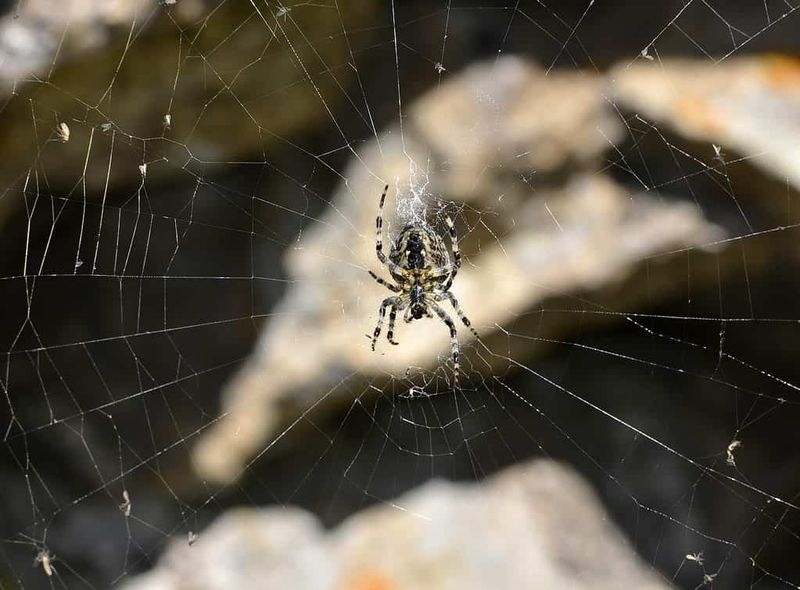
Fresh silk arrives on a schedule. Barn spiders typically tear down and rebuild their orb webs in the evening, often starting around dusk.
Rebuilding sounds wasteful, but it makes sense. Silk loses stickiness after a night of catching insects, and damaged strands reduce the odds of holding prey.
Many orb weavers eat the old silk before spinning new lines.
Watching the process is genuinely interesting if you have twenty minutes to spare. The spider lays down anchor lines first, then builds spokes, then works inward with the spiral.
A full web can go up in under an hour under calm conditions.
Timing explains a common frustration. You clear a web at bedtime, and by morning an identical one hangs in the same doorway.
Persistence, not stubbornness, is the reason.
Weather changes the routine. Heavy rain or strong wind can delay rebuilding, and some spiders skip a night when conditions turn rough.
Across Georgia in September, warm evenings and light breezes create close to ideal spinning weather.
If you want to relocate a spider, evening is the practical window since she will be out and active. Nudging her onto a stick and moving her to a shrub a few yards away usually works without harm.
5. Barn Spiders Hide Away During The Day
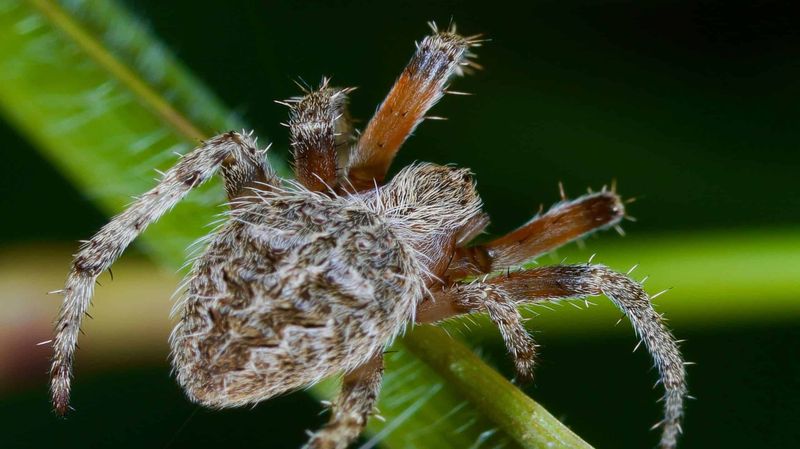
Daylight sends them into hiding. Come morning, the web may still hang there, but the spider itself is often nowhere in sight.
Retreats are usually close by. A gap in siding, a curled leaf, a crack under the railing, or the shadowed corner of an eave all serve as daytime shelter.
A single signal thread connects the hiding spot to the web, letting her feel vibrations from a distance.
Staying tucked away has obvious benefits. Birds, wasps, and lizards hunt by sight, and an exposed spider on a bright afternoon makes an easy target.
Heat plays a role too, since shaded crevices hold moisture better than open silk in full sun.
Homeowners sometimes assume a spider left after they knocked down a web. More often she simply pulled back into her retreat and waited.
Come nightfall, the same corner gets claimed again.
Poking around hiding spots is rarely necessary and not especially useful. Barn spiders are not aggressive, and bites are uncommon since they retreat rather than confront.
Homes across Georgia with wood trim, shutters, or stone facing tend to offer more crevices, which explains why some properties host several spiders at once.
Sealing large gaps helps with other pests too.
6. Rusty Brown Coloring Helps Identify These Spiders
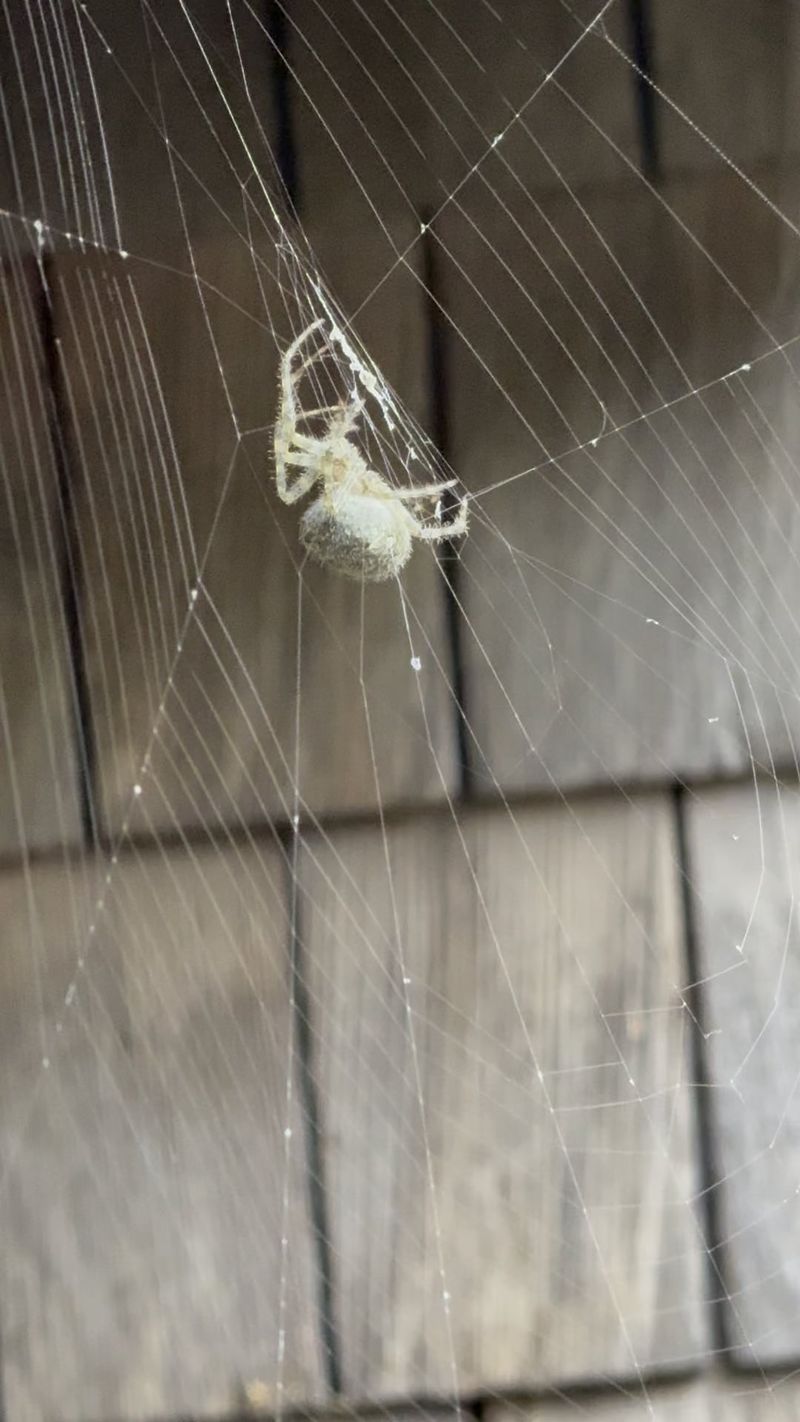
Color tells you a lot. Barn spiders wear muted rusty brown and tan tones, with banded legs that look like they were dipped in alternating stripes.
Their abdomen carries a pattern of lighter markings, often described as a rough herringbone or arrow shape. Under a flashlight, that patterning stands out against the darker background.
Underneath, many show two pale spots.
Mistaken identity happens often. Spotted orb weavers and marbled orb weavers share similar shapes, and telling them apart takes a close look at color and markings.
Marbled orb weavers lean orange with a swollen, mottled abdomen, while barn spiders stay browner and more subdued.
Neither poses a serious concern to people.
Body shape offers another clue. Barn spiders have a rounded, slightly egg-shaped abdomen and legs that look proportionally long and spiny.
Females run considerably larger than males, which is typical for orb weavers.
Anyone in Georgia worried about medically significant spiders can rule these out fairly quickly. Widows have glossy black bodies with a red hourglass, and recluses show a violin mark with uniform legs.
Barn spiders match neither description.
Snapping a clear photo before removing a web makes identification easier later. County extension offices can help confirm anything you are unsure about.
7. The First Hard Frost Ends Their Season
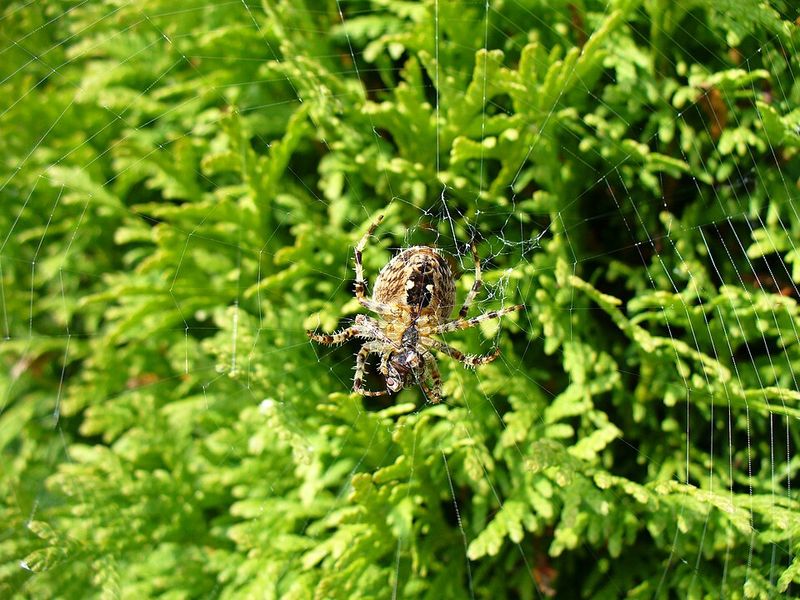
Cold weather closes the chapter. Barn spiders live roughly one year, and their season winds down once temperatures drop hard enough.
Females spend late fall producing egg sacs, tucking them into sheltered spots like siding gaps, under eaves, or beneath loose bark. Silk wrapping insulates the eggs through winter.
Spiderlings emerge in spring and start the cycle again.
Frost timing varies quite a bit across the state. Mountain counties often see a first freeze in late October, while coastal areas may wait until December or later in mild years.
Warm autumns can stretch spider activity several extra weeks.
Webs left hanging after cold nights usually mean the spider has moved on or finished her season. Tattered silk with no occupant is a common sight by November.
Sweeping those down is fine.
If you want spiders back next year, leaving egg sacs undisturbed is the simplest approach. Removing them near a doorway is also reasonable if the location bothers you.
Gardeners around Georgia often welcome the return, since orb weavers work through aphid-eating flies, moths, and mosquitoes without any chemicals involved.
Either way, September and early October remain the peak stretch for sightings, so enjoy the show while the evenings stay warm.