The Arizona Shrubs To Plant This Fall That Shade Your West Wall By Next Summer
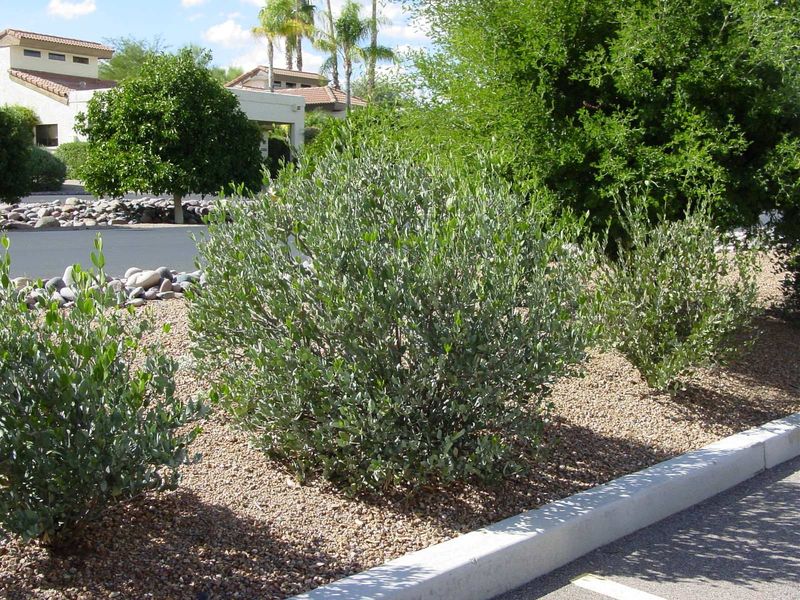
Your west wall soaks up the worst of the afternoon sun, and that heat sneaks right into your living room by evening. The good news is that fall is the best time in low-desert Arizona to plant fast, tough shrubs that can block that blast by next summer.
Cool months give roots time to grow deep before the 110 degree days return. Here are eight desert-ready picks that shade your wall, save water, and give birds and pollinators a reason to visit.
1. Arizona Rosewood
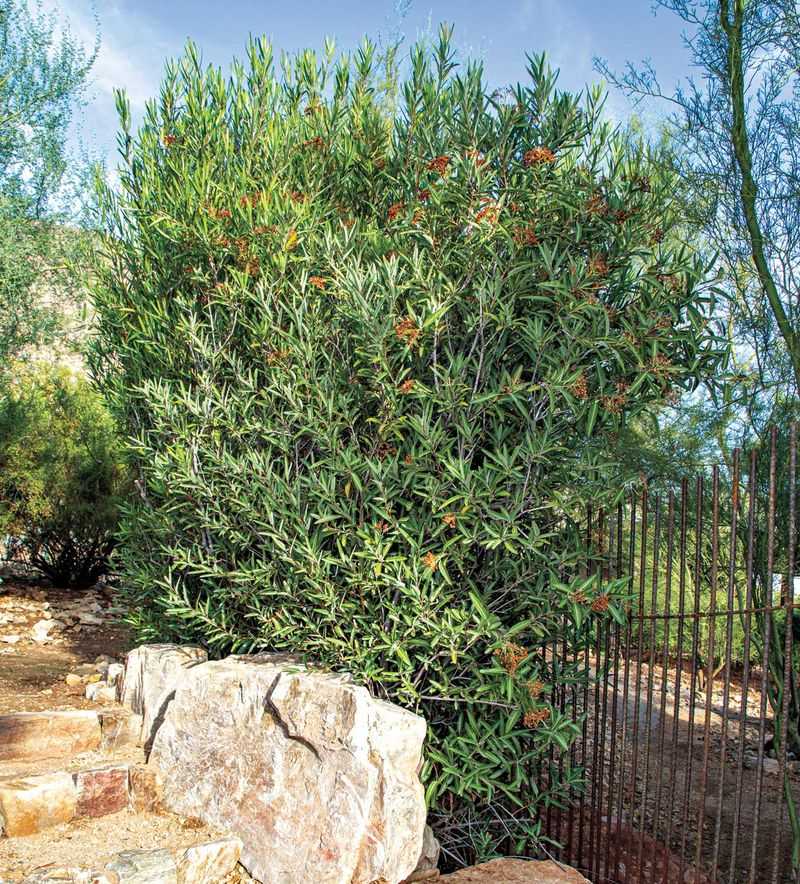
Picture a living green wall that stays thick all year, even in July. Arizona rosewood is a native evergreen that can eventually reach 15 to 25 feet tall, making it one of the strongest wall shaders on this list.
Its narrow, glossy leaves pack together tightly, so very little sun slips through to bake your stucco. Growth is moderate to fairly quick once roots settle, and a fall planting gives it a real head start.
By the next summer, a 15-gallon plant can already cast useful shade across the lower part of a wall.
Plant it about 6 to 8 feet from the house so the canopy has room to spread without rubbing the roof. Water deeply every week or two through winter, then stretch the schedule as it matures.
Once established, it gets by on surprisingly little.
Wildlife loves the dense branches too. Small birds tuck into the foliage for cover and nesting, and clusters of tiny white spring flowers draw native bees.
Keep the base trimmed up a bit and free of leaf piles, since open ground near the trunk is less inviting to scorpions looking for a cool hiding spot.
2. Mexican Bird of Paradise
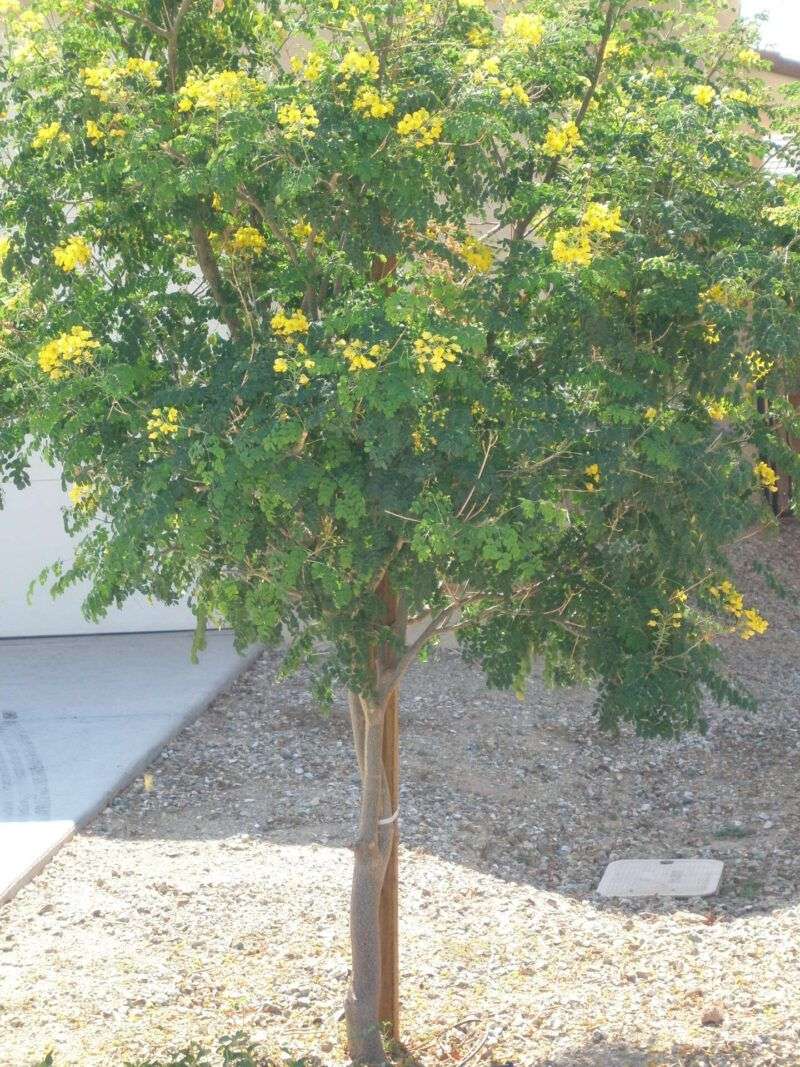
Hummingbirds seem to find this shrub before the nursery tag even comes off. Mexican bird of paradise grows into a rounded shrub or small tree around 10 to 15 feet tall, covered in sunny yellow flower clusters from spring into fall.
Speed is its big selling point. In the heat of the low desert, it can put on several feet of growth in a single season, which makes it a smart pick if you want shade fast.
Plant in October, and by June you may already see a leafy screen climbing past your window line.
The leaves stay mostly evergreen in Phoenix and Tucson, though a hard frost can thin them out. Not a problem for a west wall, since you need shade most in summer anyway.
It handles reflected heat from walls and rock mulch without complaint.
Give it a deep soak every 7 to 10 days the first year, then cut back. Light pruning in late winter keeps it shapely and pushes out fresh flowering branches.
Besides hummingbirds, the blooms draw butterflies and orioles, turning a hot, bare wall into a busy little wildlife stop that also lowers your cooling bill.
3. Hop Bush
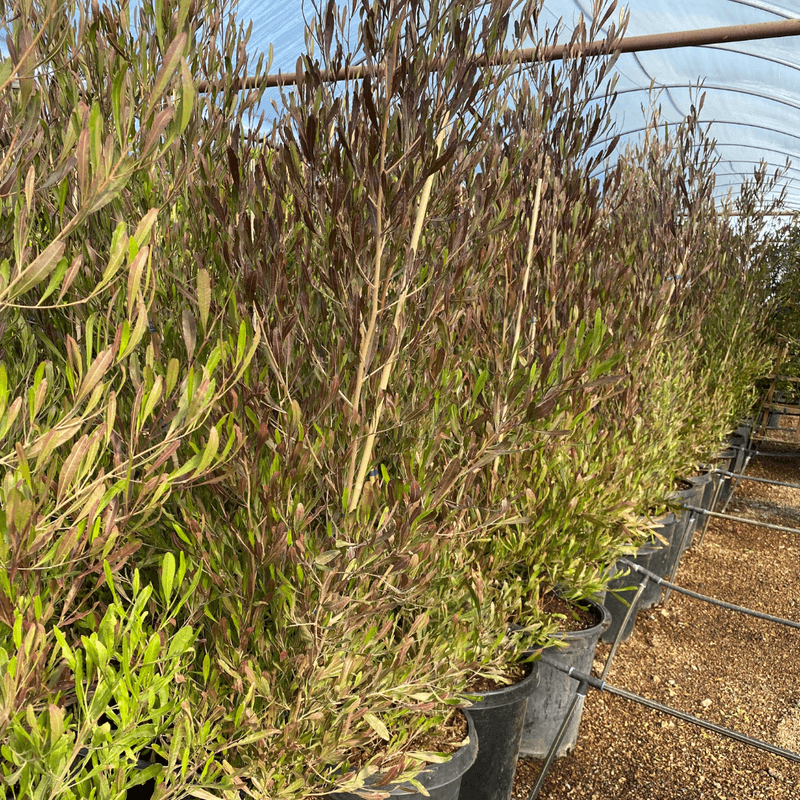
Need privacy and shade yesterday? Hop bush is the sprinter of desert shrubs, often growing 2 to 3 feet a year once its roots take hold.
Your Arizona Garden Changes Every Week. Your Plan Should Too.
Gardening in Arizona changes quickly throughout the season. Every Friday you’ll receive a simple weekly plan showing exactly what to plant, prune, fertilize, harvest, and protect so you never miss the right timing.
Native to Arizona, it forms an upright column of bright green leaves that tops out around 10 to 12 feet. That narrow, tall shape works beautifully in tight side yards where a wide shrub would crowd the path.
Plant a row about 4 to 5 feet apart along a west wall, and they will knit into a solid screen faster than most homeowners expect.
Western exposure is no problem. Hop bush shrugs off intense afternoon sun, alkaline soil, and wind.
Papery seed capsules show up in spring, giving the plant a soft, rosy glow for a few weeks.
The thick growth gives lizards and small birds a shady retreat, and birds that hang around your yard often snack on insects too. Water weekly during its first fall and winter, then taper to deep, occasional drinks.
Skip heavy shearing, because a natural shape stays fuller and healthier. Keep a tidy gap between the shrub and the foundation, which helps air flow and makes the base less appealing to pests.
4. Texas Sage
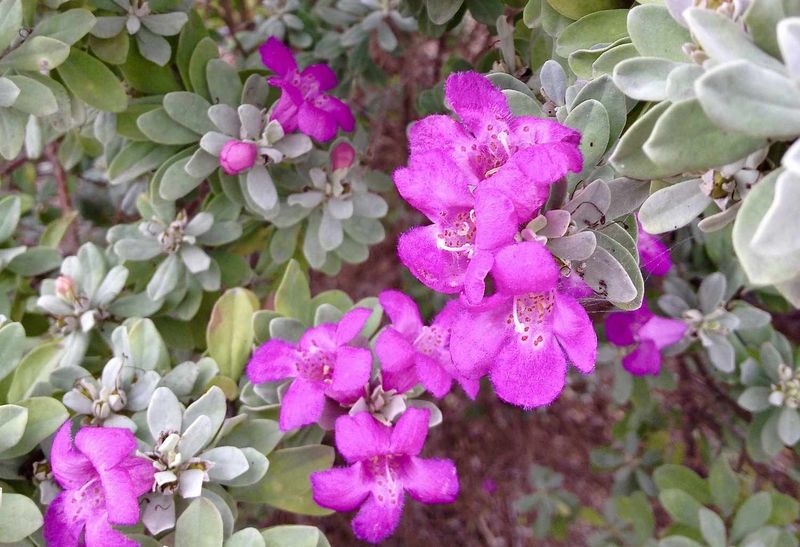
Long-time desert dwellers swear Texas sage can predict rain. Right before or after a monsoon storm, the silvery bush suddenly explodes in purple flowers, earning it the nickname barometer bush.
Beyond the show, it is one of the toughest shrubs you can put against a scorching wall. Its fuzzy gray leaves reflect sunlight, so the plant stays comfortable even with reflected heat bouncing off stucco and concrete.
Most varieties reach 5 to 8 feet tall and wide, perfect for shading the lower half of a wall and cooling the ground around your foundation.
Here is the biggest tip: do not shear it into little boxes. Natural, loose shapes bloom far more and grow fuller faster.
Plant it in fall with good drainage, since soggy soil is its only real weakness.
Once rooted, it may need water only every few weeks in summer. Bees and butterflies swarm the blooms during monsoon season, so your shade line doubles as a pollinator buffet.
Choose a taller selection like Green Cloud or Heavenly Cloud if you want more height against a single-story wall.
5. Yellow Bells
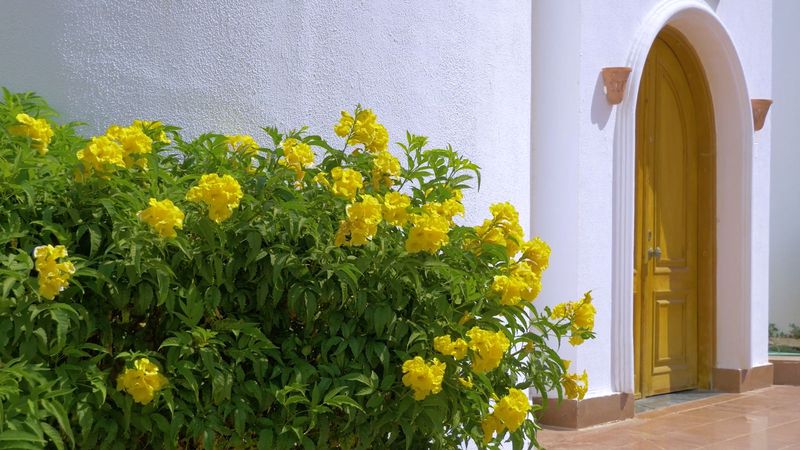
Some shrubs politely tolerate heat. Yellow bells actually seems to get happier the hotter it gets, pumping out bright trumpet flowers right through the summer.
Growth is quick in warm soil, often reaching 6 to 10 feet tall in a couple of seasons. Planted in fall, it focuses on roots during winter, then shoots upward as soon as temperatures climb.
By midsummer, the lush green leaves can shade windows and wall sections that once glowed hot to the touch.
One honest note: a hard winter freeze can nip it back in low spots. Mulch the base and plant it close enough to the warm wall, about 4 to 5 feet out, to soak up stored heat on cold nights.
It bounces back quickly in spring.
Hummingbirds, carpenter bees, and butterflies treat the flowers like a buffet, and the long bloom season keeps them coming for months. Water deeply once a week in summer during the first year.
Cut back any frost-touched stems in March, and you will get fresh growth that fills in the shade faster than ever. It is an easy way to swap a glaring wall for a buzzing, golden curtain.
6. Desert Willow
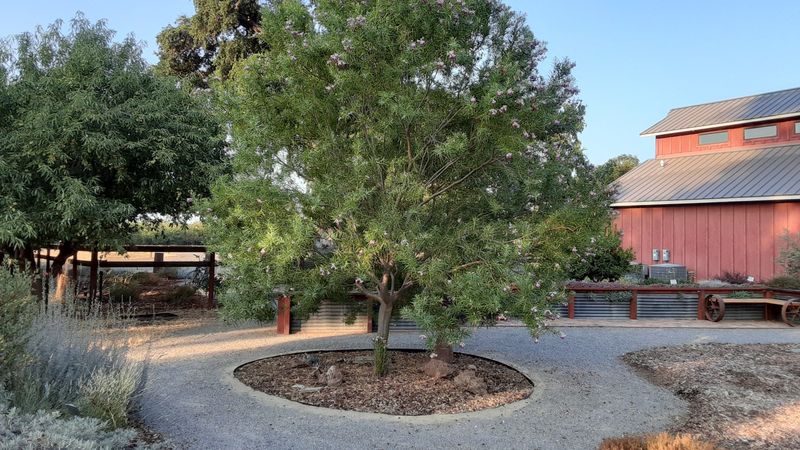
Technically, desert willow walks the line between big shrub and small tree, and that flexibility is exactly why it earns a spot here. Grown as a multi-trunk shrub, it fans out to about 15 to 20 feet, casting soft, filtered shade over a wall.
Its thin, willow-like leaves let a bit of breeze pass while still blocking harsh rays. In winter, the leaves drop, letting warm sun reach your house during the cool months.
That seasonal switch is a quiet way to save energy all year long.
From late spring through summer, orchid-like flowers in pink, lavender, or white cover the branches. Hummingbirds visit constantly, and native bees work the blooms from morning to evening.
Varieties like Bubba or Timeless Beauty bloom heavily and grow fast.
Fall planting fits it perfectly, since roots grow in cool soil while the top rests. Give deep water every week or two the first summer, then much less after.
Place it 8 to 10 feet from the wall so the canopy reaches over without crowding the eaves. As a native, it handles caliche and alkaline soils far better than most nursery imports.
7. Red Bird of Paradise
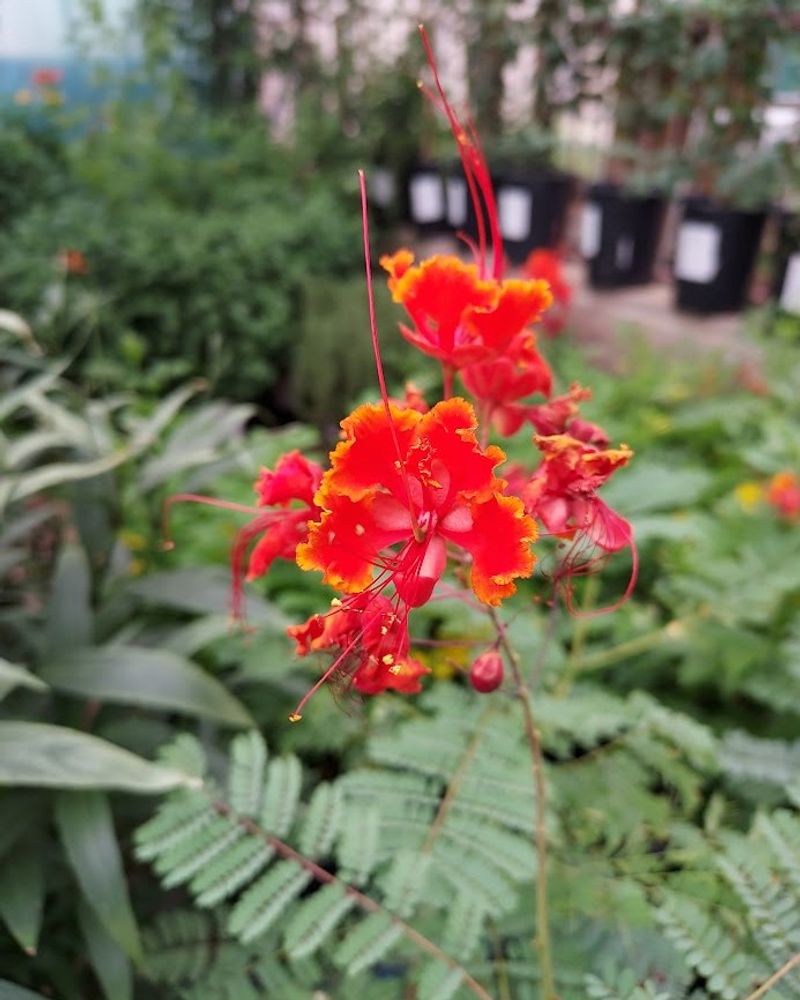
Think of fireworks that last all summer. Red bird of paradise bursts into orange, red, and yellow flower clusters right when the thermometer hits triple digits.
Among the fastest summer growers around Phoenix, it can jump from a 5-gallon pot to a 6 to 8 foot shrub in a single warm season. That speed makes it a strong partner for slower evergreens.
Plant both in fall, and the bird of paradise fills the gap while the others catch up.
It does lose leaves or freeze back in winter in many areas, so think of it as summer shade rather than a year-round screen. Many gardeners cut it down to about a foot tall in late winter.
It regrows fast and blooms heavier for it.
The flowers pull in hummingbirds and large butterflies, adding color and motion to a wall that may have looked empty. It thrives in full sun, reflected heat, and poor soil.
Water weekly in summer at first, then every couple of weeks. Keep in mind that the seeds should stay away from curious pets and kids, so pick up dried pods before they scatter.
8. Jojoba
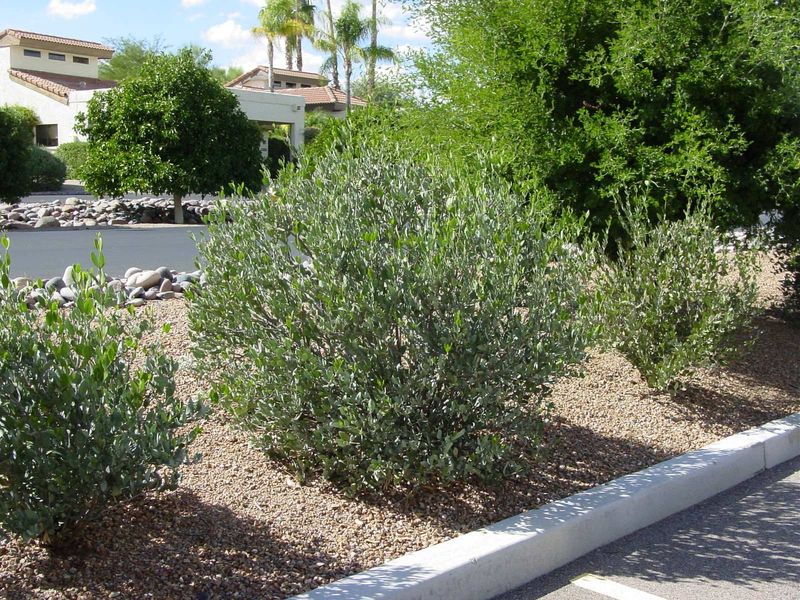
Quail families often show up within weeks of planting jojoba. This Sonoran Desert native forms a dense, rounded mound of leathery gray-green leaves that birds love for cover.
What sets it apart is pure grit. Jojoba can handle full sun, blasting wind, rocky soil, and long dry spells with almost no help.
Its leaves turn their edges toward the sun at midday, a clever trick that cuts heat stress. Plants usually reach 6 to 10 feet tall, giving solid shade to the lower wall where heat soaks into the foundation.
Growth starts slower than some others here, so buy the largest container size you can afford. A 15-gallon jojoba planted in October will be a respectable shade shrub by the following summer.
After that, it just keeps filling out.
Fun fact: the seeds contain a liquid wax used in shampoos and lotions, and native people used them for centuries. Female plants make those seeds, which ground squirrels and birds happily eat.
Water every week or two the first year, then rarely. Keep the bottom branches lifted off the ground a little, which helps reduce shady clutter that scorpions might use as a hideout.