How Fire Ants Affect Box Turtles, Ground Nesting Birds, And Other North Carolina Wildlife
A box turtle hatchling is about the size of a quarter, and a fire ant colony does not care. Red imported fire ants swarm anything that cannot get away, which makes a nest on the ground a risky place to start life.
Turtle hatchlings, ground-nesting birds, and the eggs and chicks they tend are all vulnerable. Even small mammals and snakes can suffer when mounds spread through their territory.
North Carolina yards are often part of this habitat, so what happens in your lawn matters. Fire ants also change how other insects live, which affects the food chain above them.
Treating mounds without harming other wildlife takes some care, since broad sprays reach more than the ants. Understanding the full impact helps you choose control methods that protect what you want to keep.
1. They Attack Box Turtle Eggs And Hatchlings
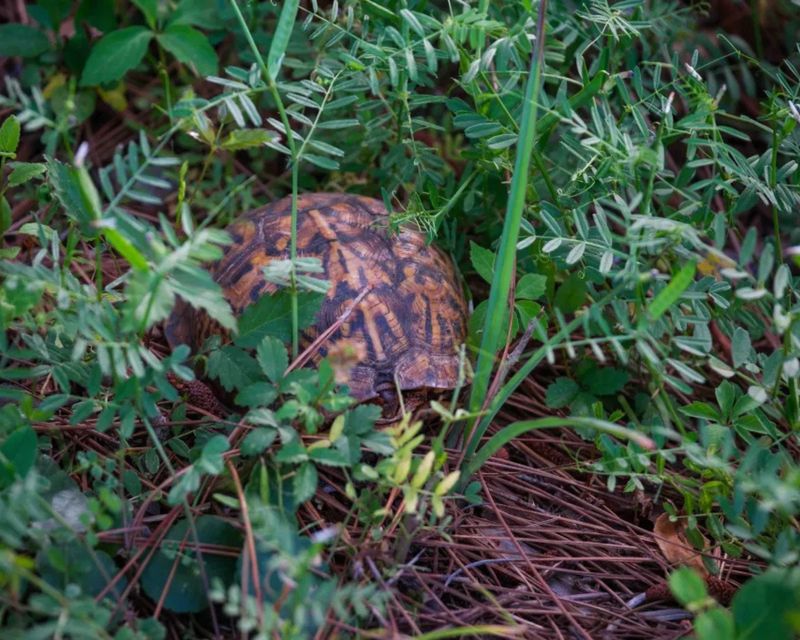
A baby box turtle is about the size of a quarter when it first pushes out of its shell. That tiny size makes it easy prey for red imported fire ants (Solenopsis invicta).
Researchers have found that these ants can break into turtle nests, especially once the eggs start to crack open during hatching.
Once the shell splits, the ants can smell the moist egg and the soft baby inside. They swarm fast and sting over and over.
A newly hatched turtle cannot outrun them, and its shell is still soft, so it has very little protection.
The problem gets worse because of where turtles choose to nest. Eastern box turtles (Terrapene carolina carolina) dig their nests in sunny, open soil where the warmth helps the eggs develop.
Fire ants love that exact same kind of ground for building their mounds. So turtle moms and ant colonies often end up as close neighbors without either one knowing it.
North Carolina named the eastern box turtle its official state reptile in 1979. Many people grow up spotting these colorful shelled friends crossing roads after a summer rain.
Sadly, box turtles grow slowly and may take seven to ten years before they can lay eggs. Each female lays only a few eggs a year, so every lost nest hurts.
You can help in simple ways. If you notice a box turtle digging in your yard in late spring or early summer, mark the spot and check the area for fire ant mounds nearby.
Treating mounds close to known nesting areas, well before hatching time in late summer, gives those little turtles a better shot at reaching the safety of the woods.
2. Ground Nesting Birds Are Especially Vulnerable
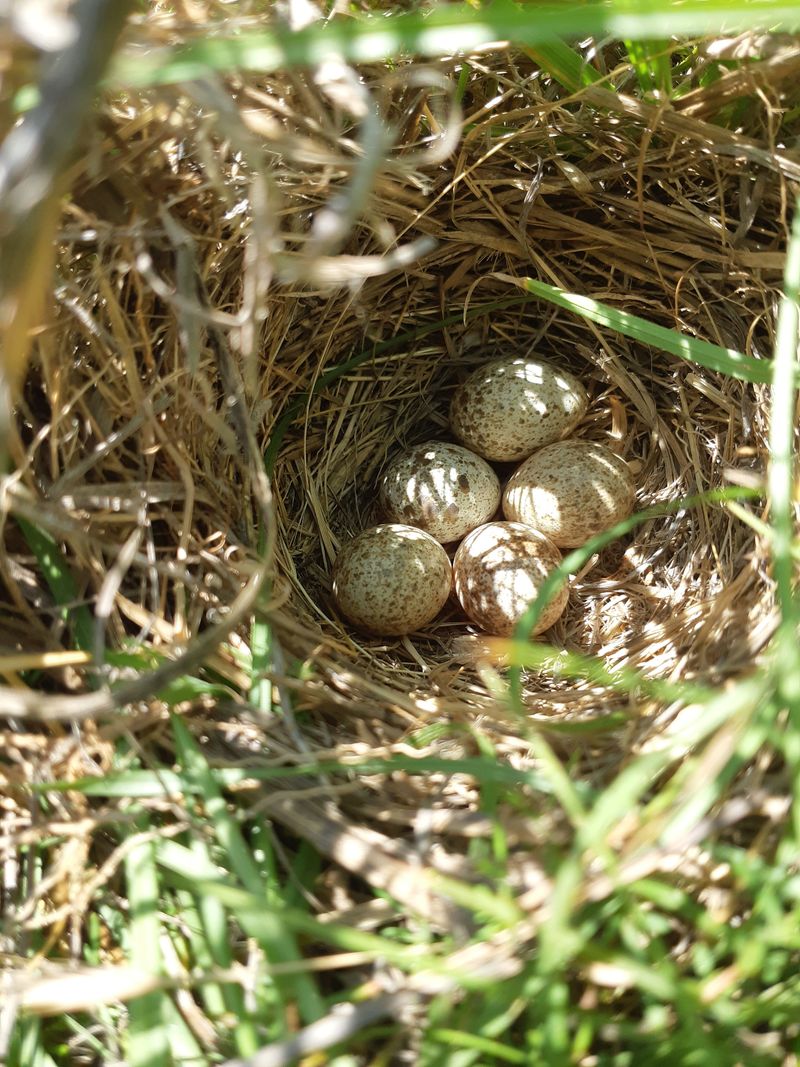
Few sounds say summer in the countryside like the cheerful bob-WHITE call of a quail. That whistle belongs to the northern bobwhite, a plump little bird that builds its nest right on the ground.
Life down there comes with a hidden danger, and it often wears six legs. Fire ants are drawn to eggs at a very specific moment. When a chick begins pipping, or poking a small hole through its shell, the opening gives ants a way in.
Your North Carolina Garden Changes Every Week. Your Plan Should Too.
Gardening in North Carolina changes quickly throughout the season. Every Friday you’ll receive a simple weekly plan showing exactly what to plant, prune, fertilize, harvest, and protect so you never miss the right timing.
The ants can sting the chick before it even gets free. Even after hatching, quail chicks stay at risk during their first days of life. They are small, wobbly, and still learning to follow their mother.
Studies in the southern United States have linked areas with high fire ant numbers to lower chick survival for bobwhites.
Nests tucked in fields, grasslands, and along field edges face the most exposure. Those sunny, open spots offer great cover for birds, yet they also make perfect homes for ant mounds.
Other ground nesters, like some sparrows, share many of the same risks. Bobwhite numbers in North Carolina have dropped a great deal since the 1960s, mostly due to habitat loss.
Fire ants add one more challenge for a bird that already needs our help. If you manage land with fields or meadows, consider treating fire ant mounds in early spring before quail nesting season gets going.
Leaving patches of native grasses and wildflowers also gives broods safer places to feed and hide while they grow.
3. Reptile And Amphibian Young Face Risks Too
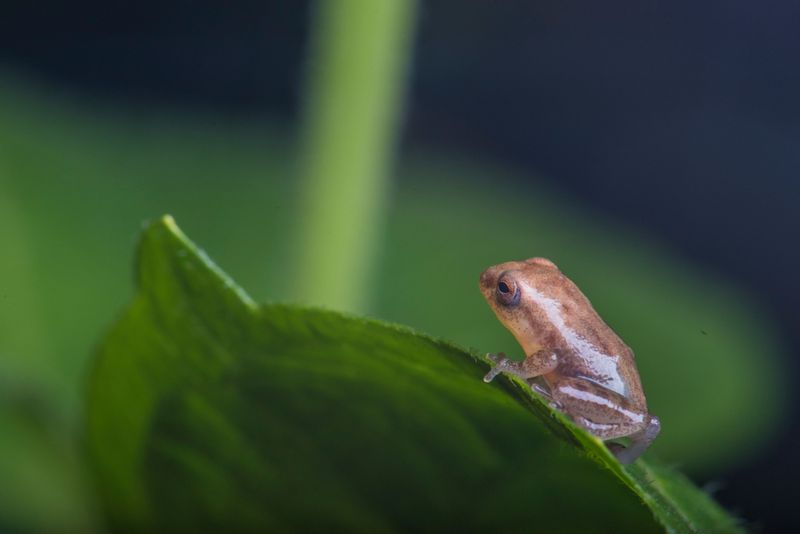
Turtles are not the only cold-blooded critters with an ant problem. Many lizards and snakes also bury their eggs in soil, and fire ants treat those hidden nests like an open pantry.
When eggs start to hatch, the ants can move in quickly and sting the tiny newcomers. Think about a five-lined skink or a young rat snake taking its very first look at the world. It is small, a bit sluggish, and has no idea what is coming.
A swarm of fire ants can overwhelm it in moments. Frogs and toads face their own troubles. After they leave the water as tiny froglets, they hop across open ground to find new homes. Those little journeys often pass right through fields and yards packed with mounds.
Small size, slow movement, and brand new life are the three traits that put animals in the most danger. Sunny, disturbed spots like roadsides, cleared lots, and freshly mowed areas tend to have the most mounds.
Unfortunately, many reptiles enjoy basking in those same warm places. North Carolina is home to a wide range of reptiles and amphibians, and many of them live in the Coastal Plain and Piedmont. Those regions also happen to host most of the state’s fire ants.
So the overlap is large, and young animals feel it first. Want to help? Keep brush piles, logs, and leafy corners in quiet parts of your yard.
These shady spots offer cover where fire ants are less common. Avoid disturbing soil near ponds in spring, when froglets and toadlets are on the move.
4. Newborn Small Mammals In Ground Nests Can Be Harmed
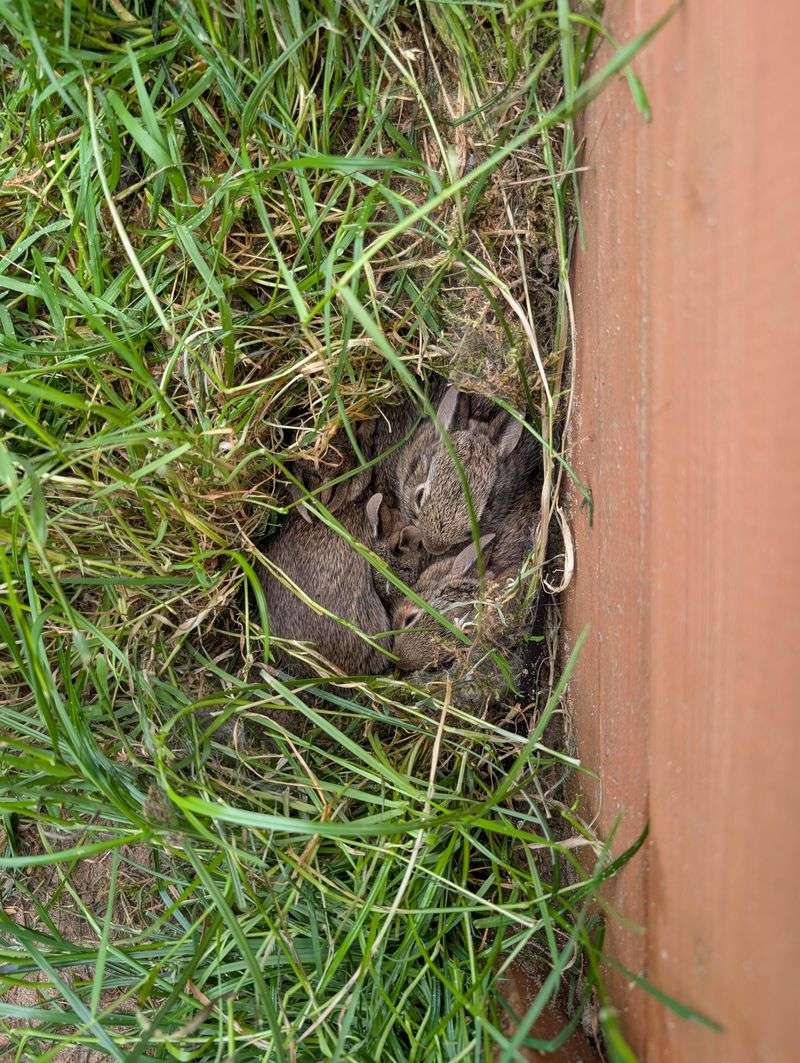
Ever found a shallow hole in your lawn lined with fur and grass? Chances are, it belonged to an eastern cottontail.
Mother rabbits make these cozy little nests right on the ground, and the babies inside are surprisingly helpless.
Baby rabbits are born with their eyes closed and very little fur. For their first several days, they cannot hop away or defend themselves.
If fire ants discover the nest, the babies can be stung many times. Rabbits are not alone. Some mice, voles, and other rodents also raise young in ground nests.
Their newborns share the same weak spot, since they are pink, tiny, and unable to move much at first.
Here is some good news, though. The worst effects usually happen in places where fire ant mounds are packed close together.
Animals that raise babies above ground, like squirrels in tree nests, face far less risk. Deep burrows located away from mounds also offer better protection.
Cottontails are common across North Carolina. They often tuck nests into lawns, fields, and the edges of gardens, which are the very places where homeowners also find fire ants.
That makes your backyard an important spot for helping these furry neighbors. If you find a rabbit nest, leave it alone and keep pets away. The mother visits only a few times a day, usually around dawn and dusk, so an empty-looking nest is normal.
Look around for fire ant mounds within several feet and treat them carefully with a bait product. Your quick action could give a whole litter of bunnies a safer start.
5. They Push Out Native Ants
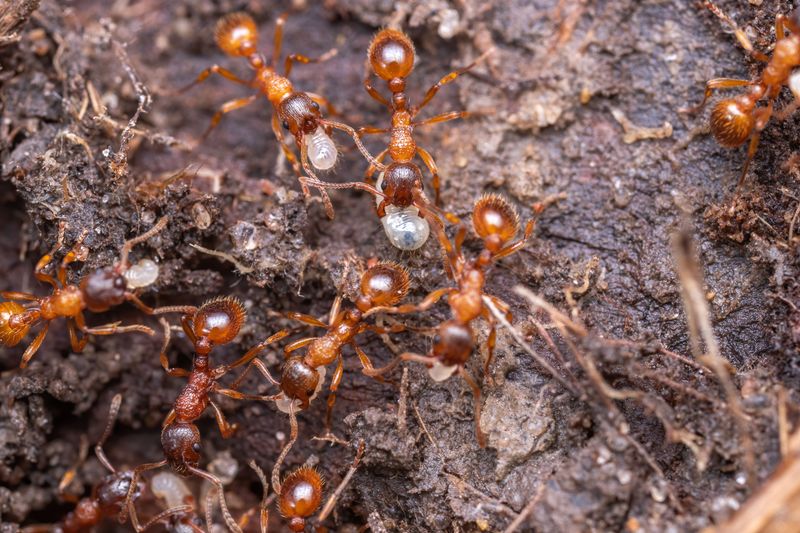
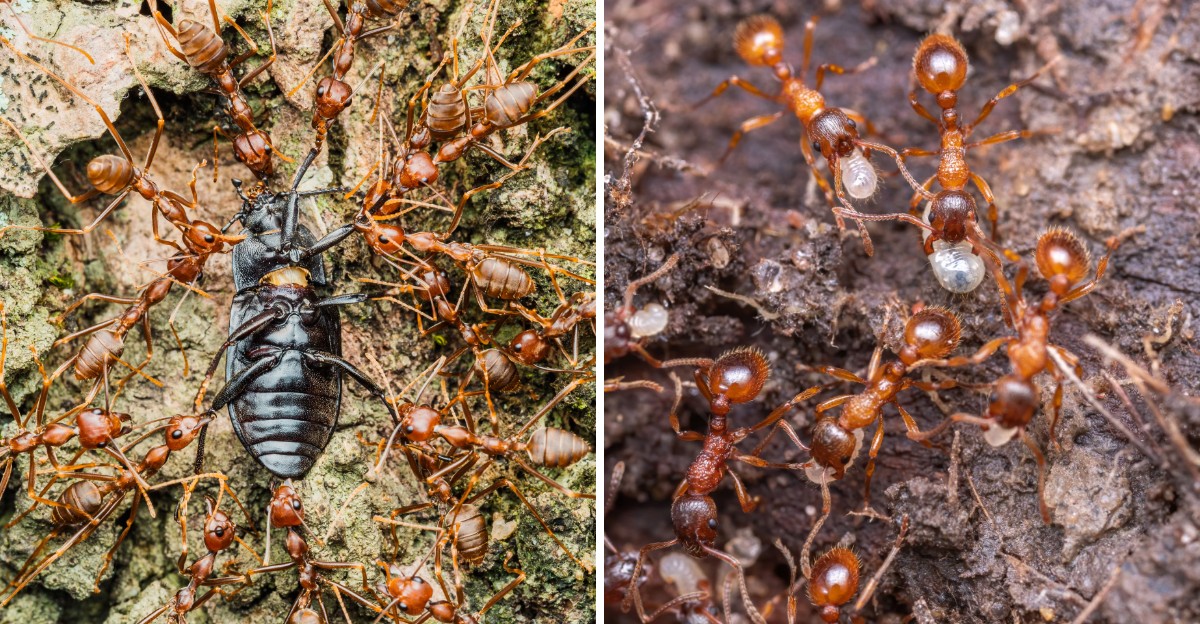
Not all ants are troublemakers. North Carolina has well over a hundred kinds of native ants, and many of them quietly keep forests and fields healthy. Fire ants, however, are bullies that do not like sharing space.
Fire ant colonies can grow to hold hundreds of thousands of workers. They are aggressive, they fight hard for food, and they spread quickly.
When they move into an area, native ant species often shrink in number or disappear from that spot altogether.
Why should anyone care about losing a few native ants? Because some of them work as gardeners.
Many woodland wildflowers produce seeds with a small, fatty treat attached, called an elaiosome. Native ants carry these seeds home, eat the treat, and toss the seed into their nest trash, where it can sprout.
Scientists call this partnership myrmecochory, a big word for ants planting seeds. In North Carolina, native ants help spread trilliums, wild ginger, bloodroot, and violets.
Fire ants are not reliable partners for this job, so plants may struggle to spread when native ants are pushed out.
Areas with heavy fire ant activity tend to have fewer types of native ants. That loss can ripple outward through the food web, since native ants also feed birds, lizards, and other insects.
Gardeners can support native ants by keeping some natural leaf litter, planting native woodland flowers, and avoiding broad insect sprays. Treat fire ant mounds one at a time instead of blanketing the whole yard.
Protecting these small helpers keeps your spring wildflowers blooming for years to come.
6. They Reduce Insects Other Animals Need For Food
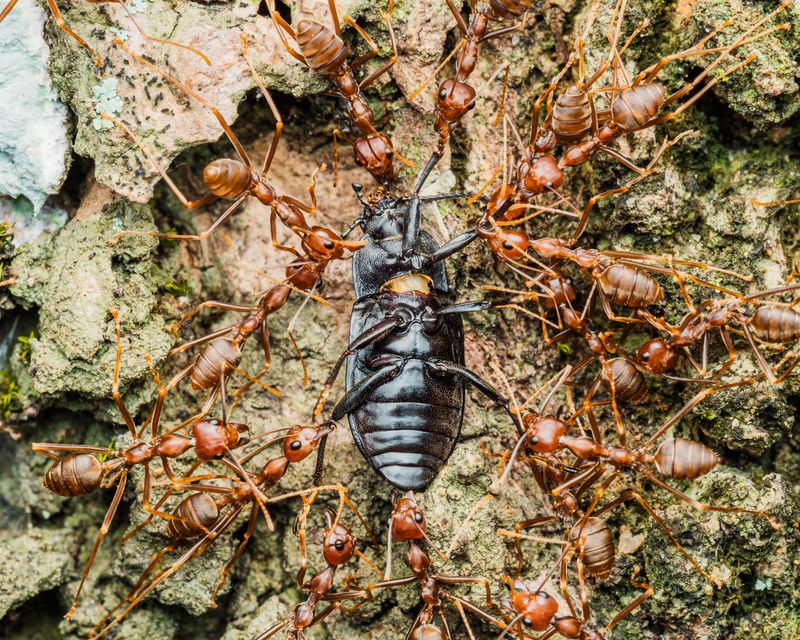
Picky eaters they are not. Fire ants will happily eat beetles, caterpillars, crickets, spiders, worms, and plenty of other small creatures that live near the ground. Their menu is huge, and their appetite never seems to slow down.
That hungry habit creates a problem for other animals. Birds, lizards, toads, and even some small mammals depend on those same bugs for meals. When fire ants clean out the insect buffet, there is less food left for everyone else.
The effect is strongest where fire ant colonies are very crowded. Open fields, sunny lawns, and grassy roadsides can hold dozens of mounds per acre. In those spots, the competition for insects becomes fierce.
Spring and summer are when this matters most. Many songbirds, including bluebirds, wrens, and Carolina chickadees, feed their babies almost nothing but insects.
A single brood of chickadees can need thousands of caterpillars before the young birds leave the nest.
North Carolina parents in feathers work hard during nesting season. If fire ants have already gobbled up much of the local insect supply, those birds may need to fly farther and spend more energy finding food.
That extra effort can make raising a family much tougher. You can give backyard wildlife a helping hand. Plant native trees and shrubs like oaks, cherries, and dogwoods, since they host many caterpillars.
Let a corner of your yard grow a bit wild to give ground insects a safe home. Then, manage fire ant mounds in high traffic areas so native bugs have a better chance to thrive and feed the creatures you love watching.
7. Their Effects Aren’t Entirely One-Sided
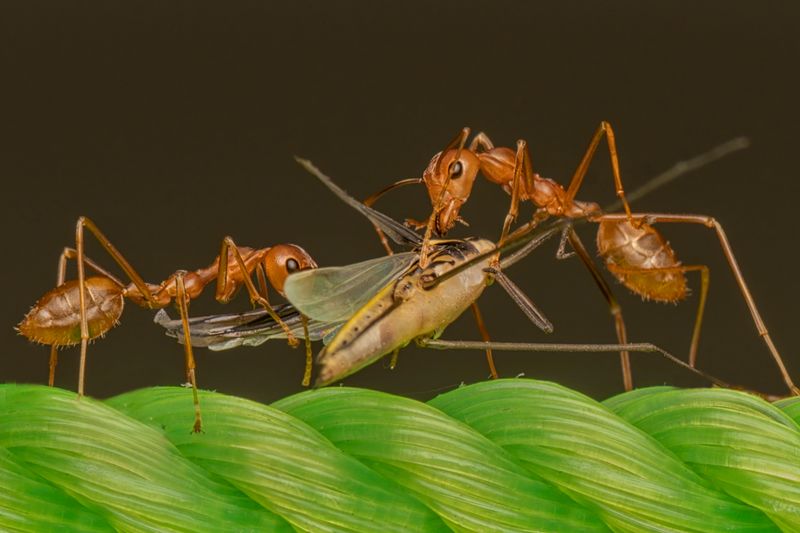
Here is a twist you might not expect. Fire ants are not purely villains in every story. In some situations, they actually do jobs that farmers and homeowners appreciate.
Because fire ants eat so many insects, they sometimes go after pests too. In cotton and sugarcane fields across the South, researchers have seen them feeding on crop pests like boll weevils and sugarcane borers.
Some studies have also found fewer ticks in areas where fire ants are very common. Fewer ticks sounds great, right? Still, those benefits come with a heavy price.
The same ants that eat pests also harm baby turtles, quail chicks, native ants, and helpful insects. Their painful stings can also send people, pets, and livestock to the doctor or vet.
So the bad effects clearly outweigh the good ones. Even so, knowing both sides helps you make smarter choices. You do not need to wage war on every single mound across every acre you own.
Instead, think about where fire ants cause the most trouble. A mound beside the swing set or near a box turtle nesting spot deserves attention.
A colony far out at the back of a large field, away from people and sensitive wildlife, might be a lower priority.
North Carolina homeowners and land managers face this balancing act all the time. They want safe yards and healthy crops, but they also want thriving wildlife.
A thoughtful approach saves money, reduces chemical use, and focuses effort where it truly counts. Sometimes the wisest move is choosing your battles carefully rather than treating everything everywhere.
8. Thoughtful Control Helps Protect Wildlife
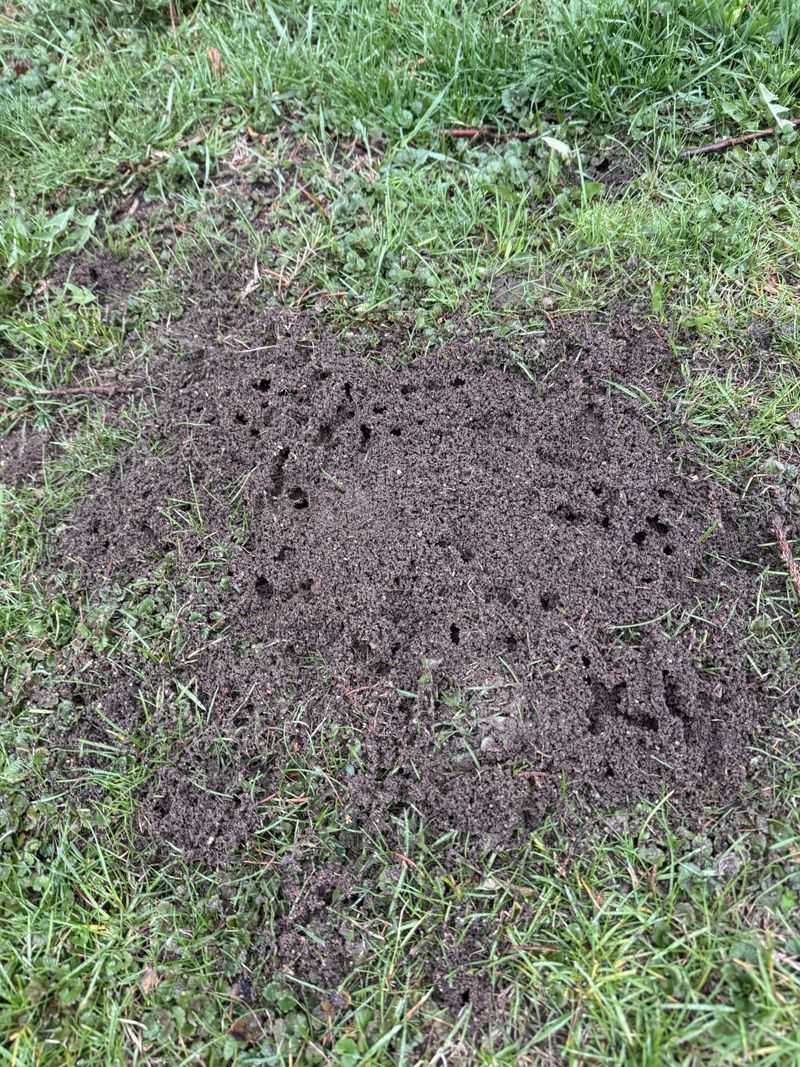
Good news for anyone tired of fire ants: you can fight back without harming the wildlife you want to protect. The secret is working smarter, not harder.
Targeted control knocks down ant numbers where they hurt the most while sparing helpful bugs and animals.
Fire ant baits are a great place to start. They contain only a small amount of active ingredient mixed into a food the ants love.
Worker ants carry the bait back to the colony and share it, which eventually reaches the queen.
NC State Extension recommends a two-step method. First, broadcast bait over the whole problem area, ideally when the ground is dry and ants are actively foraging, often on warm days in spring or fall.
Then, a few days to weeks later, treat any remaining nuisance mounds individually. Focus your efforts on lawns, play areas, and spots near wildlife habitat where mounds are packed tight. Places where box turtles nest or quail raise chicks deserve special attention.
Fresh bait works best, so buy only what you need and store it sealed. Water safety matters too. Keep all fire ant products away from ponds, streams, and wetlands, since many can harm fish, frogs, and aquatic insects.
Always read and follow the label, because the label is the law. Fire ants are now settled across much of the Piedmont and Coastal Plain, so they will not vanish overnight. Steady, careful control still makes a real difference.
With a little planning, your yard can become a safer place for turtles, birds, rabbits, and the many other creatures that call North Carolina home.