10 Pumpkin And Gourd Varieties That Thrive In Georgia’s Fall Climate
Big orange pumpkins pictured on northern farm stands often struggle in a hot, humid Southern garden.
Vines can collapse in midsummer, and leaves may turn white with mildew before the fruit colors up. Plenty of gardeners give up after one disappointing harvest and buy decorations instead.
Some pumpkins and gourds handle long, sticky summers far better, partly because they come from warmer regions.
Their shapes and colors go well beyond the classic jack-o’-lantern, from pale tan to warty and striped.
Planting dates matter too, since many types need a long, warm stretch to mature before the first Georgia frost. Jot down which varieties catch your eye at markets this season, because next year’s planting window comes sooner than expected.
Several store well for months, so the same harvest can decorate your porch and fill your kitchen.
1. Orange Bulldog Offers Classic Jack-O’-Lantern Size With Added Disease Resistance
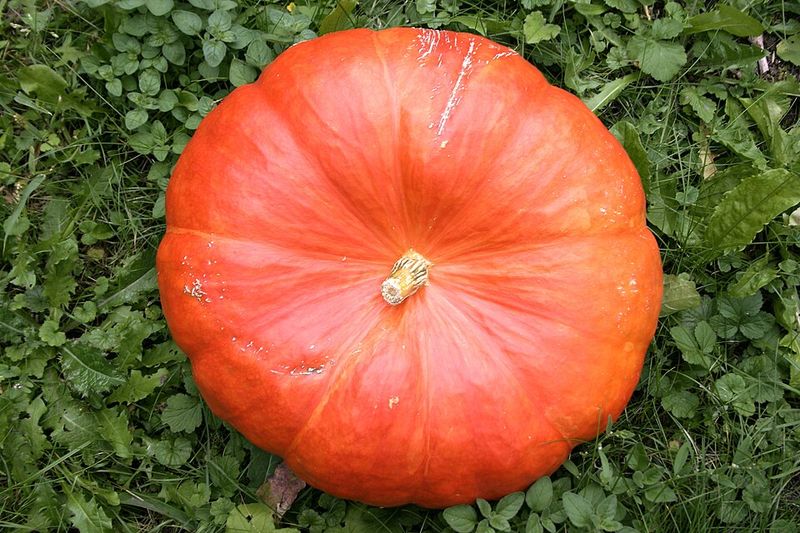
Big orange pumpkins look great on a porch, but powdery mildew can ruin the vines before the fruit matures. Orange Bulldog was bred with that problem in mind.
Seed catalogs list it as having intermediate resistance to powdery mildew, which helps in humid Southern summers.
Resistance is not the same as immunity, though. In a rainy stretch, you may still see white patches on leaves, just usually slower and milder than on older varieties.
Fruits tend to land in the classic carving range, with a smooth shape and a sturdy handle. Size depends a lot on soil, water, and how many pumpkins each vine is allowed to carry.
Most gardeners in Georgia aim to plant carving pumpkins in June or early July for a fall harvest. Check the days to maturity on your seed packet and count backward from when you want them ready.
Give the vines full sun and plenty of room, since they spread wide.
Watering at the base instead of over the leaves helps keep foliage drier and less inviting to disease. Mulch also cuts down on soil splashing onto the plants.
Harvest once the skin is fully colored and the rind resists a fingernail press.
Leave a few inches of stem attached, because pumpkins with broken stems often rot sooner on display.
2. Seminole Pumpkin Vines Hold Up In Heat And Humidity
Long before seed catalogs existed, Native peoples in Florida grew this squash on the edges of the Everglades. Few pumpkins have that kind of track record in Southern heat.
Seminole pumpkin is technically a Cucurbita moschata, the same species as butternut squash.
Moschata types are often noted by Extension sources for better tolerance of squash vine borers, since their stems are tougher and more solid. That makes a real difference in South Georgia gardens where borers can be a yearly headache.
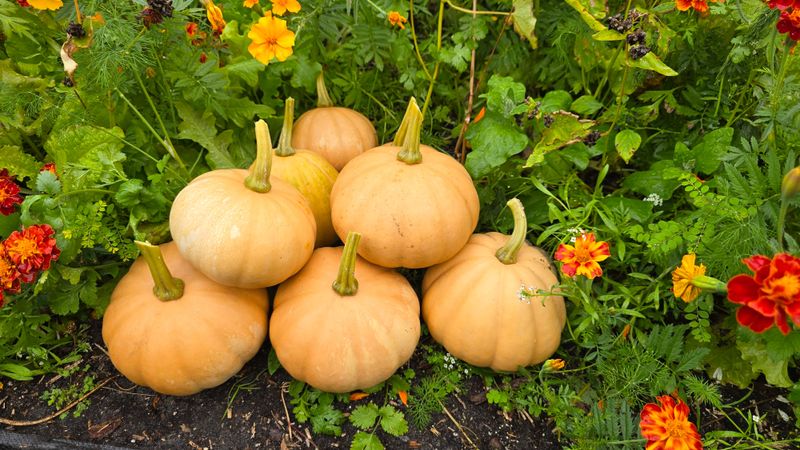
Fruits are small to medium, often tan or buff colored, and shaped like a bell or a squat ball. Their flesh is orange and sweet, and many cooks use it like butternut.
Your Georgia Garden Changes Every Week. Your Plan Should Too.
Gardening in Georgia changes quickly throughout the season. Every Friday you’ll receive a simple weekly plan showing exactly what to plant, prune, fertilize, harvest, and protect so you never miss the right timing.
Vines can run very long and even climb fences or small trees if you let them.
Plan for space before you plant. A single vine can wander well beyond a typical raised bed, so a field edge or fence line works nicely.
Heat tolerance gives you some flexibility with timing, and some Southern gardeners plant in spring or early summer.
Cured fruit is known for storing well at room temperature, often for months if the rind is undamaged. Results vary, so check stored squash now and then for soft spots.
3. Long Island Cheese Gets Its Name From Its Wheel-Like Shape
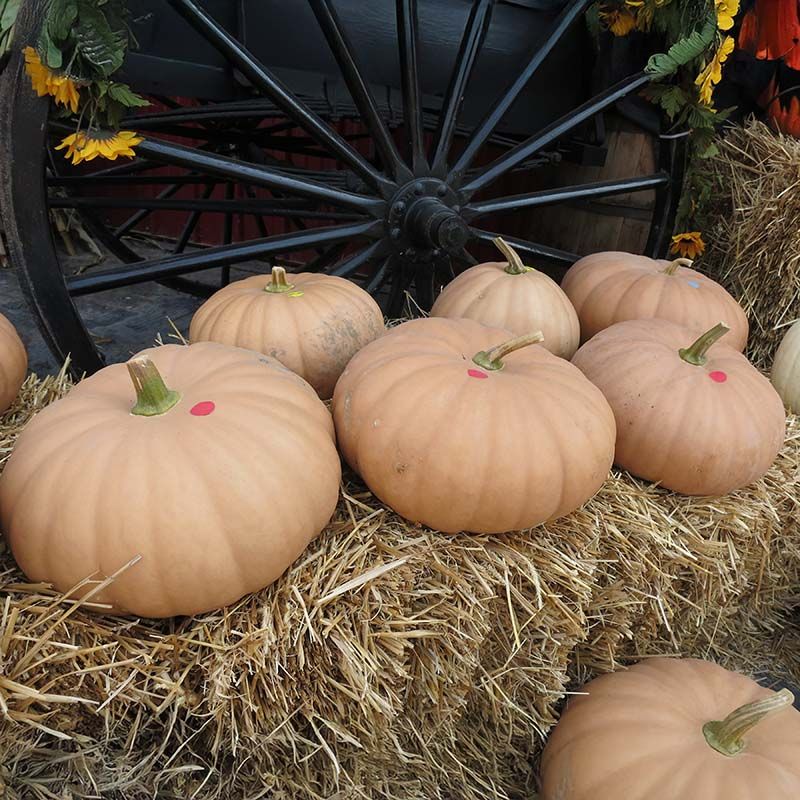
Picture an old wheel of cheese sitting on a farmhouse table. That flat, ribbed, pale tan look is exactly how this heirloom earned its name.
Long Island Cheese is another moschata pumpkin, so it shares some of the toughness that Seminole has against vine borers.
Bakers love it for pie. Its flesh is deep orange, smooth, and usually less stringy than a carving pumpkin, which makes puree easier to work with.
Fruits often weigh somewhere in the medium range, though size shifts with growing conditions.
Its muted color stands out next to bright orange pumpkins on a porch display. Pairing a few of these with white or green types makes a nice, softer fall look.
Expect a fairly long season before the fruit matures, so earlier summer planting tends to work better than late planting.
Gardeners around Georgia who struggle with borers on other pumpkins sometimes switch to this one for that reason. It still needs good care, though, including full sun, rich soil, and steady moisture during fruit set.
Once harvested, cure the pumpkins in a warm, dry spot for about a week or two.
Stored well, they can keep into winter, so you can enjoy them on display and then bake with them later.
4. Deep Ribs And Custard-Like Flesh Make Musquee De Provence A Showpiece
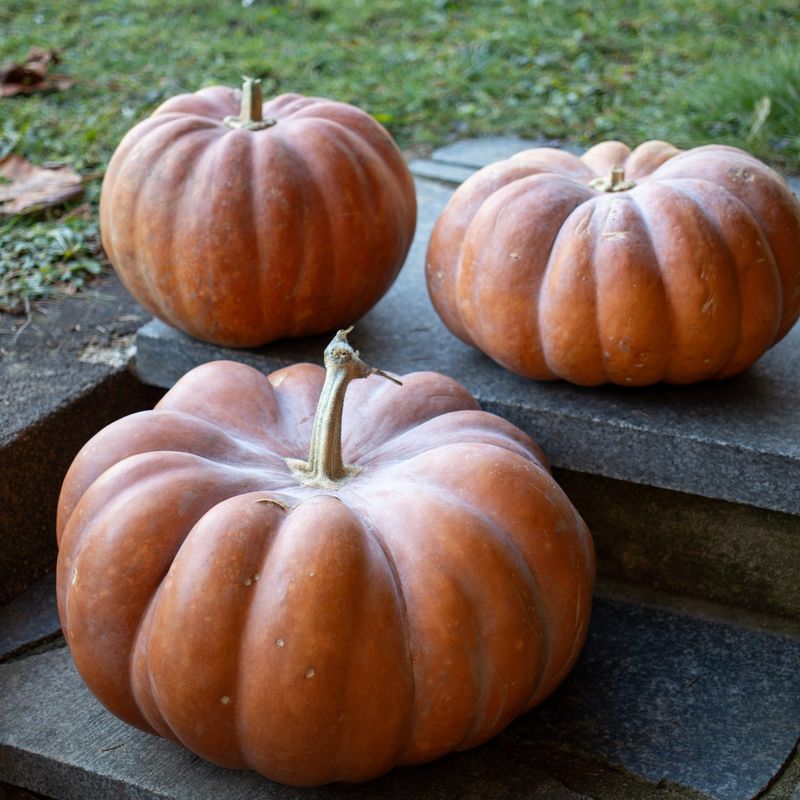
Some pumpkins look like they belong in a painting. Musquee de Provence, a French heirloom, is one of them with its deep lobes and flattened shape.
Skin starts out dark green and slowly turns a warm tan or coppery brown as it cures.
Inside, the flesh is thick, orange, and smooth. Cooks often describe it as rich and sweet, good for soups, roasting, and pies.
Like Seminole and Long Island Cheese, this variety belongs to the moschata group.
Vines are big and vigorous, and fruits can get quite heavy. Give each plant lots of room and set a board or straw under developing pumpkins to keep them off wet soil.
Its long growing season fits well with warm Southern summers, as long as you get seeds in the ground early enough. In Georgia, many growers sow it in late spring or early summer.
Don’t rush the harvest, because color change continues in storage.
A smart trick is to pick when the stem starts to dry and the rind hardens, then let it finish coloring indoors. Large fruits are often cut into wedges at farmers markets because a whole one feeds a crowd.
5. Jack Be Little Produces Palm-Sized Pumpkins For Fall Displays
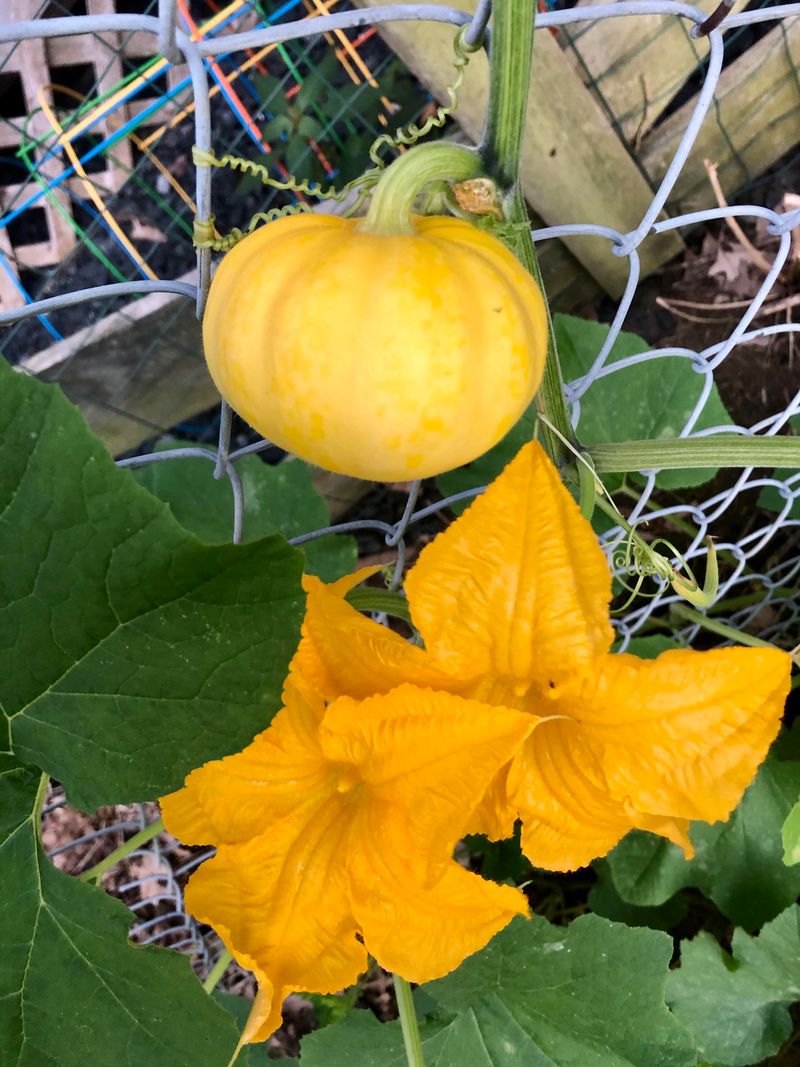
Small enough to hold in one hand, Jack Be Little pumpkins are pure fun. Kids love them, and they fit on tables, windowsills, and mantels where big pumpkins won’t.
Each fruit is flattened, ribbed, and bright orange, usually just a few inches across.
Vines produce several pumpkins each, so even a short row can fill a basket. Exact yields depend on pollination, sun, and how healthy the plants stay.
Days to maturity are shorter than most carving types.
That shorter season gives Georgia gardeners a little more breathing room. If an early summer planting fails, a later sowing may still finish in time for fall.
Vines are smaller than giant pumpkins but still sprawl, and they can be trained up a sturdy trellis. The little fruits are light enough that most trellises hold them without slings.
Powdery mildew can still show up, so pick a sunny, airy spot.
Harvest when the skin is deep orange and the stem turns woody. With dry storage and good air flow, these minis often last for weeks or even months as decorations.
They are edible too, and some cooks bake them whole as tiny serving bowls.
6. Long Hot Summers Suit Birdhouse Gourds That Need A Long Season
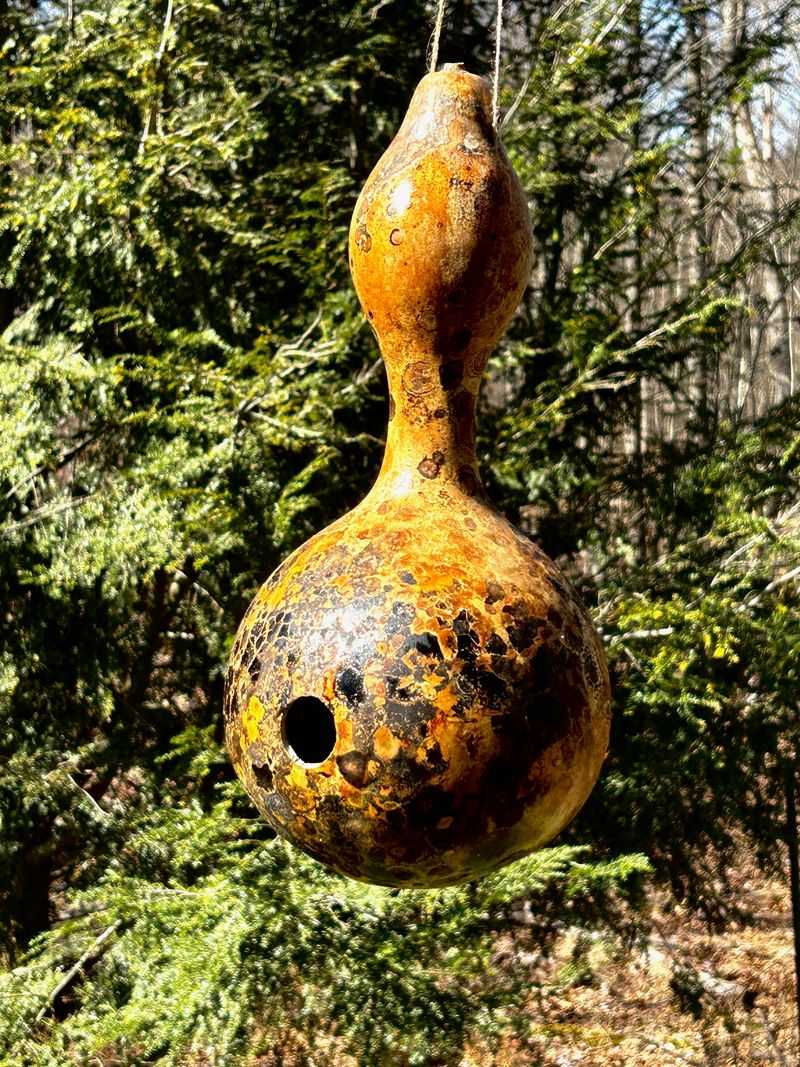
Drive through rural parts of the South and you may spot gourds hanging from poles as birdhouses. Hard-shelled bottle gourds have been used for martin houses for generations.
Birdhouse gourds are Lagenaria siceraria, a different plant from pumpkins, with white flowers that tend to open in the evening.
They need a long, warm season to mature fully, often well over 100 days. That is one reason they grow so well across much of Georgia.
Vines are huge and love to climb.
A strong trellis or fence keeps gourds off the ground, which helps them form a more even shape. Gourds that rest on soil may develop flat spots or rot.
Leave them on the vine until the stems turn brown and dry. A light frost on mature gourds is usually fine, but immature ones tend to shrivel during drying.
Drying takes patience, often several months in a spot with good air flow.
Mold on the skin is normal during this stage and usually wipes off later. Once a gourd feels light and the seeds rattle inside, it is ready to clean, drill, and hang.
7. Long-Handled Dipper Gourds Dry Into Traditional Scoops And Ladles
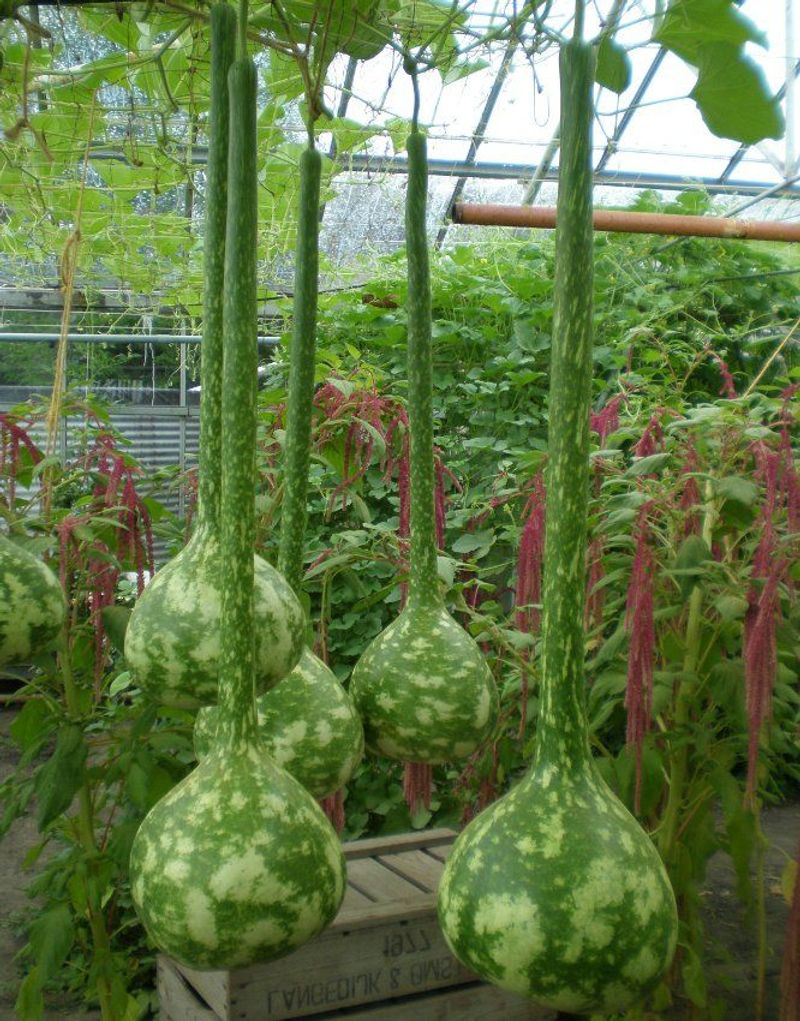
Before tin cups were common, a dried gourd dipper might hang by the water bucket. Plenty of old farmhouses relied on them.
Dipper gourds are another type of Lagenaria, with a round bulb and a long, narrow handle.
Growing method shapes the handle. On a tall trellis, gravity tends to pull the necks fairly straight, while gourds on the ground often curve or coil.
So decide early what look you want.
Vines need warm soil to get going, so wait until spring frost danger has passed before planting. Seeds have tough coats, and some growers soak them overnight to help them sprout.
Plants grow fast in summer heat and can cover a fence by midseason.
Hand pollination sometimes helps, since the night-blooming flowers may get fewer visitors in some gardens. A small brush moved from male to female blooms in the evening does the job.
After harvest, dry the gourds slowly until the shell is hard and light.
To make a dipper, cut an opening in the bulb, scrape out the seeds and pulp, and sand the edges. Many crafters seal them only for decoration, so check your finish before using one with food or water.
8. Speckled Swan Gourds Grow Graceful Curved Necks Dotted With Pale Spots
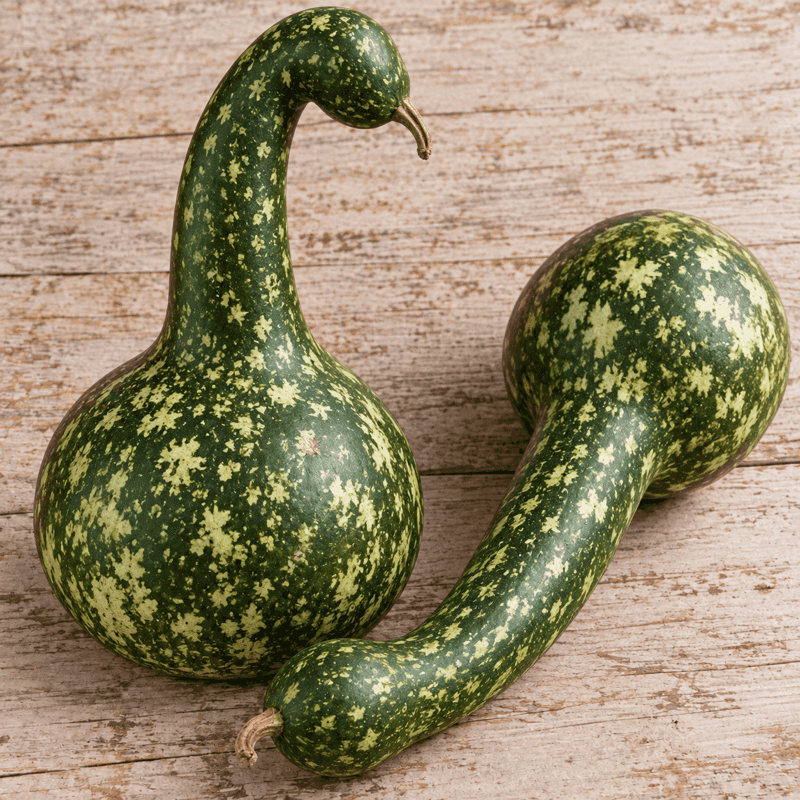
Look closely and the shape really does resemble a swan with its neck bent down. Few garden plants surprise visitors quite like this one.
Speckled swan gourds are dark green with cream or pale spots, and their curved necks form naturally when they hang from a trellis.
Like other hard-shelled gourds, they need a long, warm season. Gardeners in Georgia usually have the summer length for them, though planting date still matters.
Some people grow them only for fresh fall displays.
Others dry them for painting and carving. Their green color tends to fade toward tan or brown as they dry, so the spotted look doesn’t last forever.
Give vines a sturdy arbor or fence. Mature gourds get heavy, and a weak support can bend or snap under the load in late summer storms.
Harvest after stems dry and turn brown, handling each gourd gently to avoid bruises.
Wipe off soil and set them in a well-ventilated garage or shed to dry. Turning them occasionally helps them dry more evenly, and soft or leaking gourds should be removed quickly.
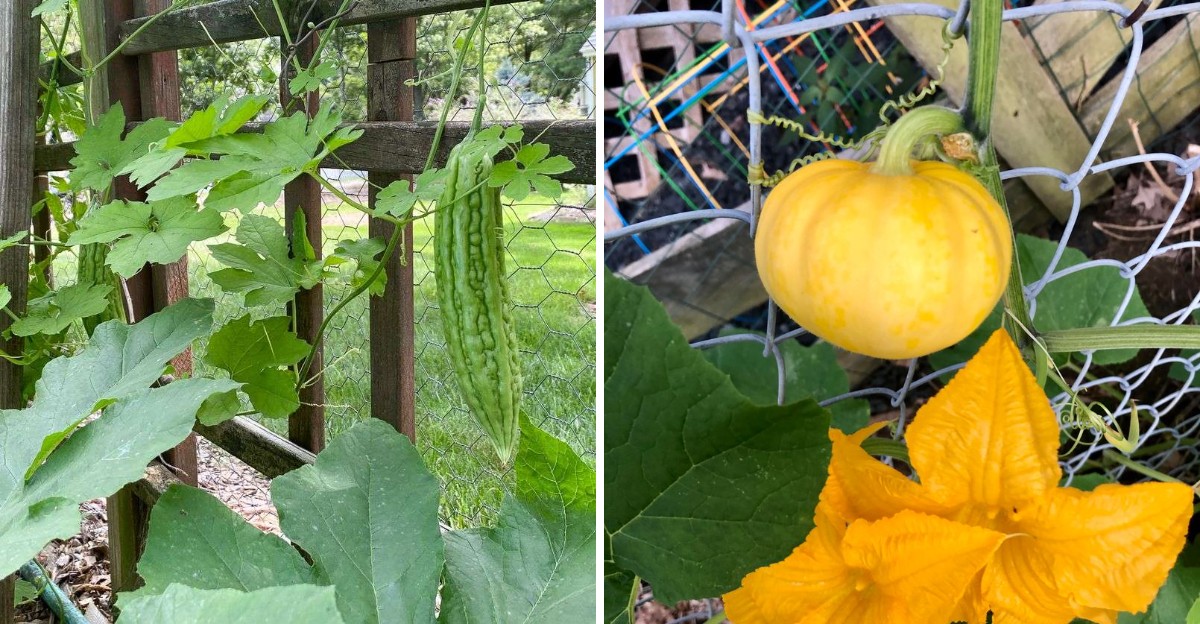
9. Bitter Gourd Thrives In Summer Heat And Is Harvested Young For Cooking
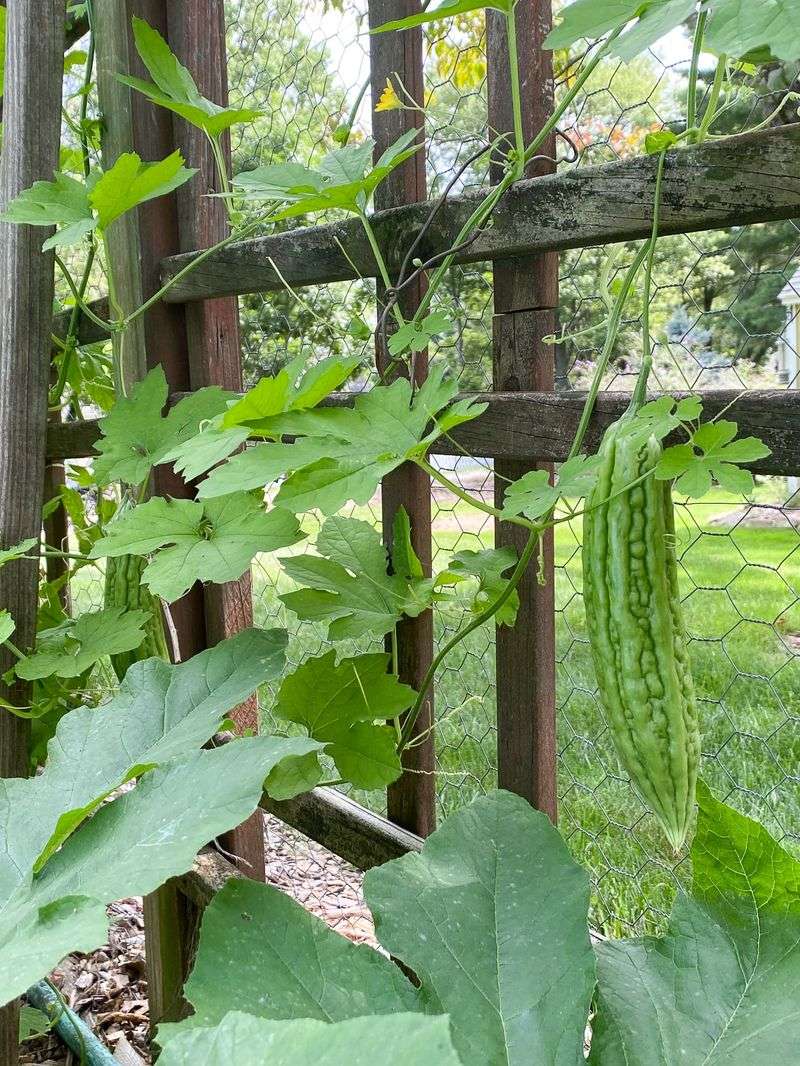
Bumpy, green, and sharply bitter, this vegetable divides opinions fast. Fans in Asian, African, and Caribbean kitchens prize it in stir-fries, curries, and stuffed dishes.
Bitter gourd, also called bitter melon, is Momordica charantia, a fast-climbing vine with small yellow flowers.
Warm temperatures suit it well, which is why it grows nicely through a Georgia summer. Cool soil slows it down, so planting after the weather warms up works best.
A trellis keeps the long fruits straight and easier to spot.
Timing the harvest matters most here. Pick fruits while they are still green and firm, since bitterness often increases as they mature.
Ripe fruits turn yellow or orange and may split open to show bright red seed coverings.
Those are past their best for most recipes. Frequent picking can also encourage more fruit to form over the season.
Soaking slices in salted water is a common kitchen step to soften the bitter bite.
A word of caution about the wild relatives that sometimes appear in Southern areas. Only eat fruit from plants you grew from known seed, and speak with a doctor about it if you take medications for blood sugar.
10. Luffa Vines Produce Gourds You Can Dry Into Natural Sponges
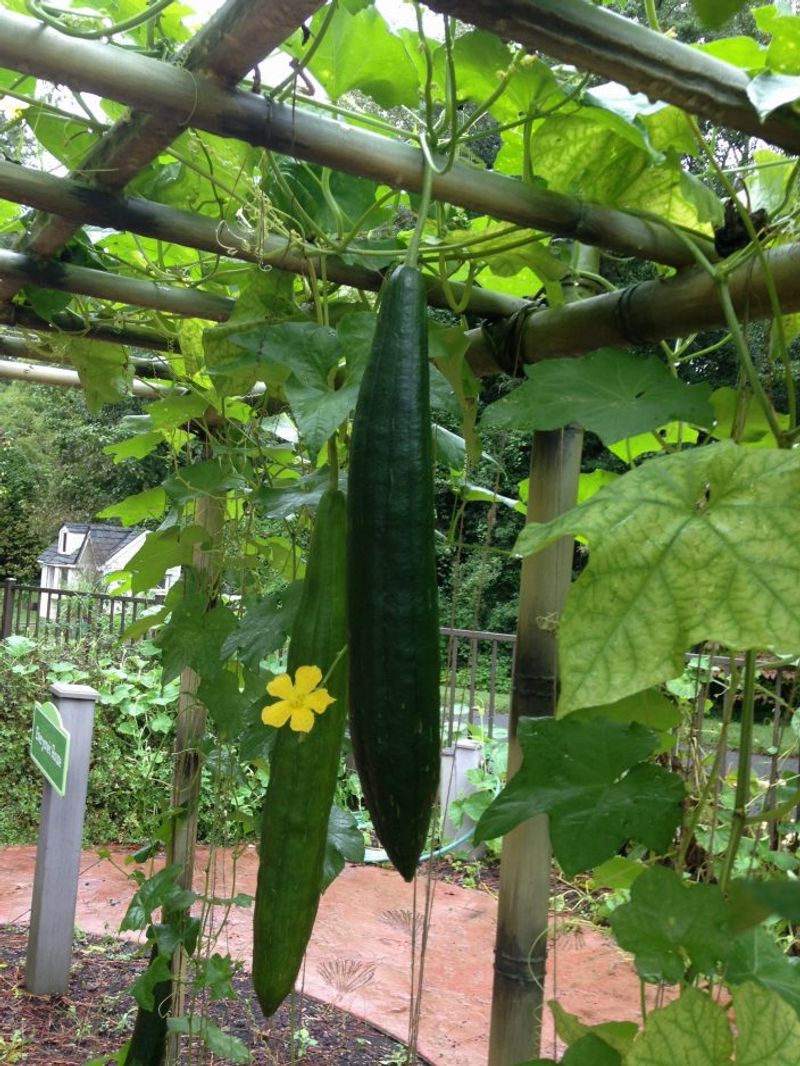
Most people are surprised to learn that bath sponges can grow on a garden fence. Luffa gourds make that possible.
Luffa needs a long, hot season, which Georgia can provide better than many northern states.
Start seeds after the soil warms in spring, since a late start may leave gourds too young to form good fibers by fall. Some gardeners begin seeds indoors to gain a few weeks.
Vines climb hard and produce bright yellow flowers that bees visit often.
Very young luffa can be cooked like summer squash. For sponges, leave the gourds on the vine until they feel light and the skin starts turning yellow or brown.
A dry gourd usually rattles with loose seeds when shaken.
Peeling comes next. Cracking the brittle skin and pulling it away reveals the fibrous sponge inside, and soaking stubborn ones in water can help.
Shake out the seeds and save some for next year.
Rinse the sponges and let them dry in the sun. Gourds picked green tend to make softer, thinner sponges, while fully mature ones are usually firmer and tougher for scrubbing.