Something Is Eating Your Halloween Pumpkins Overnight In New York. Here’s Who
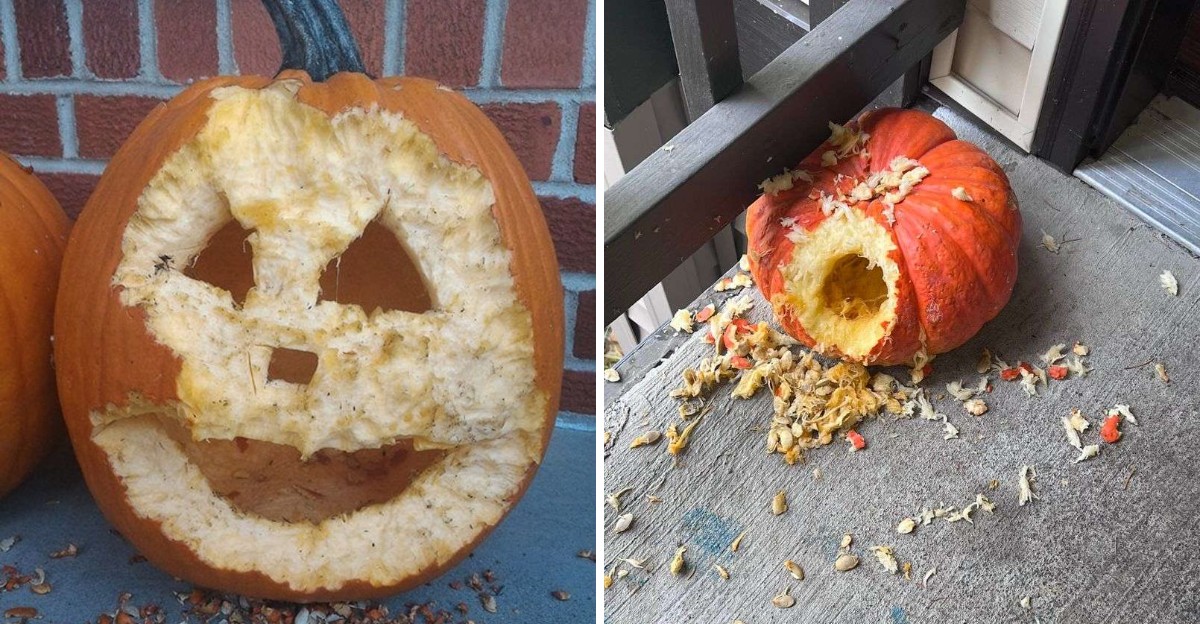
You set out a perfect pumpkin at sunset, and by sunrise it looks like a monster took a bite. Bits of orange rind lie scattered across the steps, and the carved grin now has a brand new hole.
Across New York, this little mystery shows up on porches every single October. The good news is that the guilty party is not a ghost or a prankster down the street.
Hungry wildlife is getting ready for the cold months, and your pumpkin looks like a free snack bar. Some visitors sneak in by moonlight, while others show up boldly in broad daylight.
Each one leaves behind its own clues, from tiny tooth marks to muddy prints. Once you know who is visiting, you can protect your display without harming anyone.
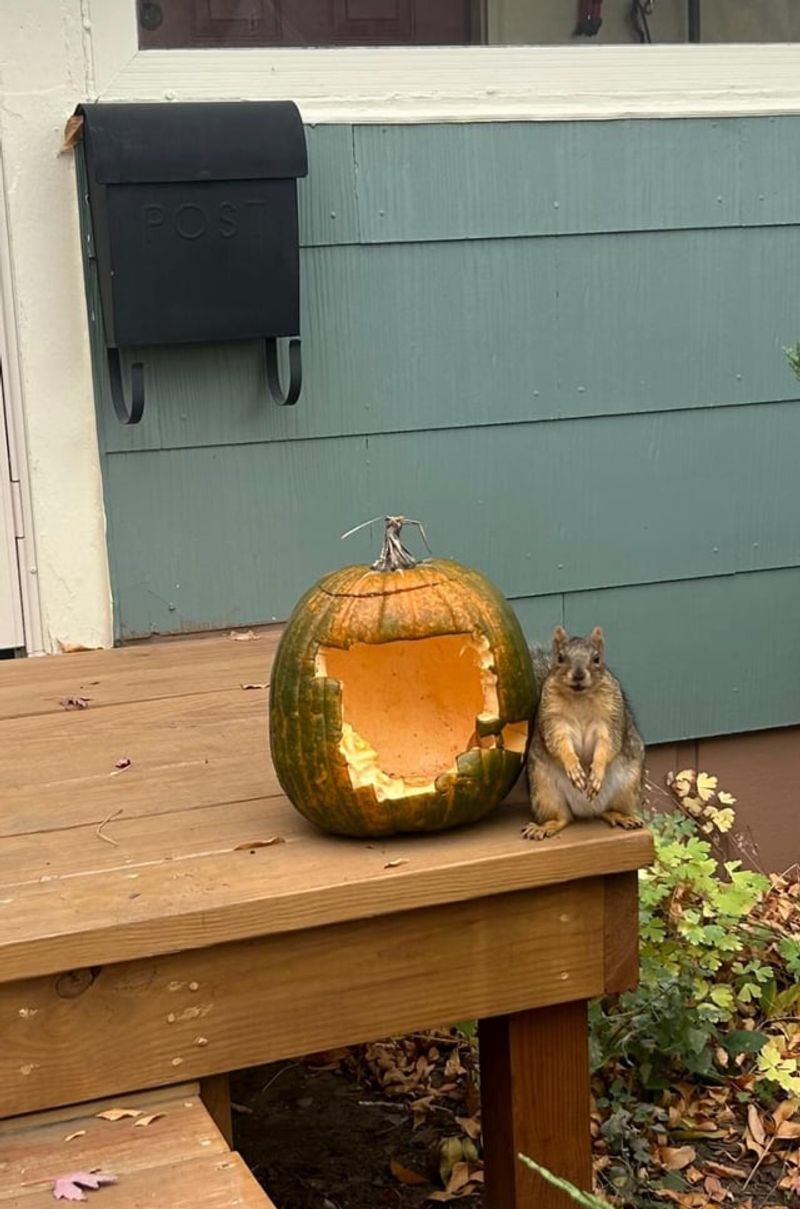
Squirrels Gnaw Holes Into Carved Faces
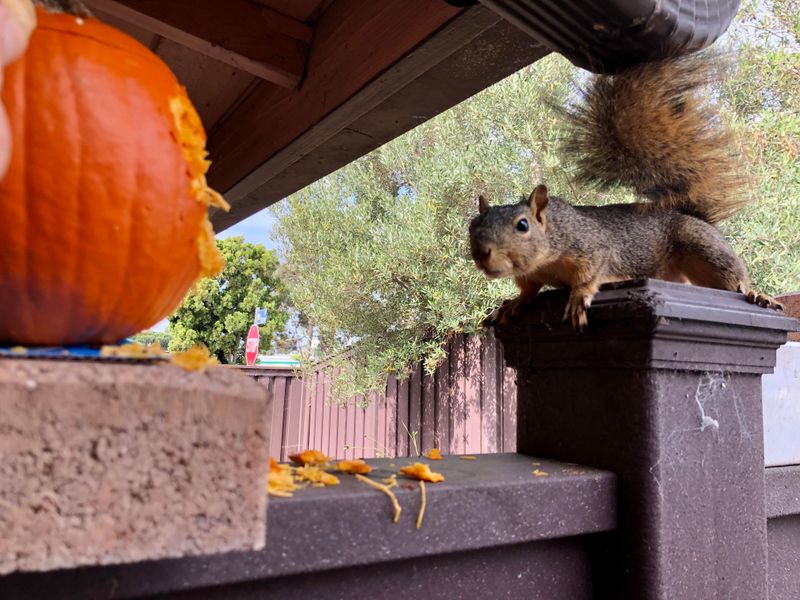
Picture a bushy-tailed bandit perched on your jack-o-lantern, munching away like it owns the place. Gray squirrels are some of the most common pumpkin thieves in New York.
Carved pumpkins are especially tempting because the soft insides are already exposed. Squirrels chew through the edges of eyes and mouths to reach the tasty flesh within.
Seeds and stringy pulp rank high on their wish list. Fall is busy season for them, since they are fattening up and stashing food for winter.
Here is a surprising detail many people miss. During dry spells, squirrels may nibble pumpkins partly for the water packed inside.
You can usually spot squirrel damage by the jagged, scraped edges around holes. Their sharp front teeth leave small grooves that look almost like someone used a tiny chisel.
Uncarved pumpkins are not totally safe either. A determined squirrel will gnaw straight through a tough rind if it smells something good.
One helpful trick is to wait before carving. Carve your pumpkin a day or two before Halloween instead of a full week early.
Wiping the cut edges with a little petroleum jelly may also slow squirrels down. Some families add a coat of clear acrylic sealer to whole pumpkins for extra protection.
Squirrels are clever and persistent, so mixing a few methods works best. Watching them try to outsmart you can be pretty entertaining, too.
If they win a round, try moving the pumpkin to a spot farther from trees. Fewer branches nearby means fewer easy highways leading straight to your porch.
Chipmunks Steal The Seeds
Cheeks stuffed full, a tiny striped critter darts away from your pumpkin at top speed. Meet the eastern chipmunk, a seed-loving speedster found all over New York.
Chipmunks adore pumpkin seeds more than almost anything else inside. Given the choice, they usually grab the seeds first and save the flesh for later.
Those famous cheek pouches can stretch to about three times the size of their head. A single chipmunk can haul off a surprising pile of seeds in one afternoon.
Unlike raccoons, chipmunks prefer working during daylight. If your pumpkin shrinks while you are at school or work, these little guys are strong suspects.
Your New York Garden Changes Every Week. Your Plan Should Too.
Gardening in New York changes quickly throughout the season. Every Friday you’ll receive a simple weekly plan showing exactly what to plant, prune, fertilize, harvest, and protect so you never miss the right timing.
They carry their treasure back to underground burrows. Inside, they build snack storage rooms to get them through the chilly months ahead.
Fun fact time for curious readers. Chipmunks do not fully hibernate, so they wake up often during winter to nibble from their stash.
Want to keep them away from your display? Scoop every seed out of your carved pumpkin and rinse the inside well.
Roasting those seeds for your own snack is a tasty bonus. Toss them with a pinch of salt and bake until golden and crunchy.
Placing pumpkins up high, like on a table or railing, can also help. Chipmunks climb, but they generally prefer quick ground-level grabs.
Keep the area tidy by sweeping up stray seeds and pulp. A clean porch gives these busy foragers fewer reasons to stick around.
Raccoons Tear Into Soft Pumpkins At Night
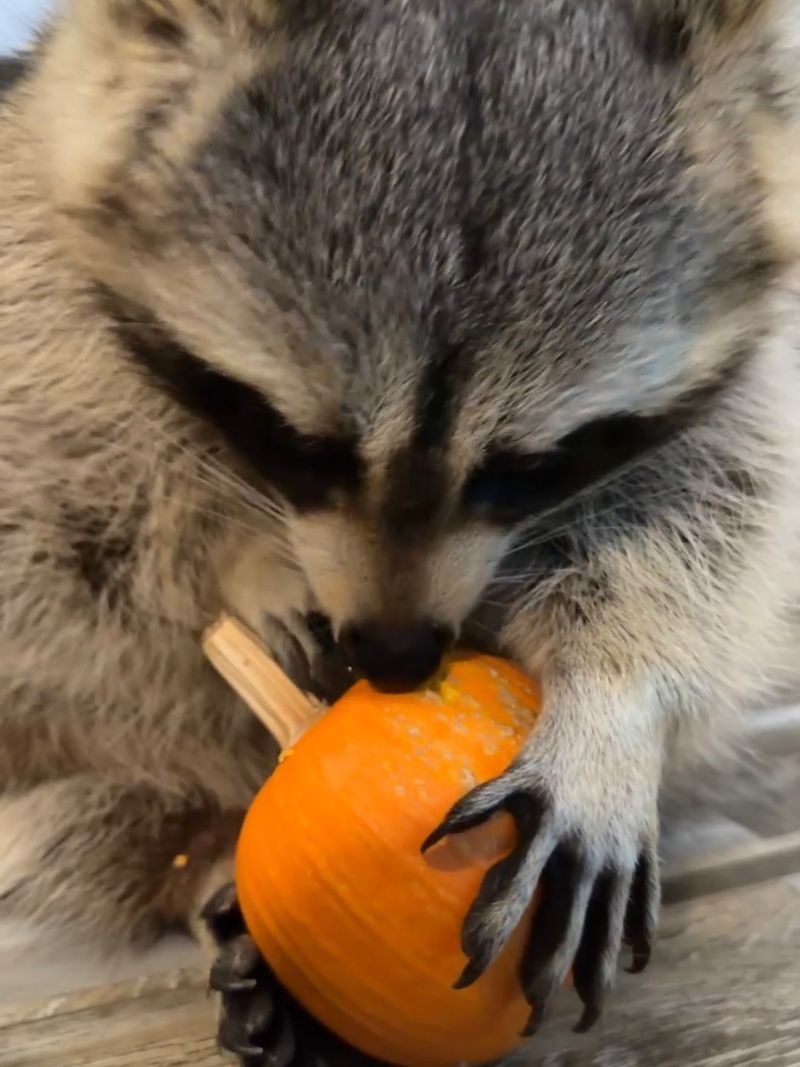
Long after the trick-or-treaters head home, a masked visitor shuffles up your steps. Raccoons are night owls, which makes them top suspects for overnight pumpkin damage.
Wildlife experts list raccoons among common pumpkin eaters. They are not picky and happily snack on seasonal decorations left outside.
Raccoons have nimble front paws that work almost like little hands. They can pull, twist, and rip apart pumpkins that are starting to soften.
Older pumpkins make easier targets. Once the rind gets mushy, a raccoon can tear big chunks away with very little effort.
Look for messy, ragged damage rather than neat gnaw holes. Pieces might be dragged across the yard or scattered near trash cans.
Raccoons are smart problem solvers with excellent memories. If your porch served them dinner once, they will likely come back for seconds.
A motion-activated light can startle them and make your porch less inviting. Many raccoons dislike sudden brightness while they are trying to sneak a meal.
Secure your garbage cans with tight lids as well. Pumpkin scraps in the trash can draw raccoons just as much as the display itself.
Toss out pumpkins once they begin to rot. A collapsing jack-o-lantern basically rings a dinner bell for every raccoon nearby.
Give raccoons plenty of space if you spot one. They can carry diseases, so admire them from a distance and let them wander off.
Deer Munch Pumpkins Right Off The Porch
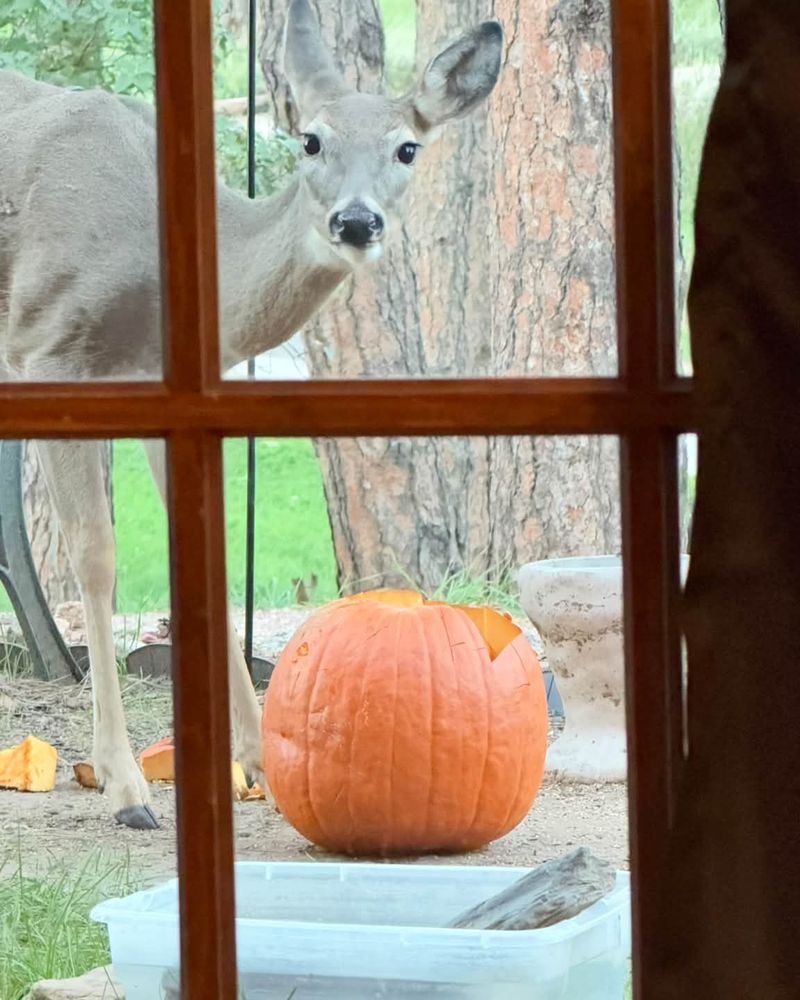
Imagine opening your front door to find a white-tailed deer staring back, pumpkin goo on its nose. In suburban and rural New York, this scene is more common than you might think.
Deer find pumpkins hard to resist. They eat flowers, leaves, seeds, and especially the soft inner flesh people call pumpkin guts.
Here is an interesting twist about their habits. Deer usually do not crack pumpkins open themselves, so they often finish what another animal started.
Once a pumpkin is broken, deer devour it fast. A small group can clean out a large pumpkin in a single visit.
Timing matters too. After the first frost, natural food gets scarce, and pumpkins suddenly look like a fancy buffet.
Watch for hoof prints shaped like split hearts near your steps. Large missing chunks and trampled flower beds are other strong hints.
Fencing is helpful for gardens but tricky for porches. Instead, keep decorations close to the house where people walk often.
Deer-repellent sprays made with egg or garlic can discourage nibbling. Reapply them after rain to keep the smell working.
Some families are tempted to put old pumpkins out for wildlife after Halloween. In New York, though, intentionally feeding deer is against the law, so compost those pumpkins instead.
Smash or cut them into smaller pieces first, since smaller chunks break down faster in a compost bin.
Groundhogs Snack Before Settling In For Winter
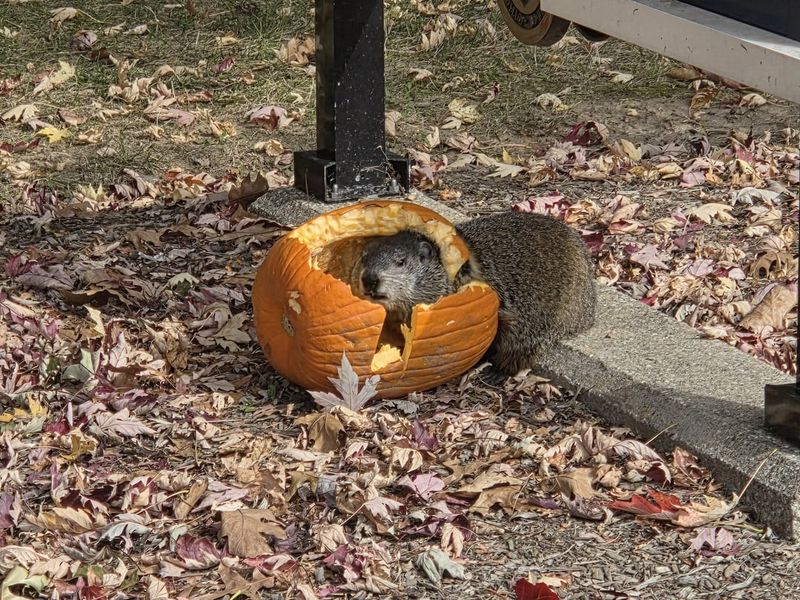
Most folks know groundhogs from one famous February morning. Few realize these chubby diggers spend autumn stuffing themselves with pumpkins.
Also called woodchucks, groundhogs eat almost every part of a pumpkin. Flesh, rinds, seeds, flowers, and leaves all disappear into their busy mouths.
They are true hibernators, unlike chipmunks. Before snoozing through winter, they must pack on serious weight to survive until spring.
Ripe pumpkins are their top pick. Gardeners across the state often report groundhogs hollowing out their best fruit right before harvest.
Groundhog bites are big and bold. They can scoop out large sections, leaving behind wide gouges instead of tiny nibbles.
Digging is another clue that a woodchuck is nearby. Look for burrow openings around ten to twelve inches wide near sheds, porches, or fences.
Here is a quirky fact to share. Groundhogs are excellent swimmers and can climb trees, even though they look rather clumsy.
Because they mostly feed during the day, you might catch one in action. Early morning and late afternoon are their favorite snack hours.
To protect a garden patch, bury fencing about a foot underground. Groundhogs tunnel under barriers that only sit on the surface.
On porches, keeping pumpkins raised and away from burrow areas helps. A little distance from their home base can save your display.
Mice And Rats Raid Pumpkins Near The House
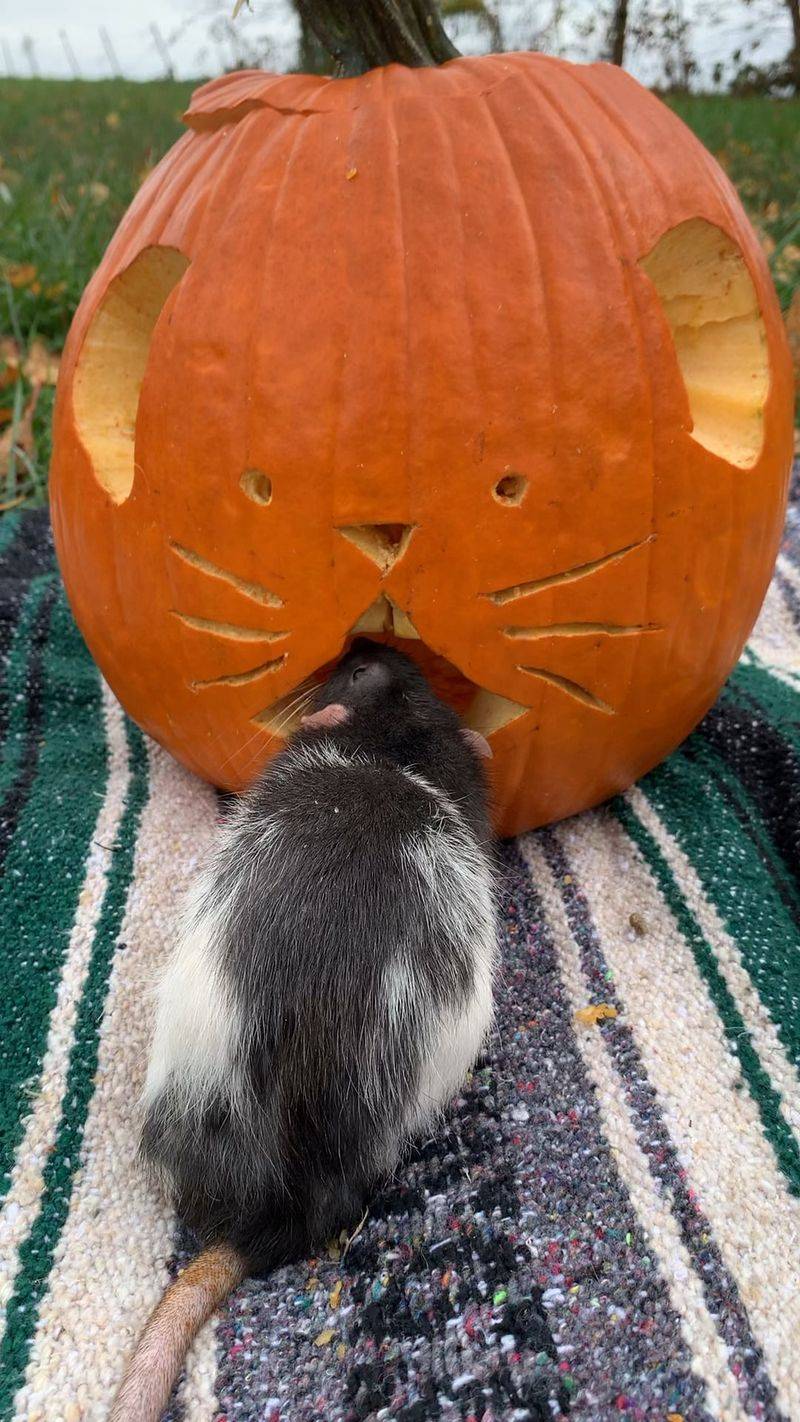
City dwellers, this one is for you. In New York neighborhoods packed with buildings, mice and rats are frequent pumpkin raiders.
These rodents are opportunists, grabbing food wherever it appears. A pumpkin sitting on a stoop or fire escape looks like an easy meal.
Carved pumpkins are extra appealing because the flesh is open. Rotting ones are even better from a rodent’s point of view.
Pumpkins give mice and rats plenty of nutrition. Both the seeds and flesh help them build energy as temperatures fall.
Autumn sends rodents searching for food and warm shelter. A pumpkin right beside your door might lead them closer to your home.
Look for many small chew marks rather than one big hole. Tiny dark droppings nearby are another sign these visitors stopped by.
Keep pumpkins a few feet away from doors and foundation walls. Distance makes it harder for curious rodents to slip inside afterward.
Check your pumpkins daily for soft spots or mold. Removing spoiled ones quickly takes away a major attraction.
Seal small gaps around doors and windows as an extra step. A mouse can squeeze through an opening about the size of a dime.
Compost old pumpkins in a closed bin rather than an open pile. Covered compost keeps hungry rodents from turning your yard into a cafeteria.
Crows Peck At Open Jack-O’-Lanterns
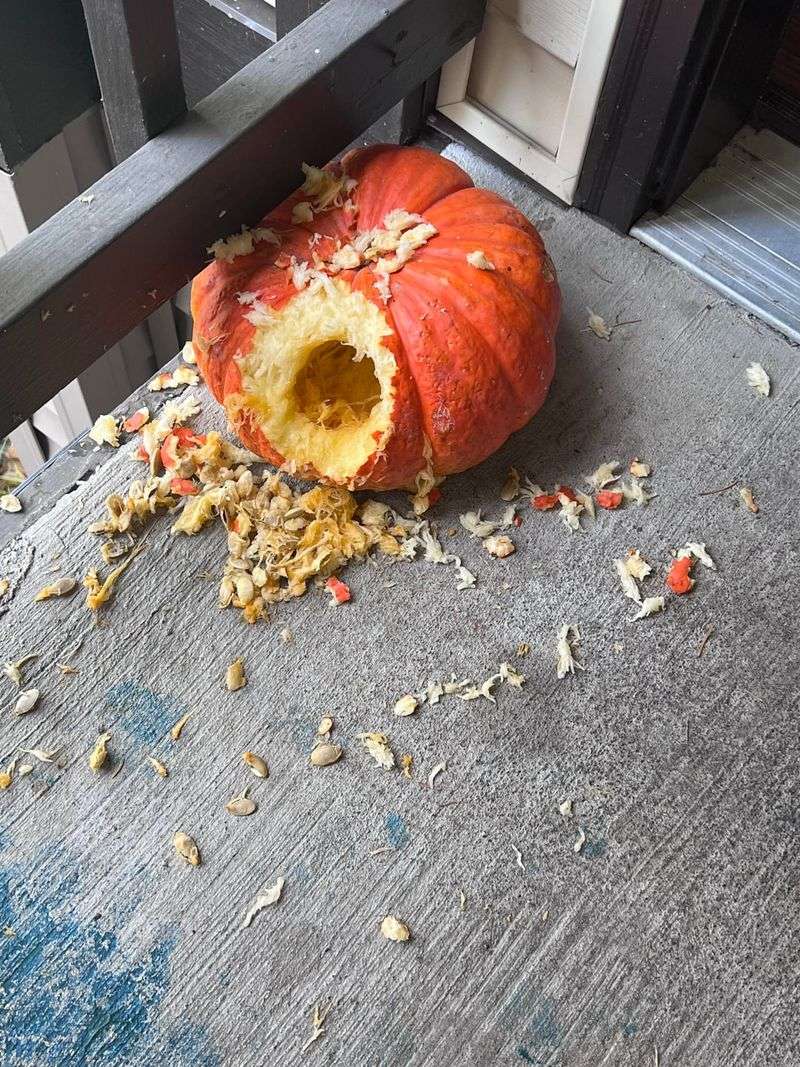
Caw, caw, crunch. A glossy black crow hopping onto your jack-o-lantern feels like a scene straight out of a spooky movie.
Birds, including crows, are known to snack on pumpkins. Open, carved pumpkins give them easy access to seeds and stringy pulp.
Crows are picky in a curious way. Some observers notice they show little interest in the actual flesh, preferring seeds or other foods.
Because of that, crows might not be your main pumpkin destroyer. They often visit to pick at leftovers after other animals open things up.
Here is something amazing about these birds. Crows can recognize individual human faces and remember people for years.
Peck marks look like small, scattered divots rather than long gnaw lines. You might also find seeds tossed around the porch or lawn.
Shiny reflective tape or old CDs hung nearby can spook crows. Moving objects and flashes of light make them cautious about landing.
Clearing out every seed also cuts down on bird visits. An empty, clean pumpkin offers far less reward for a hungry crow.
Many people actually enjoy watching crows. They are among the smartest birds in North America, using tools and solving puzzles.
So if a crow pays a visit, consider it a free show. A pecked pumpkin is a small price for a glimpse of that brainpower.
Bite Marks And Tracks Reveal The Culprit
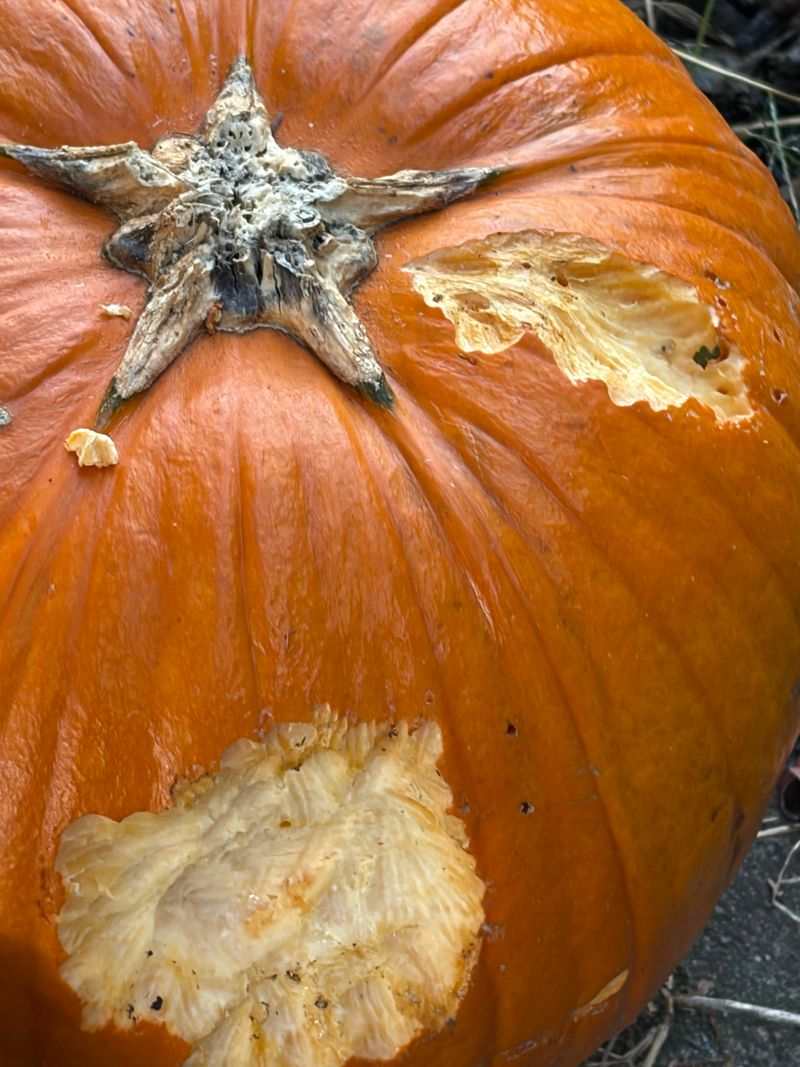
Every crime scene tells a story, and a chewed pumpkin is no exception. With a sharp eye, you can figure out exactly who stopped by.
Start by studying the bite marks. Squirrels and chipmunks leave narrow gnaw grooves and often scatter seed shells on the ground.
Groundhogs take big, chunky bites. They sometimes hollow out large portions, leaving a pumpkin looking scooped like a bowl.
Deer usually eat from pumpkins that were already open. If the hole is huge and messy, deer may have finished another animal’s work.
Raccoons tend to rip and tear soft spots. Mice and rats leave many tiny chew marks, often clustered together.
Tracks offer even more clues. Raccoon prints look like little human handprints, while deer leave pointed, split hoof marks.
Try a simple flour trick tonight. Sprinkle a thin layer of flour around your pumpkin and check for fresh footprints in the morning.
Timing helps narrow down suspects too. Daytime damage points to squirrels, chipmunks, or groundhogs, while overnight damage suggests raccoons or rodents.
A cheap trail camera can turn this into a fun family project. Many families are surprised by the parade of animals caught on video.
Once you know your visitor, pick protection that fits. Matching the solution to the critter saves time, money, and plenty of pumpkins.
A Little Hot Pepper Spray Can Help
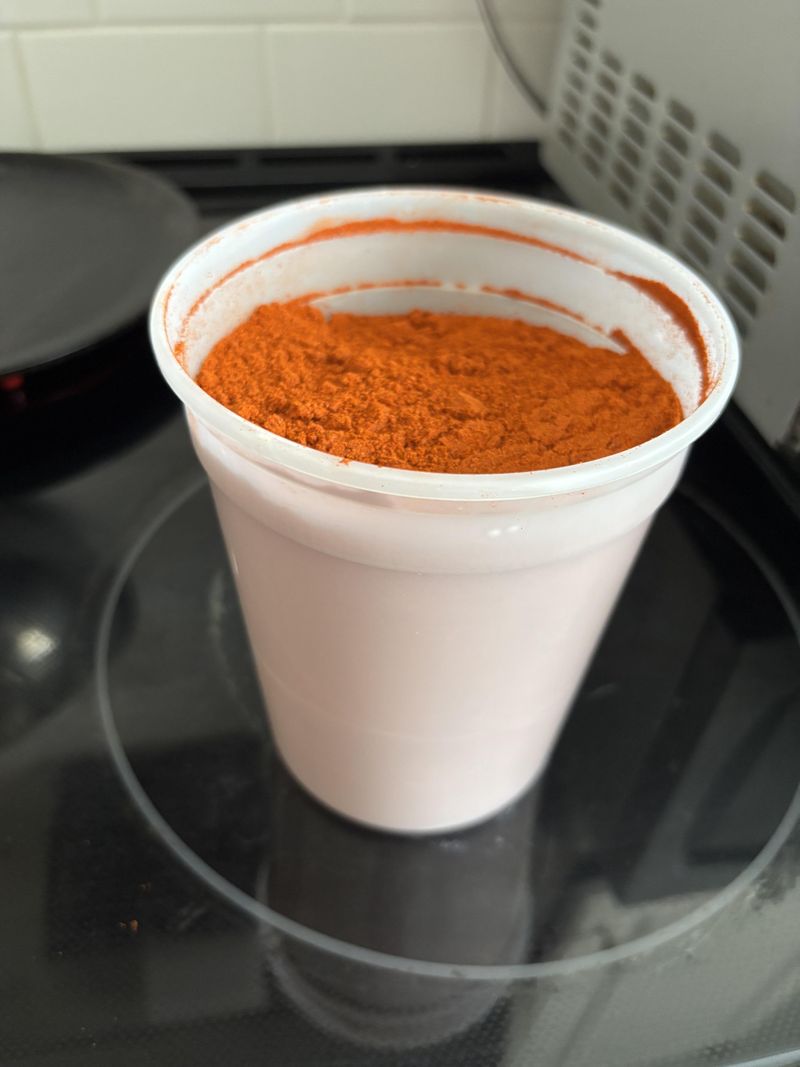
Spicy food lovers will appreciate this trick. Most critters hate the burn of hot peppers, and that makes pepper a handy pumpkin guard.
The secret ingredient is capsaicin, the compound that makes peppers hot. Animals that taste it usually back off and look elsewhere.
The easiest method is a simple sprinkle. Dust cayenne pepper or red pepper flakes right onto the pumpkin’s surface and cut edges.
A homemade spray works well too. Mix hot sauce or crushed peppers with water and a few drops of dish soap.
The soap helps the mixture stick to the rind. Pour everything into a spray bottle and coat the pumpkin evenly.
Wear gloves while mixing and spraying. Pepper on your fingers can sting badly if you touch your eyes.
Rain washes the protection away fast. Plan to reapply after storms or every few days during damp fall weather.
Birds do not feel capsaicin heat the way mammals do. That means pepper spray will not stop crows, but squirrels usually hate it.
Keep pets and little kids away from treated pumpkins. A curious dog might get an unpleasant surprise from one quick lick.
Store-bought animal repellents are another option if you prefer. Look for products labeled safe for wildlife and follow every direction carefully.
Bring Pumpkins In At Night To Protect Them
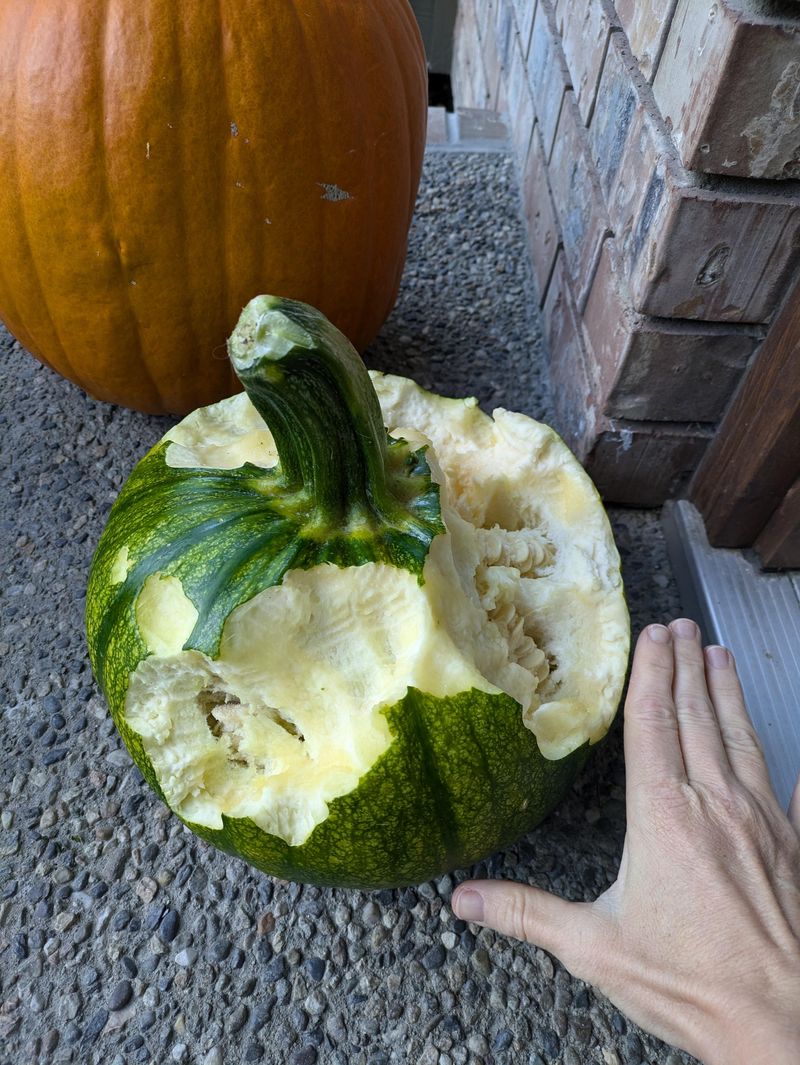
Sometimes the simplest fix is the smartest one. Carrying your pumpkins inside each night keeps most hungry visitors from ever getting a taste.
Nighttime is prime feeding time for raccoons, mice, and rats. If the pumpkin is not there, they cannot snack on it.
Indoor storage protects pumpkins from the weather as well. Chilly or freezing nights cause pumpkins to soften and spoil quickly.
Pumpkins cannot handle frost well. Once frost arrives in New York, ice crystals damage the flesh and speed up rotting.
Choose a cool, dark, airy space for overnight storage. A garage, mudroom, or basement works much better than a warm kitchen.
Set pumpkins on cardboard or an old towel. Soaking up extra moisture helps prevent mushy bottoms and mold.
Make it a family routine, like turning off the porch light. Kids can take turns being official pumpkin keeper each evening.
Heavy pumpkins can be tricky to move every day. A small wagon or rolling plant stand makes the job much easier.
Battery candles work best for pumpkins you move often. They are safer than real flames when carrying jack-o-lanterns indoors.
With a little effort, your display can stay fresh right through Halloween night. The wildlife will just have to find dinner somewhere else.