9 Flowers To Plant In November Before The Ground Freezes
Many spring bulbs refuse to bloom unless they spend roughly twelve to sixteen weeks chilling in cold soil first. That chilly nap is not a hardship for them, because it is the signal that wakes their flower buds.
Late fall gives you a narrow window, after the summer heat fades but before the ground turns rock hard. Roots keep growing in cool soil long after the leaves above ground have dropped and blown away.
I have to admit that I love sneaking flowers into the ground while everyone else is coiling up garden hoses. You need cold fingers and a trowel, but the payoff arrives months later in bright and cheerful color.
A few of my favorites even come back bigger every year, and some laugh off hungry deer. Which of these tough little surprises will you tuck into your garden before the first hard freeze arrives?
1. Daffodils
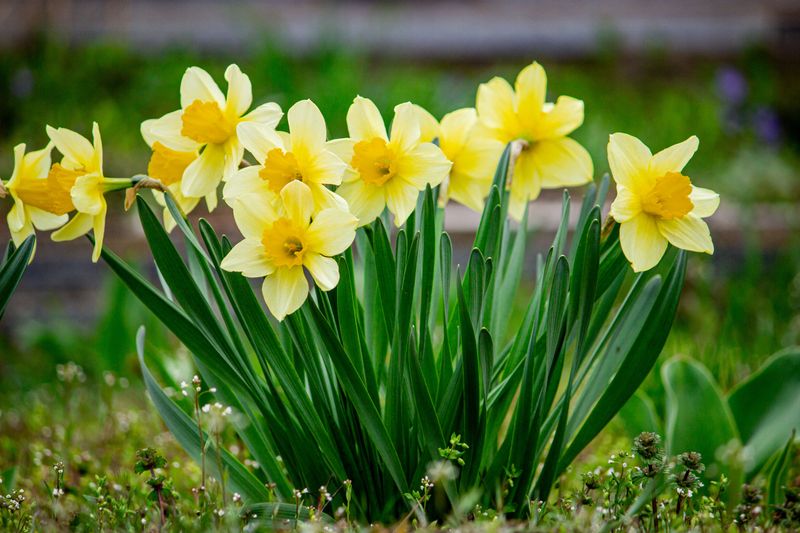
Deer and squirrels mostly turn up their noses at daffodils, which makes these sunny bulbs a rare treat for frustrated gardeners. I love how a handful planted this month can turn into a fat, golden clump within a few short years.
Every part of a daffodil contains bitter compounds called alkaloids, so most critters take one nibble and wander away. That same chemistry means the bulbs are toxic to dogs and cats, so keep curious pets away from your planting bag.
Dig each hole about six inches deep, which works out to roughly three times the height of the bulb. Set the pointy end facing up, then space bulbs four to six inches apart for a full and natural look.
Drainage matters more than almost anything else, because daffodil bulbs can rot quickly in soggy ground over winter. Skip low spots where puddles linger after rain, and choose a slightly raised bed if your soil stays wet.
Full spring sun keeps them happy, and you might notice they do well under trees that leaf out late. The bulbs soak up light and finish flowering before the branches overhead shade them out for the summer.
Once the blooms fade, let the leaves stay green for about six weeks before you cut them back. Those floppy leaves feed the bulb underground and help it build energy for next year’s flower show in your yard.
Personally, I tuck mine along the driveway edge, where they greet me every spring without asking for much attention at all.
2. Alliums
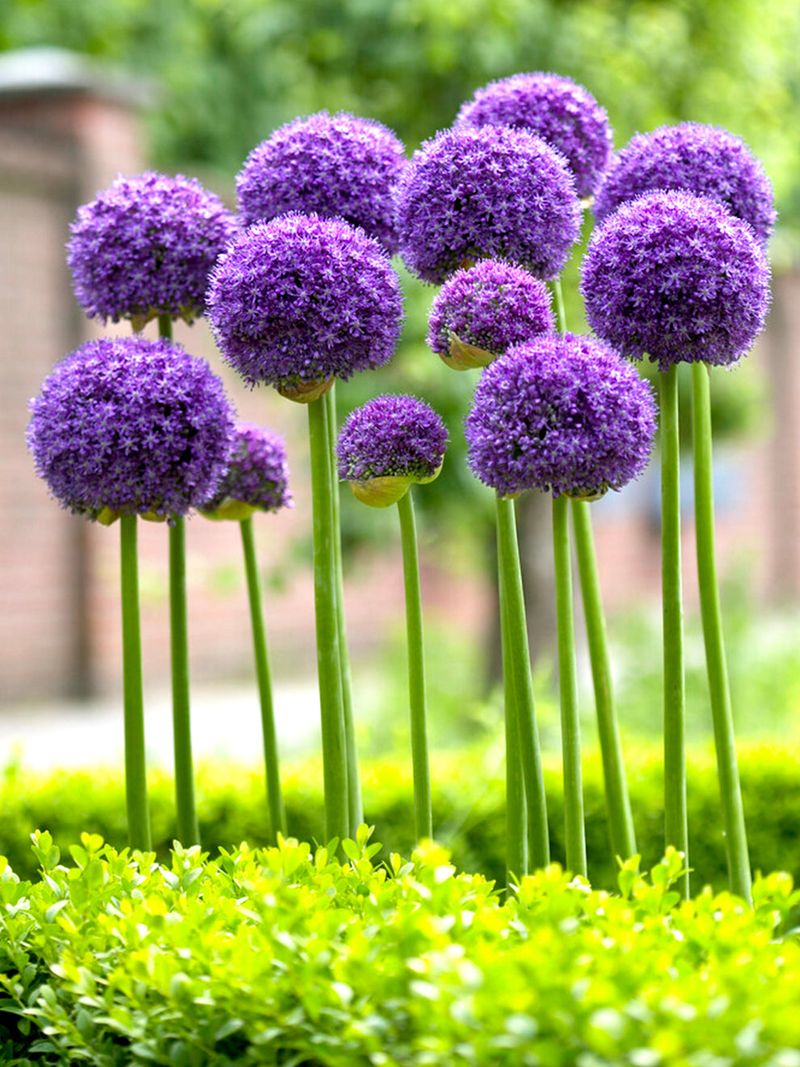
Purple pom-poms floating on tall stems look like something from a cartoon, yet alliums are real and surprisingly easy to grow. These ornamental onions belong to the same family as the garlic in your kitchen, which explains their faint oniony smell.
That scent is the reason deer and rabbits usually leave them alone, a perk I appreciate every single spring. Like their edible cousins, though, alliums are toxic to dogs and cats, so plant them where pets rarely dig.
Aim to get the bulbs into the soil early in the month while the ground is still easy to work. Plant each one about three times its own height deep, with the pointed tip aimed toward the sky.
Choose a sunny spot with soil that drains well, since wet feet over winter can cause the bulbs to rot. A little sand or fine gravel mixed into heavy clay gives them a much better chance of thriving.
Varieties range from small drumstick types to giant globes the size of a softball, depending on what you buy. Many popular kinds bloom in purple shades, but white alliums look stunning tucked between dark green shrubs or grasses.
Bees and butterflies flock to the blooms in late spring, just when the early bulbs have finished their show. I like to leave the dried seed heads standing, because they add a quirky sculptural look to summer beds.
Their leaves often yellow before the flowers open, so plant them behind bushy perennials that hide the fading foliage nicely.
3. Crocus
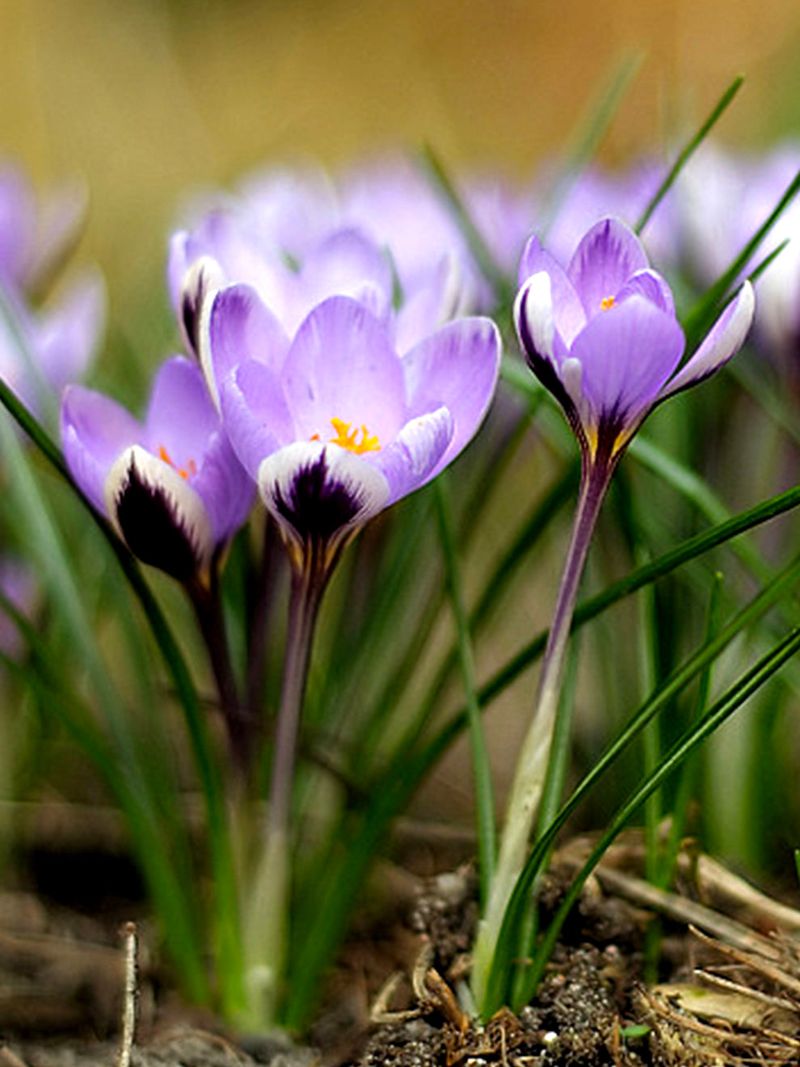
Hungry bees waking up on a sunny February afternoon often find their very first meal inside a tiny crocus cup. You’re in for a treat when those purple and white blooms pop through patches of melting snow in late winter.
Crocuses grow from corms rather than true bulbs, and they rank among the most forgiving flowers you can plant late. Even a planting done this month usually settles in and flowers on schedule, which takes the pressure off procrastinators.
Plant the corms about three times their height deep, which usually means roughly three to four inches down. Good drainage keeps them from rotting, so mix a handful of grit into heavy soil before you set them in place.
Most spring crocus varieties grow well in USDA zones 3 through 8, covering a huge portion of the country. Gardeners in warmer southern regions may struggle, since the corms need a solid stretch of winter chill to bloom well.
Squirrels and voles sometimes dig up the corms for a snack, which can feel like a rude surprise. Laying a piece of chicken wire over the planting area, then covering it with soil, usually discourages those sneaky diggers.
I love scattering crocuses right into the lawn, where they bloom and fade before the first spring mowing begins. Just wait until the leaves turn yellow before you cut the grass, so the corms can recharge for next year.
Plant them in loose groups of twenty or more, because a lonely crocus barely shows up from the kitchen window.
4. Grape Hyacinths
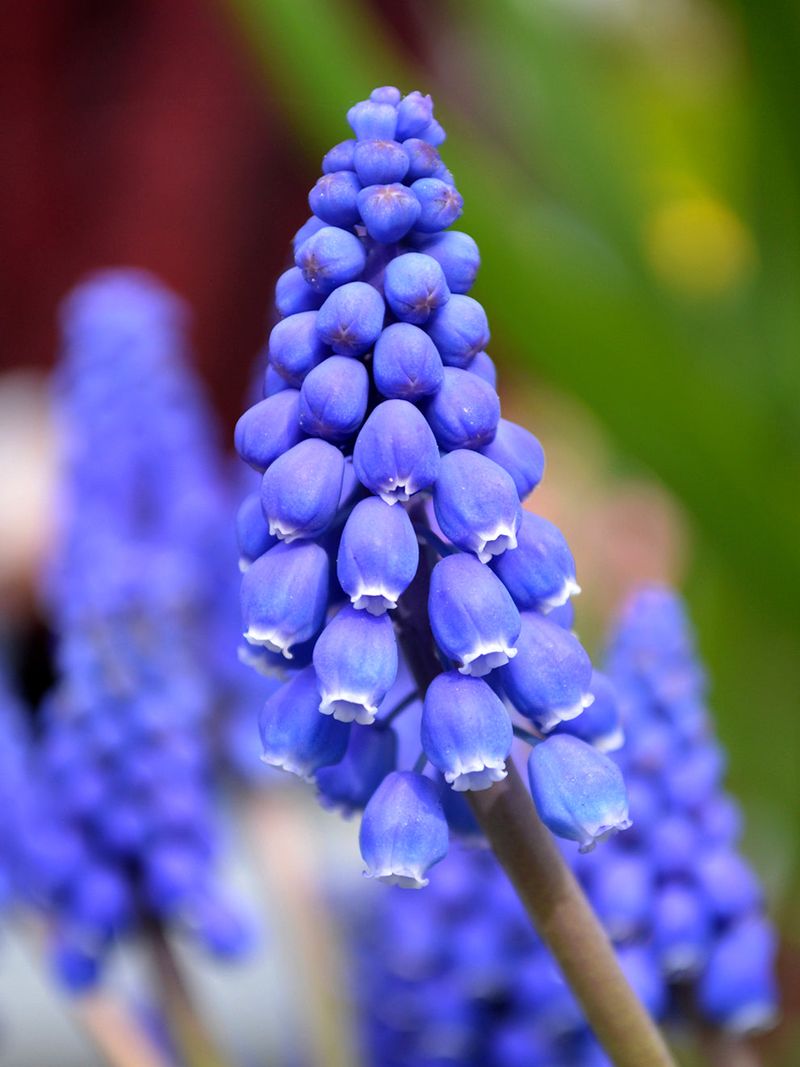
Sniff a cluster of grape hyacinths on a warm spring day and you might catch a light, sweet scent like grape candy. Their scientific name, Muscari, actually comes from a Greek word linked to musk, a nod to that fragrance.
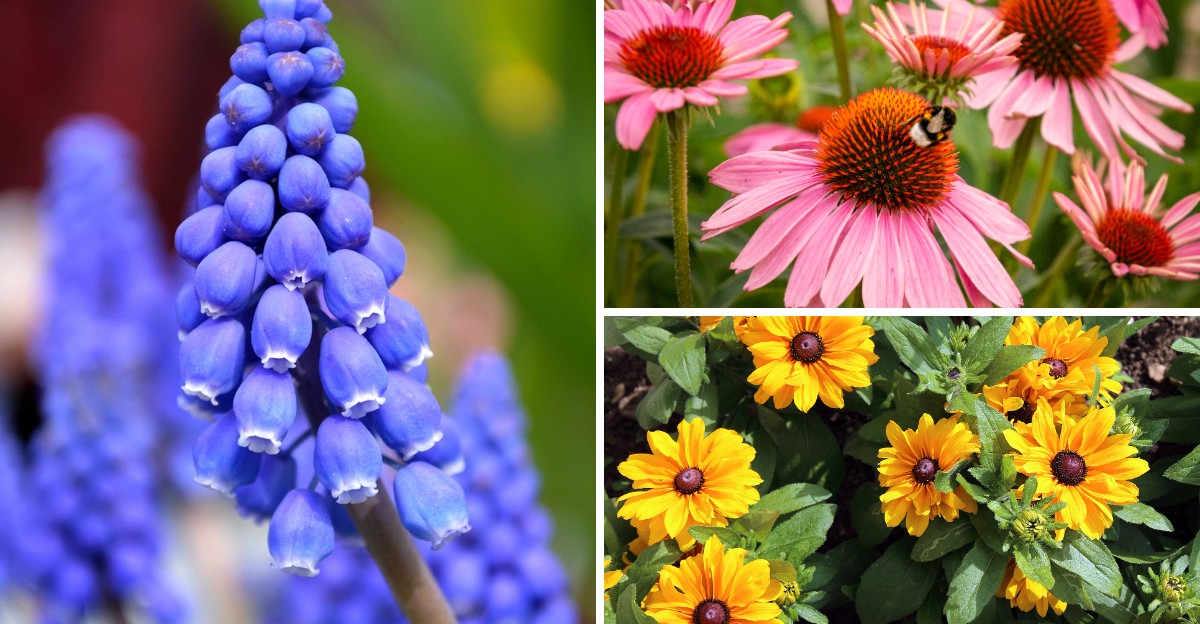
Each short stem carries dozens of tiny bell-shaped flowers packed together like a miniature bunch of grapes. Blue is the classic color, but you can also find white and soft lavender types that look lovely planted side by side.
These small bulbs go into the ground about three times their height deep, usually around three inches down. Try to finish planting early in the month, giving the roots several weeks to anchor before the soil freezes solid.
Sun or light shade suits them well, as long as the soil drains freely and stays loose. They tend to multiply each year, eventually spreading into drifts that look like a little blue river along a walkway.
I have to admit that this spreading habit is one of my favorite things about growing them in borders. In tight spaces they can wander a bit, so give them room or dig and share extra bulbs with friends.
Grape hyacinths often send up a few grassy leaves in fall, which can look odd but is perfectly normal. Those leaves handle cold weather just fine and help the bulb gather energy before winter settles in for good.
Plant them beneath taller daffodils or tulips, and the blue carpet makes the brighter flowers above look even more dazzling.
5. Species Tulips
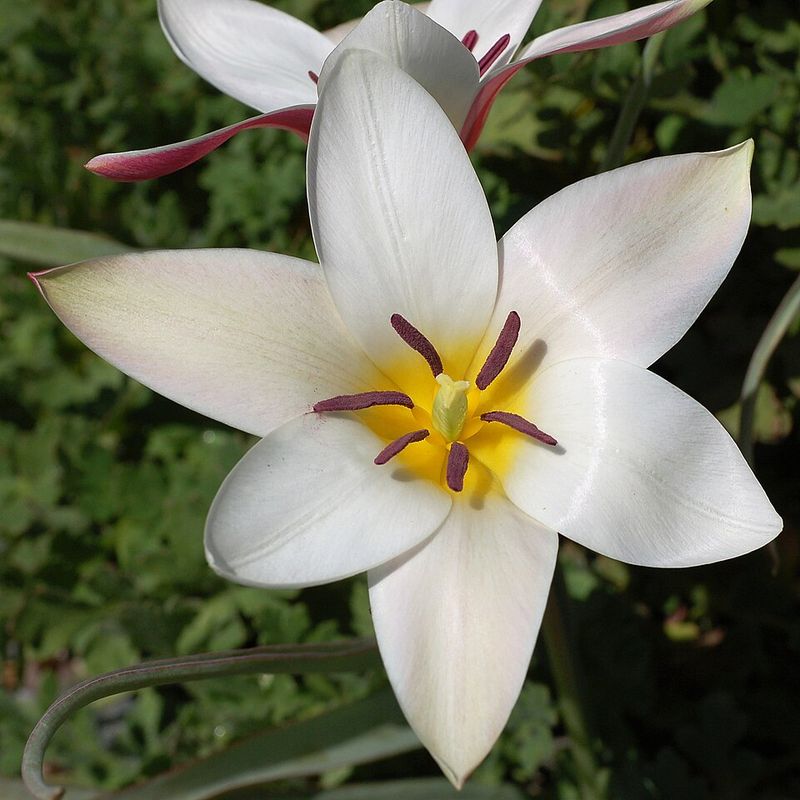
Long before tulips became famous in Dutch gardens, wild ancestors were blooming on rocky hillsides across Central Asia. Species tulips are those smaller, wilder cousins, and they often return for years instead of fading after one season.
Fancy hybrid tulips usually put on a big show once and then sulk, which disappoints plenty of gardeners. Species types like Tulipa tarda or Tulipa clusiana tend to come back reliably and sometimes even spread into little colonies.
Late fall is actually one of the best times to plant any tulip, because the soil has cooled down nicely. Cold soil helps reduce the risk of tulip fire, a fungal disease that spoils leaves and flowers in warm, damp conditions.
Set the bulbs about four to five inches deep in a sunny spot with soil that drains very quickly. These little tulips love hot, dry summers, much like their mountain homeland, so avoid areas watered heavily by sprinklers.
Adding grit or coarse sand to the planting hole helps a lot, especially in heavy clay or in containers. I like growing them in rock gardens, where their star-shaped blooms open wide on sunny days and close at dusk.
Squirrels and deer, sadly, enjoy tulip bulbs as much as we enjoy the flowers they produce each spring. Covering beds with wire mesh or planting near daffodils can help protect them from those hungry and persistent visitors.
Tulip bulbs are also toxic to pets, so store any leftover bulbs well out of reach of curious dogs.
6. Peonies
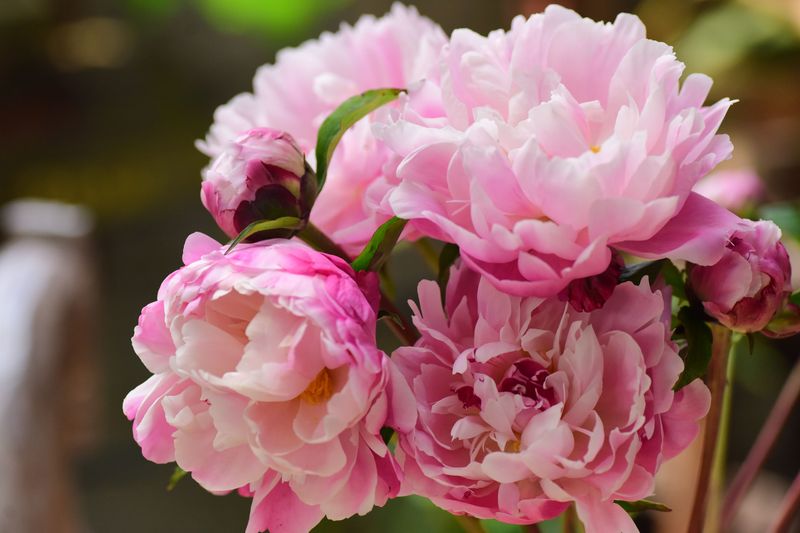
Some peony plants have bloomed in the same garden spot for fifty years or more, outliving the people who planted them. I can’t imagine a better gift to leave behind than a peony that keeps flowering for grandchildren to enjoy.
Fall is the classic season for planting bare-root peonies, since the cool soil lets roots settle without summer stress. The plant goes dormant above ground, but those chunky roots keep growing quietly until the ground freezes for the winter.
The biggest mistake people make is planting too deep, which can stop a peony from blooming for years. Look for the small pink or red buds called eyes, and keep them no more than two inches below the soil.
Gardeners in warmer regions should plant even shallower, around one inch deep, so the eyes still get enough winter chill. Without that cold period, peonies often produce healthy leaves but very few of those big, fluffy flowers everyone loves.
Pick a sunny spot with rich soil that drains well, and leave plenty of room for the plant to grow. Peonies dislike being moved once they settle in, so it pays to choose a permanent home from the start.
You might notice ants crawling on the flower buds in spring, and that is perfectly normal behavior. They are simply drawn to the sugary sap, and they do not harm the buds or the coming blooms.
Be patient during the first year or two, because young peonies focus on building roots before putting on a show.
7. Hellebores
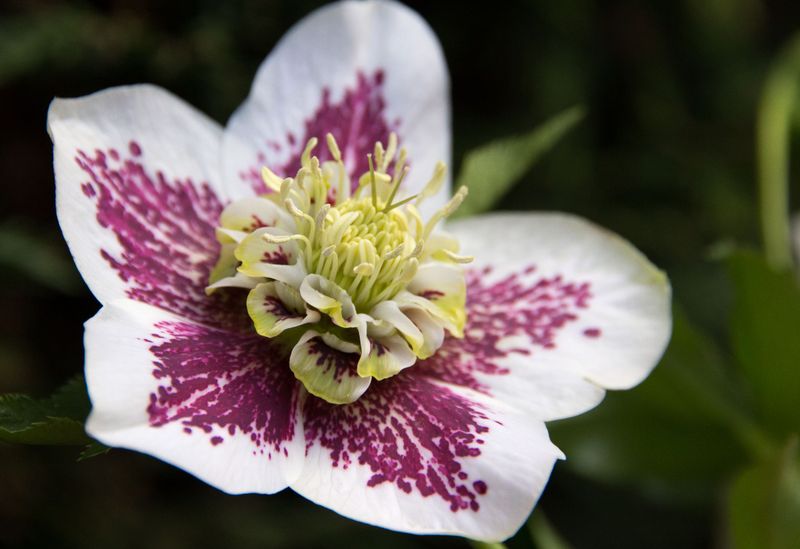
Frosty mornings rarely stop hellebores, which often open their nodding blooms while the rest of the garden is sound asleep. Many gardeners call them Lenten roses, since they tend to flower around the late winter season of Lent.
Despite that nickname, hellebores are not roses at all, and they actually belong to the buttercup family. Their cup-shaped flowers come in white, pink, deep purple, and speckled patterns that look hand-painted when you peek underneath.
Potted hellebores can go into the ground this month in milder areas, as long as the soil is still workable. Planting now gives the roots time to settle before cold weather arrives, setting up a strong bloom in late winter.
Choose a spot with partial or dappled shade, such as under deciduous trees that let winter light filter through. Moist soil that drains well suits them best, and a layer of shredded leaves helps keep their roots cozy.
Deer usually avoid hellebores, which is a big reason I tuck them along woodland paths and shady borders. The sap can irritate skin, and the plant is toxic if eaten by pets, so wearing gloves makes sense.
Each flower can last six weeks or longer, because the colorful parts are actually sturdy sepals rather than soft petals. That staying power means one plant can brighten a gloomy corner from late winter right into early spring.
Trim off tattered old leaves before the new buds rise, so the fresh flowers can shine without any messy distractions.
8. Coneflowers
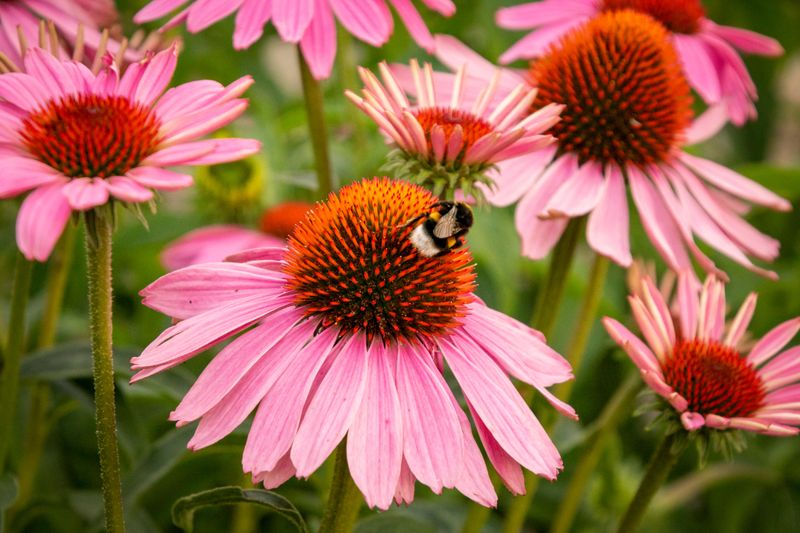
Goldfinches love perching on coneflower seed heads in fall, plucking out the seeds like kids raiding a candy jar. Planting coneflower seeds now lets winter do some of the hard work that normally happens in a greenhouse.
Echinacea is native to prairies and open woodlands across much of central and eastern North America. Its seeds have evolved to sit through cold, wet winters, which helps break dormancy so they sprout when spring warms up.
Scatter the seeds on loosened soil, then rake them in no deeper than about an eighth of an inch. Press the soil down gently with your hand or a board, so each seed has good contact with the ground.
Cold, moist winter conditions help break the seeds’ dormancy, a natural process called cold stratification. When spring arrives, seedlings tend to pop up right on schedule without any fussy indoor setups from you.
Be patient, because fall-sown coneflowers usually take until their second summer to put on a full flowering display. That first year they focus on growing deep roots, which later helps them handle drought and summer heat.
Personally, I think coneflowers are the easiest native flower for beginners, since they grow well in average or poor soil. Full sun keeps the stems sturdy and the blooms plentiful, while bees and butterflies visit nearly all summer long.
Leave the spiky seed heads standing through winter, and those hungry songbirds will thank you every chilly morning.
9. Black Eyed Susans
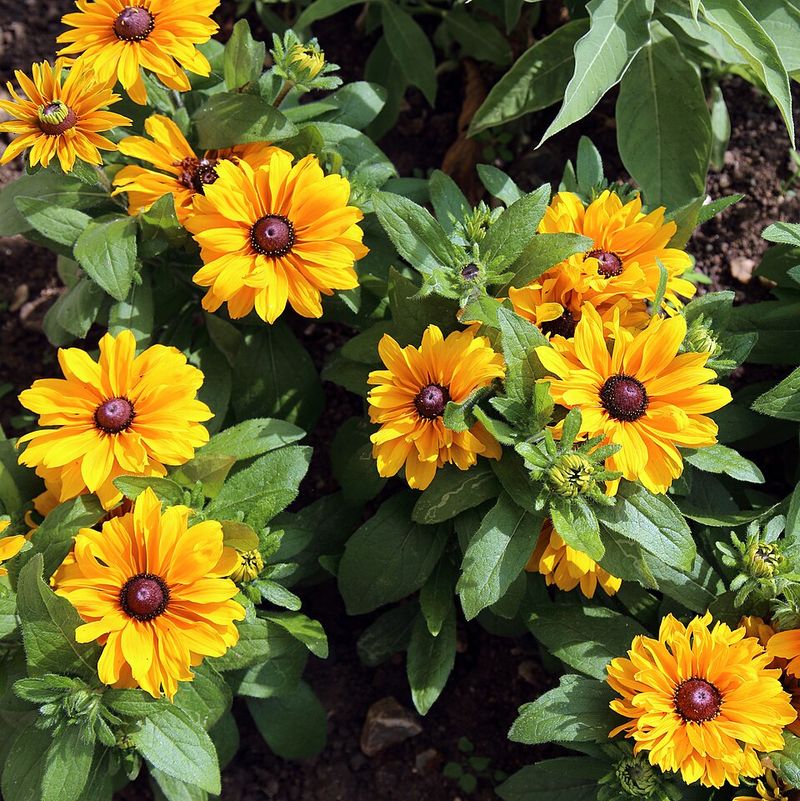
Maryland chose the black-eyed Susan as its state flower back in 1918, and it is easy to see why. Those golden petals and dark chocolate centers look like little suns scattered across a summer meadow or roadside.
Rudbeckia hirta is a native wildflower found across much of the United States, from open fields to sunny garden beds. Fall sowing works beautifully, because the seeds need a period of cold and moisture before they sprout well.
Here comes the part that surprises many people, since these seeds should not be buried under the soil. They need light to germinate, so simply scatter them on bare ground and press them down firmly with your shoe.
Clear away grass and weeds first, giving the tiny seeds direct contact with soil instead of a thick layer of mulch. Try to sow them before the ground freezes, so winter rain and snow can settle them into place.
Black-eyed Susans grow well in USDA zones 3 through 9, which covers a large portion of the country. Many types act as biennials or short-lived perennials, but they reseed freely and keep coming back year after year.
I love how they bloom from early summer into fall, filling the gap after spring bulbs have finished. Butterflies and bees visit often, and birds such as goldfinches pick at the seed heads once the petals drop.
Give them full sun and average soil, and they will reward very little effort with a long cheerful season of color.