Do Dahlias Need To Be Dug Up In California Winters?
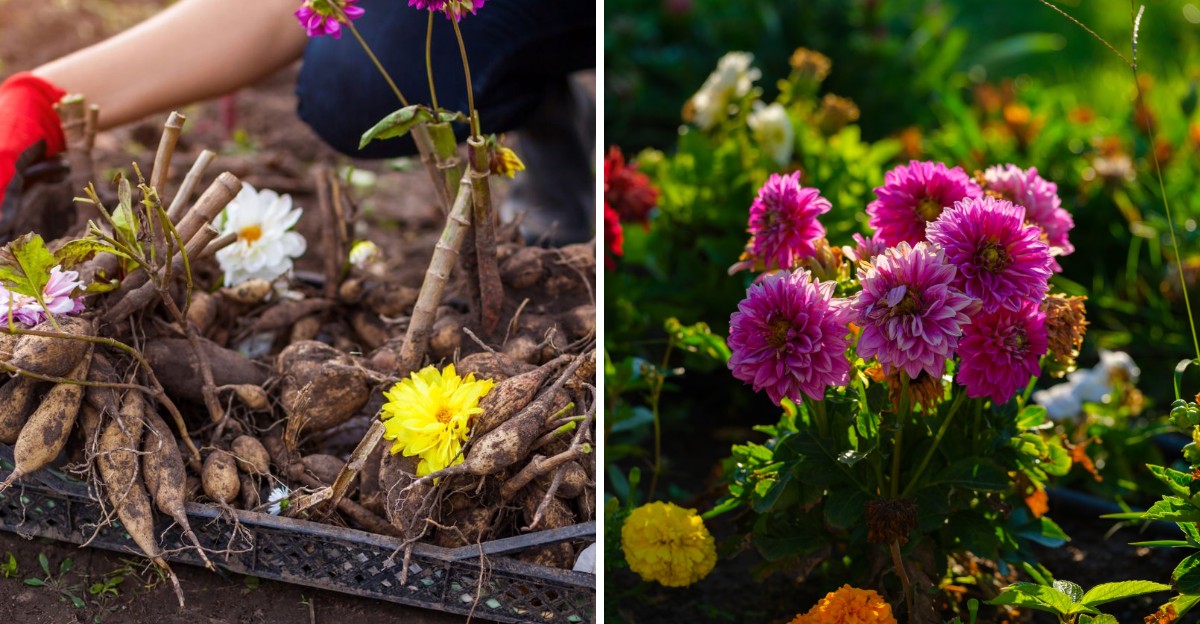
Most of California’s yearly rain lands between November and March, right when certain summer show-offs are napping underground. Those giant blooms are long gone, but their knobby roots are still down there, soaking it all in.
Each plump tuber is basically a water balloon with big ambitions. A deep freeze can burst its cells into mush. Cold, waterlogged soil is sneakier, since rot can creep in even when temperatures stay well above freezing. I find that oddly dramatic for a lump of root.
My own stalks are browning this month, and the shovel in the garage keeps giving me guilty looks. Then I glance at the mild coastal sky and suddenly find other things to do. You might be weighing the same decision this week.
The old dig-everything rule makes perfect sense in snowy states. In plenty of California yards, that shovel might earn a winter off too.
Those Knobby Dahlia Tubers Hold The Real Answer
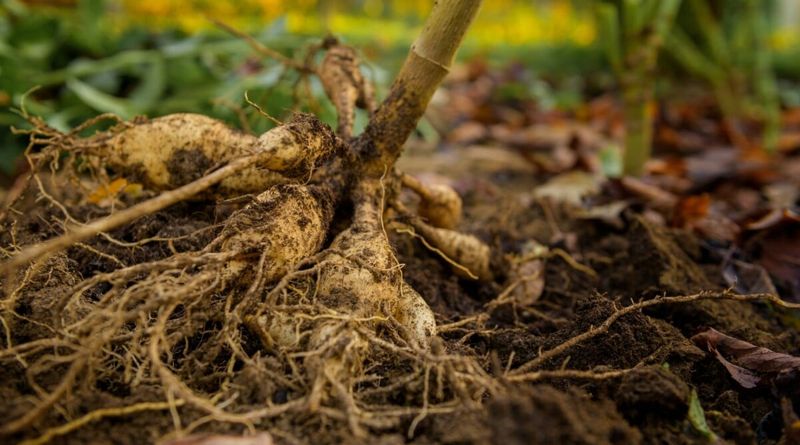
Dig up one clump in fall and you will see a cluster of fat, thin-skinned roots joined at the old stem. Those tubers store water and food for next year’s plant.
All that stored water is a strength and a weakness. If the ground freezes several inches deep, ice crystals form inside the tuber and break the cells. The tuber turns soft and mushy, and it rarely recovers.
Cold air alone is not the main worry, though. A light frost that blackens the leaves does no harm to roots tucked safely below the surface.
The second risk is soggy soil. Dormant tubers sitting in cold, wet ground for weeks can rot even when temperatures stay well above freezing.
So the real question is not whether winter arrives. It is whether your soil freezes deeply or stays waterlogged for long stretches.
Dahlias are tender perennials native to the mountains of Mexico and Central America. Gardeners in snowy states dig them because frozen soil is a sure loss there.
Much of California plays by different rules. Once you know what threatens a tuber, deciding whether to dig gets much easier.
Most California Gardeners Can Leave Dahlias In The Ground
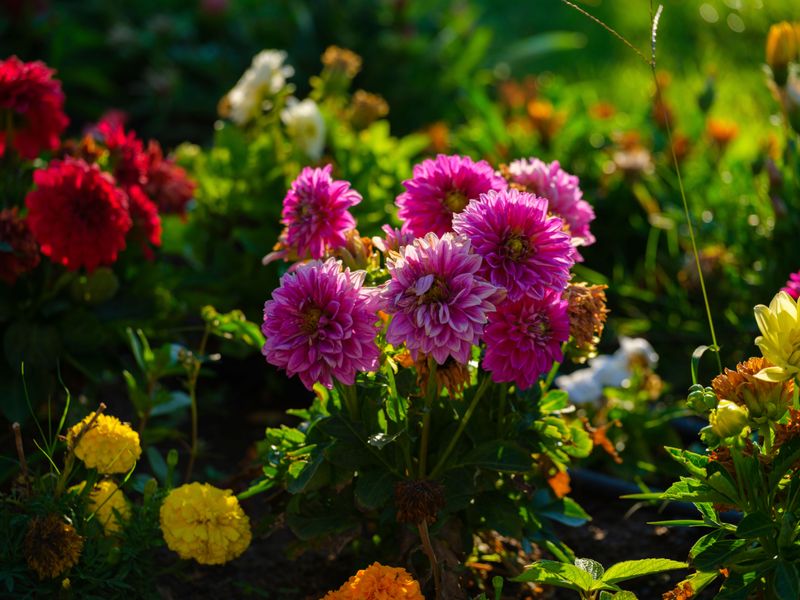
Here is the friendly news for many of us. In mild areas, dahlias can stay right where they grew all summer.
Most coastal and Southern California gardens sit in USDA zones 9 and 10, with a few pockets in zone 11. Hard freezes that reach deep into the soil are rare there.
Gardeners in places like San Diego, Los Angeles, Santa Barbara, and much of the Bay Area often leave tubers in place for years. The plants simply rest through winter and sprout again in spring.
Many inland valley gardens in zone 9 can do the same. Sacramento and Fresno get frosty nights, but the ground rarely freezes several inches down.
The catch is drainage. Heavy clay that holds puddles after winter storms can rot tubers even in a warm climate.
If your beds drain well and your soil does not freeze deeply, leaving dahlias in the ground is a solid choice. Plenty of experienced growers in the state do exactly that.
Digging becomes the better plan mostly in mountain areas, cold high desert spots, and gardens with stubborn, soggy clay. Everyone else gets a choice.
Mountain And High Desert Dahlias Need A Shovel Plan
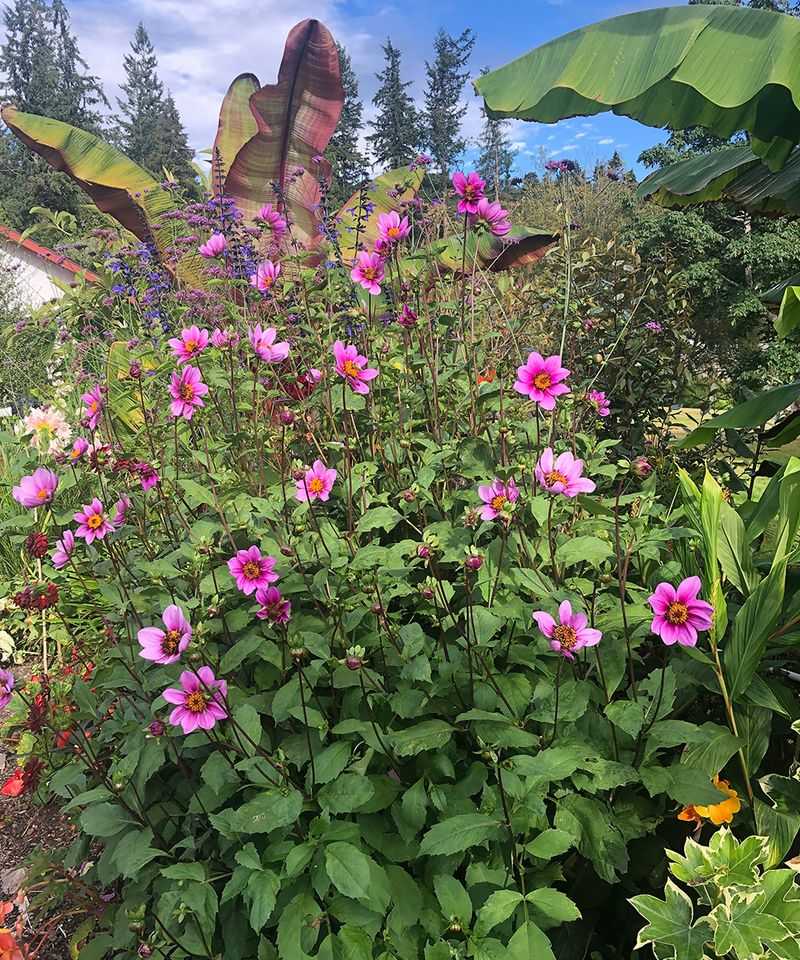
Not every corner of the Golden State is beach weather in January. Truckee, Lake Tahoe, Mammoth Lakes, and much of the far north sit in zones 5 through 7.
In those places, winter soil can freeze 4 to 6 inches deep or more. Tubers left in the ground there face a high chance of turning to mush.
High desert towns can surprise you too. Clear winter nights in spots like parts of the Antelope Valley or Modoc County bring hard freezes that sink into the soil.
For these gardens, lifting tubers each fall is the safest move. Plan to dig after the first frost blackens the leaves, usually in October or November.
Foothill gardens in zone 8 sit in the gray zone. A thick mulch may carry tubers through a mild year, but a cold snap can still cause losses.
My advice for zone 8 is simple. Leave some in the ground under deep mulch, and dig your favorites as insurance.
Not sure of your zone? Type your zip code into the USDA Plant Hardiness Zone Map online for a quick answer.
Soggy Winter Soil Is The Sneaky Threat To Dahlia Roots
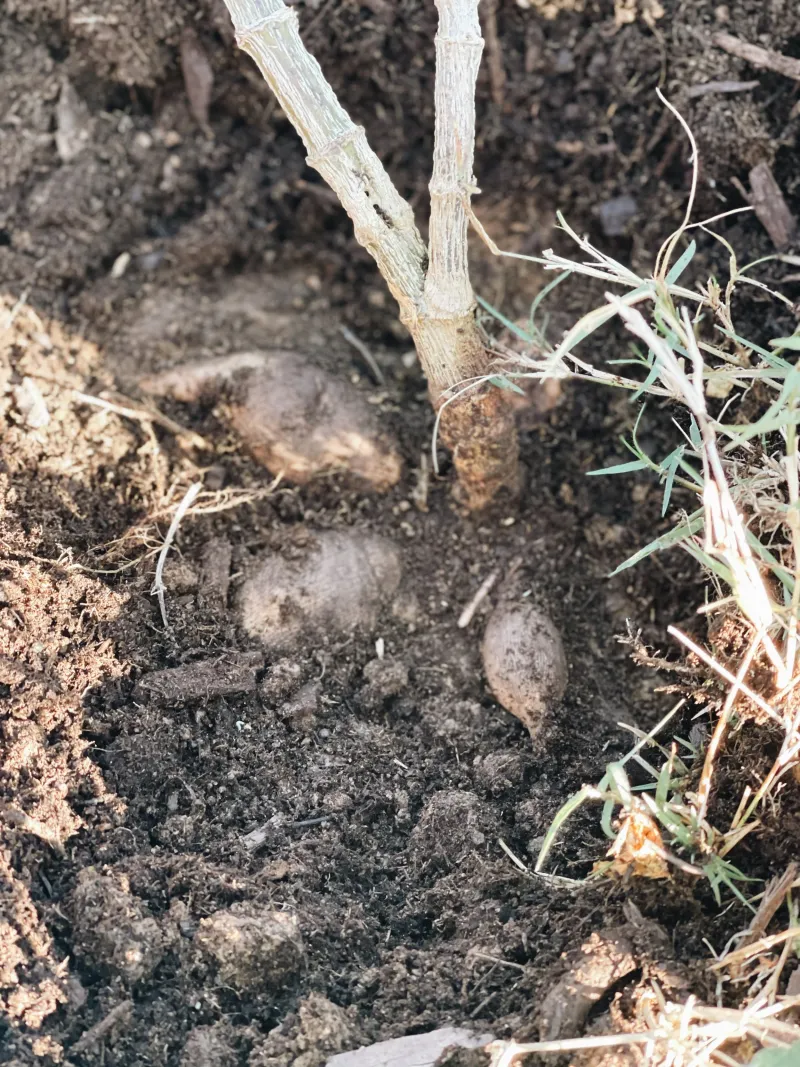
Rain, not frost, is often the bigger problem in California. Most of our yearly rain falls between November and March, right when dahlias are dormant.
A resting tuber does not need much water. When it sits in cold, soaked soil, fungi and bacteria move in and rot can set in quickly.
Heavy clay soils are the usual troublemakers. Squeeze a handful after a storm, and if it forms a sticky ball, your tubers may be at risk.
Raised beds are a great fix. They let water drain away from the root zone, and many dahlia growers swear by them.
Adding compost when you plant also helps loosen clay over time. Avoid low spots where water pools after a storm.
Turn off drip lines or sprinklers on dahlia beds once the plants go dormant. Winter rain usually supplies more than enough moisture.
Dahlias in pots need extra care. Move containers under an eave or into a garage so they stay on the dry side.
Get drainage right, and even a wet El Nino winter becomes far less scary for your plants.
Cut Back Dahlia Stalks And Tuck In A Thick Mulch Blanket
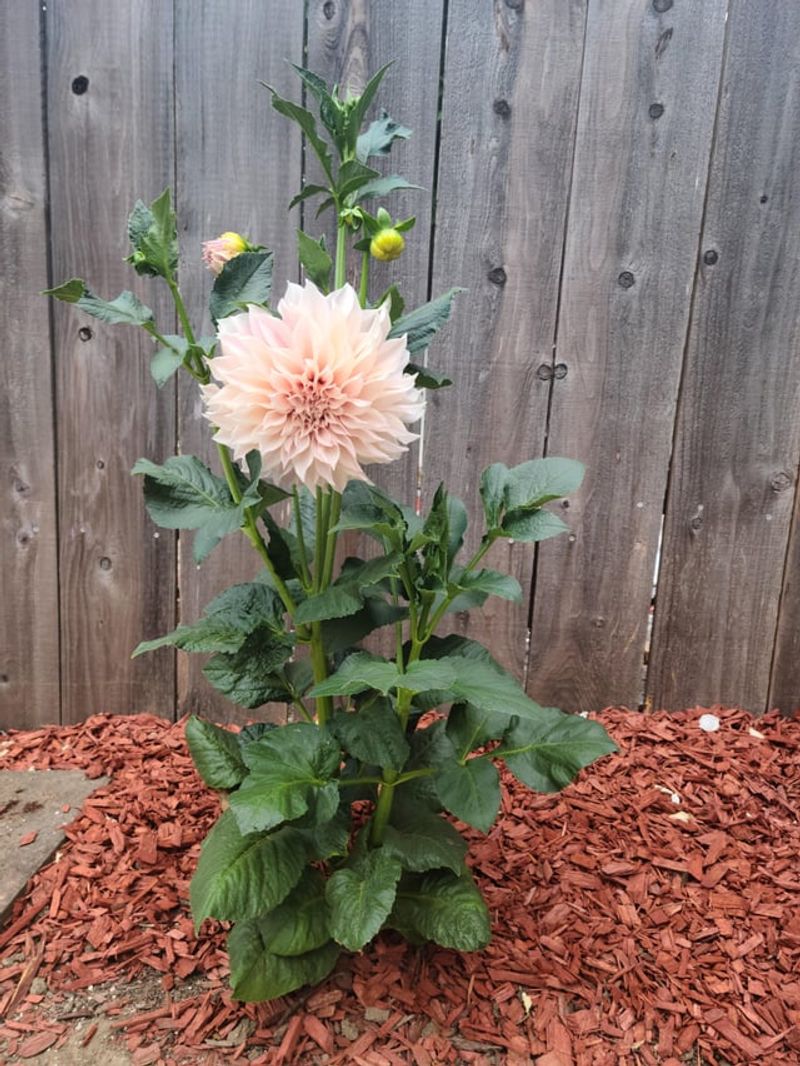
Ready to leave your dahlias in place? A little fall prep goes a long way.
Wait until the foliage turns yellow, brown, or black from frost. Those fading leaves send energy down into the tubers for next year.
In frost-free gardens, you can start cutting back after mid-November or once the plants look tired. Snip stalks to a few inches above the ground.
Here is a handy trick. Hollow dahlia stems can catch rainwater and funnel it toward the crown, so some gardeners cover the cut tops with foil or a bit of soil.
Next, spread a layer of mulch about 4 to 6 inches deep. Straw, shredded leaves, or compost all work well.
Mulch keeps the soil temperature steadier and protects against surprise cold nights. In inland valleys, it can make the difference during a chilly week in December.
Mark the spot with a plant tag or stake. It is easy to forget where tubers are hiding and accidentally dig into them in spring.
Pull back some mulch in early spring so the soil warms up. New shoots usually appear as nights warm up.
Crowded Dahlia Clumps Are A Good Reason To Dig Anyway
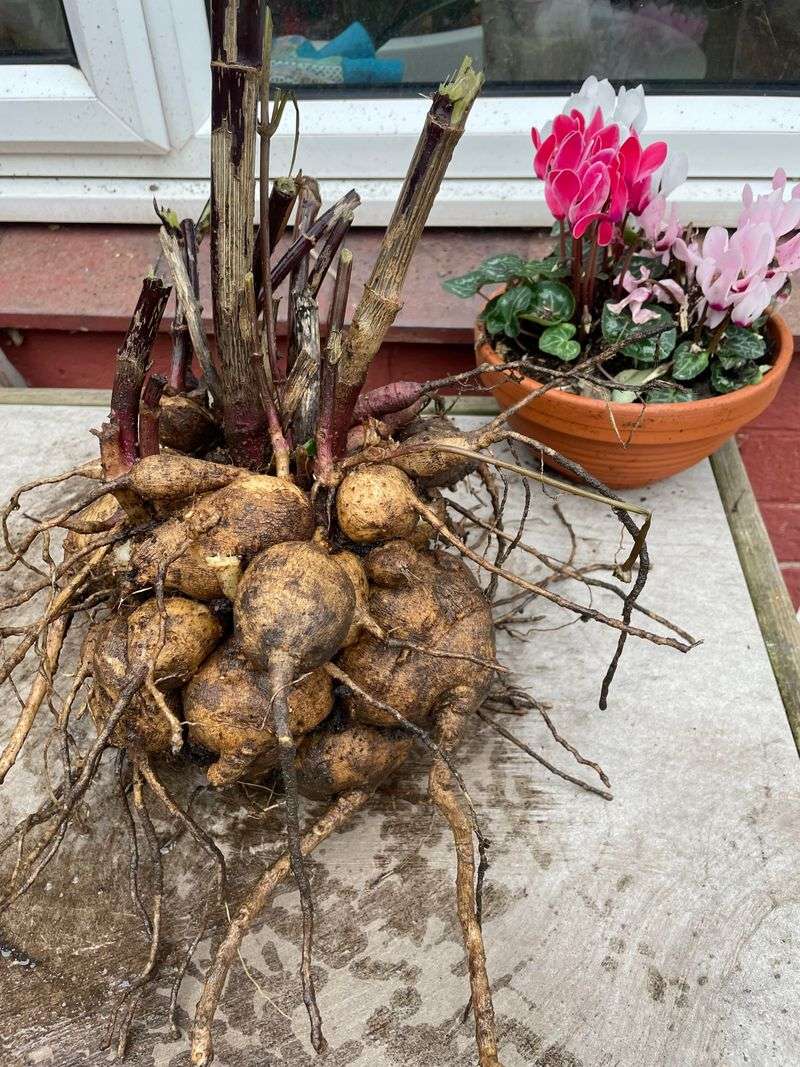
Surprise! Even gardeners in warm coastal towns sometimes grab the shovel. The reason has more to do with crowding than cold.
Each season, one tuber can multiply into a big clump. After a few years left alone, that tangle often produces weaker stems and smaller flowers.
Dividing every two or three years keeps plants vigorous. It also gives you extra tubers to share with friends or plant in new beds.
To divide, look for the eyes. These small bumps sit on the crown near where each tuber joins the old stem.
Every division needs at least one eye to sprout. A tuber without an eye may look healthy, yet it will not grow a new plant.
Eyes can be hard to spot in fall. Many growers wait until late winter or early spring, when the eyes swell and become easier to see.
Digging also lets you check for rot, pests, or damage. Toss any soft or smelly pieces so trouble does not spread.
Think of it as a checkup for your flower bed. Your future bouquets will thank you.
Lifting Dahlia Tubers Gently Saves Those Fragile Necks
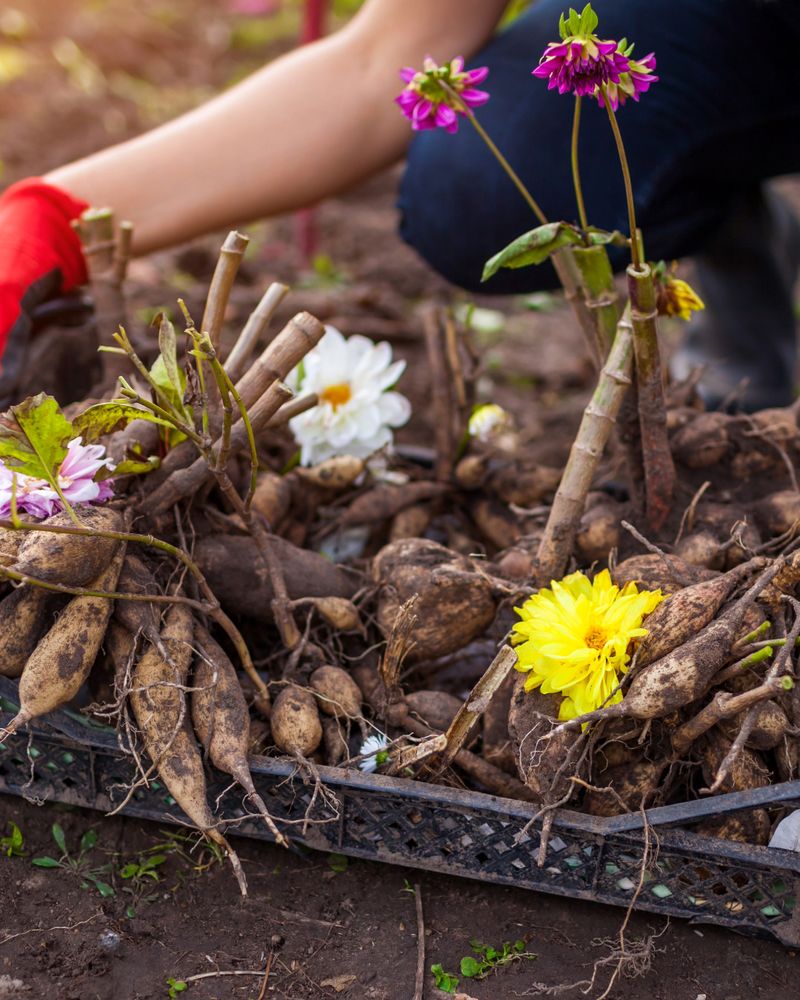
Patience pays off when lifting tubers. Rushing with a shovel is the fastest way to snap the parts you need most.
Start by cutting the stems down to about 6 inches. That stub gives you a handle and helps you find the clump.
Dig a wide circle about 12 inches from the stem with a spade or garden fork. Work slowly so you do not slice into the tubers.
Gently rock the clump until it loosens, then lift it from underneath. Avoid yanking on the stem.
The thin necks connecting each tuber to the crown break easily. A tuber with a broken neck usually cannot sprout, even if it looks plump.
Shake off loose soil or rinse it with a hose. Many growers like to see the tubers clearly to spot damage.
Write the variety name right on the tuber with a marker. Trust me, every clump looks the same by spring.
Let the tubers dry for a day or a few days in a shady, frost-free spot. Skip direct sun, which can shrivel the skin.