Can Potted Boxwoods Survive an Ohio Winter on the Porch?
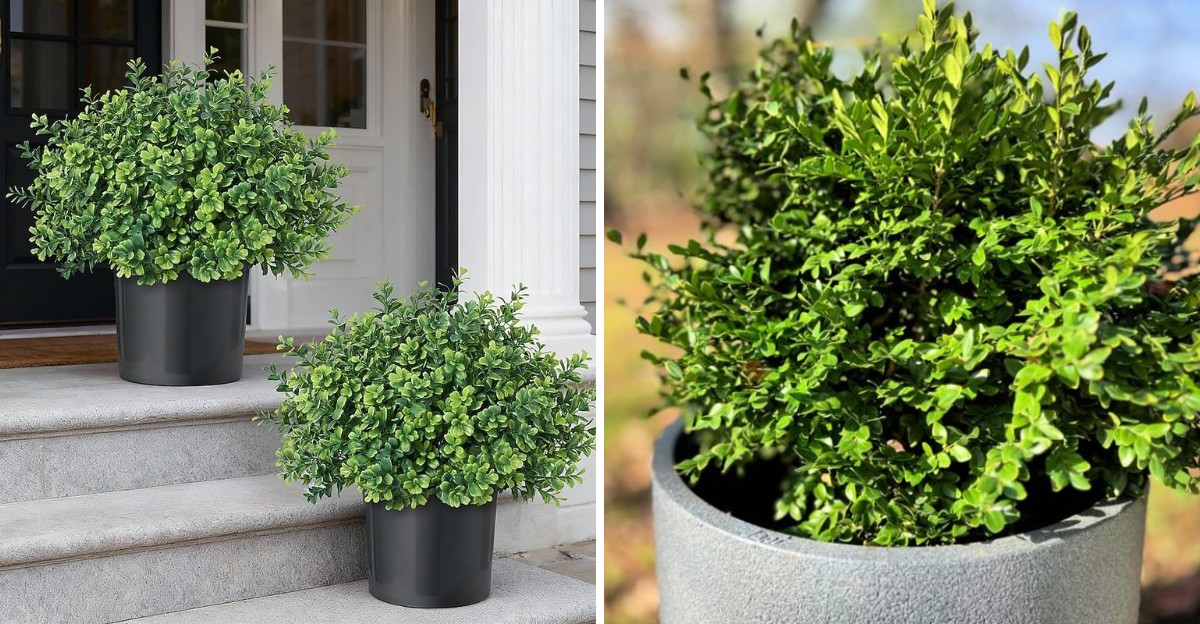
Plant roots in a container can freeze several zones colder than the air would suggest, even when the leaves above look perfectly fine. That one fact changes how I look at every pot sitting on a winter porch.
Ohio winters bring more than cold. You get bitter northwest winds, bright sun bouncing off snow, and freeze-thaw swings that can crack a pot in a single week.
A tidy green shrub by the front door has to handle all of it with only a few inches of soil for shelter.
I love the look of glossy evergreens flanking a doorway in January. I also know how heartbreaking it feels to find bronze, crispy leaves in March.
Can that classic porch favorite really ride out a Buckeye winter in a pot? The answer depends on a few small choices you can still make before the deep cold arrives.
Those Boxwood Roots Are More Exposed Than the Leaves Suggest
Most boxwoods are rated for USDA Zones 5 through 8 or 9, and Ohio sits mostly in Zones 6a through 6b, with cooler pockets of 5b in the north and warmer 7a spots along the Ohio River. On paper, that sounds like an easy win.
The catch hides below the soil line. Boxwood stems and leaves can handle far colder temperatures than the roots can.
In the ground, a huge mass of earth surrounds those roots and keeps them buffered from sudden cold snaps.
A pot offers none of that comfort. Cold air hits the container from every side, so the root ball can drop close to the outdoor air temperature.
Many university extension services suggest picking container plants rated about two zones colder than your area to account for this exposure.
So the honest answer is yes, potted boxwoods often make it through an Ohio winter outdoors. They just rarely do it without help.
A shrub that thrives in your yard bed may struggle in a small porch planter.
I find that reassuring rather than discouraging. Once you know the roots are the weak spot, every protective step makes sense, and most of them cost very little time or money.
Wrap and Group Your Boxwood Planters for Warmer Roots
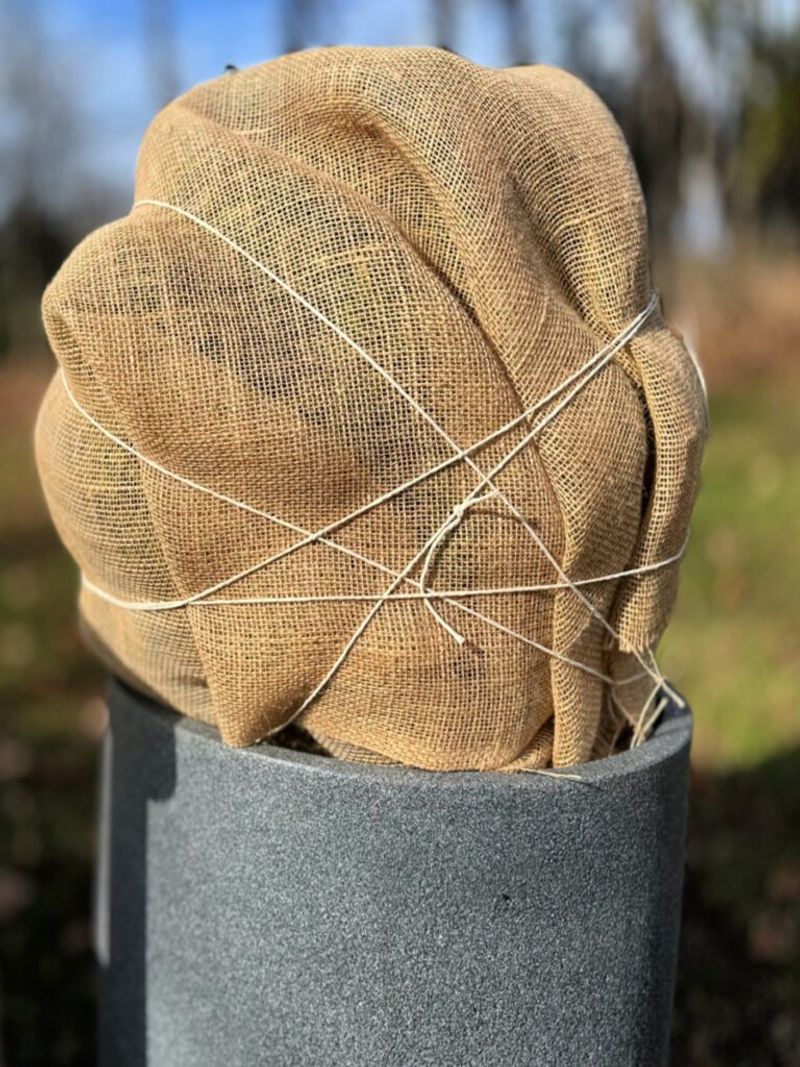
A cluster of pots stays warmer than a lonely one, and that simple trick does more work than you might expect. Grouping planters together creates a bigger mass of soil that holds heat longer during cold nights.
Next, give each container a cozy layer. Bubble wrap, heavy burlap, or a moving blanket wrapped around the outside of the pot helps slow the chill.
Tie it snugly with twine so wind cannot pull it loose.
For extra protection, try the pot-in-pot method. Set your boxwood planter inside a larger container, then pack the gap with straw, shredded leaves, or wood chips.
That stuffing acts like a down jacket for the roots.
A layer of mulch on top of the soil helps too. Two inches of shredded bark keeps the surface from swinging between frozen and thawed every few days.
Size matters as well. Bigger containers hold more soil, so roots sit farther from the cold outer walls.
If you are still shopping, choose a pot that leaves a few extra inches around the root ball.
Honestly, wrapping pots takes about ten minutes each. Your boxwoods will thank you in spring with fresh, green growth.
A Sheltered Porch Corner Beats the Windy Front Steps
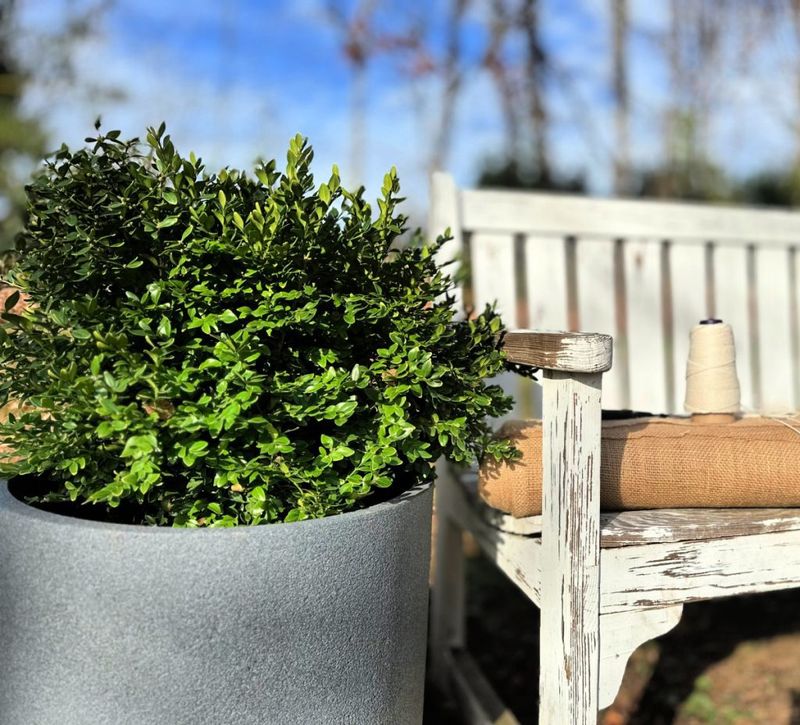
Location can make or break a winter boxwood. I have seen two identical shrubs on the same porch look completely different by March, simply because one sat out in the wind.
Move your pots close to the house if you can. A wall gives off a little stored warmth and blocks some of the harsh air.
A covered porch also shields plants from heavy snow and ice loads.
Pay attention to direction. In Ohio, winter winds mostly blow from the west and northwest.
An east-facing or north-facing spot often protects boxwoods from those blasts and from strong afternoon sun.
Why does sun matter in winter? Bright light warms the leaves, and they start losing moisture.
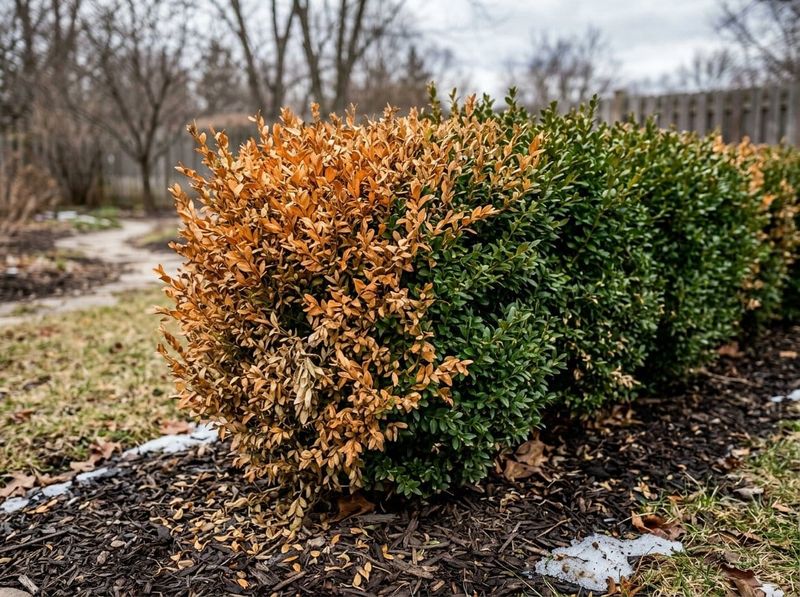
Frozen roots cannot replace that water, so the foliage turns tan or bronze. Gardeners call this winter burn.
Avoid spots near dryer vents or where snow gets shoveled onto pots, since salt and heavy loads cause trouble. Steps facing open lawns or streets can act like wind tunnels too.
If your porch has no sheltered corner, an unheated garage or shed works as a backup during brutal cold spells. Just bring the pots back out when the weather eases.
Thirsty Boxwoods Still Need a Drink in December
Watering in winter feels a little silly, like putting on sunscreen in a snowstorm. Still, dry soil sets boxwoods up for trouble in the cold months.
Evergreens keep their leaves all winter, and those leaves keep losing small amounts of water. A well-hydrated plant handles cold and wind much better than a stressed one.
Moist soil also holds heat better than dry soil.
Water your potted boxwoods deeply through fall, right up until the soil in the pot freezes solid. Aim for evenly moist, not soggy.
Make sure drainage holes stay open so water does not pool and freeze around the roots.
During mild spells, check the pots again. When temperatures climb above 40 degrees Fahrenheit, poke a finger into the soil.
If it feels dry and thawed, water around midday so it soaks in before night.
Containers dry out faster than garden beds, even in winter. A covered porch adds to the problem because rain and snow rarely reach the soil.
I keep a watering can by the door during winter as a friendly reminder. A quick check every couple of weeks during thaws is enough for most porches.
Bronze Boxwood Leaves Are Asking for Winter Burn Protection
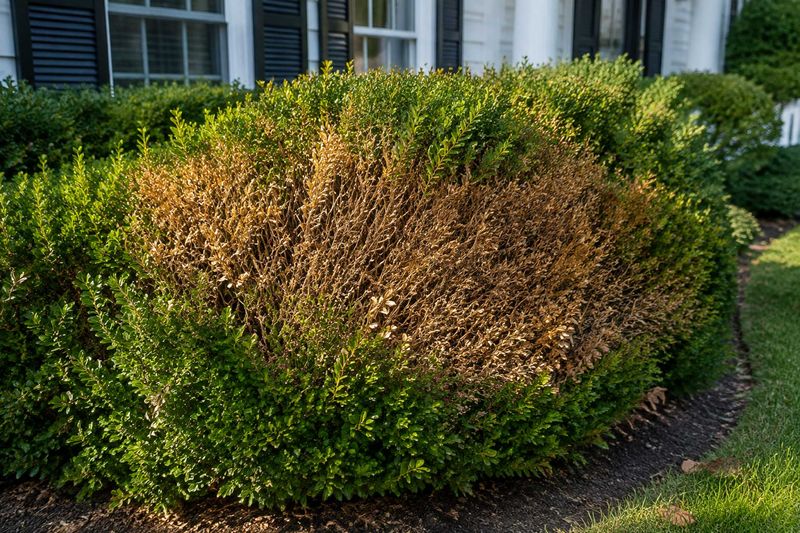
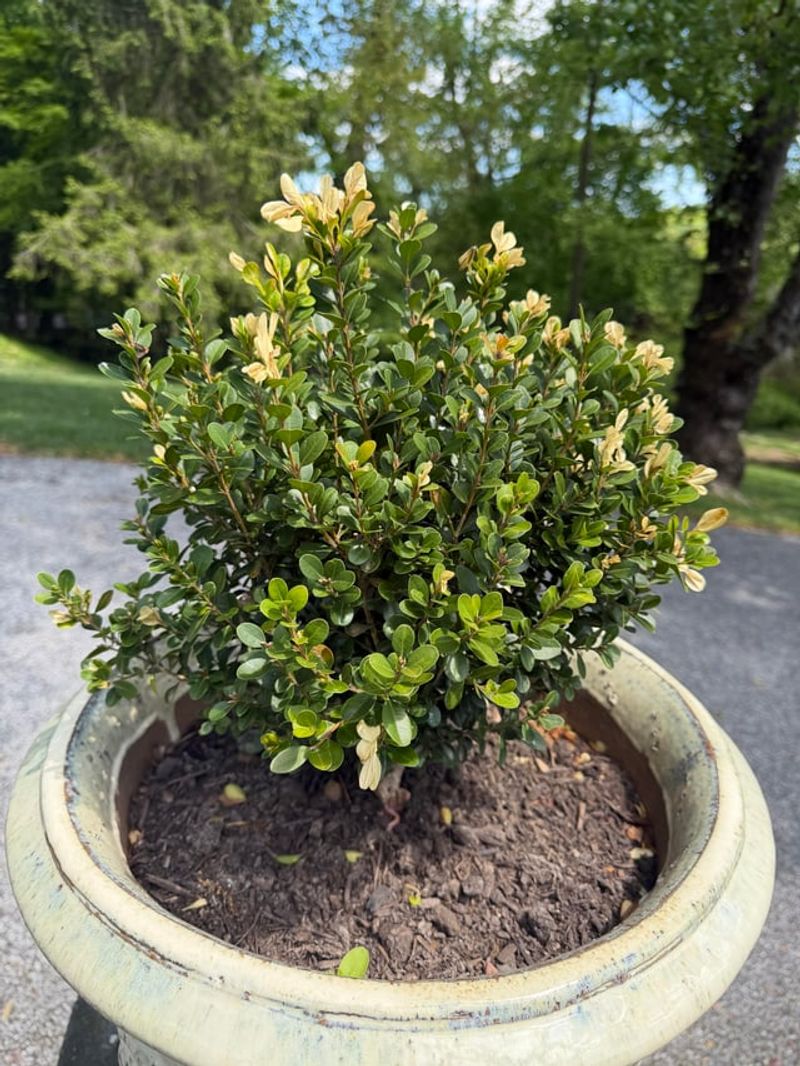
Ever notice boxwood leaves turning orange, tan, or bronze by late winter? That color shift usually signals winter burn or cold stress, not a pest problem.
Some fading of color is normal for certain types, especially common American and English boxwood. Severe burn, though, can leave crispy patches that take months to fill back in.
Burlap offers a simple shield. Wrap it loosely around the shrub, or build a little screen with stakes on the windy side.
Skip plastic, since it traps heat and moisture against the leaves.
Anti-desiccant sprays are another option. These products coat the leaves with a thin film meant to slow water loss.
Apply them on a dry day when temperatures sit above 40 degrees, usually in late fall. Research results on these sprays are mixed, so treat them as a helper rather than a cure.
Brush heavy snow off gently with a broom so branches do not split. Let light snow stay, since it actually insulates.
In spring, wait until new growth appears before trimming any brown areas. Many leaves that look rough in March bounce back once warmer days arrive.
Terra Cotta Pots Crack While Frost-Proof Planters Hold Strong
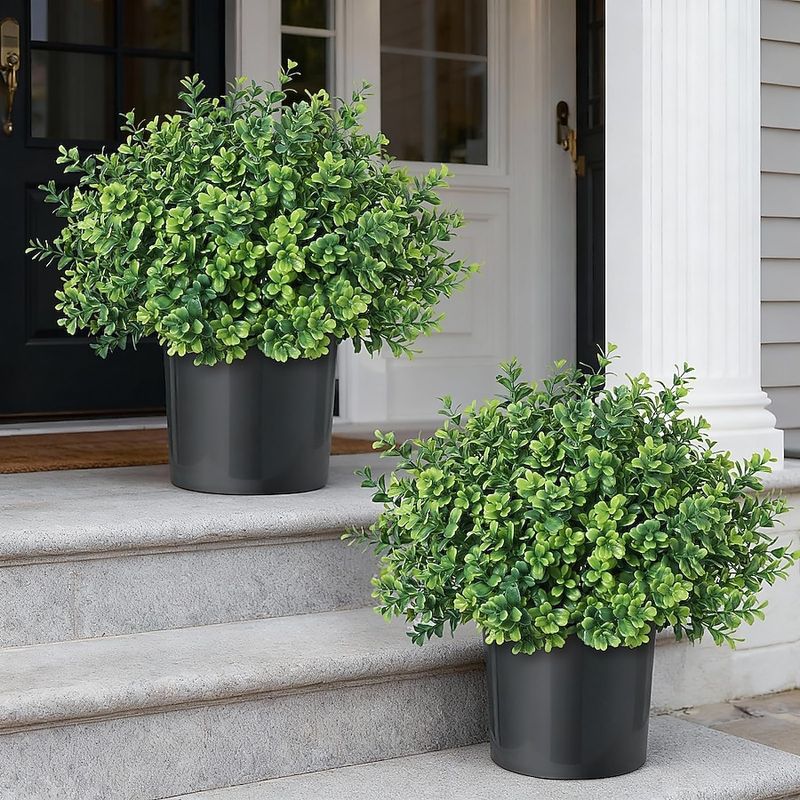
Nothing stings quite like finding a favorite pot split down the middle after a February thaw. Unglazed terra cotta soaks up water, and that water expands when it freezes.
Ohio winters swing above and below freezing again and again. Each cycle puts pressure on porous clay, so cracks and flaking are common.
A broken pot also exposes roots to even more cold air.
Better choices include fiberglass, resin, heavy plastic, concrete, and high-fired glazed ceramic labeled frost-proof. These materials handle repeated freezing far better.
Some double-walled planters even add a bit of built-in insulation.
Drainage matters just as much as material. A pot without holes fills with water, freezes into a solid block, and can crack even sturdy containers.
Use pot feet or small risers to keep the base off cold, wet porch boards.
Here is a fun fact: wooden planter boxes insulate surprisingly well, because wood conducts cold slowly. A thick cedar box can be a lovely, practical home for a porch boxwood.
If you already own terra cotta, you can still use it. Just line it, keep it raised, and consider moving it into a garage during the worst stretch.
Cold-Hardy Boxwood Varieties Give Your Porch Better Odds
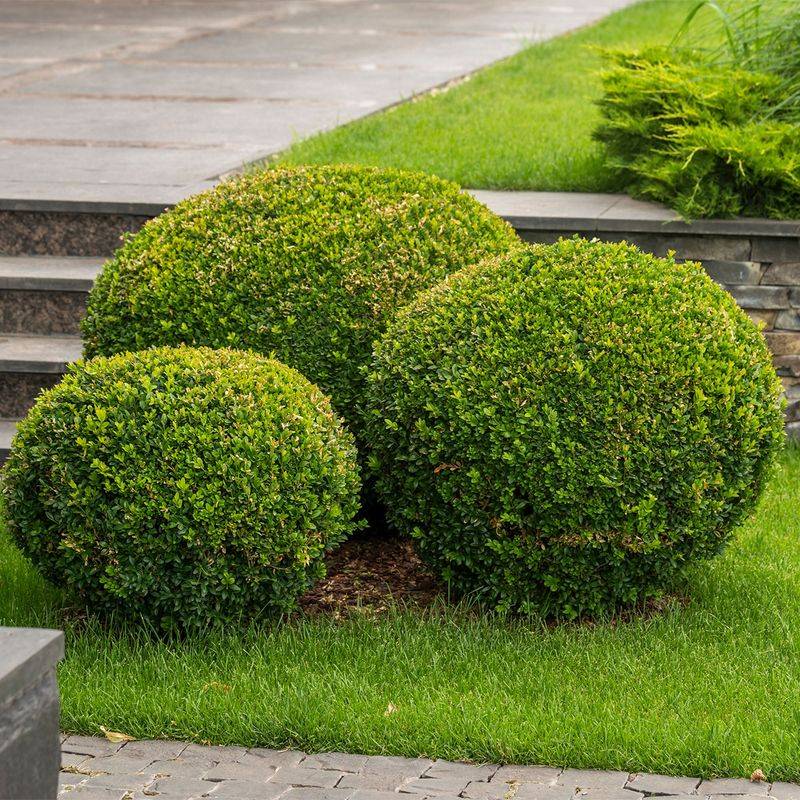
Picking the right boxwood is like choosing the right winter boots. Some are simply built tougher for Midwestern cold.
Korean and hybrid boxwoods tend to shine in colder climates. ‘Wintergreen’ is a well-loved option that handles Zone 5 and keeps a decent green color. The Sheridan hybrids, including ‘Green Velvet’, ‘Green Mountain’, and ‘Green Gem’, came from breeding in Ontario, Canada, with cold toughness in mind.
‘Green Velvet’ forms a soft, rounded shape that suits porch pots nicely. ‘Green Mountain’ grows more upright, so it works well flanking a door. Proven Winners also sells ‘North Star’, a compact globe with strong cold tolerance.
Common English boxwood looks classic but often bronzes or struggles more in exposed Ohio spots. Save that one for sheltered beds in southern parts of the state.
Check the plant tag for a hardiness rating of Zone 4 or 5. That extra buffer helps make up for the cold container roots face.
Shopping at a local Ohio garden center has perks too. Staff often know which varieties held up best in nearby yards last winter, which beats any catalog promise.
Spring Checkups Help Your Porch Boxwoods Bounce Back
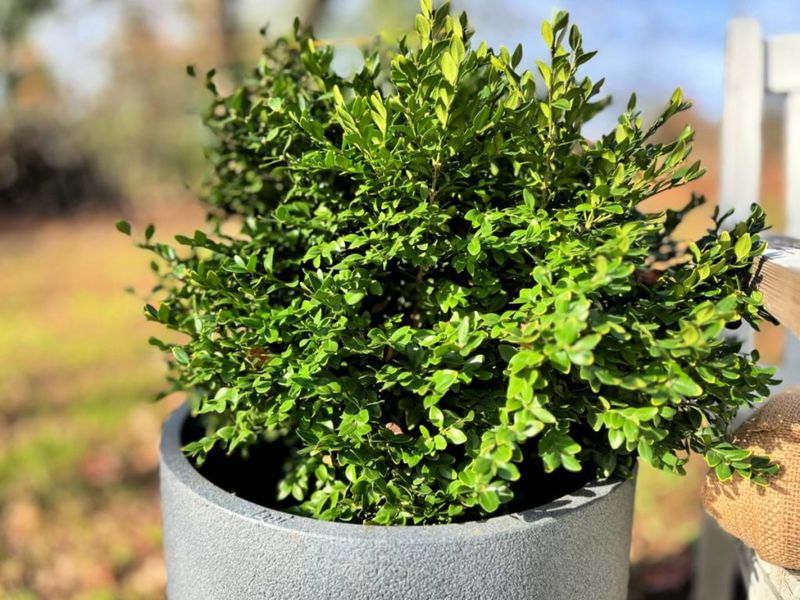
March in Ohio can feel like a coin toss, with sunny afternoons followed by surprise snow. Wait until hard freezes become rare before unwrapping your boxwoods, usually around mid to late April.
Remove burlap and pot wraps on a cloudy day. A sudden blast of bright sun can shock leaves that spent months in shade.
Then give each plant a careful look. Scratch a stem gently with your fingernail.
Green tissue underneath means the branch is alive and likely to leaf out again.
Hold off on pruning until fresh growth starts. Then trim away any brittle, brown tips back to healthy wood.
A light dose of slow-release fertilizer in spring supports new leaves.
Watch for boxwood leafminer, a common pest that causes blistered leaves, and for signs of boxwood blight, which shows as dark leaf spots and sudden leaf drop. Ohio State University Extension offers helpful guides if anything looks unusual.
Finally, jot down what worked. Note where each pot sat, how it was wrapped, and how it looked in spring.
Those notes turn one winter’s guesswork into next year’s confident plan, and that is my favorite gardening habit of all.