The White-Pawed Wanderer Creeping Into Illinois Homes This November
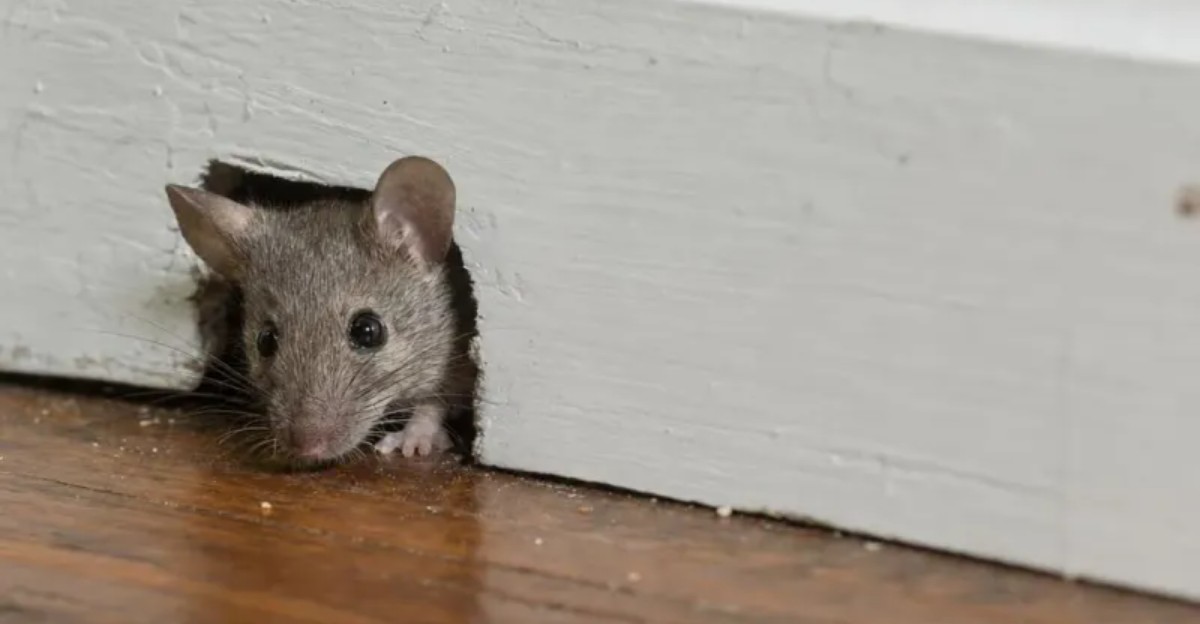
A tiny native rodent can slip through a gap about the width of a pencil. Its whiskers and skull help it test the opening first, and the rest of its body simply follows.
I found shredded insulation stuffed inside an old garden boot last fall. A little detective work gave me my answer, along with a fresh respect for small, clever neighbors across Illinois.
As Illinois nights turn frosty in November, wild seeds and insects get harder to find. Warm garages, sheds, and basements start looking like five-star hotels to anything with fur and big eyes.
You might notice faint scratching after dark or a pile of seed husks behind a storage bin. Those clues usually point to a woodland visitor with snowy feet, a bicolored tail, and a surprising talent for climbing.
The white-footed mouse is already at your foundation, and this month it is looking for a way in.
Those Big-Eyed Mice With White Feet Are Not Your Usual House Guests

Most people expect the gray house mouse when they hear rustling in a wall. The visitor showing up in many Illinois sheds and garages this time of year is often a different creature, the native white-footed mouse, known to scientists as Peromyscus leucopus.
You can spot the difference fairly quickly. White-footed mice wear warm reddish-brown coats with crisp white bellies and feet.
Their eyes and ears look oversized, and the tail is dark on top and pale underneath, a two-tone pattern house mice lack.
Outdoors, these mice live in woodlands, fencerows, brushy edges, and gardens across the whole state. They are active mostly at night and climb trees and shrubs with ease, sometimes nesting in old bird boxes or hollow branches.
Fun fact: these mice do not hibernate. Instead, they stay active through winter, sometimes huddling together in groups to share body heat when temperatures plunge.
Knowing which mouse you have matters. White-footed mice usually prefer the edges of a home, like garages, sheds, cabins, and attics, rather than busy kitchens.
That small detail shapes where you look for clues and where you focus your efforts this month.
Cold Nights And Shrinking Seed Supplies Push Mice Toward Your Foundation

November in Illinois brings the first truly hard freezes, and that shift changes everything for small mammals. Insects disappear, plants stop producing fresh seed, and the ground starts to harden.
White-footed mice spend autumn stashing acorns, seeds, and berries in hidden caches. Even so, a sheltered space protected from wind, rain, and predators like owls and foxes becomes extremely valuable as daylight shortens.
Your house, garage, or garden shed checks every box. Walls hold heat, stored items create hiding spots, and insulation makes perfect nesting fluff.
A mouse exploring along your foundation at night will follow warm air leaking from small gaps.
Timing varies a bit across the state. Northern counties near Rockford and Chicago often feel freezing nights earlier, while southern Illinois may see the push a little later as temperatures drop.
Nothing unusual or alarming is happening here. Experts describe fall movement indoors as a normal seasonal pattern every year, not a new invasion or outbreak.
Understanding that rhythm helps you plan. Acting in early fall works best, but November is still a smart moment to block entry points before winter settles in for months of cold.
A Quarter-Inch Gap Is Wide Enough For A Mouse To Squeeze Through
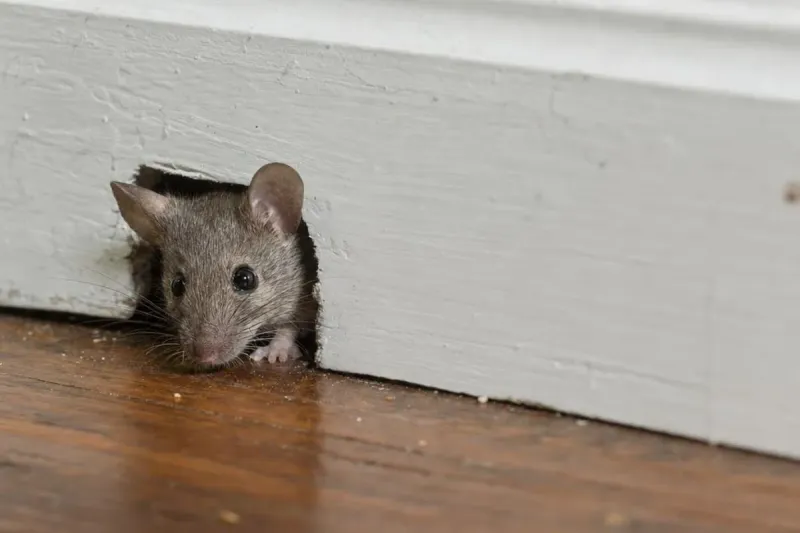
Grab a pencil and look at its width. That is roughly the size of opening a mouse needs, and University of Illinois Extension recommends sealing any gap larger than about one-quarter inch.
Start low and walk slowly around your home. Check foundation cracks, spaces where pipes and wires enter, dryer vents, and the corners of garage doors, which are favorite entry spots.
Choose materials mice cannot chew easily. Steel wool, copper mesh, and hardware cloth with quarter-inch openings hold up well.
Spray foam by itself rarely stops determined teeth, so pack metal mesh into the gap first, then seal over it.
Repair worn door sweeps and weatherstripping along exterior and garage doors. Masonry patch or mortar works well for crumbling foundation spots.
Remember that white-footed mice are skilled climbers. Glance up at roof vents, soffits, and gaps near eaves, especially where siding meets the roofline.
I like doing this check with a flashlight after dark. Light leaking out from inside the garage shows small gaps you would miss during the day.
One evening of careful sealing often prevents an entire winter of scratching and cleanup headaches.
Those Tiny Droppings Carry Health Risks Worth Taking Seriously
Cute faces can hide real concerns. White-footed mice can carry New York orthohantavirus, one of several hantaviruses in North America that can cause hantavirus pulmonary syndrome, a serious lung illness.
Cases in Illinois are rare, according to the Illinois Department of Public Health. Still, people usually get exposed by breathing dust stirred up from droppings, urine, or nesting material, often while sweeping out a shed or cabin.
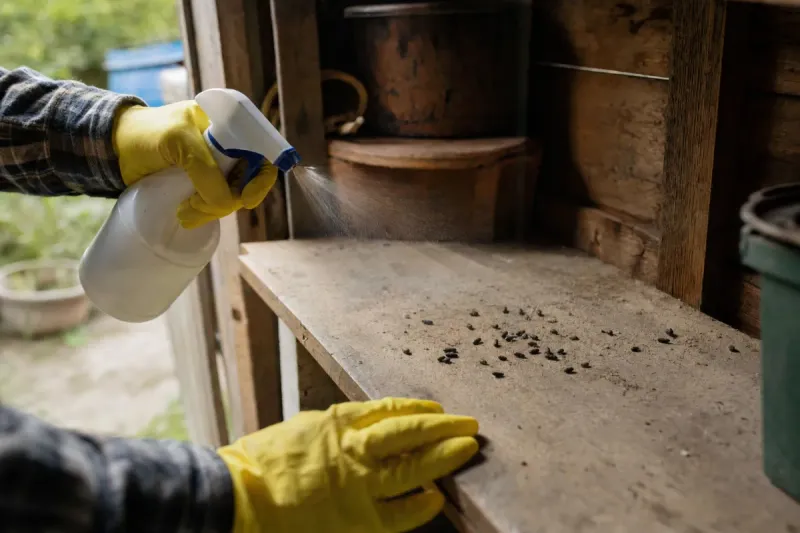
Safe cleanup is simple. Open doors and windows for at least 30 minutes first. Wear rubber gloves, and spray droppings and nests with a bleach solution or disinfectant, letting it soak about five minutes before wiping up.
Skip the broom and vacuum during that first pass, since both can send particles into the air. Bag the waste, then wash gloved hands before removing gloves.
These mice also matter in Lyme disease cycles. Young blacklegged ticks often pick up the bacteria by feeding on infected mice, which is one reason tick awareness stays important for gardeners.
Gnawing brings its own trouble too. Chewed wires, insulation, and stored garden gear add up, so prevention protects your health and your belongings at the same time.
Woodpiles And Leaf Heaps Near Your House Make Perfect Mouse Hideouts

As a gardener, I love a messy corner for pollinators and birds. The trick is keeping that wild spot away from your foundation, where it can become a launching pad for mice.
Firewood is a classic culprit. Store it at least 20 feet from the house if you can, and raise stacks off the ground on a rack. Bring in only what you will burn soon.
Brush piles, heaped leaves, and stacked pots against siding offer cozy cover. Spread leaves on garden beds or into a compost area farther out instead of piling them by the walls.
Keep a narrow strip next to the foundation fairly open. Gravel or bare mulch makes mice feel exposed, and they prefer not to cross open ground where owls can see them.
Trim shrubs and tree branches so they do not touch your roof or siding. These agile climbers use branches like bridges to upper vents and gaps.
Your garden can still welcome wildlife. Native plantings, leaf litter, and seed heads offer real habitat value. Simply give them a bit of distance from the house, and everyone wins.
Spilled Birdseed And Stored Bulbs Are Basically A Mouse Buffet
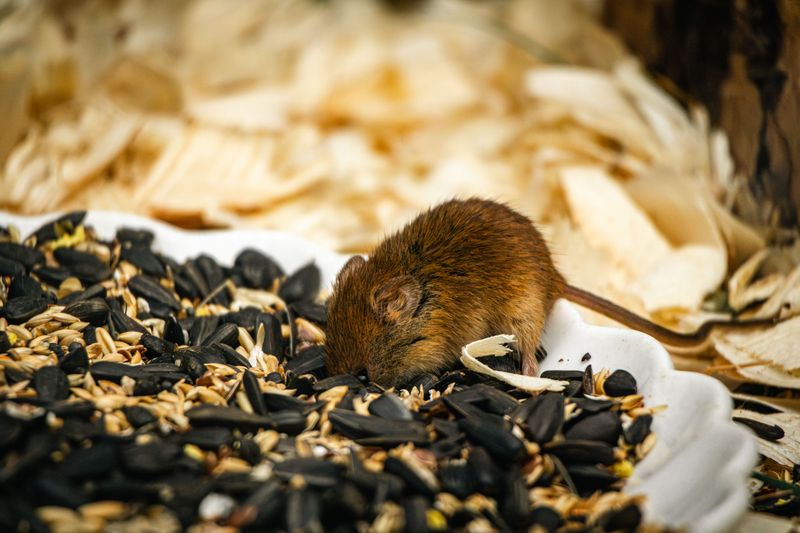
Bird feeding season and mouse season overlap almost perfectly. Spilled sunflower seed under a feeder looks like an open invitation to any hungry rodent passing by at night.
Rake up hulls and fallen seed every few days. A tray under the feeder or a no-mess blend with hulled seed reduces leftovers on the ground.
Inside the garage, paper bags are easy targets. Move birdseed, grass seed, pet food, and grain into metal cans or thick plastic bins with tight lids. Keep containers off the floor on sturdy shelves.
Gardeners have another weak spot. Tulip bulbs, saved seeds, and dahlia tubers stored for winter can attract nibblers. Pack them in lidded containers or wire mesh boxes.
Kitchens deserve attention too. Wipe crumbs promptly, wash dishes before bed, and use trash cans with fitted lids.
Nesting supplies count as well. Old newspapers, fabric scraps, burlap, and twine piles become ready-made bedding, so seal them in bins.
Without easy food or fluffy material, your space quickly loses its appeal, and a curious mouse will likely move along to someplace easier.
Snap Traps Along The Wall Work Better Than Peppermint Oil
Scratching overhead at 2 a.m. tells me sealing alone came a little late. Once mice are inside, traps give the most reliable results, according to University of Illinois Extension guidance.
Simple wooden snap traps are inexpensive and effective. Bait them with a small dab of peanut butter, a few sunflower seeds, or moistened oats. Set the baited end facing the wall, since mice run along edges.
Use several traps rather than one. Place them a few feet apart near droppings, behind appliances, and along shelving in garages and basements. Check them daily and wear gloves when handling.
Live traps are another choice. Release spots should be well away from your home, and some areas have rules about relocating wildlife, so check local guidance first.
Poison baits are risky around homes. Pets, children, and owls or hawks that eat affected mice can be harmed, and mice may end up in wall spaces where odors develop.
Peppermint oil and ultrasonic devices get plenty of buzz online. Research shows mixed or weak results, so treat them as extras rather than your main plan.
A Quick November Walk Around The House Keeps Mice Outside All Winter

My favorite November ritual takes about an hour with a flashlight, a roll of copper mesh, and a hot mug nearby. It pays off every single winter.
Start outside. Look for gaps near pipes, vents, garage door corners, and the foundation, then seal anything about a quarter inch or larger. Check door sweeps and replace worn ones.
Next, tidy the perimeter. Move firewood away, pull leaf piles back from siding, and trim branches touching the roof. Rake spilled seed under feeders.
Head into the garage and shed afterward. Seal birdseed, pet food, bulbs, and grass seed in metal or heavy plastic containers. Watch for droppings, chewed paper, or nests as early warning signs.
Set a couple of snap traps in quiet corners as a monitoring system. If you catch one, more may be nearby, so keep checking.
White-footed mice play a valuable role in Illinois woodlands, spreading seeds and feeding owls and foxes.
Respecting them outdoors while keeping them out of your living space feels like a fair deal. A little effort now buys a peaceful, quiet house until spring returns.