Why Overwintered Geraniums Turn Yellow When Kept Indoors
The flower most of us call a geranium is not a true geranium at all. Botanists file it under Pelargonium, and its wild ancestors grew in the sunny, dry hills of South Africa.
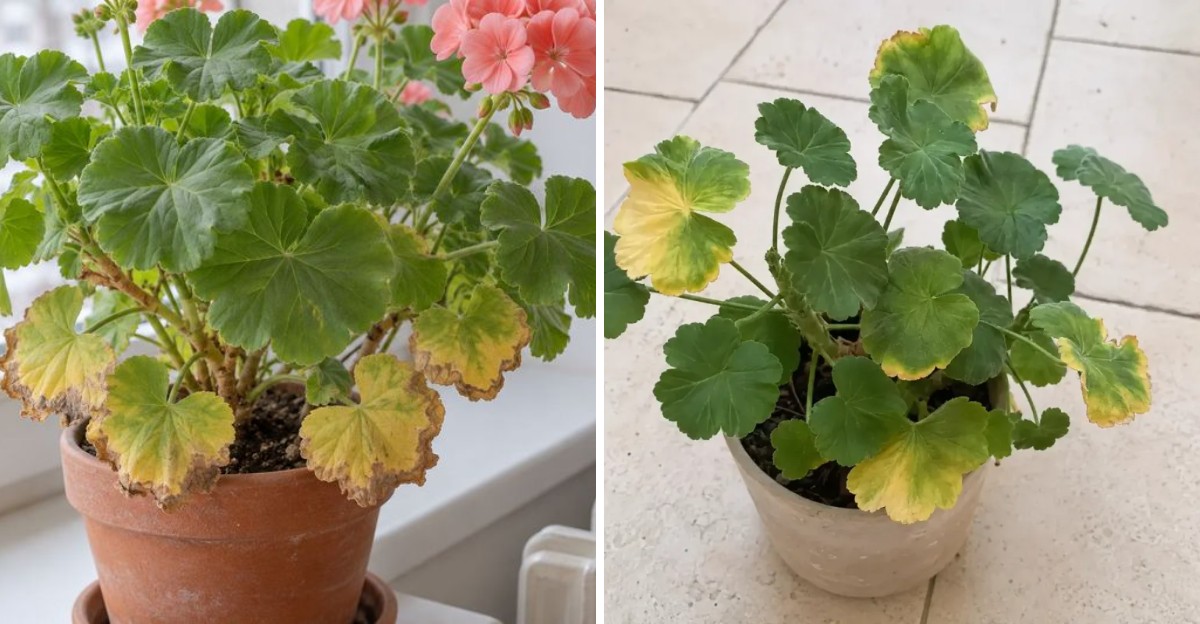
That backstory explains a lot. Every fall, I haul my potted favorites inside before the first frost, feeling pretty heroic about it. Then, within a couple of weeks, the lower leaves start fading to butter yellow and dropping onto the windowsill.
I used to panic and grab the watering can. Truth is, that reflex often makes things worse, and I learned the hard way that a little yellow can be perfectly normal.
Some leaf drop is perfectly normal, while some is a real warning sign. The cause usually sits somewhere between your window, your thermostat, and that innocent-looking saucer under the pot. Which one is your plant quietly complaining about?
Those Yellow Geranium Leaves Are Reacting To A Big Move
Moving day is rough on everyone, and potted geraniums are no exception. Outdoors, they soaked up six or more hours of strong sun, plus fresh breezes and cool nights. Indoors, even a sunny window delivers a small fraction of that light.
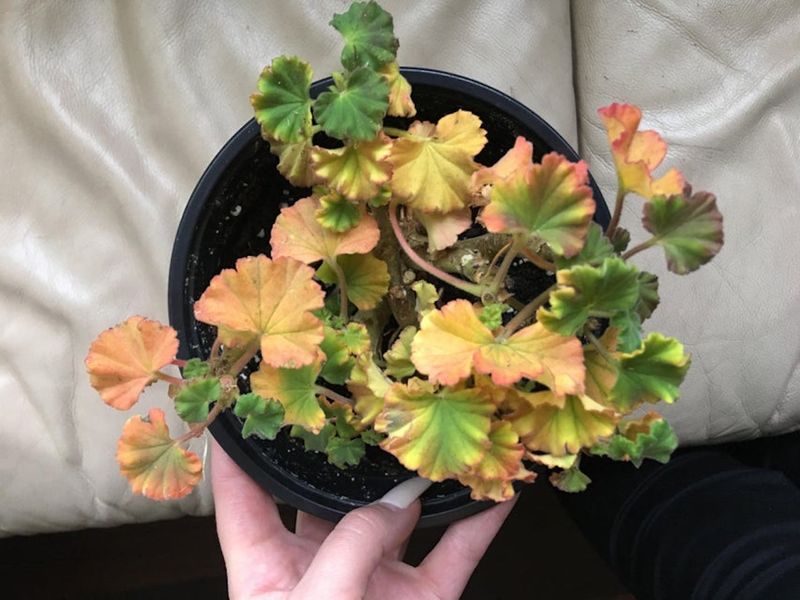
Your plant notices right away. Leaves that grew under bright summer sun cost more energy to keep than the plant can now make. So it pulls nutrients out of its oldest, lowest leaves, lets them turn yellow, and drops them.
Gardeners sometimes call this acclimation, and it is mostly harmless. Expect it within the first two or three weeks after the move. As long as the top growth stays green and firm, you can relax.
Not going to lie, my first winter I thought my plants were doomed. They weren’t. They were just trimming the budget.
You can soften the shock a bit next fall. Start moving pots into partial shade outdoors for a week or two before bringing them inside. That gradual dimming lets the plant adjust before it lands in your living room. Also check for hitchhiking pests during this step, since a quick rinse of the leaves now saves headaches later.
That Soggy Geranium Pot Is Probably The Main Culprit
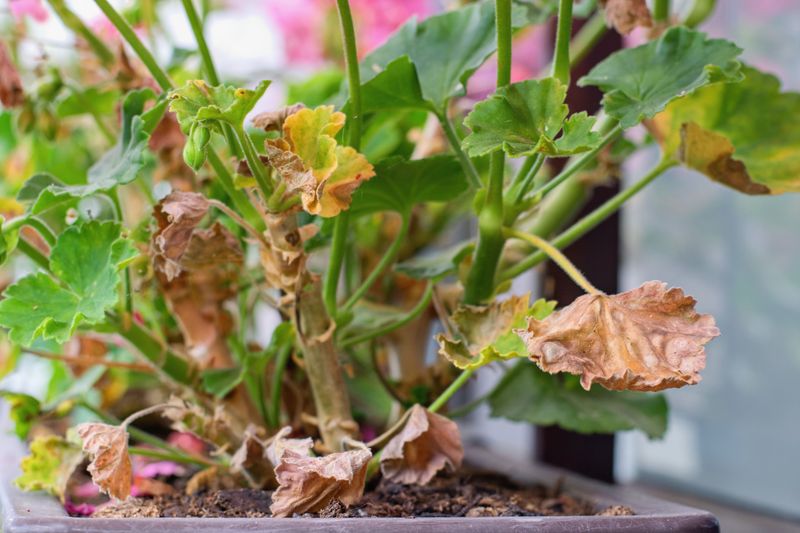
Guilty as charged, I have drowned more geraniums than I care to admit. Extension horticulturists consistently point to overwatering as the leading cause of yellow leaves on indoor geraniums in winter.
Indoor conditions make soggy soil easy to create. Cooler rooms and weak light slow the plant down, so it drinks far less than it did in July. Meanwhile, the potting mix stays wet for days.
Roots need air as much as water. When every pore in the soil fills with moisture, roots struggle to breathe, and the plant answers with yellow lower leaves that often feel soft rather than crispy.
Try this simple habit instead of a calendar schedule. Push a finger an inch or two into the soil, and water only when it feels dry at that depth. Then water thoroughly and let the extra drain away.
Empty the saucer within 30 minutes so the pot never sits in a puddle. Terracotta pots with drainage holes help too, since clay breathes and dries faster than plastic.
Underwatering can cause yellowing as well, usually with crispy edges and soil pulling away from the pot. Still, in winter, too much water is the far more common story.
Your Geranium Needs The Brightest Window In The House
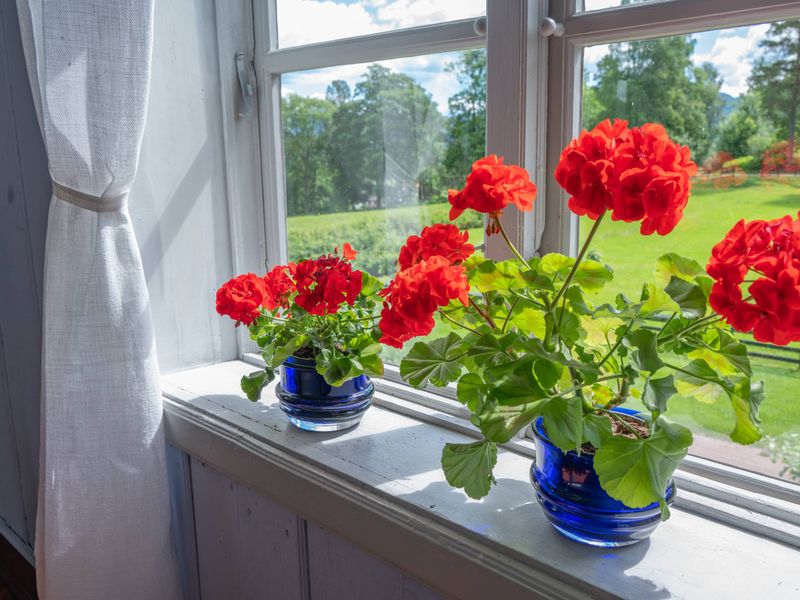
Sunlight is the fuel these South African natives run on. When a pelargonium sits in a dim corner, it cannot make enough food to support all its leaves, and the extra foliage turns yellow.
A south-facing window is your best bet in most of the United States. West-facing glass comes in second. North windows rarely provide enough winter light, so skip them unless you plan to add help.
Watch for clues besides yellow leaves. Long, stretched stems with big gaps between leaves tell you the plant is reaching for light. Pale new growth is another hint.
Here’s my favorite fix for darker homes. An inexpensive LED grow light placed about 6 to 12 inches above the plant, running 12 to 14 hours a day, can keep geraniums compact and green all winter.
Rotate pots a quarter turn every week so every side gets its share. Wipe dust off the leaves and clean the window glass too, since grime blocks more light than you’d guess.
I’m a sucker for a cheerful windowsill bloom in January. With enough light, many geraniums will keep flowering right through the gray months, which feels like a small miracle.
Cold Windowpanes And Hot Vents Both Stress Geraniums
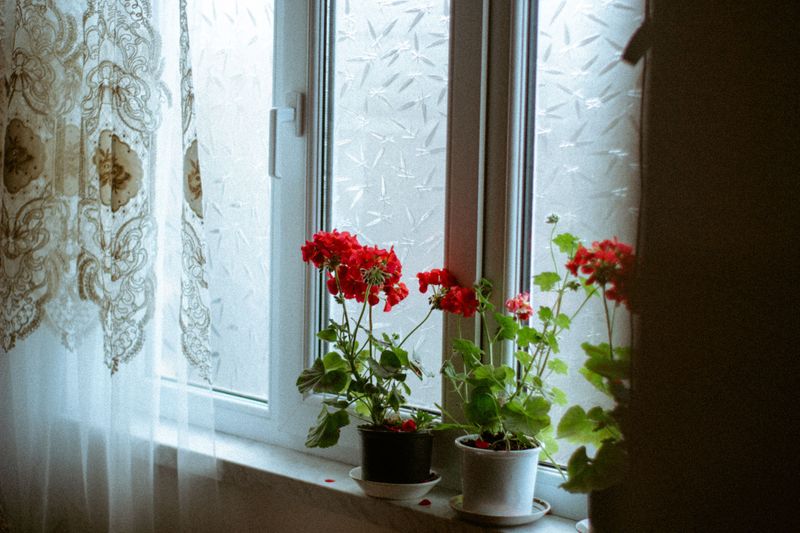
Temperature swings sneak up on indoor plants. Geraniums do best with daytime temperatures in the 60s and slightly cooler nights, roughly 55 to 60 degrees Fahrenheit.
Trouble starts at the extremes. Leaves pressed against a frosty windowpane can chill well below room temperature on a January night. Exposure under about 40 degrees often shows up as yellow or bronze patches within a day or two.
Heat brings its own problems. A pot parked over a forced-air vent or near a wood stove dries out fast, and the hot, dry air stresses foliage. Leaves may yellow, crisp at the edges, and drop.
Fair warning, the sunniest window is sometimes the drafty one. Pull pots a few inches back from the glass on bitterly cold nights, or slip a piece of cardboard between leaves and pane.
Keep plants away from exterior doors that let in icy blasts every time someone walks the dog. A cool spare bedroom or bright enclosed porch that stays above 50 degrees can work beautifully.
Fun fact: slightly cool conditions actually help geraniums stay stocky. Warm rooms paired with low light produce the floppy, stretched growth nobody loves.
Fungus Gnats And Whiteflies Love Indoor Geraniums
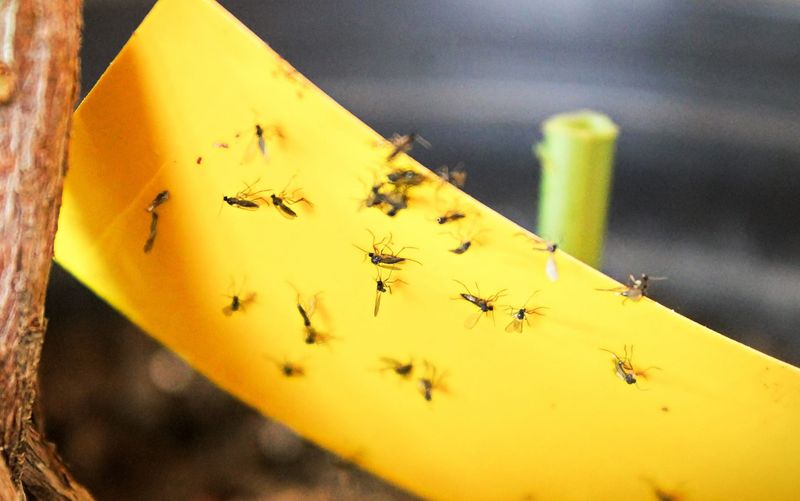
Tiny freeloaders often ride indoors on summer plants. Once inside, with no birds or ladybugs to stop them, their numbers can climb quickly.
Whiteflies are a classic geranium pest. Brush the foliage and a little cloud of white specks lifts off. They feed on sap from leaf undersides, leaving foliage mottled and yellow, sometimes with sticky residue.
Aphids and spider mites cause similar trouble. Look for clusters of soft insects on new tips, or fine webbing and speckled leaves in dry rooms.
Fungus gnats are the little black flies buzzing around the soil surface. Adults are mostly a nuisance, but their larvae feed on roots in constantly damp soil. That root damage can mimic overwatering symptoms.
I check leaf undersides every time I water. It takes a minute and catches problems early.
Yellow sticky cards help monitor and trap flying pests. Let soil dry more between waterings to break the gnat cycle. For whiteflies and aphids, insecticidal soap applied to both sides of the leaves, repeated as the label directs, works well. Always test sprays on a small area first, since some geranium varieties react to oils.
Mushy Geranium Roots Point To Rot Below The Soil
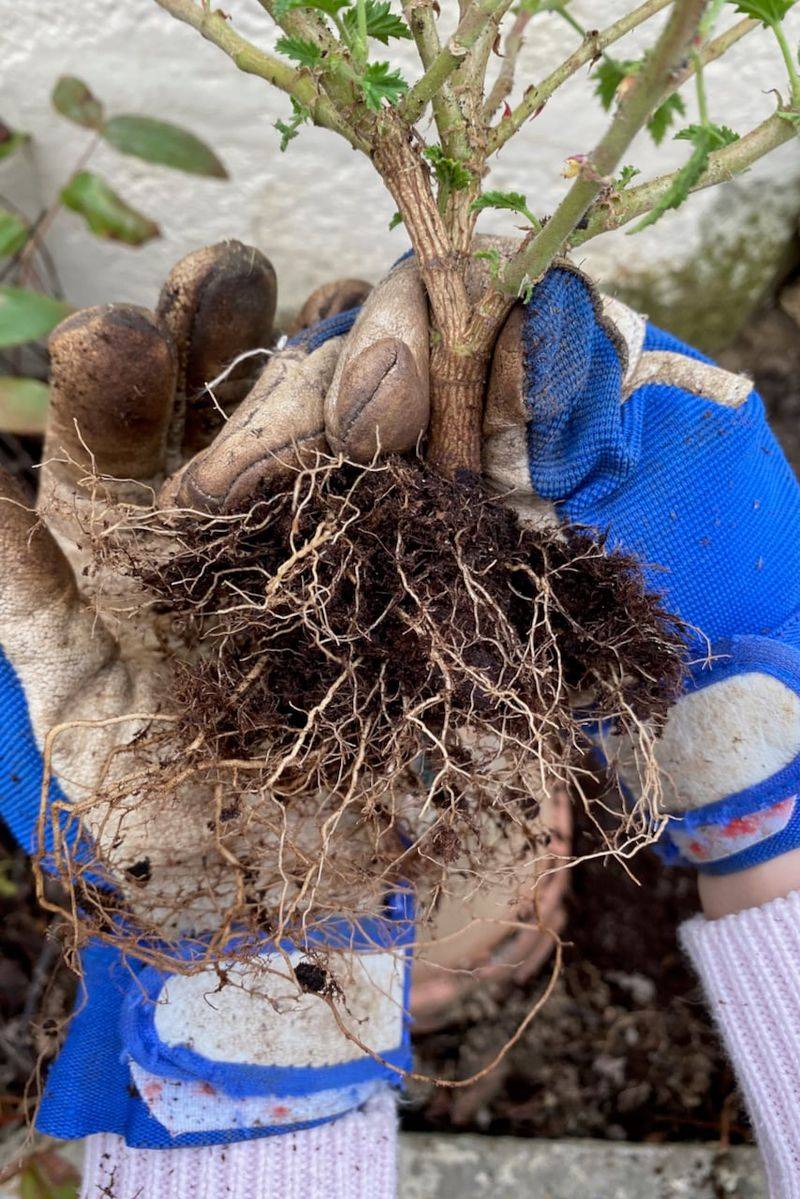
Sometimes the real story hides underground. When yellowing keeps spreading even after you cut back on water, it is time to peek at the roots.
Slide the plant gently out of its pot. Healthy roots look white or light tan and feel firm. Rotting roots turn brown or black, feel mushy, and often smell sour or musty.
Root rot usually follows long stretches of soggy soil, which invite fungus-like organisms such as Pythium. Blackleg, a stem rot of geraniums, shows up as black, shriveled stems near the soil line.
Above ground, watch for gray fuzzy mold on spent flowers or leaves. That’s Botrytis, and it thrives in cool, humid, crowded spots. Rust shows as rusty-brown pustules under leaves.
Act quickly if you spot rot. Trim away soft roots with clean scissors, repot in fresh, well-drained potting mix, and water sparingly afterward. If the base of the stem is black, take healthy tip cuttings instead and start fresh.
Space plants apart for airflow and pick off fading blooms and leaves. Plants with rust or severe blackleg are best discarded so the problem does not spread to the rest of your collection.
Pale Lower Geranium Leaves Might Signal Hungry Soil
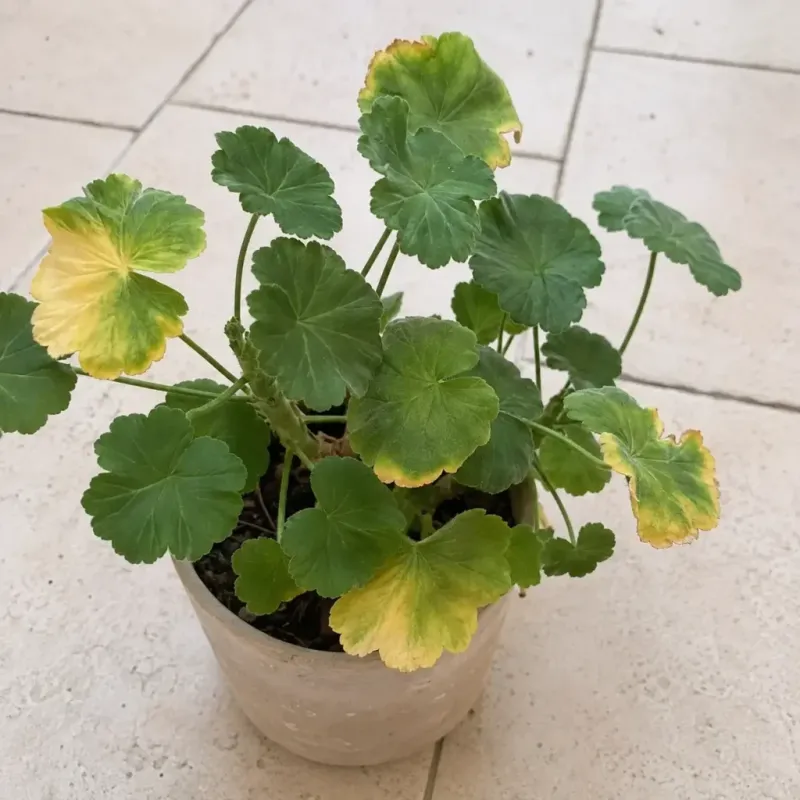
After a long summer of blooming, a pot of geraniums has used up much of the food in its soil. Frequent watering also flushes nutrients out the drainage holes.
Leaf patterns offer clues. Older, lower leaves fading evenly to pale yellow can point to low nitrogen, since the plant moves that nutrient to new growth. Yellow tissue between green veins suggests magnesium shortage.
Here’s where restraint pays off. Overwintering plants in modest light grow slowly and need very little fertilizer. Heavy feeding in December can build up salts that burn roots and cause their own yellowing.
My rule is simple. If the plant is actively growing under strong light or a grow lamp, I give a balanced houseplant fertilizer at quarter to half strength about once a month. If it is resting in a cool, dim room, I skip feeding until late winter.
A white crust on the soil or pot rim means salts are building up. Flush the pot with plenty of plain water, letting it drain fully. Some gardeners use a light dose of Epsom salt for magnesium, but only try it when the vein pattern fits.
Pinch Off Yellow Leaves And Prune Geraniums For Spring
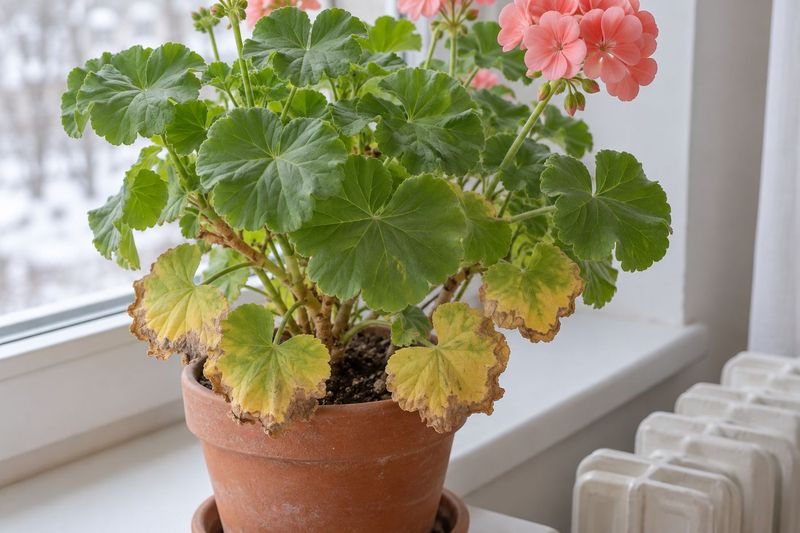
Yellow leaves won’t turn green again, so go ahead and remove them. Snap them off at the stem or pinch gently, and toss them in the trash rather than leaving them on the soil.
That tidy-up does more than improve looks. Fallen foliage traps moisture and invites mold, especially in cool rooms.
Once you fix the underlying cause, watch the newest growth. Fresh green leaves at the tips mean your plant has turned the corner, even if a few older leaves still fade.
Late winter is pruning time. Around February or early March, cut leggy stems back by about one third to one half, just above a leaf joint. New shoots will branch out and fill in.
Those trimmings make great cuttings. Pop 4-inch tips into moist potting mix and many will root in a few weeks.
When spring arrives, wait until nights stay reliably above 50 degrees before moving pots outside. In northern states that may be late May, while Southern gardeners can start earlier. Ease them into full sun over a week or so.
Every fall, I now treat a few yellow leaves as a conversation, not a crisis. The plant is usually telling you exactly what it needs.