A Bright Orange Fungus Is Appearing In Georgia Yards — Here’s Why Experts Aren’t Surprised
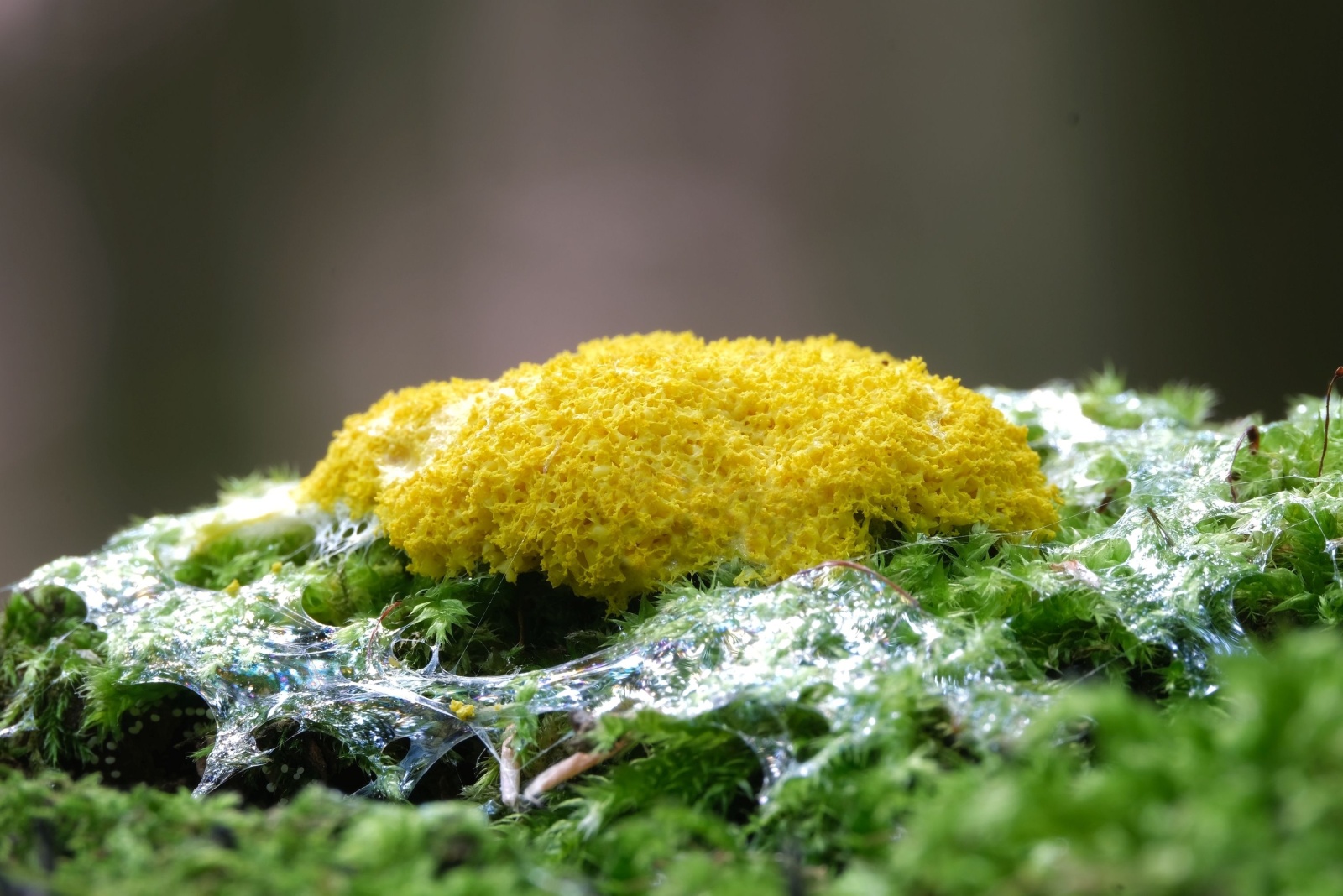
If you’ve noticed a sudden splash of bright orange or yellowish growth appearing in your Georgia yard, you’re not alone.
Homeowners across the state often spot this strange-looking substance after periods of warm, humid weather or heavy rain, especially on lawns, mulch, and decaying wood.
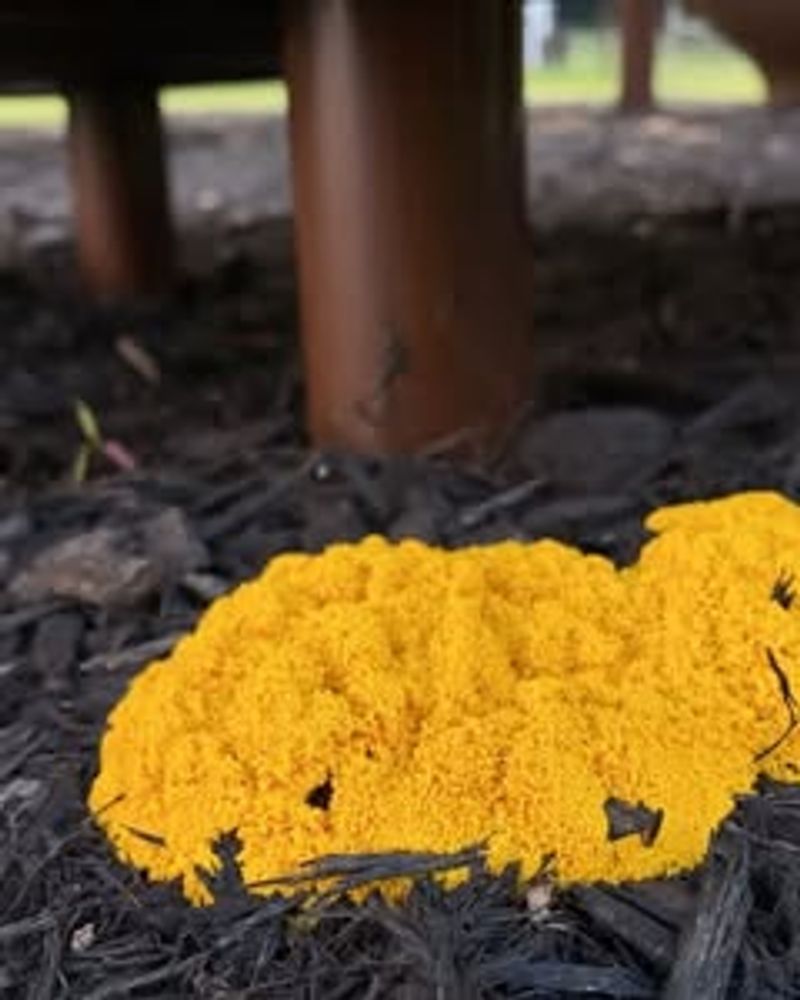
The organism is commonly known as dog vomit slime mold, scientifically called Fuligo septica, and despite its alarming appearance, experts say it’s a familiar and expected sight in Georgia’s climate.
Its sudden arrival may be surprising to homeowners, but it’s exactly the kind of conditions this organism thrives in.
What Fuligo Septica Actually Is
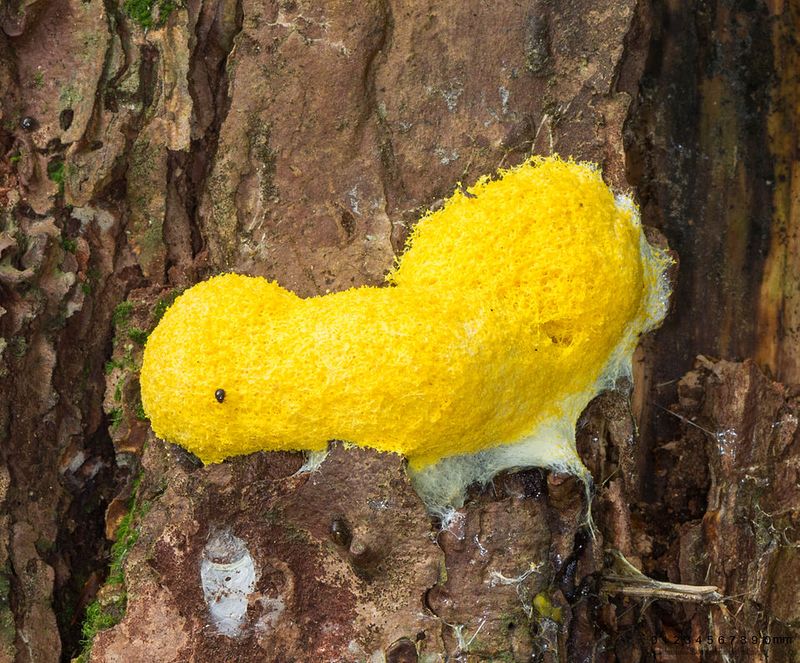
Fuligo septica belongs to a group of organisms called slime molds, which are neither plants, animals, nor true fungi despite their misleading common name.
These unique creatures exist in a category all their own, moving and feeding like animals while reproducing with spores like fungi do traditionally.
Scientists classify slime molds as protists, placing them in a fascinating middle ground between different kingdoms of life on our beautiful planet.
The organism starts as microscopic cells that eventually merge together to form one large, mobile mass that can stretch across several inches.
During its active feeding stage, Fuligo septica appears as a bright yellow-orange blob that slowly creeps along surfaces, consuming bacteria and tiny particles.
When conditions become unfavorable, the slime mold transforms into a crusty, brownish structure that produces spores to spread to new locations nearby.
This transformation process can happen within just a few days, making the organism seem like it appears and disappears mysteriously from your yard.
Why Georgia’s Climate Is Perfect
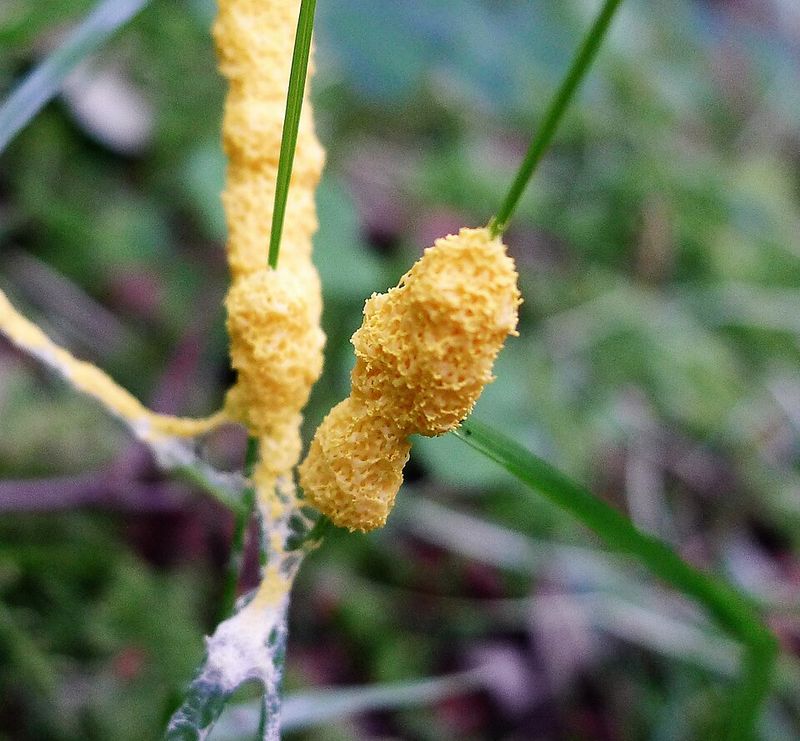
Georgia’s hot, humid summers create ideal conditions for Fuligo septica to thrive, with temperatures and moisture levels that support rapid growth and reproduction.
The state experiences frequent afternoon thunderstorms during summer months, leaving gardens and mulch beds soaked with the moisture slime molds desperately need.
Humidity levels often climb above seventy percent in Georgia, creating an environment where organisms like slime molds can move and feed without drying out.
Temperatures between seventy and eighty degrees Fahrenheit are particularly favorable, allowing the slime mold to remain active for extended periods throughout the season.
Mulched garden beds, which are extremely popular in Georgia landscaping, provide both moisture retention and organic matter that slime molds feed upon constantly.
These conditions mirror the forest floors where Fuligo septica naturally occurs, making suburban yards unintentionally perfect habitats for these unusual organisms to flourish.
Experts note that recent weather patterns with increased rainfall have made sightings even more common across the state this particular growing season.
The Organism’s Unusual Movement
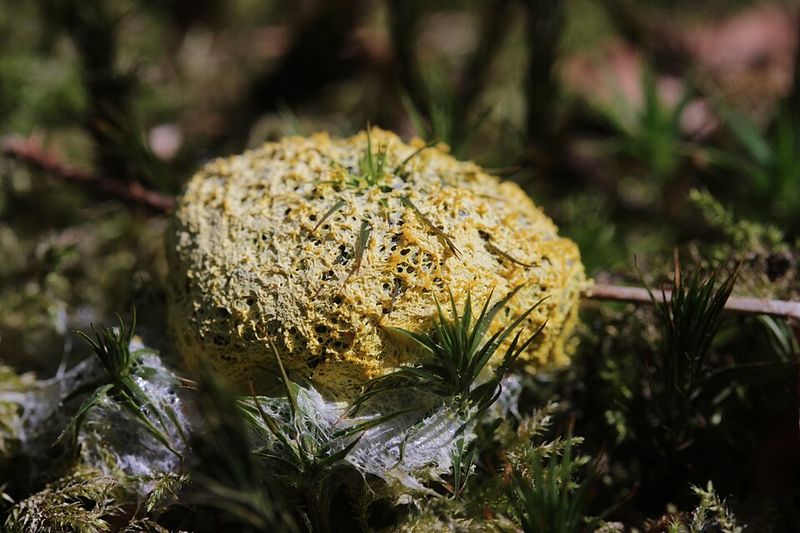
One of the most startling features of Fuligo septica is its ability to move, albeit very slowly, across surfaces in search of food.
Unlike plants that remain rooted in place, this slime mold can creep along at speeds reaching up to one inch per hour.
The movement occurs through a process called cytoplasmic streaming, where the organism’s internal fluid flows in coordinated waves to push the mass forward.
This bizarre locomotion allows the slime mold to explore its environment, seeking out bacteria, fungal spores, and decaying organic material to consume.
Homeowners sometimes report that the orange blob has moved several feet overnight, which can be quite unsettling when you first witness this phenomenon.
The organism follows chemical gradients, moving toward areas with higher concentrations of food sources while avoiding unfavorable conditions like direct sunlight or dryness.
Watching Fuligo septica move in time-lapse photography reveals an almost intelligent-seeming behavior, though the organism has no brain or nervous system whatsoever.
This movement is purely chemical and mechanical, driven by environmental signals and internal biological processes that researchers continue studying with great interest.
Why It’s Called Dog Vomit Slime Mold
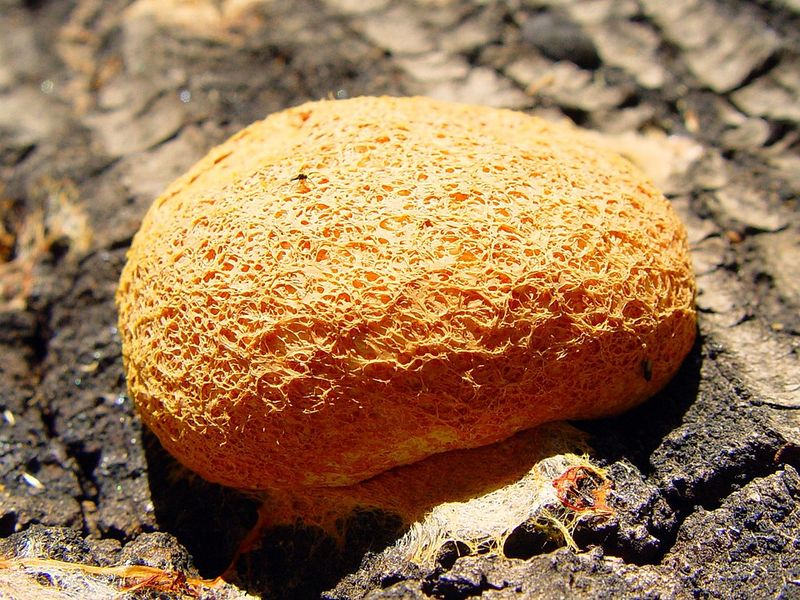
The unfortunate common name comes from the organism’s appearance during its plasmodial stage, when it resembles something a sick dog might leave behind.
Its bright yellow to orange color, foamy texture, and irregular shape all contribute to this rather unappetizing comparison that makes homeowners recoil.
When fully developed, the slime mold can reach sizes of several inches across, creating quite a conspicuous and somewhat disturbing sight in otherwise pristine gardens.
The texture appears wet and slimy, with a consistency that looks disturbingly organic and somewhat unsettling to anyone unfamiliar with these creatures.
Despite its gross appearance, the name has stuck in popular culture, making it one of the most memorable organisms in amateur naturalist circles.
Some people prefer alternative names like scrambled egg slime mold, which is slightly less off-putting but equally descriptive of its unusual appearance.
The scientific name Fuligo septica is more dignified, with Fuligo meaning soot and septica referring to its habitat among decaying organic matter everywhere.
Is It Harmful to Humans or Pets
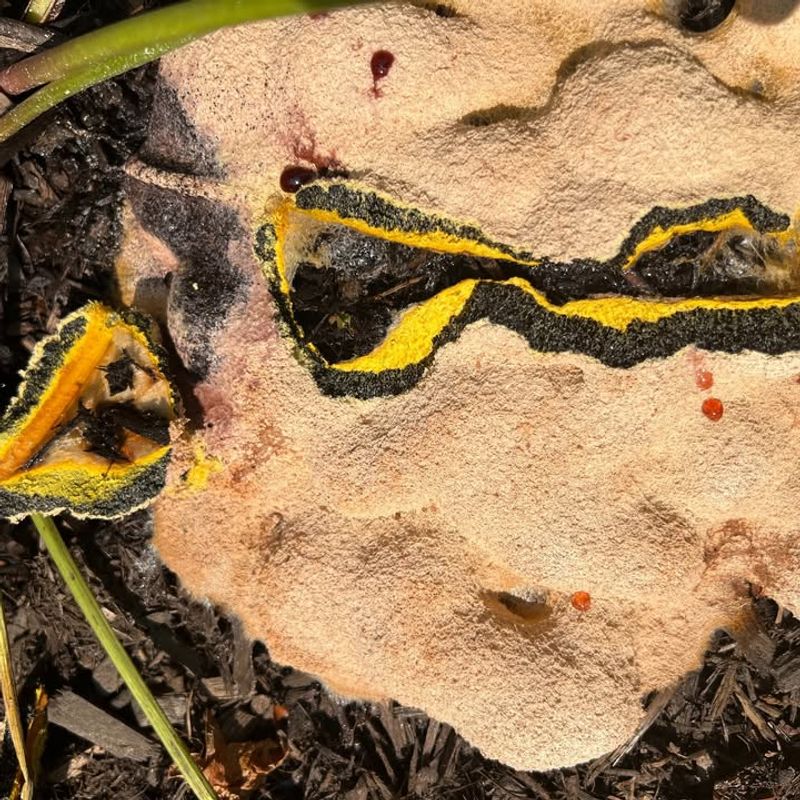
Homeowners naturally worry when strange organisms appear where children and pets play, but Fuligo septica poses virtually no threat to humans or animals.
The slime mold is not toxic, does not bite, sting, or cause any known allergic reactions in most people who encounter it.
Pets might occasionally sniff or lick the organism out of curiosity, but ingestion typically causes no serious health problems beyond possible mild stomach upset.
Most animals find the taste and texture unappealing enough that they avoid consuming more than a tiny amount during their initial investigation.
Some individuals with sensitive skin might experience minor irritation from direct contact, but this reaction is rare and usually resolves quickly without treatment.
Experts recommend wearing gloves when handling slime molds simply as a general hygiene practice, not because of any specific danger the organism presents.
The biggest concern is purely aesthetic, as the bright orange blobs can be startling and unsightly in carefully maintained landscapes and garden areas.
Parents should teach children not to touch unknown organisms as a general safety rule, though Fuligo septica itself presents minimal actual risk.
What The Slime Mold Eats
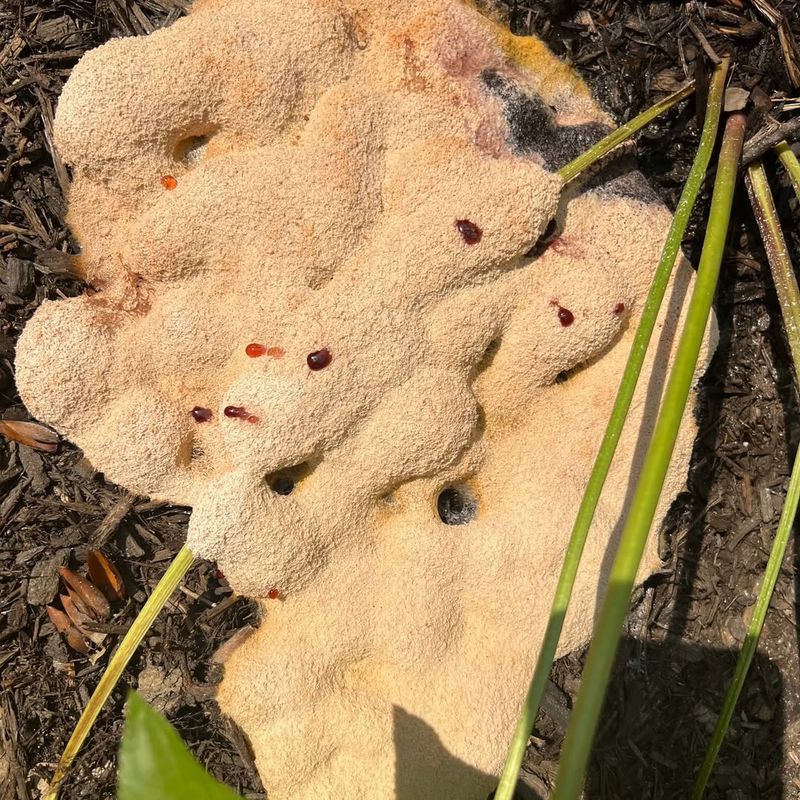
Fuligo septica feeds primarily on bacteria, fungal spores, and microscopic bits of decaying plant material found abundantly in mulch and garden soil.
As it creeps along surfaces, the organism engulfs these tiny food particles through a process called phagocytosis, essentially surrounding and absorbing them.
The slime mold plays an important ecological role by helping break down organic matter and recycling nutrients back into the soil ecosystem.
Mulch beds are particularly attractive because they provide constant supplies of decomposing wood, leaves, and bark that support thriving bacterial communities to feed upon.
Compost piles, rotting logs, and leaf litter also serve as excellent feeding grounds where Fuligo septica can find abundant nutrition for growth.
The organism actually benefits gardens by consuming bacteria that might otherwise compete with beneficial soil microorganisms or cause plant problems in some cases.
During active feeding, the slime mold can double in size within just twenty-four hours when conditions and food availability are optimal.
This rapid growth explains why the organism seems to appear suddenly overnight, shocking homeowners who checked their yards just yesterday afternoon.
The Life Cycle Transformation
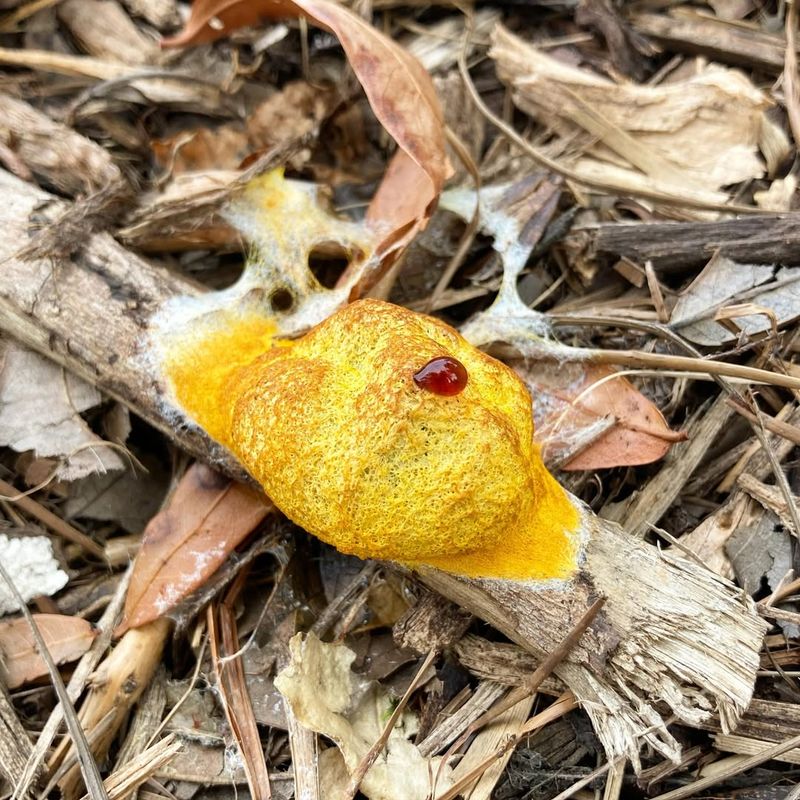
The life cycle of Fuligo septica involves dramatic transformations that would seem like science fiction if they weren’t completely real and observable.
The bright orange plasmodium stage represents the feeding and growing phase, when the organism actively moves around consuming food and increasing in size.
When environmental conditions become less favorable, such as when the weather dries out or food becomes scarce, the slime mold undergoes remarkable changes.
The mobile plasmodium stops moving and begins transforming into a stationary structure called an aethalium, which looks crusty, dried, and brownish-gray.
This hardened structure contains millions of microscopic spores that will eventually be released into the air to colonize new locations when conditions improve.
The transformation from slimy orange blob to dry crusty mass can occur within just forty-eight to seventy-two hours under the right circumstances.
Once the spores are released, they can remain dormant in the soil for extended periods, waiting for favorable moisture and temperature conditions.
When conditions align perfectly, the spores germinate and eventually merge to form a new plasmodium, starting the fascinating cycle all over again.
How To Remove It If Desired

Many homeowners prefer to remove Fuligo septica simply because of its unsightly appearance, even though the organism provides ecological benefits to garden ecosystems.
The easiest removal method involves scooping up the entire mass with a shovel or trowel and disposing of it in your compost bin.
Wearing gloves during removal is recommended for general hygiene purposes, though the organism itself poses no significant health risks to most individuals.
Some people prefer to spray the slime mold with a strong stream of water from a garden hose, which breaks it apart.
Allowing the organism to complete its natural life cycle and transform into spores is actually the most environmentally friendly approach if you can tolerate it.
The crusty brown stage is much less noticeable than the bright orange plasmodium and will eventually break down and disappear completely naturally.
Preventing recurrence requires addressing the underlying moisture and organic matter conditions that attracted the slime mold initially to your property.
Reducing mulch depth, improving drainage, and allowing areas to dry out between waterings can make your yard less hospitable to future appearances.
Why Experts Expected This Appearance
Scientists who study slime molds and garden ecology predicted increased sightings this year based on weather patterns and environmental conditions across the region.
Georgia experienced above-average rainfall during late spring and early summer, creating perfect conditions for slime mold proliferation in residential landscapes and natural areas.
Experts also note that suburban expansion into previously wooded areas brings people into closer contact with organisms they might never have encountered before.
Slime molds have always existed in Georgia forests, but homeowners are now creating similar habitats in their yards through mulching and landscaping practices.
The increased use of organic mulches in landscaping provides abundant food and shelter for Fuligo septica and other decomposer organisms to thrive.
Climate trends showing warmer, wetter conditions also favor these organisms, suggesting that sightings may become even more common in coming years ahead.
Educational outreach by extension services and naturalist groups has also increased awareness, meaning more people recognize and report sightings than in previous decades.
Social media allows homeowners to quickly share photos and seek identification, creating the impression of a sudden outbreak when populations are actually normal.
Similar Organisms You Might Encounter
Fuligo septica is just one of hundreds of slime mold species that might appear in Georgia yards, though it’s certainly the most conspicuous.
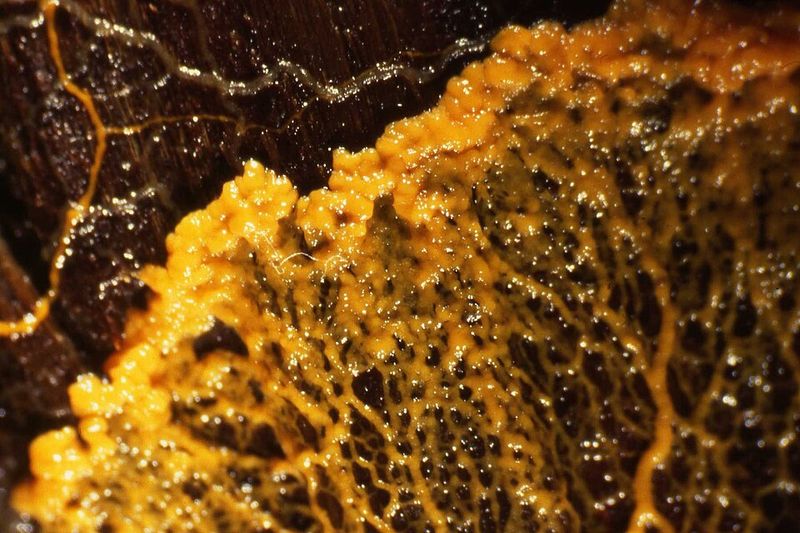
Other common species include Physarum polycephalum, which appears as delicate yellow networks spreading across rotting wood and decomposing organic materials everywhere.
Stemonitis species create elegant clusters of tiny brown or black stalks that look like miniature forests growing on logs and mulch piles.
These slime molds are less alarming to homeowners because they’re smaller and less brightly colored than the shocking orange Fuligo septica.
Arcyria species produce beautiful pink or red fruiting bodies that resemble tiny coral formations, adding unexpected color to shaded garden areas.
Lycogala epidendrum, known as wolf’s milk slime mold, appears as small pink or coral spheres that release pink liquid when broken open.
Learning to identify these various species can transform your perception from disgust to fascination with the incredible diversity of life in ecosystems.
Many slime molds are quite beautiful when examined closely, displaying intricate structures and colors that rival any flower in your carefully maintained garden.
The Scientific Fascination With Slime Molds
Researchers worldwide study slime molds like Fuligo septica because these organisms display remarkably complex behaviors despite lacking brains or nervous systems whatsoever.
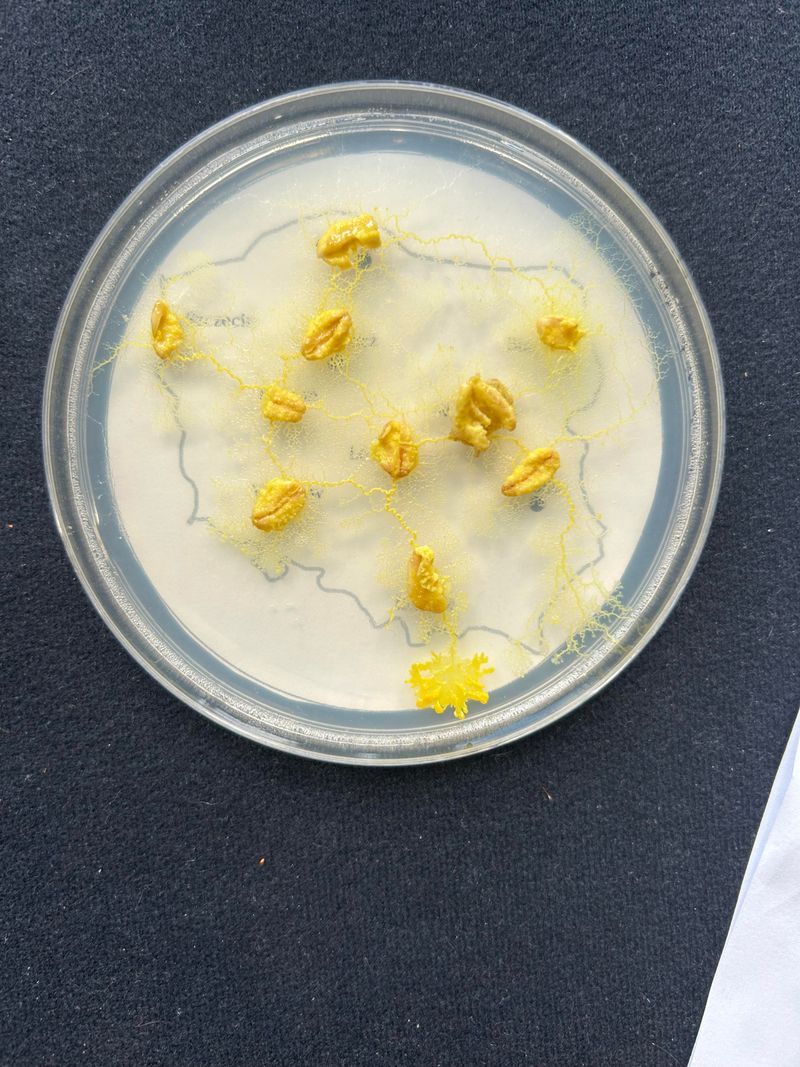
Laboratory experiments have shown that slime molds can solve mazes, find optimal paths between food sources, and even display memory-like behaviors.
Japanese scientist Toshiyuki Nakagaki famously demonstrated that slime molds could recreate efficient transportation networks resembling human-designed railway systems in Tokyo.
This research has implications for computer science, network design, and our understanding of intelligence in biological systems without traditional neural structures.
Medical researchers investigate slime molds for insights into cell movement, coordination, and communication that might apply to understanding human cellular processes and diseases.
The organisms also produce unique biochemical compounds that scientists are studying for potential pharmaceutical applications in treating various human health conditions.
Educational institutions use slime molds in classrooms to teach concepts about life cycles, ecology, and the diversity of organisms on our planet.
The fact that such a simple organism can exhibit seemingly intelligent behavior challenges our assumptions about what constitutes intelligence and decision-making in nature.