A Strange Orange Fungus Is Turning Up In Ohio Gardens — Here’s Why Locals Are Alarmed
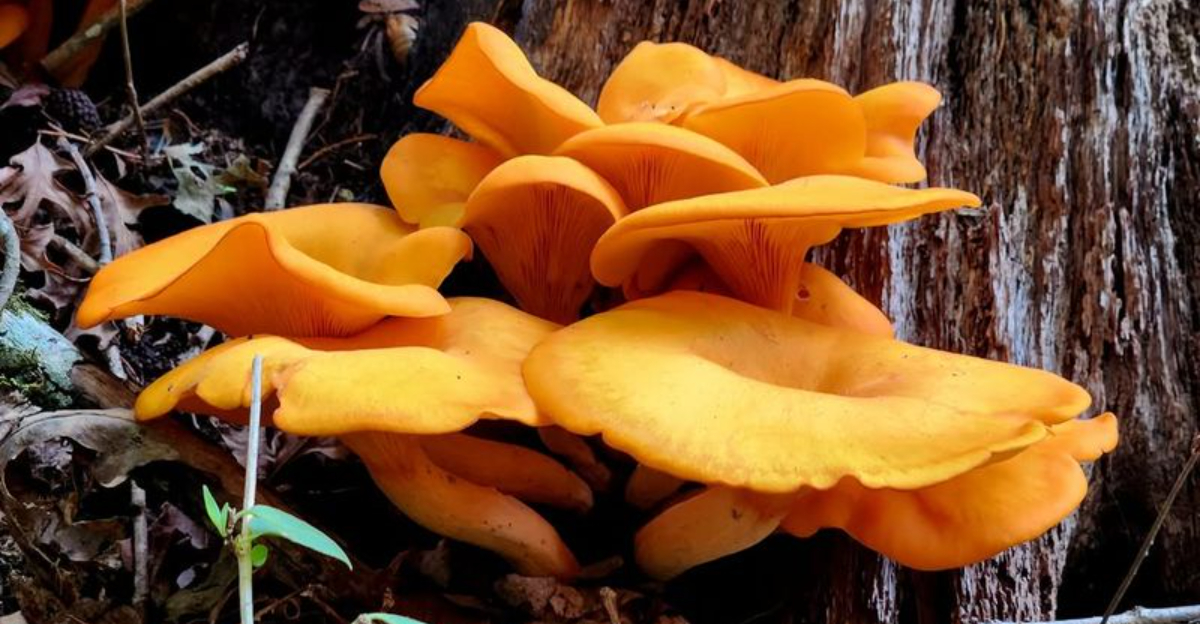
This orange visitor startled me the moment I noticed its warm glow under my backyard shrubs, and that’s when I realized Ohio gardeners were suddenly talking constantly about Jack-O’Lantern fungus.
It looks almost magical at first glance, yet it quickly becomes concerning once you understand how boldly it forms dense clusters and how many locals are now alarmed today overall.
Gardeners across Ohio keep saying it feels like this vivid fungus appears overnight, creating sudden bursts of color that make morning yard walks feel unexpected and slightly unsettling for homeowners.
Some neighbors initially admire its bright clusters before admitting the swift expansion of Jack-O’Lantern fungus feels unsettling, especially when it chooses unexpected corners of their gardens to emerge without warning.
Local gardeners say the appearance of these glowing caps adds an eerie twist to yards, prompting questions about how far this fungus might spread and how it might transform landscapes.
1. Bright Orange Color Makes It Stand Out
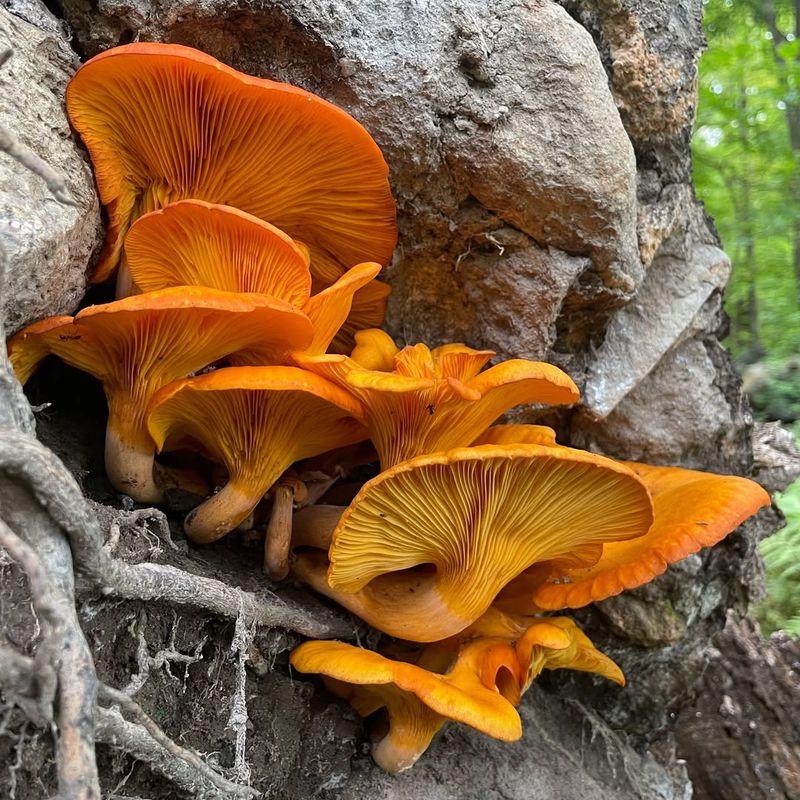
Picture walking through your garden and spotting a patch of bright orange mushrooms that look like they belong in a fairy tale.
The Jack-O’Lantern fungus gets its name from its stunning pumpkin-orange color that makes it impossible to miss among the green plants and brown soil.
Gardens across Ohio have become temporary homes to these eye-catching mushrooms, which often appear in large clusters.
The vibrant hue serves as nature’s warning sign, telling animals and people that these mushrooms aren’t meant for eating.
Many Ohio residents have taken photos of these colorful fungi, sharing them on social media to ask what they are.
The caps can range from deep orange to yellowish-orange, sometimes fading as they age.
Their bright appearance makes them popular subjects for nature photographers exploring backyards throughout the state.
2. They Actually Glow in the Dark
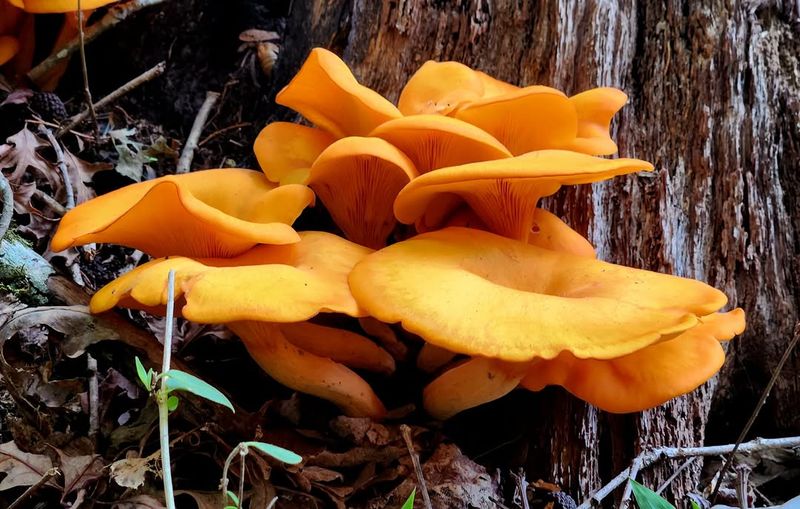
Wait until nightfall and you might witness something truly amazing.
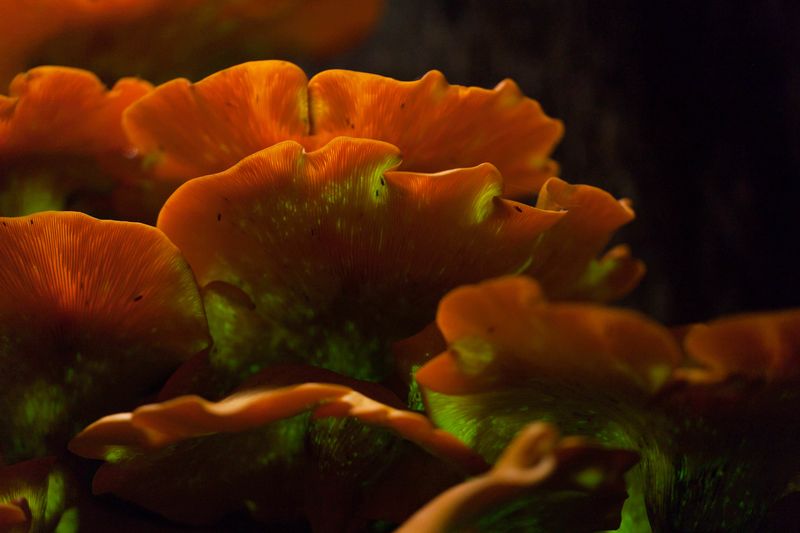
Jack-O’Lantern mushrooms produce their own light through a process called bioluminescence, creating an eerie greenish glow in complete darkness.
The gills underneath the cap emit this ghostly light, though you need very dark conditions to see it clearly.
Ohio gardeners who have checked their mushrooms at night report seeing a faint, supernatural glow that looks almost like something from a science fiction movie.
This natural light comes from a chemical reaction involving an enzyme called luciferase, the same substance that makes fireflies light up.
Scientists believe the glow might attract insects that help spread the mushroom’s spores to new locations.
Bringing them into a completely dark room makes the bioluminescence much easier to observe and appreciate.
3. Not Safe to Eat Despite Tempting Looks
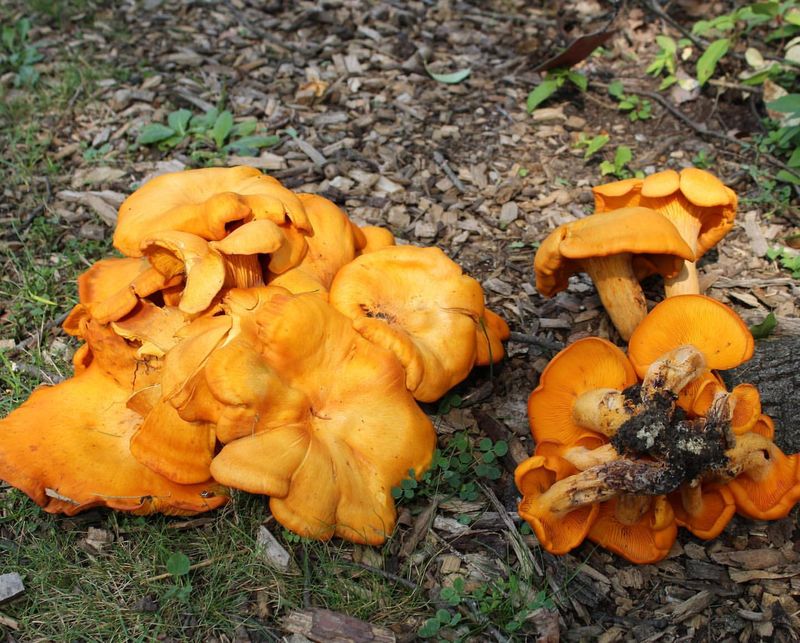
Never put these mushrooms in your mouth, no matter how interesting they look.
Jack-O’Lantern fungi contain toxins that cause severe stomach problems, including intense cramping, vomiting, and digestive distress that can last for hours.
Ohio residents discovering these mushrooms should admire them from a safe distance rather than considering them for dinner.
The symptoms usually begin within thirty minutes to two hours after eating them, making for a miserable experience.
While they won’t cause permanent harm to most healthy adults, the illness is extremely unpleasant and may require medical attention.
Some people mistake them for edible chanterelle mushrooms, which have a similar orange color but different features.
Teaching children in Ohio to never touch or taste wild mushrooms helps prevent accidental poisoning incidents in neighborhoods where these fungi appear.
4. They Grow on Decaying Wood
These mushrooms aren’t just randomly appearing in Ohio gardens.
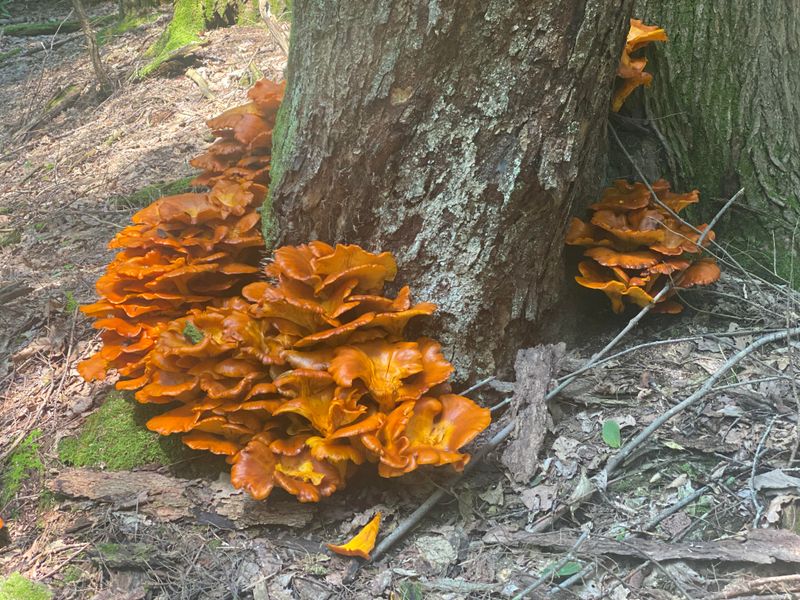
Jack-O’Lantern fungi specifically target dead or decaying wood, including old tree stumps, buried roots, and decomposing logs hidden beneath the soil surface.
Many Ohio homeowners discover them growing where a tree was removed years ago, with the mushrooms feeding on roots still breaking down underground.
The fungus acts as nature’s recycling system, breaking down tough wood fibers and returning nutrients to the soil.
Sometimes they appear to grow from the ground, but there’s always wood somewhere below that they’re connected to.
Finding these mushrooms might indicate that your yard has old wooden debris from previous landscaping or construction projects.
They prefer hardwood trees like oak, which are common throughout Ohio, making the state an ideal environment for their growth and spread.
5. Often Confused with Chanterelles
One big reason people get sick from Jack-O’Lantern mushrooms is mistaken identity.
Chanterelles are delicious edible mushrooms that also have an orange color, leading inexperienced foragers in Ohio to make dangerous mistakes.
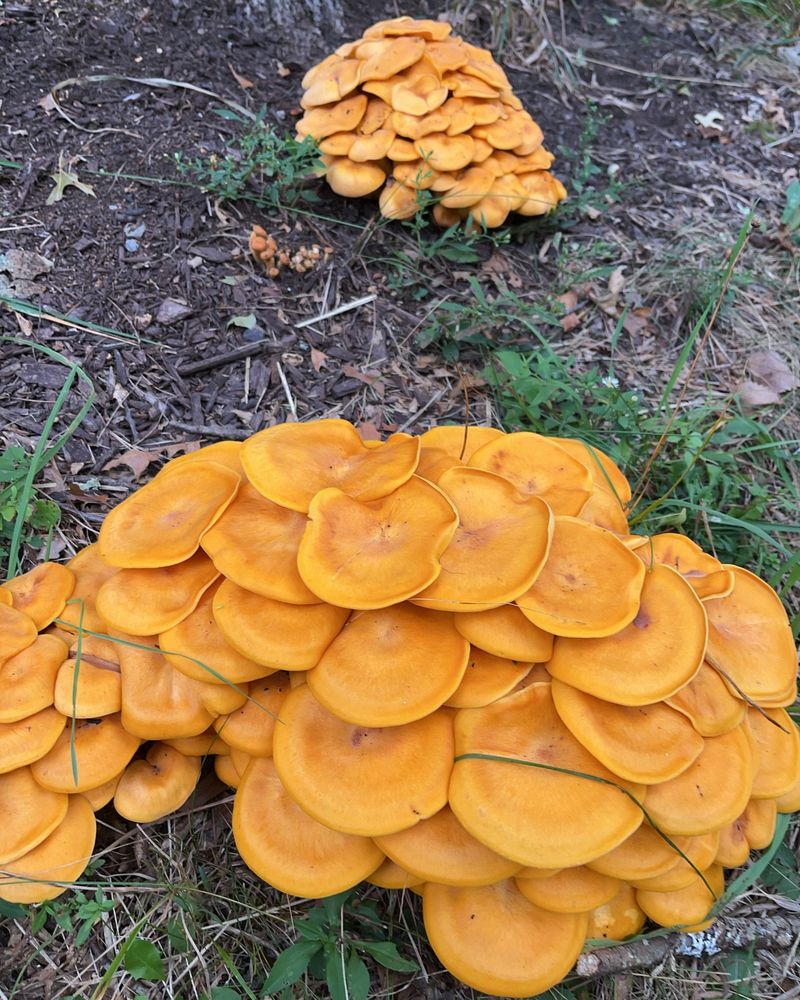
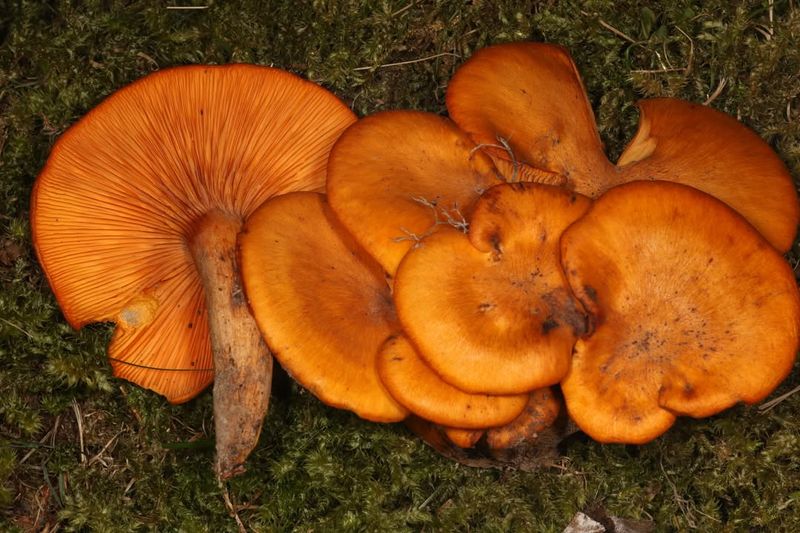
The key difference lies in the gills: Jack-O’Lanterns have true sharp-edged gills, while chanterelles have blunt, forked ridges that look more like wrinkles.
Chanterelles also grow from the soil rather than from wood, and they have a fruity, apricot-like smell.
Jack-O’Lantern mushrooms typically appear in dense clusters, whereas chanterelles usually grow individually or in small scattered groups.
Ohio mushroom hunters need to study these differences carefully before harvesting anything for the kitchen.
When in doubt, consulting an expert or leaving the mushroom alone is always the safest choice for residents exploring nature.
6. They Appear in Late Summer and Fall
Timing matters when it comes to mushroom appearances.
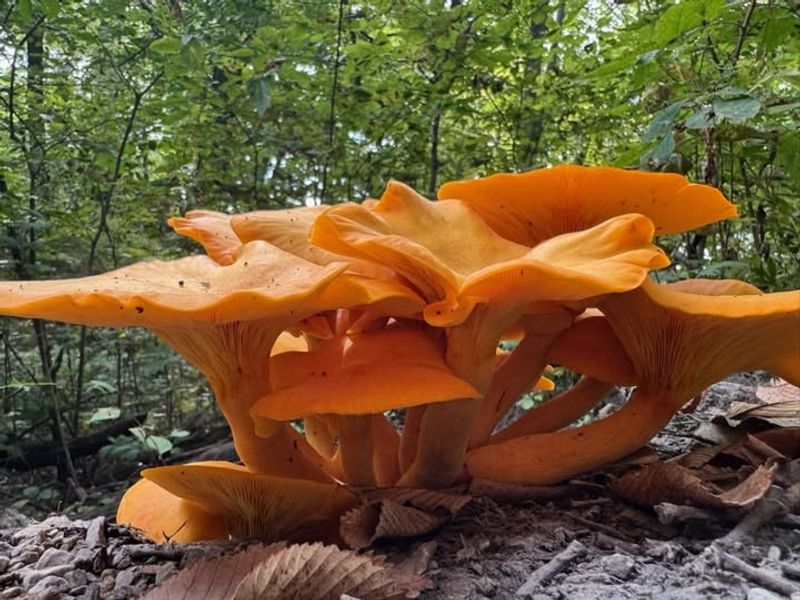
Jack-O’Lantern fungi typically show up in Ohio gardens from late August through November, with peak numbers appearing in September and October.
The cooler temperatures and increased rainfall during autumn create perfect conditions for these mushrooms to fruit and spread their spores.
Ohio’s climate provides the moisture and moderate temperatures that encourage the fungus to produce visible mushrooms rather than staying hidden underground.
Gardeners who notice them in summer might see just a few, but fall brings impressive clusters that can contain dozens of individual mushrooms.
Their seasonal appearance coincides with Halloween, which makes their pumpkin-orange color and spooky name seem even more appropriate.
After the first hard freeze, the mushrooms typically disappear until the following year when conditions become favorable again.
7. Found Throughout the Eastern United States
Ohio isn’t the only state experiencing these colorful visitors.
Jack-O’Lantern mushrooms grow throughout the eastern half of the United States, from Maine down to Florida and west to the Mississippi River region.
However, Ohio’s combination of hardwood forests, moderate climate, and suburban landscaping makes it particularly suitable habitat for these fungi.
Neighboring states like Pennsylvania, Michigan, and Indiana also report frequent sightings in yards and wooded areas.
The mushrooms have adapted well to human-modified environments, thriving in parks, gardens, and anywhere old wood exists beneath the surface.
Climate change may be expanding their range or making them more noticeable as weather patterns shift across the country.
Ohio gardeners should expect to see them regularly since the state falls squarely within their preferred geographic range and habitat zone.
8. They Help Break Down Dead Trees
Despite being toxic, these mushrooms play an important role in nature.
Jack-O’Lantern fungi work as decomposers, using special enzymes to break down the tough lignin and cellulose found in dead wood.
This process releases nutrients back into the soil, making them available for plants and trees growing in Ohio gardens.
Without fungi like these, dead trees would accumulate and forests would become choked with woody debris that never broke down.
The mushrooms you see above ground represent just a tiny fraction of the organism, which consists mostly of thread-like structures called mycelium.
This underground network spreads through the wood, slowly dissolving it over months or years.
Ohio gardeners witnessing these mushrooms are actually watching nature’s cleanup crew at work, recycling old stumps and roots into rich soil.
9. Clusters Can Contain Dozens of Mushrooms
Individual mushrooms rarely appear alone when it comes to this species.
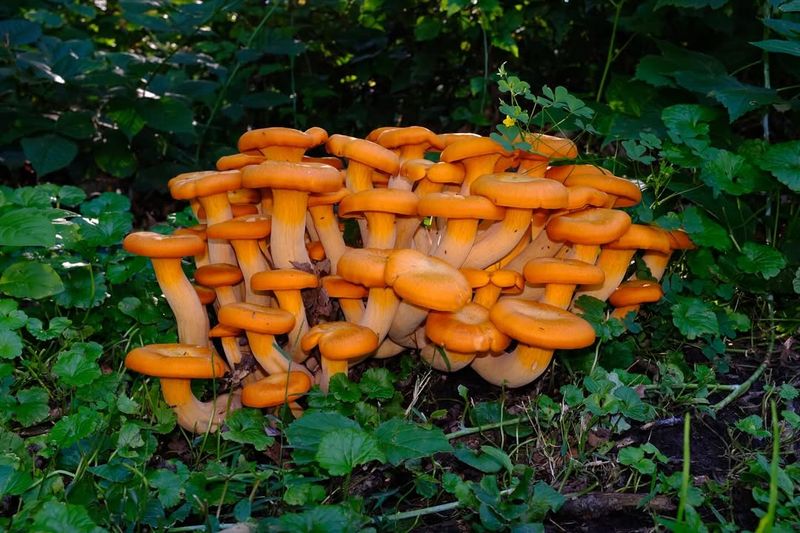
Jack-O’Lantern fungi typically produce impressive clusters containing anywhere from a dozen to over fifty individual mushrooms growing from a shared base.
Ohio residents have reported finding clusters so large they cover entire tree stumps or spread across several square feet of garden space.
All the mushrooms in a cluster are connected underground by the same mycelium network, essentially making them parts of one large organism.
The clustered growth pattern helps distinguish them from chanterelles, which rarely form such tight groups.
These dense arrangements make for spectacular displays that draw attention from neighbors and passersby curious about the bright orange growth.
Photographing these clusters has become popular among Ohio nature enthusiasts who appreciate the unusual beauty these mushrooms bring to ordinary backyards.
10. Best to Leave Them Alone
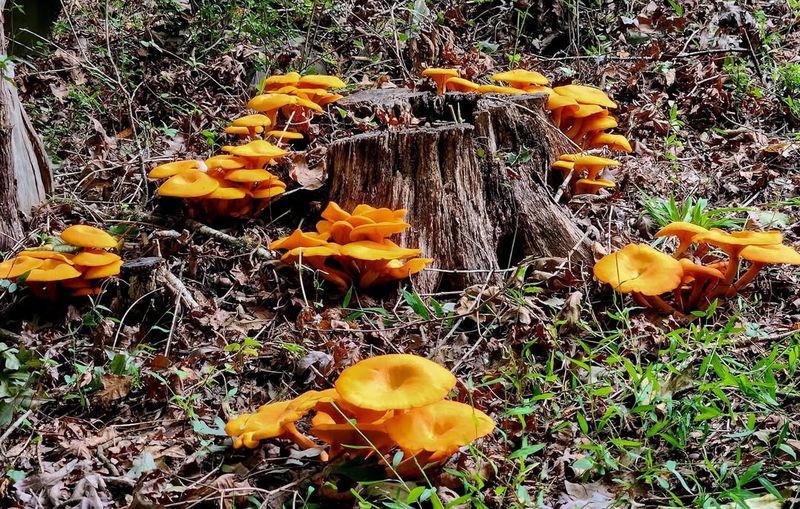
Finding these mushrooms doesn’t require immediate action or removal.
Jack-O’Lantern fungi pose no threat to living plants, grass, or the overall health of your Ohio garden ecosystem.
They focus exclusively on dead wood and won’t attack healthy trees or damage your landscaping in any way.
Removing them doesn’t solve anything because the main fungus lives underground and will simply produce more mushrooms later.
The mushrooms naturally disappear after a week or two, breaking down and releasing spores to continue their life cycle.
Ohio gardeners should simply enjoy the temporary display while keeping children and pets away from tasting them.
Taking photos, observing their glow at night, and learning about their biology makes more sense than trying to eliminate a harmless natural phenomenon.