Animal Tracks In North Carolina You’ll See After Rainy Nights
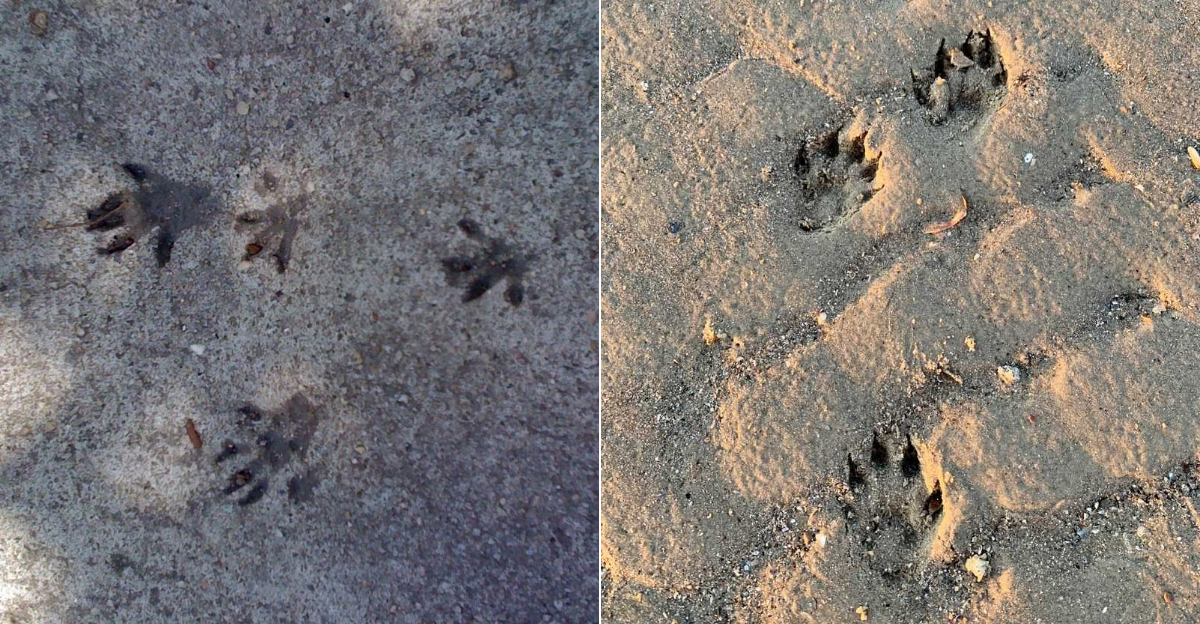
After a rainy night in North Carolina, the ground has a way of revealing what usually goes unnoticed.
What looked like an ordinary yard or quiet path can suddenly show signs of movement from the night before.
You might spot small prints near garden beds or deeper tracks pressed into soft soil where water collected. It is one of those details that becomes more interesting the longer you look.
Different animals leave behind different patterns, and rain helps preserve those clues just long enough to catch them.
Once you start paying attention, it becomes easier to recognize who has been passing through your space, especially during those calm mornings when everything still feels fresh from the rain and the ground has not yet dried or been disturbed.
1. White-Tailed Deer Clear Hoof Prints In Soft Mud
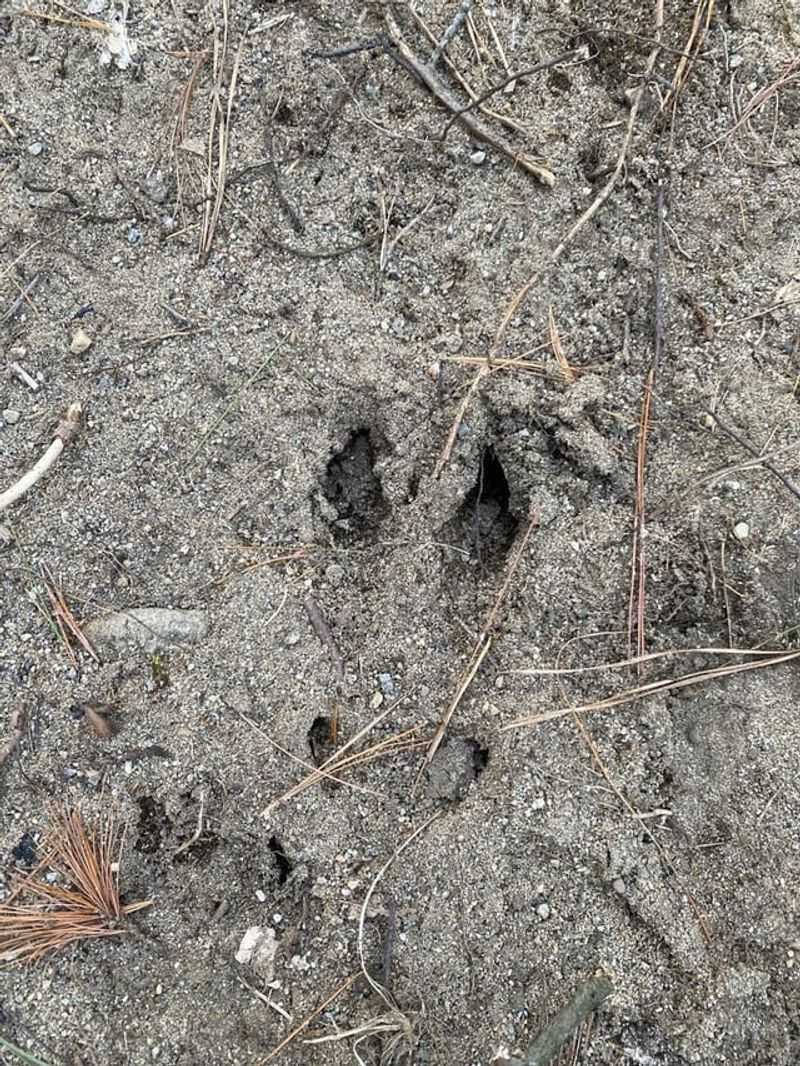
Few sights are as satisfying as spotting a crisp set of deer tracks pressed into wet North Carolina soil on a cool morning.
White-tailed deer leave behind heart-shaped hoof prints that measure roughly 2 to 3 inches in length.
These tracks are split down the middle, giving them that classic two-toed look you might recognize from nature books.
You will most often find these prints near water sources like streams or ponds, along forest edges, and anywhere food is plentiful.
Deer are surprisingly widespread across North Carolina, living in everything from dense woodlands to suburban neighborhoods.
After a rainy night, their prints can appear so sharp and detailed that you can even see where the hooves pressed deeper at the tips.
One helpful tip is to look for trails, which are lines of repeated tracks showing a path the deer traveled.
Deer tend to follow the same routes night after night, so finding a trail means you have discovered a regular hangout spot.
You might also notice that the back hoof often lands right on top of the front hoof print, a behavior called direct registering.
If you find large, deep tracks with a wide spread between the two toes, there is a good chance a big buck passed through recently.
Tracking white-tailed deer in North Carolina is a great starting point for anyone new to reading animal signs in the wild.
2. Virginia Opossum Long Toes And Drag Marks
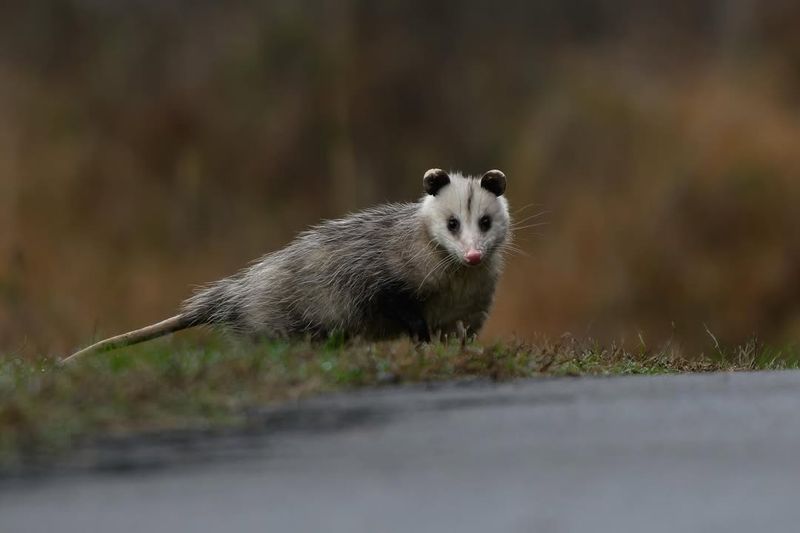
Opossums are one of North America’s most ancient mammals, and their tracks carry a quirky charm that makes them instantly recognizable once you know the secret.
The rear foot of a Virginia opossum has a thumb-like toe that points inward or even backward, leaving a print unlike anything else you will find in North Carolina soil.
This unusual feature makes opossum tracks look almost like a tiny hand with a hitchhiker’s thumb sticking out to the side.
The front feet leave five-toed prints as well, but it is that distinctive rear track that wildlife enthusiasts love to spot.
Overall, opossum trails tend to look a bit messy or wandering, which perfectly matches the animal’s slow, meandering style of movement.
After a rainy night, their tracks often appear near wooded areas, brushy thickets, and even close to residential neighborhoods where they scavenge for food.
Virginia opossums are the only marsupial native to North America, which makes finding their tracks feel like a small, wild discovery.
They are nocturnal and tend to cover a lot of ground searching for berries, insects, and whatever else they can find.
Their slow pace means their tracks are often deeply pressed and easy to examine closely. If you trace an opossum trail in North Carolina, you might find it leading under a porch, along a fence line, or toward a compost pile.
Their tracks tell the story of a night spent quietly exploring every corner of the neighborhood.
3. Raccoon Hand-Like Tracks Near Water And Soil
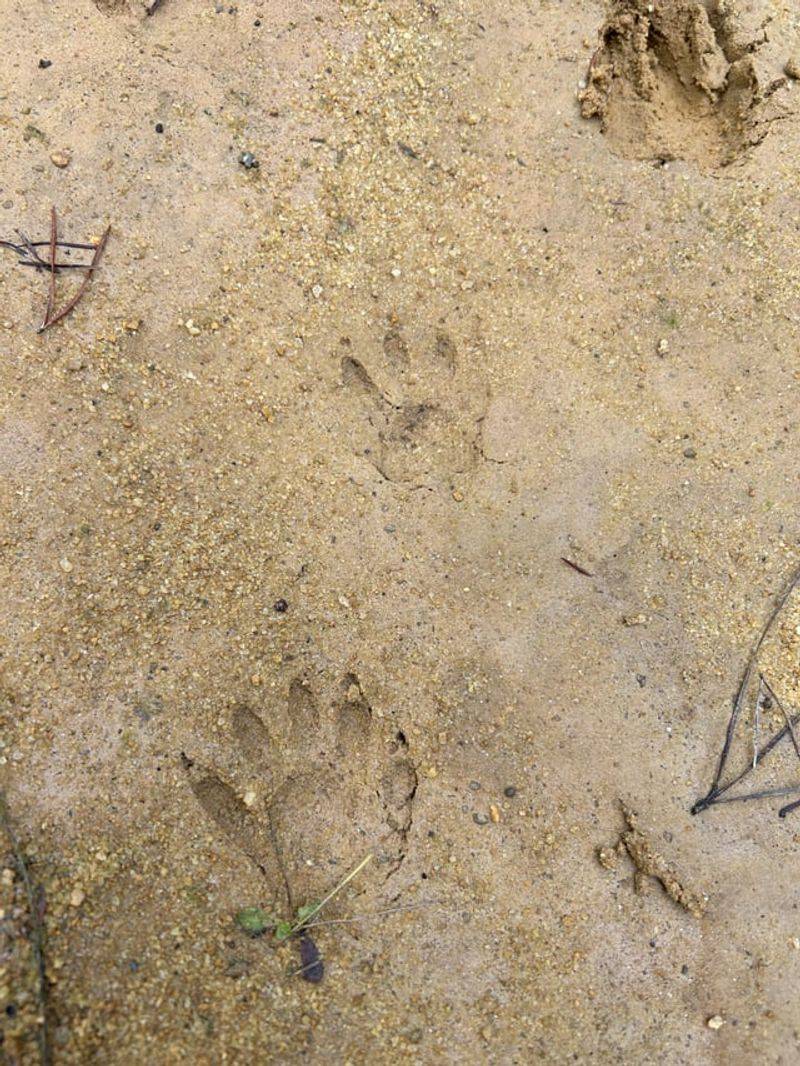
Almost like tiny human handprints, raccoon tracks stand out once you know what to look for.
The front feet leave impressions with five long, spread-out fingers that really do resemble small hands.
The rear feet create longer, narrower prints that almost look like a miniature human footprint walking barefoot through the mud.
In North Carolina, raccoons are extremely common and adaptable. They thrive near streams, marshy areas, wooded neighborhoods, and even campgrounds where food scraps might be available.
After a rainy night, their tracks show up beautifully in soft soil near the water’s edge, often in pairs since raccoons frequently walk with a shuffling, waddling gait.
Raccoons often handle food near water, which is one reason their tracks are frequently found along creek banks and pond edges across the state.
If you follow a raccoon trail, you might notice it weaves back and forth, poking into corners and sniffing around fallen logs or rocks.
Raccoons are curious and opportunistic, so their tracks rarely travel in a perfectly straight line. Look for claw marks above each toe impression, as raccoons have sharp, non-retractable claws.
Spotting raccoon tracks after a rainy North Carolina night is one of the most common and exciting wildlife discoveries you can make on a morning walk.
4. Eastern Cottontail Rabbit Paired Hops In Damp Ground
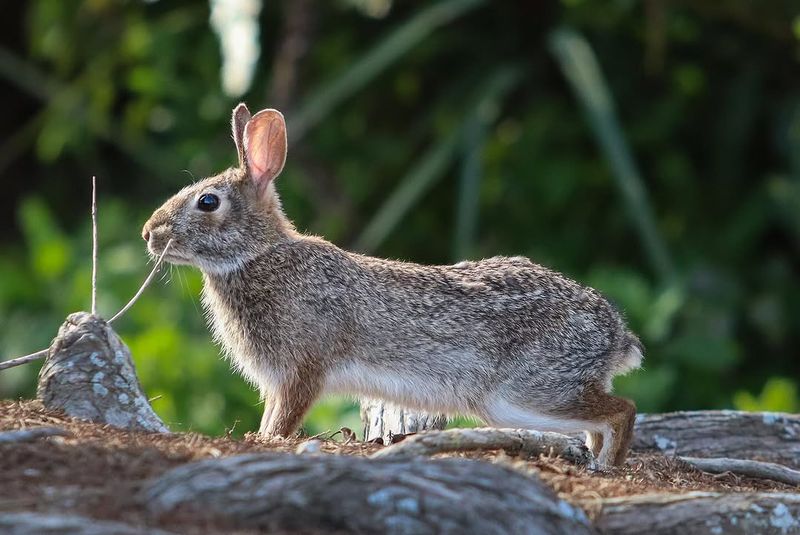
With a bouncy, energetic look, rabbit tracks practically jump off the ground at you. Eastern cottontails move by bounding forward, and when they do, their larger rear feet land ahead of their smaller front feet, creating a track pattern shaped like a Y or T.
The two big hind prints land side by side, while the two smaller front prints appear staggered behind them.
Eastern cottontails are one of the most commonly spotted animals in North Carolina, living in meadows, field edges, brushy yards, and forest clearings.
After a rainy night, their tracks appear in open grassy areas and along the edges of gardens and parks.
Because rabbits move quickly and cover a lot of ground, their bounding trail can stretch quite far across a muddy patch. One cool thing to look for alongside the tracks is clipped vegetation.
Cottontails chew through plant stems at a sharp 45-degree angle, leaving clean, diagonal cuts on twigs and stems near ground level.
You might also find small, round droppings scattered along the trail. Rabbit fur sometimes catches on low branches or fence wire nearby, giving you even more clues.
In North Carolina, cottontails are most active at dawn and dusk, so the freshest tracks will usually appear early in the morning after a rainy night.
Following a cottontail trail is a great way to understand how these speedy little animals navigate their world between dusk and dawn.
5. Gray Squirrel Small Tracks With Bounding Patterns
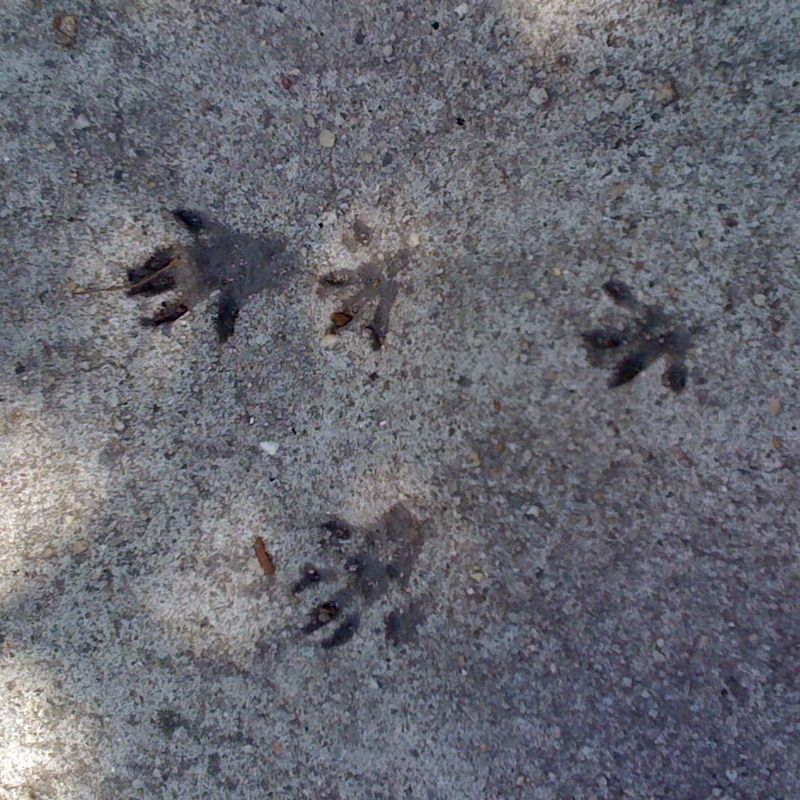
With a playful, scattered energy, squirrel tracks match exactly how these animals move. Gray squirrels bound across the ground in quick leaps, and their tracks reflect that bouncy lifestyle.
The front paws leave small, four-toed prints, while the larger hind paws show five toes and often land ahead of or alongside the front prints in a clustered grouping.
Gray squirrels are everywhere in North Carolina, from city parks to deep forest interiors. After a rainy night, their tracks show up clearly in soft dirt under oak trees, along woodland paths, and near bird feeders where they love to forage.
The bounding pattern creates little clusters of four prints spaced several inches apart, almost like a series of small explosions across the mud. Did you know that gray squirrels are responsible for planting thousands of trees each year?
They bury acorns and other nuts to save for later, but they often forget where they hid them, and those forgotten caches sprout into new trees. Tracking squirrels in North Carolina can sometimes lead you right to a buried nut stash.
Look for disturbed soil or small digging spots near the base of trees, as squirrels frequently stop to check their hiding spots during their nightly or early morning forays.
Gray squirrel tracks are a wonderful reminder that even the most familiar backyard animals leave behind fascinating stories written in the mud after every rainy night.
6. Red Fox Narrow Prints With Clean Edges
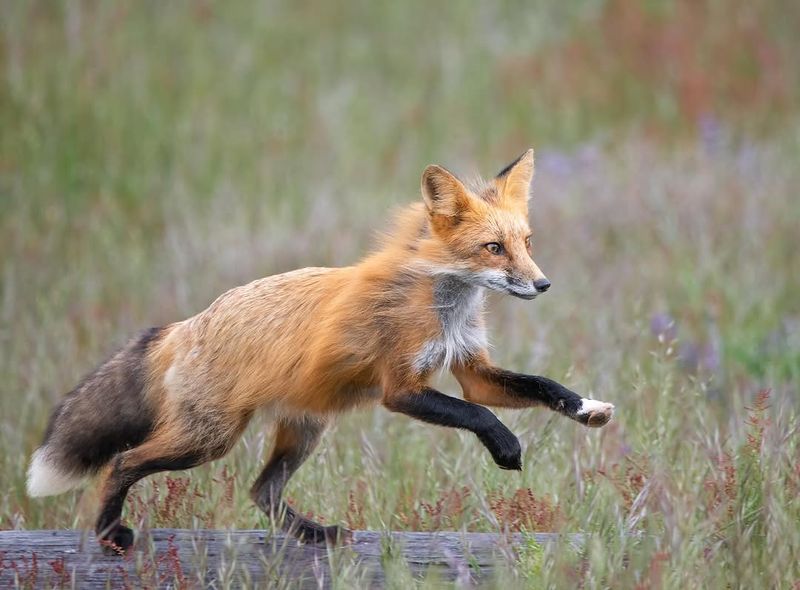
There is something almost elegant about red fox tracks. They are small, oval-shaped, and placed with a precision that makes the trail look like it was drawn with a ruler.
Red foxes use a movement style called direct registering, where the rear foot lands almost exactly on top of the front foot print, creating a neat, single-file line of tracks that looks more like a tightrope walk than an animal stroll.
In North Carolina, red foxes live in a wide range of habitats including forest edges, farmland, suburban neighborhoods, and open fields.
After a rainy night, their dainty tracks appear most often in open areas and along fence lines or field edges where foxes like to hunt for mice and rabbits.
The prints themselves are relatively small, usually around 2 inches long, with tight toe groupings and visible claw marks pointing forward. One way to tell fox tracks from dog tracks is the overall neatness.
A domestic dog tends to wander and leave messy, overlapping prints, while a fox moves with focused, purposeful steps.
Fur between a fox’s toes can sometimes soften the edges of the print slightly, compared to the often sharper appearance of coyote tracks.
If you follow a red fox trail across a muddy North Carolina field, you might find it leading straight toward a brushy hedgerow or a spot where the grass is thick enough to hide a hunting fox waiting patiently for its next meal.
7. Coyote Straight-Line Tracks Across Wet Soil
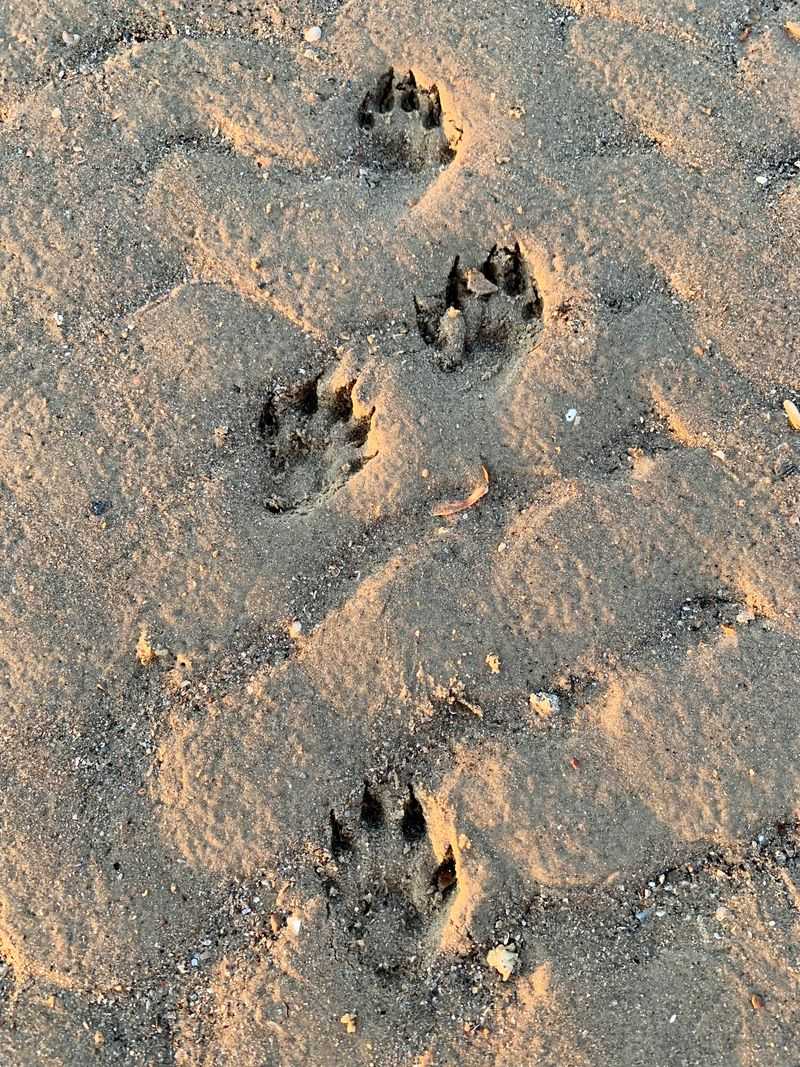
Coyotes are now found across much of North Carolina, and their tracks are one of the more notable finds after a rainy night.
At first glance, coyote tracks can look similar to a medium-sized dog’s prints, but there are clear differences once you know what to check.
Coyote tracks are oval and symmetrical, with four toes grouped tightly together and claw marks that point straight ahead rather than splaying outward like a dog’s.
The overall trail pattern of a coyote is also very different from a domestic dog. Coyotes move with purpose and efficiency, leaving a relatively straight trail with prints that fall in a neat, almost single-file line.
Dogs tend to zigzag and wander, leaving tracks scattered in multiple directions. Coyote prints are also generally larger than fox tracks, usually measuring around 2.5 inches long.
Across North Carolina, coyotes are found in forests, farmland, wetlands, and even the edges of cities and towns. They are highly adaptable and surprisingly stealthy for such a widespread animal.
After a rainy night, their tracks often appear in open fields, along dirt roads, and near stream banks where they search for food.
Finding a set of coyote tracks is a reminder that these animals are more widespread in the state than many people realize.
If you spot a long, straight trail of oval prints heading confidently across the mud, there is a good chance a coyote passed through not long before sunrise.
8. Beaver Wide Tracks Near Muddy Banks
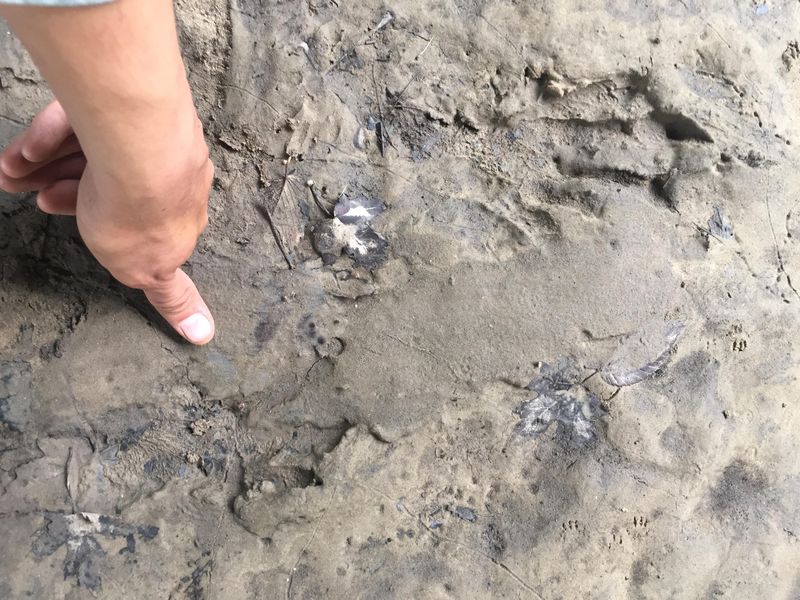
Along a North Carolina waterway, few tracks stand out quite like these, and spotting beaver prints can feel like stumbling onto a construction site.
Beavers have large, webbed rear feet that leave impressive prints up to 6 inches long, with five toes and clear webbing between them.
The front feet are smaller and less webbed, leaving rounder, hand-like impressions in the mud. What really sets beaver tracks apart is the addition of a tail drag mark.
As beavers waddle between water and land, their broad, flat tail often sweeps across the ground, leaving a wide, rounded groove in the mud between the footprints. This tail drag is one of the most distinctive signs in all of North Carolina wildlife tracking.
You will almost always find beaver tracks right at the water’s edge, along riverbanks, pond shores, and wetland margins.
Beavers are incredibly industrious animals, and their tracks often lead directly to evidence of their work.
Look for gnawed tree stumps with a distinctive pencil-point shape, drag marks where logs were hauled to the water, and of course, their impressive dams and lodges.
North Carolina has healthy beaver populations in many of its rivers and wetlands, particularly in the piedmont and coastal plain regions.
After a rainy night, the soft mud along a beaver pond can hold some of the most detailed and fascinating tracks you will ever have the chance to examine up close.
9. Bobcat Round Prints With No Claw Marks
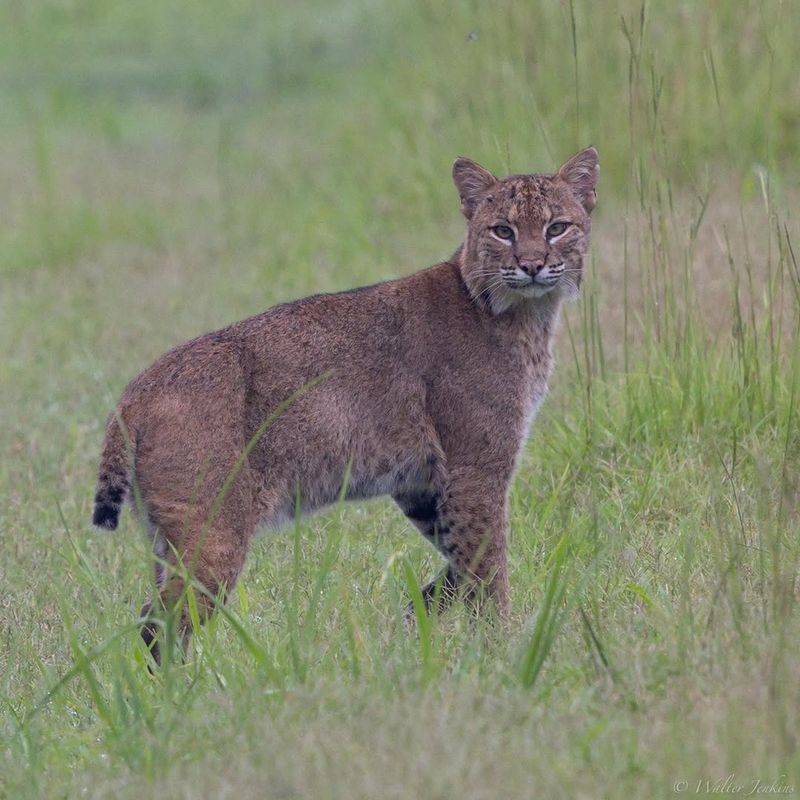
Finding bobcat tracks after a rainy night in North Carolina feels like uncovering a genuine secret.
Bobcats are secretive, solitary, and rarely seen in the wild, but they leave behind tracks that tell you exactly where they walked while you were sound asleep.
Their prints are round and relatively large, usually measuring about 2 inches across, with four toes arranged in a curved pattern around a three-lobed central pad.
The most important thing to look for is the absence of claw marks. Unlike dogs and coyotes, bobcats have retractable claws that stay pulled back when they walk, so their tracks appear smooth and clean without any nail impressions above the toes.
This claw-free print is the clearest way to identify a wild cat track in North Carolina. Bobcat trails also tend to be neat and deliberate, with prints placed carefully one after another.
Bobcats live across much of North Carolina, from the mountains to the coastal plain, favoring dense forests, swamps, and rocky terrain where they can hunt rabbits, squirrels, and birds.
After a rainy night, their tracks appear most clearly in soft soil along forest trails, stream banks, and field edges.
Because bobcats cover large territories, following their trail can lead you on quite an adventure.
Spotting bobcat tracks is considered a special find among wildlife enthusiasts in the state, a quiet proof that wild, powerful animals are living their full lives just beyond the edge of the familiar world.