6 Arizona Milkweed Plant Species That Attract Monarch Butterflies
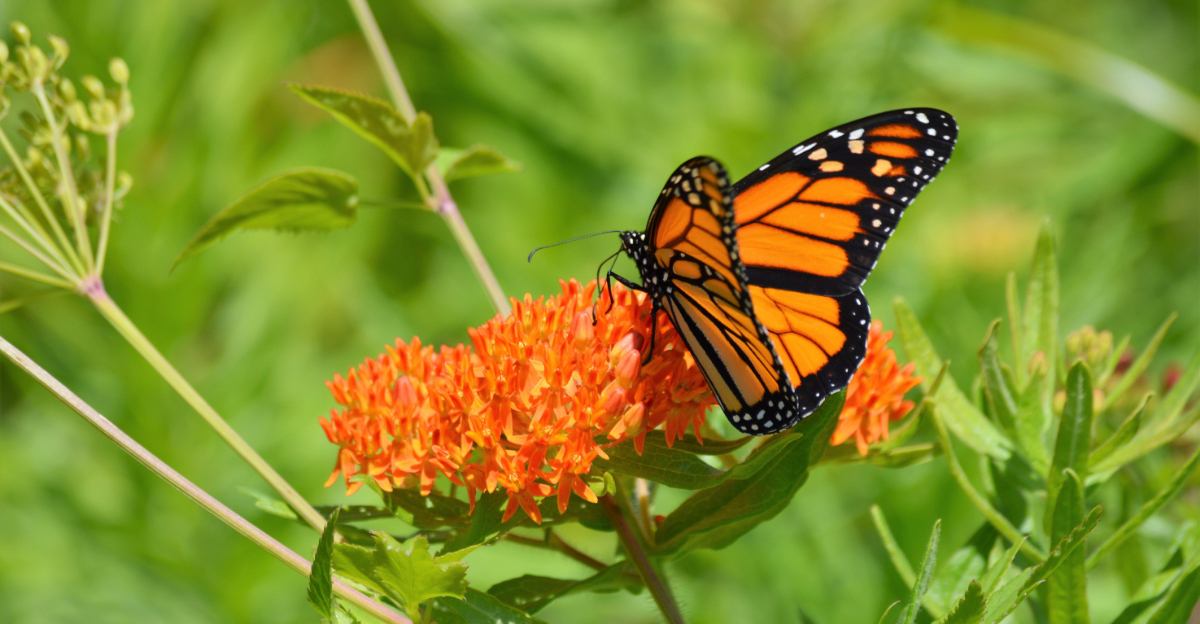
If you’ve ever watched a monarch butterfly flutter through the air, finding nectar and landing gently on a flower, you know it can brighten even the simplest garden moment.
For backyard gardeners in Arizona who want to encourage these iconic butterflies, adding milkweed to the landscape is one of the most rewarding ways to create habitat.
Arizona’s dry conditions don’t rule out milkweed altogether – in fact, several species are native here and adapted to local soils, sunlight, and seasonal patterns.
These plants may show bold flowers and work with other pollinator‑friendly plantings to bring both color and wildlife to outdoor spaces.
As you plan milkweed spots for monarch butterflies this year, you’ll find species well suited to the region’s climate and soil. Some are known to reseed themselves, and many draw not only monarchs but also bees and other butterflies.
In the list ahead, a few of the Arizona milkweed species to consider start telling that story right away.
1. Arizona Milkweed With Its Delicate White Clusters
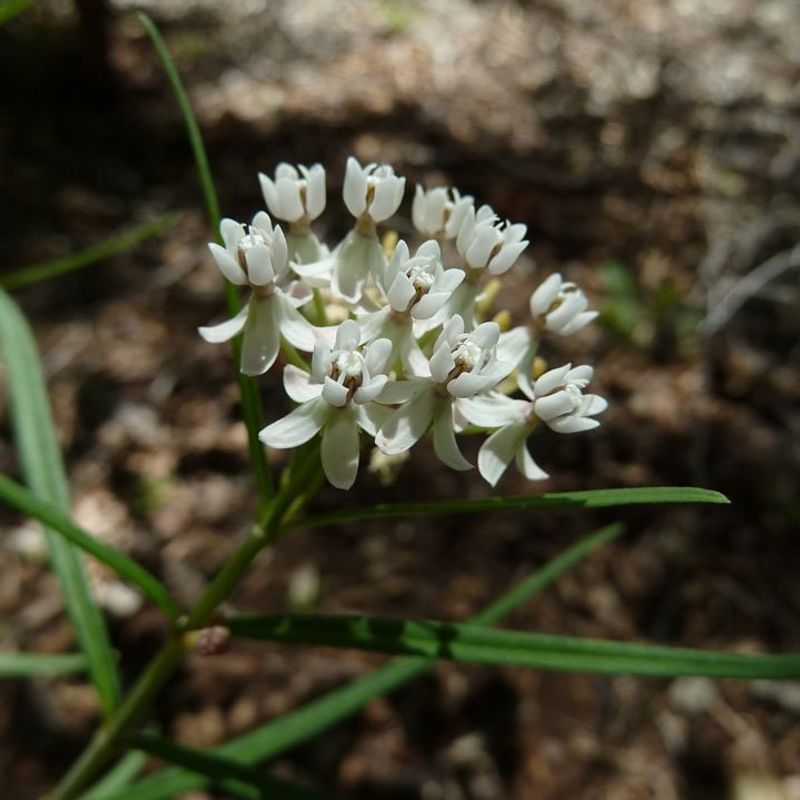
Tucked into the rocky hillsides and dry washes of southern Arizona, Arizona Milkweed (Asclepias angustifolia) is a quiet but powerful friend to monarch butterflies. Known scientifically as Asclepias angustifolia, this plant grows back year after year, providing a useful resource for monarchs passing through the region.Its narrow, grass-like leaves and soft clusters of pinkish-white flowers make it easy to recognize once you know what to look for.
What makes Arizona Milkweed especially valuable is its role as a host plant. Female monarchs actively seek out this species to lay their eggs, and once the caterpillars hatch, the leaves become their first and most important food source.
The plant contains natural compounds called cardenolides, which caterpillars store in their bodies. These compounds make adult monarchs taste unpleasant to predators, giving the butterflies a natural defense mechanism that starts right here on this plant.
Growing Arizona Milkweed in your own yard is very doable if you live in the southern part of the state. The plant thrives in well-drained, rocky or sandy soil and does best in full sun.
It is highly drought-tolerant, which makes perfect sense given that it evolved in one of the driest regions of the country. Once established, it needs very little water, making it a low-maintenance choice for Arizona gardeners who want to support local wildlife without a lot of extra effort.
Native plant nurseries in Arizona often carry this species, and some conservation groups even offer seeds for free or at a low cost. If you plant a few together, you will likely start noticing monarch activity within the first season.
Beyond monarchs, other pollinators like bees and native flies also visit the flowers for nectar. Supporting Arizona Milkweed in your landscape is one of the most direct and meaningful ways to contribute to monarch conservation right here in the Southwest.
2. Rush Milkweed Reaching Tall And Elegant
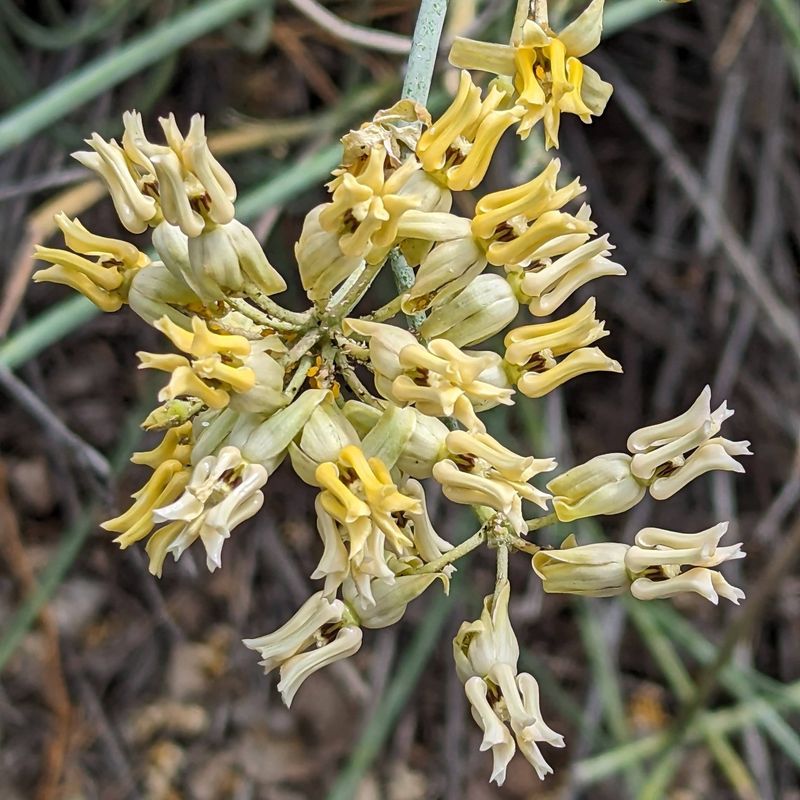
At first glance, Rush Milkweed (Asclepias subulata) might not look like much. Its tall, slender stems are nearly leafless, and it can blend right into the dry desert scrub of central and southern Arizona.
But do not let its minimalist appearance fool you because this plant is a powerhouse for monarch butterflies and a true survivor of the Sonoran Desert environment.
Also sometimes called Desert Milkweed or Reed Milkweed, this species is highly drought-tolerant and well adapted to the desert regions of Arizona and the Southwest. The stems themselves take over the job of photosynthesis since the plant drops most of its leaves during dry periods to conserve water.
Clusters of small, creamy white to pale yellow flowers appear at the tops of the stems and produce nectar that monarchs and other pollinators eagerly seek out during their migrations through Arizona.
Rush Milkweed serves monarchs in two important ways. Adult butterflies visit the flowers for nectar to fuel their long journeys, while female monarchs also use the plant as a place to lay their eggs.
Once caterpillars hatch, they feed on the stems and any available leaf material. The plant’s toxins are absorbed by the caterpillars, providing the same kind of natural protection seen in other milkweed species across the country.
For Arizona gardeners, Rush Milkweed is an excellent choice because it handles heat and drought like a champion. It grows well in sandy or gravelly soils with excellent drainage and thrives in full sun locations.
In the right conditions, it can grow several feet tall, making it a striking vertical element in a native plant garden. Because it is evergreen in frost-free areas, it provides year-round habitat value.
Pairing it with other native Arizona plants creates a welcoming corridor for monarchs and other pollinators throughout the entire season. It is a plant that earns its place in any conservation-minded garden.
3. Antelope Horns Milkweed With Its Curved Seed Pods
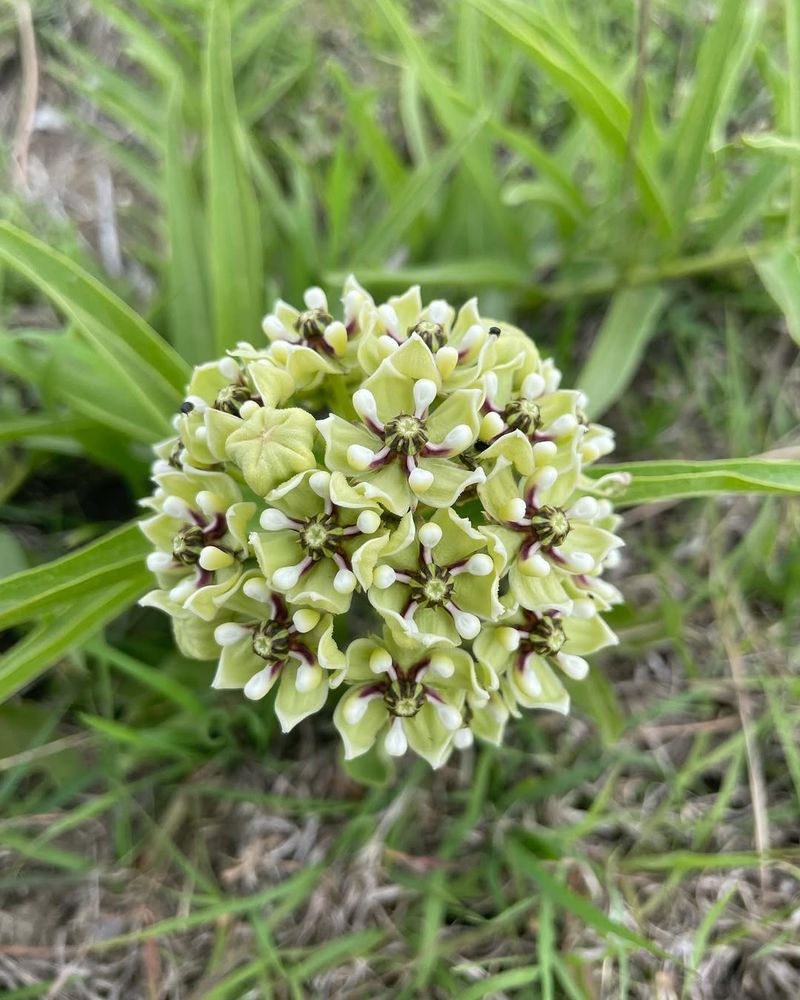
The wonderfully quirky Asclepias asperula is one of those native wildflowers that doesn’t immediately look like a monarch magnet until you notice just how much life it supports in a garden or natural space. This milkweed gets its common name from the way its seed pods curve upward as they mature, resembling the elegant horns of an antelope, a feature that often makes people stop, admire its form, and take a closer look.
This perennial herb typically grows about one to three feet tall, forming clumps of slender, lance-shaped leaves on hairy stems. In spring and into summer, it produces clusters of greenish-yellow flowers with subtle maroon highlights that aren’t flashy like some other milkweeds but are absolutely irresistible to butterflies, bees, and other pollinators moving through the area.
Monarch butterflies depend on milkweeds as the only plants on which they will lay their eggs, and Antelope Horns Milkweed is a true host plant in regions like Arizona and across the southwestern United States. Monarch caterpillars feed and grow on its leaves and absorb natural toxins from the plant’s milky sap, which makes the butterflies they become distasteful to hungry birds.
In the landscape or a native pollinator garden, this species works beautifully in rock gardens, meadowy swaths, and sunny beds where the soil drains quickly. It is adapted to dry, well-drained soils and full sun, and once established, needs very little supplemental water.
Although it is not the easiest milkweed to grow from seed or transplant compared with others, the payoff in terms of monarch support, pollinator activity, and year-round interest is well worth the effort.
4. Pineneedle Milkweed With Thin Needle-Like Leaves
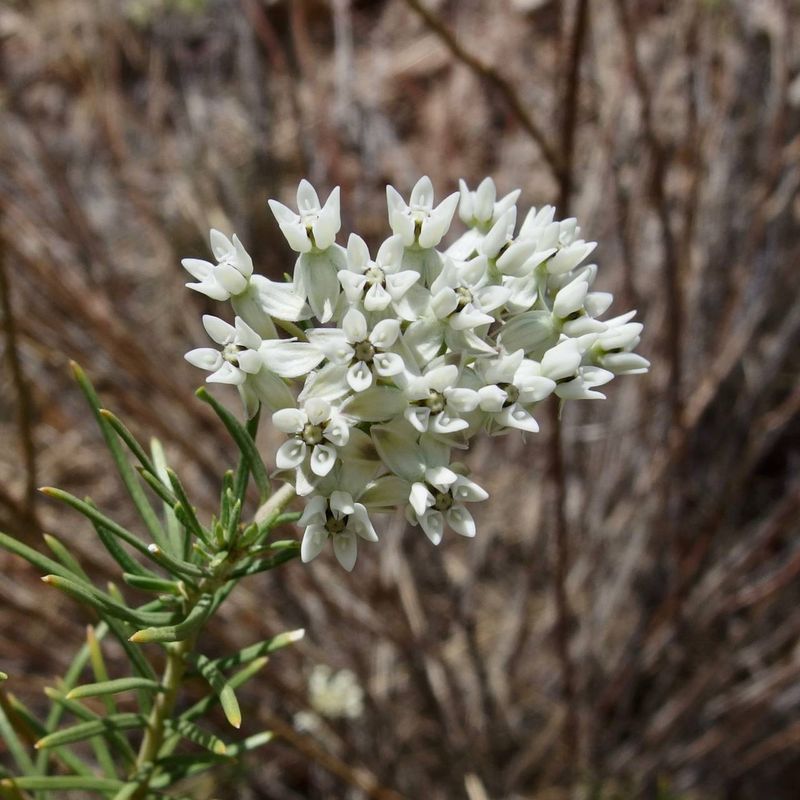
Named for its unusually thin, needle-like leaves that look remarkably similar to pine needles, Pineneedle Milkweed (Asclepias linaria) is one of the most distinctive-looking milkweed species you will find in Arizona. Up close, the contrast between those feathery green leaves and the delicate clusters of small white flowers is genuinely charming.
It is the kind of plant that makes you stop and look twice on a trail or in a garden bed.
Pineneedle Milkweed grows naturally across the rocky slopes and canyon walls of central and southern Arizona, often appearing at mid-elevation zones where the desert transitions into grassland and scrubland habitats. It tends to form bushy, rounded clumps and can reach a few feet in height when conditions are favorable.
The white flowers, which appear in rounded clusters, bloom from spring through fall, providing a long window of nectar availability for visiting pollinators including monarch butterflies.
Fun fact: Pineneedle Milkweed is one of the few milkweed species that can remain evergreen in mild Arizona winters, which means it may offer habitat value even during cooler months when other species have gone dormant. This makes it particularly useful in areas where monarchs might overwinter or pass through during warmer stretches of the season.
Monarchs use the plant both as a nectar source and as a place to deposit their eggs, making it doubly valuable in the landscape.
For home gardeners across Arizona, Pineneedle Milkweed is a surprisingly easy plant to grow. It adapts well to rocky, well-drained soils and handles the intense Arizona sun without complaint.
It also looks great in containers, which is handy if your outdoor space is limited to a patio or balcony. Watering needs are minimal once the plant is established, and it rarely requires fertilizer.
Adding even one or two of these plants to your yard can make a measurable difference for monarchs traveling through the region.
5. Butterfly Milkweed With Bright Orange Blooms
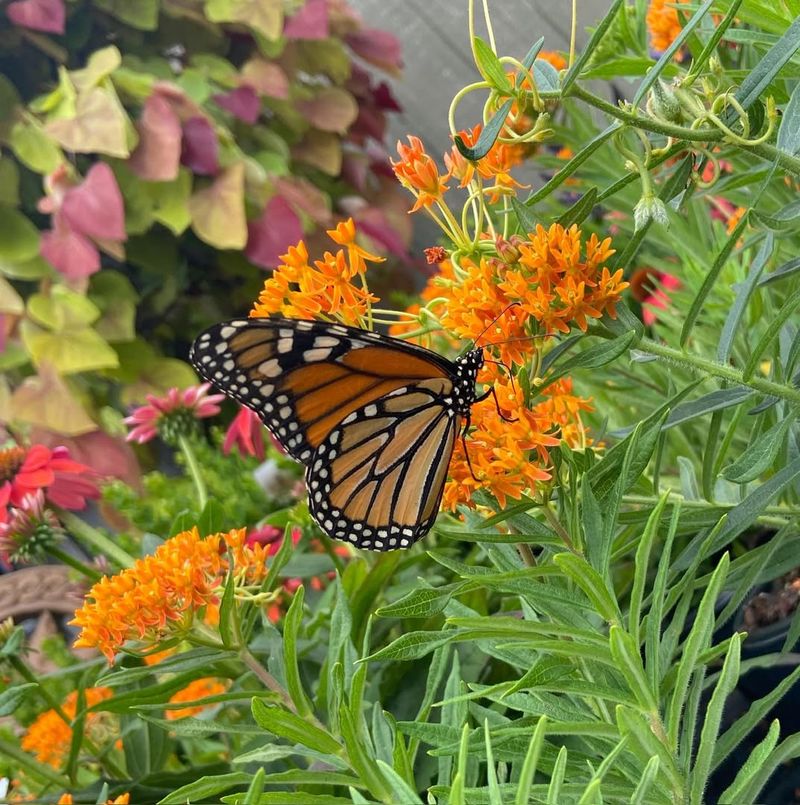
If there is one milkweed species that stops people in their tracks, it is Butterfly Milkweed (Asclepias tuberosa). Those brilliant, flame-orange flower clusters are nearly impossible to miss, and they have a way of making even the most ordinary garden look like something out of a nature magazine.
Beyond the striking good looks, this plant is one of the most celebrated native wildflowers in North America, and Arizona gardeners are lucky to have it as a local option for supporting monarch butterflies.
Butterfly Milkweed blooms from late spring through summer, producing dense, flat-topped clusters of vivid orange or occasionally yellow flowers. Monarchs are drawn to these flowers for their rich nectar, and on a warm day, a single plant in bloom can attract a dozen or more butterflies at once.
It is also a host plant for monarch caterpillars, meaning female monarchs will lay their eggs on the leaves, and the hatched larvae will feed there as they grow and develop.
Unlike some other milkweed species, Butterfly Milkweed has a notably low latex content, which makes the foliage a bit easier for young caterpillars to consume. It grows from a deep, thick taproot, which is what makes it so resilient during Arizona’s dry summers.
Once that root system is established, the plant is remarkably tough and can handle periods of drought without much stress. However, because of that deep taproot, it does not transplant well, so it is best to plant it in its permanent spot from the start.
You will find Butterfly Milkweed growing in grasslands, open woodlands, and roadsides across Arizona, particularly at higher elevations. In the garden, it pairs beautifully with other native wildflowers and grasses.
It attracts not just monarchs but also swallowtails, fritillaries, and a wide variety of native bees. For anyone wanting to create a pollinator-friendly yard in Arizona, this plant belongs at the very top of the list.
6. Narrowleaf Milkweed With Slender, Graceful Foliage
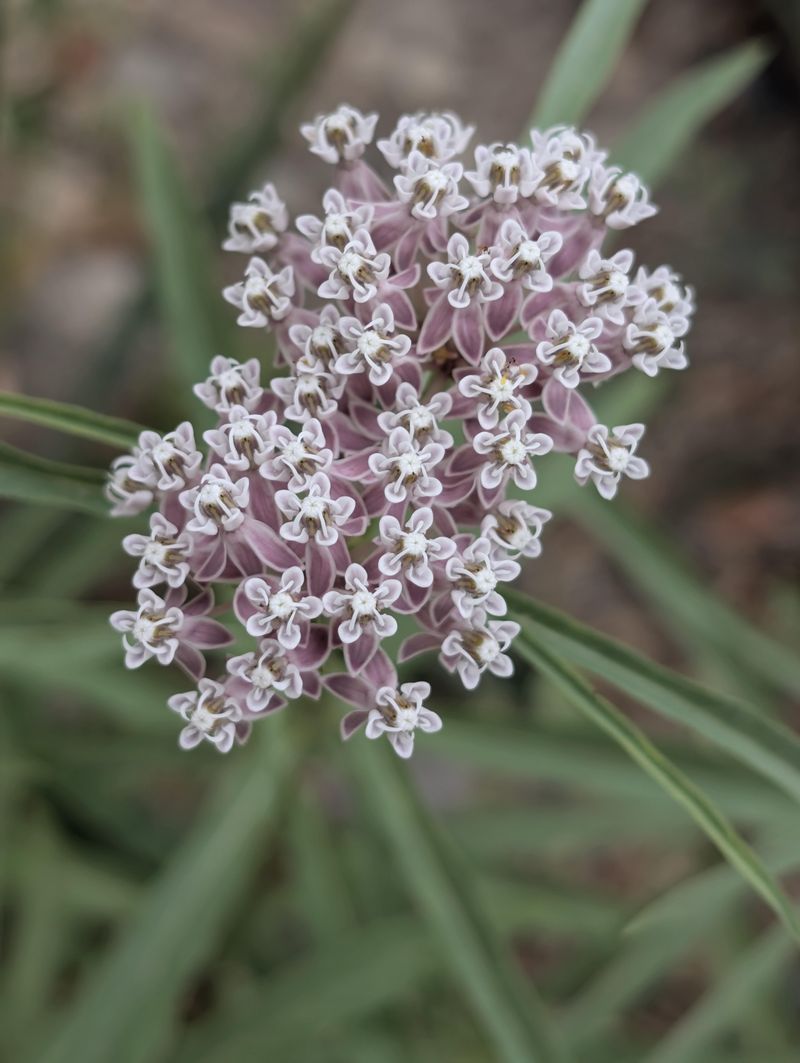
Slender, graceful, and quietly hardworking, Narrowleaf Milkweed (Asclepias fascicularis) may not have the flashy orange blooms of its cousin Butterfly Milkweed, but it more than makes up for it with sheer usefulness to monarch butterflies. Along roadsides, in meadows, and in gardens across western Arizona and into neighboring states, this plant forms dense colonies that provide exactly what monarchs need most: a reliable place to lay eggs and a steady food source for growing caterpillars.
The leaves of Narrowleaf Milkweed are long and very slim, giving the plant a wispy, airy appearance that sways gently in a breeze. The flowers are small clusters of pale pink, lavender, and white, which may seem understated compared to showier species, but they produce nectar in good quantities.
Monarch butterflies, along with many native bees and other pollinators, visit these flowers regularly throughout the blooming season, which typically runs from summer into early fall in Arizona.
One of the most interesting things about Narrowleaf Milkweed is how enthusiastically monarchs use it as a host plant. Observations indicate that this species is a favored choice for monarch egg-laying along parts of the western migration corridor, including regions of Arizona.
The leaves are tender enough for newly hatched caterpillars to feed on easily, and the plant grows densely enough to support multiple caterpillars at once without being quickly depleted.
Growing Narrowleaf Milkweed in your Arizona garden is straightforward. The plant spreads through underground rhizomes, so it can fill in a garden bed over time without much help from you.
It tolerates a range of soil types but prefers well-drained conditions and full sun. In areas with mild winters, it may stay green year-round, offering extended habitat value.
If you are planting a butterfly garden in Arizona and want a species that monarchs will return to season after season, Narrowleaf Milkweed is a smart and rewarding choice that truly delivers results.