Arizona Native Plants That Stand Out This Season
Some Arizona plants barely register, while others immediately demand attention the moment you see them.
Native plants often fall into that second group, especially when seasonal conditions line up in their favor.
This season highlights how well Arizona natives respond when temperatures, light, and moisture match what they’re built for.
While non-native plants may stall or need extra help, natives tend to show clearer form, stronger color, or noticeable growth with very little intervention.
Their timing feels natural rather than forced. Choosing native plants isn’t only about low maintenance.
It’s about noticing which plants actually look their best right now and understanding why. When natives stand out this season, it’s usually because they’re growing on their own terms, making the landscape feel more intentional and far less demanding.
1. Desert Marigold
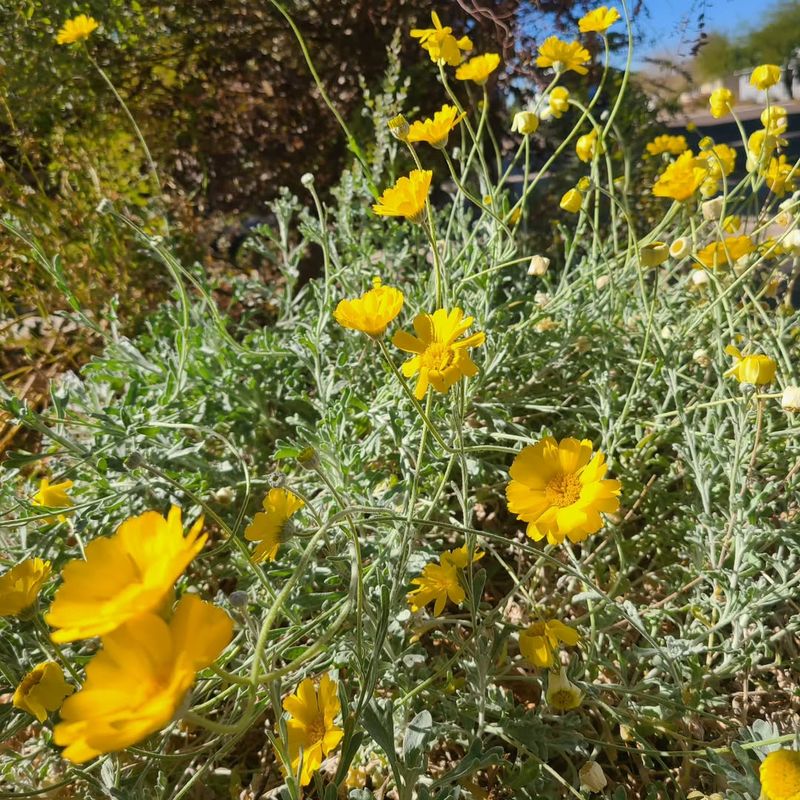
Golden petals glow against Arizona’s red rock and desert soil. Desert Marigold is impossible to miss when it’s in bloom.
This perennial wildflower produces sunny yellow blooms that resemble daisies, appearing almost year-round in mild climates but peaking during spring and fall months. Each flower head sits atop slender stems that sway gracefully in desert breezes, creating movement and life in otherwise still landscapes.
Gardeners throughout Arizona appreciate how little fuss this plant requires once established in the ground.
Desert Marigold tolerates extreme heat and drought conditions that would stress many other flowering species.
The plant typically grows 12 to 18 inches tall and spreads slightly wider, forming attractive mounds of gray-green foliage that looks appealing even between blooming cycles. Butterflies and native bees visit these flowers constantly, drawn by the abundant nectar and pollen they provide.
Planting them in groups creates dramatic sweeps of color that catch attention from across the yard. They work beautifully along pathways, in rock gardens, or mixed with other native species in naturalistic designs.
Seeds germinate easily when scattered in fall or early spring, though many Arizona nurseries sell established plants ready for transplanting.
2. Brittlebush
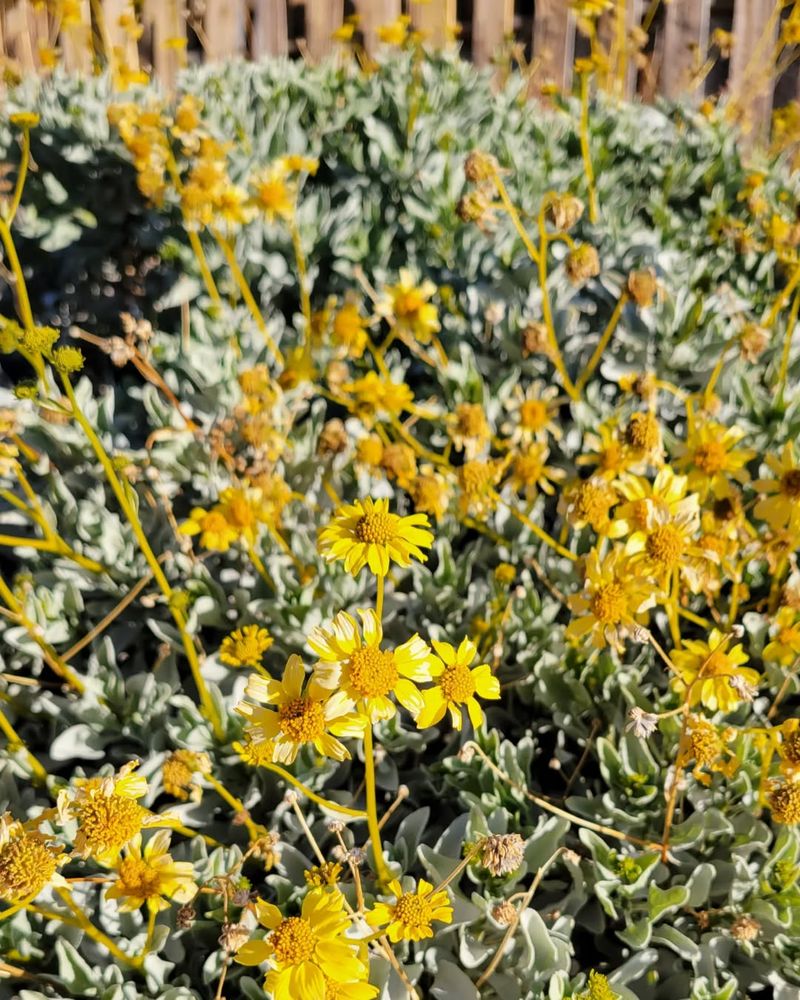
Brittlebush looks dramatic long before it ever flowers. The silver-gray foliage alone makes it stand out in Arizona landscapes.
This shrubby perennial grows naturally throughout the Sonoran Desert, forming rounded mounds that can reach three feet tall and equally wide.
The leaves have a soft, fuzzy texture that reflects sunlight, helping the plant stay cool during scorching summer months while adding wonderful contrast to darker green plants nearby.
Late winter through spring brings the main flowering show, when bright yellow daisy-like blooms appear on tall stalks rising above the foliage. Masses of these cheerful flowers create spectacular displays that attract countless pollinators to Arizona gardens.
Even after blooming finishes, the attractive silvery leaves continue providing visual interest throughout the year. Brittlebush earned its common name from the brittle nature of its stems, which break easily when bent.
Native Americans and early settlers discovered the aromatic resin from broken stems could be used as incense and for various medicinal purposes. Modern gardeners value it primarily for its outstanding drought tolerance and ability to thrive in reflected heat from walls and paving.
Planting Brittlebush requires minimal effort since it adapts readily to most soil types found throughout Arizona. Full sun exposure brings out the best silver color in the foliage and encourages abundant flowering.
Established plants need virtually no supplemental watering during summer, making them ideal for water-conscious landscapes.
3. Penstemon
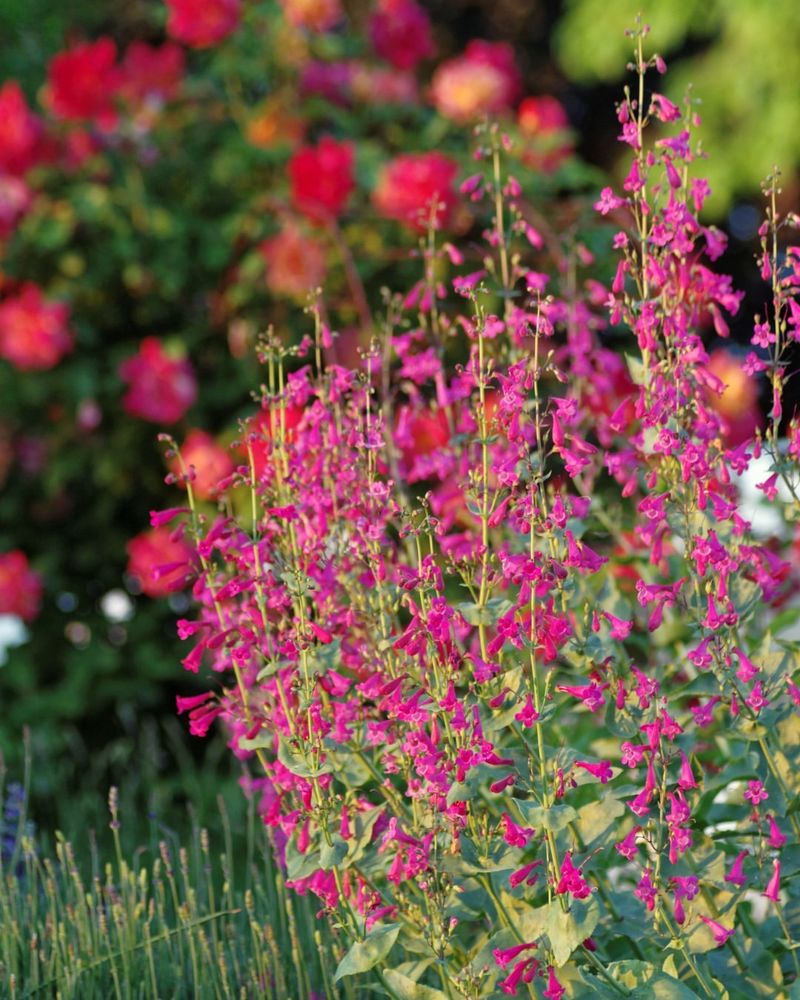
Penstemon instantly changes how an Arizona yard feels when it starts blooming. Hummingbirds notice it immediately.
These showy perennials send up tall flower spikes that can reach two to three feet high, creating vertical interest in desert gardens while providing essential nectar sources for wildlife. Several Penstemon species grow naturally in different Arizona elevations, from low desert areas to mountain regions, giving gardeners many options to choose from.
Spring typically brings peak blooming time, though some varieties continue flowering sporadically into summer if they receive occasional deep watering.
The flowers cluster along upright stems in a way that makes them highly visible to passing hummingbirds, who hover expertly to sip nectar from the tubular blooms.
Watching these tiny birds visit Penstemon flowers becomes a daily entertainment for many Arizona residents. Different species suit different garden conditions across the state.
Parry’s Penstemon thrives in higher elevations with cooler temperatures, while Eaton’s Firecracker Penstemon handles intense low desert heat remarkably well. Their lance-shaped leaves form attractive basal rosettes that remain semi-evergreen in mild winter areas.
Establishing Penstemon in Arizona gardens works best when you match the species to your specific elevation and microclimate. They prefer well-draining soil and full sun to light shade, depending on how hot your location gets during summer.
Avoid overwatering, which can lead to root problems, and instead provide deep but infrequent irrigation during the growing season.
4. Globe Mallow
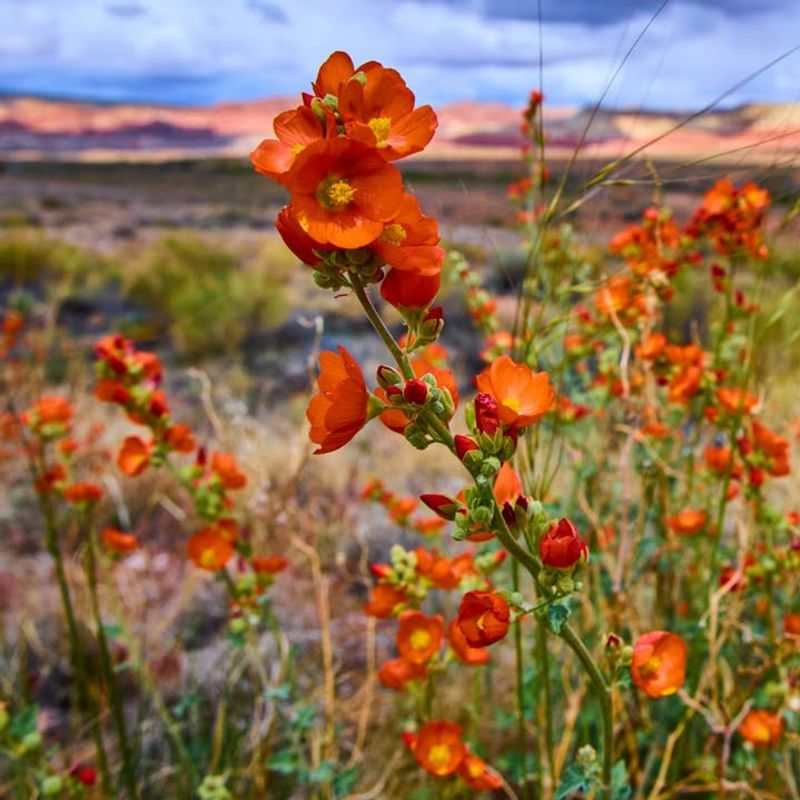
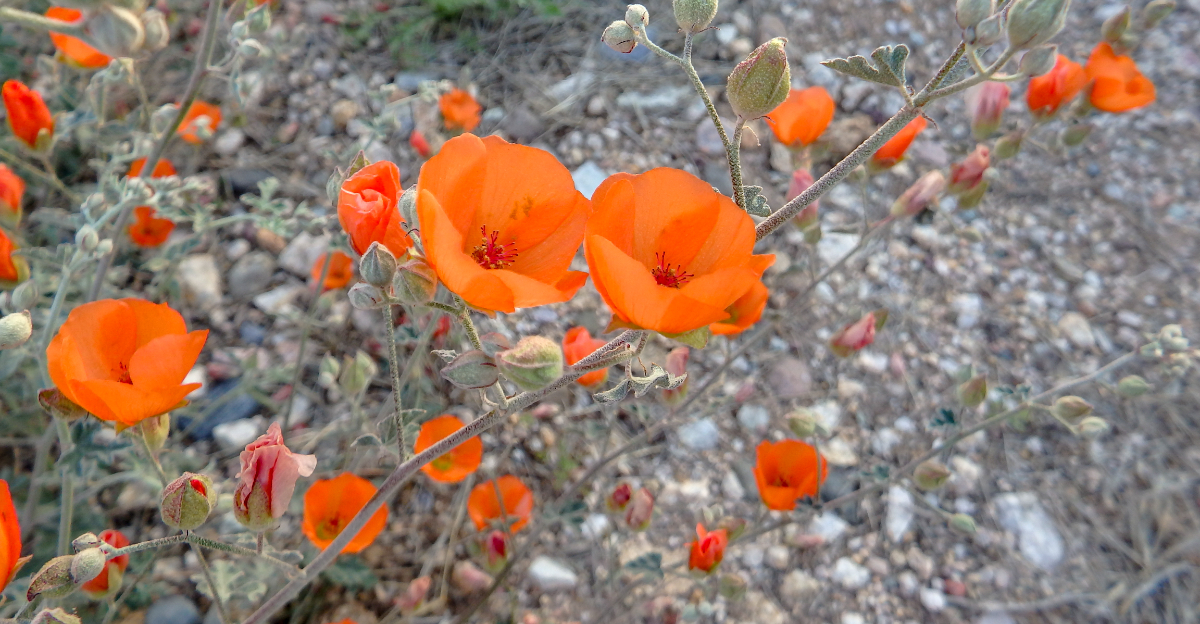
Globe mallow looks wild, bold, and almost out of place in a neat yard. That’s exactly why it stands out.
This tough perennial produces cup-shaped flowers that seem to glow in the bright desert sunlight, attracting attention from both human admirers and pollinating insects.
The plant grows naturally throughout much of Arizona, often appearing along roadsides and in disturbed areas where its resilient nature allows it to colonize quickly.
Flowering typically begins in early spring and can continue for several months if conditions remain favorable. Individual plants may reach two to three feet tall, though they often sprawl somewhat rather than growing strictly upright.
The gray-green leaves have a slightly fuzzy texture similar to Brittlebush, helping them conserve water during dry periods. Globe Mallow spreads readily from seed, sometimes too readily for formal garden settings where controlled growth is desired.
However, this vigorous nature makes it perfect for naturalizing large areas or creating informal wildflower meadows that require minimal maintenance. Native bees particularly love these flowers, visiting them constantly throughout the blooming season.
Growing Globe Mallow in Arizona gardens requires almost no special care beyond providing full sun and decent drainage. The plant tolerates poor soils and extreme drought once established, though occasional watering during extended dry spells encourages more prolific blooming.
Cut back old stems in late fall to promote fresh growth and better flowering the following spring.
5. Blackfoot Daisy
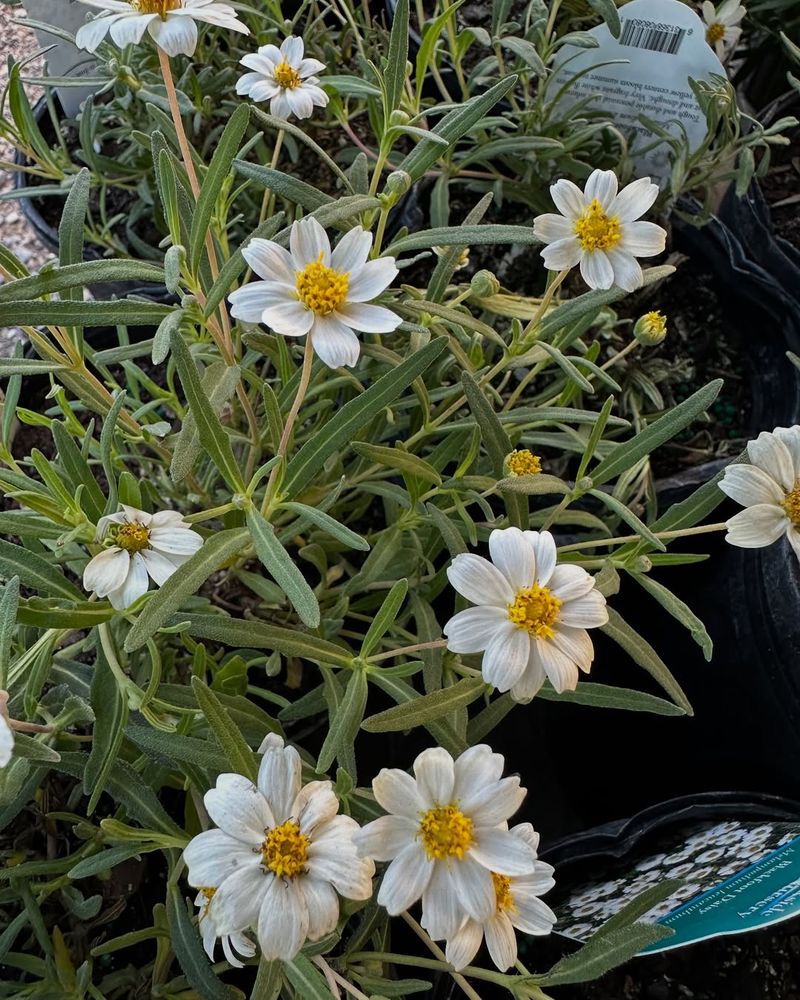
Blackfoot daisy stands out because it blooms constantly when most desert plants take breaks. This low-growing perennial forms dense mats of fine-textured foliage that stay under one foot tall, making it excellent for edging pathways or filling spaces between larger plants.
The cheerful daisy flowers appear abundantly from spring through fall, with peak blooming occurring during cooler months when many other desert plants rest. Each flower measures about an inch across, small enough to appear dainty but produced in such quantities that they create significant visual impact.
The narrow, dark green leaves provide a nice contrast to the white flowers and remain attractive year-round in most Arizona locations.
This plant works particularly well in rock gardens where its mounding habit softens hard edges and fills crevices naturally.
Blackfoot Daisy originated in the Chihuahuan Desert but has adapted beautifully to Arizona’s Sonoran Desert conditions. It tolerates reflected heat from walls and paving better than many flowering perennials, making it valuable for challenging spots near buildings or along driveways.
Butterflies and small native bees visit the flowers regularly, adding movement and life to garden spaces. Planting Blackfoot Daisy successfully requires excellent drainage since the plant cannot tolerate soggy soil or standing water.
Full sun brings the most abundant flowering, though it accepts light afternoon shade in the hottest desert areas. Trim back spent flowers occasionally to encourage continuous blooming and maintain a tidy appearance throughout the growing season.
6. Fairy Duster
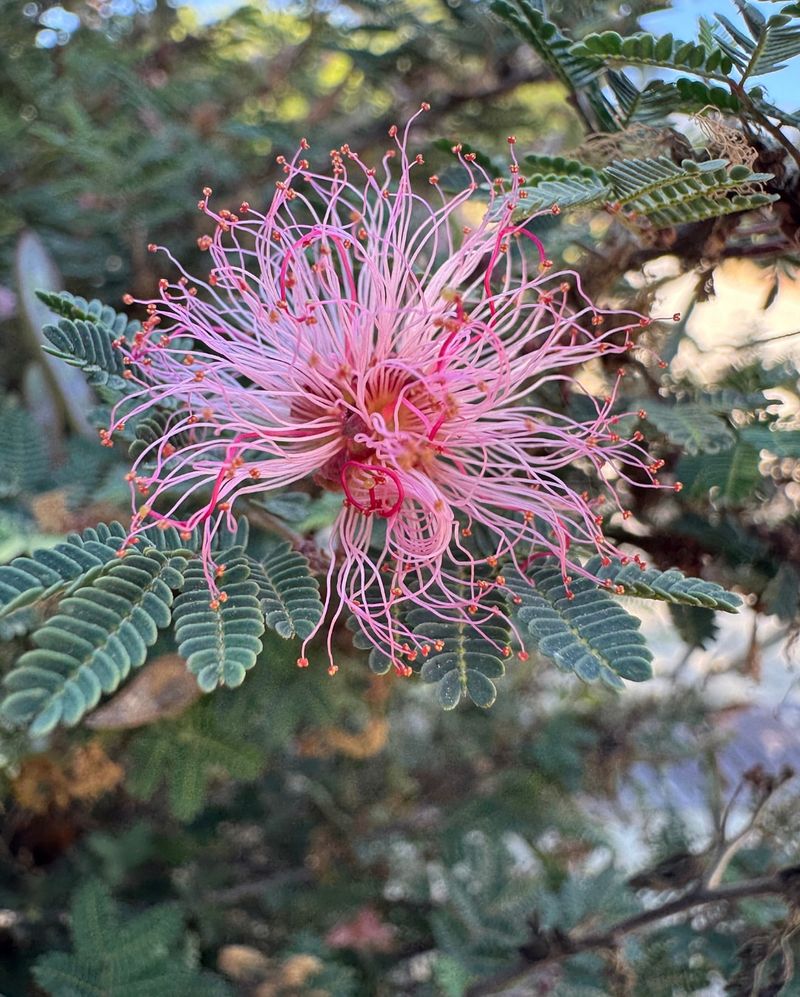
Fairy duster doesn’t look like a desert plant at all. The pink, feathery blooms feel almost unreal.
These unusual flowers consist mainly of long, delicate stamens that create a feathery appearance unlike typical flower forms. The blooms emerge in clusters at branch tips, creating spots of soft color that contrast beautifully with the plant’s fine-textured, ferny foliage.
This small shrub typically grows two to three feet tall and wide, forming a rounded shape that works well as a low hedge or massed groundcover.
The compound leaves remain evergreen in mild Arizona winters, providing year-round structure even when flowers aren’t present.
However, blooming occurs most heavily in spring and fall, with sporadic flowers appearing during other seasons if the plant receives occasional deep watering. Hummingbirds find Fairy Duster flowers irresistible, visiting them frequently to feed on nectar.
The plant’s compact size makes it suitable for smaller Arizona yards where space limitations prevent using larger native shrubs. It also works beautifully in container gardens on patios and courtyards, bringing desert character to confined spaces.
Growing Fairy Duster successfully means providing full sun and well-draining soil similar to its natural desert habitat. The plant tolerates extreme heat and drought once established but produces more flowers with occasional supplemental water during the growing season.
Light pruning after main flowering periods helps maintain a compact shape and encourages additional bloom cycles throughout the year in Arizona’s mild climate.
7. Desert Willow
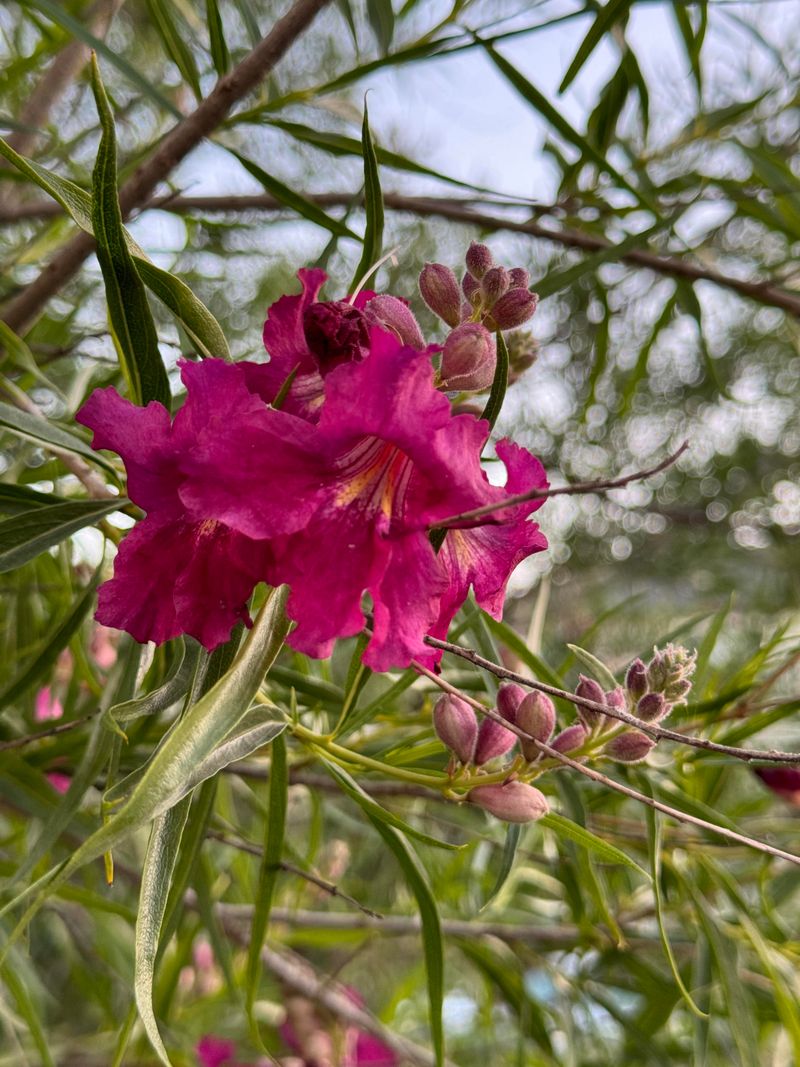
Desert willow looks more like a flowering ornamental tree than a native desert plant. Despite its common name, this plant isn’t actually a willow but earned the nickname from its long, narrow leaves that resemble willow foliage.
The stunning trumpet-shaped flowers appear in clusters from late spring through fall, creating a spectacular display that attracts hummingbirds from across the neighborhood.
Desert Willow typically grows 15 to 25 feet tall with an irregular, open branching pattern that casts light, dappled shade.
This makes it perfect for planting near patios where you want filtered sun rather than dense shade. The tree’s multi-trunk form and graceful architecture add sculptural interest to Arizona gardens even during winter when it drops its leaves.
Individual flowers measure two to three inches long and feature ruffled edges and spotted throats that add to their exotic appearance. After flowering, long seed pods develop that dangle from branches through winter, providing additional visual interest and food for birds.
The tree grows naturally along desert washes throughout Arizona, indicating its preference for areas that receive occasional deep moisture. Planting Desert Willow requires full sun and well-draining soil to prevent root problems.
Young trees need regular watering to establish strong root systems, but mature specimens tolerate extended drought periods typical of Arizona summers.
Prune lightly to shape the tree and remove damaged or non-productive branches, but avoid heavy pruning that can reduce flowering.
8. Creosote Bush
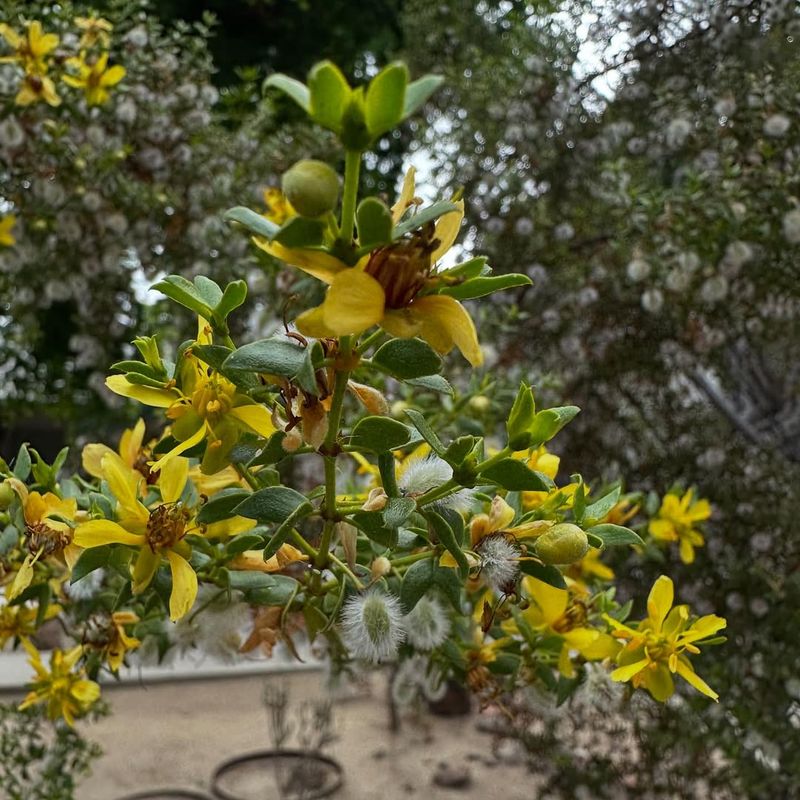
Creosote bush stands out because it defines what the Arizona desert actually smells and feels like. The small, waxy leaves stay evergreen even through the hottest, driest periods, coated with a resinous substance that gives the plant its characteristic smell, especially noticeable after rain.
Small yellow flowers appear mainly in spring but can bloom sporadically after summer monsoon rains bring moisture to Arizona’s deserts.
While not as showy as some other native plants, the flowers attract various pollinators and develop into distinctive fuzzy white seed balls that add textural interest.
The plant’s open branching structure creates interesting shadows and allows light to filter through to plants growing beneath. Creosote Bush grows naturally as a dominant species across much of Arizona’s low desert regions, often forming vast stands that create the classic desert landscape many people envision.
Individual plants typically reach six to ten feet tall and equally wide, though they can be pruned smaller for residential landscapes. The plant’s deep root system makes it extremely drought-tolerant once established.
Using Creosote Bush in Arizona gardens brings authentic desert character while requiring virtually no maintenance or supplemental water. Full sun and well-draining soil are the only real requirements.
The plant’s evergreen nature provides year-round structure, and its natural resistance to pests means it never needs chemical treatments to stay healthy and attractive.
9. Chuparosa
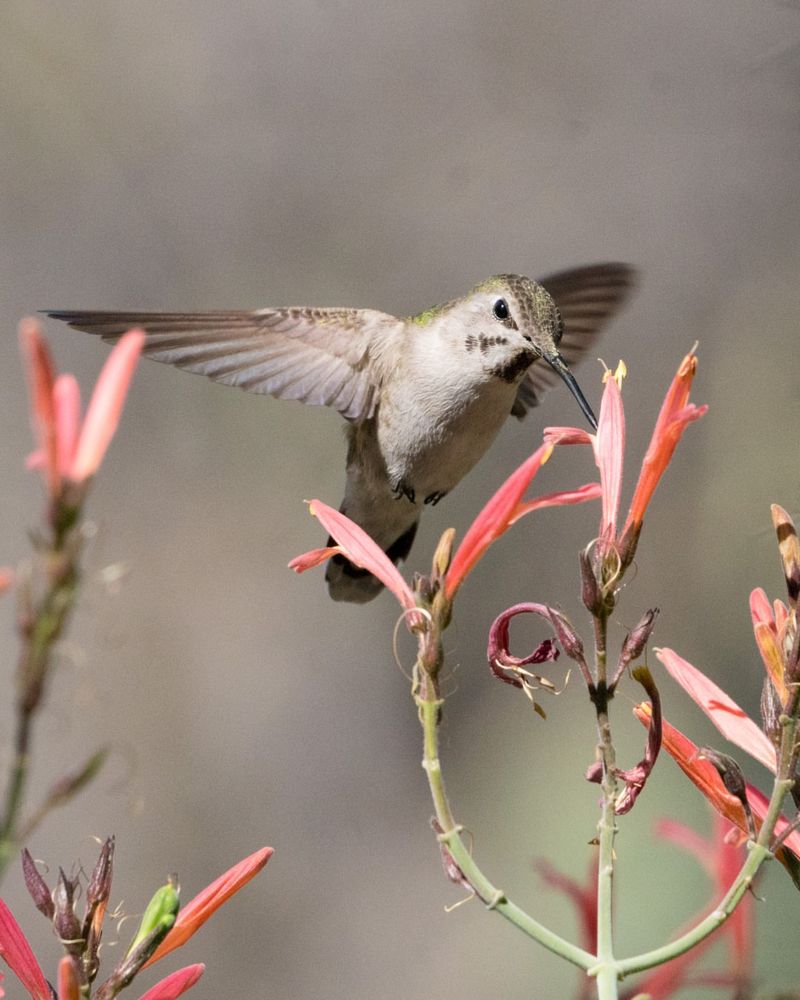
Few native shrubs grab attention like chuparosa when it’s in bloom. This shrub produces some of the most intensely colored flowers found among native plants, creating vivid displays that seem almost tropical against the muted desert backdrop.
The common name comes from the Spanish word for hummingbird, referring to the countless visits these tiny birds make to feed on the abundant nectar. Chuparosa grows as a loose, open shrub reaching three to five feet tall, with bright green stems that remain visible even when the plant drops its small leaves during the hottest, driest periods.
This deciduous nature helps conserve water during stress periods, but the green stems continue photosynthesizing so the plant stays active. Flowering peaks during cooler months when hummingbirds migrating through Arizona need reliable nectar sources.
The plant grows naturally along desert washes and in rocky areas throughout southern Arizona and into Mexico.
It tolerates extreme heat and drought once established but produces more flowers and holds its leaves longer with occasional deep watering during the growing season.
The arching stems create an attractive fountain-like form that softens harsh landscape lines. Planting Chuparosa in Arizona gardens means choosing a location with full sun and excellent drainage to prevent root problems.
Space plants appropriately since they can spread several feet wide at maturity. Prune lightly after the main flowering period to maintain shape and encourage bushier growth that produces more flower-bearing stems for hummingbirds to enjoy.