13 Backyard Trees That Stay Small But Provide Big Shade Ideal For Michigan
Shade changes everything. A cooler patio feels better. A calmer yard feels more usable. The right tree can deliver comfort without taking over your space.
Big canopies do not always need giant trunks. Smart homeowners look for compact trees that grow upward instead of outward and still block harsh sun.
Many gardeners in California already use smaller shade trees to protect outdoor spaces while keeping yards open and flexible. The same idea works perfectly in Michigan where summer heat can hit hard and property sizes often call for balance. Less pruning saves time.
Controlled growth protects nearby structures. Better shade lowers surface temperatures and makes outdoor living easier. Good tree choices add value.
They also add beauty and comfort in one move. Curious which backyard trees stay small but still deliver serious shade for Michigan landscapes? Keep reading because the right pick could transform your yard faster than you think.
1. Eastern Redbud Brings Spring Magic And Summer Comfort
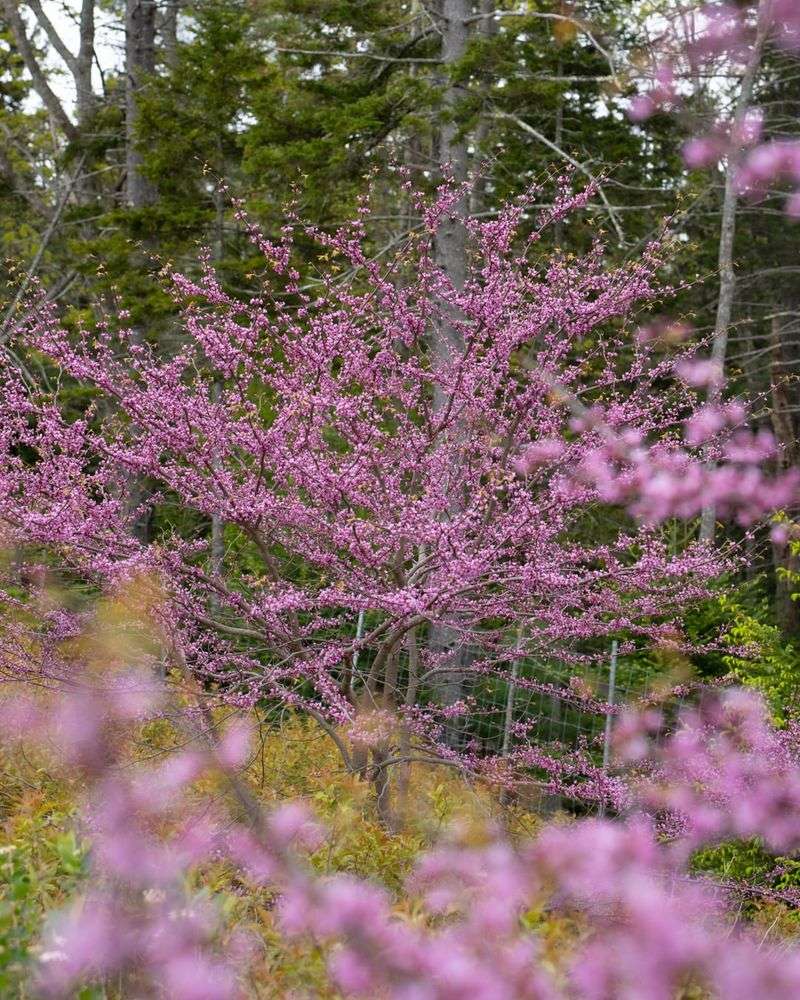
Picture a tree that announces spring with thousands of tiny pink flowers before its leaves even appear. Eastern Redbud does exactly that, creating a stunning display every April. This native Michigan tree reaches just 20 to 30 feet tall, making it perfect for smaller yards.
The heart-shaped leaves create a lovely dappled shade that cools your patio without blocking all sunlight. Your grass will still grow underneath, unlike with dense shade trees. The spreading canopy provides comfortable relief during hot summer afternoons.
Redbuds adapt well to various soil types found throughout Michigan. They tolerate both clay and sandy conditions with minimal fussing. Plant them where you’ll enjoy the spring show from your kitchen window.
These trees require very little pruning or special care once established. They naturally develop an attractive vase-shaped form. Wildlife loves them too, with bees visiting the flowers and birds nesting in the branches.
Fall brings another surprise when the leaves turn bright golden yellow. This seasonal transformation adds visual interest to your landscape. Eastern Redbud truly delivers beauty and function throughout the growing season.
2. Dogwood Creates Elegant Layers Of Filtered Light
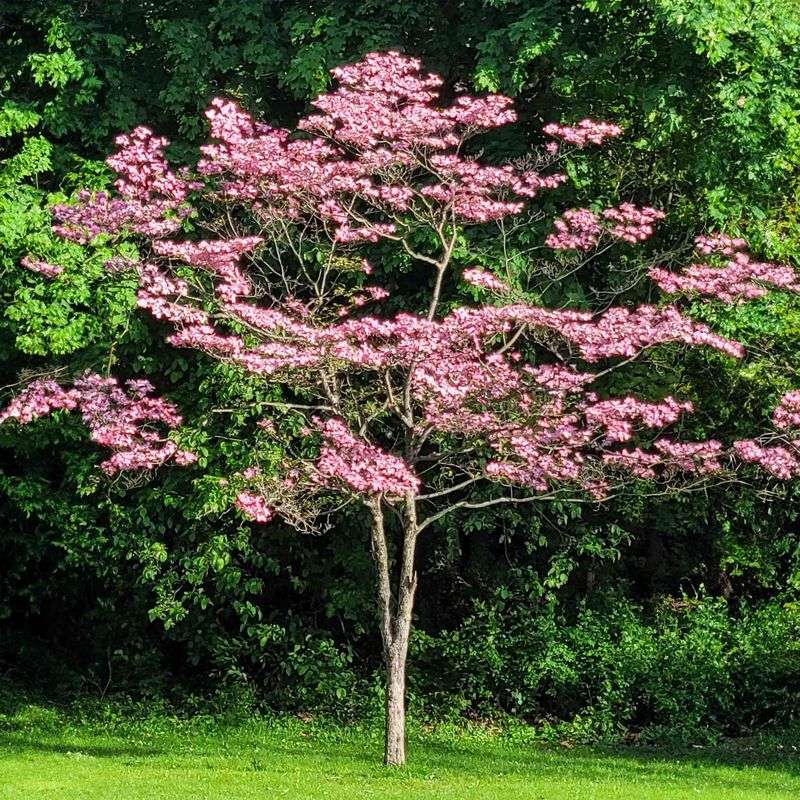
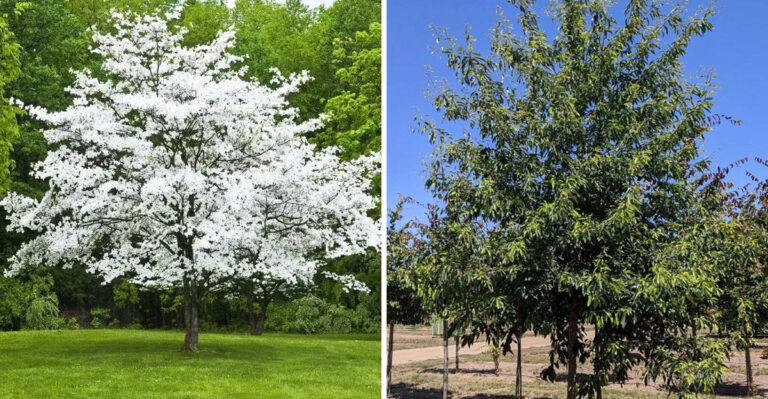
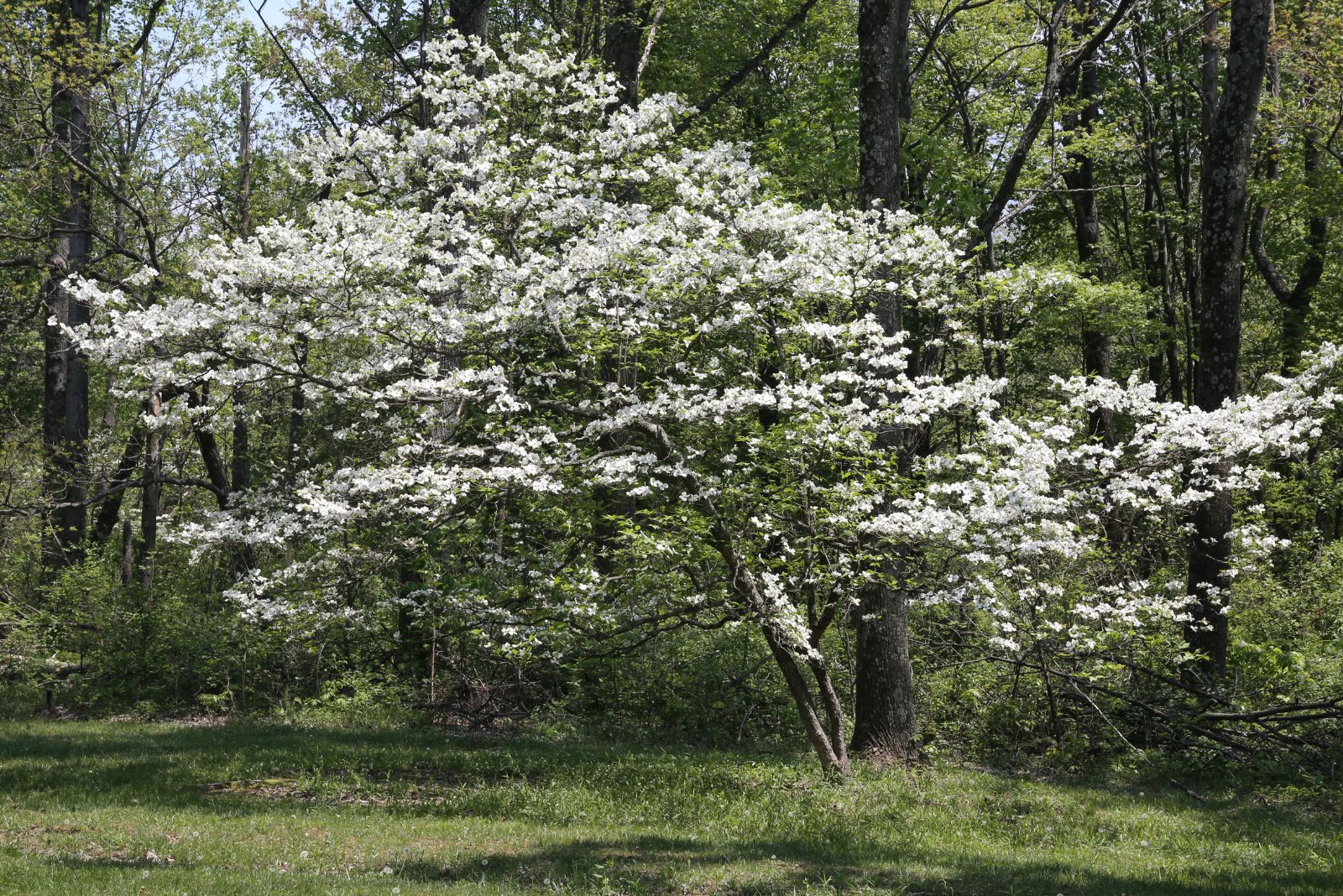
Dogwoods bring an architectural elegance that few small trees can match. Their distinctive horizontal branching creates natural layers in your landscape. Reaching only 15 to 25 feet, they fit beautifully into compact spaces.
Spring blooms appear as showy white or pink bracts that last for weeks. These aren’t true flowers but modified leaves that create stunning visual impact. The real flowers sit in the center, attracting beneficial pollinators.
The filtered shade underneath dogwoods allows you to grow hostas, ferns, and other shade lovers. This makes them perfect for creating layered garden designs. Your yard gains depth and interest with this companion planting approach.
Michigan gardeners should choose native Cornus florida varieties for best results. These trees have evolved alongside local wildlife and weather patterns. They handle our cold winters and humid summers with grace.
Fall foliage turns deep burgundy red, extending the seasonal show. Bright red berries appear, feeding migrating birds through autumn. The attractive bark adds winter interest when everything else sleeps.
Position dogwoods where they receive morning sun and afternoon shade. This mimics their natural woodland edge habitat. Proper placement ensures healthy growth and abundant flowering.
3. Japanese Maple Adds Artistic Flair With Colorful Canopy
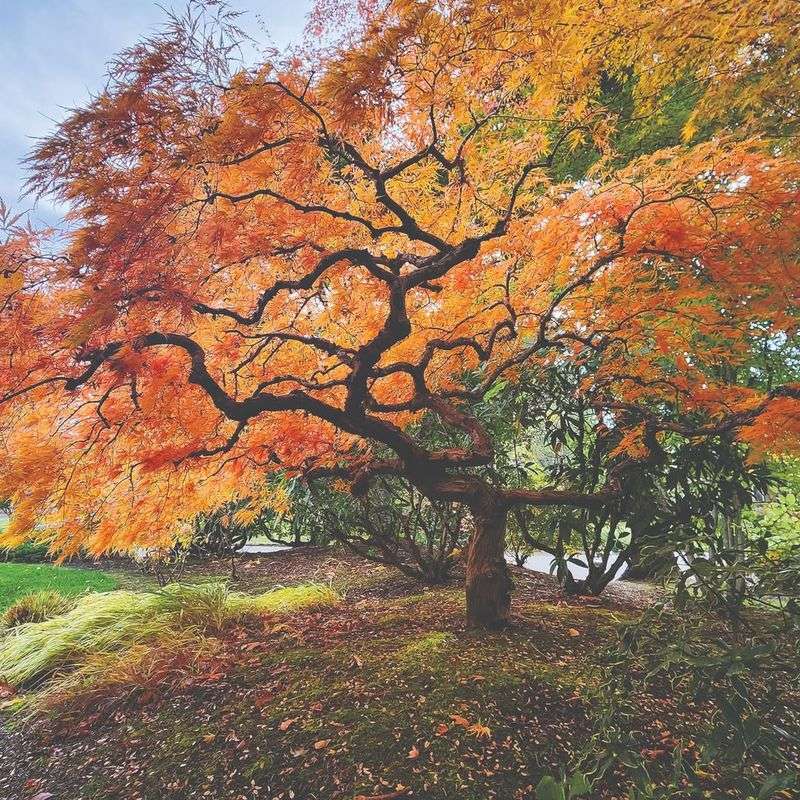
Few trees match the artistic beauty of Japanese Maple. These stunning specimens transform your yard into a living sculpture. Growing 10 to 25 feet tall, they offer shade without overwhelming your space.
The delicate, lacy leaves create patterns of light and shadow underneath. This filtered effect protects tender plants while maintaining visual interest. Your garden gains a sophisticated, refined atmosphere.
Japanese Maples come in incredible variety, from green to deep purple foliage. Some cultivars feature leaves that change color through the season. Choose varieties proven hardy in Michigan’s Zone 5 and 6 climates.
These trees prefer slightly acidic soil with good drainage. Amend heavy clay with compost before planting. Mulch around the base to maintain consistent moisture levels.
Spring brings fresh new growth in vibrant colors. Summer foliage provides steady shade and visual anchor points. Fall transforms the canopy into brilliant oranges, reds, and golds.
Protect Japanese Maples from harsh afternoon sun in their first years. Once established, they tolerate more exposure. Their slow growth means minimal pruning requirements, saving you time and effort throughout the years.
4. Serviceberry Delivers Three Seasons Of Outstanding Interest
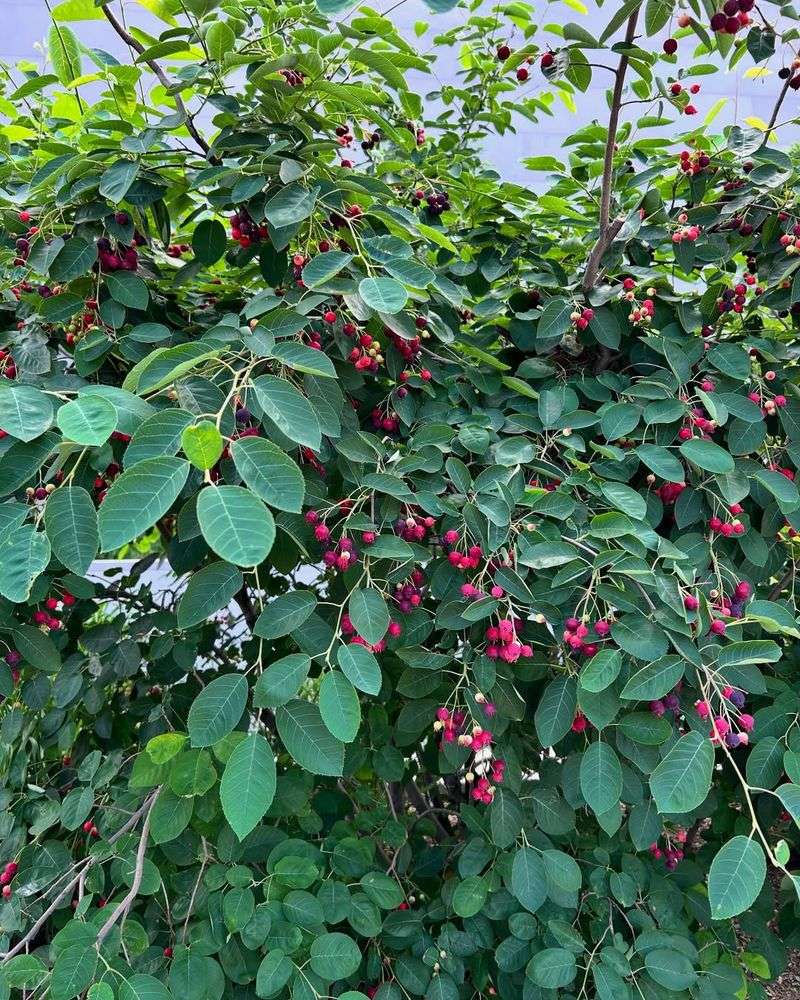
Serviceberry stands out as a true four-season performer. This native Michigan tree reaches 15 to 25 feet with multiple stems. The graceful form creates natural shade while maintaining an airy appearance.
Early spring brings clouds of delicate white flowers. These blooms appear before most other trees wake up. Bees and butterflies appreciate this early nectar source.
By June, edible purple berries ripen across the branches. These sweet fruits taste like blueberries with almond notes. Birds compete with humans for this delicious harvest.
The spreading canopy provides comfortable shade through summer months. Leaves create dappled light perfect for reading or relaxing underneath. Your outdoor furniture stays cooler beneath this natural umbrella.
Fall foliage explodes in brilliant oranges, reds, and yellows. This spectacular display rivals any ornamental tree. The show lasts several weeks before leaves drop.
Serviceberry tolerates various soil conditions found throughout Michigan. It handles both wet and dry periods once established. Plant it near patios or seating areas to maximize enjoyment of its seasonal changes and wildlife activity.
5. Sourwood Offers Fragrant Flowers And Reliable Summer Shade
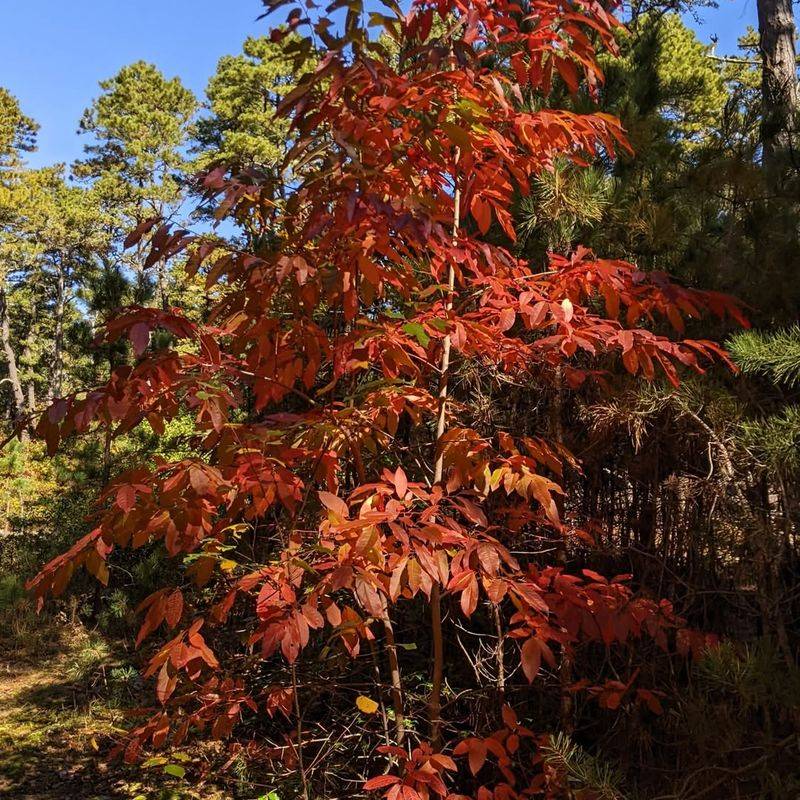
Sourwood brings Southern charm to Michigan landscapes. This underused native tree grows 20 to 30 feet tall. The spreading branches create substantial shade for its compact size.
Midsummer brings cascading chains of fragrant white flowers. These lily-of-the-valley-like blooms perfume your entire yard. Bees produce exceptional honey from sourwood nectar.
The glossy green leaves reflect sunlight while providing cooling shade. This makes the area beneath comfortable even during hot afternoons. Your family will naturally gather under its welcoming canopy.
Sourwood prefers acidic soil, common in many Michigan locations. It thrives in the same conditions as blueberries and azaleas. Adding sulfur or peat moss helps in neutral soil areas.
Fall brings the most spectacular color transformation. Leaves turn brilliant scarlet red weeks before other trees. This early show extends your autumn enjoyment.
The tree maintains attractive form without heavy pruning. Its naturally pyramidal shape looks intentional and polished. Winter reveals interesting bark texture that adds subtle beauty to snowy landscapes.
Plant sourwood where you’ll appreciate its fragrance during summer evenings. Position it near decks or patios for maximum sensory enjoyment throughout the growing season.
6. Fringe Tree Creates Ethereal Beauty With Delicate Blooms
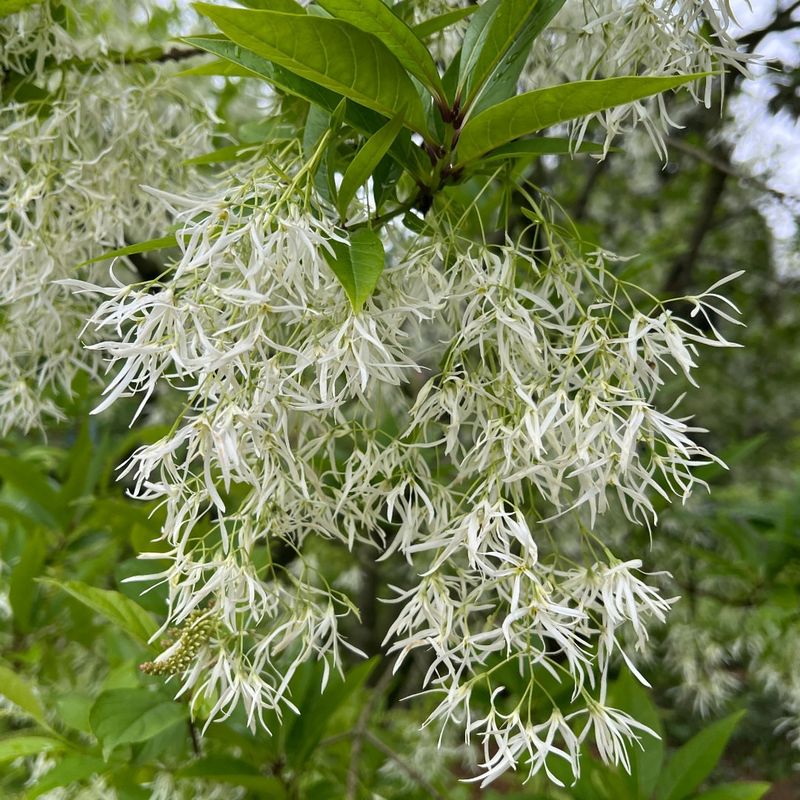
Imagine a tree covered in delicate white ribbons each spring. Fringe Tree delivers exactly this magical effect. Growing just 12 to 20 feet, it fits perfectly in smaller Michigan yards.
The fragrant flowers appear in late May or early June. Each bloom consists of narrow, fringe-like petals that flutter in breezes. The display lasts two to three weeks.
Light, filtered shade develops beneath the open canopy. This allows lawn grass to thrive underneath. You can also grow spring bulbs and shade perennials in this gentle environment.
Fringe Trees adapt to various Michigan soil types. They tolerate both wet and dry conditions once established. This flexibility makes them reliable performers across different yard situations.
Female trees produce small blue fruits that birds adore. These berries appear in late summer if a male tree grows nearby. The wildlife activity adds entertainment value to your landscape.
Fall foliage turns clear yellow, providing a softer autumn display. The color complements rather than competes with bolder fall trees. Winter reveals attractive gray bark with interesting texture.
Position Fringe Tree where its spring fragrance reaches your outdoor living spaces. This placement maximizes enjoyment during peak blooming season.
7. Flowering Crabapple Combines Spring Show With Summer Comfort
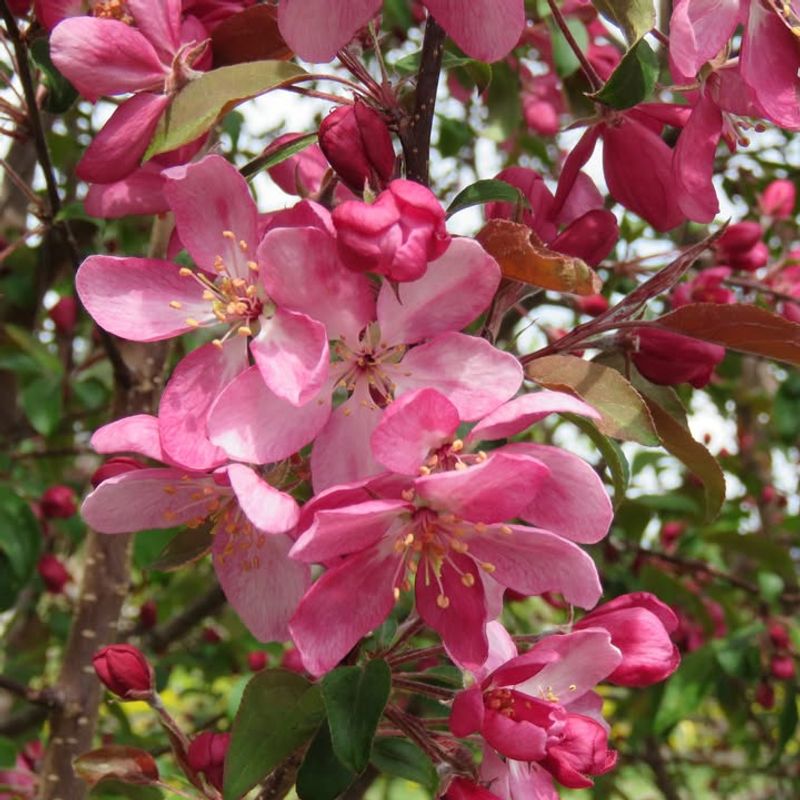
Crabapples rank among Michigan’s most beloved small trees. These reliable performers reach 15 to 25 feet tall. The rounded canopy creates inviting shade perfect for backyard gatherings.
Spring transforms crabapples into clouds of pink or white flowers. The spectacular bloom period lasts up to two weeks. Your entire neighborhood will notice this stunning display.
Dappled shade develops as leaves emerge after flowering. This filtered light keeps your patio comfortable without creating deep darkness. Plants underneath receive enough light to thrive.
Modern disease-resistant varieties handle Michigan’s humid summers beautifully. Choose cultivars specifically bred for resistance to apple scab. These newer selections require minimal spraying or maintenance.
Small fruits appear in late summer and persist through winter. These colorful ornaments feed birds during harsh weather. Some varieties produce fruits perfect for making jelly.
The branching structure creates interesting winter silhouettes. Snow highlights the tree’s natural architecture. Your yard maintains visual interest even during dormant months.
Plant crabapples in full sun for best flowering and fruiting. Space them away from driveways if you prefer non-messy varieties. Select cultivars with persistent fruits that stay attractive rather than dropping and creating cleanup work.
8. Hawthorn Provides Dense Shade And Wildlife Habitat
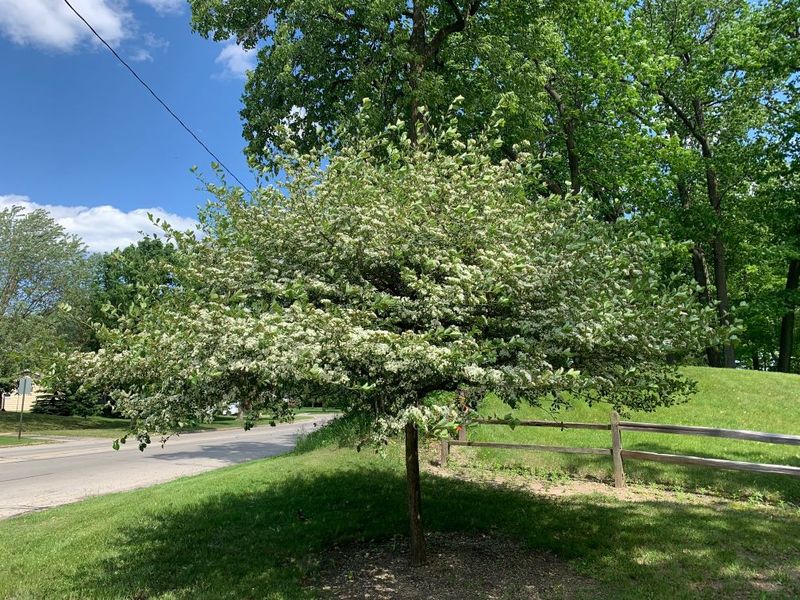
Hawthorns bring old-fashioned charm to modern Michigan landscapes. These tough native trees grow 15 to 25 feet tall. The dense branching creates substantial shade for their compact size.
Clusters of white flowers cover branches each May. The blooms attract numerous beneficial insects and pollinators. This flowering period signals late spring’s arrival.
The thick canopy blocks significant sunlight, creating genuine cooling shade. This makes hawthorns ideal near patios or play areas. Your family will appreciate the temperature difference underneath.
Small red fruits appear in fall, providing food for birds. These berries persist through winter when other food sources disappear. Your yard becomes a wildlife haven.
Hawthorns tolerate tough urban conditions and poor soils. They handle road salt, compacted earth, and pollution. This resilience makes them excellent choices for challenging locations.
The thorny branches provide excellent security screening. Birds nest safely within the protective structure. This natural fortress supports local wildlife populations.
Fall foliage turns bronze or purplish tones. The color change adds subtle seasonal interest. Winter reveals the sculptural branching pattern and persistent berries against snow.
Choose thornless varieties if planting near walkways or play areas. These cultivars offer all benefits without the sharp points.
9. Red Buckeye Attracts Hummingbirds While Providing Filtered Shade
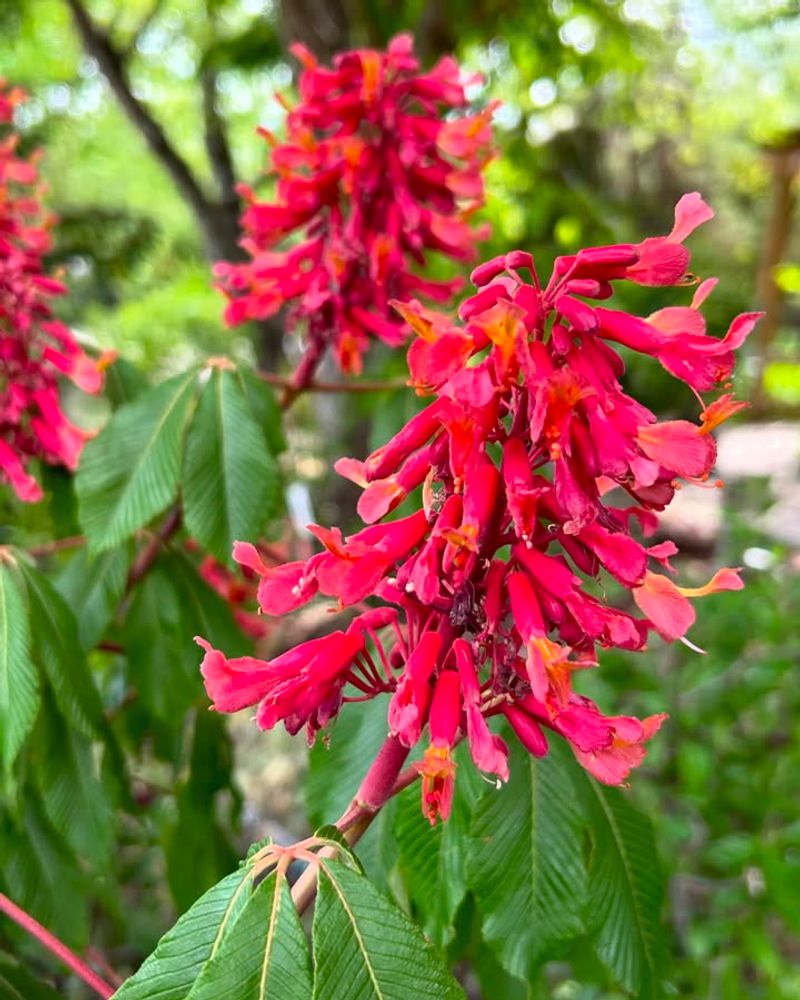
Red Buckeye brings Southern flair to Michigan’s milder regions. This small tree reaches 15 to 25 feet tall. The spreading branches create comfortable filtered shade.
Tubular red flowers appear in late spring. Hummingbirds flock to these nectar-rich blooms. Your yard becomes a destination for these tiny jeweled visitors.
The palmately compound leaves create interesting texture. Light filters through the foliage in appealing patterns. This dappled effect protects without creating deep darkness.
Red Buckeye prefers slightly moist soil with good drainage. It thrives in partial shade or full sun. The tree adapts well to typical Michigan garden conditions.
Large seeds develop in smooth capsules by late summer. These buckeyes aren’t edible but provide interesting visual elements. Children find them fascinating to collect and examine.
Fall brings early leaf drop, which some gardeners appreciate. The tree enters dormancy ahead of others. This characteristic reduces fall cleanup compared to later-dropping species.
Plant Red Buckeye where you can watch hummingbirds from windows. Position feeders nearby to maximize bird activity. The combination creates an engaging wildlife viewing station.
This tree works beautifully in woodland garden settings. It naturalizes well alongside native wildflowers and ferns. The understory planting creates layered interest.
10. Dwarf Linden Delivers Substantial Shade In Compact Form
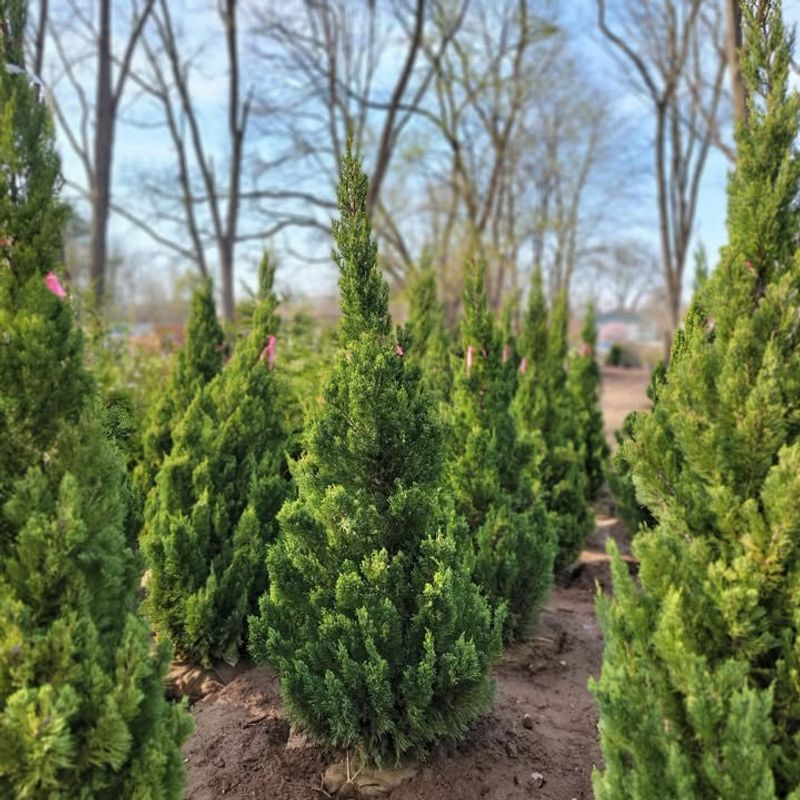
Greenspire Dwarf Linden packs impressive shade into smaller dimensions. This cultivar reaches 25 to 30 feet tall. The dense foliage blocks sunlight more effectively than many larger trees.
The pyramidal form fits beautifully in formal or informal landscapes. Branches grow in an organized, attractive pattern. This natural structure requires minimal corrective pruning.
Heart-shaped leaves create a lush, full canopy. The dense coverage provides genuine cooling shade beneath. Your outdoor spaces stay noticeably cooler during summer heat.
Fragrant yellow flowers bloom in early summer. The sweet scent carries across your entire yard. Bees work these blooms enthusiastically, supporting pollinator populations.
Dwarf Linden tolerates urban conditions exceptionally well. It handles compacted soil, air pollution, and road salt. This toughness makes it ideal for front yards near streets.
The tree maintains consistent growth and form throughout its life. You won’t deal with awkward juvenile stages. It looks intentional and polished from the beginning.
Fall color appears as soft yellow. The change happens gradually over several weeks. Leaf drop occurs in a manageable timeframe rather than all at once.
Plant Dwarf Linden where you need serious shade without massive size. It works perfectly near homes, driveways, or property lines where space limits options.
11. Chokecherry Supports Wildlife While Shading Your Space
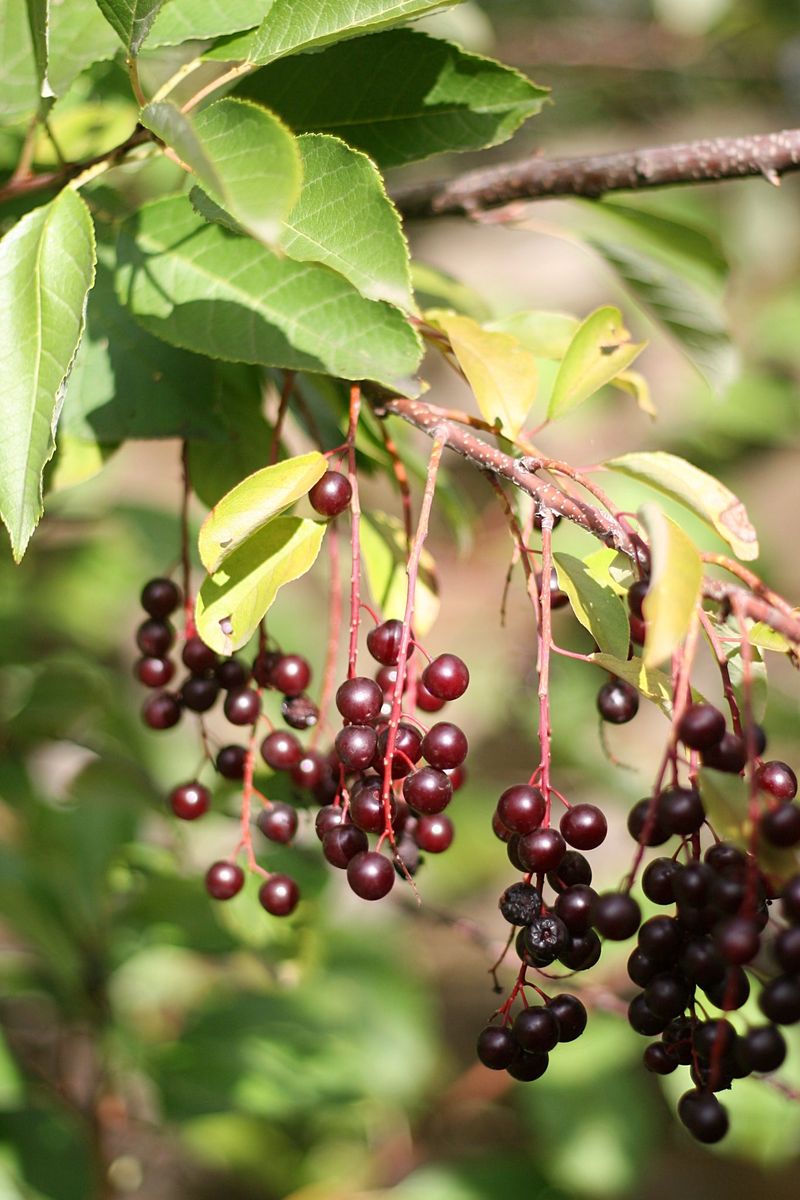
Chokecherry stands out as a wildlife magnet. This Michigan native grows 15 to 25 feet tall. The rounded canopy creates pleasant filtered shade.
Fragrant white flower clusters appear in spring. These blooms attract butterflies, bees, and other beneficial insects. The sweet scent enhances your outdoor experience.
Dark purple fruits ripen in midsummer. Birds arrive in flocks to feast on these berries. Your yard becomes a hub of avian activity.
The filtered shade allows grass and perennials to grow underneath. This makes landscape design easier than with dense shade trees. You maintain more planting flexibility.
Chokecherry tolerates poor soil and challenging conditions. It thrives where fussier trees struggle. This adaptability makes it reliable across different Michigan locations.
The fruits taste astringent when raw but make excellent jelly. Many gardeners harvest some while leaving plenty for wildlife. This dual purpose adds practical value.
Fall foliage turns yellow to reddish tones. The color change signals autumn’s progression. Birds continue visiting for any remaining fruits.
Chokecherry spreads through suckers, creating natural thickets over time. This growth habit works well for informal hedges or naturalized areas. Prune suckers if you prefer a single-trunk tree form instead of the multi-stemmed natural growth pattern.
12. Columnar Sweetgum Maximizes Shade In Tight Spaces
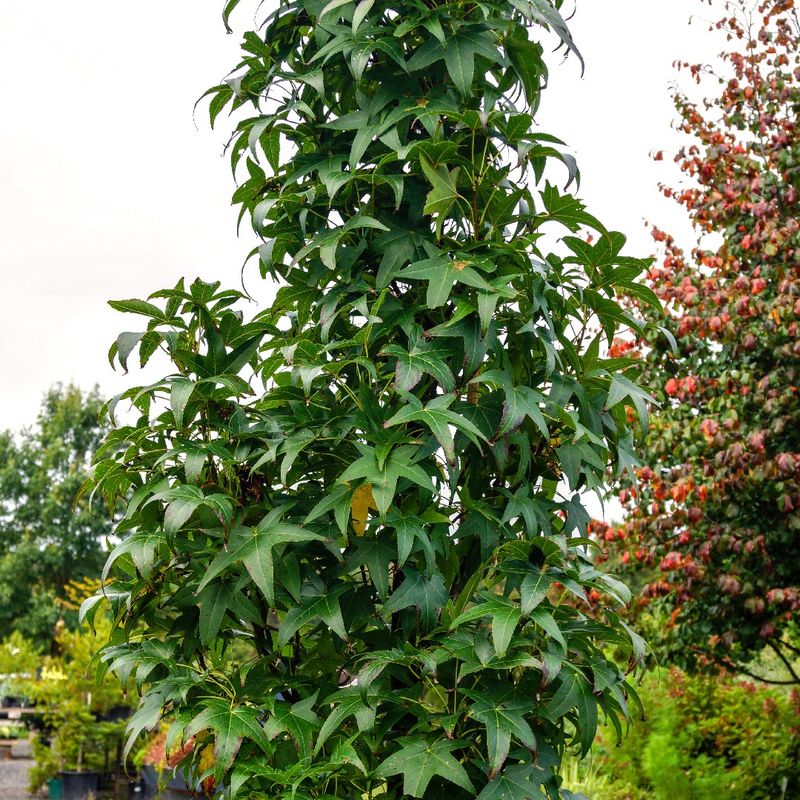
Slender Silhouette Sweetgum solves the narrow space challenge. This unique cultivar grows 20 to 30 feet tall. The columnar form stays just three to four feet wide.
The vertical growth pattern provides shade without spreading horizontally. This makes it perfect for side yards or between buildings. You gain cooling coverage where traditional trees won’t fit.
Star-shaped leaves create interesting texture and pattern. The foliage density provides substantial shade despite the narrow profile. Light filters through at morning and evening angles.
This cultivar produces few to no spiky seed balls. Traditional sweetgums drop messy fruits that cause complaints. Slender Silhouette eliminates this maintenance headache.
Fall color rivals any tree, with brilliant purple, red, and orange. The narrow form becomes a vertical flame in autumn. This display lasts several weeks.
Columnar Sweetgum tolerates various soil types. It adapts to both clay and sandy conditions. The tree establishes quickly once planted.
Use this tree to frame entryways or create living screens. Multiple specimens planted in a row form an effective privacy barrier. The vertical emphasis draws eyes upward, making spaces feel larger.
Winter reveals the interesting bark and branch structure. The architectural form adds sculptural interest to dormant season landscapes.
13. Disease-Resistant Dogwood Hybrids Offer Improved Performance
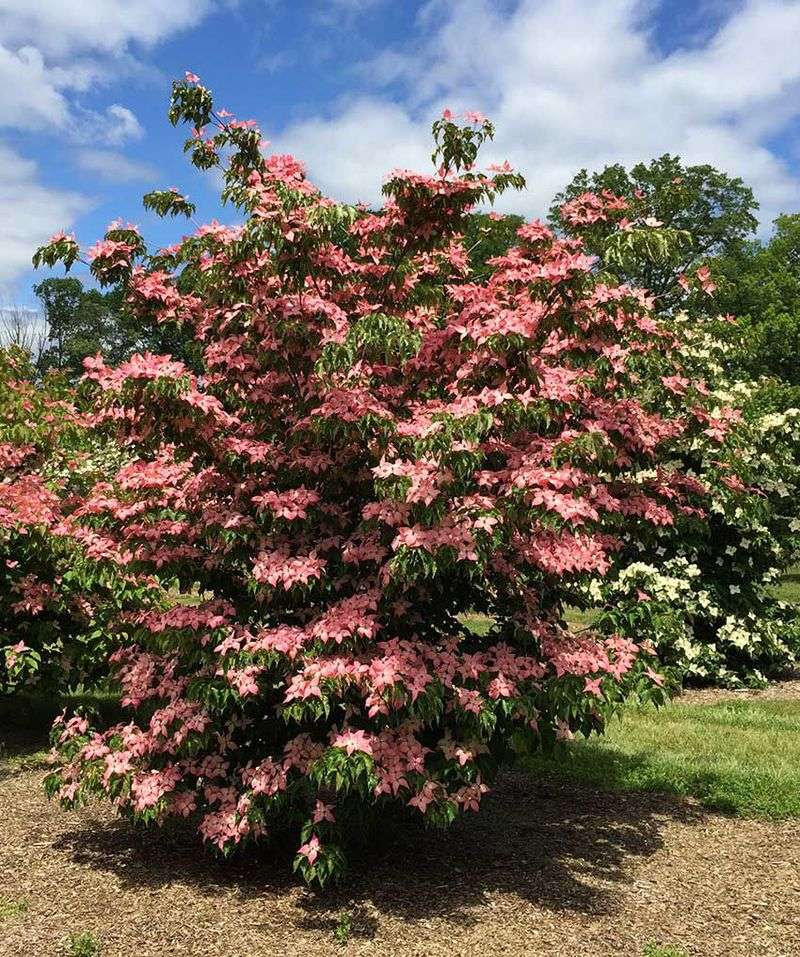
Modern dogwood hybrids solve the disease problems plaguing older varieties. These improved trees reach 15 to 25 feet tall. The compact size delivers shade without overwhelming smaller yards.
Spring blooms appear in white or pink shades. The flowers last longer than traditional dogwoods. You enjoy an extended flowering period each year.
Hybrid vigor creates stronger, healthier trees. These cultivars resist anthracnose and powdery mildew. Your tree maintains attractive appearance with minimal intervention.
The canopy provides filtered shade perfect for understory planting. Hostas, ferns, and woodland flowers thrive beneath. This layered approach creates depth in your landscape design.
Stellar series hybrids combine Asian and American dogwood traits. They inherit cold hardiness from American parents. Asian parents contribute disease resistance and vigor.
Fall foliage develops in rich burgundy and red tones. The color intensity matches or exceeds traditional varieties. Berries feed migrating birds through autumn.
These hybrids tolerate more sun exposure than native dogwoods. They adapt to various landscape positions. This flexibility simplifies placement decisions.
Plant disease-resistant hybrids where previous dogwoods struggled. They succeed in locations that challenged older varieties. Your landscape gains reliable beauty without constant worry about tree health problems or intensive maintenance requirements throughout the growing season.