8 Backyard Visitors That Signal Spring Is Finally Arriving In North Carolina
A quiet shift begins before the landscape fully awakens, and those who pay attention can feel spring arriving long before the first flowers open.
Across North Carolina, subtle signs appear as winter slowly releases its hold and daylight stretches a little further each evening.
Mornings grow livelier with cheerful birdsong, evenings carry the gentle chorus of tiny frogs, and small movements return to gardens and woodlines that seemed still for months.
These early visitors are nature’s way of announcing that warmth is on the horizon, even while traces of winter linger.
Observing these changes adds a sense of wonder to everyday moments and deepens your connection to the natural rhythms unfolding around you. North Carolina’s landscapes come alive step by step, offering clues for those willing to watch and listen.
Keep your senses alert, because these eight familiar visitors reveal that spring is truly on its way.
1. American Robins Become Highly Active In February And March
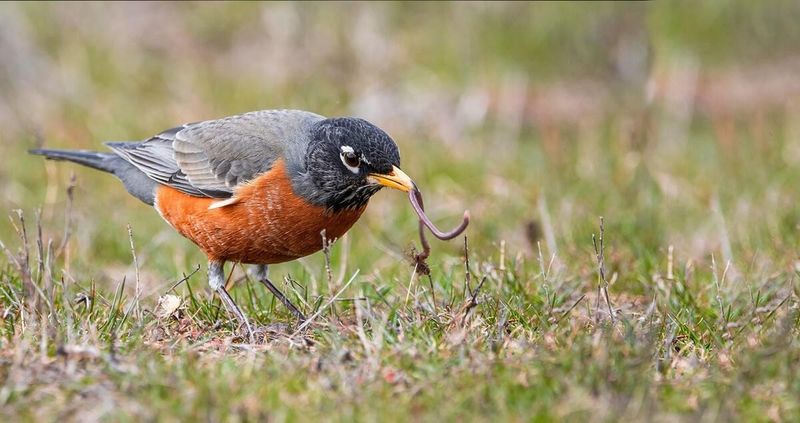
You might spot a familiar orange-red breast bobbing across your lawn and think, where did all these robins come from? American Robins actually stay in North Carolina year-round, but they shift their behavior dramatically as late winter approaches.
During colder months, they tend to flock together in wooded areas, feeding on berries and fruit. As February rolls in and temperatures start climbing, they spread out across neighborhoods, parks, and backyards in search of earthworms and insects.
Robins are one of the clearest signs that spring is picking up speed. Males begin singing their rich, rolling song well before sunrise, sometimes starting as early as an hour before dawn.
This early morning chorus is directly tied to breeding season, as males work hard to attract females and claim territory. Nesting activity typically ramps up in March, with females building cup-shaped nests using mud, grass, and plant fibers.
If you want to attract robins, keeping a section of your yard free from heavy mulch helps them probe the soil more easily for worms. Planting native berry-producing shrubs like hollies also gives them a food source during cooler stretches.
Watching a robin tug a worm from the ground on a bright February morning is honestly one of the most satisfying signs that spring is truly on its way in North Carolina.
2. Eastern Bluebirds Begin Nest Searching In Late February
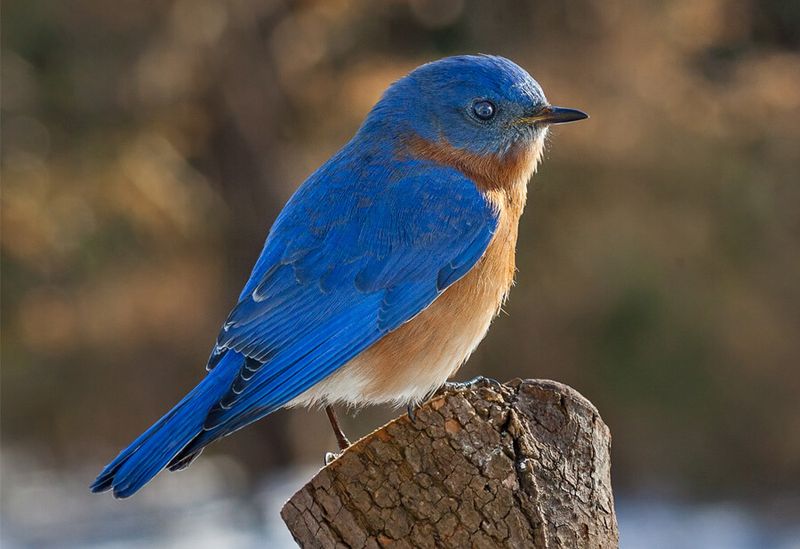
Few birds bring as much joy to a North Carolina backyard as the Eastern Bluebird, with its brilliant blue back and warm rusty-orange chest. By late February, something shifts in their behavior that is hard to miss.
Males begin visiting potential nest sites repeatedly, hovering near cavities and nest boxes as if mentally measuring the space. This nest-searching behavior is one of the earliest and most reliable signs that breeding season is getting underway.
Eastern Bluebirds are cavity nesters, meaning they rely on hollow trees or man-made nest boxes to raise their young. In the wild, old woodpecker holes are a popular choice.
However, competition for these spots can be fierce, so putting up a properly sized bluebird nest box in late January or early February gives them a great option. The entrance hole should measure exactly 1.5 inches in diameter to keep out larger competing birds.
Pairs form and bond quickly once a suitable site is found, with females doing most of the nest construction using dry grasses and pine needles.
North Carolina is actually home to some of the healthiest Eastern Bluebird populations in the southeastern United States, partly because of active nest box programs.
Mounting your box on a pole with a predator guard about five feet off the ground gives bluebird families the best possible start to the season.
3. Red Winged Blackbirds Return To Wetlands In February
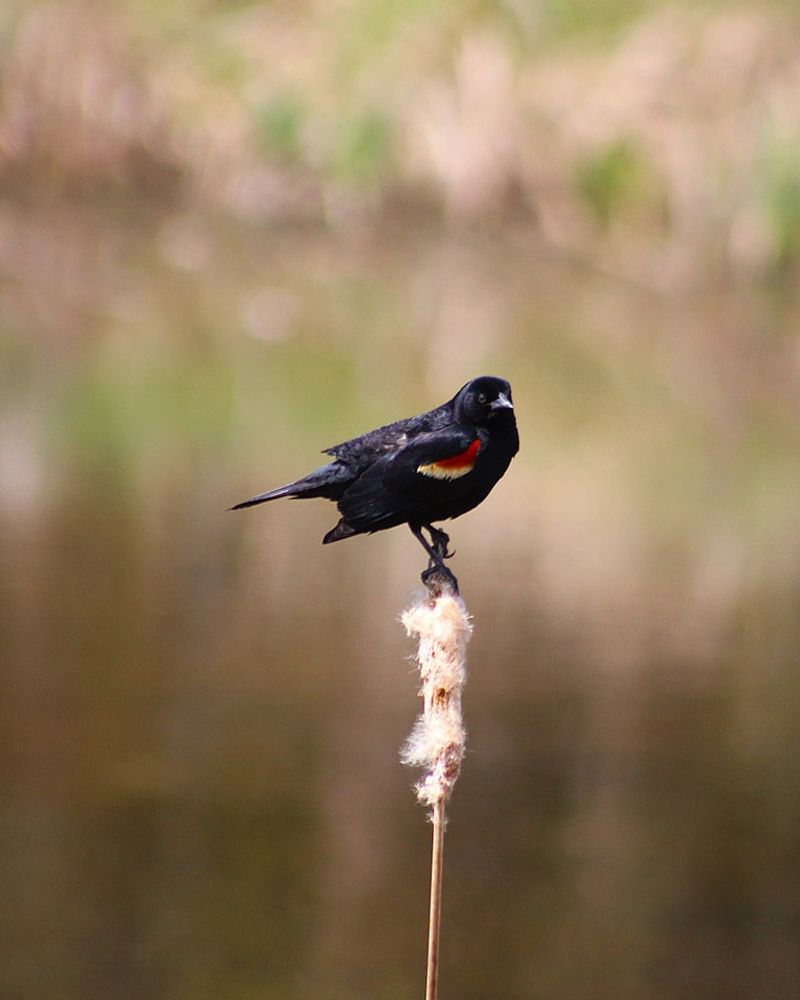
That bold, buzzy call echoing from a marsh or roadside ditch in February almost always belongs to one bird: the Red-winged Blackbird.
Male Red-winged Blackbirds are among the earliest songbirds to ramp up their activity as winter fades, and their presence near wetlands is a clear sign that the breeding season is not far off.
The males arrive before the females, staking out territory along cattail marshes, wet meadows, and pond edges across North Carolina.
The males are unmistakable with their glossy black feathers and vivid red shoulder patches edged in yellow.
They perch high on reeds or fence posts and call loudly to advertise their territory, sometimes spreading their wings to flash those bright patches as a warning to rival males.
This behavior intensifies throughout February and into March as competition for prime wetland spots grows stronger.
Females arrive a few weeks later, and their appearance is quite different. They are streaky brown, which helps them stay camouflaged while nesting low in dense vegetation.
Red-winged Blackbirds are highly adaptable and can also show up at backyard feeders near wooded edges, especially when temperatures dip. Offering cracked corn or millet on a ground-level platform feeder can bring them in close.
Hearing that distinctive call from a nearby pond on a cool February morning is a genuine thrill that signals spring is stirring.
4. Spring Peepers Begin Calling In Late February Or Early March
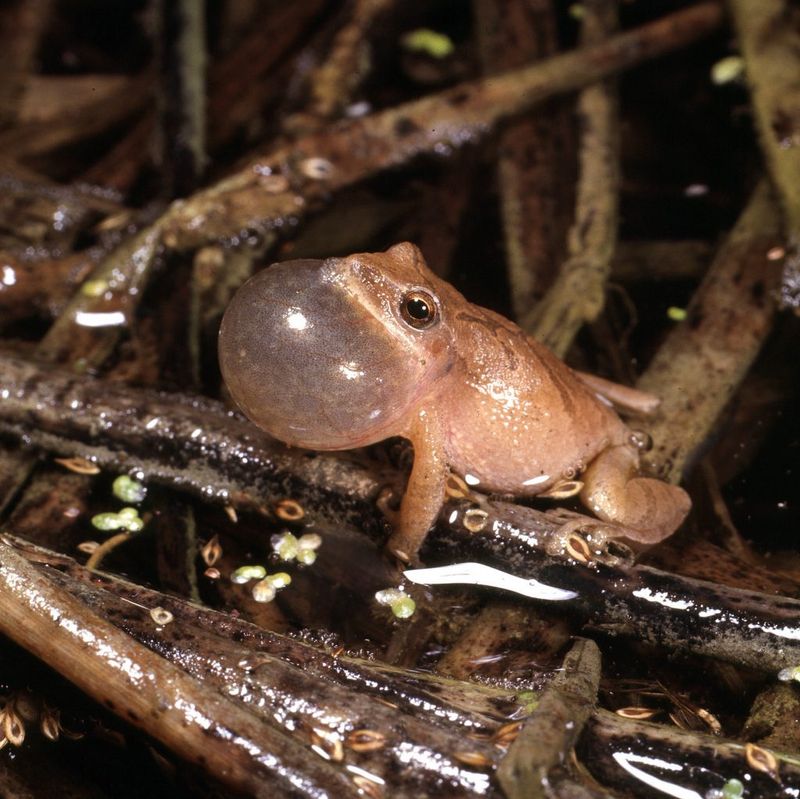
Long before you see any signs of spring, you might hear it first. On a mild evening in late February or early March, a chorus of high-pitched peeping sounds rises from ponds, swamps, and wooded wetlands across North Carolina.
That sound belongs to Spring Peepers, one of the smallest and most vocal frogs in the eastern United States. These tiny amphibians are barely an inch long, but their calls can be heard from over a mile away when a large group gathers together.
Spring Peepers belong to the chorus frog family and are identified by the distinctive X-shaped marking on their backs.
They spend most of the year hidden under leaf litter or bark in wooded areas, but as nighttime temperatures consistently stay above 40 degrees Fahrenheit, they make their way to shallow water to breed.
The males do all the calling, producing that familiar sharp peep to attract females to the water.
Hearing Spring Peepers for the first time each year is a moment many North Carolina residents genuinely look forward to.
You do not need to do anything special to attract them, but maintaining a small backyard pond with shallow edges and surrounding native plants gives them ideal habitat.
Avoiding pesticide use near water sources also helps protect these sensitive little frogs. Their evening chorus is one of the most enchanting sounds of early spring in the Carolinas.
5. Bumblebee Queens Emerge In March As Flowers Begin Blooming
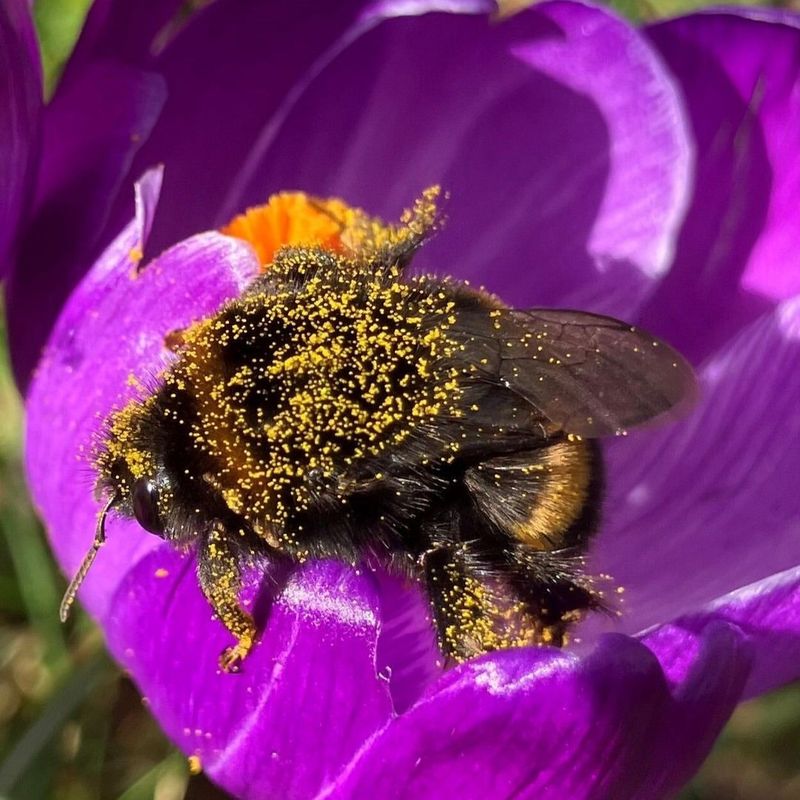
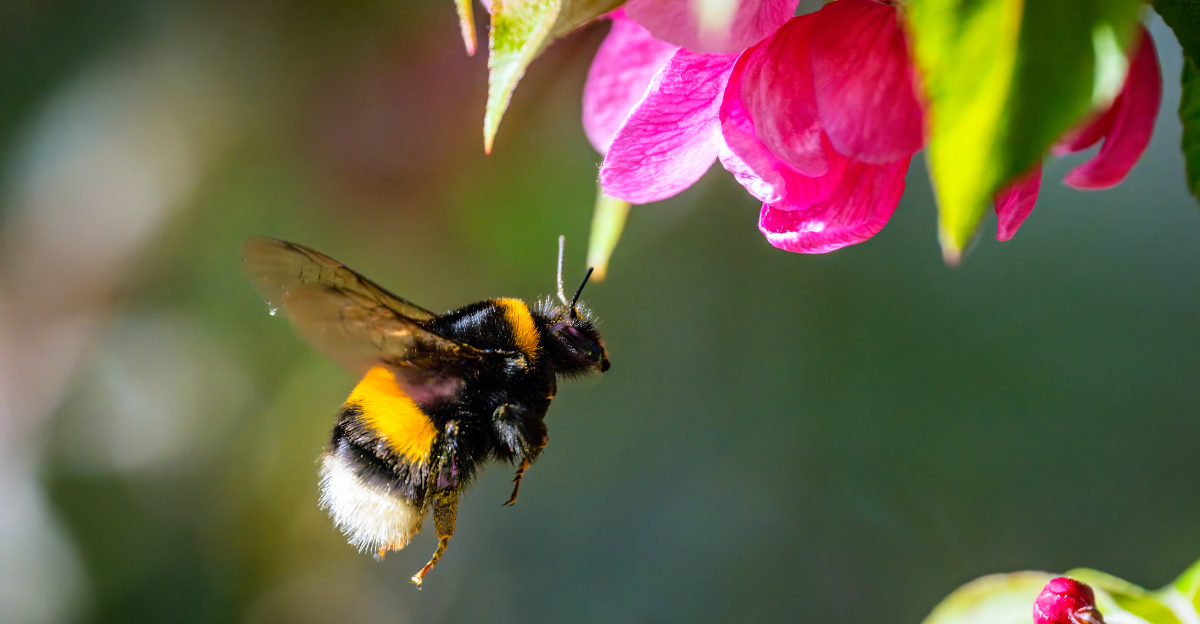
Spotting a large, fuzzy bumblebee cruising low over your garden in early March is genuinely exciting, and there is a good reason why.
That big bee is almost certainly a queen bumblebee that spent the entire winter tucked underground, waiting for warmer temperatures to wake her up.
Unlike honeybees, bumblebee colonies do not survive winter as a group. Only mated queens overwinter, and when soil temperatures warm enough in early spring, they emerge with one urgent mission: find food and start a new colony.
Queen bumblebees are noticeably larger than worker bees, which makes them easier to spot as they forage on early spring blooms.
In North Carolina, they frequently visit henbit, purple deadnettle, and flowering trees like red maple and willow, which bloom before most garden flowers open.
Nectar fuels the queen as she searches for a suitable underground nesting site, often an abandoned rodent burrow or a dense clump of grass.
Gardeners can make a real difference for bumblebee queens by leaving some areas of the yard a little wild and by planting early-blooming native flowers. Avoiding soil disturbance in late winter also protects queens that may be nesting just below the surface.
Common bumblebee species in North Carolina include the Eastern Bumblebee and the Brown-belted Bumblebee.
Watching a queen methodically work through early spring flowers on a sunny March morning is a wonderful reminder of how interconnected the natural world truly is.
6. Mourning Cloak Butterflies Appear On Warm Late Winter Days
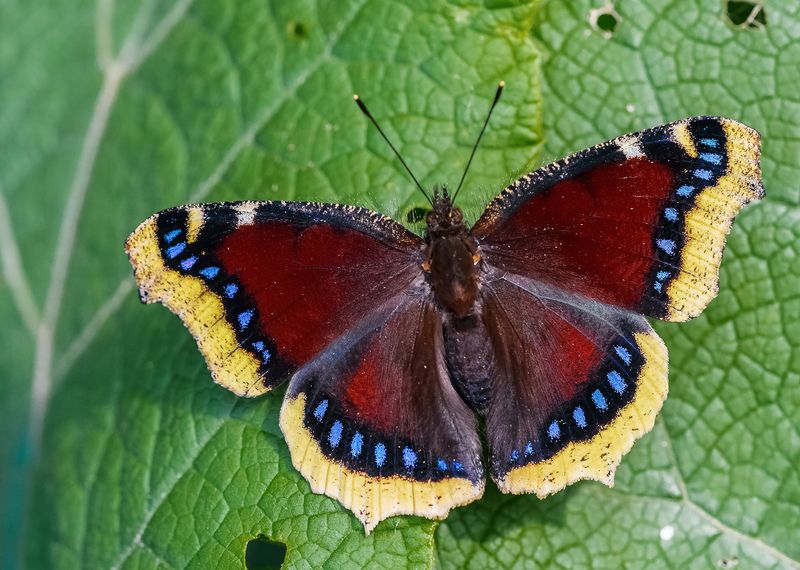
On an unexpectedly warm afternoon in late January or February, you might catch a flash of dark wings sailing through your backyard and wonder if you imagined it.
Mourning Cloak butterflies are one of the most fascinating insects in North Carolina because they actually spend the winter as adults, tucked beneath loose tree bark or inside hollow logs.
When a warm spell arrives, even in the middle of winter, they rouse themselves and take to the air to warm up and search for food.
Mourning Cloaks are striking butterflies with deep maroon wings trimmed in pale yellow-gold edges and a row of iridescent blue spots just inside the border. They are large for a North American butterfly, with a wingspan that can reach nearly four inches.
Rather than feeding on flowers, they prefer tree sap, especially from oaks and elms, and they also feed on rotting fruit when available. Watching one bask in a patch of winter sunlight on a fence post is surprisingly moving.
These butterflies are sometimes called the longest-lived butterflies in North America, with adults surviving up to ten or eleven months.
That remarkable lifespan allows them to overwinter and then breed in early spring before most other butterfly species have even hatched.
If you spot one in your yard, consider leaving a few overripe or fallen fruits out as a food source. Their early appearance is a quiet, beautiful reminder that nature is always moving forward.
7. Northern Mockingbirds Begin Territorial Singing In Late Winter
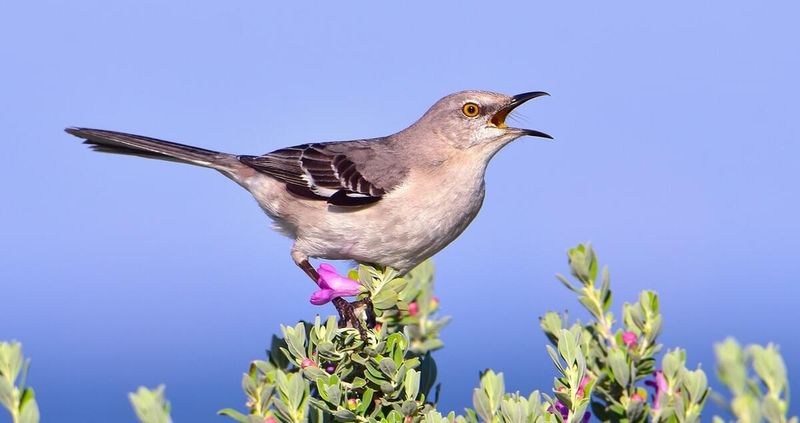
There is something both impressive and a little relentless about a Northern Mockingbird in full singing mode.
If you have ever been kept awake by a bird belting out song after song in the middle of the night in late February, you already know exactly what this bird is capable of.
Northern Mockingbirds are year-round residents across North Carolina, but their singing behavior ramps up dramatically as late winter approaches and breeding season draws near.
Male mockingbirds sing to establish territory and attract mates, and they are extraordinarily talented at it. A single male can learn and perform over 200 distinct song types, often mimicking other birds, frogs, insects, and even mechanical sounds.
Late winter singing tends to happen both during the day and at night, particularly when there is a full or bright moon. Unmated males are especially persistent singers, sometimes going for hours without stopping.
Northern Mockingbirds are fiercely territorial and will actively chase away much larger birds, cats, and even people who get too close to their claimed area.
Planting native berry-producing shrubs like American holly, beautyberry, or wax myrtle gives mockingbirds both food and nesting cover, making your yard genuinely attractive to them.
Their bold personality and astonishing vocal range make them one of the most entertaining backyard birds in North Carolina, and their late-winter song is a spirited announcement that spring is getting closer every single day.
8. Ruby Throated Hummingbirds Return In Early To Mid April
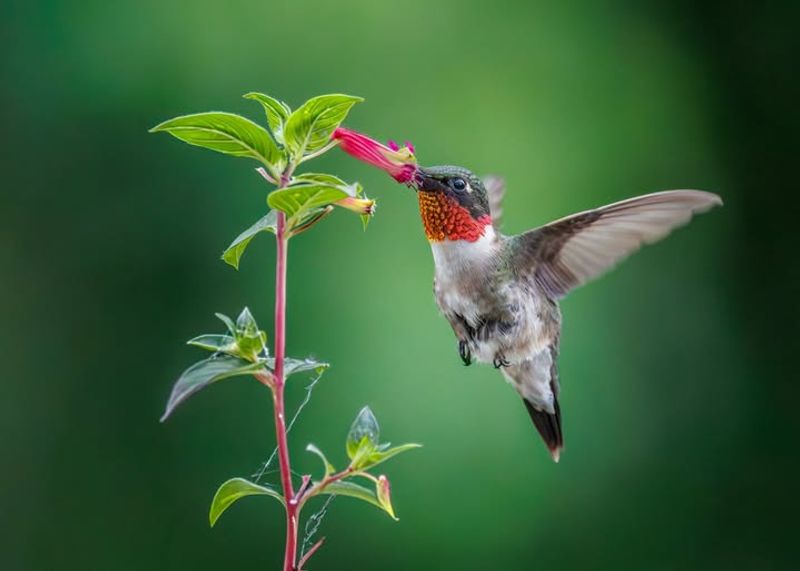
Few moments in a North Carolina spring feel as thrilling as the first Ruby-throated Hummingbird zipping into your backyard after a long winter away.
These tiny, jewel-like birds spend the winter in Central America and Mexico, then make an incredible journey north each spring, crossing the Gulf of Mexico in a single nonstop flight that can cover up to 500 miles.
Most Ruby-throated Hummingbirds begin arriving in North Carolina between early and mid-April, with numbers building steadily through the month.
Males typically arrive a week or two before females, scouting out food sources and establishing feeding territories. The males are easy to identify by their iridescent green backs and the brilliant ruby-red throat patch that flashes like a gemstone in direct sunlight.
Females are slightly larger with white-tipped tail feathers and a plain white throat. Both sexes feed heavily on nectar from tubular flowers and also catch small insects for protein, which is essential during breeding season.
Getting your feeders ready by late March gives early arrivals an immediate food source after their long migration. Use a simple solution of four parts water to one part plain white sugar, and skip the red dye entirely since it is unnecessary and potentially harmful.
Native plants like coral honeysuckle, cardinal flower, and trumpet creeper are outstanding natural food sources that hummingbirds absolutely love. Hanging a feeder near a window means you can watch these astonishing little birds up close all season long.