Beat The Drought With These 7 Long-Blooming California Perennials
California gardeners know the drill: long dry spells, blazing sun, and water restrictions that make every drop count. The good news?
You can still have a yard bursting with color without cranking up the sprinklers. The secret lies in choosing tough, long blooming perennials that thrive in drought conditions and keep the show going for months.
These resilient plants are built for California’s climate, handling heat with ease while delivering vibrant flowers that attract bees, butterflies, and admiring neighbors.
Once established, they ask for far less water than thirsty annuals and reward you with reliable, season after season beauty.
If you are ready to swap out high maintenance plants for hardworking bloomers that shine through dry weather, you are about to discover some true garden champions that prove water wise can still be absolutely stunning.
1. Blanket Flower (Gaillardia)
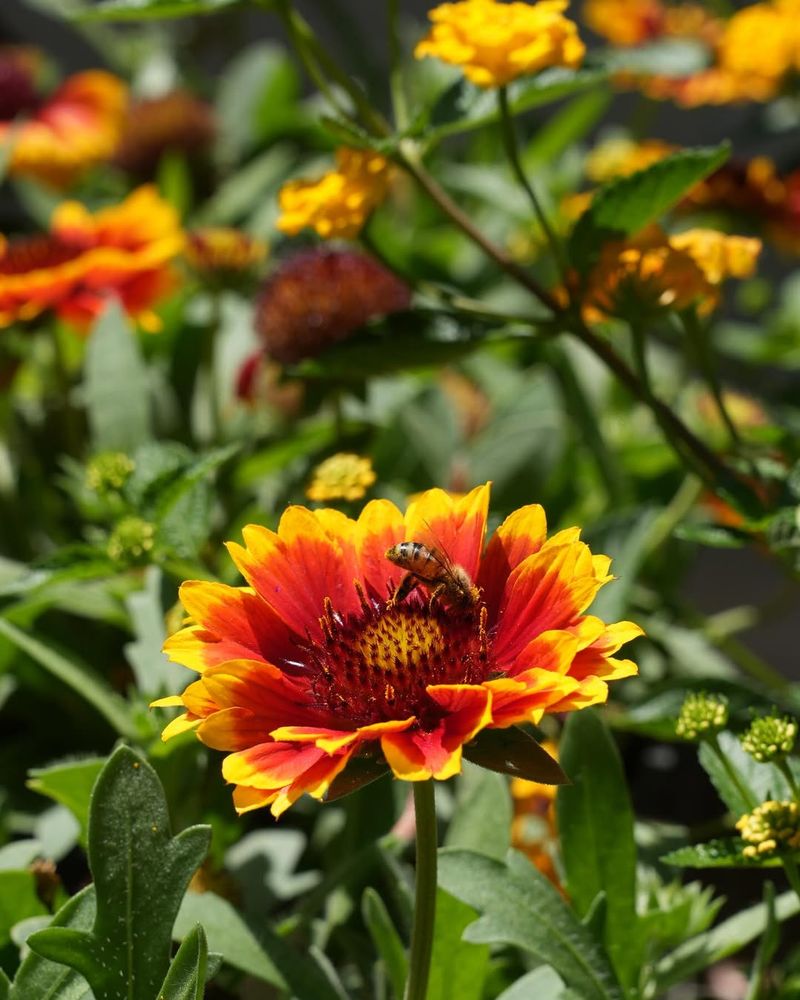
Imagine a flower that looks like a tiny sunset right in your backyard. That is exactly what Blanket Flower brings to any California garden.
Its bold red and yellow petals radiate outward from a rich burgundy center, creating a display that grabs attention from the moment it opens.
Gaillardia is one of the toughest perennials you can plant in California. It handles heat, poor soil, and long dry spells without missing a beat.
Once it gets settled in, it practically takes care of itself. You can water it lightly and still get blooms from late spring all the way through fall.
Gardeners across California love this plant because it attracts butterflies and bees while requiring almost no fuss. Plant it in full sun and make sure the soil drains well.
Sandy or rocky soil actually works great for this plant. Avoid overwatering because too much moisture can cause root issues.
Deadhead spent blooms regularly to keep new flowers coming all season. It grows about two feet tall, making it a great mid-border choice.
Blanket Flower is a must-have for anyone building a low-water California garden.
2. Coreopsis (Tickseed)
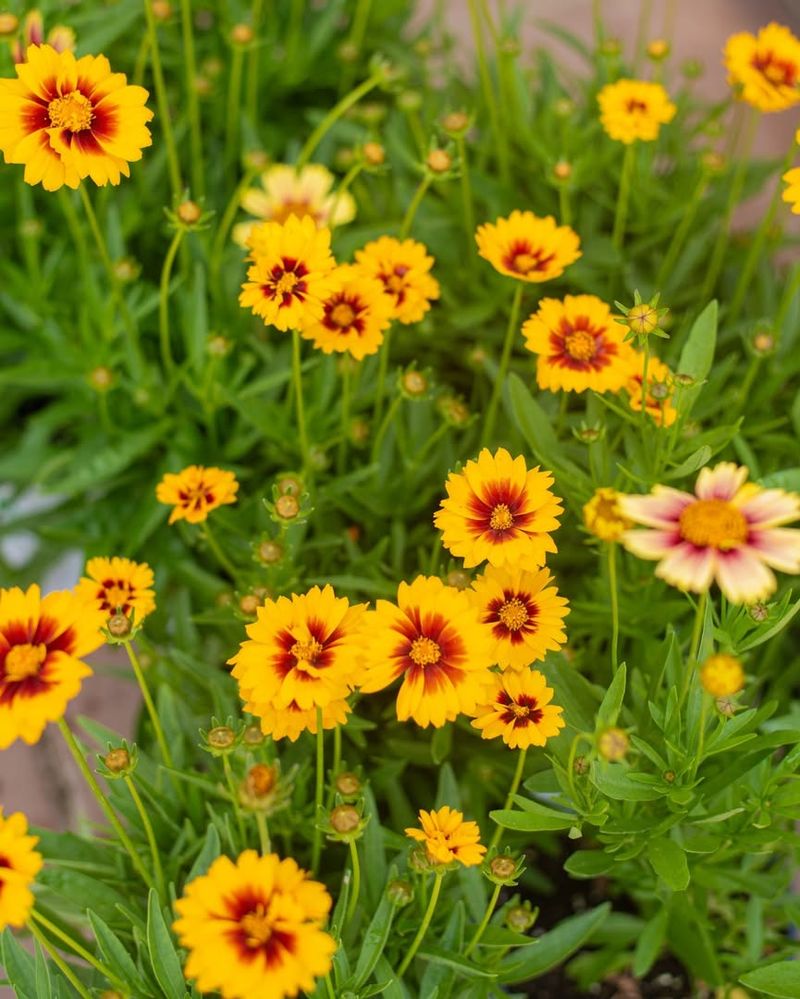
Few plants deliver as much cheerful color for as little effort as Coreopsis. Known as Tickseed, this perennial bursts into bright yellow blooms that light up California gardens from spring through fall.
It is the kind of plant that makes neighbors stop and ask what you are growing.
Coreopsis is a true survivor in California’s dry climate. It thrives in full sun and sandy or loamy soil with excellent drainage.
Once established, it needs very little water, making it a smart choice for water-conscious gardeners across the state. You can cut it back lightly mid-season to encourage a fresh round of blooms.
Beyond its good looks, Coreopsis is a magnet for pollinators. Bees and butterflies visit constantly throughout the blooming season.
It grows about one to two feet tall, so it works beautifully at the front of a garden bed or along a pathway. Some varieties even come in shades of pink, orange, and red, giving you plenty of options.
In California, where water-wise landscaping is becoming more popular every year, Coreopsis earns its place as one of the most reliable and rewarding perennials you can grow.
3. Rockrose (Cistus)
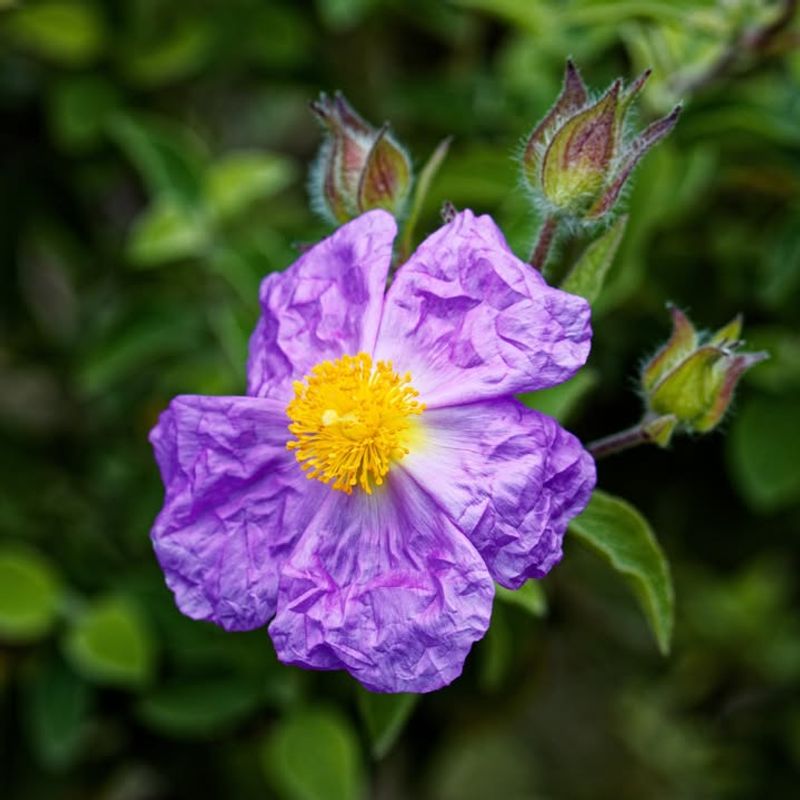
There is something almost magical about a plant that blooms more beautifully the harder life gets. Rockrose is exactly that kind of plant.
Native to the Mediterranean, Cistus has found a true home in California’s dry, sun-soaked landscapes where other plants struggle to survive.
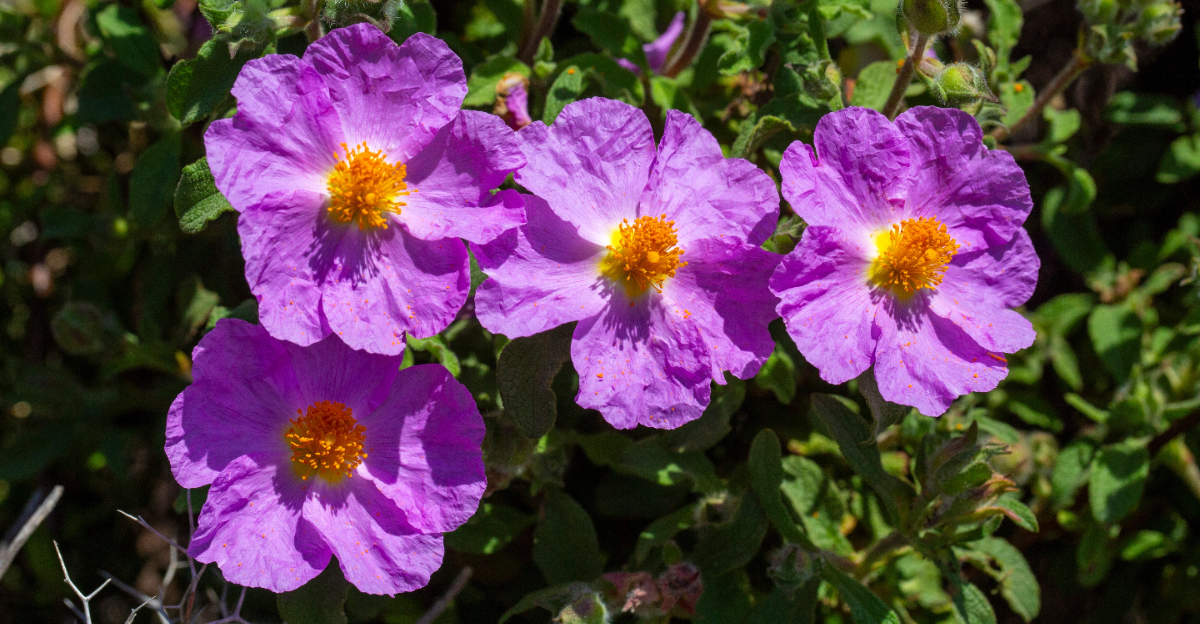
Rockrose produces papery, rose-like flowers in shades of white, pink, and purple. Each bloom only lasts a day, but the plant produces so many flowers that it stays covered in color for weeks.
It blooms heavily in spring and early summer, and in mild California coastal areas, it can push out flowers even longer.
This shrubby perennial is incredibly tough. It handles poor, rocky soil and blazing heat without complaint.
Once established, Rockrose barely needs any irrigation at all. It also has a natural resistance to fire, which makes it a popular choice for California hillsides and slopes.
Plant it in a sunny spot with well-drained soil and give it room to spread, since it can grow three to five feet wide. Avoid heavy pruning and skip the fertilizer because too much nutrition actually reduces blooming.
Rockrose is low-maintenance landscaping at its most beautiful.
4. Seaside Daisy (Erigeron glaucus)
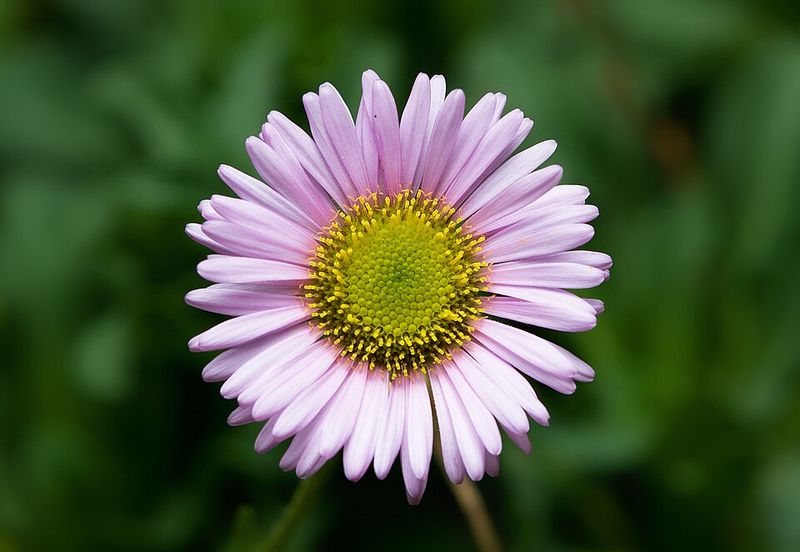
Walk along almost any California coastal garden and you are likely to spot the cheerful lavender blooms of Seaside Daisy. Erigeron glaucus is a California native that has been brightening up gardens for generations.
It is low-growing, spreading, and almost always in bloom from spring through fall.
What makes this plant so special is its ability to thrive in tough coastal conditions. It handles salt air, wind, sandy soil, and drought without slowing down.
Inland California gardeners also grow it successfully in well-drained spots with full to partial sun. It is a wonderfully adaptable little plant that earns its keep in many different settings.
Seaside Daisy grows only about six to twelve inches tall, making it perfect as a ground cover or border plant. It spreads slowly and fills in gaps beautifully between larger perennials.
The flowers are a soft purple with bright yellow centers, and they attract all kinds of pollinators. Water it occasionally during the first season to help it get established, then cut back watering significantly.
Light trimming after the main bloom flush keeps it tidy and encourages more flowers. For California gardeners who want a native, low-water option with serious charm, Seaside Daisy is hard to beat.
5. Red Hot Poker (Kniphofia)
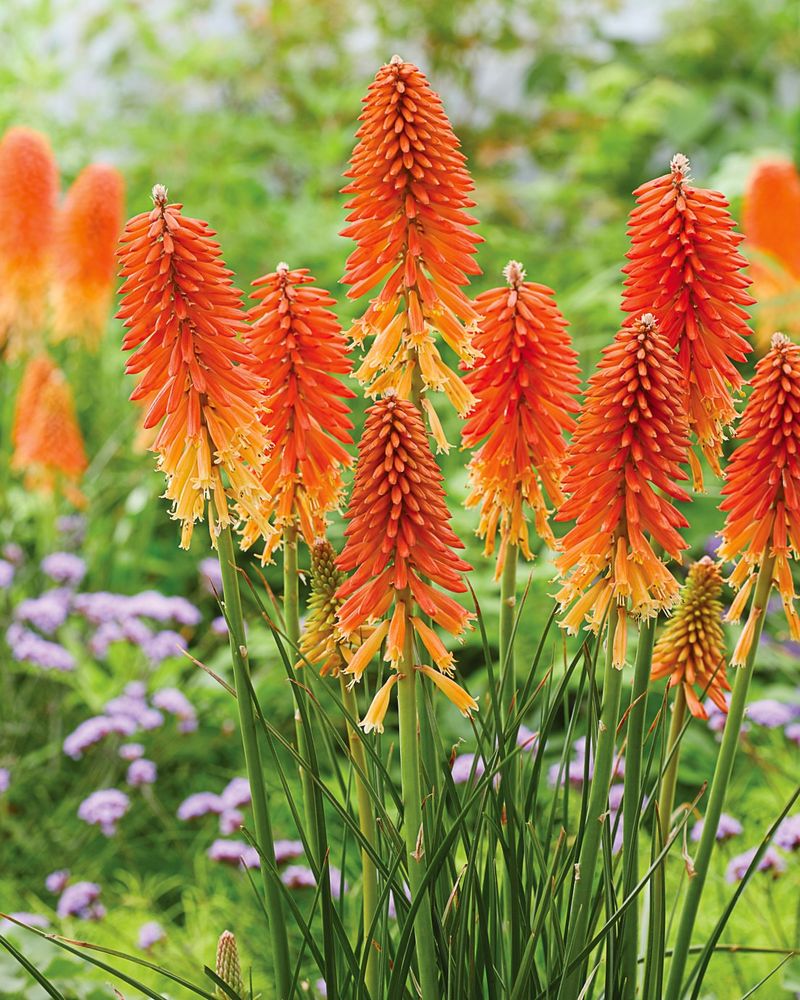
If your garden needs a showstopper, look no further. Red Hot Poker earns every bit of its dramatic name with towering spikes of fiery orange, red, and yellow flowers that shoot up like living torches.
Hummingbirds absolutely love them, and once you see one in bloom, it is hard not to want a whole row of them.
Kniphofia originates from South Africa, where dry summers and rocky soils are the norm. That background makes it a natural fit for California gardens.
It handles heat and drought remarkably well once established. Plant it in full sun with fast-draining soil, and it will reward you with blooms from late spring through summer and sometimes into fall.
Red Hot Poker grows two to four feet tall, so it makes a bold vertical statement in the middle or back of a garden bed. It looks stunning planted in groups of three or more.
The strappy, grass-like foliage stays attractive even when the plant is not flowering. Minimal watering is needed after the first year.
Remove old flower stalks to keep the plant looking tidy and to encourage new blooms. In California’s warm, dry climate, this perennial thrives with very little effort and delivers maximum visual impact every single season.
6. Cleveland Sage (Salvia clevelandii)
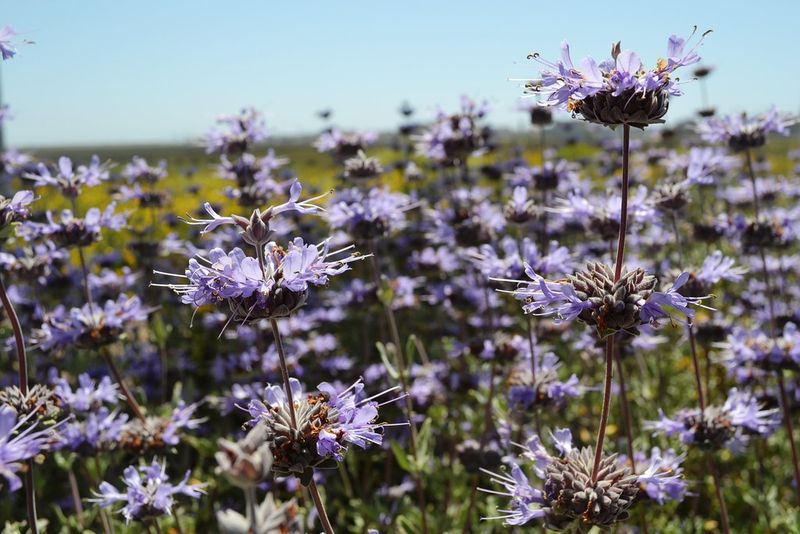
Step near a Cleveland Sage on a warm afternoon and you will understand immediately why California gardeners are obsessed with it. The scent alone is worth growing it.
This Southern California native releases a rich, spicy fragrance that fills the air and signals to every bee and butterfly in the neighborhood that something wonderful is blooming nearby.
Salvia clevelandii produces tall whorls of violet-blue flowers on upright stems from late spring into summer. The blooms are stunning against the silvery-gray foliage, creating a cool, natural color palette that looks right at home in California’s dry landscape.
It grows three to five feet tall and wide, making it a solid anchor plant for a native or drought-tolerant garden design.
Once established, Cleveland Sage is remarkably tough. It thrives in full sun, poor soil, and very little water.
Overwatering is actually one of the few things that can cause problems for this plant, so hold back on the hose. Prune it lightly after blooming to keep it compact and encourage fresh growth.
It pairs beautifully with other California natives like buckwheat and manzanita. For gardeners in Southern California and beyond who want fragrance, beauty, and serious water savings, Cleveland Sage is an absolute must-plant.
7. Blackfoot Daisy (Melampodium leucanthum)
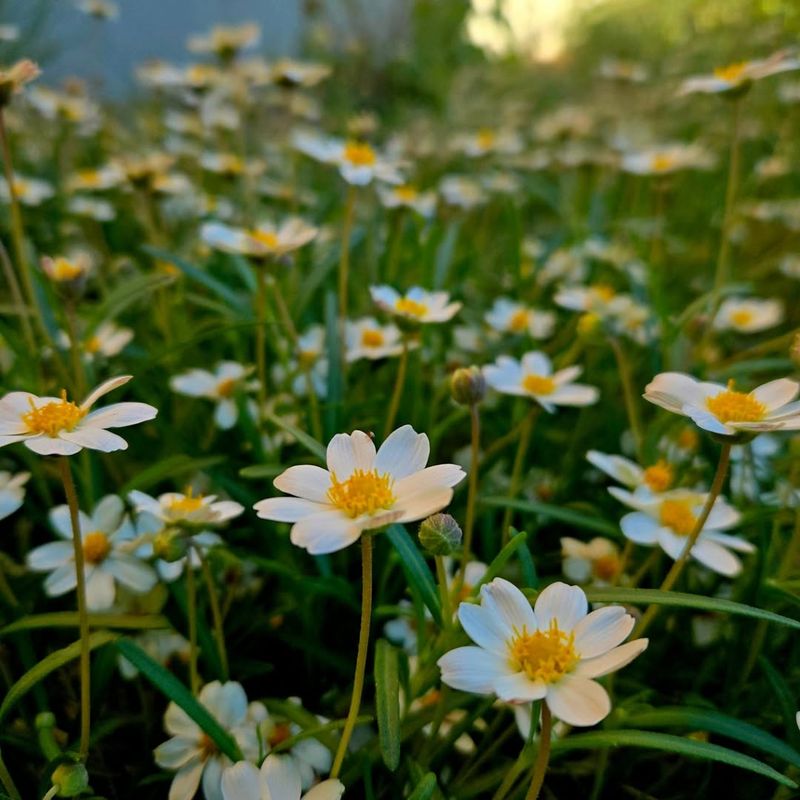
Small but mighty is the best way to describe Blackfoot Daisy. This compact little perennial punches way above its weight, producing a non-stop parade of cheerful white flowers with golden yellow centers from early spring all the way through fall.
In mild California winters, it sometimes blooms year-round.
Melampodium leucanthum is native to the American Southwest and northern Mexico, so it was practically built for California’s hot, dry summers. It loves full sun and well-drained soil.
Once it gets settled in after the first season, it needs very little supplemental water. That makes it a fantastic choice for water-wise landscaping projects across California.
Blackfoot Daisy stays low and mounded, reaching about one foot tall and one to two feet wide. It works wonderfully as an edging plant, in rock gardens, or tucked into gaps between stepping stones.
The honey-scented blooms attract bees and butterflies throughout the long blooming season. No deadheading is required, which makes it even easier to maintain.
Give it a light trim in late winter to keep the mound looking tidy and to encourage vigorous spring growth. For California gardeners searching for a no-fuss, high-reward perennial, Blackfoot Daisy delivers season after season with almost zero effort required.