Beautiful But Dangerous Vining Plants South Carolina Gardeners Should Avoid
Some vines are all charm and no mercy. They climb fast, spread quietly, and turn from pretty to problematic before most gardeners realize what is happening.
In South Carolina, a vine that looks harmless on a fence or arbor can quickly smother shrubs, creep into trees, crowd out native plants, and leave you with a mess that is far harder to remove than it was to plant.
That is what makes them so deceptive. Many of the worst offenders are genuinely beautiful at first glance, with glossy leaves, colorful berries, or flowers that seem made for a cottage garden.
But behind that good looks can be aggressive growth, damage to local habitats, and in some cases, irritation or harm if you handle them carelessly.
Knowing which vines to avoid is not just about saving yourself work later. It is about protecting your yard, your surrounding landscape, and the plants and wildlife that actually belong there.
1. Kudzu
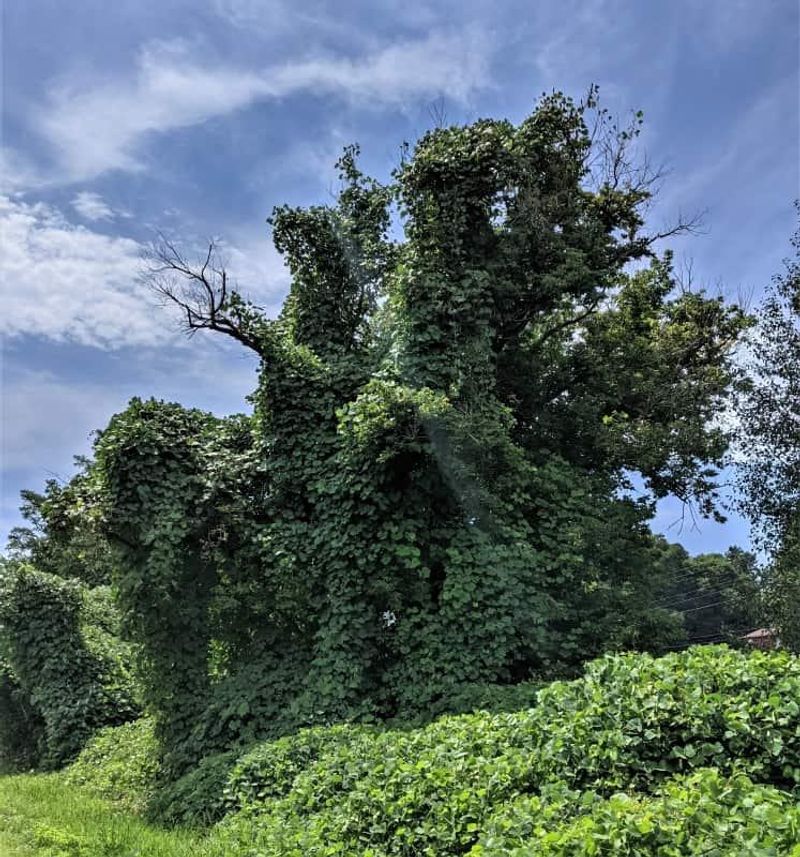
Once called “the vine that ate the South,” kudzu is one of the most aggressive plants you will ever encounter.
Originally introduced from Japan in the late 1800s as an ornamental plant and later promoted for erosion control, it quickly escaped cultivation and became a full-scale ecological problem across the Southeast.
Kudzu grows at an astonishing pace, often reaching up to a foot per day during peak summer conditions. It climbs over anything in its path, trees, fences, power lines, and even buildings, forming thick, heavy blankets of foliage that block out sunlight completely.
Native plants trapped underneath are slowly starved of light and eventually die, leaving entire areas overtaken by a single species.
In South Carolina, it is not uncommon for homeowners to see trees, sheds, or entire sections of their yard swallowed almost overnight.
What starts as a small, manageable patch can quickly turn into a sprawling mass that is extremely difficult to control once established.
Removing kudzu is a long-term commitment. It typically requires repeated cutting, targeted herbicide applications, and consistent monitoring over several growing seasons to fully exhaust the root system.
Simply cutting the vines at the surface will not solve the problem, as the plant resprouts aggressively from deep roots.
If you catch it early, you have a much better chance of success. Young vines can be pulled by hand, especially when the soil is moist, allowing more of the root system to come out.
Acting quickly is key, because with kudzu, waiting even a little too long can turn a small issue into a full-blown takeover.
2. Oriental Bittersweet
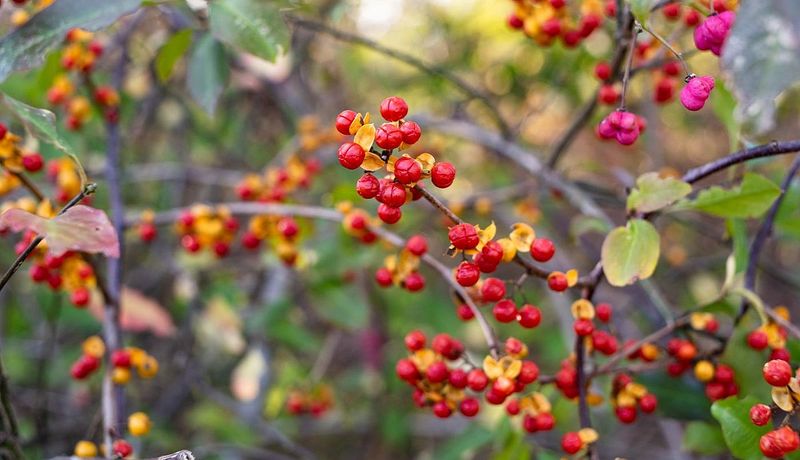
At first glance, Oriental bittersweet looks like something pulled straight from a fall catalog. Its bright orange and red berries are eye-catching and almost feel made for decoration.
That visual appeal is exactly what makes it so deceptive, because behind the beauty is one of the most aggressive invasive vines you can introduce into your landscape.
The real problem begins once birds get involved. They are drawn to the berries, eat them, and then spread the seeds far beyond the original planting area.
What starts as a small, contained vine can quickly turn into a widespread infestation in just a few growing seasons. The vine climbs aggressively, wrapping tightly around tree trunks and branches, eventually girdling them and disrupting the flow of water and nutrients.
Over time, this can weaken or even kill mature trees.
Part of what makes Oriental bittersweet especially tricky is how easily it is confused with the native American bittersweet, which is far less aggressive and much safer to grow. The key difference is in the berries.
Oriental bittersweet produces fruit all along the stem, while the native species only forms berries at the tips of the branches.
Getting rid of it requires persistence and thorough removal. The root system can be large, woody, and deeply embedded, so digging it out completely is essential.
Simply cutting the vine back will not stop it from returning. It is also important not to compost any part of the plant, as cut vines can re-root if left on moist soil.
Catching Oriental bittersweet early makes all the difference. The longer it is allowed to grow, the more established it becomes, and the harder it is to fully remove from your garden.
3. Japanese Honeysuckle
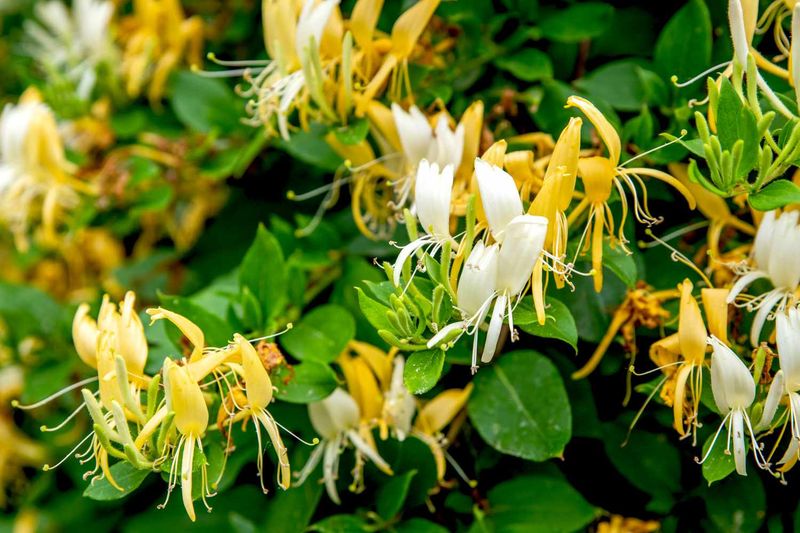
Few plants smell as wonderful as Japanese honeysuckle in full bloom. That is exactly why so many gardeners let it stick around far longer than they should.
That sweet fragrance is practically irresistible, but behind it hides a vine that can seriously damage your landscape over time.
Japanese honeysuckle grows fast and thick, climbing over shrubs and small trees and pulling them down under its weight. It leafs out earlier in spring and holds its leaves later into fall than most native plants, giving it a major competitive edge in the garden.
Wildlife does use it for cover and food to some degree, but the plant crowds out native species that local pollinators and birds depend on much more heavily.
Replacing it with native coral honeysuckle is a fantastic swap since that plant offers the same climbing habit with gorgeous red tubular flowers that hummingbirds absolutely love.
Cutting Japanese honeysuckle back repeatedly weakens it over time, but full removal requires treating the cut stems with an appropriate herbicide to prevent vigorous resprouting from the roots.
4. English Ivy
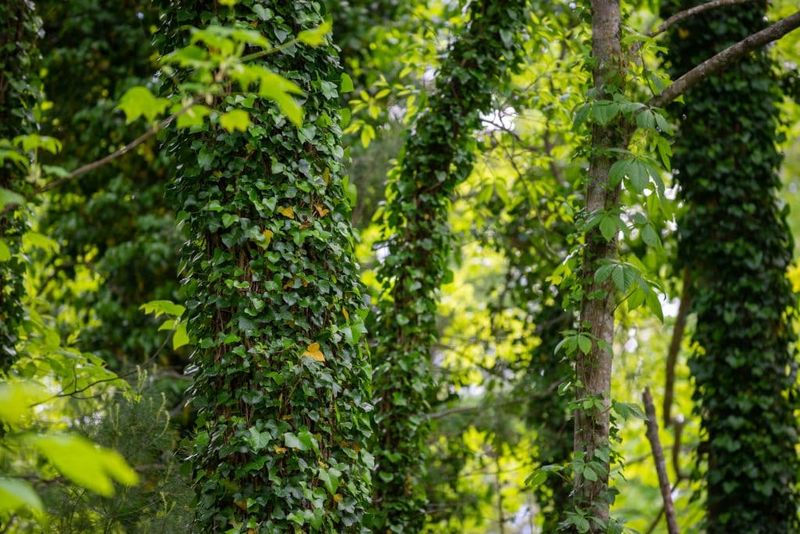
English ivy looks polished and elegant creeping along the ground or climbing a brick wall. For decades it was the go-to choice for low-maintenance ground cover.
Turns out, that tidiness comes at a steep cost to the surrounding environment.
When English ivy climbs trees, it adds enormous weight to the canopy and makes trees far more vulnerable to storm damage.
It also creates what experts call “ivy deserts,” dense mats where no other plants can grow and where native ground-nesting birds and insects lose critical habitat.
The berries are toxic to humans and pets, which adds another layer of concern for families with curious kids or dogs who love to explore the yard. Mature vines also produce a different leaf form and begin flowering, spreading seeds by bird activity across wide areas.
Removing English ivy is hard but very doable with consistent effort. Cut the vines at the base of trees and allow the upper portions to dry out before pulling them down so you do not damage the bark.
Replacing it with native ground covers like wild ginger or green-and-gold is a much smarter long-term choice.
5. Wisteria (Asian Species)
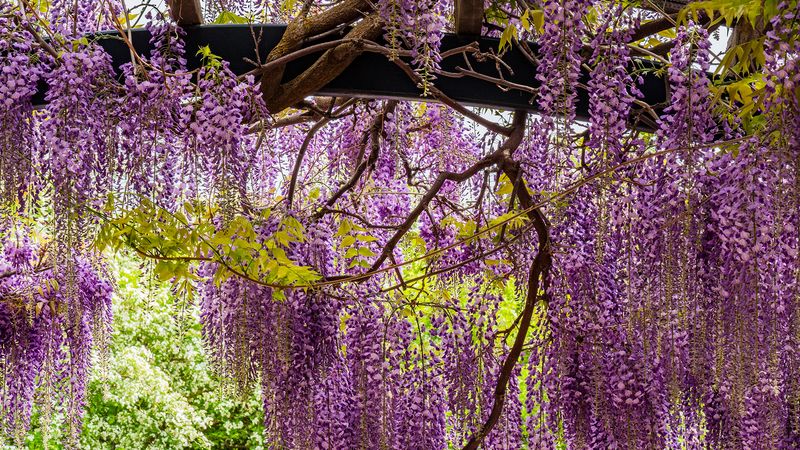
Purple cascading flowers, a heavenly fragrance, and a romantic cottage-garden look make Asian wisteria one of the most requested plants at nurseries every spring. The problem is that what you plant for beauty can easily become your garden’s biggest nightmare.
Chinese and Japanese wisteria grow with stunning speed, and their woody stems can eventually crack wooden structures, pull down gutters, and strangle mature trees with their powerful twisting grip.
A single plant left unmanaged for a few years can spread across an entire backyard. Native American wisteria is a wonderful alternative that offers similar beauty with far less aggressive behavior, and it actually blooms more reliably in many gardens.
If you already have Asian wisteria established, consistent and aggressive pruning twice a year can keep it somewhat in check, though full removal is the safest route.
Cutting the main stem and repeatedly treating the stump is necessary since these plants resprout with remarkable energy.
Many South Carolina gardeners have shared stories of removing what they thought was a small vine only to uncover a root system the size of a small car hiding just beneath the soil surface.
6. Porcelain Berry
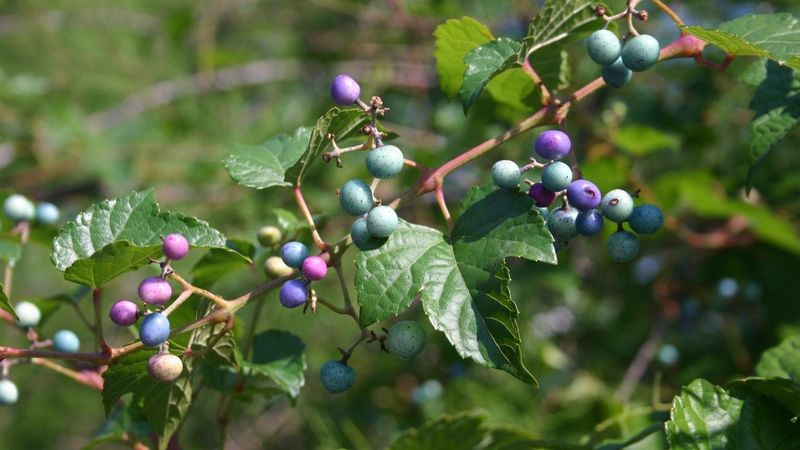
Porcelain berry might be the most visually stunning invasive vine on this entire list. That is exactly what makes it so dangerous to your garden.
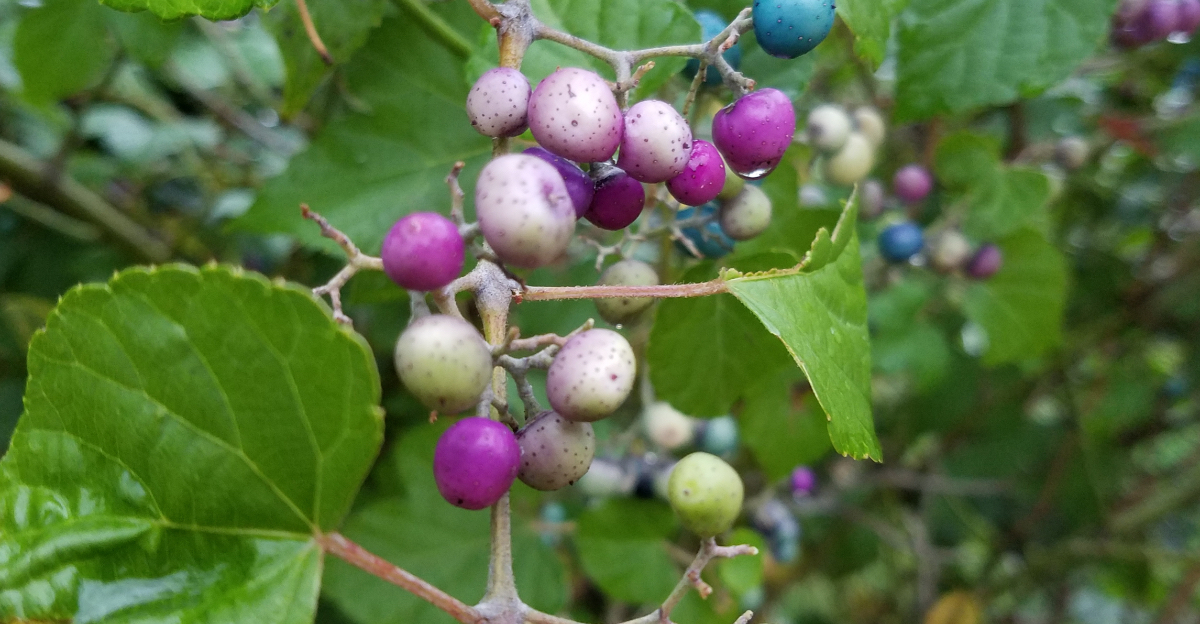
Those clusters of iridescent berries in shades of lavender, blue, teal, and purple look like tiny jewels hanging from every stem.
Birds go absolutely wild for those berries, which means seeds get scattered far and wide very quickly. The vine grows rapidly over shrubs and small trees, and because it looks so ornamental, many people mistake it for a desirable garden plant and let it grow unchecked.
Porcelain berry is closely related to native grapes, which makes identification a little tricky for beginners. The key difference is in the pith of the stem: porcelain berry has white pith while native grapes have brown pith.
Removing it involves cutting vines at the base and digging out as much of the root system as possible before the plant sets seed. Wearing gloves is a smart move since some people experience mild skin irritation from handling the stems and leaves.
Staying on top of seedlings each spring is the best way to prevent a major re-infestation after initial removal efforts.
7. Mile-A-Minute Weed
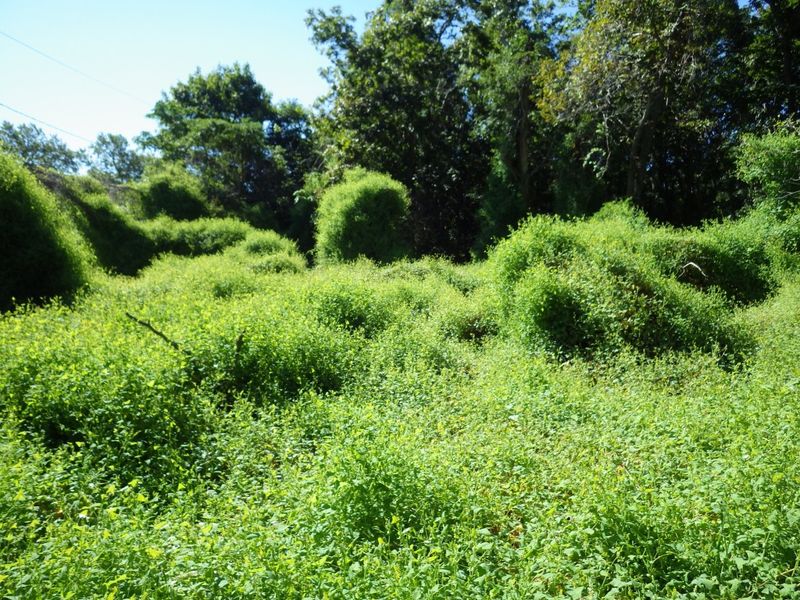
The name alone should tell you everything you need to know about this plant. Mile-a-minute weed earns its nickname honestly, growing at a pace that can genuinely feel like you are watching it move in real time during a hot, wet summer.
This annual vine from Asia uses tiny curved barbs along its stems and leaf edges to grab onto anything nearby, including your skin and clothing if you brush against it.
It forms dense mats over native vegetation remarkably fast, and its small blue berries are spread efficiently by birds throughout the growing season.
Unlike many invasive vines with deep stubborn roots, mile-a-minute is actually easier to manage because it is an annual plant that must regrow from seed each year. Hand-pulling young plants before they set seed is highly effective, especially after rain when the soil is soft.
The key is acting early in the season before the vines get large enough to produce berries. Wearing long sleeves and thick gloves protects your skin from those irritating barbs during removal.
Checking disturbed areas and woodland edges regularly through spring and early summer gives you the best chance of staying ahead of new growth.
8. Trumpet Vine (Invasive Spread)
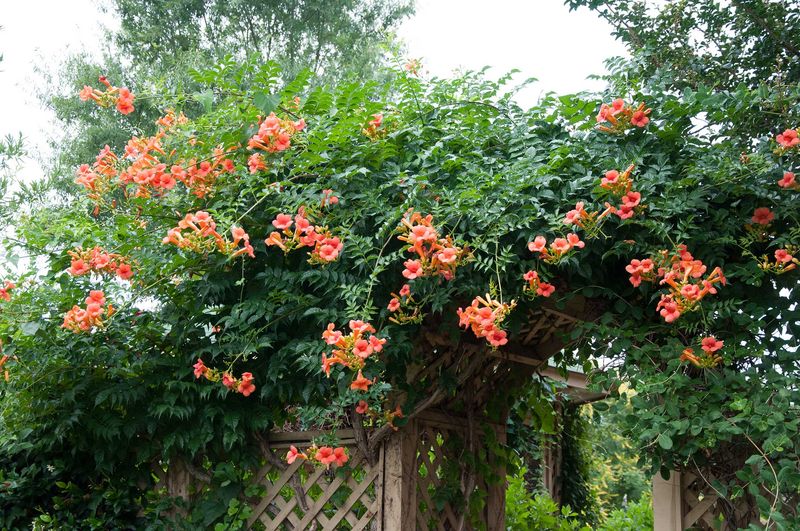
Hummingbirds love it, the flowers are jaw-droppingly beautiful, and it is native to the Eastern United States, so what could possibly go wrong? Quite a lot, actually, if you plant trumpet vine without understanding how aggressively it spreads.
Trumpet vine sends up suckers from its roots that can pop up several feet away from the main plant, invading lawn areas, neighboring garden beds, and even cracking through pavement over time.
Once established, the root system becomes incredibly difficult to fully remove without persistent effort over multiple seasons.
Some people also develop a skin rash from handling the plant, so wearing gloves whenever you prune or manage it is a must. Planting it in a container or against a structure where you can closely control its spread helps keep it manageable.
If you grow it in the ground, plan on doing regular root pruning around the base each spring to stop suckers from running wild.
Despite its native status, trumpet vine behaves invasively in garden settings and should always be planted with a clear management plan in place rather than simply left to do whatever it wants.
9. Air Potato Vine
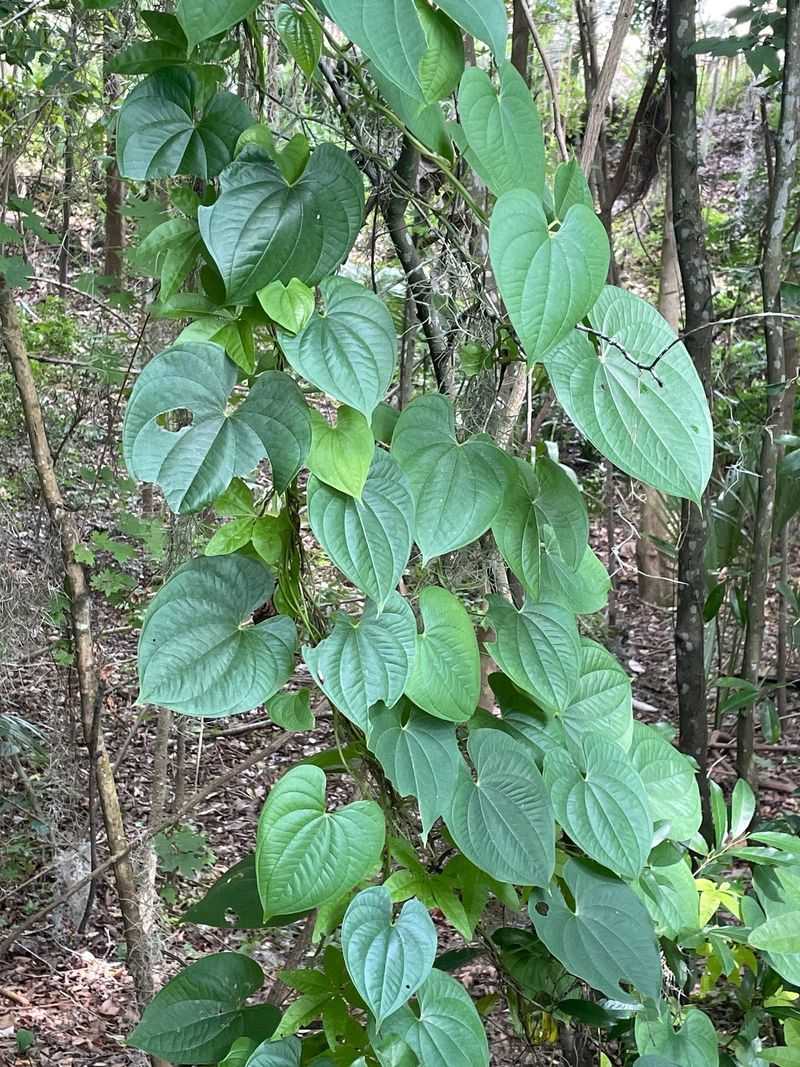
Air potato vine sounds almost whimsical, like something out of a fairy tale garden, but this fast-growing tropical invader is no joke once it gets established in warm climates.
It produces small potato-like bulbils all along its stems that drop to the ground and sprout into new plants with zero effort.
A single vine can produce hundreds of those bulbils in one season, which means the potential for rapid spread is enormous.
The large heart-shaped leaves create dense shade that smothers native plants underneath, and the vine can climb to the tops of tall trees with surprising ease.
Removing air potato requires collecting every single bulbil you can find since even tiny ones left behind will sprout the following season. This is genuinely tedious work, but skipping it means starting over from scratch the next year.
There is actually a biological control agent, a leaf-feeding beetle, that has been approved and released in some Southern states to help manage air potato populations.
Checking with your local extension office about available resources and management strategies is a smart first step if you find this vine on your property. Early action always beats playing catch-up later.