Beautiful DIY Terrarium Ideas Michigan Homeowners Are Trying
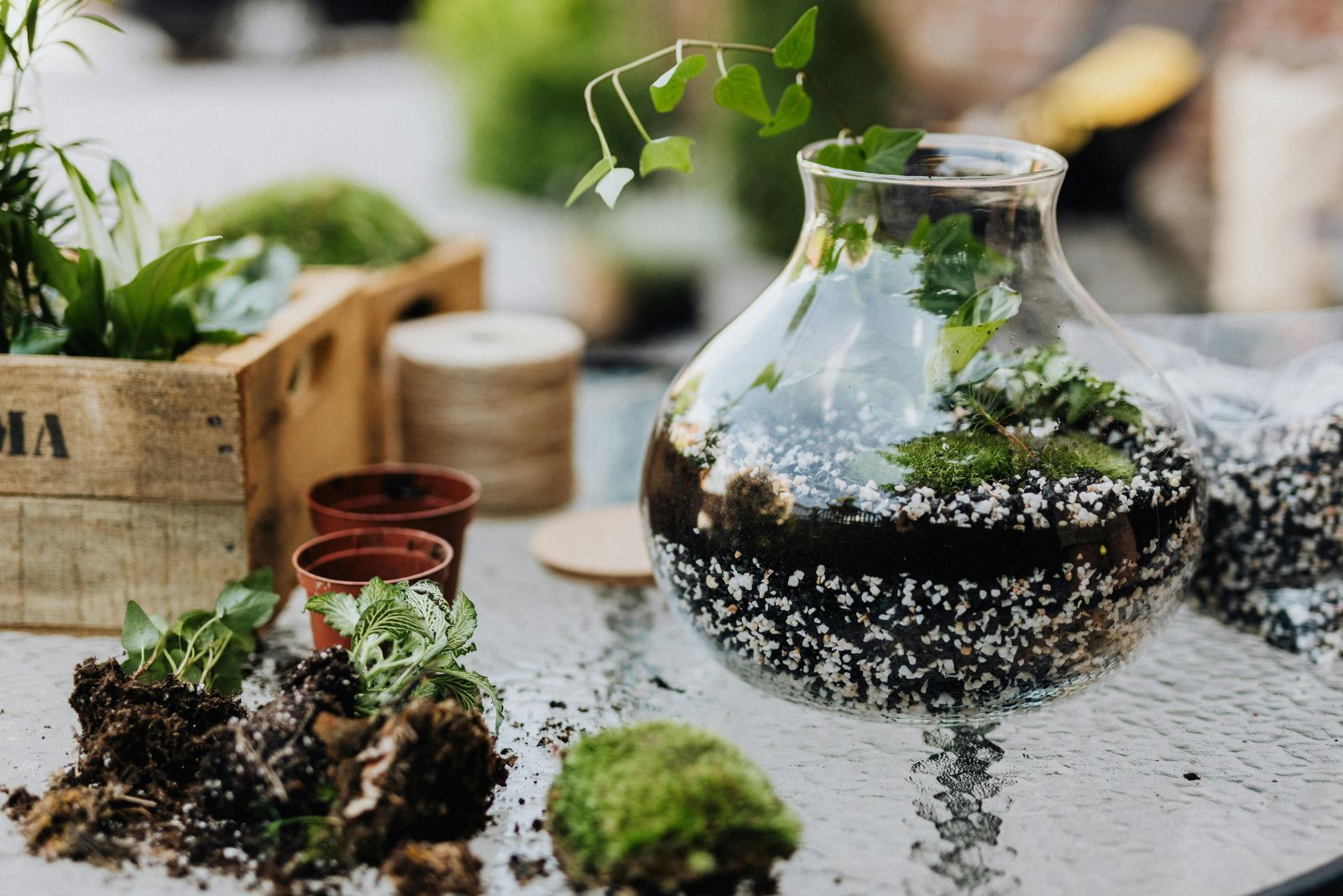
If you love plants but want something a little more creative than a regular pot on the windowsill, terrariums might be your new favorite project.
Michigan homeowners are turning simple glass containers into tiny living worlds that bring greenery indoors without taking up much space.
They are stylish, relaxing to make, and surprisingly easy to care for, which makes them perfect for long winters when outdoor gardening is on pause.
From lush mossy forests to modern minimalist designs, terrariums can match any home style while adding a fresh, natural touch.
Even better, most require very little maintenance once set up properly. Whether you want a fun weekend project, a unique gift idea, or a beautiful centerpiece for your table, these DIY terrarium ideas are full of inspiration.
Get ready to discover creative, eye-catching mini gardens Michigan homeowners are loving right now.
Mini Tropical Jungle
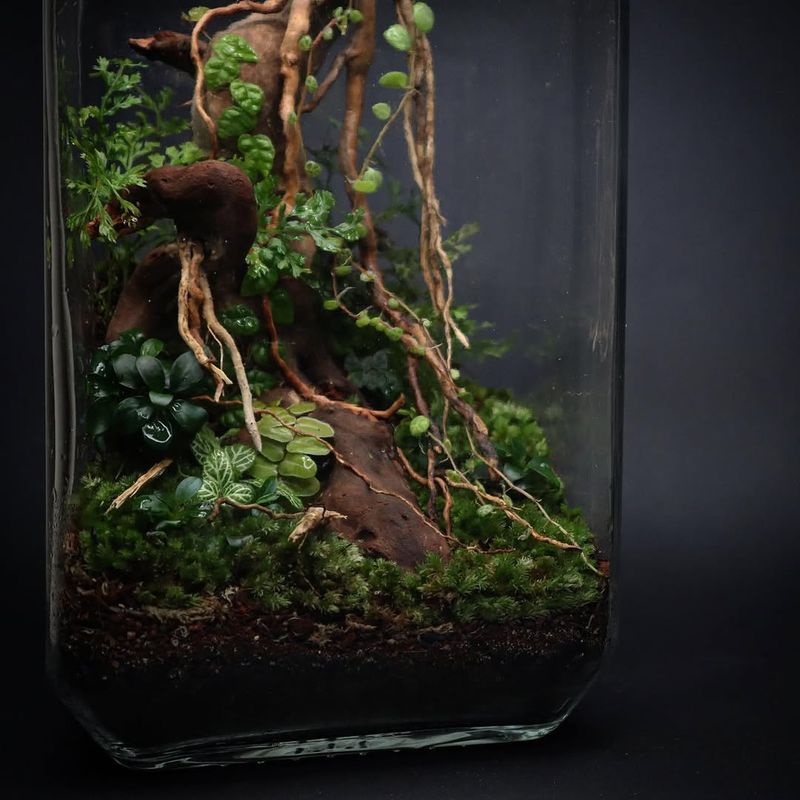
Creating your own slice of the tropics becomes surprisingly simple with the right plants and container. Ferns thrive in humid environments, making them perfect candidates for enclosed glass terrariums.
Layer your base with activated charcoal for drainage, add potting soil, then arrange your plants thoughtfully.
Michigan homes often have dry indoor air during winter months. This terrarium style actually benefits from that because the enclosed environment traps moisture naturally.
Mist your plants weekly and watch condensation form on the glass walls, creating a self-sustaining mini ecosystem.
Choose smaller varieties like button ferns or baby tears that won’t outgrow their space quickly. Add pieces of driftwood or decorative stones to create visual interest and height variation.
The key is balancing plant sizes so each species has room to breathe. Place your tropical jungle near indirect light, avoiding harsh afternoon sun that might overheat the container. North-facing windows work wonderfully in Michigan homes.
Within weeks, you’ll notice new growth as your plants settle into their humid paradise. This living decoration requires minimal maintenance once established. Simply trim any overgrown leaves and remove yellowing foliage promptly.
Your miniature rainforest will transport you to warmer climates even during January blizzards.
Succulent Terrarium
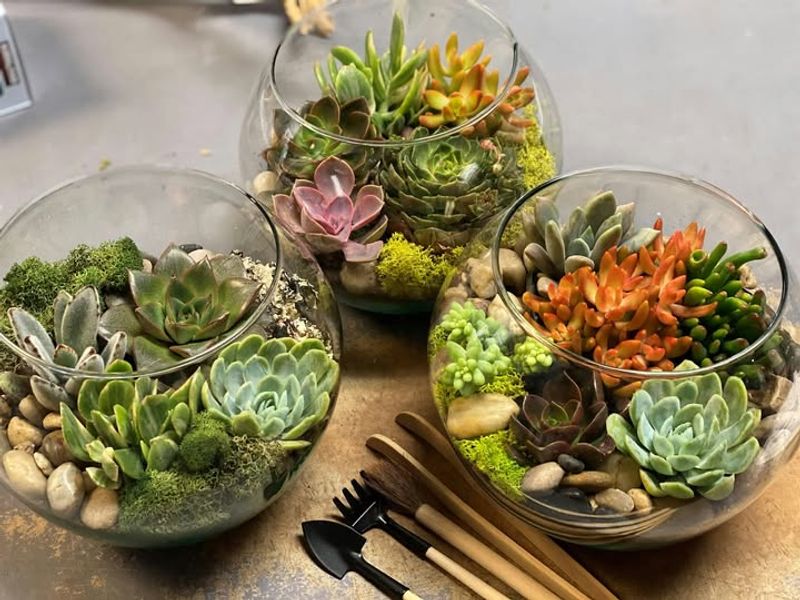
Succulents offer an entirely different approach to terrarium gardening that suits busy lifestyles perfectly. These drought-tolerant plants store water in their thick leaves, requiring far less attention than tropical varieties.
Mix different colors and textures for visual appeal, from blue-green echeveria to spiky aloe.
Open containers work best for succulent terrariums since these plants prefer good air circulation. Layer sand and gravel at the bottom for excellent drainage, preventing root rot that commonly affects overwatered succulents.
Add a cactus-specific soil mix on top for optimal growing conditions.
Michigan winters provide plenty of bright indoor light through south-facing windows, which succulents absolutely love. Position your terrarium where it receives at least six hours of sunlight daily.
The low humidity inside heated homes actually mimics their natural desert environment perfectly.
Water sparingly, perhaps once every two to three weeks during winter months. Test the soil with your finger first, only watering when completely dry.
This hands-off approach makes succulent terrariums ideal for beginners or anyone with a packed schedule.
Experiment with different container shapes like geometric glass boxes or vintage fish bowls. Add decorative elements such as polished stones or tiny ceramic animals.
Your low-maintenance desert garden will brighten rooms throughout the coldest months without demanding constant care.
Fairy Garden Terrarium
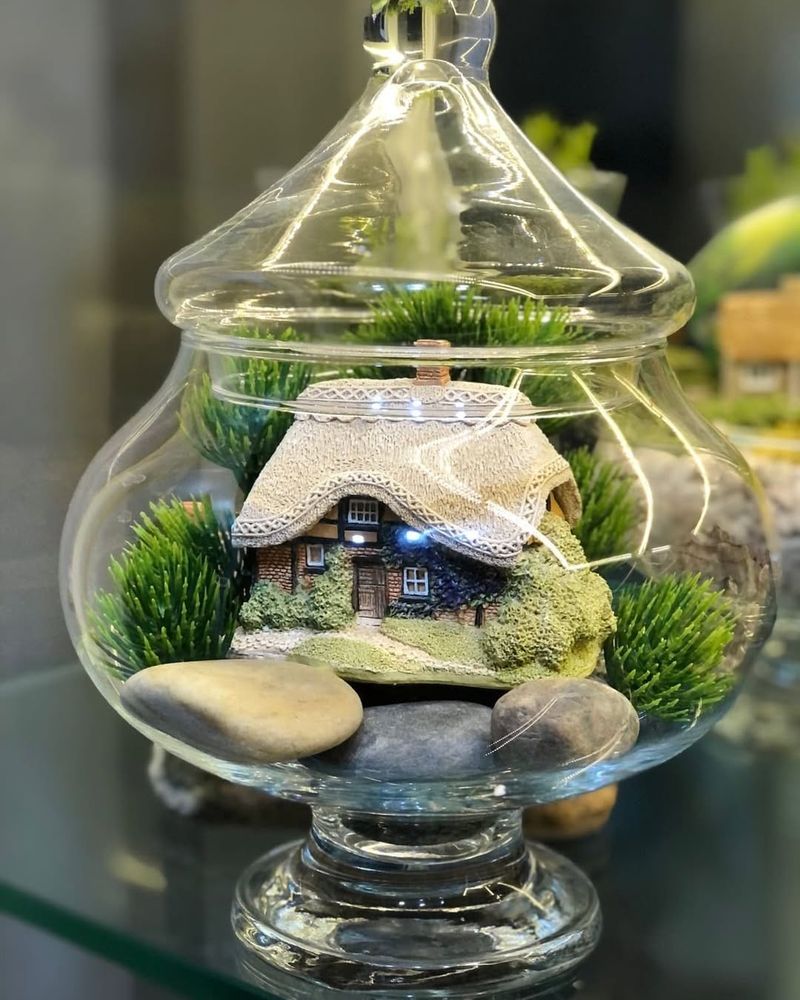
Whimsy meets gardening in these enchanting miniature worlds that spark imagination at any age. Start with a wide-mouthed container that allows easy access for arranging tiny accessories and plants.
Moss creates the perfect soft carpet for your fairy village, while small ferns add woodland charm.
Michigan craft stores stock adorable miniature accessories year-round, from tiny bridges to microscopic garden tools. Choose figurines and decorations that tell a story, perhaps a fairy reading under a mushroom or tending a miniature vegetable patch.
Let creativity guide your design rather than following strict rules. Children especially enjoy helping create and maintain these magical gardens. They learn plant care responsibility while exercising their storytelling abilities.
Position small LED lights inside for evening ambiance, transforming your terrarium into a glowing fairy realm after sunset.
Balance decorative elements with living plants so neither overwhelms the other. Too many accessories crowd the space, while too few make it feel empty.
Aim for a natural look where fairies might actually choose to live.
Rotate seasonal decorations throughout the year to keep your fairy garden fresh and interesting. Add tiny pumpkins in autumn or miniature snowmen in winter.
This interactive terrarium becomes a conversation piece that evolves with your imagination, bringing smiles during Michigan’s longest seasons.
Air Plant Display
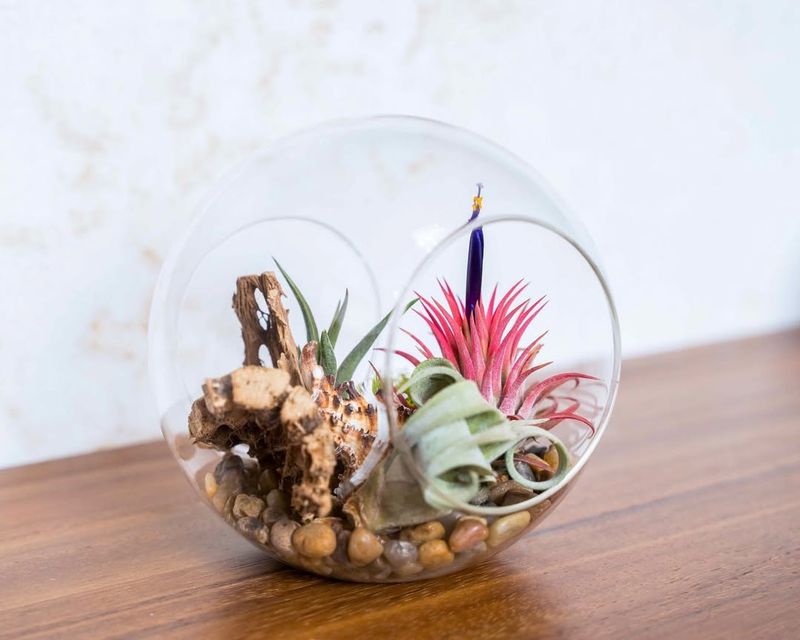
Air plants revolutionize terrarium gardening by eliminating soil entirely from the equation. These fascinating Tillandsia species absorb water and nutrients through their leaves, anchoring themselves to rocks, driftwood, or decorative holders.
Their alien-like appearance adds modern sculptural interest to any room.
Open glass containers or hanging holders showcase air plants beautifully while providing essential air circulation. Arrange several varieties together for textural contrast, mixing spiky varieties with softer, curling species.
Driftwood pieces collected from Michigan beaches make perfect natural mounting surfaces.
Care routines differ dramatically from traditional terrariums. Simply remove plants weekly and soak them in room-temperature water for twenty to thirty minutes.
Shake off excess moisture and return them to their display. This simple ritual keeps them healthy and vibrant.
Michigan’s indoor heating can dry air plants faster than in humid climates. Mist them between soakings if leaves start curling inward, a sign of dehydration.
Bright indirect light near east or west windows provides ideal growing conditions without scorching delicate leaves.
Air plants occasionally bloom with colorful flower spikes, rewarding attentive care with unexpected beauty. After flowering, they produce small offspring called pups that eventually grow into full-sized plants.
Your collection naturally expands over time, providing extras to share with friends or create additional displays throughout your home.
Moss And Woodland Scene
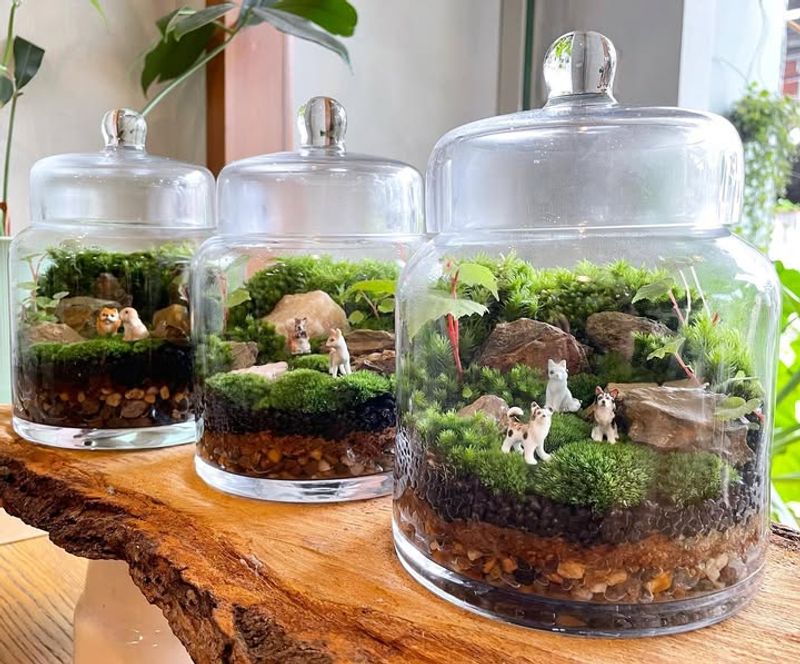
Capturing the essence of Michigan’s northern forests becomes possible through carefully arranged moss and woodland elements. Multiple moss varieties create depth and texture, from cushiony sheet moss to delicate hair cap moss.
Small ferns native to shaded areas complete the forest floor aesthetic.
Collect natural materials during autumn walks through local woods, gathering interesting bark pieces, tiny pinecones, and smooth stones. Always take only what has already fallen to protect living trees and plants.
These authentic touches make your terrarium feel genuinely connected to Michigan’s natural landscape.
Closed containers maintain the high humidity woodland plants crave, reducing maintenance significantly. Position your forest scene away from direct sunlight since these shade-loving species thrive in lower light conditions.
North-facing windows or interior shelves with ambient light work perfectly.
The beauty of woodland terrariums lies in their peaceful, natural appearance. Avoid symmetrical arrangements, instead placing elements randomly as they would fall in nature.
Tuck ferns partially behind bark pieces, let moss creep over stones organically.
This terrarium style connects you with Michigan’s outdoors even when snow blankets the ground. Watch as moss slowly spreads and ferns unfurl new fronds, creating a living diorama.
The calming green tones and natural textures provide a meditative focal point, bringing woodland serenity indoors throughout every season.
Herb Terrarium
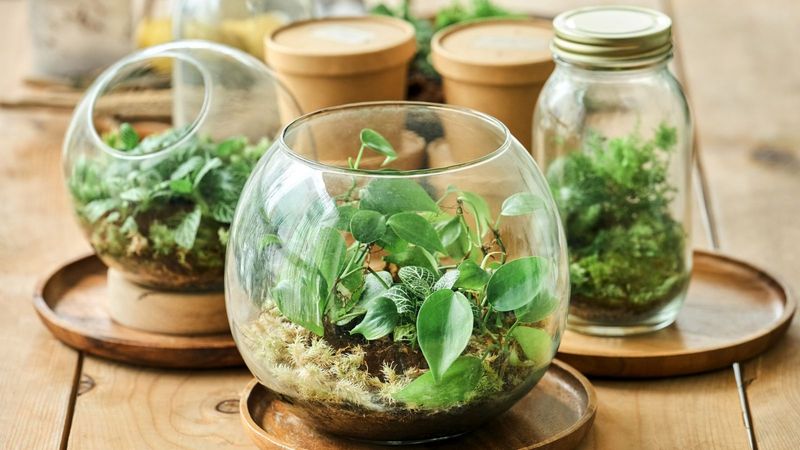
Combining beauty with functionality, herb terrariums provide fresh seasonings right from your kitchen windowsill. Choose compact varieties that won’t quickly outgrow their container, like dwarf basil, creeping thyme, or miniature oregano.
These culinary plants thrive in bright conditions Michigan winter windows provide.
Drainage becomes absolutely critical when growing edible plants indoors. Layer pebbles at the container bottom, add activated charcoal, then use quality potting soil mixed with perlite for aeration.
Excess moisture leads to root problems that ruin both plants and your cooking ingredients.
Open or partially open containers work better than fully sealed designs for herbs. Good air circulation prevents fungal issues while allowing you to easily snip fresh leaves for recipes.
Position your herb garden where it receives at least six hours of direct sunlight daily.
Water when the top inch of soil feels dry, typically every few days depending on your home’s humidity. Herbs prefer slightly drier conditions than tropical terrarium plants.
Rotate your container weekly so all sides receive equal light exposure, promoting even growth.
Fresh herbs elevate everyday cooking with minimal effort. Snip what you need just before adding to dishes for maximum flavor.
Your productive little garden saves money on store-bought herbs while reducing plastic packaging waste, making it both practical and environmentally friendly throughout Michigan’s long indoor season.
Zen Or Minimalist Terrarium
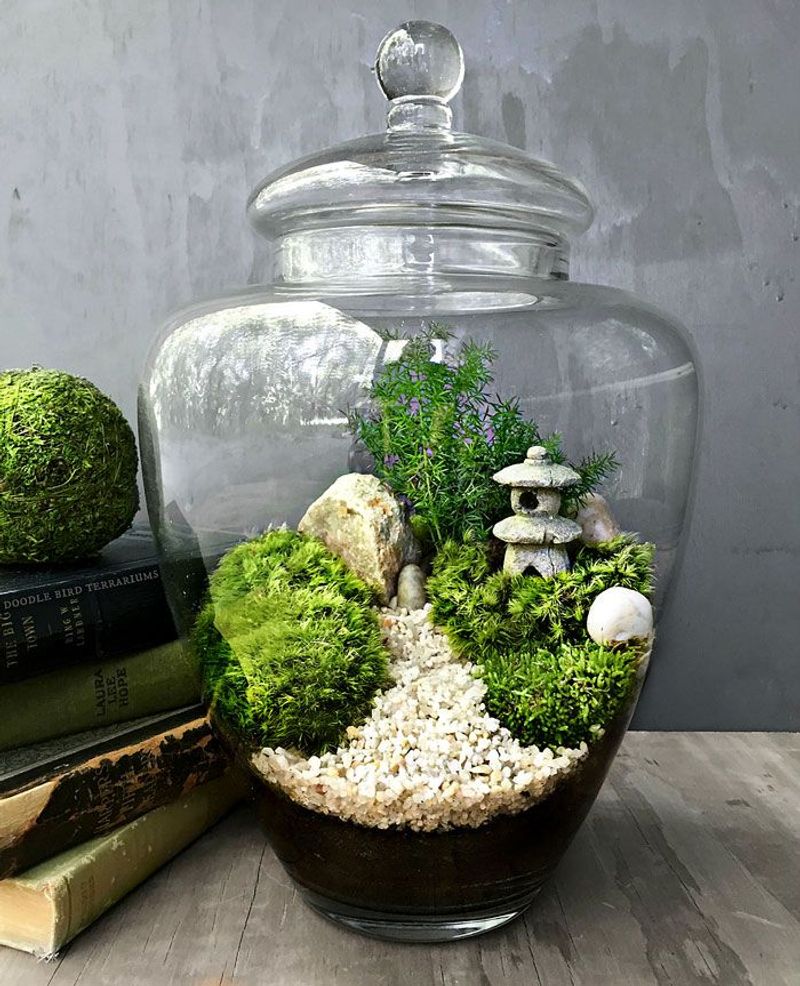
Simplicity speaks volumes in these elegant, pared-down designs that emphasize negative space and intentional placement. A single healthy plant becomes the star when surrounded by carefully chosen stones and sand.
This approach reflects Japanese garden principles adapted for tiny indoor spaces. Select containers with clean lines and clear glass that won’t distract from the minimalist composition. Geometric shapes like cubes or cylinders work beautifully.
White or light-colored sand creates a serene base, while smooth river rocks add organic texture without visual clutter.
Choose your single plant thoughtfully since it carries the entire design. A perfect succulent rosette, a sphere of vibrant moss, or a small air plant all make striking focal points.
Position it off-center following the rule of thirds for more dynamic visual interest. Michigan homeowners appreciate how these terrariums complement modern interior design trends. They fit seamlessly into minimalist spaces without adding visual noise.
Place them on desks, bedside tables, or floating shelves where their simple beauty can be appreciated up close.
Maintenance takes mere minutes since you’re caring for just one plant and keeping sand patterns neat. Occasionally rake the sand into gentle waves or concentric circles around stones for meditative variety.
This living art piece provides a calming focal point, encouraging mindful moments during busy days while requiring minimal commitment or space.
Water Or Semi-Aquatic Terrarium
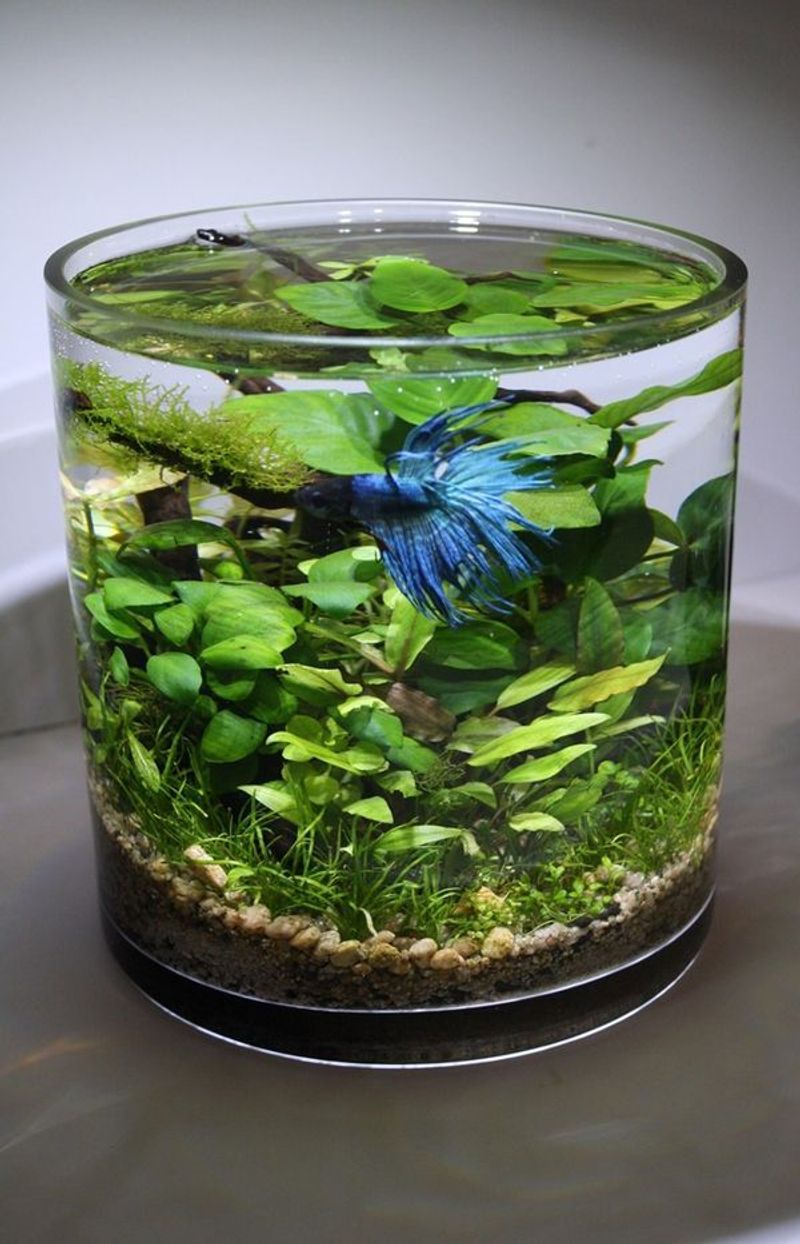
Blending aquarium and terrarium concepts creates fascinating displays that showcase both aquatic and terrestrial plants together. Use waterproof containers with enough depth for a shallow water section at the bottom.
Build up one side with rocks and soil to create a transitional beach area.
Dwarf aquatic plants like Anubias or Java moss thrive partially submerged, their roots underwater while leaves reach toward light. Add small ferns or moss on the raised sections for contrast.
This unique ecosystem demonstrates how different plant types coexist in wetland environments.
Water quality matters significantly in these setups. Change about one-third of the water weekly to prevent algae growth and maintain freshness.
Use dechlorinated water at room temperature to avoid shocking sensitive plant roots. A small aquarium air pump can add gentle water movement if desired.
Position your semi-aquatic terrarium where it receives bright indirect light but not harsh direct sun that encourages algae blooms. East-facing windows in Michigan homes provide ideal morning light without afternoon intensity.
The gentle sound of water adds another sensory dimension to your indoor garden.
These living water features bring unique beauty and tranquility to any room. Watch as aquatic plants grow beneath the surface while terrestrial varieties flourish above.
The interplay between water and land creates a dynamic, ever-changing display that captivates attention and sparks conversation about nature’s amazing adaptability.
Seasonal Or Holiday Terrarium
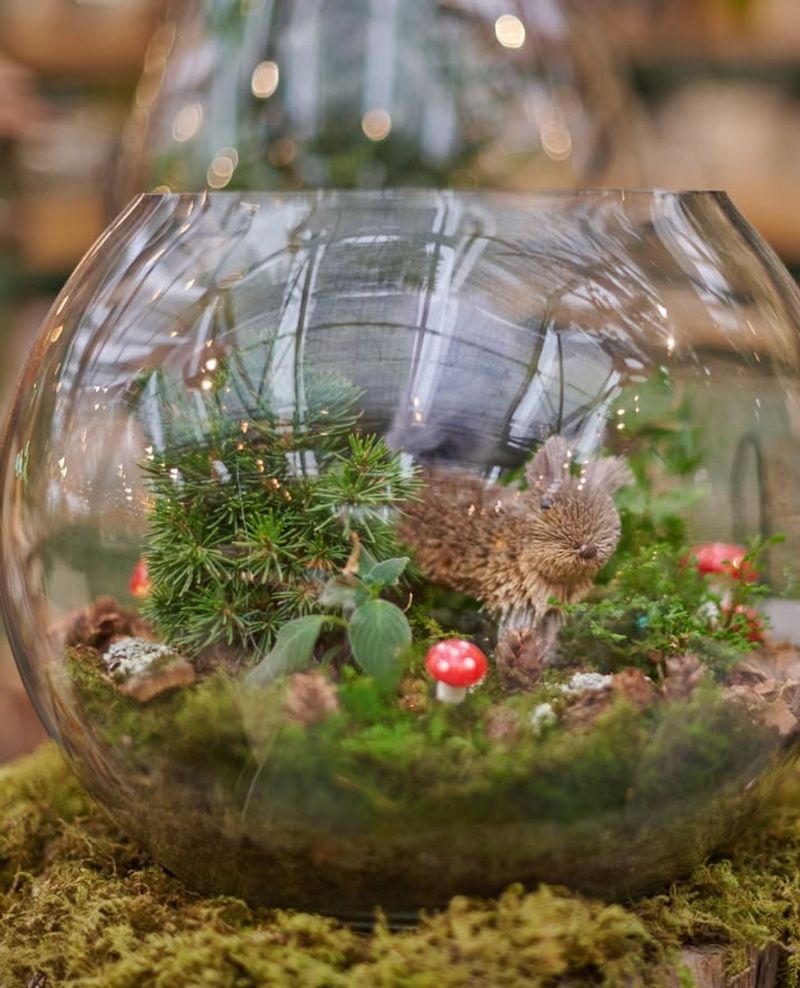
Celebrating Michigan’s distinct seasons through rotating terrarium displays keeps your indoor garden feeling fresh and relevant year-round. Autumn brings miniature pumpkins nestled in moss, while winter calls for evergreen sprigs and tiny ornaments.
Spring welcomes pastel flowers, and summer showcases bright blooms and beach themes.
Base your seasonal terrariums on hardy plants that tolerate occasional decoration changes. Moss, small ferns, and succulents work wonderfully as permanent residents.
Simply add and remove seasonal accessories without disturbing plant roots, keeping maintenance simple while dramatically changing the overall appearance.
Michigan’s strong seasonal identity makes these themed terrariums particularly meaningful. Use local natural materials like acorns collected in fall or pussy willow branches in early spring.
These authentic touches connect your indoor garden directly to the changing landscape outside your windows.
Holiday versions become cherished decorations that return year after year. Create a spooky Halloween scene with tiny skeletons and orange moss, or a Christmas display with miniature presents and frosted pinecones.
Children love helping redesign seasonal terrariums, making it a family tradition that marks time’s passage.
Store seasonal accessories in small labeled containers so they’re ready when needed. This organized approach makes transitions quick and enjoyable rather than stressful.
Your ever-evolving terrarium becomes a living calendar, celebrating Michigan’s beautiful seasonal changes while bringing nature’s rhythms into your home throughout the entire year.