Beautiful Flowering Vines That Flourish In Michigan Gardens
Michigan is a wonderful place to add vertical beauty to your landscape with the right climbing plants. Whether you have a wooden fence, a metal trellis, or a bare brick wall, a stunning vine can completely change the way your garden looks and feels.
These plants bring extra color and life to any outdoor space while taking up very little room on the ground. From bright flowers that attract hummingbirds to sweet scents that fill the air, the local climate supports a wide range of impressive options.
You do not need a professional design to make your yard look like a hidden paradise this year. Picking the right variety for the unique weather in Michigan ensures your plants stay strong through the changing seasons.
We have found the best vines that grow quickly and stay healthy in your own backyard. Get ready to find a new favorite for your home.
1. Clematis (Clematis spp.)
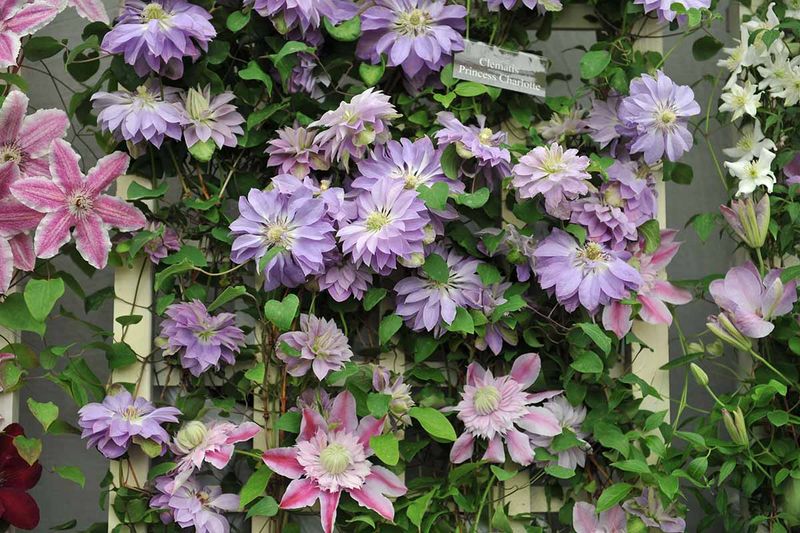
Known as the “Queen of the Vines,” clematis has earned that title for very good reason. Few flowering vines can match its bold, oversized blooms that show up in rich shades of purple, pink, white, and red.
Michigan gardeners have been growing clematis for generations, and it remains one of the most beloved choices in the state year after year.
Clematis blooms from early summer all the way through fall, giving you months of gorgeous color without much fuss.
These vines love full sun but do best when their roots stay cool and shaded, so planting a low-growing groundcover around the base makes a huge difference.
Well-drained soil is a must, and a sturdy trellis or fence gives the vine something to grab onto as it climbs higher.
One impressive fact about clematis is that some varieties can live for over 50 years with proper care. That means one good planting decision today can reward you with stunning blooms for decades.
In Michigan, popular varieties like “Jackmanii” and “Nelly Moser” handle cold winters well and bounce back beautifully each spring. Pruning at the right time of year keeps the plant healthy and encourages even more flowers.
If you want a vine that delivers drama, color, and lasting value in your Michigan garden, clematis is a fantastic place to start.
2. Trumpet Vine (Campsis radicans)
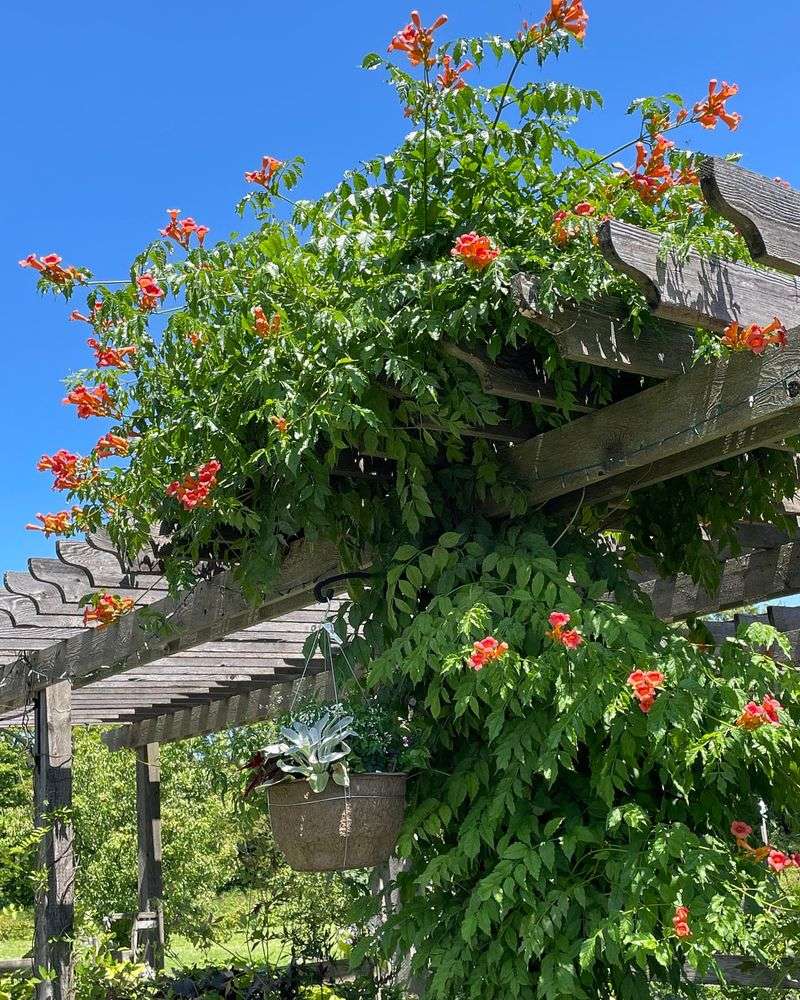
If hummingbirds are your favorite garden visitors, trumpet vine is practically a guaranteed invitation for them to show up. This fast-growing powerhouse produces bold, tubular flowers in striking shades of orange and red that hummingbirds simply cannot resist.
Michigan gardeners love it because it fills in quickly and creates a stunning wall of color from summer all the way into fall.
Trumpet vine is cold-hardy in zones 4 through 9, which makes it a perfect match for Michigan’s sometimes unpredictable climate. It thrives in full sun and handles heat well, spreading vigorously across fences, trellises, and arbors with impressive speed.
Once established, it needs very little water, making it one of the lower-maintenance options available to Michigan gardeners who want big results without constant upkeep.
One thing worth knowing is that trumpet vine grows aggressively, so giving it a defined space from the beginning helps keep it manageable. Regular trimming during the growing season keeps it looking neat and encourages more flowering.
Planting it along a back fence or a sturdy pergola is a smart move that lets it spread without taking over nearby plants.
The combination of effortless growth, wildlife appeal, and non-stop summer color makes trumpet vine a standout addition to any Michigan garden. It rewards you generously with very little effort on your part.
3. Wisteria (Wisteria sinensis)
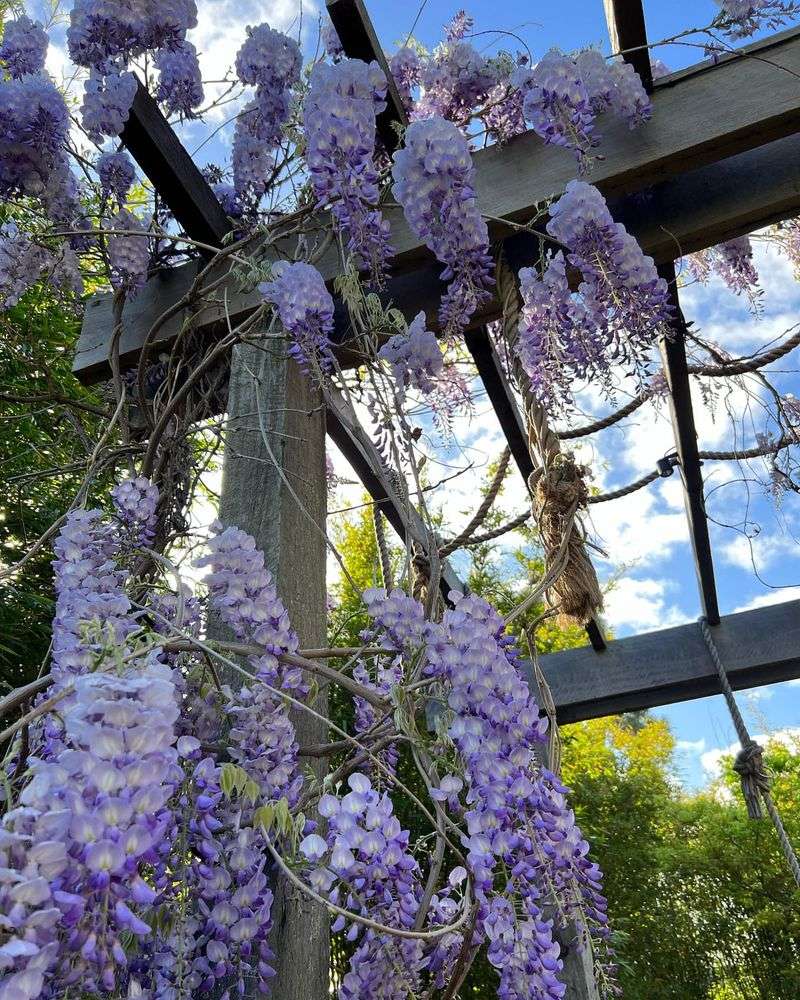
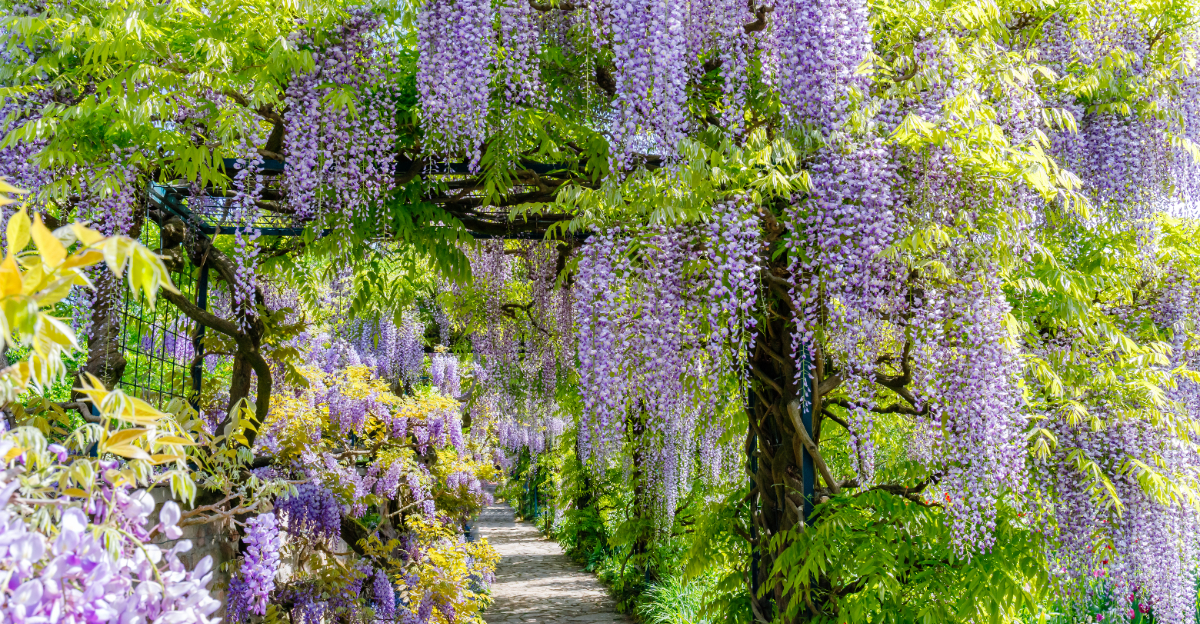
There is something almost magical about wisteria in full bloom. The long, cascading clusters of purple flowers hang like beautiful curtains from arbors and trellises, creating a scene that looks straight out of a storybook.
In Michigan, late spring brings wisteria to life in the most spectacular way, filling the air with a light, sweet fragrance that draws people in from across the yard.
Chinese wisteria, known scientifically as Wisteria sinensis, grows best in full sun with well-drained soil. It is a strong, vigorous climber that needs a very sturdy support structure because the vines and flower clusters can get quite heavy over time.
An iron pergola or a thick wooden arbor works beautifully and gives the plant room to drape dramatically as it matures.
Patience is part of growing wisteria, since younger plants may take a few years before they begin flowering heavily. Once they hit their stride, though, the payoff is absolutely worth the wait.
Pruning twice a year, once in late summer and again in late winter, keeps the plant tidy and encourages a stronger bloom cycle. Michigan gardeners who invest in wisteria often say it becomes the centerpiece of their entire outdoor space.
Few plants create as much visual impact with such effortless elegance, making wisteria a truly unforgettable addition to any Michigan yard.
4. Morning Glory (Ipomoea spp.)
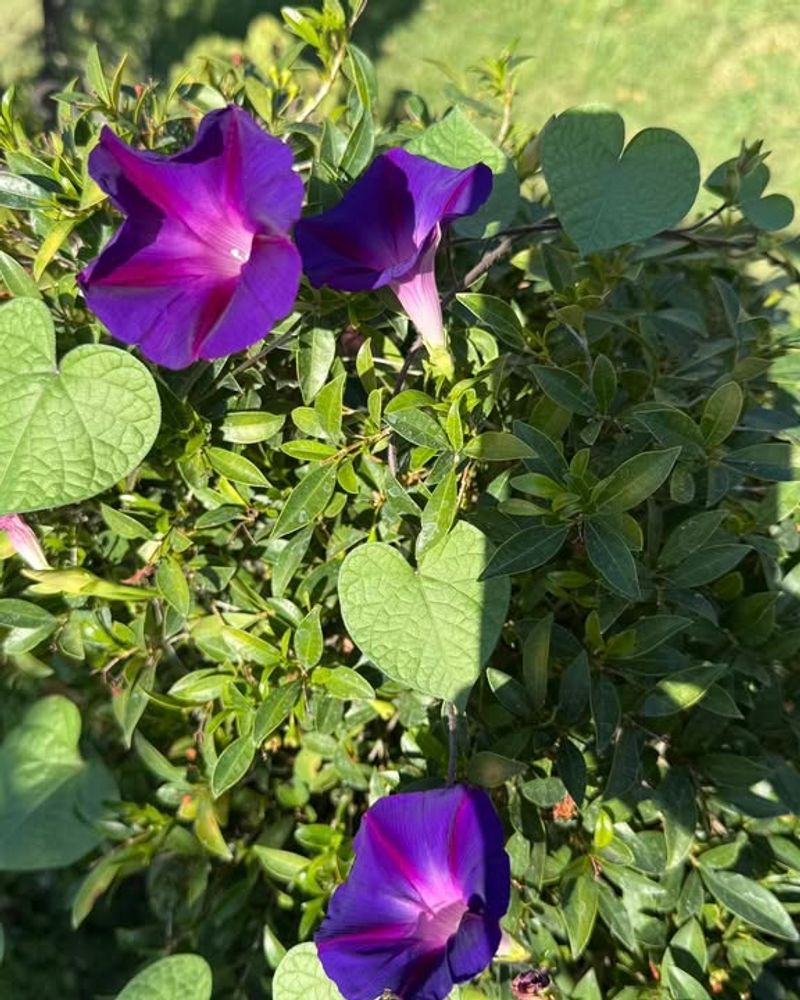
Morning glory earns its name every single day. Each morning, fresh blooms open up in brilliant shades of blue, purple, and pink, greeting the day with a burst of color that feels genuinely cheerful.
By afternoon the flowers close, and new ones take their place the very next morning, making this vine feel alive and constantly refreshing throughout the growing season in Michigan.
As one of the fastest-growing annual vines available, morning glory can cover a fence or trellis in a surprisingly short amount of time. It thrives in full sun and does well in moist, well-drained soil, making it a practical choice for most Michigan garden conditions.
The heart-shaped leaves add a lush, green backdrop that makes the trumpet-like flowers pop even more when they open each day.
Starting morning glory from seed directly in the garden is easy and budget-friendly. Soaking the seeds overnight before planting helps speed up germination and gets the vine off to a strong start.
In Michigan, planting after the last frost in late May gives the vine plenty of warm weeks to climb and bloom before fall arrives. Morning glory works beautifully on mailboxes, garden arches, and porch railings, adding instant charm wherever it grows.
For gardeners who want fast, colorful results with minimal investment, morning glory is one of the smartest choices available in Michigan.
5. Hops (Humulus lupulus)
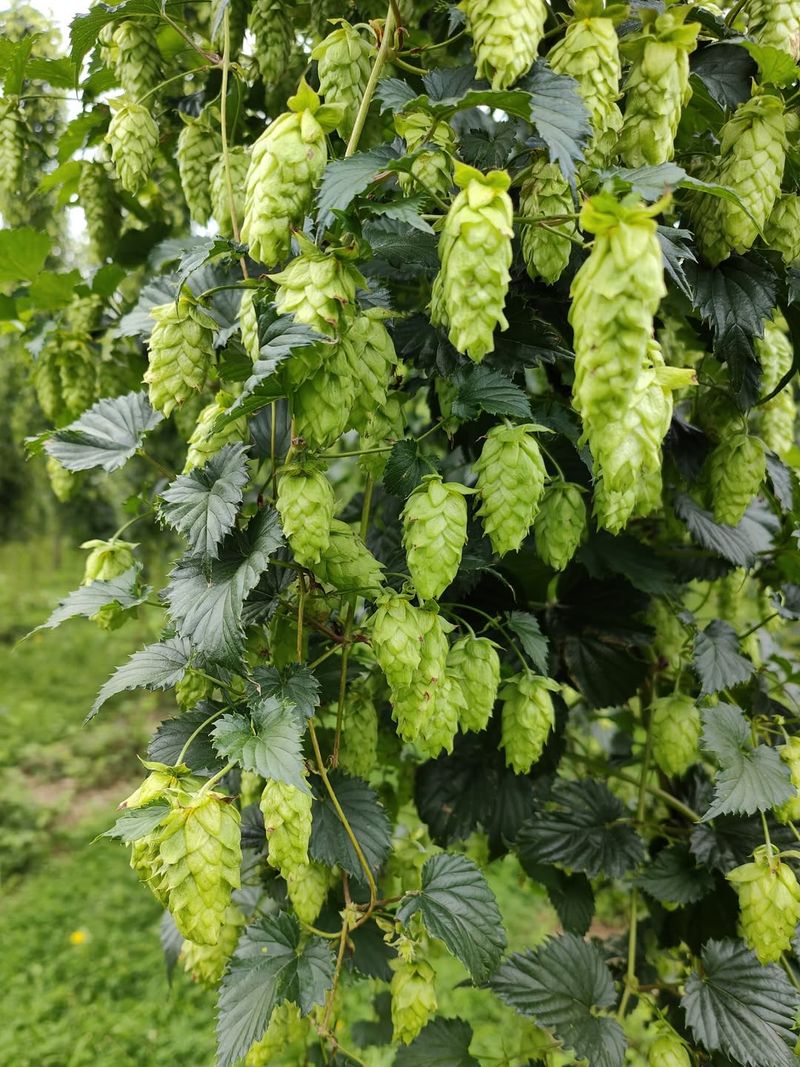
Most people think of hops as a brewing ingredient, but Michigan gardeners know it is also one of the most impressive ornamental vines you can grow. Hops vines shoot upward with remarkable speed, sometimes growing several inches in a single day during peak summer.
The result is a thick, lush curtain of green that creates excellent privacy and adds real texture to any garden space.
The small, papery green flowers that hops produce in early to late summer are delicate and interesting up close, with a pleasant, earthy aroma that adds a sensory layer to the garden.
Michigan’s climate suits hops extremely well since the plant is cold-hardy and comes back reliably every spring after winter.
Full sun is where hops performs best, though it tolerates partial shade without much complaint.
Growing hops on a tall trellis, fence, or pergola gives it the vertical space it craves and keeps the garden looking organized.
The vines can reach 20 feet or more in a single season, so giving them a strong structure from the start prevents tangling and keeps growth directed upward.
At the end of the season, harvested hops cones can even be used in home brewing, making this vine both beautiful and genuinely useful.
For Michigan gardeners who want dramatic height, fast coverage, and a conversation-starting plant, hops delivers on every level without much effort at all.
6. Sweet Pea (Lathyrus odoratus)
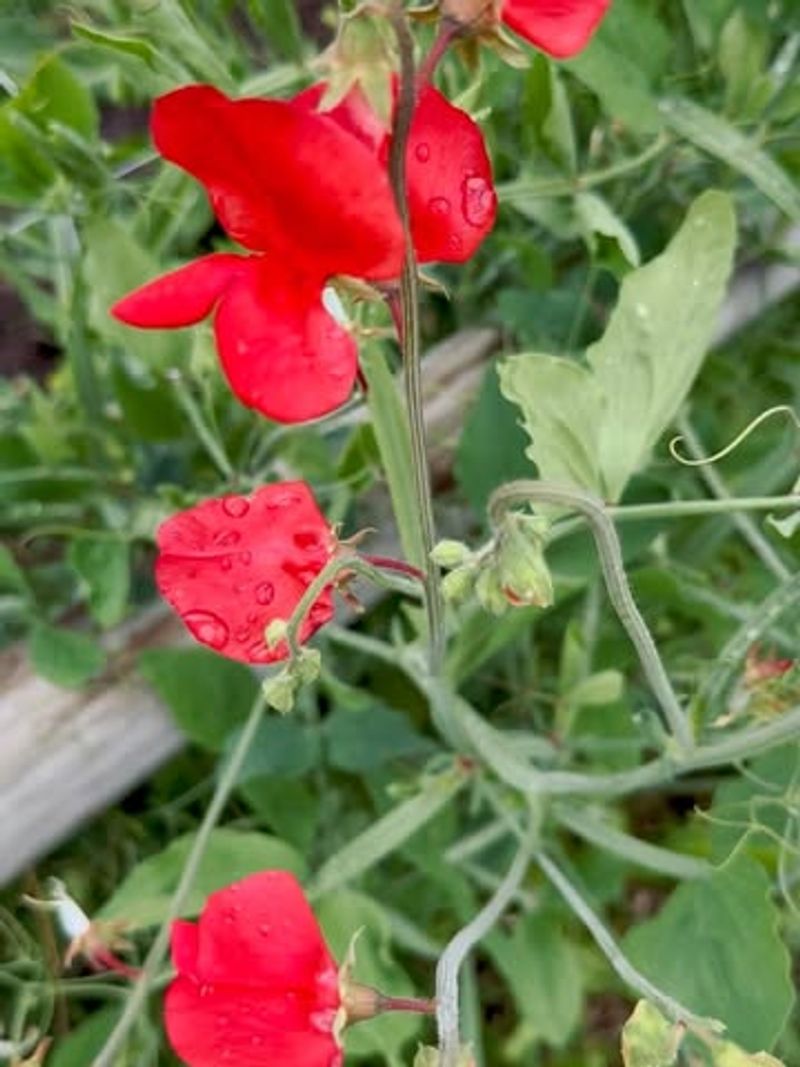
Sweet peas carry one of the most beloved fragrances in the entire plant world. The moment these delicate flowers open in spring, the air around them fills with a soft, sweet scent that feels nostalgic and fresh at the same time.
Michigan gardeners who grow sweet peas often say the fragrance alone makes the whole effort worthwhile, even before accounting for how beautiful the blooms actually look.
Blooming in shades of pink, purple, white, and red, sweet peas bring rich color to the garden during the cooler weeks of early to mid-spring.
They prefer full sun and well-drained soil, and they climb naturally using their curling tendrils to grip trellises, fences, and netting.
In Michigan, planting sweet peas early in the season while temperatures are still cool gives them the best possible start since they thrive in mild weather rather than summer heat.
Reaching heights of up to 12 feet, sweet peas are excellent for vertical gardening and make a gorgeous living screen along garden borders.
Cutting the flowers regularly encourages the plant to keep producing new blooms throughout the season, so keep a vase handy because fresh sweet pea bouquets are absolutely stunning indoors.
These vines also attract pollinators like bees, adding ecological value alongside their visual charm. For Michigan gardeners who love fragrance, color, and elegance in one plant, sweet peas check every single box with style.
7. Cypress Vine (Ipomoea quamoclit)
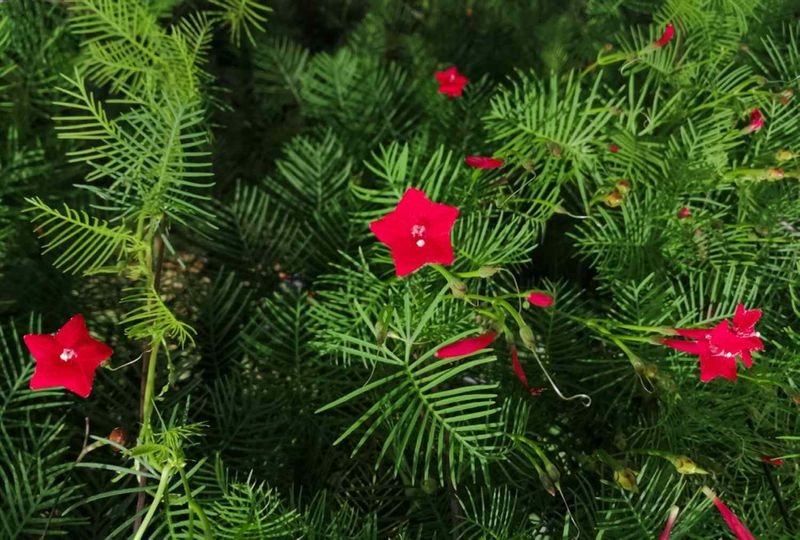
Cypress vine might be one of the most underrated flowering vines growing in Michigan gardens today. Its bright red, star-shaped flowers are small but absolutely eye-catching, and they show up in generous clusters all summer long.
Hummingbirds are huge fans of these blooms, and a well-established cypress vine can turn your garden fence into a busy hummingbird feeding station from July through September.
What makes cypress vine especially interesting is its foliage. The leaves are feathery and finely cut, giving the vine an almost tropical, fern-like appearance that looks elegant even when the plant is not in full bloom.
It grows quickly in full sun and does best in well-drained soil, spreading eagerly across fences, garden arches, and lattice panels throughout the warm Michigan growing season.
Starting cypress vine from seed is simple and rewarding. Like its close relative morning glory, soaking the seeds overnight before planting encourages faster sprouting.
In Michigan, planting after the last spring frost gives the vine a long runway to grow and flower before cooler fall temperatures arrive.
Cypress vine works especially well as a lightweight covering for chain-link fences, transforming plain structures into vibrant garden features.
The combination of delicate foliage, vivid red blooms, and wildlife appeal makes this vine a genuinely exciting addition to any Michigan garden that wants to stand out from the crowd this season.
8. Climbing Hydrangea (Hydrangea anomala petiolaris)
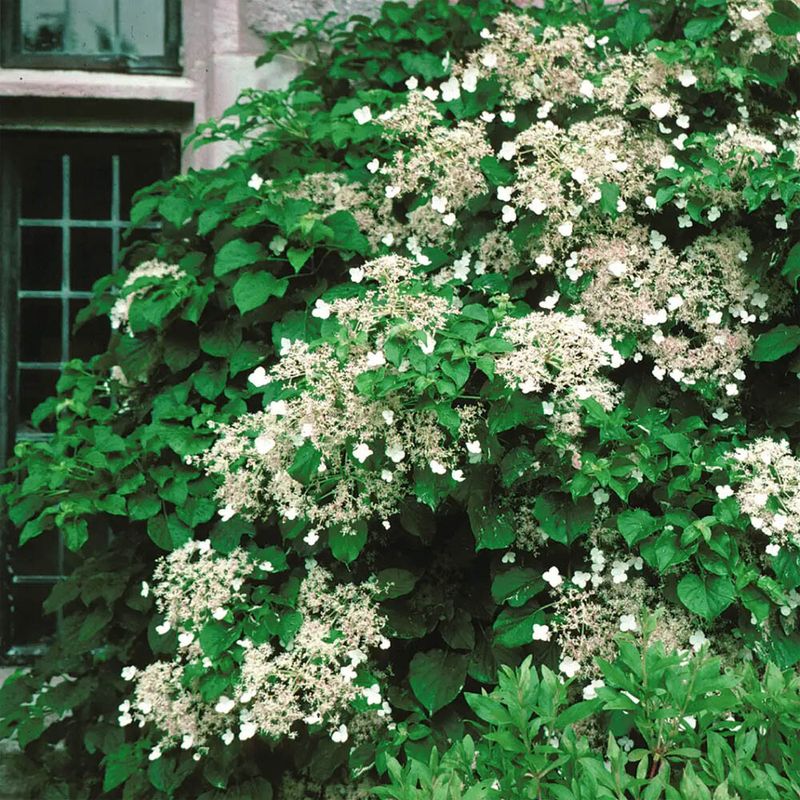
Shaded garden spots can be tricky to fill with flowering plants, but climbing hydrangea handles low-light conditions beautifully.
Unlike many vines that demand full sun, this elegant climber actually prefers partial to full shade, making it a perfect solution for the shadier corners of Michigan yards where other flowering plants tend to struggle and fade out early in the season.
Climbing hydrangea produces large, flat clusters of creamy white flowers in summer that look stunning against its rich, dark green foliage. The flowers have a lacecap style, with delicate small blooms in the center surrounded by larger, showier petals on the outside.
Beyond the flowers, the vine develops attractive peeling bark as it matures, adding winter interest to the garden even after the blooms have faded for the season.
This vine attaches to walls, fences, and trees using small root-like structures called holdfasts, which means it can climb vertical surfaces without needing wire or netting to support it.
Growth is slow in the first couple of years as the plant establishes its root system, but once it settles in, climbing hydrangea expands reliably year after year.
Michigan’s cold winters do not bother it at all since it is fully cold-hardy in the region. For gardeners dealing with a shady fence or a north-facing wall, climbing hydrangea turns a challenging space into something genuinely spectacular with beautiful, long-lasting results.
9. Virginia Creeper (Parthenocissus quinquefolia)
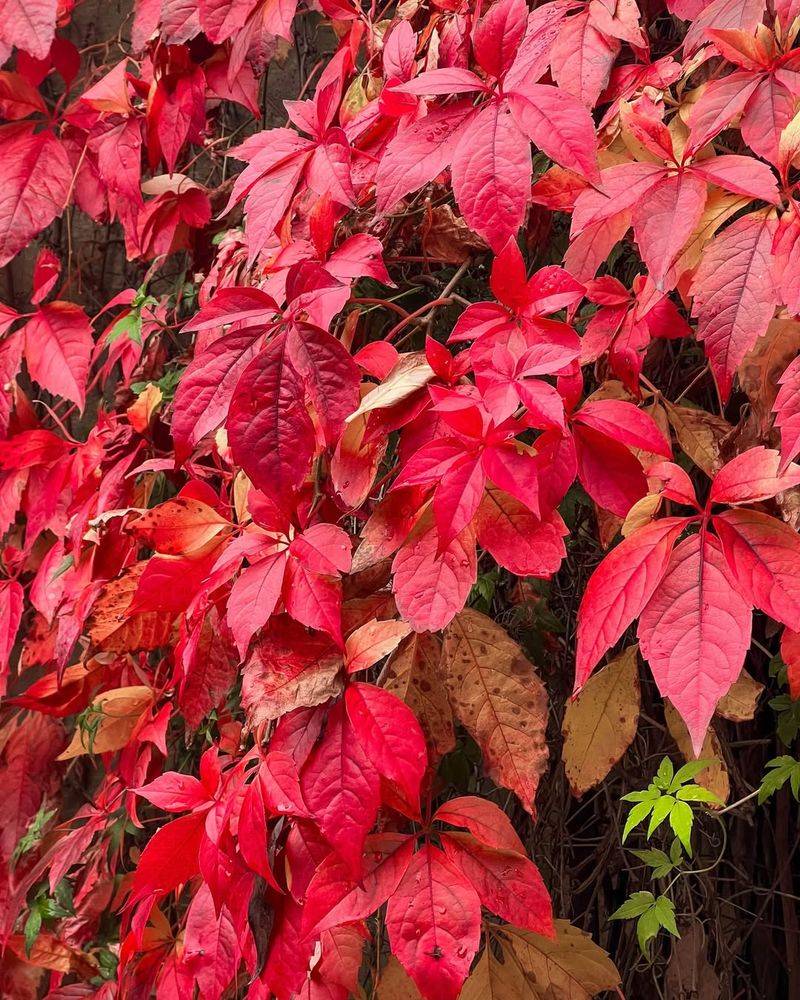
Virginia creeper is the vine that truly shines when the rest of the garden starts winding down for the year.
As Michigan summers transition into fall, the five-pointed leaves of this fast-growing vine turn an absolutely stunning shade of fiery red, creating a dramatic seasonal display that stops people in their tracks.
Walls, fences, and tree trunks covered in Virginia creeper look like living works of art come October.
During summer, the vine produces small, inconspicuous green flowers that quietly develop into clusters of blue-black berries by autumn.
Those berries are a valuable food source for birds like woodpeckers, robins, and thrushes, making Virginia creeper a genuinely wildlife-friendly choice for Michigan gardens.
The vine grows vigorously in full sun to partial shade, adapting easily to a wide range of soil types and conditions found across the state.
Virginia creeper attaches to surfaces using small adhesive pads at the tips of its tendrils, so it climbs walls and stone surfaces without needing additional support.
Growth is fast once established, covering large areas efficiently and providing excellent seasonal interest across multiple times of year.
Regular trimming keeps the vine from spreading beyond its intended space, which is a smart habit to build early on.
For Michigan gardeners who want bold fall color, wildlife value, and effortless coverage all in one reliable plant, Virginia creeper is a truly outstanding choice worth planting this season.