6 Beautiful Native Pennsylvania Groundcovers That Might Replace Grass
Grass lawns have long been the standard in Pennsylvania, but more homeowners are starting to think outside the box. While grass is classic, it can require a lot of maintenance, water, and care, especially with unpredictable weather.
If you’re looking for a more sustainable, low-maintenance alternative, native groundcovers could be just what your yard needs. These hardy plants not only look beautiful, but they’re also well-suited to the local climate, requiring less water and care than traditional grass.
Native groundcovers can help you create a lush, green space without the constant mowing and fertilizing. Many of these plants offer vibrant colors, interesting textures, and even flowers that attract pollinators like bees and butterflies.
Plus, they can thrive in different conditions, from sunny spots to shady corners. Whether you’re looking to replace all your grass or just fill in some gaps, these native groundcovers can transform your landscape into something both beautiful and environmentally friendly.
1. Pennsylvania Sedge
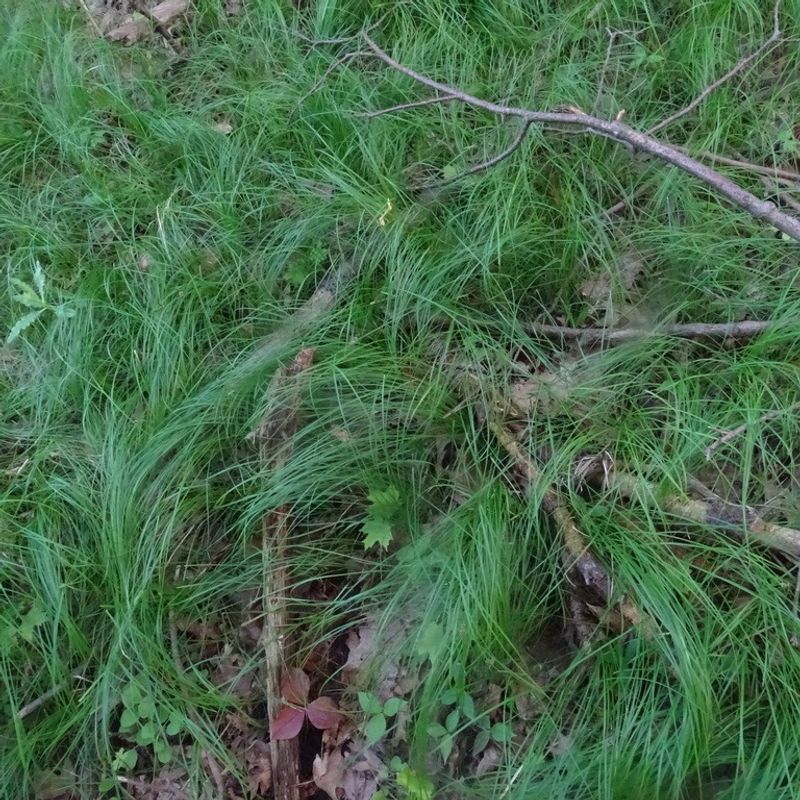
Soft, flowing, and surprisingly tough, Pennsylvania Sedge might just be the most underrated lawn alternative in the state. It grows naturally across Pennsylvania in dry, open woods and wooded slopes.
Unlike traditional turf grass, it stays low on its own, meaning you rarely need to mow it at all.
Pennsylvania Sedge forms a gentle, weeping carpet that looks a lot like a traditional lawn from a distance. Up close, it has a fine, arching texture that gives your yard a relaxed, natural feel.
It handles dry shade really well, which is great news for those tricky spots under large trees where grass always seems to struggle.
This sedge is also very low maintenance once it gets established. It does not need fertilizer, and it rarely needs watering after its first season.
Because it is native to Pennsylvania, it is already used to the local winters, summers, and rainfall patterns.
One fun fact: Pennsylvania Sedge is actually named after the state. Its scientific name, Carex pensylvanica, reflects its deep roots in this region. That alone makes it a fitting choice for any Pennsylvania garden.
Planting it is straightforward. You can start from plugs or small divisions and space them about six to twelve inches apart.
Over a couple of seasons, they will fill in and form a solid, attractive mat. Penn State Extension recommends it as one of the top native groundcovers for challenging landscape spots.
If you want a lawn-like look without the lawn-like work, Pennsylvania Sedge is an excellent place to start your groundcover journey.
2. Wild Ginger
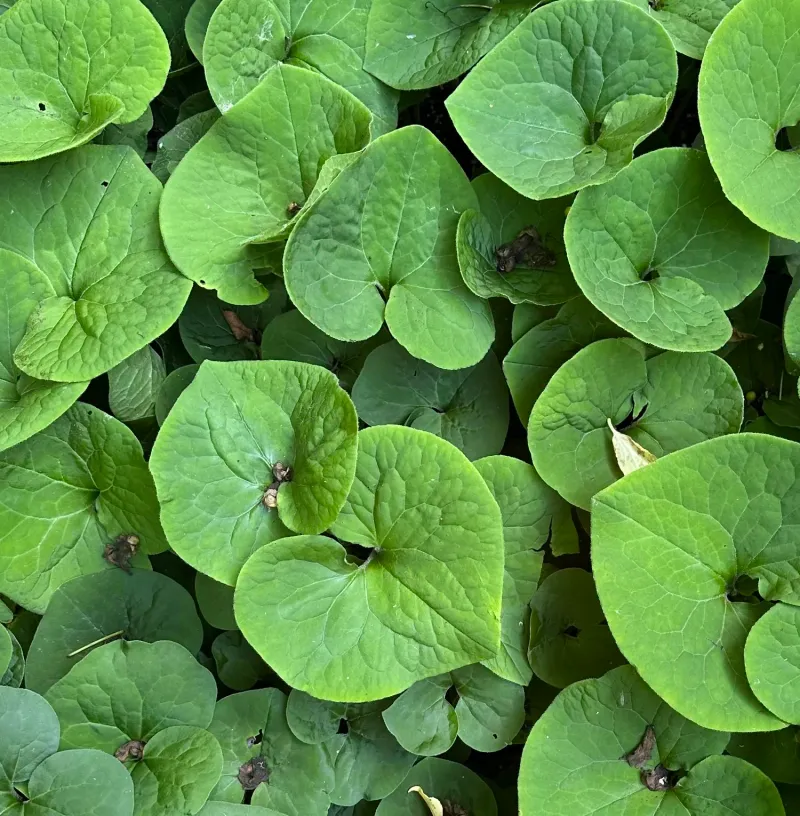
Imagine a groundcover so lush and full that weeds can barely find a place to sneak in. That is exactly what Wild Ginger does in a shaded Pennsylvania garden.
Its large, heart-shaped leaves grow close together, forming a thick, velvety mat that looks rich and full all season long.
Wild Ginger loves shade, which makes it perfect for spots under trees or along the north side of a house where most plants refuse to cooperate. It spreads slowly by underground rhizomes, gradually expanding into a solid colony over time.
Patience pays off with this one, because once it fills in, it is truly stunning.
One of the most interesting things about Wild Ginger is its hidden flower. It blooms in spring, but the small, reddish-brown flower hides right at the base of the plant under the leaves.
You almost have to get on your hands and knees to spot it. It is a fun little secret that makes this plant feel special.
Wild Ginger is native throughout Pennsylvania and grows naturally in moist, rich woodland soils. It works especially well where traditional turf grass has always struggled. Unlike grass, it does not need full sun or regular mowing to look its best.
For Pennsylvania homeowners who want a groundcover that feels truly wild and natural, this is a wonderful pick. Plant it in groups and give it a season or two to settle in.
Water it during dry spells in the first year, and after that, it largely takes care of itself. Wild Ginger brings quiet, woodland elegance to any shaded corner of your yard.
3. Barren Strawberry
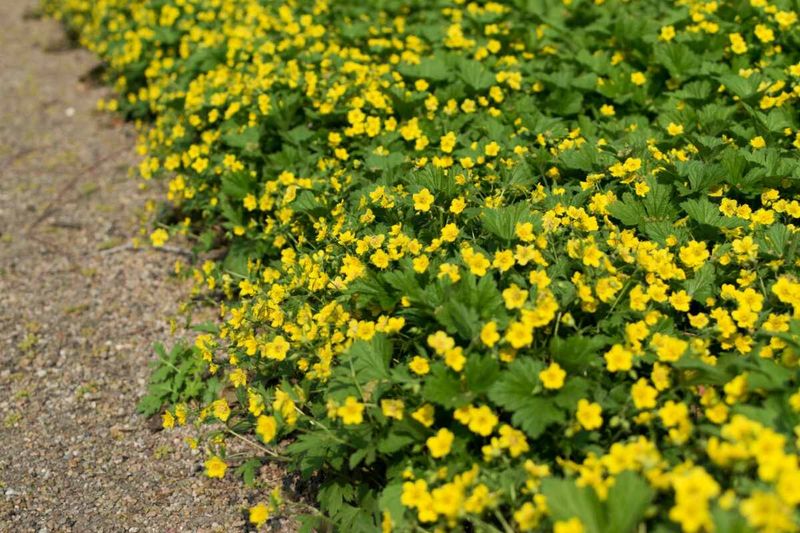
Do not let the name fool you. Barren Strawberry is anything but boring.
This tough little native plant looks a lot like a wild strawberry, with glossy, three-part leaves and cheerful yellow flowers that bloom in spring. It is one of the most reliable and attractive native groundcovers you can plant in Pennsylvania.
Penn State Extension describes Barren Strawberry as an excellent North American native groundcover for sun to partial shade. It handles a wide range of conditions, from dry rocky slopes to partially shaded garden beds.
That kind of flexibility makes it a go-to choice for Pennsylvania homeowners who want something that actually works without constant attention.
The leaves stay semi-evergreen in Pennsylvania, meaning they hold their color well into late fall and sometimes through mild winters.
That gives your yard a finished, polished look even when most other plants have gone dormant. Few groundcovers offer that kind of year-round appeal at such a low maintenance cost.
Barren Strawberry spreads by runners, slowly filling in gaps and crowding out weeds as it grows. Once established, it forms a neat, dense mat that holds soil well on slopes and banks.
It is a smart pick for erosion-prone areas around Pennsylvania homes. Planting it is simple. Start with small plugs spaced about twelve inches apart.
Give them regular water during the first growing season, and they will reward you by spreading naturally from there. Pollinators love the spring flowers too, so you will likely notice more bees visiting your yard.
For a no-fuss, good-looking native groundcover in Pennsylvania, Barren Strawberry earns its spot on this list every single time.
4. Foamflower
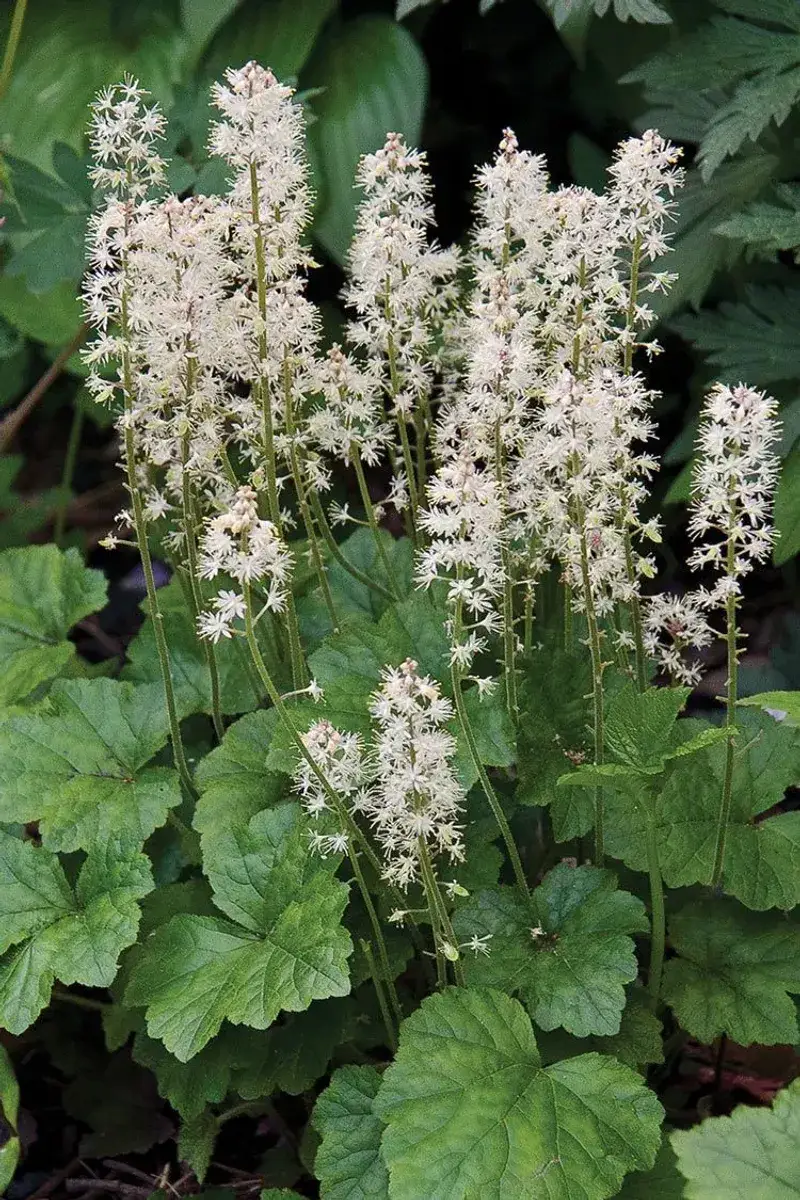
Every spring, Foamflower puts on a show that stops people in their tracks. Delicate, feathery white flower spikes rise above a carpet of beautifully patterned leaves, creating a look that feels straight out of a fairy tale.
It is one of the most visually striking native groundcovers you can grow in Pennsylvania. Foamflower thrives in shade and part shade, making it a natural fit for woodland-style gardens and areas under mature trees.
It spreads by stolons, which are above-ground runners that root as they travel. Over time, it builds a dense, weed-suppressing mat that requires very little effort from you.
The leaves themselves are worth celebrating even after the blooms fade. They have a maple-like shape with interesting dark markings along the veins, giving the plant a decorative quality that lasts all season.
Some varieties even develop reddish tones in fall, adding another layer of seasonal interest to your Pennsylvania landscape.
Foamflower is native to the eastern United States, including Pennsylvania, where it grows naturally in moist, rich woodland soils. It pairs beautifully with Wild Ginger and ferns, creating a layered, naturalistic look that feels completely at home in the Pennsylvania landscape.
Getting started with Foamflower is easy. Plant plugs or small divisions in spring or fall, water regularly through the first season, and watch them spread.
They do not need fertilizer or special soil amendments to perform well. Pollinators, especially native bees, are drawn to the spring blooms.
For shady spots where you want something truly beautiful and low-maintenance, Foamflower is one of the best choices Pennsylvania native plant lovers can make.
5. Golden Ragwort
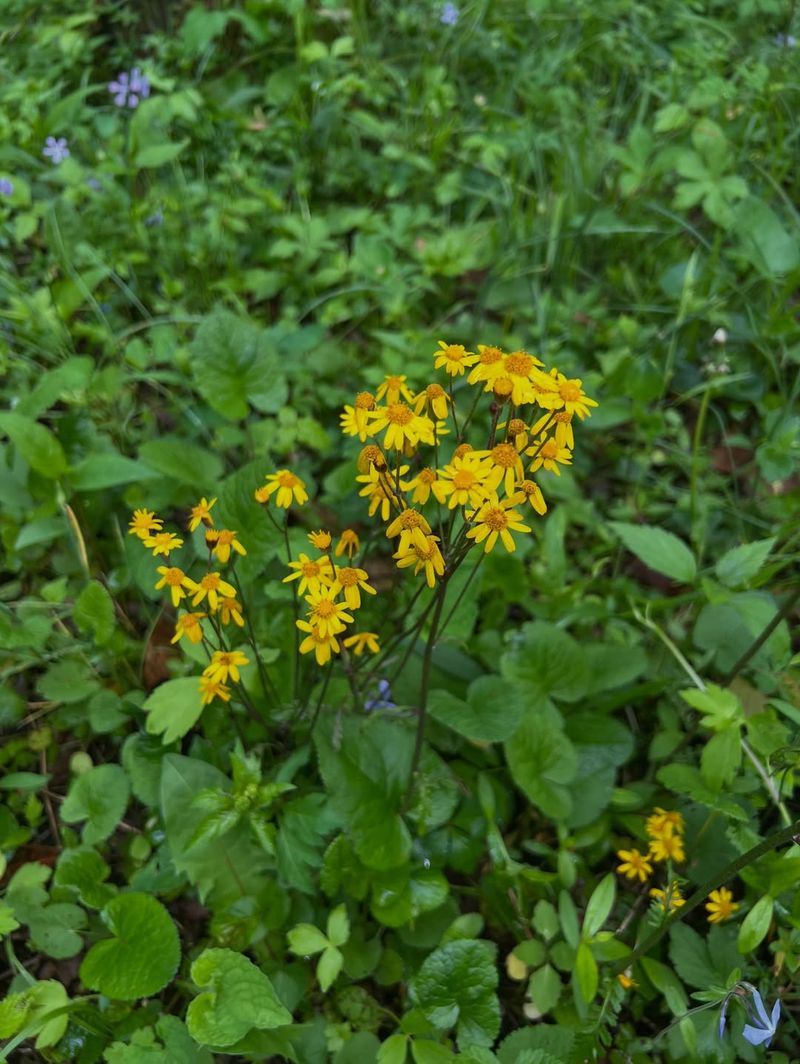
Bold, bright, and buzzing with pollinators, Golden Ragwort is one of those native plants that makes a real statement in the Pennsylvania landscape.
Every spring, it explodes into a sea of golden-yellow flowers that look cheerful and wild at the same time. It is the kind of plant that makes your neighbors stop and ask what it is.
Golden Ragwort spreads enthusiastically in moist, part-shade conditions, making it a strong candidate for areas along streams, near downspouts, or under trees where water tends to collect.
It forms a thick, leafy groundcover that effectively crowds out weeds once it gets going. The basal leaves are evergreen in mild Pennsylvania winters, so the ground stays covered year-round.
Early-season pollinators absolutely love this plant. Native bees and butterflies flock to the flowers in April and May, right when food sources are still scarce.
Planting Golden Ragwort in your Pennsylvania yard is a real gift to local wildlife during a critical time of year.
One thing to know: Golden Ragwort can spread pretty quickly in ideal conditions. That is actually a feature, not a problem, if you have a larger area to cover.
It is often recommended as a native alternative for homeowners who want something fuller and more natural-looking than a standard grass lawn.
Plant it in fall or early spring, water it through the first season, and then let it do its thing. It is deer-resistant, which is a huge bonus for Pennsylvania gardeners dealing with hungry wildlife.
Golden Ragwort brings energy, color, and ecological value to any yard that needs a little wild beauty.
6. Creeping Phlox
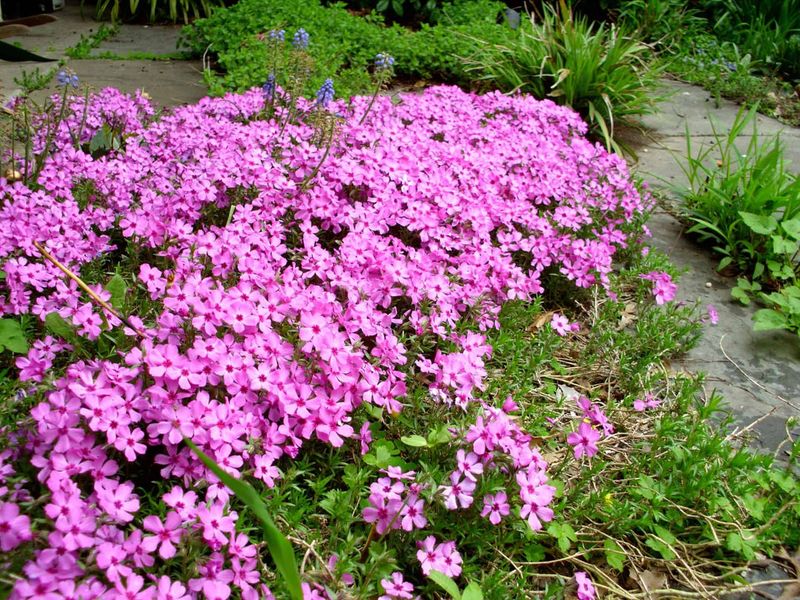
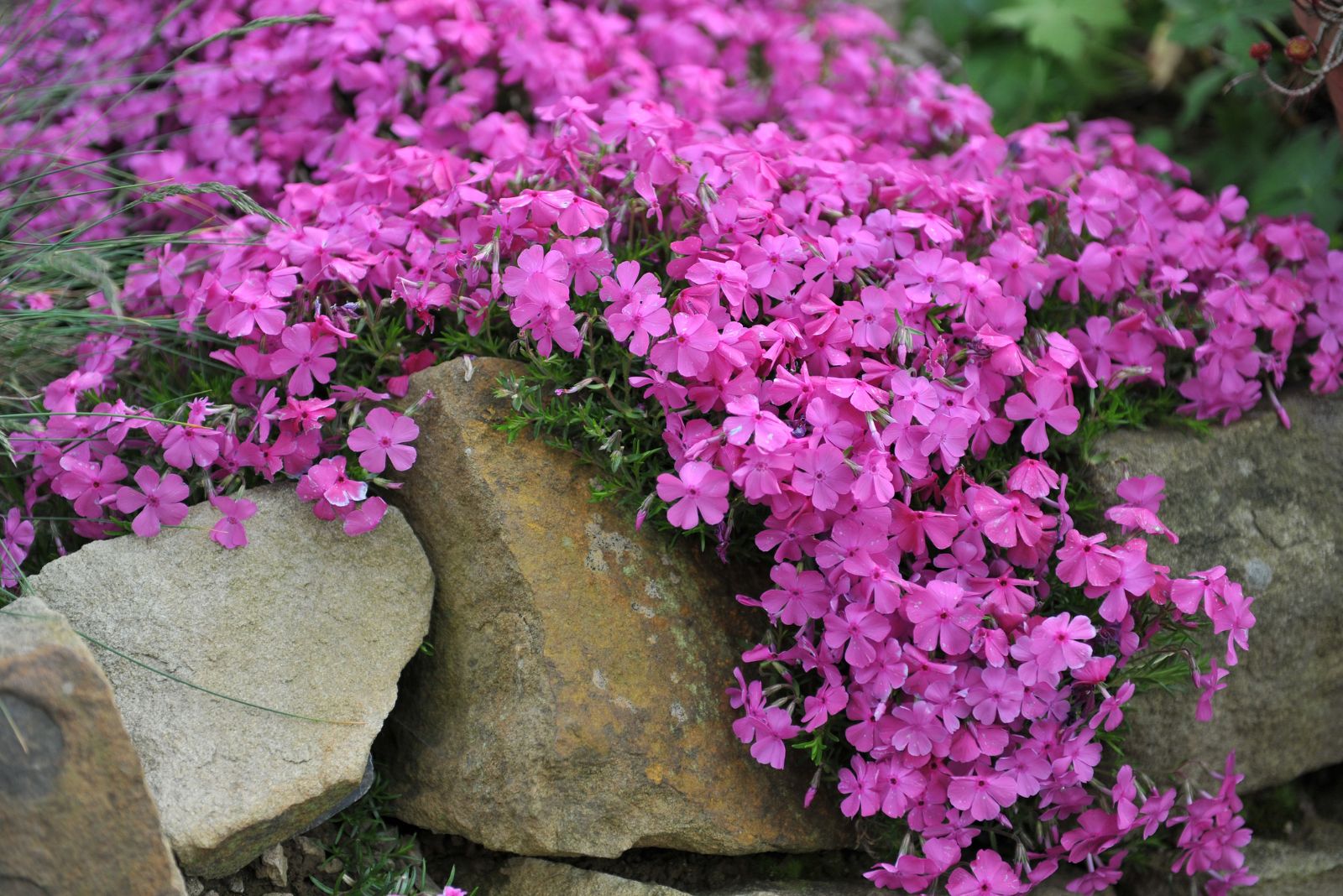
Few native groundcovers put on a spring display as jaw-dropping as Creeping Phlox. When it blooms in April and May, the entire plant disappears under a thick blanket of pink, purple, or white flowers.
It is the kind of show-stopping color that can transform a plain sunny slope into something truly spectacular.
Moss Phlox is native to Pennsylvania and thrives in sunny, well-drained spots. It is a fantastic choice for rocky banks, hillsides, and edges along driveways or walkways where grass is hard to establish and maintain.
Penn State describes it as a low-growing, dense, matted groundcover that holds soil beautifully on slopes prone to erosion.
After the blooms fade, the plant settles into a tidy, evergreen mat of needle-like foliage that stays attractive through fall and into winter.
It keeps its structure even through cold Pennsylvania winters, giving your landscape a finished look all year long. That kind of reliability is hard to find in any groundcover.
Creeping Phlox is also very drought-tolerant once established. It does not need much water, fertilizer, or fussing to look great.
That makes it one of the easiest native groundcovers a Pennsylvania homeowner can plant and walk away from with confidence.
To get started, plant divisions or plugs in early spring or fall. Space them about twelve to eighteen inches apart and water regularly during the first season.
After that, they spread on their own and fill in nicely over time. Pollinators love the spring flowers too.
For sunny spots in Pennsylvania where you want bold color and zero hassle, Creeping Phlox belongs at the top of your list.