9 Beautiful Rare Philodendrons Georgia Indoor Gardeners Want Right Now
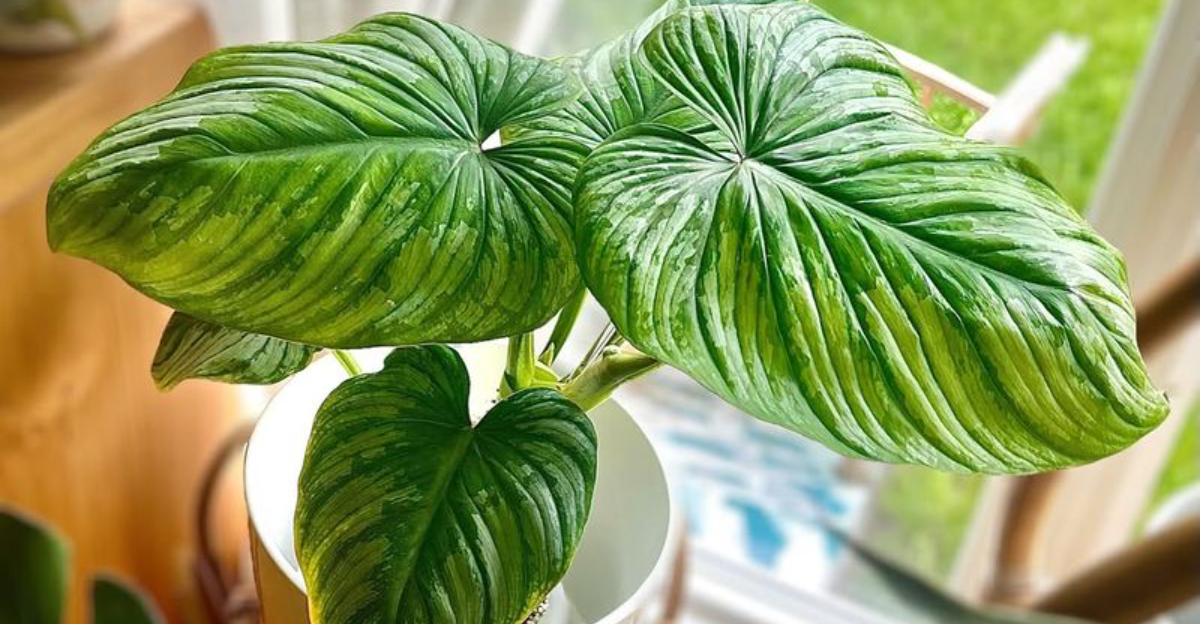
Indoor gardening in Georgia has taken a bold turn, and rare philodendrons are stealing the spotlight.
These plants are not your everyday green fillers.
With dramatic leaves, unusual patterns, and rich colors, they bring serious style to shelves and corners.
Once someone spots one, it is hard not to want it.
They have a way of stopping people in their tracks and sparking instant plant envy.
Georgia’s warm climate gives indoor gardeners a natural edge.
Many philodendrons thrive in bright rooms with steady warmth, making them a perfect match for local homes.
Beyond good looks, these plants balance beauty with durability.
They grow steadily, adapt well, and reward patience with show stopping foliage.
For collectors, finding a rare variety feels like striking gold.
Social media and local plant shops have only fueled the buzz.
One photo leads to another, and soon everyone is hunting for the next standout leaf.
These philodendrons are not just plants.
They are conversation starters and long term companions.
Like adding a statement piece to a room, the right philodendron transforms the space.
Right now, Georgia indoor gardeners know exactly what they want, and rare philodendrons sit at the top of the list.
1. Philodendron Pink Princess
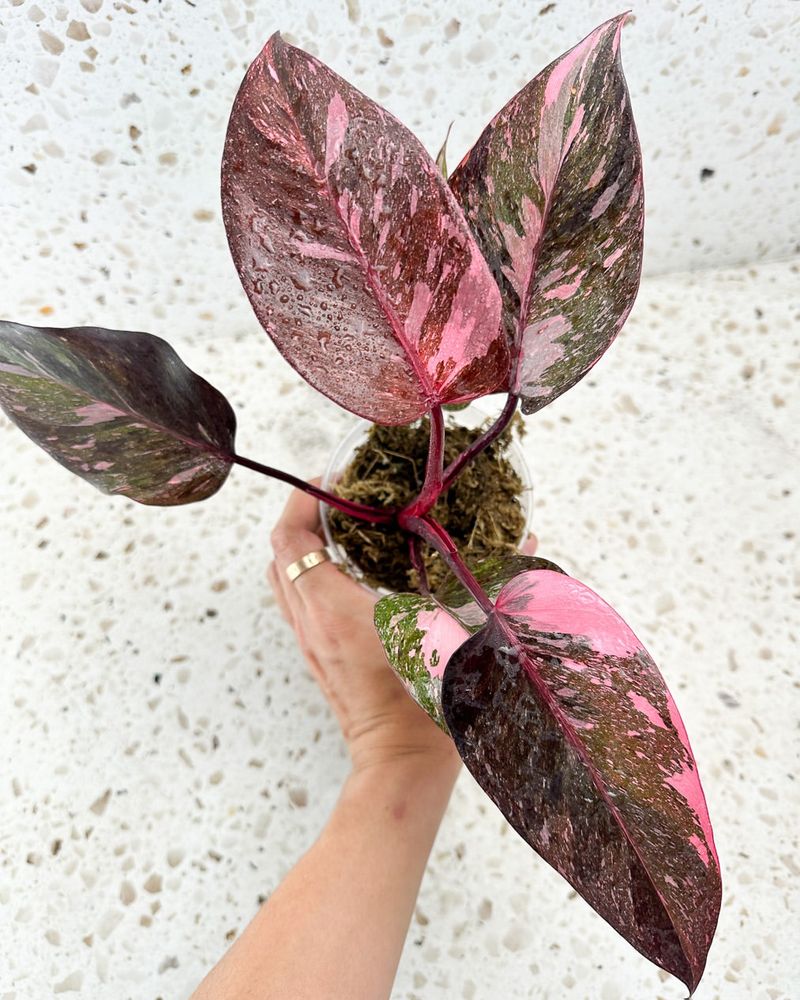
Collectors throughout Georgia can’t stop talking about this stunning plant with its bubble gum pink splashes across deep green leaves.
The Pink Princess has become legendary in plant communities from Macon to Columbus, with people willing to pay premium prices for well-variegated specimens.
Each leaf unfurls like a surprise gift, revealing unique pink patterns that never repeat exactly the same way twice.
Finding stable variegation is the real challenge with this beauty.
Some leaves might emerge completely green while others show spectacular pink sections that stretch across half the leaf.
Indoor gardeners in Georgia have learned that bright, indirect light helps maintain those coveted pink patches, though too much direct sun can fade the colors or scorch the delicate foliage.
The Pink Princess prefers consistently moist soil and appreciates Georgia’s naturally humid air, especially during summer months.
Many growers keep them near east-facing windows where morning light energizes the plant without overwhelming it.
Temperatures between 65-80 degrees work perfectly, which matches most Georgia homes year-round.
Propagation has become a popular hobby among Atlanta plant enthusiasts, though cuttings with pink variegation command higher prices.
Watching a cutting develop roots and eventually produce new variegated growth feels incredibly rewarding.
This philodendron definitely deserves its crown as one of the most sought-after houseplants in the state right now.
2. Philodendron Gloriosum
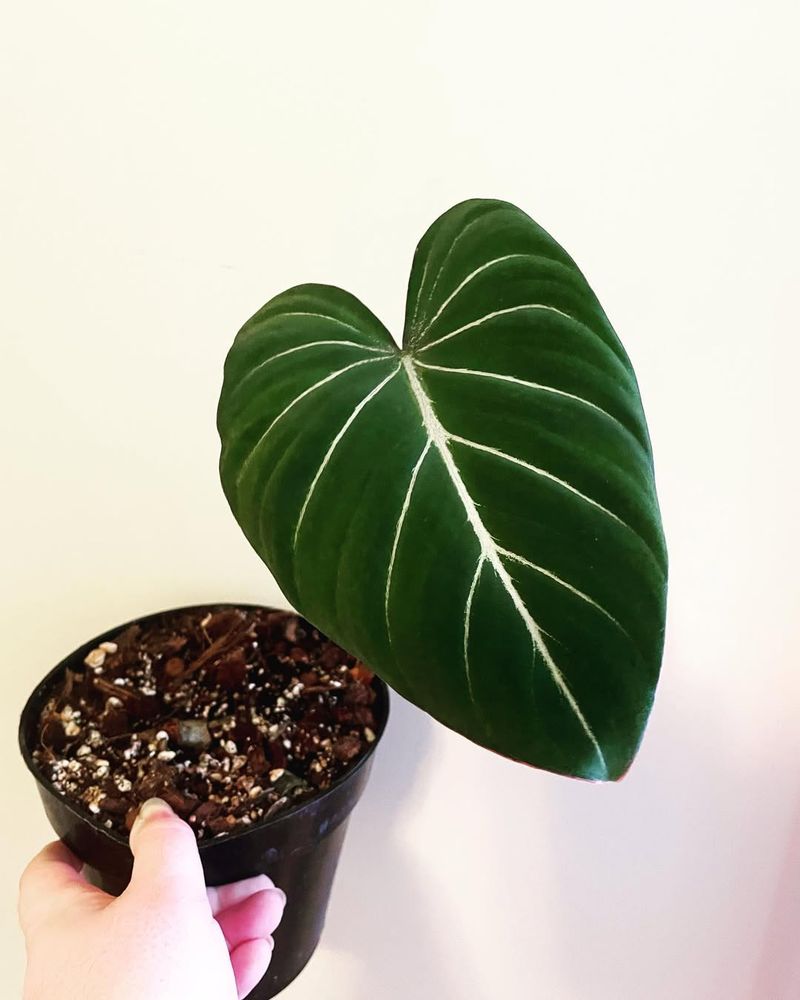
Imagine running your fingers across leaves so velvety they feel like expensive fabric.
Philodendron Gloriosum brings that luxurious texture into Georgia homes, paired with striking white veins that trace elegant patterns across deep green, heart-shaped foliage.
This crawling beauty grows horizontally rather than climbing, creating a unique display that sprawls gracefully across shelves or tables.
Savannah and Augusta plant collectors particularly love how this species adds drama to their indoor gardens.
Each mature leaf can reach impressive sizes, sometimes spanning over a foot wide when grown in optimal conditions.
The contrast between the soft, almost fuzzy leaf surface and those crisp white veins creates an eye-catching effect that photographs beautifully for social media posts.
Growing Gloriosum successfully requires understanding its creeping growth habit.
The rhizome needs to rest on top of the soil rather than being buried deep, which differs from typical potted plants.
Georgia growers often use shallow, wide containers that accommodate the horizontal spread while providing excellent drainage.
Humidity levels above 60 percent keep those velvety leaves looking their absolute best.
Many indoor gardeners throughout Georgia use pebble trays or small humidifiers nearby, especially during winter when heating systems dry out the air.
With patient care and proper conditions, this showstopper rewards you with steadily expanding foliage that never fails to impress visitors.
3. Philodendron Melanochrysum
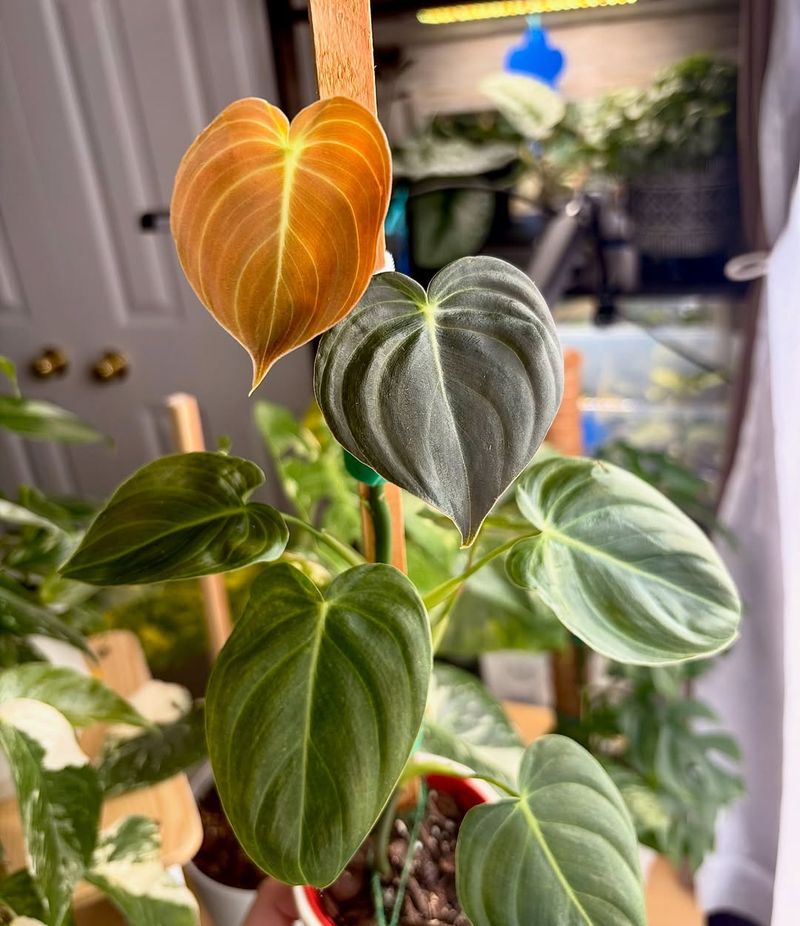
Black velvet meets golden shimmer in this absolutely breathtaking climber that’s captured the hearts of Georgia plant enthusiasts.
Philodendron Melanochrysum produces elongated leaves that can grow over two feet long, displaying an almost iridescent quality when light hits them just right.
The common name Black Gold Philodendron perfectly describes those dark, velvety leaves accented with pale golden veins.
Young leaves emerge with a coppery bronze tone before maturing into their signature dark coloration.
Plant lovers in Athens and Roswell have discovered that providing a moss pole or wooden plank for climbing encourages larger, more dramatic foliage.
The climbing habit mimics how this species grows in its native Colombian cloud forests, reaching toward tree canopies.
Consistent moisture without waterlogging is essential for keeping Melanochrysum thriving.
Georgia’s tap water works fine for most growers, though letting it sit overnight allows chlorine to evaporate.
The plant appreciates temperatures that stay comfortably warm, which most heated Georgia homes provide even during winter cold snaps.
Bright indirect light brings out the best coloration and that characteristic shimmer on the leaves.
Too much shade results in smaller leaves that lose some of their dramatic impact.
This rare philodendron isn’t the easiest for beginners, but intermediate growers throughout the state find it absolutely worth the extra attention required.
4. Philodendron White Wizard
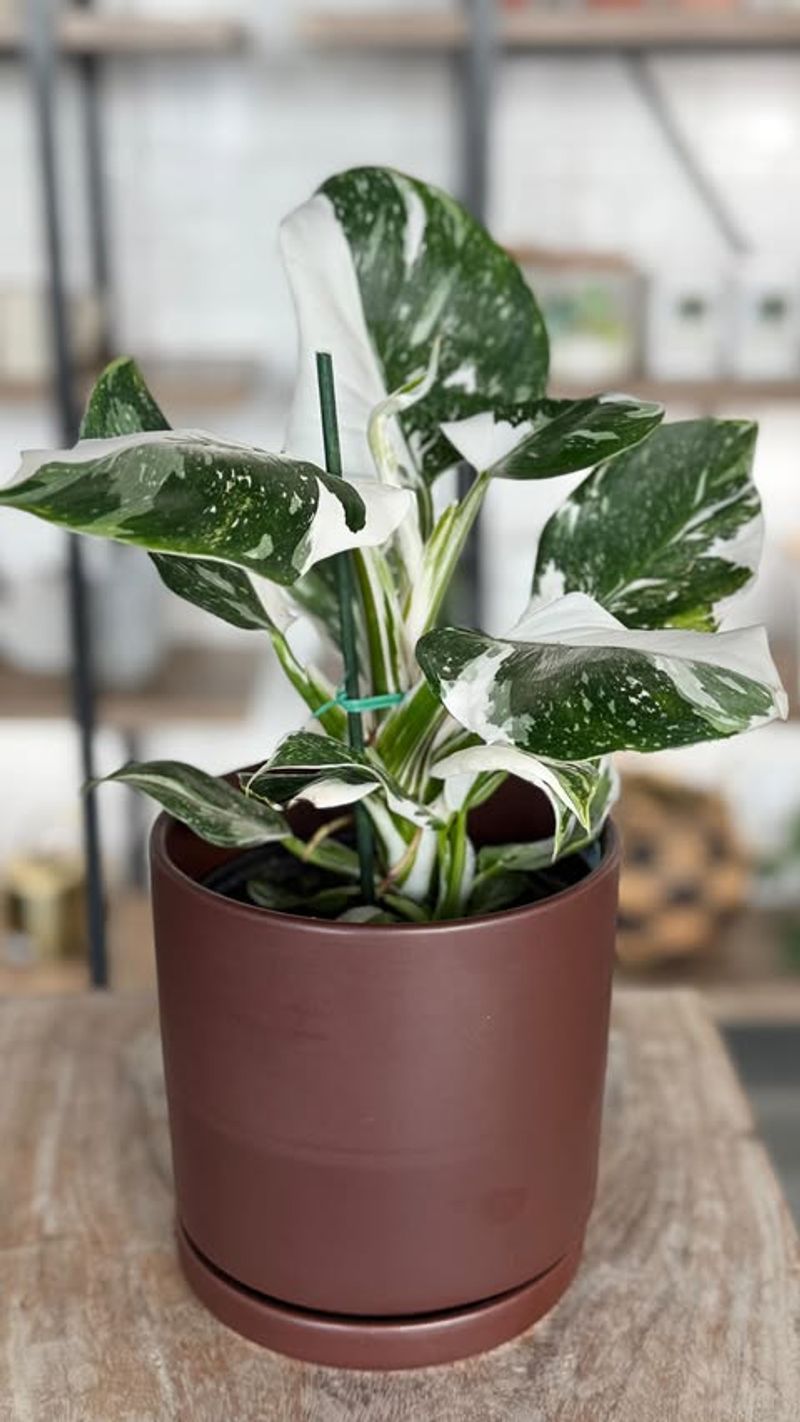
Bold white streaks and sectors splash across green leaves like someone painted them with a magical brush.
The White Wizard has enchanted Georgia collectors with its stunning variegation that often covers significant portions of each leaf.
Unlike some variegated plants that show only subtle color changes, this variety delivers dramatic contrast that makes a serious visual statement.
Columbus and Warner Robins plant enthusiasts have noticed that White Wizard tends to be more stable than some other variegated philodendrons.
While variegation levels still fluctuate from leaf to leaf, complete reversions to solid green happen less frequently.
Each new leaf brings anticipation as you wait to see how much white sectoring it will display once fully unfurled.
Proper lighting makes all the difference with this beauty.
Too little light and you’ll see more green leaves with minimal white sections.
Bright indirect light encourages maximum variegation while preventing sun damage to those delicate white portions that lack chlorophyll.
East or west-facing windows work wonderfully in Georgia homes.
The White Wizard grows at a moderate pace, producing new leaves regularly when conditions suit it.
Standard philodendron care applies with well-draining soil, regular watering, and occasional feeding during growing season.
Many growers throughout the state have found this variety more forgiving than the finicky Pink Princess, making it an excellent choice for those newer to rare philodendrons.
5. Philodendron Verrucosum
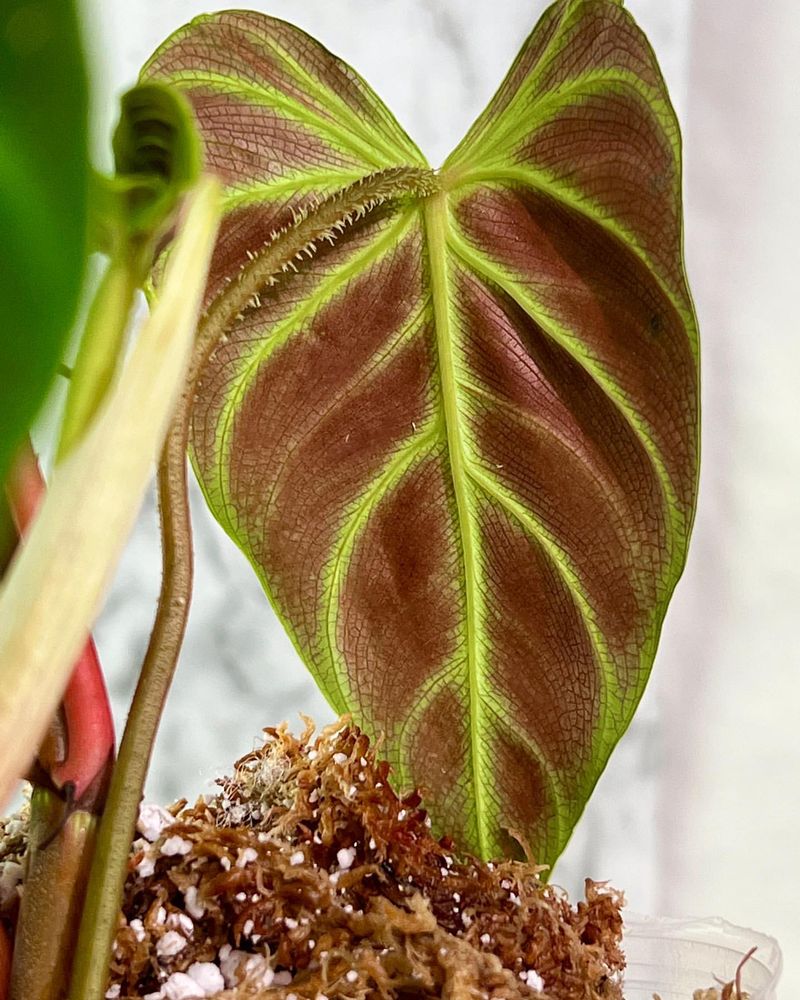
Fuzzy stems covered in tiny hairs give this climbing philodendron a distinctive character that sets it apart from smooth-stemmed relatives.
Philodendron Verrucosum produces heart-shaped leaves with an incredible velvety texture and emerald green coloration that sometimes shows hints of bronze on the undersides.
Those hairy, almost bristly stems feel surprising when you touch them, adding a unique tactile element to this already special plant.
Indoor gardeners across Georgia appreciate how this species brings cloud forest vibes into their homes.
The leaves display beautiful veining patterns that become more pronounced as they mature.
When backlit by sunlight streaming through windows, the foliage practically glows with an ethereal quality that photographs can barely capture.
High humidity is absolutely crucial for Verrucosum success.
Many Savannah and Atlanta growers keep theirs in bathrooms with good natural light or use cabinet greenhouses to maintain moisture levels.
The fuzzy stems are particularly sensitive to dry air, which can cause browning and stunted growth.
Misting helps temporarily, but consistent ambient humidity works better.
This climber appreciates a sturdy support structure as it grows upward.
Moss poles work wonderfully, allowing aerial roots to attach and encouraging larger leaf development.
Temperatures should stay above 60 degrees, which rarely poses problems in Georgia homes.
With proper humidity and care, Verrucosum becomes a conversation-starting centerpiece that showcases your serious plant-growing skills.
6. Philodendron Spiritus Sancti
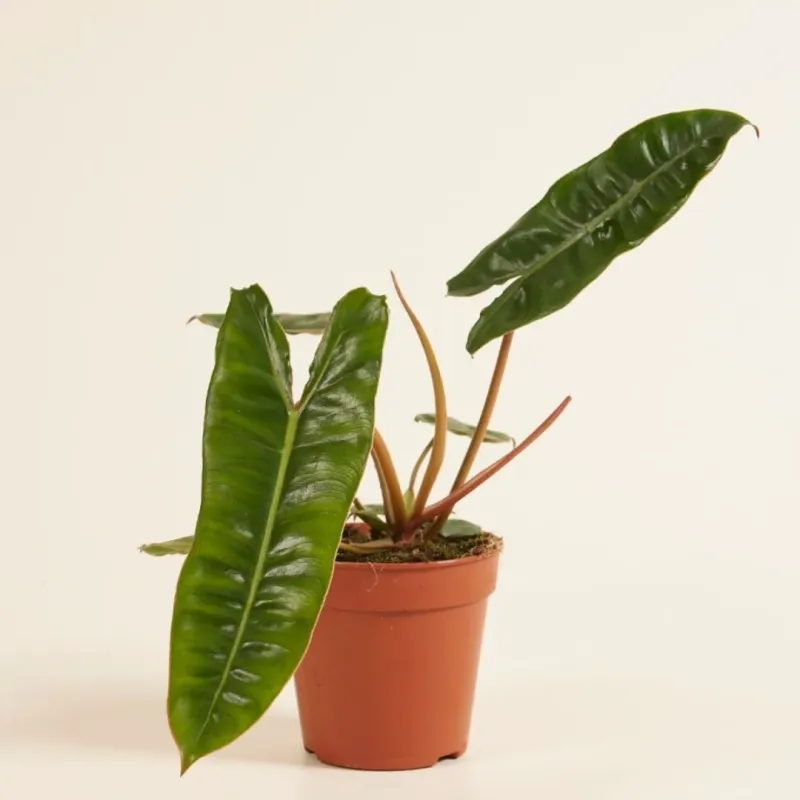
Rarity reaches legendary status with this critically endangered species that commands astronomical prices in the collector market.
Philodendron Spiritus Sancti produces narrow, deeply lobed leaves that look completely different from typical philodendron foliage.
Only a handful of mature specimens exist in the wild, making cultivated plants incredibly precious to serious collectors throughout Georgia and worldwide.
The distinctive leaf shape resembles elongated fingers reaching outward, creating an architectural silhouette unlike anything else in the philodendron family.
Plant enthusiasts in Atlanta’s collector circles sometimes spend years on waiting lists hoping to acquire even a small cutting.
When one becomes available at local specialty nurseries or through private sales, word spreads quickly through Georgia’s tight-knit rare plant community.
Growing conditions mirror other tropical philodendrons with bright indirect light, consistent moisture, and good humidity.
The extreme rarity means most Georgia growers treat their Spiritus Sancti plants like treasured jewels, providing optimal care and protection.
Even small plants receive premium positioning in collections where conditions stay most stable.
Propagation happens slowly, which contributes to the continued scarcity and high prices.
Tissue culture labs are working to make this species more accessible, though cultured plants still command significant investment.
For now, owning Spiritus Sancti represents the ultimate achievement for Georgia’s most dedicated philodendron collectors who’ve built relationships within the rare plant community.
7. Philodendron Mamei
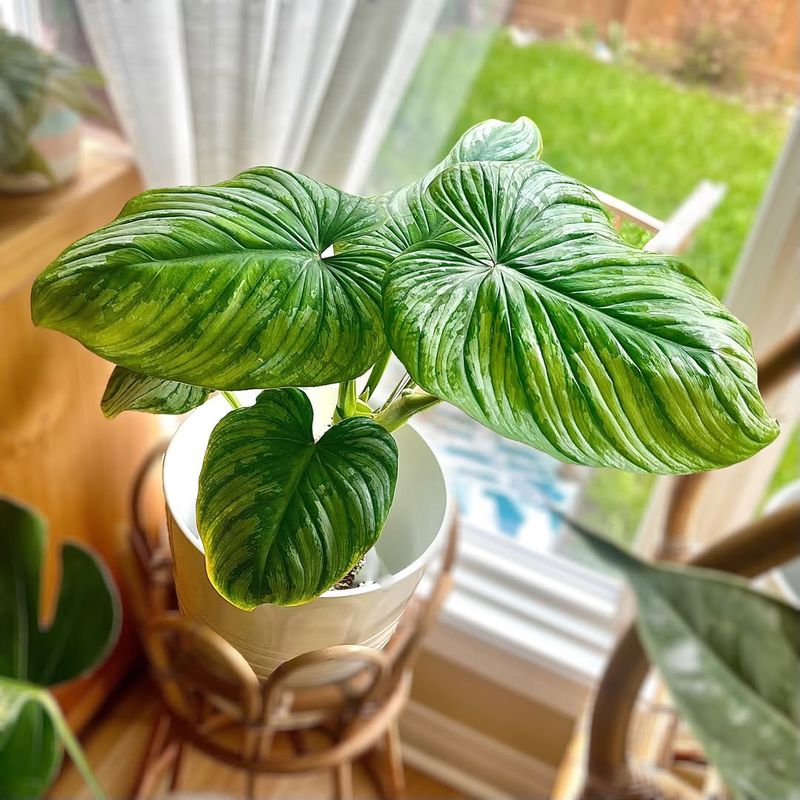
Silver splashes wash across massive heart-shaped leaves like moonlight frozen in place.
Philodendron Mamei crawls along the ground or across surfaces, producing foliage that can reach impressive dimensions when mature.
The silvery variegation appears naturally, creating patterns that shimmer beautifully under indoor lighting throughout Georgia homes.
This terrestrial grower behaves similarly to Gloriosum with its creeping rhizome that travels horizontally.
Plant lovers in Marietta and Decatur have discovered that providing room to spread encourages the most spectacular leaf development.
Each new leaf emerges slightly larger than the last when conditions remain favorable, eventually creating a stunning display of silver-splashed foliage.
The variegation on Mamei differs from typical white or pink patterns found on other philodendrons.
Instead, silvery sections blend into the green base color, creating a softer, more subtle effect that still catches the eye.
The overall appearance feels elegant and sophisticated rather than boldly contrasting.
Care requirements match most tropical philodendrons with one important note about the creeping rhizome.
It should rest on top of the soil surface rather than being buried, allowing new growth points to emerge properly.
Georgia growers use chunky, well-draining soil mixes that prevent the rhizome from staying too wet.
Moderate to bright indirect light keeps growth steady without scorching those beautiful silvery sections.
This crawler makes an excellent choice for anyone wanting something different from typical climbing varieties.
8. Philodendron Billietiae
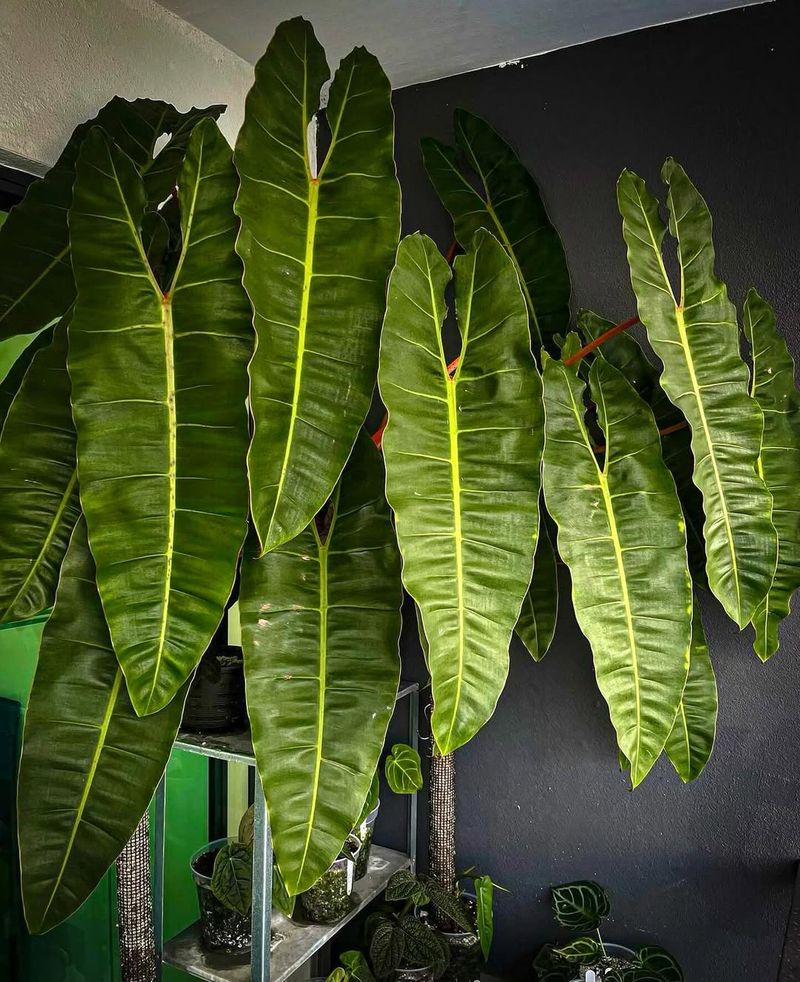
Bright orange petioles steal the show on this striking climber that brings unexpected color to Georgia plant collections.
Philodendron Billietiae produces long, narrow leaves that can exceed two feet in length, but those vibrant orange stems connecting leaves to the main plant create the real wow factor.
The contrast between deep green foliage and neon orange petioles looks almost artificial, yet it’s completely natural.
Plant collectors throughout Georgia have fallen for this species because it offers something visually different from typical green-on-green philodendrons.
The elongated leaf shape adds architectural interest, while those orange stems provide a pop of warm color year-round.
As plants mature and climb upward on supports, the effect becomes even more dramatic with multiple orange petioles visible at once.
Billietiae appreciates bright indirect light that brings out the most intense orange coloration in the stems.
Lower light conditions cause the orange to fade toward yellow or even greenish tones.
Many Alpharetta and Sandy Springs growers position theirs near bright windows with sheer curtains that filter harsh afternoon sun.
This climber grows vigorously when happy, producing new leaves regularly during growing season.
Standard philodendron care with well-draining soil, regular watering, and monthly feeding keeps it thriving.
The orange petioles remain colorful throughout the leaf’s life, maintaining visual interest even as foliage ages.
For Georgia indoor gardeners wanting a rare philodendron that’s also relatively easy to grow, Billietiae hits the perfect sweet spot.
9. Philodendron Plowmanii
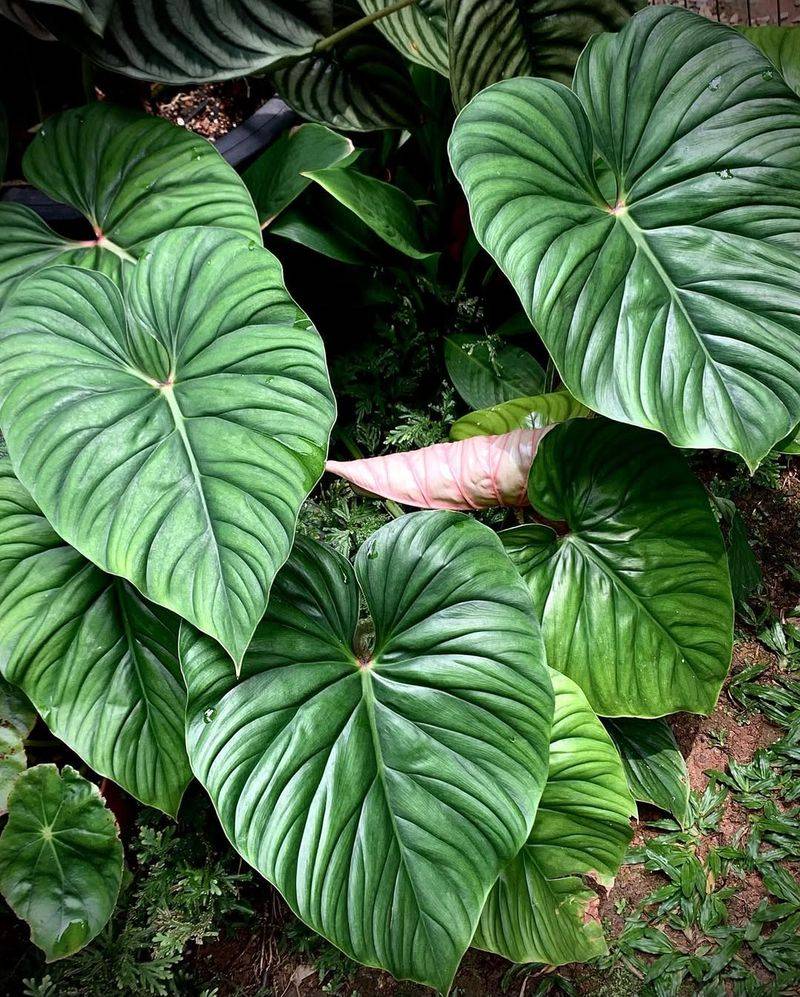
Ruffled leaf edges and subtle silver markings create understated elegance in this terrestrial grower that’s gaining popularity across Georgia.
Philodendron Plowmanii doesn’t climb or crawl extensively like some relatives, instead forming a more compact clump of glossy, heart-shaped leaves.
The slightly wavy or ruffled edges add textural interest that becomes more pronounced as leaves mature and harden.
Silver streaks along the midrib and sometimes extending into the leaf blade provide subtle variegation without the drama of Pink Princess or White Wizard.
This more refined appearance appeals to Georgia collectors who appreciate beauty that reveals itself gradually rather than shouting for attention.
The overall effect feels sophisticated and works beautifully in modern or minimalist interior designs.
Growing Plowmanii successfully requires understanding its preference for staying slightly more compact.
Unlike vigorous climbers, this species doesn’t need tall moss poles or extensive climbing space.
A sturdy pot with excellent drainage suits it perfectly, making it ideal for Georgia apartment dwellers or anyone with limited space.
The compact growth habit also makes it easier to maintain optimal humidity around the foliage.
Bright indirect light keeps growth steady and brings out the best leaf coloration.
The glossy leaf surface reflects light beautifully, adding brightness to indoor spaces throughout Augusta and beyond.
With moderate watering, occasional feeding, and protection from temperature extremes, Plowmanii proves itself a rewarding addition to any rare philodendron collection in the Peach State.