12 Beautifully Fragrant Plants That Tennessee Gardeners Can’t Resist
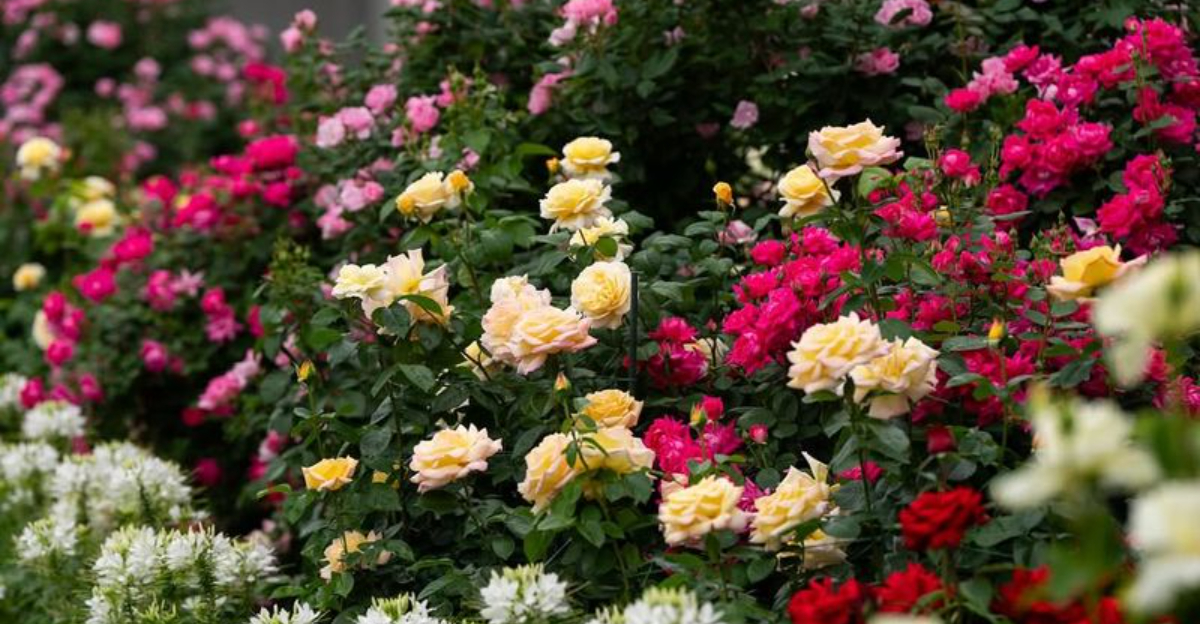
A Tennessee garden can turn into pure magic when the right scents drift through the air.
Some plants whisper sweetness with every breeze, pulling visitors in and making gardeners fall head over heels.
These fragrant favorites handle heat, humidity, and surprise storms while still filling yards with aromas that linger long after sunset.
A single bloom can change the whole mood of a porch, walkway, or flower bed.
With petals that charm the eye and perfume that stops folks in their tracks, these plants earn their spot in gardens across the state.
Their scent brings comfort, color, and a touch of Southern charm to any space.
1. Gardenia
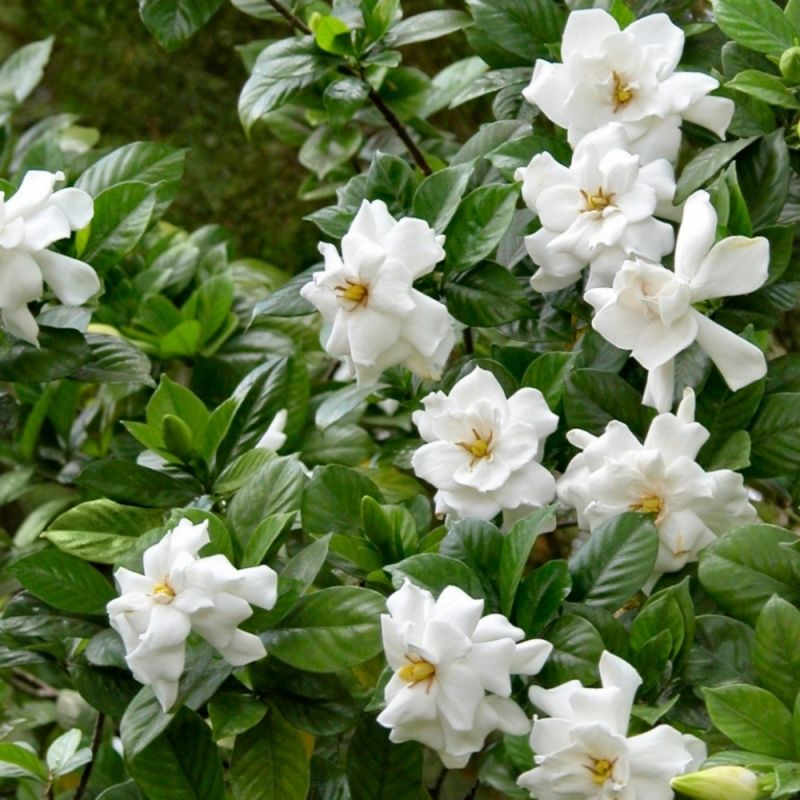
Few flowers can match the intoxicating perfume of gardenias when they bloom during late spring and early summer.
Their creamy white petals release a sweet, almost tropical scent that can fill an entire yard with fragrance.
Tennessee gardeners often plant them near patios, walkways, or bedroom windows to enjoy their heavenly aroma.
Gardenias prefer acidic soil and partial shade, making them perfect for planting under tall trees or on the north side of your home.
They need consistent moisture and benefit from regular feeding with acid-loving plant fertilizer.
Mulching around the base helps retain moisture and keeps roots cool during Tennessee’s hot summers.
These evergreen shrubs grow three to six feet tall and wide, creating beautiful foundation plantings or hedges.
Their glossy, dark green leaves provide year-round interest even when flowers aren’t blooming.
Many Tennessee gardeners grow gardenias in containers on shaded porches, where they can easily control soil conditions.
Watch for yellowing leaves, which usually indicates iron deficiency in alkaline soil.
Regular applications of chelated iron keep foliage deep green and healthy.
Gardenias reward patient gardeners with blooms that last several weeks and fragrance that creates unforgettable memories.
2. Confederate Jasmine
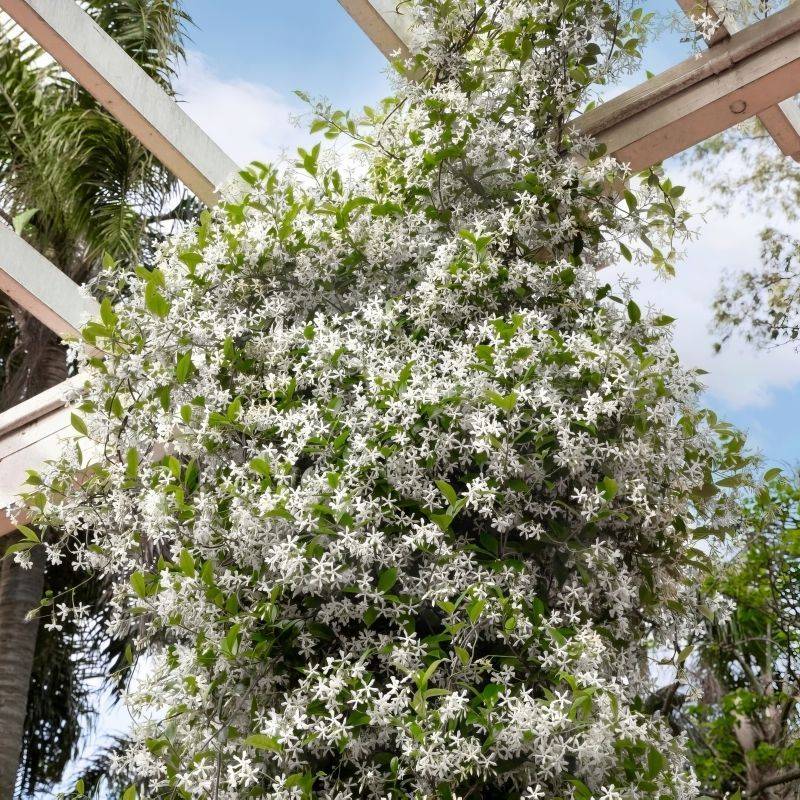
When Confederate jasmine bursts into bloom each April and May, the sweet perfume announces spring’s arrival across Tennessee neighborhoods.
This vigorous evergreen vine produces thousands of small, white, star-shaped flowers that release an enchanting fragrance reminiscent of true jasmine.
The scent carries on the breeze, delighting everyone within smelling distance.
Despite its name, Confederate jasmine isn’t actually a true jasmine but rather a member of the dogbane family.
It climbs readily on fences, arbors, trellises, and walls, reaching fifteen to twenty feet when properly supported.
Tennessee gardeners love using it to cover unsightly structures or create living privacy screens that smell wonderful.
This tough vine tolerates Tennessee’s heat and humidity with ease, thriving in full sun to partial shade.
Once established, it handles drought reasonably well, though regular watering produces the most abundant flowering.
The glossy evergreen foliage stays attractive throughout winter, providing year-round screening.
Confederate jasmine grows well throughout Tennessee, from Memphis to the Smoky Mountains, adapting to various soil types.
Prune after flowering to control size and shape, as new blooms form on old wood.
This low-maintenance vine rewards minimal care with maximum fragrance and beauty.
3. Lavender
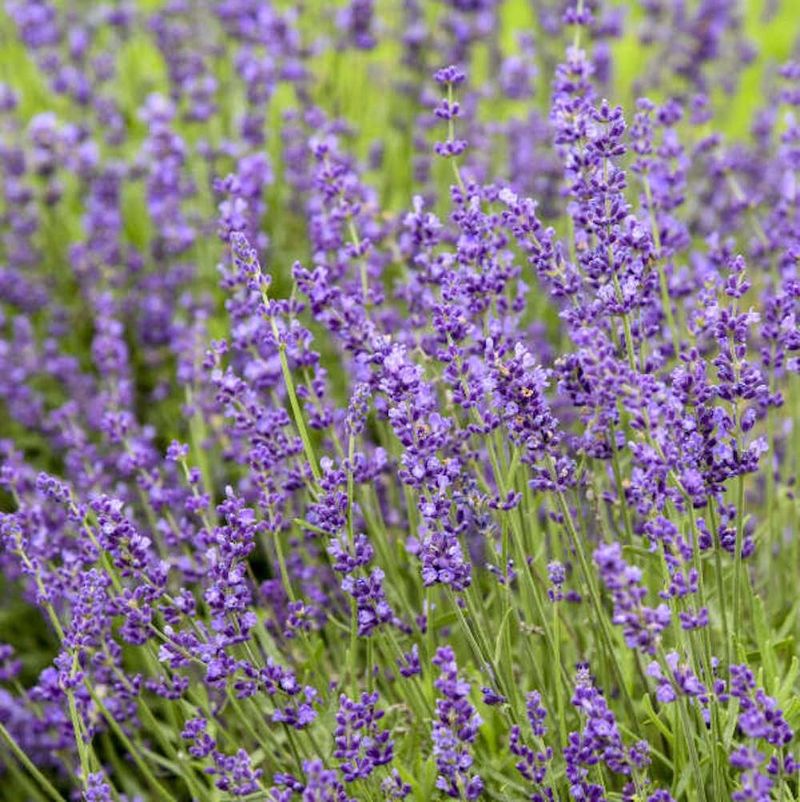
Lavender’s clean, refreshing scent has captivated gardeners for centuries, and Tennessee growers have discovered which varieties thrive in the state’s climate.
English lavender varieties like ‘Munstead’ and ‘Hidcote’ perform well in Tennessee gardens, producing fragrant purple spikes from late spring through summer.
The aromatic foliage smells wonderful even when plants aren’t flowering.
Success with lavender in Tennessee requires excellent drainage and plenty of sunshine.
Plant in raised beds or on slopes where water won’t collect around roots, as soggy soil causes problems.
Adding gravel or sand to heavy clay soil improves drainage significantly.
Tennessee’s humidity challenges lavender, so proper spacing allows air circulation between plants.
These Mediterranean natives prefer lean soil and don’t need rich fertilization.
Overfeeding produces lush growth with less fragrance and reduced hardiness.
Pruning after flowering encourages compact growth and often triggers a second bloom flush in fall.
Harvest flower stalks for sachets, potpourri, or culinary uses.
Lavender attracts butterflies and bees while deer typically avoid it, making it valuable for Tennessee wildlife gardens.
The silvery-green foliage contrasts beautifully with darker-leaved plants.
Many Tennessee gardeners plant lavender along pathways where brushing against foliage releases its calming scent.
4. Honeysuckle
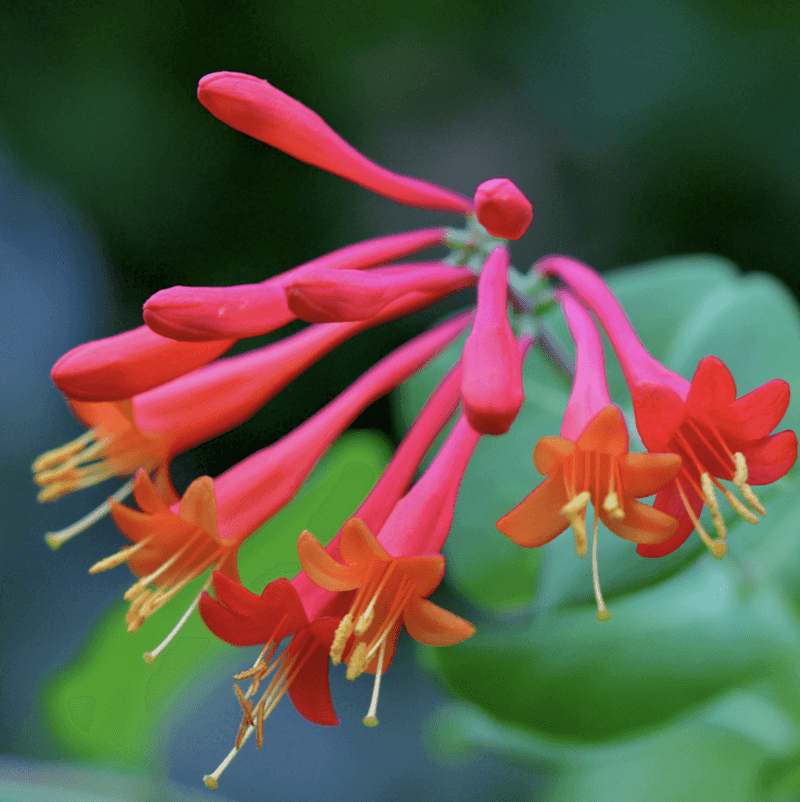
Native honeysuckles fill Tennessee woods and gardens with their distinctive sweet fragrance that intensifies during evening hours.
The tubular flowers, typically yellow, white, or coral, attract hummingbirds and sphinx moths while perfuming the air.
Many Tennessee residents have childhood memories of tasting the sweet nectar from honeysuckle blooms.
Japanese honeysuckle, while beautifully fragrant, has become invasive throughout Tennessee and should be avoided.
Instead, choose native species like coral honeysuckle or trumpet honeysuckle, which provide fragrance without aggressive spreading.
These well-behaved natives bloom repeatedly from spring through fall, offering months of color and scent.
Coral honeysuckle produces tubular red-orange flowers with less fragrance than Japanese types but still offers a light, sweet scent.
It climbs moderately to fifteen feet, making it manageable for most garden settings.
Plant near seating areas or windows where you can appreciate both the fragrance and hummingbird visitors.
Honeysuckles grow in full sun to partial shade throughout Tennessee, tolerating various soil conditions once established.
They need sturdy support for climbing and benefit from occasional pruning to prevent tangling.
The combination of fragrance, flowers, and wildlife appeal makes native honeysuckles valuable additions to Tennessee landscapes.
5. Sweet Autumn Clematis
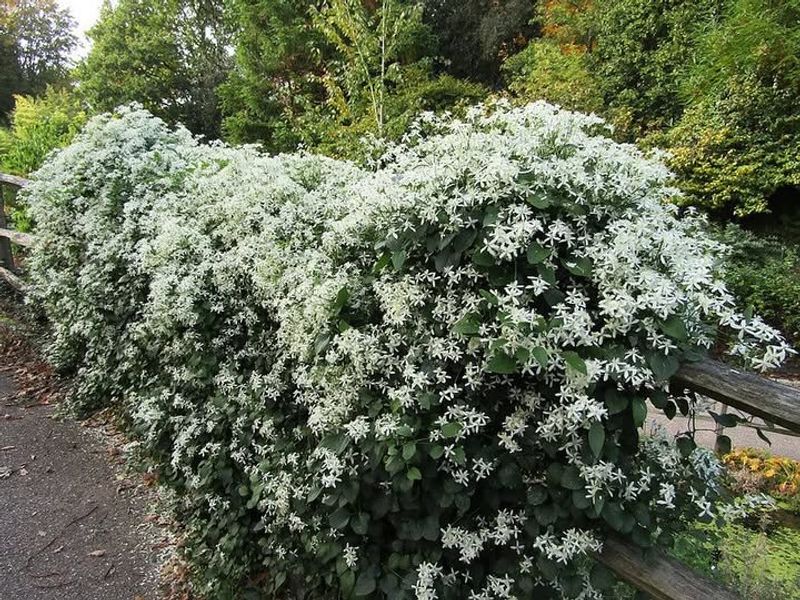
Just when many plants finish blooming, sweet autumn clematis explodes with thousands of small white flowers that blanket fences, arbors, and structures throughout Tennessee.
The vanilla-like fragrance becomes most noticeable during warm afternoons and evenings in August and September.
This vigorous vine creates a spectacular late-season display when gardens need refreshment.
Sweet autumn clematis grows with remarkable enthusiasm, quickly covering large areas with its twining stems.
Tennessee gardeners appreciate this vigor when screening unsightly views or covering chain-link fences.
The vine can reach twenty to thirty feet in a single season, so plant it where aggressive growth is welcome rather than problematic.
Unlike many clematis varieties that need special care, sweet autumn clematis thrives with minimal attention.
It tolerates Tennessee’s heat, humidity, and occasional drought once roots establish.
Full sun produces the most abundant flowering, though partial shade is acceptable.
The vine goes dormant in winter, regrowing vigorously each spring.
After flowering, fluffy seed heads add textural interest through fall and early winter.
Some Tennessee gardeners consider this clematis too vigorous and prefer more restrained vines.
However, when you need fast coverage and late-season fragrance, few plants perform better in Tennessee’s climate.
6. Tea Olive
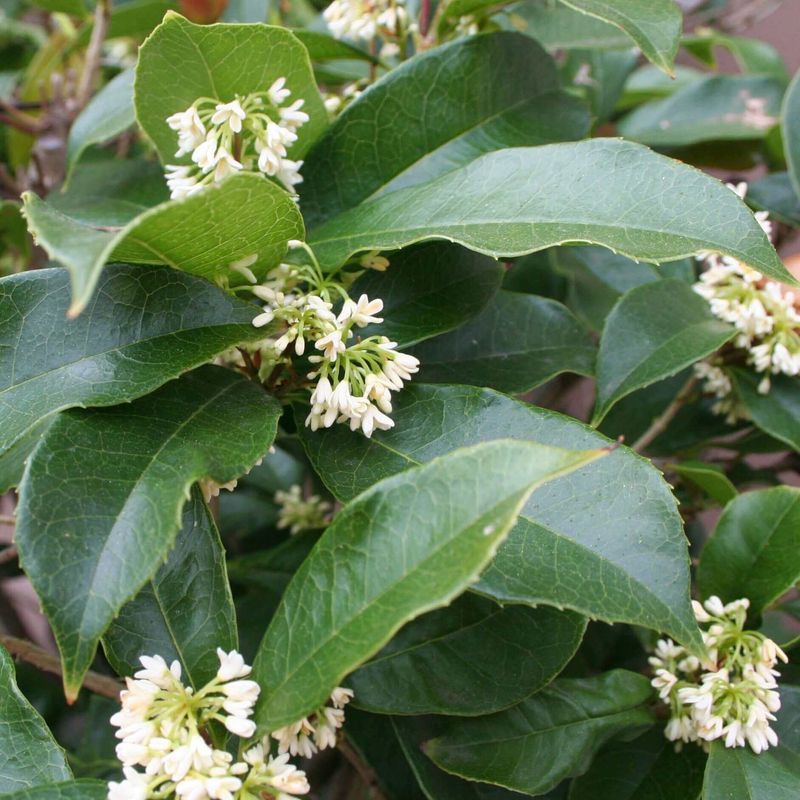
Tea olive might win the prize for most fragrant plant per flower size, as its tiny blooms produce an incredibly powerful apricot-like scent.
The fragrance carries remarkable distances, often leading Tennessee gardeners on searches to find the source.
Fall-blooming varieties perfume gardens during September and October, while spring types flower in March and April.
Osmanthus fragrans and its varieties grow as evergreen shrubs that eventually reach eight to fifteen feet tall in Tennessee landscapes.
The glossy, dark green foliage remains attractive year-round, making tea olive valuable even when not flowering.
Many Tennessee gardeners plant them near doorways, patios, or windows where the fragrance can be fully appreciated.
Tea olive prefers partial shade and well-drained, slightly acidic soil, similar conditions to azaleas and camellias.
It tolerates Tennessee’s summer heat when provided adequate moisture and protection from harsh afternoon sun.
These shrubs grow slowly but steadily, requiring minimal pruning to maintain attractive shapes.
Cold hardiness varies by variety, with some tolerating temperatures throughout Tennessee while others suit only southern regions.
‘Fudingzhu’ offers excellent cold tolerance for middle and eastern Tennessee gardens.
The combination of powerful fragrance, evergreen foliage, and low maintenance makes tea olive a treasured plant among Tennessee gardeners.
7. Mock Orange
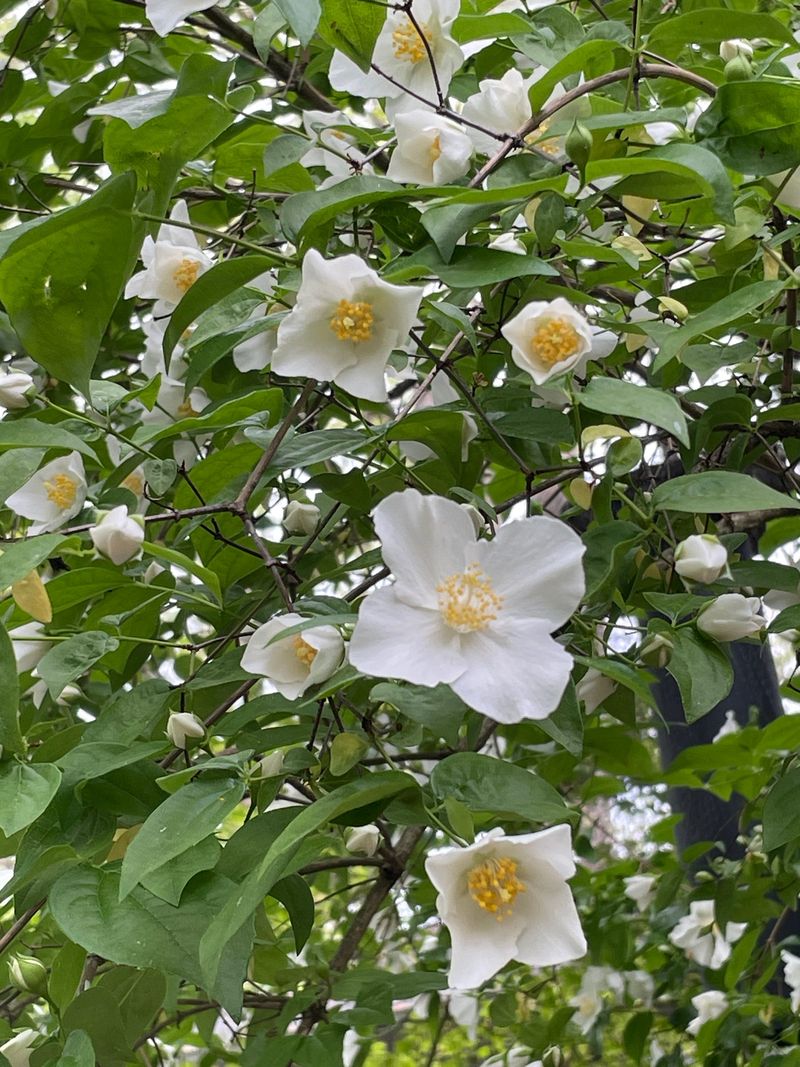
Mock orange earns its name from flowers that smell remarkably similar to orange blossoms, filling Tennessee gardens with sweet citrus fragrance each May and June.
The pure white, four-petaled flowers appear in clusters along arching branches, creating a spectacular spring display.
Old-fashioned varieties offer the strongest fragrance, while some modern hybrids sacrifice scent for double flowers.
These deciduous shrubs grow six to ten feet tall and wide, making them excellent choices for mixed borders or informal hedges.
Mock orange performs well throughout Tennessee, tolerating the state’s variable weather conditions.
Plant in full sun to partial shade for best flowering, though too much shade reduces bloom production significantly.
After flowering finishes, prune to shape plants and remove oldest stems to encourage vigorous new growth.
Mock orange blooms on previous year’s wood, so timing pruning correctly ensures flowers the following spring.
These tough shrubs tolerate Tennessee’s clay soils and require little care once established in appropriate locations.
The fragrance attracts pollinators while deer generally leave mock orange alone, making it useful for Tennessee gardens with browsing pressure.
Combine with other spring bloomers like lilacs and peonies for a fragrance garden that delights the senses.
Mock orange’s old-fashioned charm and reliable performance keep it popular across Tennessee.
8. Roses
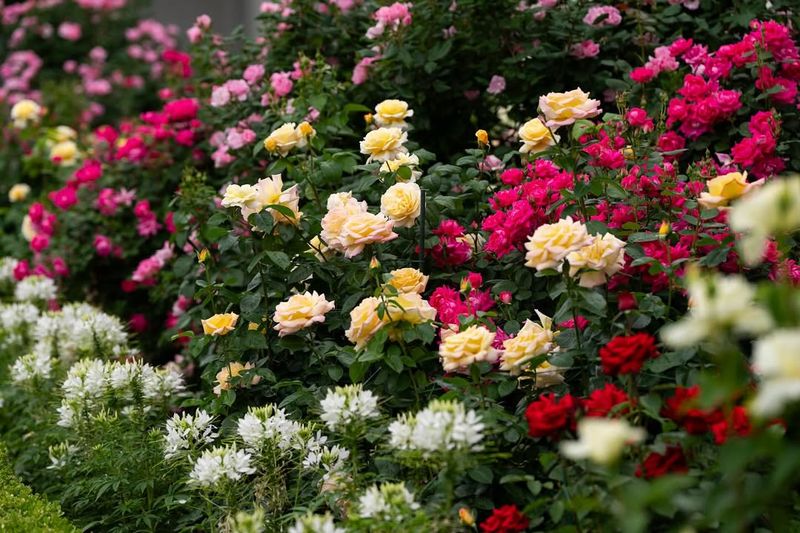
Nothing says classic garden fragrance quite like roses, and Tennessee’s climate allows growing many wonderfully scented varieties.
Old garden roses and David Austin English roses typically offer the strongest perfumes, ranging from sweet and fruity to spicy and complex.
Modern hybrid teas often sacrifice fragrance for perfect flower form, so choose varieties specifically noted for scent.
Tennessee gardeners find success with roses by selecting disease-resistant varieties suited to the state’s humid summers.
The Knock Out series offers good disease resistance though limited fragrance, while Earth Kind roses combine toughness with better scent.
Many antique roses thrive in Tennessee, having proven themselves over decades in similar climates.
Roses need at least six hours of direct sunlight daily and well-drained soil enriched with organic matter.
Morning sun with afternoon shade helps flowers last longer during Tennessee’s hot summers.
Regular watering during dry periods and monthly fertilization during the growing season support abundant blooming and strong fragrance.
Black spot and powdery mildew challenge Tennessee rose growers, so choosing resistant varieties reduces maintenance significantly.
Proper spacing allows air circulation, which helps prevent fungal diseases.
Despite requiring more care than some plants, fragrant roses reward Tennessee gardeners with incomparable beauty and scent from spring through fall.
9. Lilac
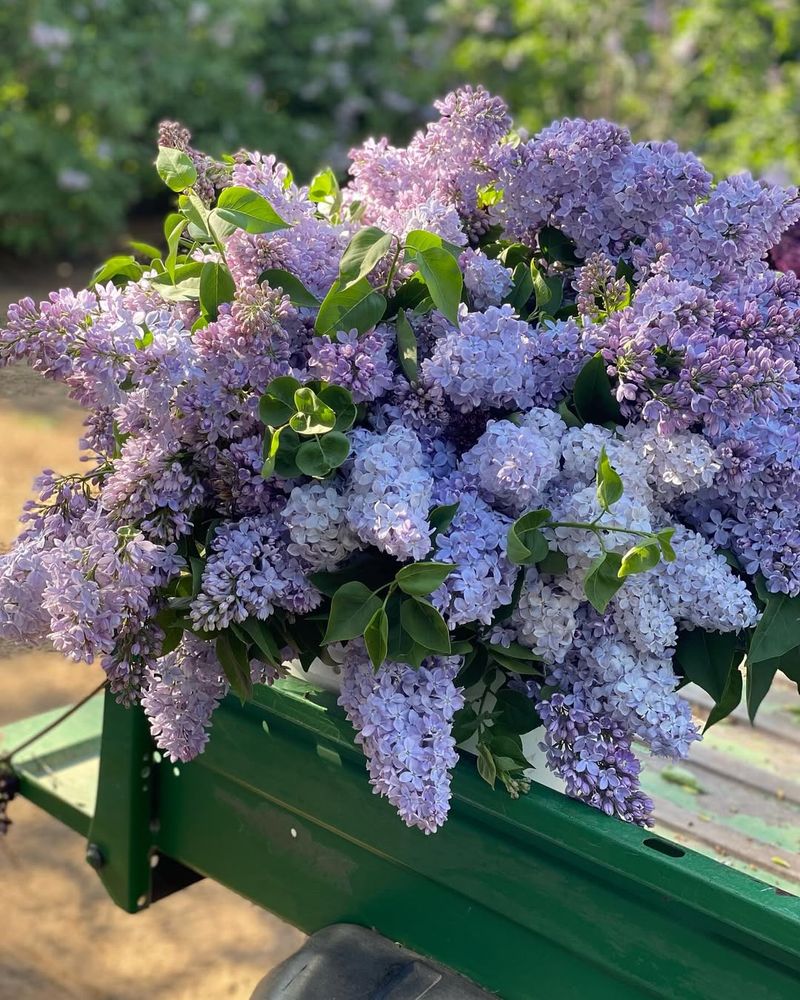
Lilacs bring nostalgic springtime fragrance to Tennessee gardens, though they require careful variety selection for success in the state’s warm climate.
Traditional lilacs bred for northern gardens struggle with Tennessee’s mild winters and hot summers.
Fortunately, southern-adapted varieties like ‘Miss Kim’ and ‘Bloomerang’ perform reliably, producing the beloved lilac fragrance that reminds many people of grandmother’s garden.
These deciduous shrubs bloom in April and May, producing cone-shaped clusters of tiny flowers in shades of purple, pink, white, or lavender.
The intense, sweet fragrance carries well on spring breezes, perfuming entire neighborhoods.
Cut branches bring that wonderful scent indoors, lasting about a week in arrangements.
Lilacs need full sun and good air circulation to thrive in Tennessee’s climate.
Plant them where they receive at least six hours of direct sunlight daily.
Well-drained soil is essential, as wet conditions encourage fungal problems.
Tennessee’s alkaline soils suit lilacs well, unlike acid-loving plants that struggle without amendments.
Prune immediately after flowering, as next year’s blooms form on current season’s growth.
Remove spent flower clusters to direct energy into plant growth rather than seed production.
While lilacs require more attention than some shrubs, their incomparable spring fragrance makes them worthwhile for Tennessee gardeners willing to meet their needs.
10. Sweet Alyssum
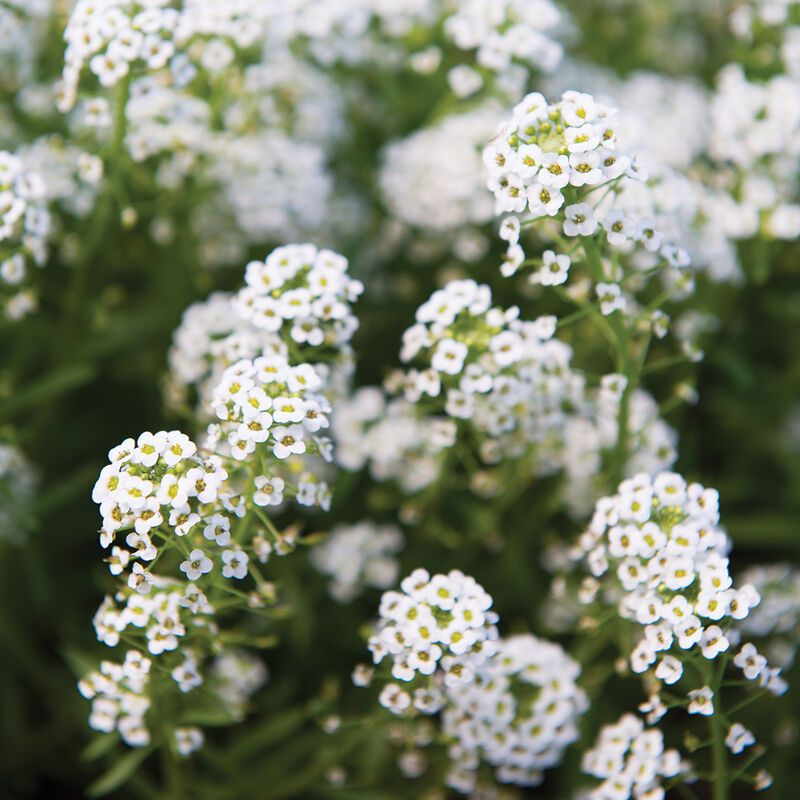
Sweet alyssum may be small, but its honey-like fragrance punches well above its weight class in Tennessee gardens.
This low-growing annual produces masses of tiny white, pink, or purple flowers that blanket the ground with color and scent.
The fragrance intensifies during evening hours, making alyssum perfect for planting near outdoor living spaces where you relax after dinner.
Growing just four to six inches tall, sweet alyssum works beautifully as an edging plant along pathways, in containers, or cascading over wall edges.
Tennessee gardeners appreciate how quickly it fills spaces between larger plants, creating a fragrant carpet.
The fine-textured flowers attract beneficial insects while providing continuous color from spring through fall.
Sweet alyssum thrives in Tennessee’s spring and fall weather but may pause during peak summer heat.
It often reseeds, returning year after year in the same locations.
Plant in full sun to partial shade in well-drained soil.
Deadheading isn’t necessary, as spent flowers are tiny and inconspicuous.
This annual tolerates light frost, making it one of the last flowers blooming in Tennessee fall gardens.
Combine white alyssum with colorful annuals for contrast, or plant masses of a single color for impact.
The combination of easy care, continuous blooming, and sweet fragrance makes alyssum a favorite among Tennessee gardeners.
11. Four O’Clocks
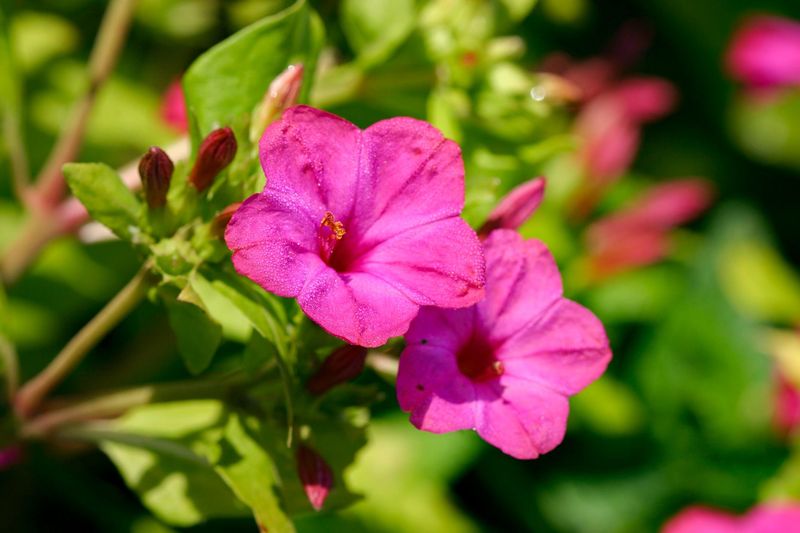
Four o’clocks earned their quirky name by opening their trumpet-shaped flowers late each afternoon, releasing sweet fragrance into evening air.
These old-fashioned perennials have graced Tennessee gardens for generations, self-sowing reliably and returning year after year.
The flowers come in brilliant shades of pink, magenta, yellow, white, and even bicolors, sometimes all on the same plant.
Growing two to three feet tall and equally wide, four o’clocks form bushy mounds covered with flowers from midsummer through frost.
Tennessee gardeners love their carefree nature and tolerance for heat, humidity, and less-than-perfect soil.
Plant them where you’ll be outdoors during evening hours to enjoy both their vibrant colors and sweet perfume.
Four o’clocks grow from tuberous roots that can be dug and stored like dahlias, though most Tennessee gardeners simply let them reseed naturally.
They tolerate full sun but appreciate afternoon shade during the hottest months.
Once established, these tough plants handle drought reasonably well, though regular watering produces more abundant flowering.
The flowers close each morning as temperatures rise, reopening late afternoon when cooler conditions return.
This unique habit makes them perfect companions for morning-blooming plants, creating all-day interest.
Four o’clocks attract hummingbird moths and other evening pollinators while filling Tennessee gardens with old-fashioned charm and fragrance.
12. Peonies
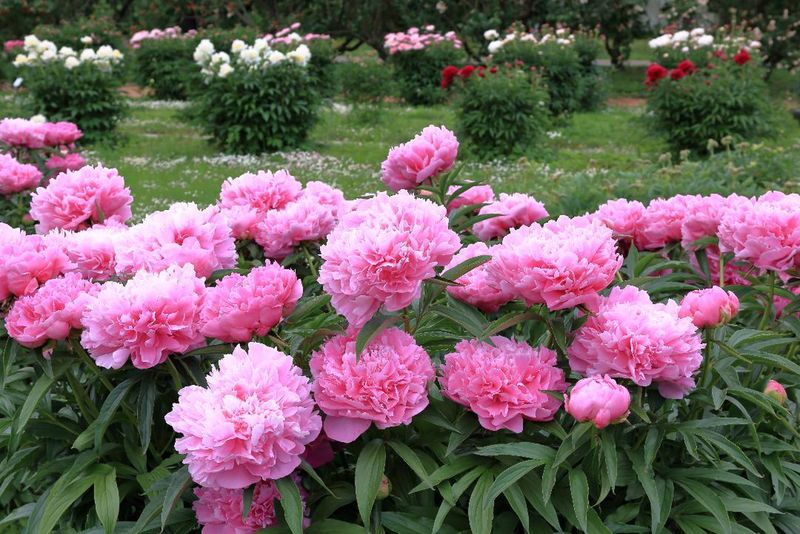
Peonies produce some of spring’s most spectacular and fragrant flowers, with many varieties offering scents ranging from sweet roses to spicy citrus.
These long-lived perennials can bloom in Tennessee gardens for decades, becoming cherished heirlooms passed between generations.
The massive flowers, often five to six inches across, make stunning cut arrangements that perfume entire rooms.
Tennessee gardeners should choose early and midseason peony varieties, as late-season types may struggle with the state’s quickly warming springs.
Plant bare-root peonies in fall, positioning eyes just one to two inches below soil surface.
Planting too deeply prevents flowering, a common mistake that frustrates new peony growers.
Peonies need full sun and excellent drainage to thrive in Tennessee’s climate.
Amend heavy clay soil with compost to improve drainage and provide nutrients.
These plants dislike being moved once established, so choose planting locations carefully.
Support heavy flowers with peony rings or stakes to prevent rain-laden blooms from flopping onto the ground.
After flowering ends, maintain foliage throughout summer to build energy for next year’s blooms.
Cut back dry foliage in fall after frost.
While peonies require patience, as newly planted roots take two to three years to produce abundant flowers, their longevity and spectacular fragrant blooms make them worthwhile investments for Tennessee gardeners.