9 Berry Plants Perfect For Northern California Gardens
Northern California is a berry lover’s paradise, but even here, the secret to a record-breaking harvest is all in the timing.
From the foggy coastal valleys to the sun-drenched foothills – our Mediterranean climate offers the perfect stage for everything from blueberries to raspberries.
If you plant the right varieties at the right moment, your backyard can overflow with homegrown fruit long before the intense summer heat sets in.
Choosing well-adapted berries does more than just boost your harvest; it keeps pests in check and minimizes watering struggles year after year.
For gardeners who want juicy, sun-ripened fruit and a vibrant, pollinator-friendly landscape, Northern California is the ideal place to grow – provided you know which varieties to pick and how to care for them.
These simple strategies will help you turn your garden into a productive, low-maintenance berry patch.
1. Blueberries Bring Sweet Flavor
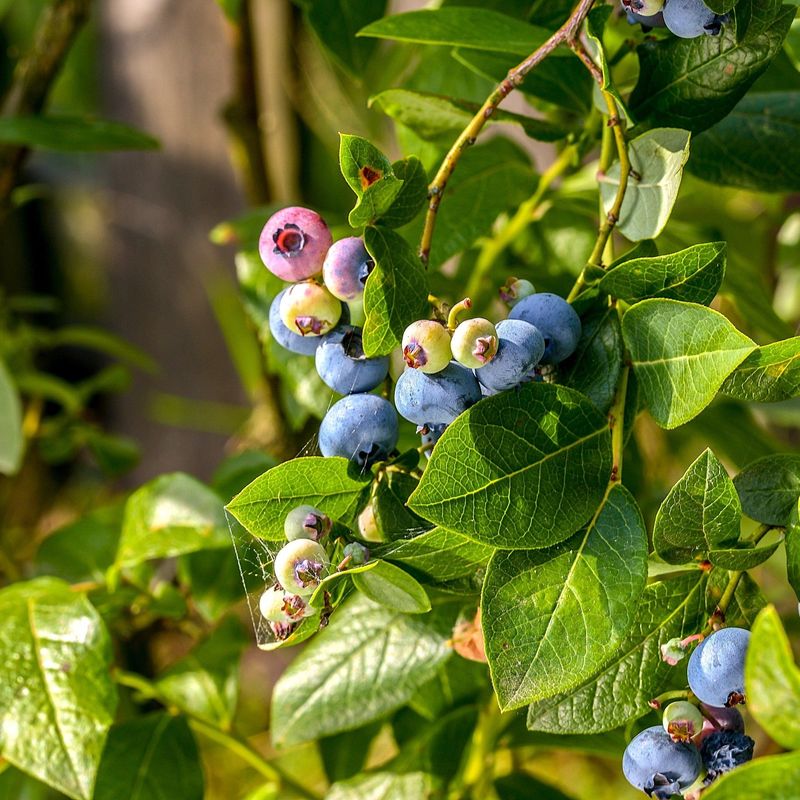
Few fruits feel as rewarding to grow as blueberries, especially when you bite into a sun-warmed berry straight from your own backyard.
In Northern California, blueberries grow best in acidic soil with a pH between 4.5 and 5.5, which differs from most garden soils in the region.
Amending beds with sulfur or planting in containers filled with acidic potting mix helps meet this requirement without too much hassle.
Southern highbush varieties like ‘Misty,’ ‘O’Neal,’ and ‘Sunshine Blue’ perform reliably across many Northern California climates, including warmer inland areas.
These cultivars have lower chill hour requirements, which suits regions that don’t always get long cold winters.
Planting two different varieties nearby encourages cross-pollination and noticeably boosts berry production.
Full sun is ideal, though afternoon shade in hot inland zones helps prevent leaf scorch. Blueberries prefer consistent moisture and benefit from drip irrigation to keep roots evenly moist without waterlogging.
Mulching with wood chips or pine bark helps retain soil moisture and gradually lowers soil pH over time. Fertilize with an acid-forming fertilizer in early spring and again after harvest to support vigorous growth.
Prune out older, woody canes every few years to encourage fresh, productive shoots from the base of the plant.
2. Raspberries Offer Summer Harvests
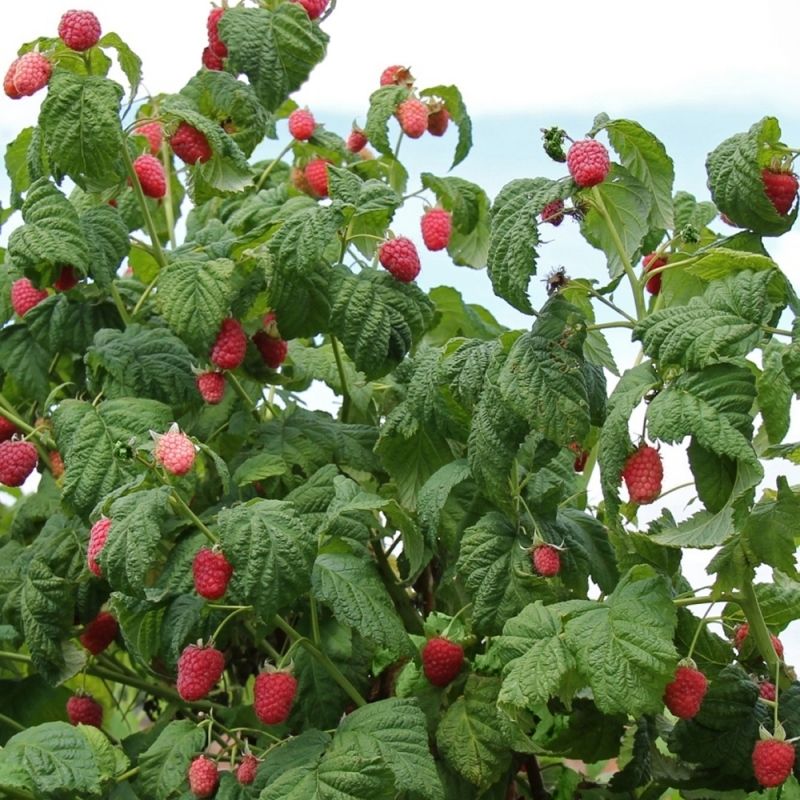
There’s something almost magical about walking out on a warm July morning and picking a bowl of fresh raspberries before breakfast.
Raspberries are surprisingly well-suited to Northern California gardens, particularly in coastal and foothill areas where summer temperatures stay moderate.
In hotter inland zones, some afternoon shade helps canes avoid heat stress during peak summer months.
Varieties like ‘Autumn Bliss,’ ‘Caroline,’ and ‘Heritage’ are popular choices because they produce reliable crops without demanding too much from the gardener.
Ever-bearing types offer two harvest windows – one in early summer and another in fall – which extends your picking season considerably.
Plant bare-root canes in late winter or early spring in well-drained soil enriched with compost.
Raspberries need support, so installing a simple trellis or wire system at planting time saves effort later. Space canes about 18 to 24 inches apart in rows, and keep rows roughly 8 feet apart to allow good air circulation.
Good airflow reduces fungal disease pressure, which is especially helpful in cooler, foggier coastal gardens. Water consistently but avoid soggy soil, as raspberries are prone to root rot in waterlogged conditions.
Fertilize with a balanced granular fertilizer in early spring. After harvest, cut floricanes down to the ground to keep the planting tidy and productive for seasons to come.
3. Blackberries Produce Juicy Berries
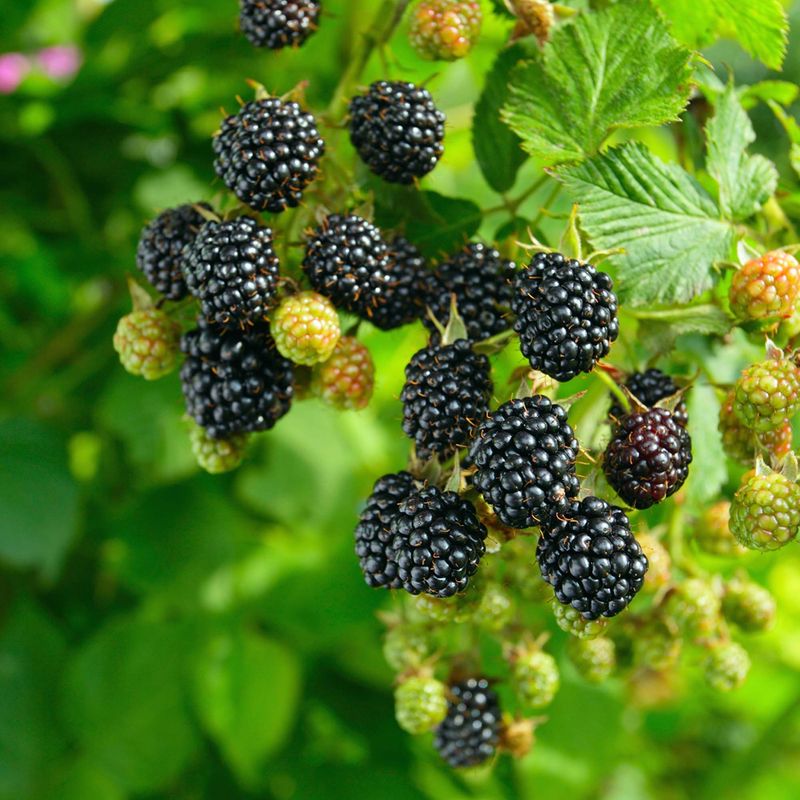
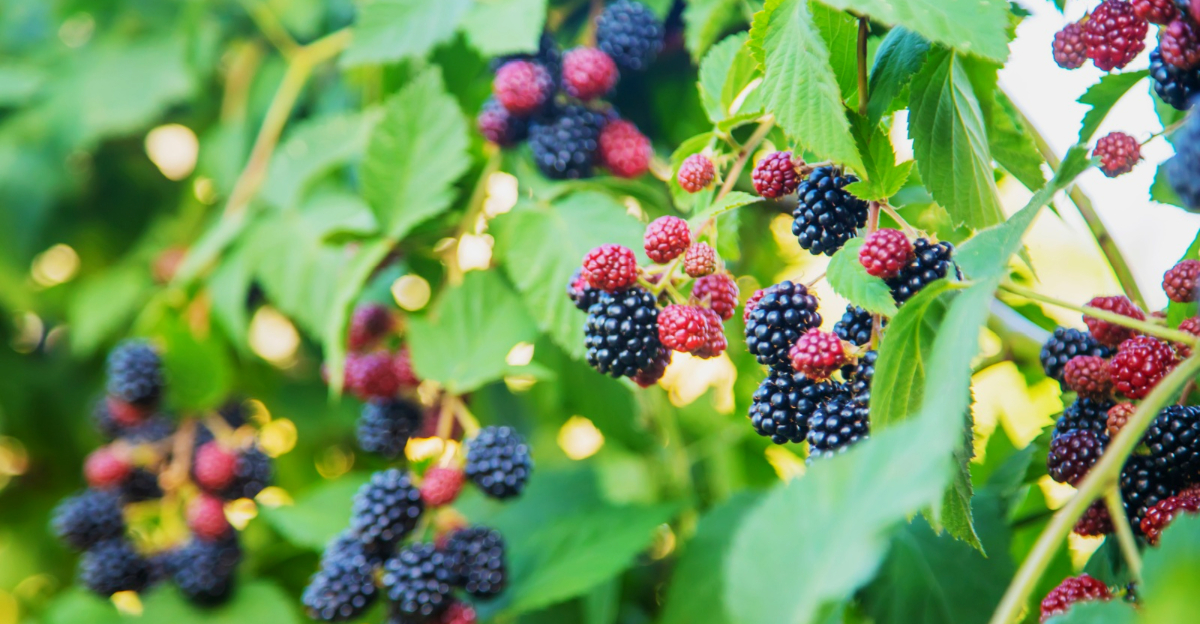
Bold, juicy, and incredibly productive, blackberries have a long history in Northern California gardens and for good reason. The region’s warm summers and mild winters create nearly ideal conditions for thornless and thorny varieties alike.
Blackberries are vigorous growers, so giving them adequate space and a sturdy support structure from the start pays off quickly.
Thornless varieties like ‘Chester,’ ‘Triple Crown,’ and ‘Apache’ are popular among home gardeners because they make harvesting far more comfortable. These cultivars produce large, sweet berries and tend to resist disease better than older thorny types.
Plant in full sun for the heaviest crops, though partial shade is tolerated in warmer inland areas where afternoon heat can be intense.
Well-drained soil with plenty of organic matter gives blackberries the foundation they need for strong root development. Water regularly during the growing season, tapering off as berries ripen to concentrate sweetness.
Space plants about 4 to 6 feet apart along a trellis or fence, training new canes upward as they grow. After fruiting, cut the two-year-old canes that bore fruit down to soil level to make room for fresh growth.
Fertilize in early spring with a balanced fertilizer and again in midsummer if plants appear pale or slow-growing.
Mulching around the base helps suppress weeds and retain soil moisture through the dry summer months.
4. Strawberries Give Quick Harvests
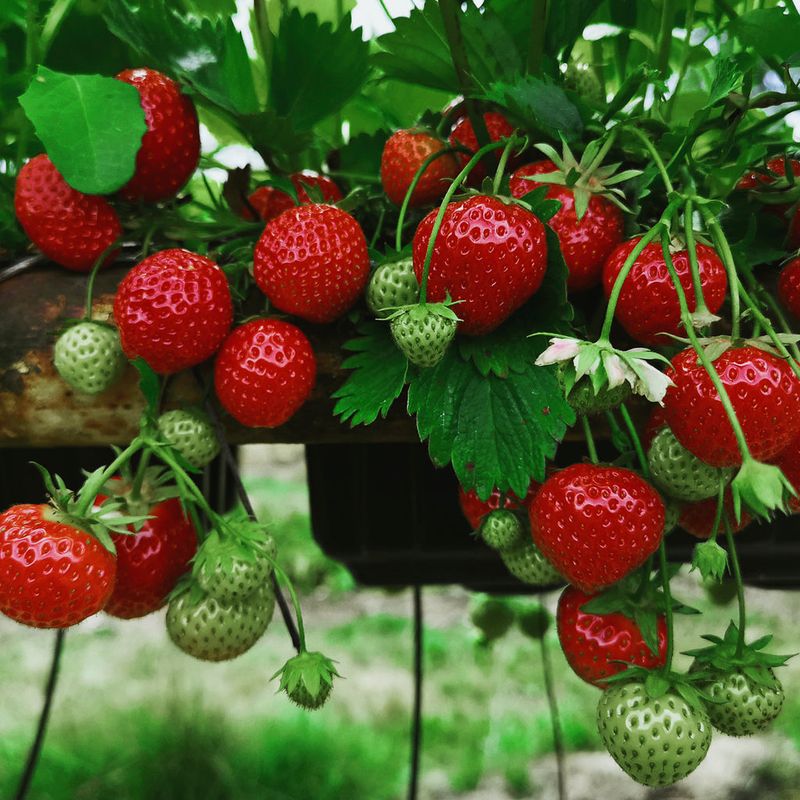
If you want fruit fast, strawberries are hard to beat – some varieties start producing just weeks after planting, making them one of the most beginner-friendly berry crops you can grow.
Northern California’s climate is actually famous for strawberry production, and backyard gardeners can take full advantage of the same favorable conditions that drive commercial growing in the region.
Coastal areas near the Bay and in Santa Cruz and Monterey counties enjoy near-perfect strawberry weather with cool summers and mild winters.
June-bearing types like ‘Chandler’ and ‘Camarosa’ deliver one large, concentrated harvest in late spring or early summer.
Day-neutral varieties like ‘Seascape’ and ‘Albion’ produce smaller but steady crops from spring through fall, which many home gardeners prefer.
Plant in well-drained, fertile soil in a location that receives at least six hours of direct sunlight daily.
Raised beds and containers both work well for strawberries, especially where soil drainage is less than ideal. Set plants with the crown just at soil level – too deep and they rot, too shallow and they dry out.
Water consistently, especially during fruit development, using drip irrigation to keep foliage dry and reduce disease risk. Fertilize lightly with a balanced fertilizer at planting and again after the first harvest.
Replace plants every two to three years to maintain vigor and fruit quality as older plants naturally decline in productivity.
5. Gooseberries Thrive In Partial Shade
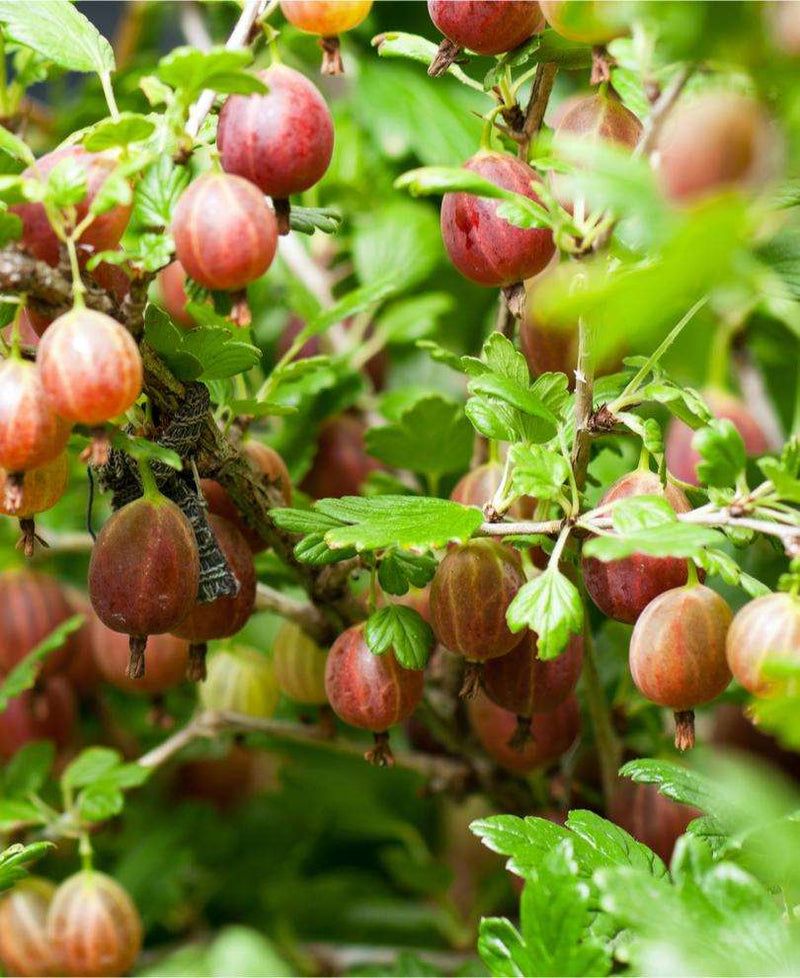
Gooseberries are one of those underappreciated gems that experienced gardeners quietly love.
They tolerate partial shade better than almost any other fruiting shrub, which makes them incredibly useful in gardens where full sun spots are already taken by vegetables or other plants.
In Northern California, gooseberries do well in both coastal and foothill gardens, thriving where summer heat stays relatively moderate.
Varieties like ‘Poorman,’ ‘Pixwell,’ and ‘Invicta’ have proven track records in home gardens and produce good crops of tart, flavorful berries used in pies, jams, and sauces.
These compact shrubs typically reach 3 to 5 feet tall and wide, making them easy to fit into smaller garden spaces.
Plant in well-drained soil with good organic matter content, and add compost at planting to improve soil structure and fertility.
Gooseberries prefer cool, moist root zones, so mulching generously around the base helps moderate soil temperature during summer. Water regularly but avoid overwatering, as soggy soil encourages root problems.
Prune annually in late winter by removing the oldest, most congested canes to keep the center of the plant open and well-ventilated. Good air circulation reduces the risk of powdery mildew, which can be an issue in humid coastal gardens.
Fertilize in early spring with a balanced fertilizer to encourage healthy new growth and a productive fruiting season.
6. Currants Provide Bright Clusters
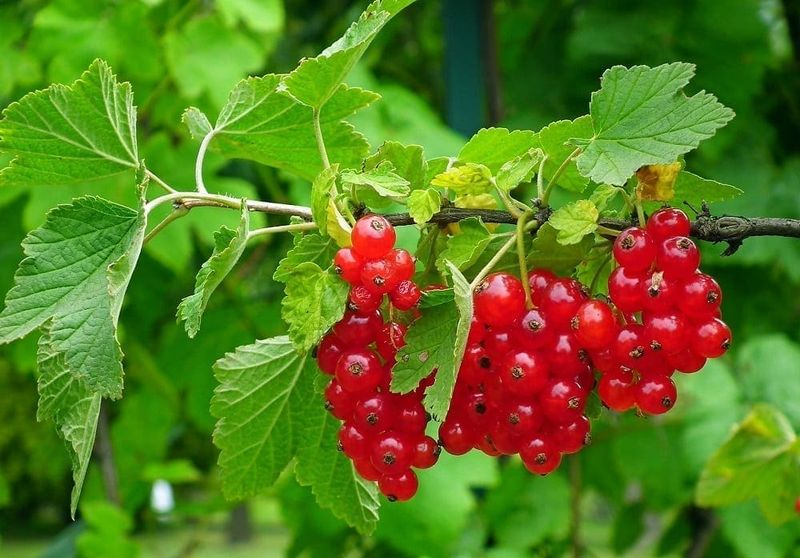
Walking past a currant bush loaded with gleaming clusters of red, white, or black berries is genuinely hard to ignore – they look almost too beautiful to be real.
Currants are closely related to gooseberries and share many of the same easy-care qualities that make both plants excellent choices for Northern California gardeners.
Red currants like ‘Red Lake’ and ‘Rovada’ and black currants like ‘Ben Sarek’ perform reliably across a range of Northern California microclimates.
These shrubs handle partial shade gracefully, making them good candidates for spots that get morning sun and afternoon shade. In warmer inland areas, that afternoon shade is especially beneficial for keeping plants productive during the hottest months.
Plant currants in rich, well-drained soil with a near-neutral to slightly acidic pH, and work in compost before planting to give roots a strong start.
Space plants about 4 to 5 feet apart to allow good airflow and make harvesting easier when the clusters ripen all at once. Water consistently through spring and early summer when berries are developing, then reduce irrigation as fruit matures.
Fertilize in early spring with a balanced granular fertilizer to support vigorous shoot growth. Prune annually in late winter, removing canes older than three years to keep the plant producing on younger, more fruitful wood.
Currants are generally low-maintenance and rarely troubled by serious pest problems in Northern California gardens.
7. Elderberries Feed Pollinators
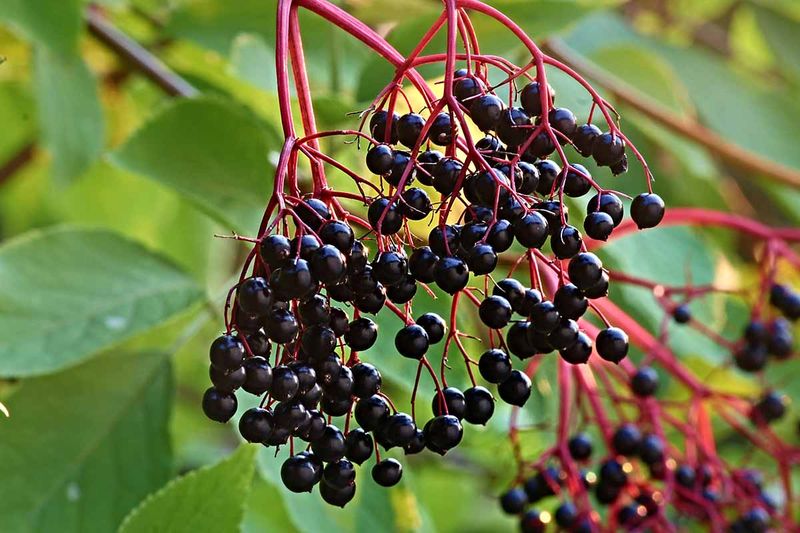
Elderberries pull double duty in the garden – they produce generous clusters of dark, nutrient-rich berries while simultaneously drawing in bees, butterflies, and other beneficial insects with their large, fragrant flower heads.
Few shrubs offer that kind of combined productivity and ecological value in a single planting.
In Northern California, American elderberry and blue elderberry both grow vigorously, with blue elderberry being native to the region and particularly well-adapted to local soils and dry summers.
Elderberries are remarkably tough once established, tolerating both moist and moderately dry conditions better than most fruiting shrubs. They prefer full sun to light shade and grow quickly – reaching 6 to 12 feet in just a few seasons if given room.
Plant in deep, well-drained soil and water regularly during the first growing season to help roots establish before summer heat arrives.
After establishment, elderberries need minimal irrigation in most Northern California climates, relying largely on winter rainfall to sustain them. Fertilize lightly in early spring to encourage vigorous new growth and heavy flower production.
Prune older canes to the ground every few years to rejuvenate the plant and maintain manageable size. Harvest berry clusters when they turn deep purple-black in late summer or early fall, and use them quickly for syrups, jams, or dried preparations.
Raw elderberries should not be consumed in large quantities, so cooking is recommended before eating.
8. Boysenberries Add Sweet Boost
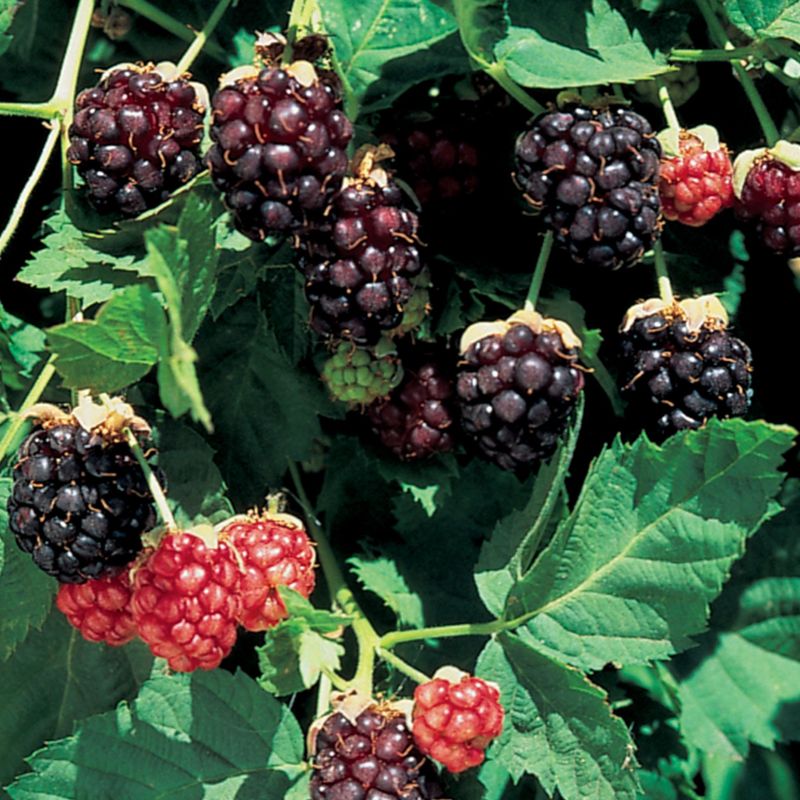
Boysenberries have a flavor story all their own – deeper and more complex than a standard blackberry, with a hint of raspberry brightness and just enough tartness to keep things interesting.
Developed in California in the early 20th century by horticulturist Rudolph Boysen, this hybrid berry has deep roots in the state’s agricultural history.
Northern California’s warm, dry summers and mild winters create the kind of conditions boysenberries genuinely love.
These vigorous trailing vines need a solid trellis or fence to grow on, as canes can reach 6 to 8 feet or longer in a single season. Plant in full sun with well-drained, fertile soil, spacing plants about 5 to 6 feet apart along a support structure.
Both thorned and thornless varieties are available, with thornless types making harvest considerably more pleasant on warm summer afternoons.
Water consistently from bud break through harvest, then reduce irrigation once picking is complete to help harden off new canes for winter. Drip irrigation keeps foliage dry, which reduces disease pressure on the canes and leaves.
Fertilize in early spring with a balanced fertilizer and side-dress with compost to keep soil organic matter levels up.
After harvest, cut the old fruiting canes back to the ground and train the new season’s growth along the trellis.
With good care, a single boysenberry plant can produce impressive amounts of fruit for many years.
9. Loganberries Deliver Unique Flavor
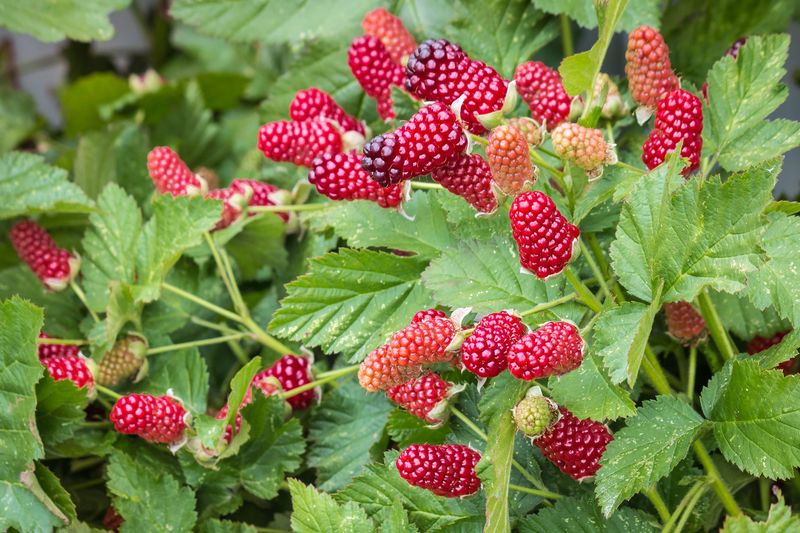
Loganberries occupy a flavor category entirely their own – brighter and more tart than a blackberry, richer and more complex than a raspberry, with a deep wine-red color that makes them stand out at the farmers market and in the kitchen alike.
Like boysenberries, loganberries were developed in California, originating in Santa Cruz in the late 1800s as a natural hybrid between a blackberry and a red raspberry.
That California heritage means they’re genuinely well-adapted to Northern California growing conditions.
Loganberries grow as vigorous trailing canes and perform best in full sun with fertile, well-drained soil.
They have moderate chill hour requirements, making them suitable for a wide range of Northern California microclimates from coastal valleys to warmer foothill areas.
Plant in late winter or early spring, spacing canes about 5 feet apart along a sturdy trellis or wire support system.
Water regularly during the growing season, particularly as berries are sizing up in late spring and early summer. Consistent moisture at this stage significantly improves fruit size and flavor.
Fertilize in early spring with a balanced granular fertilizer, and consider adding a layer of compost around the base to improve soil health over time. After harvest, remove the old fruiting canes and train new growth onto the trellis for the following year.
Loganberries are relatively pest-resistant and, once established, reward patient Northern California gardeners with generous annual harvests.