9 Best Hedges For Privacy In Georgia Gardens
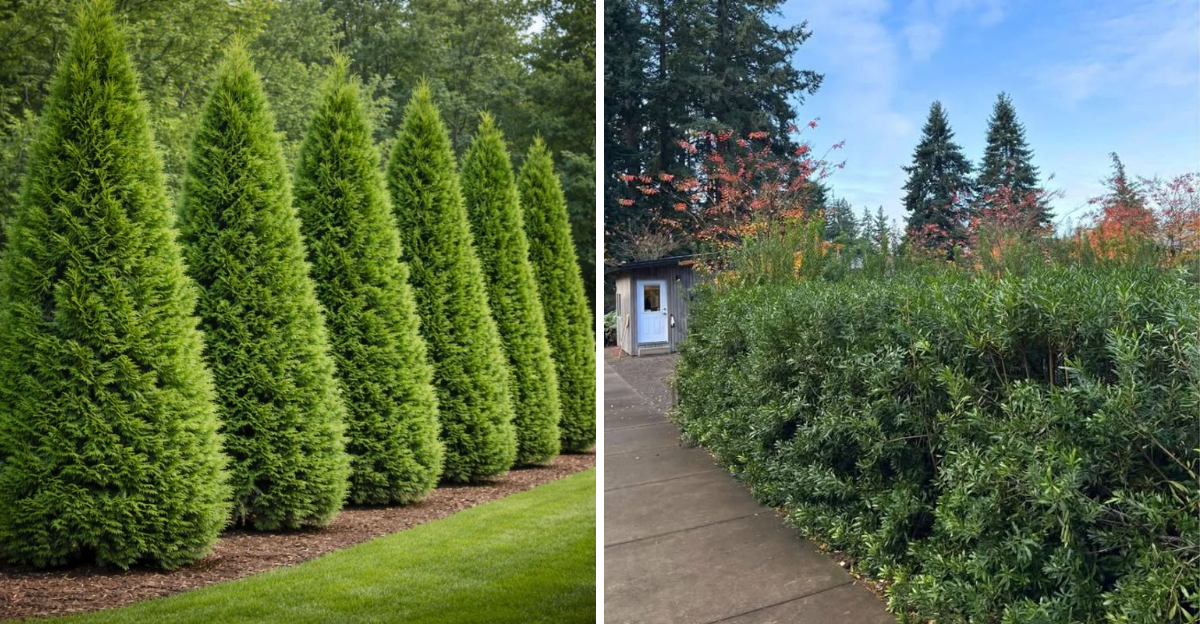
You don’t really notice how exposed a yard feels until you fix it, and in Georgia, the right hedge can completely change that feeling without making the space look closed off or heavy.
Instead of staring straight into a neighbor’s window or dealing with constant street views, a dense, well-chosen hedge creates a softer, greener kind of privacy that actually improves how the whole yard looks.
What makes the difference here is choosing plants that grow thick enough to block views but still handle Georgia’s heat, humidity, and long growing season without turning into a constant project.
Some hedges fill in faster than expected, while others take a bit more time and end up looking more structured and polished.
Once they settle in, everything starts to feel more comfortable and pulled together, and that quiet sense of privacy becomes one of the best parts of the garden.
1. Thuja Green Giant Fills In Fast And Stays Dense Year Round
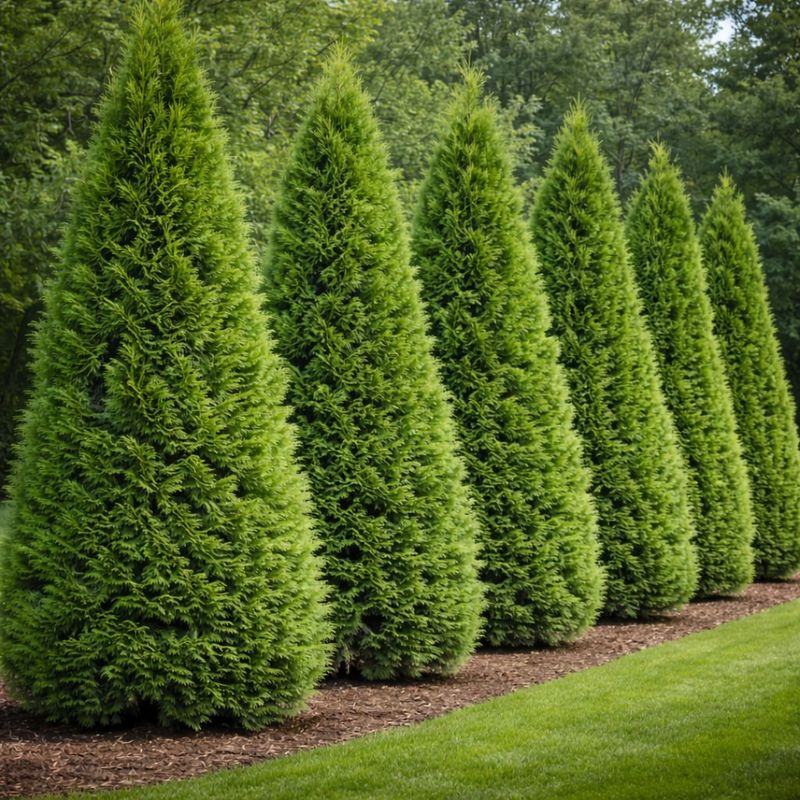
Few plants close off a yard as fast as Thuja Green Giant. In Georgia’s warm climate, these trees can push out three to five feet of new growth every single year when they’re young and well-watered.
Plant them about six feet apart and they’ll knit together into a solid green wall within a few seasons.
They stay full from the ground up, which matters a lot if you’re trying to block views at eye level rather than just at the roofline.
Thuja Green Giant handles Georgia’s summer heat without browning out or looking stressed. It doesn’t need constant shaping to stay tidy — a light trim once a year keeps things neat.
At full size, these trees can reach 40 to 60 feet tall, so they’re better suited to larger yards where height won’t become a problem. If you’re in a tight suburban lot, plant them with some planning.
Deer tend to leave them alone, which is a real bonus if you’re gardening anywhere near the Georgia woodlands. Pair them with a drip irrigation line the first two summers and watch them take off.
2. Nellie Stevens Holly Builds A Tall And Reliable Privacy Screen
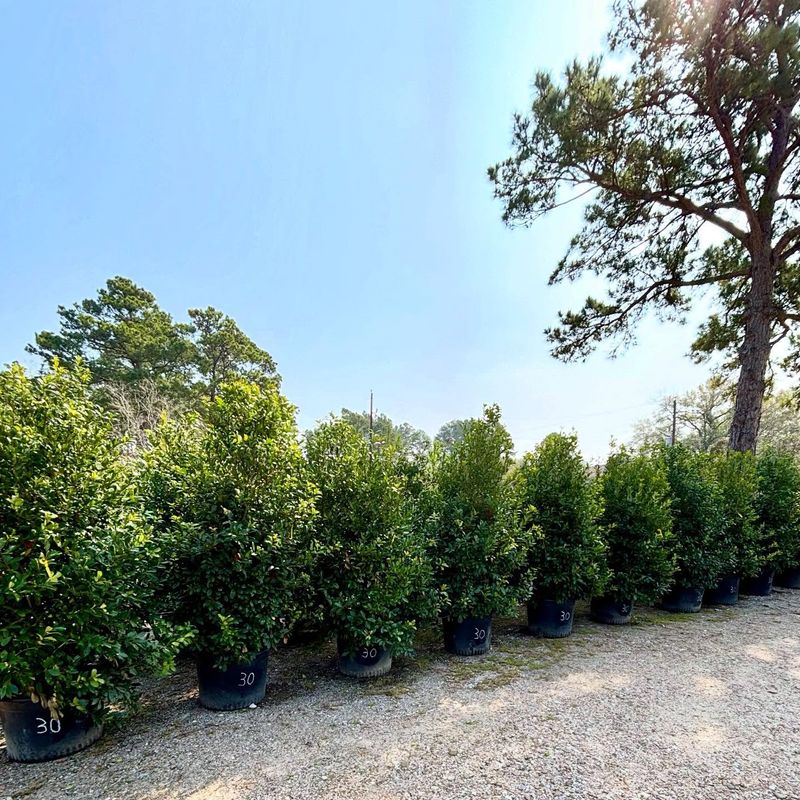
Nellie Stevens Holly is one of those plants that earns its spot in Georgia yards year after year without much fuss. It grows into a dense pyramid shape naturally, so you’re not fighting the plant to keep it looking good.
Expect it to reach around 15 to 25 feet tall over time, with a spread of 10 to 12 feet. That size makes it perfect for blocking two-story sightlines without needing a ladder every time you want to trim it.
Red berries appear in fall and winter, which adds something extra beyond just a green wall. Birds love them, so you’ll get some wildlife activity along your hedge line if that appeals to you.
In Georgia’s red clay soil, Nellie Stevens Holly still performs well as long as you don’t plant it in standing water. Amend heavy clay with compost at planting time and drainage improves noticeably.
Space plants about six to eight feet apart for a solid screen, or push them closer if you want faster coverage.
Fertilize lightly in spring and this plant handles the rest on its own through Georgia’s long growing season.
3. Cherry Laurel Forms A Thick Evergreen Barrier Quickly
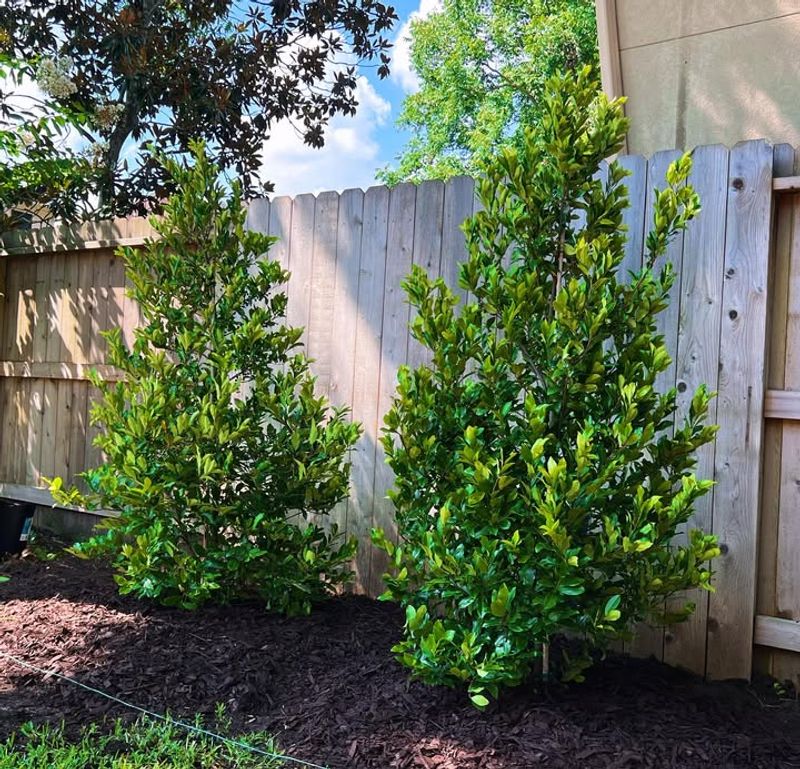
Cherry Laurel is the plant people reach for when they need coverage fast and don’t want to wait years to feel like they have real privacy. It puts on size quickly and the foliage stays thick and glossy through Georgia’s winters without dropping leaves.
Skip Laurel, a popular variety, grows more upright and columnar, which works well in tighter spaces. Otto Luyken stays lower and wider if you need something under windows.
Knowing which variety fits your space saves a lot of regret later.
In Georgia, Cherry Laurel handles both sun and partial shade, which makes it flexible along fence lines that shift between open and shaded areas. It doesn’t sulk in spots where other plants struggle.
Watch spacing carefully — these plants spread wider than people expect. Planting them too close together leads to crowding and poor airflow, which can invite fungal issues in Georgia’s humid summers.
Prune in late winter or early spring before new growth flushes out. A hard cut doesn’t bother Cherry Laurel at all — it bounces back full and green within weeks.
It’s a reliable workhorse for Georgia privacy plantings.
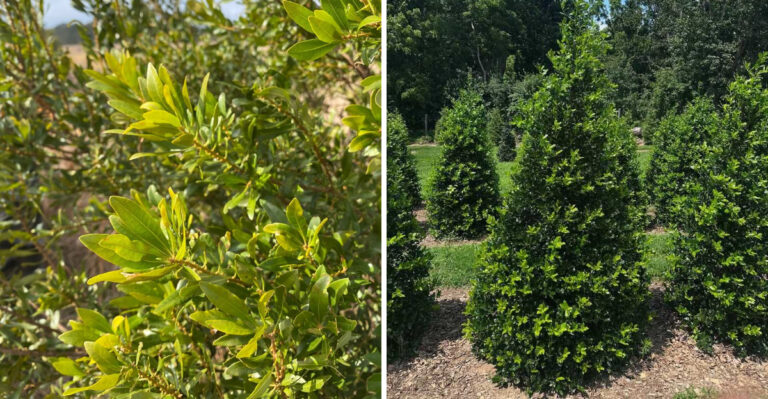
4. Wax Myrtle Grows Fast And Works Well For Natural Screening
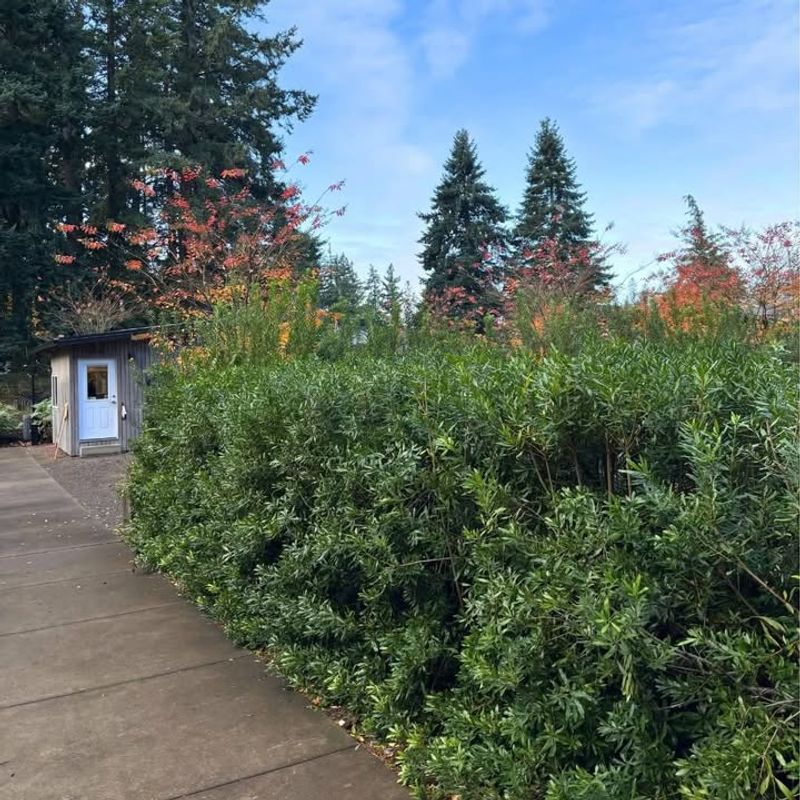
Wax Myrtle has a loose, natural look that fits right into Georgia landscapes without appearing overly manicured or stiff. It grows fast, handles drought once it gets settled, and tolerates wet spots better than most plants on this list.
Left to grow freely, it can reach 15 to 20 feet tall and wide. You can also keep it trimmed as a tighter hedge — it responds well to shearing and rebounds quickly after a cut.
The silvery-green foliage has a pleasant, faintly spicy scent when you brush against it. It’s subtle but noticeable, and it makes walking along the hedge line in a Georgia evening garden feel a little more interesting.
Birds are drawn to the small waxy berries that form on female plants, so if wildlife matters to you, Wax Myrtle delivers on that front without any extra effort.
Full sun works best for the densest growth, but it manages reasonably well in part shade too. In Georgia’s coastal areas and piedmont regions, Wax Myrtle has been a go-to screening plant for generations of gardeners who wanted something tough and genuinely low-demand.
Plant it and mostly just let it grow.
5. Leyland Cypress Creates A Quick Screen With Proper Spacing
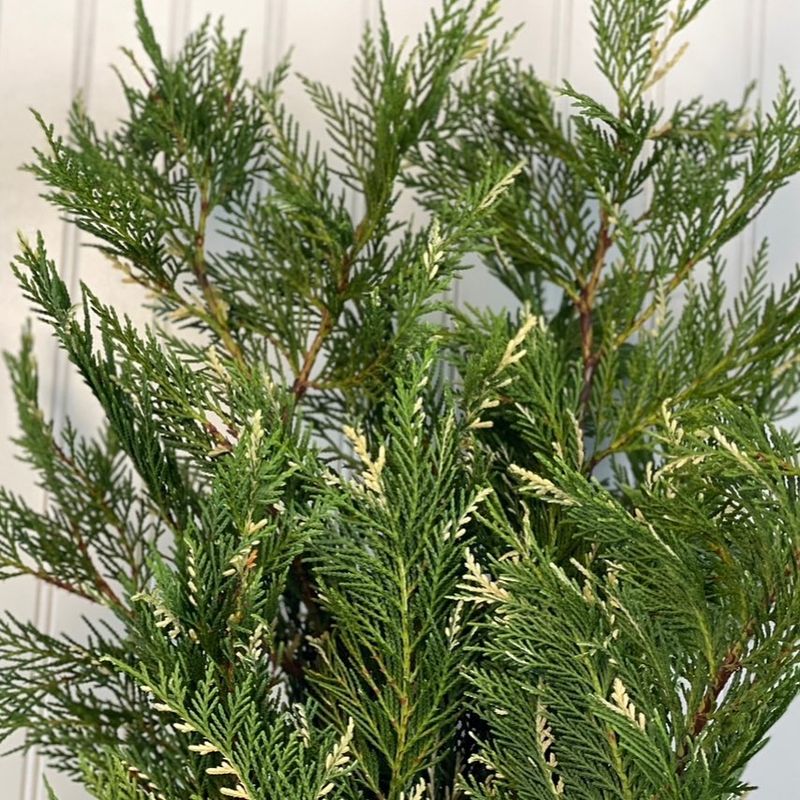
Leyland Cypress has a reputation for speed, and that reputation is well-earned. In Georgia, it can shoot up three to four feet per year when conditions are right, giving you a tall screen faster than almost anything else.
The catch is spacing. Plant these too close and you’ll end up with a crowded row that blocks airflow and light in the interior.
A spacing of 8 to 12 feet between trees lets them fill out properly without suffocating each other.
Canker disease is a real concern with Leyland Cypress in Georgia’s humid climate, especially in dense plantings with poor airflow. Good spacing and avoiding overhead irrigation goes a long way toward keeping trees healthy long-term.
At maturity, expect 40 to 50 feet of height with a spread of 10 to 15 feet. That’s a serious wall of green when planted in a row, and it stays evergreen through Georgia winters without any special protection.
Leyland Cypress works best as a background screen rather than a formal clipped hedge. Let it grow naturally and it stays full and attractive.
It suits larger Georgia properties where the scale of the tree fits the landscape without overwhelming the space.
6. Viburnum Types Like Chindo And Awabuki Grow Dense And Tall
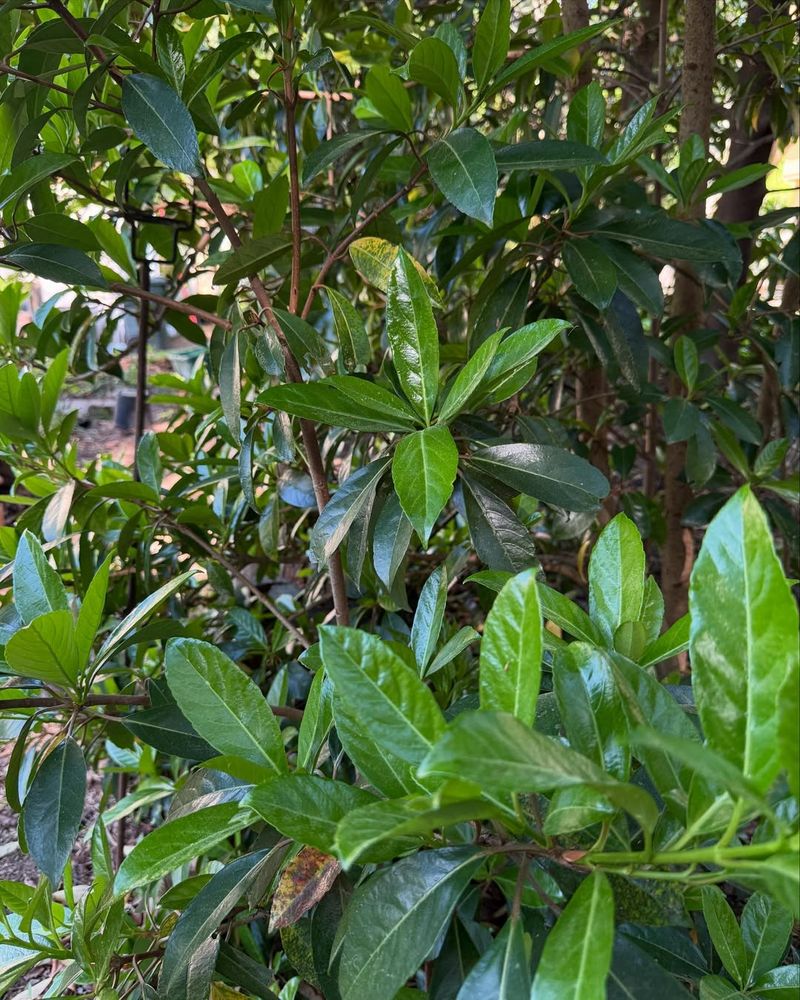
Viburnum is one of the more underrated hedge plants in Georgia, and the larger-growing types like Chindo and Awabuki deserve far more attention than they usually get. Both form dense, upright shrubs with large, glossy leaves that give a hedge a polished, finished look.
Awabuki, sometimes called Sweet Viburnum, can push 10 to 20 feet tall in Georgia’s climate with a spread that fills gaps nicely. Chindo is slightly more cold-hardy and handles north Georgia winters without browning like some other broadleaf evergreens.
Spacing around five to six feet apart builds a solid wall within three to four years. Pruning isn’t required to keep them dense, though a light shaping after spring flowering keeps things tidy if you prefer a more formal line.
Fragrant white flower clusters appear in spring and the scent is genuinely pleasant — not overpowering, just noticeable on warm Georgia mornings. Berries follow the flowers and attract birds into the fall season.
Both varieties handle Georgia’s clay soils reasonably well with some soil prep at planting. Full sun to partial shade works fine.
If you want a hedge that looks substantial and established within just a few years, Chindo or Awabuki Viburnum is worth serious consideration.
7. American Holly Forms A Strong Long Lasting Privacy Hedge
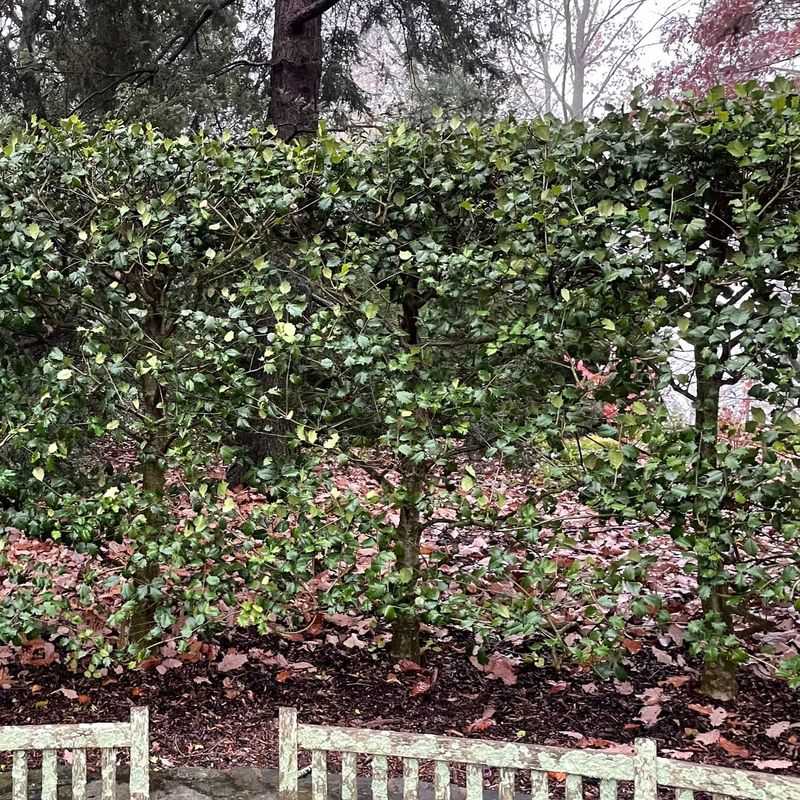
American Holly is built for the long haul. Plant a row of these in your Georgia yard and you’re putting in something that could still be standing and screening your property decades from now — long after faster-growing options have come and gone.
Growth is slower than some plants on this list, running about one to two feet per year. What you get in return is a tough, deeply rooted tree that handles Georgia’s heat, cold snaps, and occasional drought without much complaint.
Glossy, spiny leaves stay green all year and the red berry clusters in winter make this one of the more visually striking hedges you can plant. It looks good in every season, not just when everything else is actively growing.
Expect mature heights of 15 to 30 feet with a spread of 10 to 15 feet. Plant male and female trees together for berry production — you’ll need at least one male near every few female plants to get fruit.
American Holly tolerates part shade, which opens up planting spots along fence lines that don’t get full sun all day.
In Georgia, it’s a proven performer from the mountains down to the coastal plain, adapting to widely different soil and moisture conditions.
8. Loropetalum Creates A Colorful And Compact Privacy Barrier
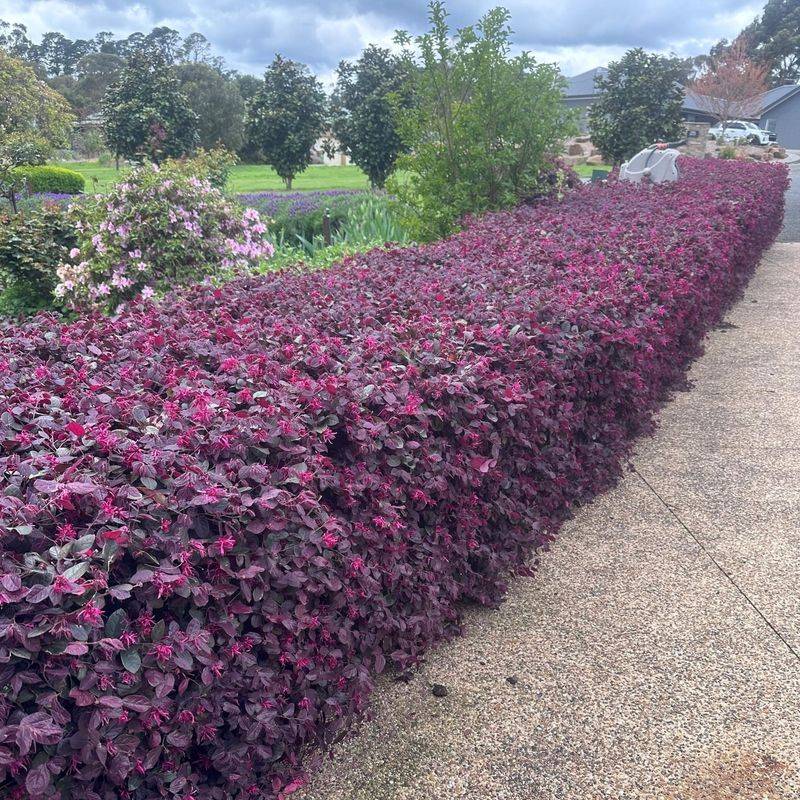
Purple foliage and hot pink flowers on a privacy hedge — Loropetalum brings something to the yard that almost nothing else on this list can match. It’s a plant that does real screening work while also looking genuinely interesting throughout the year.
Larger varieties like Purple Diamond and Crimson Fire can reach eight to ten feet tall in Georgia with a dense, mounded shape that fills in without a lot of intervention. Smaller cultivars stay under four feet, so picking the right variety for your goal matters a lot.
Spring flowering is the showstopper moment, with fringe-like blooms covering the plant. But the deep burgundy foliage keeps things colorful even when the flowers have finished for the season.
In Georgia’s heat and humidity, Loropetalum performs well in full sun to partial shade. It handles the summer without wilting or looking ragged, which is more than you can say for some ornamental shrubs.
Prune lightly after the spring bloom to shape it and encourage a second flush of growth. Avoid heavy shearing — it removes the natural arching form that makes this plant look so good.
Planted in a row along a fence or property line, a mature Loropetalum hedge turns an ordinary boundary into a real feature of the Georgia garden.
9. Tea Olive Grows Thick And Adds Fragrance To Privacy Plantings
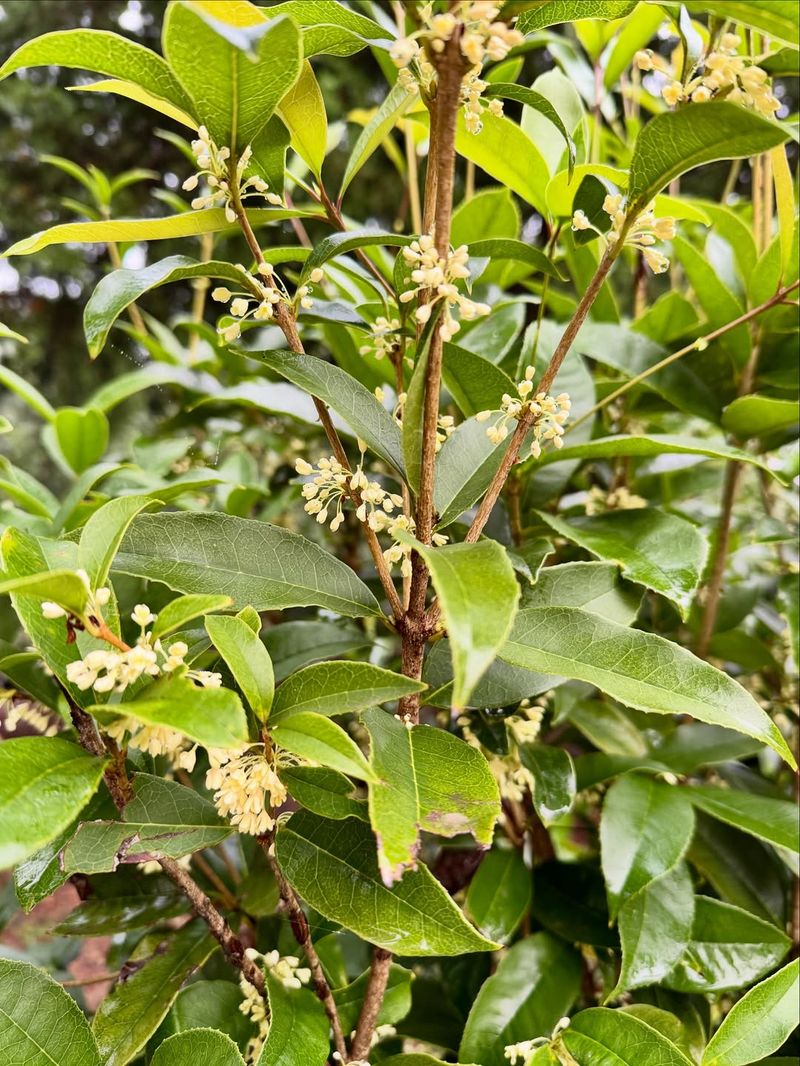
Walk past a Tea Olive hedge in bloom on a Georgia evening and the fragrance stops you in your tracks. Small white flowers, almost invisible from a distance, put out a sweet apricot-like scent that carries surprisingly far on warm air.
Fragrance aside, Tea Olive is a serious privacy plant. It grows into a dense, upright shrub or small tree reaching 10 to 20 feet, depending on the variety, and the thick evergreen foliage stays full year-round in Georgia’s climate.
Fortunes Tea Olive and Fruitland Tea Olive are two larger-growing types that suit hedge use well. Both have bigger leaves than the common variety and put on size a bit faster, which shortens the wait for real screening coverage.
Full sun produces the fastest growth and the best flower production. Partial shade works but growth slows down noticeably.
In Georgia, plant in well-drained soil and avoid low spots that collect water after heavy rain.
Space plants about five to six feet apart for a solid hedge line. Tea Olive doesn’t need constant pruning to stay tidy — a light shaping once a year keeps the form clean.
For Georgia gardeners who want privacy and something genuinely pleasant to spend time near, Tea Olive earns a spot at the top of the list.