10 Best Hedges For Privacy In Michigan Gardens
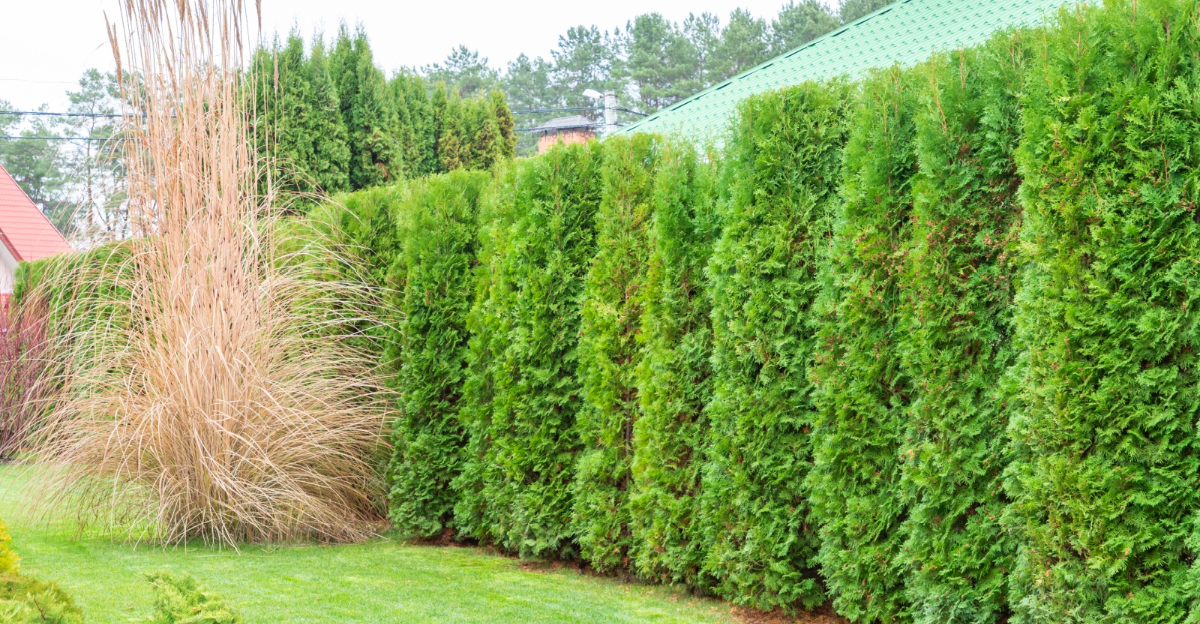
Whether you want more privacy from nearby neighbors, a softer view along the road, or a quieter backyard, the right hedge can change how your whole yard feels.
In Michigan, that choice matters even more because plants have to handle cold winters, clay-heavy soil, and big seasonal shifts.
A good privacy hedge does more than block a view. It can soften wind, reduce street noise, and make the landscape feel fuller and more inviting.
Some shrubs stay evergreen for year-round screening, while others leaf out in spring and bring flowers, berries, and fall color.
Choosing plants that truly perform well in Michigan helps you build a hedge that stays attractive, useful, and dependable for years.
1. Arborvitae Creates A Classic Year Round Privacy Wall
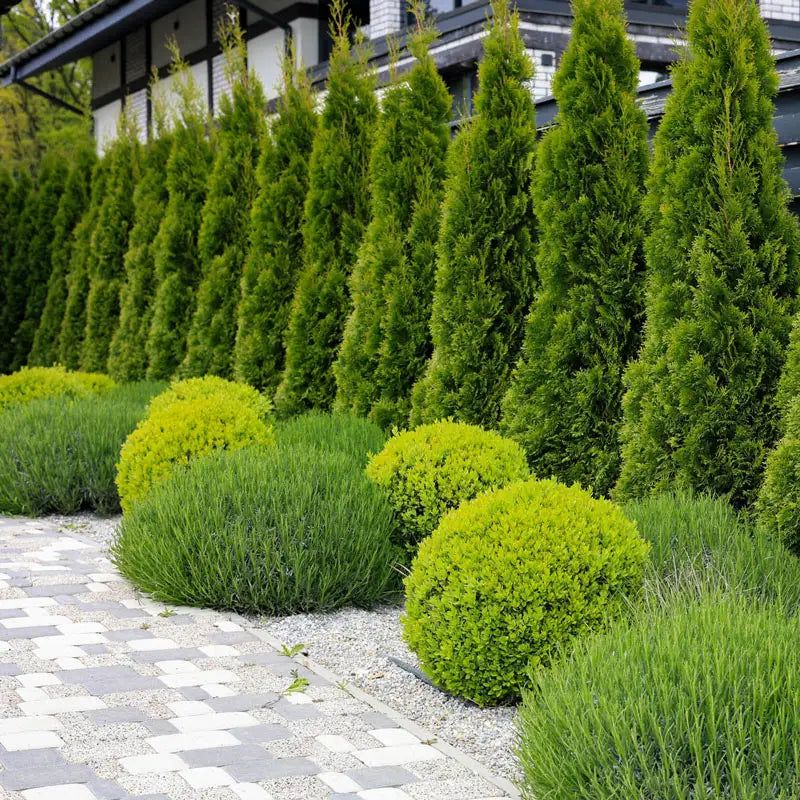
Few shrubs deliver the kind of reliable, wall-like privacy that arborvitae does, and Michigan gardeners have relied on it for decades.
Thuja occidentalis is a native evergreen that stays green through even the harshest Upper Peninsula winters.
Varieties like Emerald Green and Techny are especially popular because they hold their narrow, upright form without much pruning.
Emerald Green tops out around 12 to 15 feet tall and spreads only 3 to 4 feet wide, making it a smart pick for tighter spaces. Techny grows a bit broader and handles wind exposure particularly well, which matters a lot in open Michigan yards.
Both perform best in full sun to partial shade and tolerate clay soils, though they appreciate good drainage.
For a solid hedge, space plants 3 to 4 feet apart from center to center. Water deeply during the first two growing seasons to help roots establish before winter.
Arborvitae rarely needs heavy pruning, but a light trim in late spring keeps the shape tidy. Watch for bagworm infestations in summer, as they can strip foliage quickly if left unchecked.
Overall, arborvitae remains one of the most dependable year-round privacy options available to Michigan homeowners.
2. Yew Brings Dense Green Coverage In Sun Or Shade
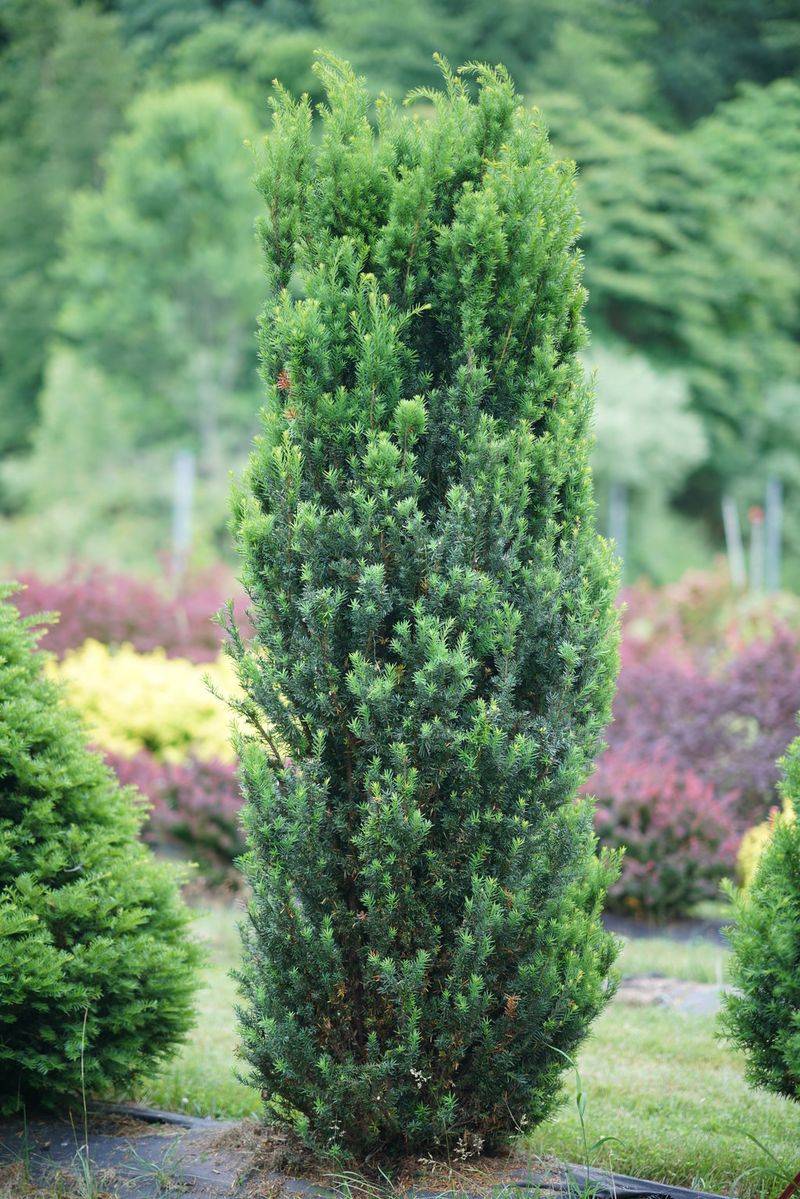
Not every Michigan yard gets full sun, and that is exactly where yew earns its reputation.
Taxus species, particularly Taxus x media hybrids like Densiformis and Hicksii, thrive in everything from bright open spots to heavily shaded areas under large trees.
That kind of flexibility is rare among evergreen hedging plants.
Hicksii yew is an upright grower that can reach 10 to 12 feet tall, making it well suited for taller screens along property lines. Densiformis stays lower and wider, topping out around 4 feet, which works well for mid-height borders.
Both produce dense, dark green needles that provide solid year-round coverage, and the bright red berries that appear in fall add a nice seasonal touch.
Yew handles Michigan winters with ease and tolerates heavy clay soil better than many other evergreens.
It responds very well to shearing, so keeping a formal, uniform hedge line is straightforward with annual pruning in late spring or early summer.
Space upright varieties about 3 feet apart for a tight hedge. Avoid planting in low spots where water pools after rain, since consistently wet roots are the main challenge for yew.
Otherwise, it is a low-maintenance, long-lived privacy plant.
3. Juniper Handles Sunny Spots With Tough Evergreen Texture
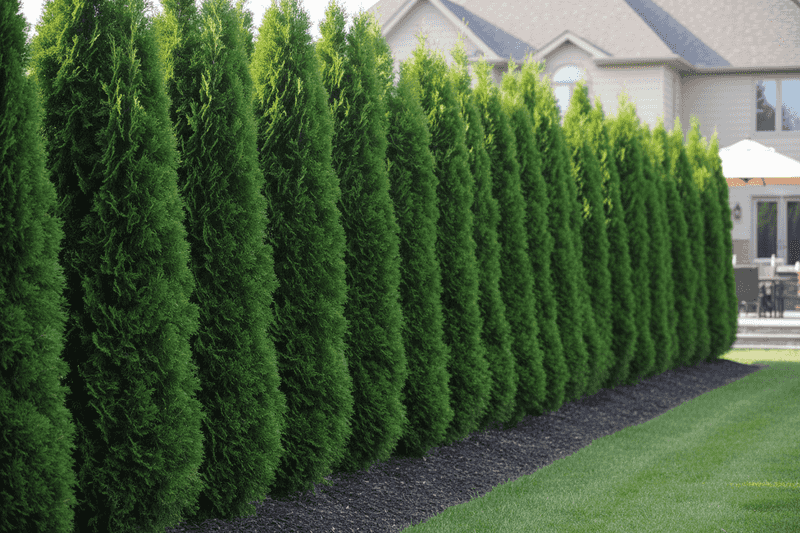
Baked by afternoon sun, battered by dry spells, and frozen solid every winter, some spots in a Michigan yard seem impossible to plant. Juniper thrives in exactly those conditions.
Species like Juniperus virginiana, the Eastern red cedar, and Juniperus scopulorum grow upright and dense, creating privacy screens that stand up to serious weather stress without much fuss.
Eastern red cedar is a Michigan native that can reach 40 feet tall at maturity, though it is easily managed with selective pruning.
Its dense, scale-like foliage provides solid screening, and birds love the small bluish berries it produces, so you get wildlife value along with privacy.
For more modest heights, columnar cultivars of Juniperus scopulorum like Skyrocket or Blue Arrow reach 15 to 20 feet and stay only 2 to 3 feet wide.
Plant junipers in full sun for the best density and shape. They adapt to sandy, rocky, or clay-heavy soils as long as drainage is reasonable.
Space columnar types about 3 feet apart for a tight hedge. Prune lightly in early spring before new growth pushes out.
Avoid cutting back into old wood with no foliage, as bare branches rarely recover well. Juniper is a smart, durable choice for exposed, sunny Michigan sites.
4. Boxwood Keeps Privacy Plantings Neat And Structured
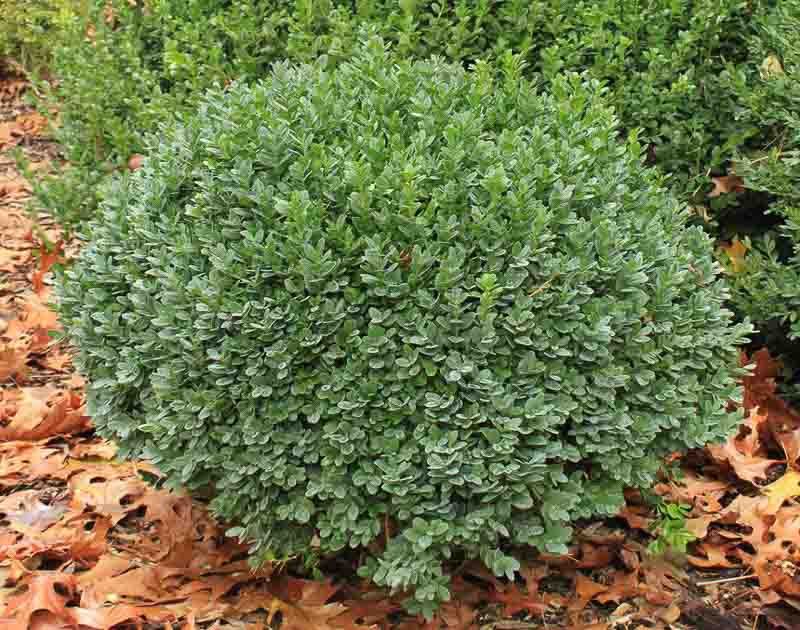
There is something undeniably polished about a well-maintained boxwood hedge, and Michigan gardeners who want clean lines and formal structure keep coming back to it.
Buxus species, especially Buxus sinica var. insularis (Korean boxwood) and cold-hardy cultivars like Winter Gem and Green Velvet, hold up well in Michigan’s Zone 5 and 6 growing conditions.
Boxwood is not the tallest option on this list, typically reaching 3 to 5 feet depending on the variety, but it excels at creating defined boundaries, framing garden spaces, and adding a tailored look to foundation plantings.
Its small, glossy leaves stay green through winter in most Michigan locations, providing year-round structure even if the color occasionally takes on a bronze tint during cold months.
Plant boxwood in well-drained soil with some protection from harsh winter winds and strong afternoon sun, which can scorch foliage. Space plants 18 to 24 inches apart for a solid hedge.
Shear once or twice a year in late spring and again in midsummer to keep the shape crisp. Boxwood blight has become a concern in some Michigan areas, so choose resistant varieties when possible and avoid overhead watering.
With proper siting and basic care, boxwood delivers a refined, lasting hedge.
5. Arrowwood Viburnum Builds A Full Screen With Wildlife Value
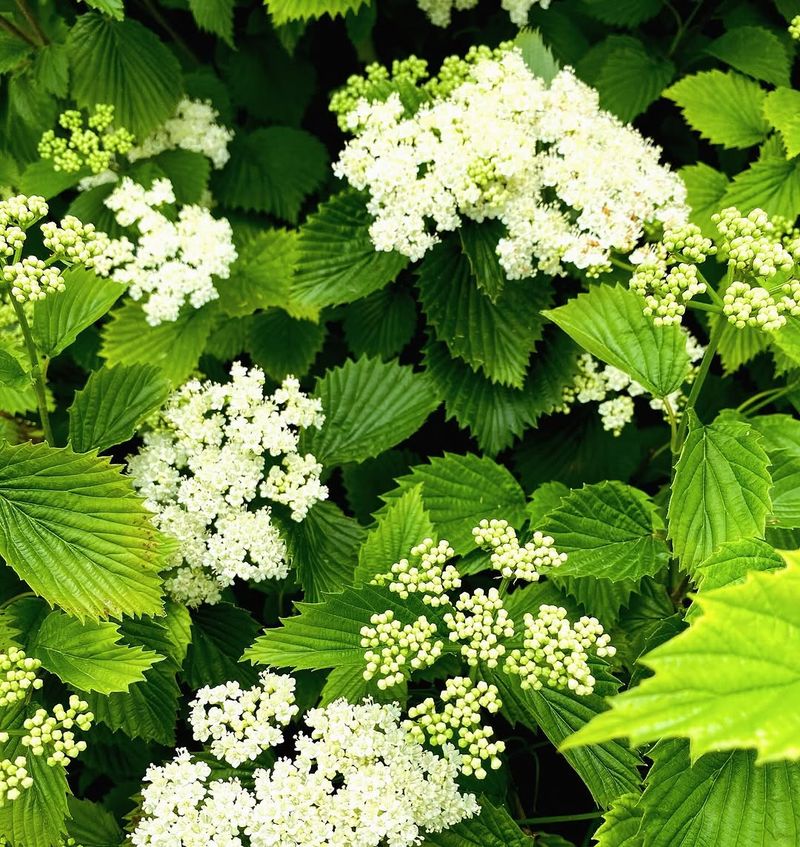
Watching a flock of birds descend on a hedge loaded with dark blue berries in late summer is one of those small backyard moments that makes gardening worthwhile.
Arrowwood viburnum, Viburnum dentatum, delivers that experience while also building into a dense, multi-stemmed screen that fills in beautifully over a few seasons.
Native to Michigan and the broader Midwest, arrowwood viburnum grows 6 to 10 feet tall and nearly as wide, with upright arching branches that knit together naturally when planted in a row.
Flat-topped clusters of creamy white flowers appear in late spring, followed by clusters of blue-black berries that attract migrating birds.
Fall foliage shifts to shades of red, orange, and purple, giving the hedge a second moment of seasonal color.
Arrowwood adapts to a wide range of soil types, including clay, and tolerates both full sun and partial shade. Space plants 4 to 5 feet apart to allow natural spreading while still forming a connected screen.
Water regularly during the first season, then reduce as the plants establish. Pruning is best done right after flowering to avoid removing next year’s buds.
Because it drops its leaves in winter, arrowwood provides seasonal rather than year-round privacy, but its dense branching still offers some visual screening even without foliage.
6. Nannyberry Viburnum Adds Height Berries And Seasonal Beauty
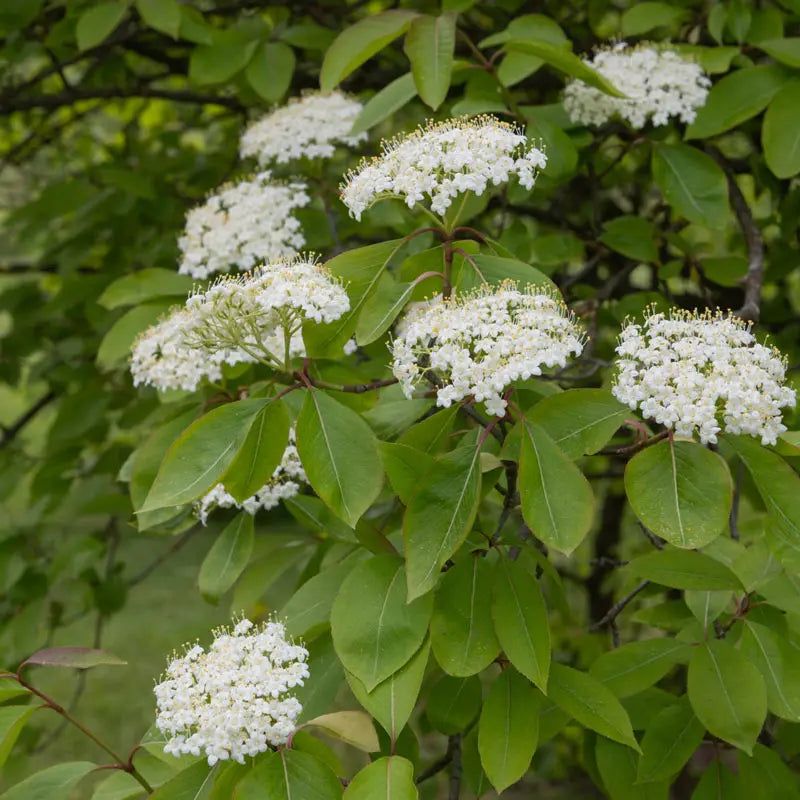
When height is a priority and you want a hedge that does more than just block a view, nannyberry viburnum stands out as a genuinely impressive option.
Viburnum lentago is one of the tallest native viburnums in Michigan, capable of reaching 15 to 18 feet when grown without heavy pruning.
That kind of stature creates a real visual barrier that competes with fence height without the cost of fencing.
Nannyberry produces large, flat clusters of creamy white flowers in mid-spring, which give way to clusters of blue-black berries by late summer. The berries are sweet enough for humans to eat and are absolutely loved by birds and other wildlife.
Fall color ranges from glossy red to deep burgundy, making the transition from summer to autumn genuinely attractive along a property line.
This shrub performs well in full sun to partial shade and handles Michigan’s clay soils and occasional wet spots better than most.
Space plants 5 to 6 feet apart to allow for their natural spread while still forming a connected screen over time.
Minimal pruning is needed, but you can selectively remove older stems every few years to encourage fresh growth from the base.
Nannyberry is a deciduous plant, so it offers seasonal screening rather than year-round coverage, but its height and density make it a standout performer through the warmer months.
7. Ninebark Fills In Fast With Texture And Color
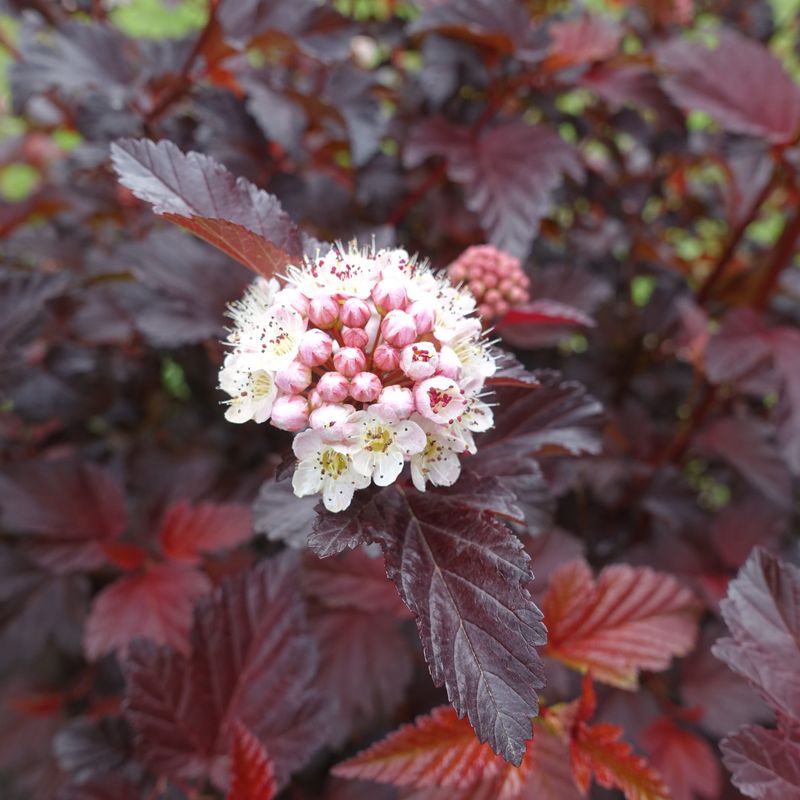
Speed matters when you are starting a new privacy hedge from scratch, and ninebark is one of the fastest-filling native shrubs you can plant in Michigan.
Physocarpus opulifolius grows vigorously, putting on 2 to 3 feet of new growth per year under good conditions.
Within three or four seasons, a row of ninebark plants can form a thick, layered screen that blocks sightlines effectively.
Beyond speed, ninebark brings real visual interest. Cultivars like Diablo and Summer Wine feature deep burgundy foliage that holds its color well through summer.
Coppertina offers warm copper and orange tones, while Dart’s Gold stays bright chartreuse all season.
Clusters of small white or pinkish flowers cover the branches in late spring, and the peeling, cinnamon-colored bark adds winter texture after the leaves drop.
Ninebark is a deciduous shrub, so it provides seasonal rather than year-round privacy. It grows 6 to 10 feet tall depending on the variety and thrives in full sun to partial shade.
Michigan’s clay soils are no problem for this tough native. Space plants 4 to 5 feet apart for a hedge that fills in quickly.
Prune in early spring before new growth emerges, cutting older stems close to the base to keep the plant vigorous and prevent it from becoming too woody over time.
8. Red Osier Dogwood Brightens Boundaries With Bold Winter Stems
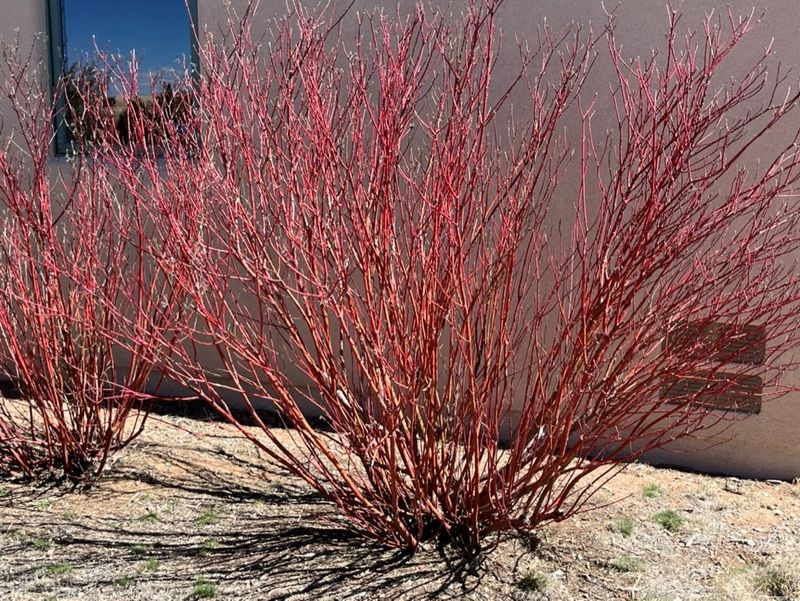
Most hedges disappear into the background during a Michigan winter, but red osier dogwood does the opposite.
Cornus sericea lights up a snowy yard with stems so intensely red they almost look painted.
That winter display alone makes it worth planting, and the fact that it doubles as a solid seasonal privacy screen through spring, summer, and fall is a genuine bonus.
Red osier dogwood grows 6 to 9 feet tall and spreads aggressively through root suckers, which means it fills in a hedge line quickly but also needs some management to keep it from spreading beyond its intended space.
Clusters of small white flowers appear in late spring, followed by white or bluish berries that birds consume eagerly.
The foliage turns reddish-purple in autumn before dropping.
This shrub is especially well suited for wet or low-lying areas of Michigan yards where other plants struggle. It handles clay soil, seasonal flooding, and full sun to partial shade without complaint.
Space plants 4 to 5 feet apart for a connected hedge. To keep stem color vivid and bright each winter, cut one-third of the oldest stems down to the ground each spring.
New stems produce the most intense red color, so regular renewal pruning is the key to keeping this hedge looking its best year after year.
9. American Cranberrybush Viburnum Offers Flowers Fruit And Cover
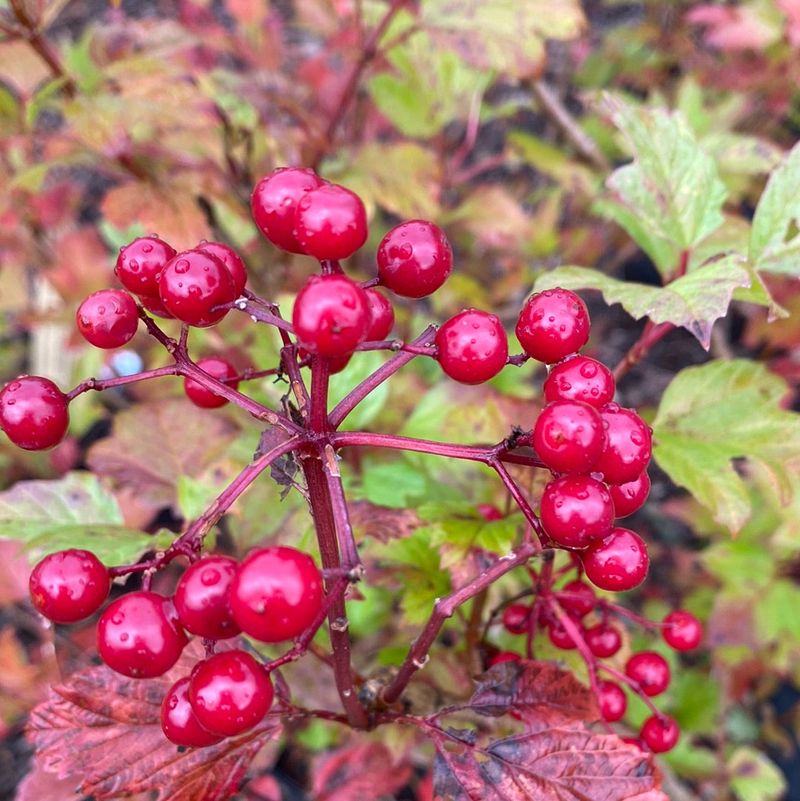
A hedge that earns its place in every season is worth its weight in garden space, and American cranberrybush viburnum does exactly that.
Viburnum trilobum, also called highbush cranberry, produces showy white lacecap flowers in spring, bold maple-like foliage through summer, clusters of brilliant red berries in fall, and persistent fruit that clings to branches well into winter, feeding birds during the coldest months.
This Michigan native grows 8 to 12 feet tall and nearly as wide, forming a full, rounded screen when planted in a row.
The dense branching habit provides good visual coverage through the growing season, and even without leaves the branching structure adds some opacity in winter.
The bright red berries are tart but edible and have historically been used for jams and jellies.
American cranberrybush viburnum performs best in full sun to partial shade and tolerates Michigan’s clay soils and moist conditions well.
Space plants 5 to 6 feet apart to allow natural spreading while still building a connected hedge.
Water consistently during the first growing season, then scale back as the shrub establishes. Prune lightly right after flowering if needed to manage size, removing any crossing or crowded stems.
This is a deciduous plant, so plan for seasonal rather than year-round screening, though its height and density still make it a strong privacy performer.
10. American Hazelnut Forms A Natural Hedge With Rustic Charm
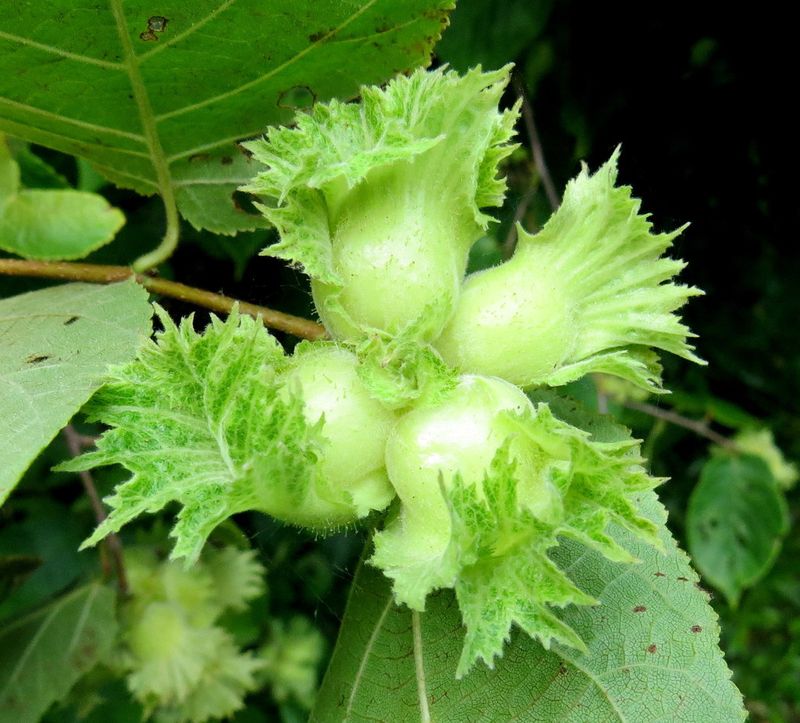
Some of the best hedges look like they belong to the land rather than being placed on it, and American hazelnut pulls that off better than almost any other native shrub in Michigan.
Corylus americana grows with a loose, multi-stemmed habit that feels natural and relaxed, making it an ideal fit for informal landscapes, woodland edges, and rural property boundaries.
Mature plants reach 8 to 12 feet tall and spread nearly as wide, forming a broad, arching screen through the growing season. Long, dangling catkins appear in very early spring before the leaves emerge, adding a subtle but interesting visual detail.
The hazelnuts that follow in late summer are edible and attract squirrels, deer, and a variety of birds, making this one of the more wildlife-friendly hedging options available to Michigan gardeners.
American hazelnut grows in full sun to partial shade and adapts well to clay soils, sandy soils, and everything in between.
It spreads slowly through root suckers, which helps it fill in a hedge line over time without requiring replanting.
Space plants 5 to 6 feet apart. Prune in late winter before catkins open, removing any dead or crowded stems to keep the interior open and healthy.
Because it is deciduous, it provides seasonal privacy, but its natural density and generous spread still make it a reliable and charming screening plant.