Best Native Flowering Vines To Plant In April In North Carolina Gardens
April is a great time to give a North Carolina garden something extra. Native flowering vines can climb, spread, and fill empty spaces with color just as the season starts to warm up.
They do more than look pretty. They can soften a fence, dress up a trellis, and turn a plain corner into one of the most eye catching spots in the yard.
Because they are native, they are also well suited to local growing conditions and often attract birds, bees, and butterflies. That makes them a smart choice for gardeners who want beauty with less struggle.
Planting them in April gives roots time to settle in before the hotter months arrive. Some grow with a light, delicate touch, while others make a bold statement fast.
The right vine can completely change the feel of a garden and make it far more lively.
1. Coral Honeysuckle (Lonicera sempervirens)
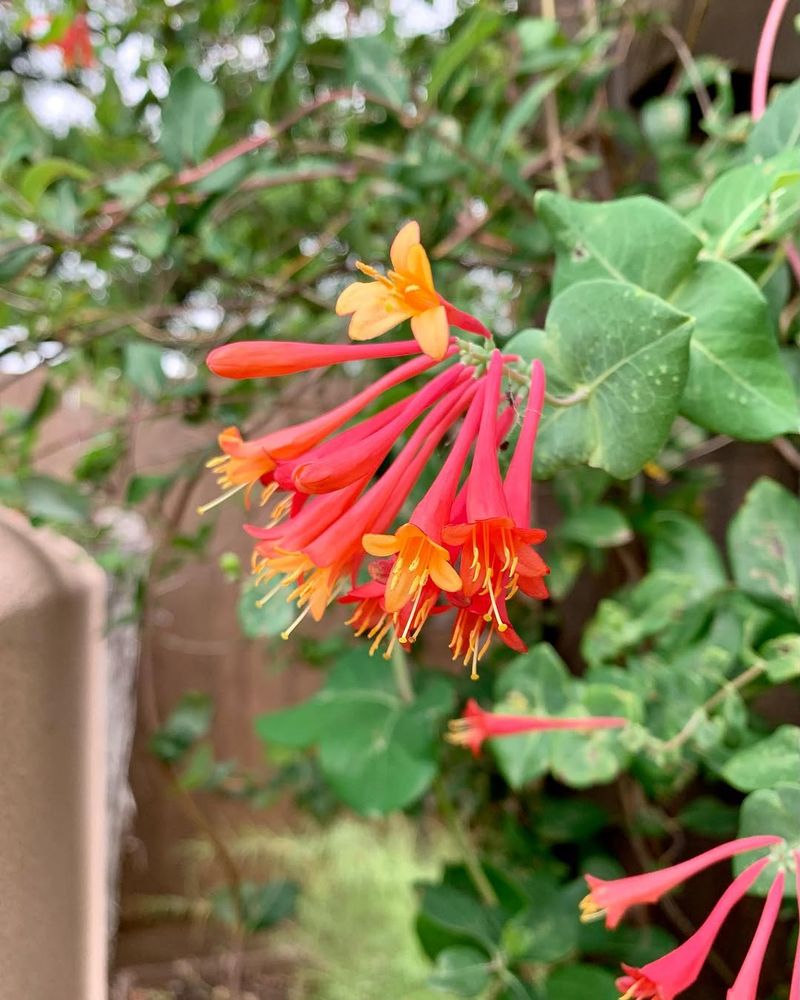
Few vines can match the showstopping color of coral honeysuckle lighting up a North Carolina fence in spring. Those bold red tubular flowers start opening as early as March and keep going strong well into summer, giving your garden weeks of nonstop color.
Hummingbirds absolutely love this plant, and once word gets out in your neighborhood, you will have a steady stream of tiny visitors hovering around your yard.
Coral honeysuckle grows beautifully on trellises, arbors, fences, and pergolas, reaching anywhere from 10 to 20 feet tall. It thrives in full sun but handles part shade just fine, making it flexible for many garden layouts.
Unlike its invasive Japanese cousin, this native version plays nicely with other plants and does not take over your entire yard.
Planting in April gives the vine a full growing season to establish strong roots before winter. Young plants appreciate regular watering during their first few weeks, but once settled, they are surprisingly drought-tolerant.
North Carolina gardeners from the mountains to the coast will find coral honeysuckle adapts well across the state.
Add a sturdy support structure at planting time so the vine has somewhere to climb right away, and you will be rewarded with gorgeous blooms and happy hummingbirds for years to come.
2. Crossvine (Bignonia capreolata)
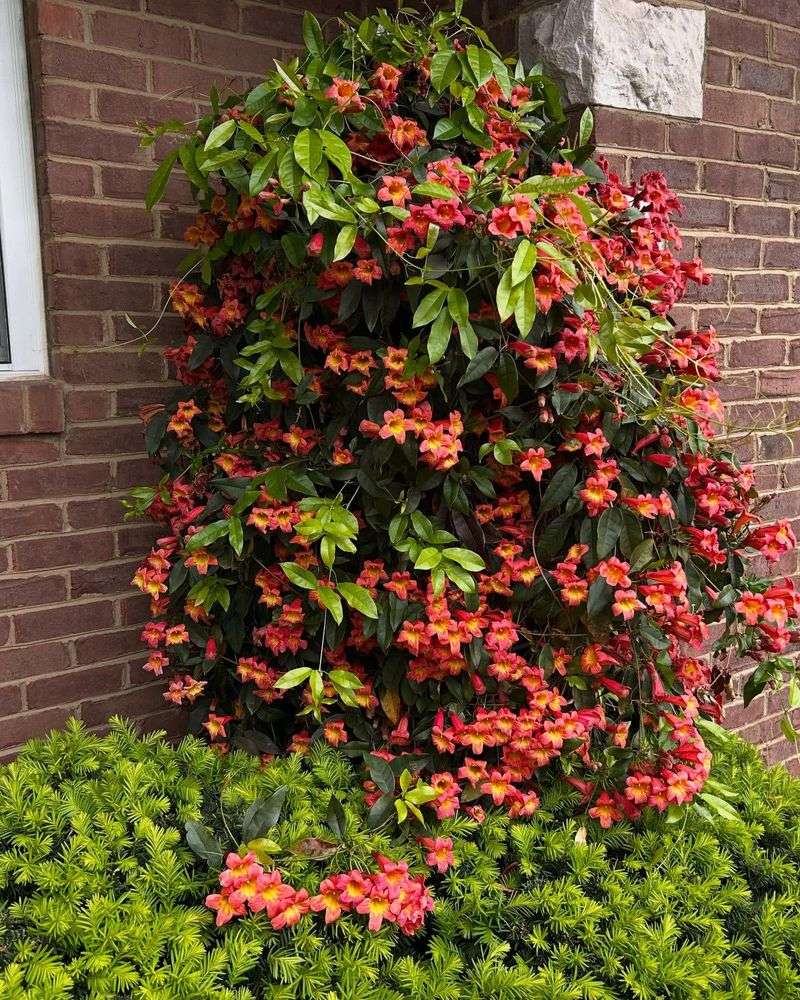
If you want a vine that really moves, crossvine is the one to plant in April. This native climber is a powerhouse, capable of shooting up 30 to 50 feet and blanketing fences, walls, and trellises in a matter of a few seasons.
The trumpet-shaped flowers come in gorgeous shades of orange, red, and yellow, creating a warm burst of color that is hard to miss from across the yard.
Crossvine blooms in late winter to early spring, so by the time April rolls around, it may already be showing off its flowers.
Planting a young vine this month means the roots get established during mild temperatures, setting the stage for explosive growth come summer.
It handles full sun and part shade equally well, which makes it one of the most versatile native vines for North Carolina landscapes.
One cool fact about this plant is how it got its name. If you cut through the stem, the cross-section reveals a distinctive cross pattern inside.
Beyond the novelty, crossvine is genuinely tough, tolerating clay soils and occasional dry spells once it gets going. Pair it with a strong fence or masonry wall, and it will cling on using its tendrils without much help from you.
North Carolina gardeners looking for fast, reliable coverage with beautiful blooms will not be disappointed.
3. Carolina Jessamine (Gelsemium sempervirens)
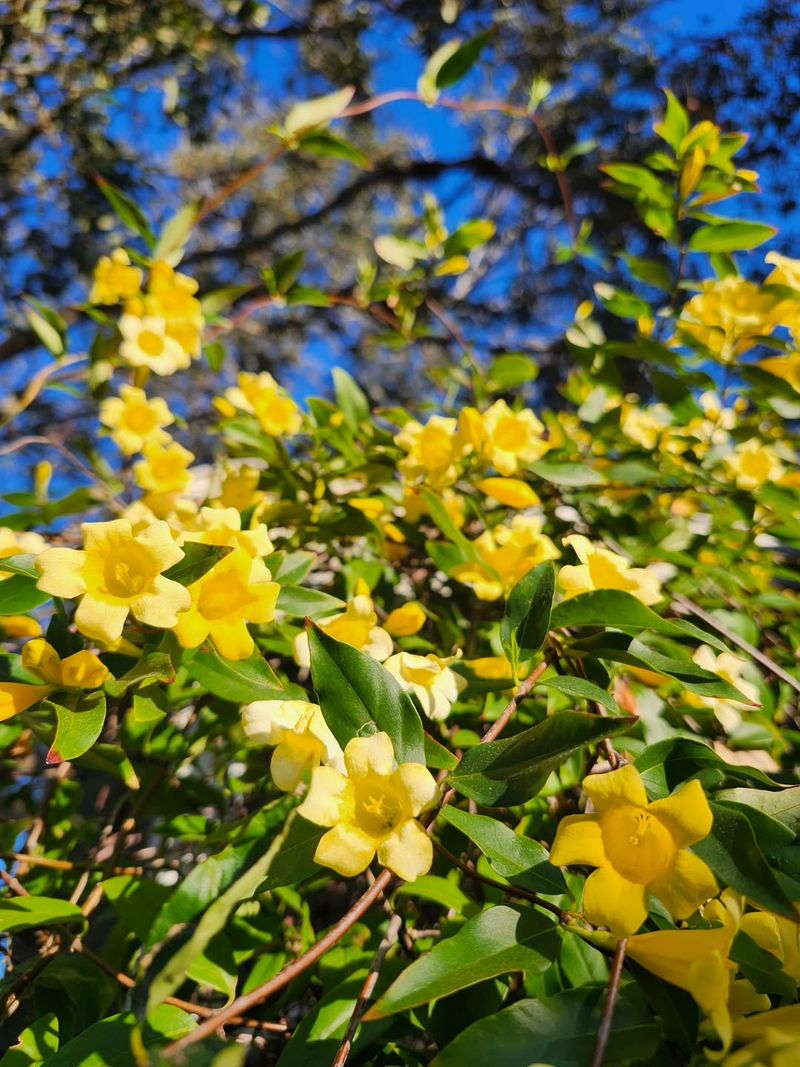
Bright yellow flowers on a chilly late-winter morning are one of the sweetest surprises a North Carolina garden can offer, and Carolina jessamine delivers exactly that.
As the official state flower of South Carolina and a beloved native across both Carolinas, this evergreen vine starts blooming as early as February and often keeps going into April.
The flowers carry a light, sweet fragrance that drifts through the yard on warm days, making it a sensory treat as much as a visual one.
Carolina jessamine climbs happily on trellises, fences, and arbors, reaching up to 20 feet when given proper support. It grows best in full sun to partial shade and prefers slightly acidic, well-draining soil, which is easy to find across much of North Carolina.
Planting in April is actually a smart move even though blooming may be winding down, because the roots have all spring and summer to grow deep and strong before the following year.
Keep in mind that all parts of this plant are toxic if eaten, so plant it away from areas where small children or pets play unsupervised. That said, pollinators like bees are drawn to the flowers, making it a valuable addition to any wildlife-friendly yard.
With its glossy green leaves staying on the vine year-round, Carolina jessamine brings structure and beauty to North Carolina gardens even when it is not in bloom.
4. Passionflower (Passiflora incarnata)
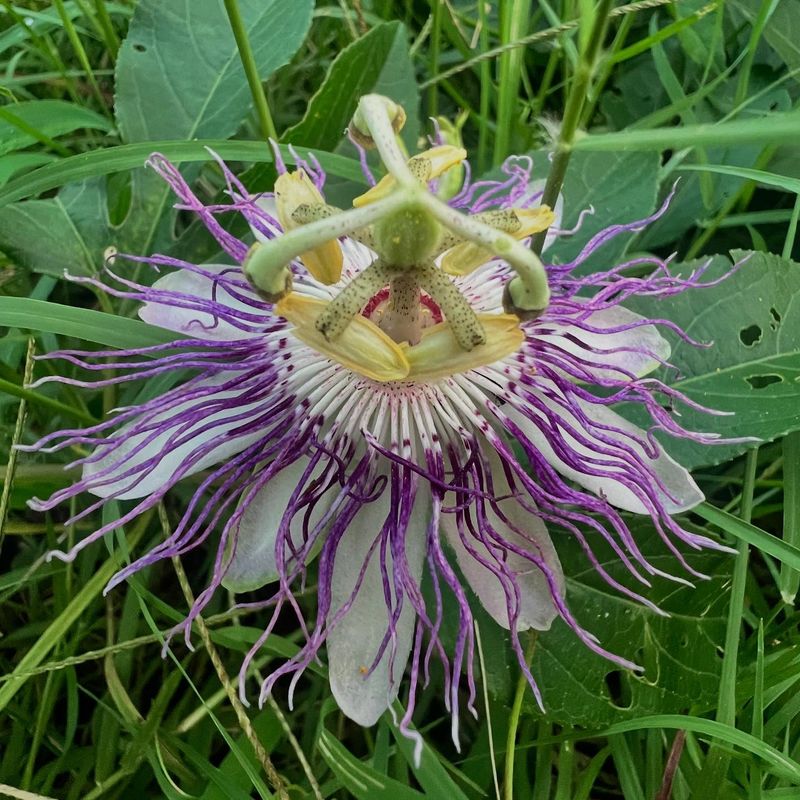
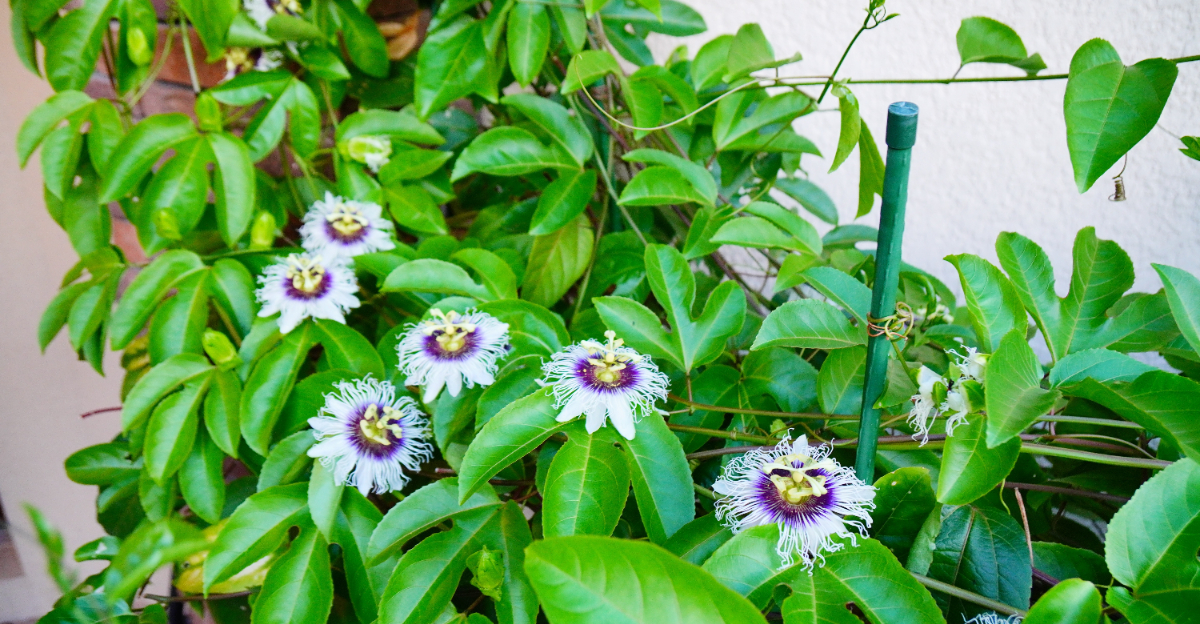
Nothing in a North Carolina garden turns heads quite like passionflower. The blooms are genuinely otherworldly, featuring layers of white petals ringed by a fringe of purple and pink filaments that look more like something from a tropical rainforest than a backyard vine.
Native to the southeastern United States, passionflower thrives in North Carolina’s warm, humid summers without any fussing from you.
April is a great month to get passionflower in the ground because the soil has warmed enough to encourage quick sprouting.
This vine grows fast, often reaching 6 to 10 feet or more in a single season, and it spreads by underground runners, so give it a spot where it has room to roam.
Full sun to part shade works well, and it tolerates a wide range of soil types, including the clay-heavy soils found in many North Carolina yards.
Passionflower is also one of the most important host plants for gulf fritillary butterflies, whose caterpillars feed exclusively on its leaves. Planting it is essentially rolling out a welcome mat for one of the most stunning orange butterflies in the region.
After the flowers fade, the vine produces egg-shaped fruits called maypops that are edible and attract wildlife.
Whether you are growing it for the blooms, the butterflies, or both, passionflower brings genuine excitement to any North Carolina garden from spring through early fall.
5. American Wisteria (Wisteria frutescens)
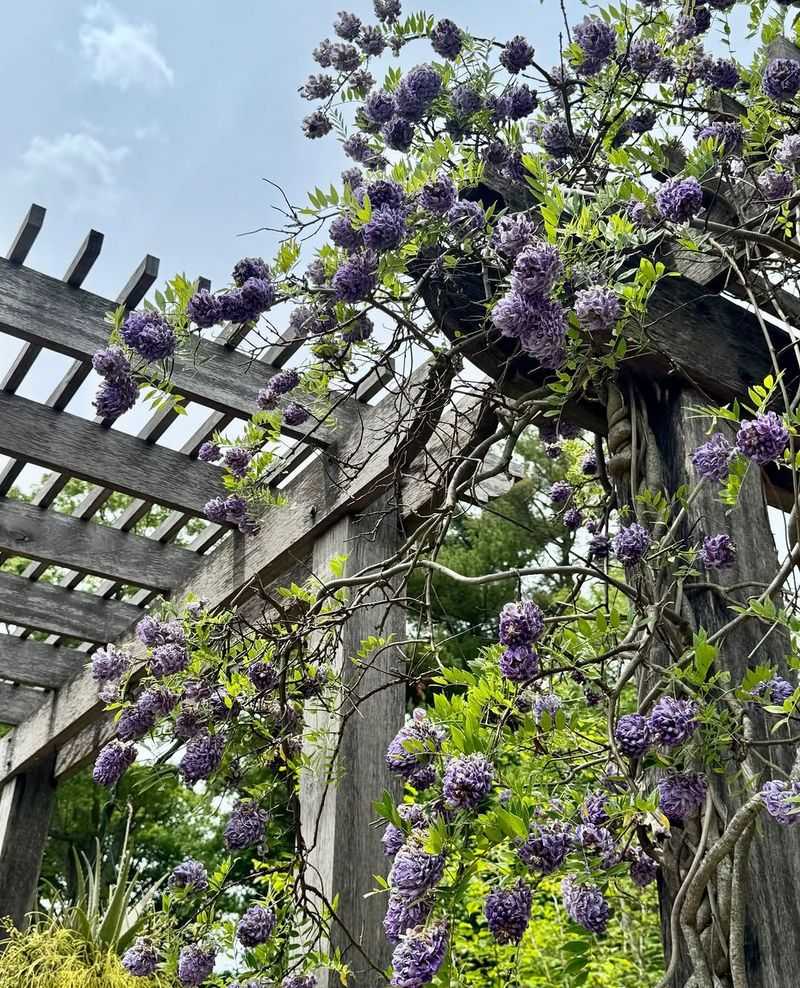
Wisteria has a reputation for being beautiful but aggressive, and that reputation is well earned by the non-native Asian varieties. American wisteria is a completely different story.
This native species produces the same gorgeous drooping clusters of lavender-purple flowers but behaves itself in the garden, growing at a moderate pace and staying where you put it.
For North Carolina gardeners who want that classic wisteria look without the headache, this is the plant to choose.
American wisteria typically blooms in late spring to early summer, and planting in April gives the vine a solid head start on the season. It can eventually reach 25 to 30 feet, so a sturdy pergola, arbor, or trellis is essential from day one.
Full sun produces the best flower display, though the plant tolerates partial shade. It also handles moist soils and even occasional wet periods better than many other vines, making it a natural fit for low-lying North Carolina garden spots.
Unlike its invasive relatives, American wisteria does not strangle nearby trees or crack through fences and foundations. Pollinators, especially bumblebees, go absolutely wild for the flower clusters, and the sweet fragrance fills the air around any structure it covers.
North Carolina gardeners in both the Piedmont and coastal plain regions report excellent results with this vine. A little annual pruning after blooming keeps it tidy and actually encourages even more flowers the following year.
6. Virginia Creeper (Parthenocissus quinquefolia)
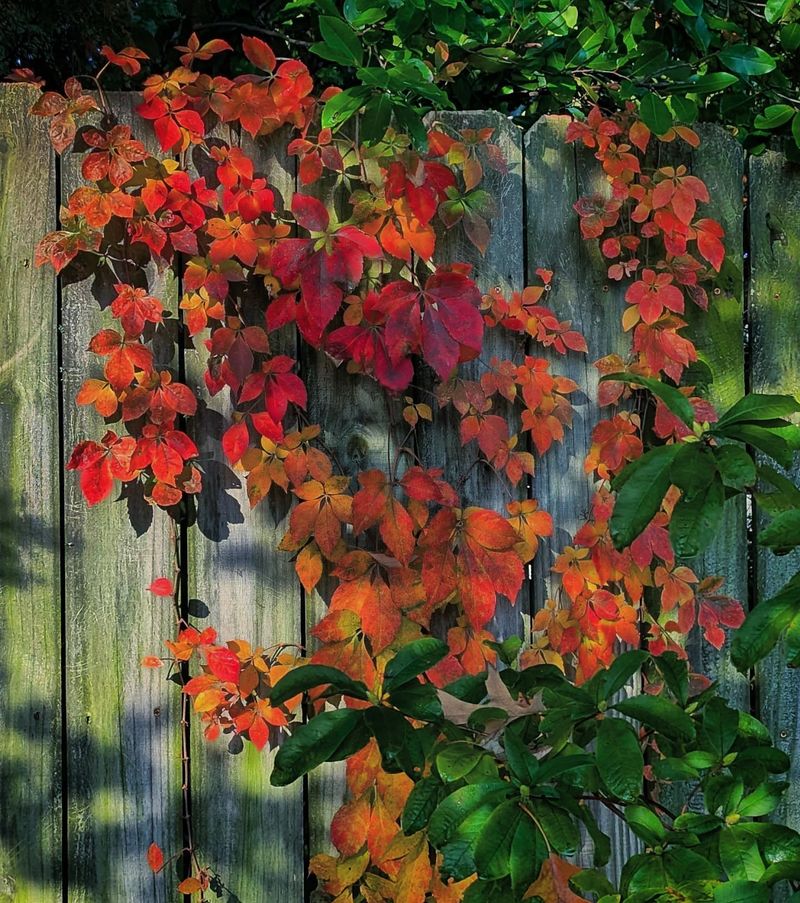
Virginia creeper might just be the hardest-working vine in any North Carolina yard. During spring and summer, it spreads a lush canopy of deep green, five-pointed leaves across fences, walls, and trellises.
When fall rolls around, those same leaves transform into a blazing show of scarlet red that rivals any ornamental tree in the neighborhood. Not many plants deliver this kind of two-season drama all by themselves.
This vine grows fast, sometimes adding several feet in a single growing season, and it clings to surfaces using small adhesive discs at the tips of its tendrils. That means it can cover a bare brick wall or wooden fence with almost no help from you.
April planting allows the vine to spend the entire warm season establishing a strong root system, which makes it far more resilient during its first winter in the ground.
Virginia creeper thrives in full sun, partial shade, and even deep shade, which makes it one of the most adaptable native vines available to North Carolina gardeners. It tolerates poor soils, drought, and urban conditions without complaint.
Birds love the small dark berries the vine produces in late summer, making it a fantastic choice for wildlife gardens. One thing to know is that the berries are not safe for people to eat, so plant accordingly.
For fast, reliable, and genuinely beautiful coverage across North Carolina landscapes, Virginia creeper is tough to beat.
7. Trumpet Vine (Campsis radicans)
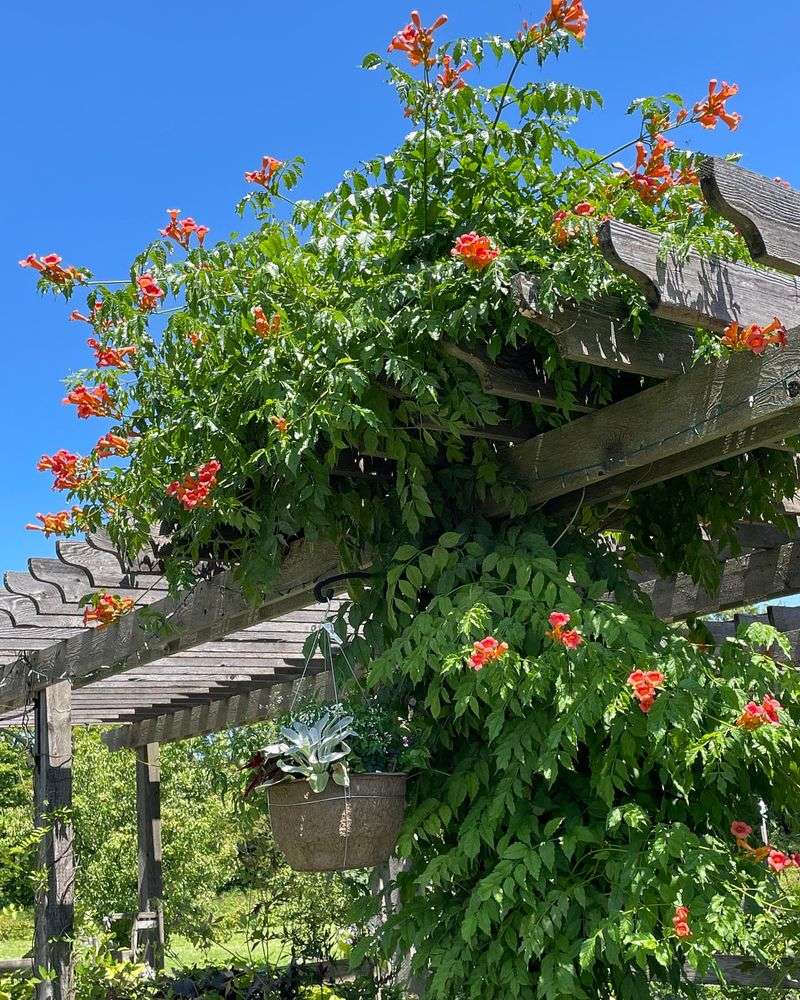
Trumpet vine brings a tropical energy to North Carolina gardens that is hard to replicate with any other native plant. The flowers are large, bold, and blazing orange, shaped like wide-mouthed trumpets that practically shout for attention from across the yard.
Hummingbirds cannot resist them, and during peak bloom in midsummer, a well-established trumpet vine can attract multiple birds at once, turning your backyard into a miniature wildlife show.
This vine is a vigorous grower, and that is putting it mildly. Trumpet vine can climb 30 to 40 feet using aerial rootlets that grip onto wood, brick, and stone with surprising strength.
April is the right time to plant it because the warm soil encourages fast root development right from the start. Full sun is ideal for maximum flowering, though it grows well in partial shade too.
North Carolina’s warm, humid summers are practically perfect conditions for this vine to thrive.
Because trumpet vine grows so enthusiastically, choosing the right location before planting is important. Give it a fence line, a large pergola, or a sturdy outbuilding where it can spread freely without crowding other plants.
Avoid planting it directly against your home’s foundation or gutters. Once established, it is quite drought-tolerant and needs very little maintenance beyond occasional pruning to manage its spread.
For a high-impact, hummingbird-friendly native vine that thrives across North Carolina, trumpet vine is a bold and rewarding choice.
8. Climbing Aster (Ampelaster carolinianus)
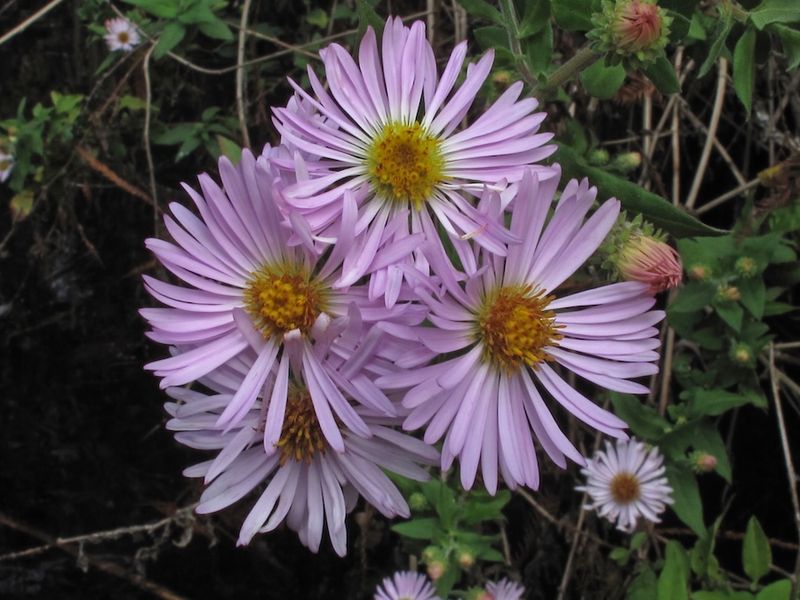
Most flowering vines put on their best show in spring or summer, which is exactly why climbing aster deserves a special spot in every North Carolina garden.
This underrated native vine saves its blooms for fall, covering itself in cheerful lavender-purple, daisy-like flowers with bright yellow centers just when most other plants are winding down.
The result is a garden that stays colorful and lively well into October and beyond.
Climbing aster is a herbaceous perennial, meaning it grows back from the roots each year after winter. In a single growing season, it can reach up to 12 feet, scrambling over fences, shrubs, and trellises with an easygoing sprawling habit.
Planting in April gives the vine a long, full season to establish itself before its fall flowering debut. It grows best in full sun to partial shade and prefers moist, well-draining soils, which are common in many parts of North Carolina.
Late-season pollinators like bees and butterflies depend on plants like climbing aster when food sources become scarce in autumn. Monarch butterflies passing through North Carolina on their southern migration often stop to feed on its nectar.
Native to coastal and Piedmont regions of North Carolina, this vine feels completely at home in the state’s climate.
If you want a vine that surprises your neighbors with gorgeous fall color while supporting local wildlife, climbing aster is the perfect plant to add to your April planting list.