10 Best Peony Companion Plants In Ohio Gardens
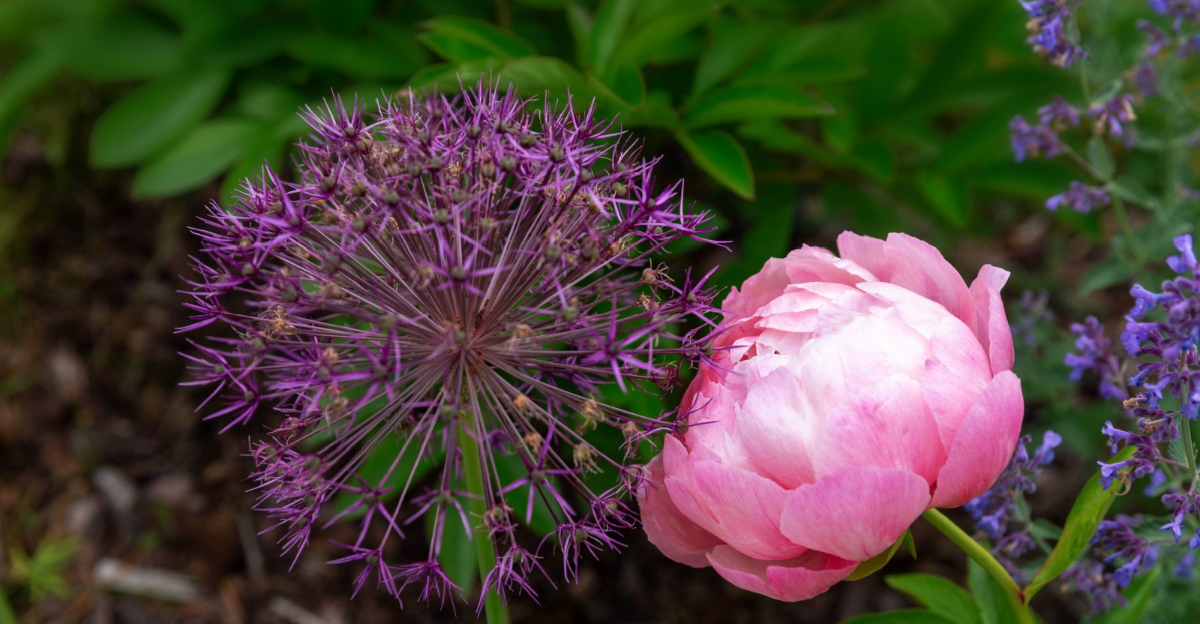
Few flowers steal the show in an Ohio garden quite like peonies. Their huge blooms, rich color, and sweet fragrance turn late spring into a moment many gardeners wait for all year.
When the buds finally open, the entire garden suddenly feels fuller and more alive. Yet even these stunning flowers look better with the right company.
The plants around peonies can shape how dramatic those blooms appear, how balanced the garden feels, and how long the bed stays interesting after peony season fades. Smart pairings bring out the best in their color, texture, and structure.
Many Ohio gardeners discover that the secret to a truly beautiful peony bed lies not only in the peonies themselves, but in the companions that grow beside them.
1. Alliums With Tall Blooms And Early Season Interest
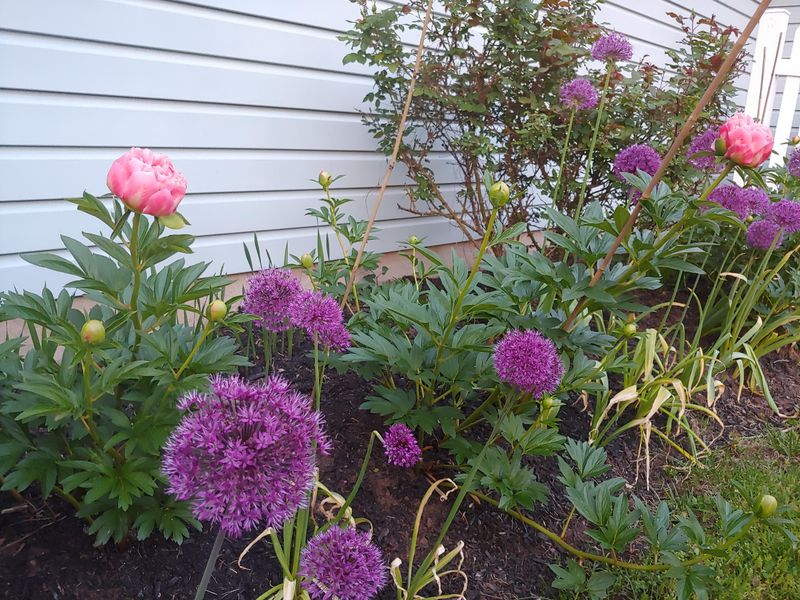
Few plants make as bold a statement in late spring as the giant allium, with its perfectly round purple flower heads rising on tall, sturdy stems. Allium giganteum typically blooms in May and early June in Ohio, which lines up beautifully with the tail end of peony season.
As peonies finish their big floral show, alliums step in to keep the garden looking full and interesting.
The vertical structure alliums bring is something peonies simply cannot provide on their own. Peony plants tend to spread outward with lush, mounding foliage, so the upright allium stems add a nice architectural contrast that makes both plants look more intentional.
Gardeners who love a layered, designed look will appreciate how naturally these two plants work together.
Alliums also attract bees and butterflies, which benefits the entire garden bed. In Ohio gardens, they thrive in full sun and well-drained soil, the same conditions peonies prefer.
Plant allium bulbs in fall, spacing them about six to eight inches apart and roughly twelve inches away from peony crowns to avoid crowding the roots. Their dried seed heads look attractive even after the blooms fade, adding interest well into summer.
2. Catmint For Long Lasting Color And Soft Texture
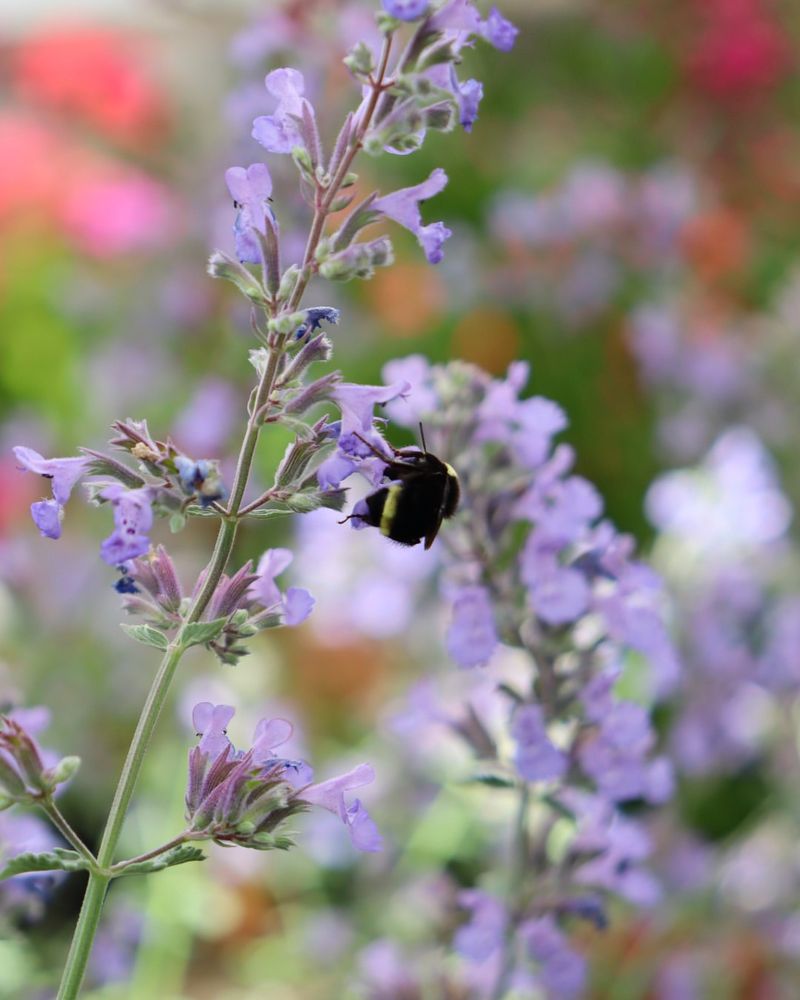
Catmint has a way of making everything around it look softer and more relaxed, which is exactly why it works so well next to the bold, ruffled blooms of peonies. Nepeta, commonly called catmint, produces masses of small lavender-blue flowers on arching stems that create a hazy, romantic effect in the garden.
It starts blooming in late spring alongside peonies and keeps going well into summer if you trim it back after the first flush.
One of the best things about catmint is its reliability in Ohio’s variable climate. It handles heat, humidity, and even dry spells without much fuss, which makes it a low-maintenance choice for busy gardeners.
The soft, gray-green foliage stays attractive even when the plant is not in bloom, acting as a gentle backdrop that lets peony colors pop.
For spacing, plant catmint about eighteen inches from peony crowns so neither plant feels crowded. Catmint works especially well along the front edge of a border, where its slightly sprawling habit softens hard edges.
Bees absolutely love it, so planting catmint nearby encourages more pollinator activity throughout the entire garden bed during Ohio’s growing season.
3. Salvia For Pollinator Friendly Garden Beds
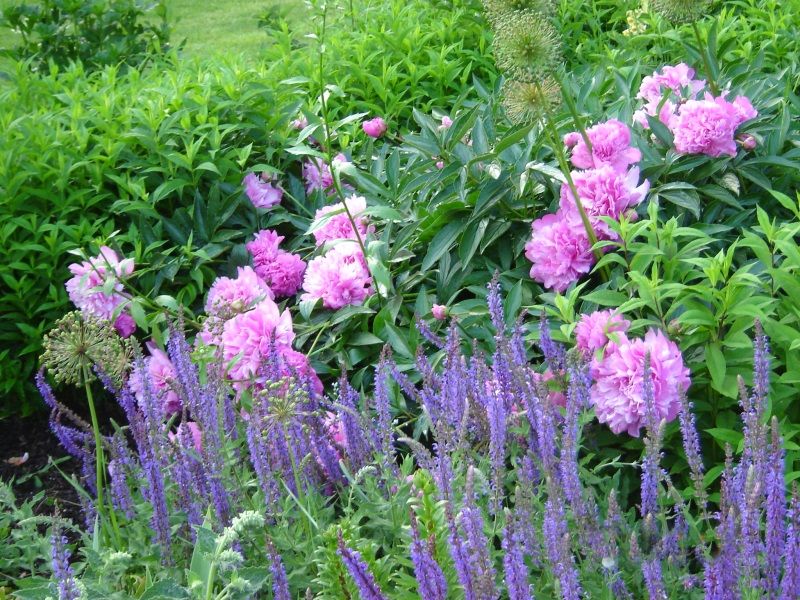
Salvia nemorosa, especially the popular cultivar Caradonna, is one of those plants that earns its spot in the garden by doing almost everything right. Its rich, deep purple flower spikes shoot upward in a clean, vertical line that contrasts sharply with the round, fluffy form of peony blooms.
The two plants together create a classic cottage garden pairing that looks both bold and elegant at the same time.
Blooming from June through September in Ohio, salvia keeps the garden colorful long after peonies have finished for the season. It is also a powerhouse for pollinators.
Bees, butterflies, and hummingbirds are drawn to salvia’s nectar-rich flowers, making it a smart choice for gardeners who want to support local wildlife. OSU Extension recommends salvia as one of the best perennials for attracting beneficial insects to Midwest gardens.
Salvia grows well in full sun and prefers well-drained soil, matching peony growing requirements almost perfectly. Space plants about twelve to fifteen inches from peony crowns and cut salvia back by about a third after the first bloom cycle to encourage a second flush of flowers.
Ohio summers can be warm and humid, and salvia handles those conditions with ease, rarely needing extra attention once established.
4. Irises With Elegant Late Spring Flowers
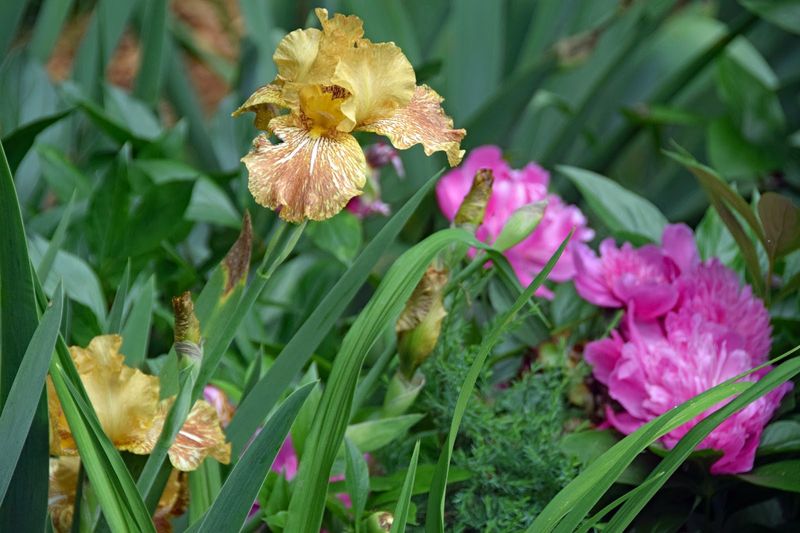
Tall bearded irises and peonies have shared garden beds across the Midwest for generations, and it is easy to see why. Both plants bloom in late spring, creating a spectacular overlap of color that can last for two to three weeks in Ohio gardens.
Iris flowers come in nearly every color imaginable, so finding a variety that complements your peony shades is a fun and creative part of garden planning.
Beyond the bloom timing, irises offer a strong vertical element with their sword-shaped leaves that stands in pleasing contrast to the rounded mound of peony foliage. After irises finish blooming, their upright foliage continues to add structure and texture to the bed throughout summer, filling in space that might otherwise look bare once peonies stop flowering.
Irises prefer the same full sun and well-drained soil conditions that peonies love, making them natural garden neighbors in Ohio. One important tip is to avoid planting iris rhizomes too deep, as they need to sit near the soil surface to bloom reliably.
Keep a spacing of about twelve to eighteen inches between iris clumps and peony crowns. Dividing iris clumps every three to four years keeps them healthy and blooming at their best.
5. Foxglove For Vertical Cottage Garden Drama
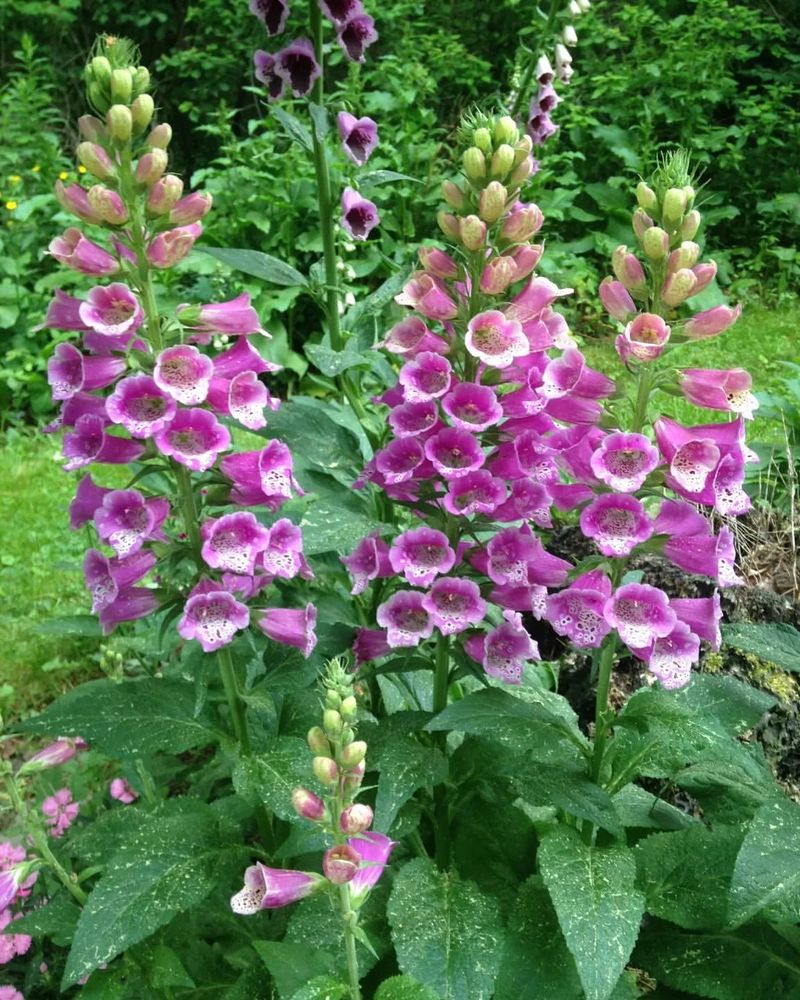
Foxglove brings a sense of old-world cottage garden charm that few other plants can match. Its tall, dramatic flower spikes, covered in tubular blooms in shades of pink, purple, white, and cream, can reach four to six feet in height, making them a striking backdrop for shorter peony plants in Ohio garden beds.
The combination creates a layered, storybook look that feels both wild and carefully designed.
Digitalis purpurea is a biennial, meaning it produces leafy rosettes the first year and flowers the second, but it self-seeds freely enough that a well-established planting feels permanent. In Ohio, foxglove thrives in part shade to full sun, though it appreciates some afternoon shade during the hottest weeks of summer.
Plant it at the back of a border so its towering spikes rise dramatically behind peony blooms in late spring and early summer.
Space foxglove plants about twelve inches apart and at least eighteen to twenty-four inches behind your peonies so the tall spikes do not shade them out. Foxglove also attracts bumblebees, which are important pollinators for many Ohio garden plants.
Allow a few plants to go to seed each season to ensure new plants come back the following year without any extra effort on your part.
6. Lady’s Mantle With Soft Foliage And Airy Blooms
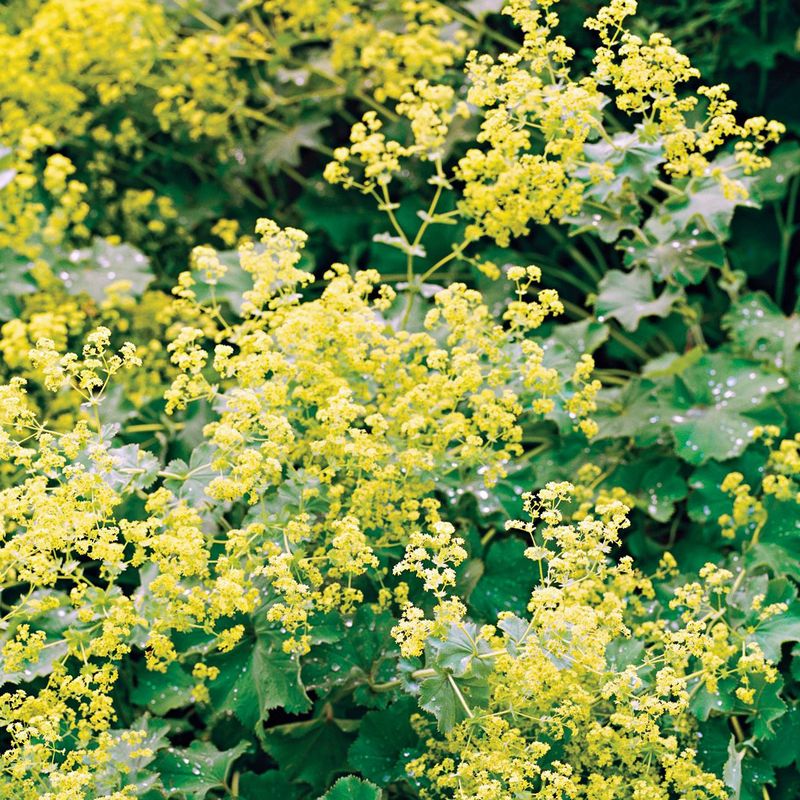
Lady’s mantle is one of those quietly charming plants that makes everything around it look more beautiful without ever demanding the spotlight for itself. Alchemilla mollis forms low, spreading mounds of scalloped, velvety leaves that catch and hold water droplets after rain, creating a sparkling effect that looks almost magical in the morning light.
Its frothy chartreuse-yellow flower clusters appear in late spring and early summer, adding a soft, airy contrast to the bold blooms of nearby peonies.
In Ohio gardens, lady’s mantle grows best in part shade to full sun with consistently moist but well-drained soil. It is particularly useful along the front edge of a peony border, where its low, spreading habit softens the transition between plants and the lawn or pathway.
The foliage stays attractive all season long, providing reliable ground-level interest even after the flowers fade.
Lady’s mantle is also a natural weed suppressor, forming a dense mat that shades the soil and reduces the need for frequent weeding around peony crowns. Plant it about twelve inches from peony roots and trim back any overly enthusiastic spread each spring.
OSU Extension notes that this plant adapts well to Ohio’s clay-heavy soils when amended with compost, making it a practical and beautiful choice for Midwest gardeners.
7. Shasta Daisies For Bright Summer Color
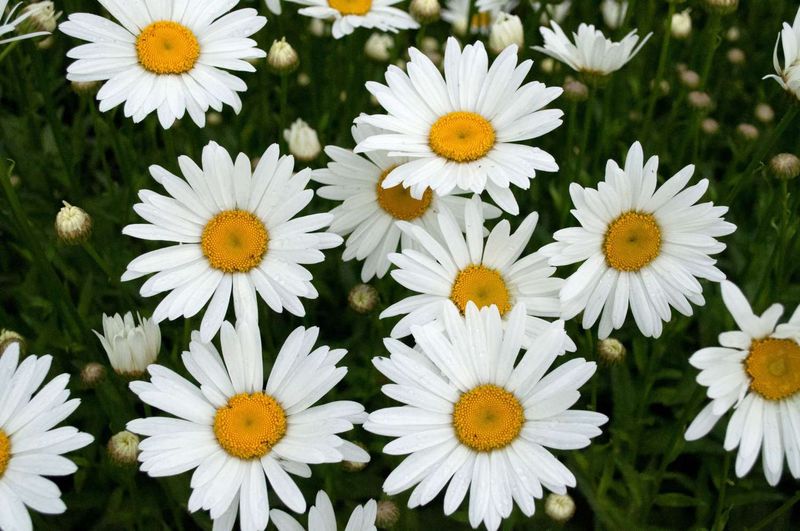
Once peonies finish their spring show, the garden can suddenly feel a little flat without a plan for what comes next. Shasta daisies solve that problem with cheerful energy, producing masses of bright white flowers with sunny yellow centers from June through August in Ohio.
Their crisp, clean look provides a fresh burst of color right when the garden needs it most.
Leucanthemum x superbum, the botanical name for Shasta daisy, grows into upright clumps about two to three feet tall, which works nicely alongside the bushy mound of peony foliage that remains attractive even after blooming ends. The contrast between the white daisy flowers and the deep green peony leaves creates a classic, fresh garden combination that never feels overdone.
Shasta daisies are tough perennials well suited to Ohio’s climate, tolerating heat, humidity, and occasional dry spells once established. Plant them in full sun with well-drained soil and space clumps about eighteen inches apart, keeping them at least a foot away from peony crowns.
Deadhead spent blooms regularly to extend the flowering period and prevent unwanted self-seeding. Dividing Shasta daisy clumps every two to three years keeps them vigorous and prevents the center of the clump from becoming woody and sparse.
8. Garden Phlox For Bold Mid Summer Flowers
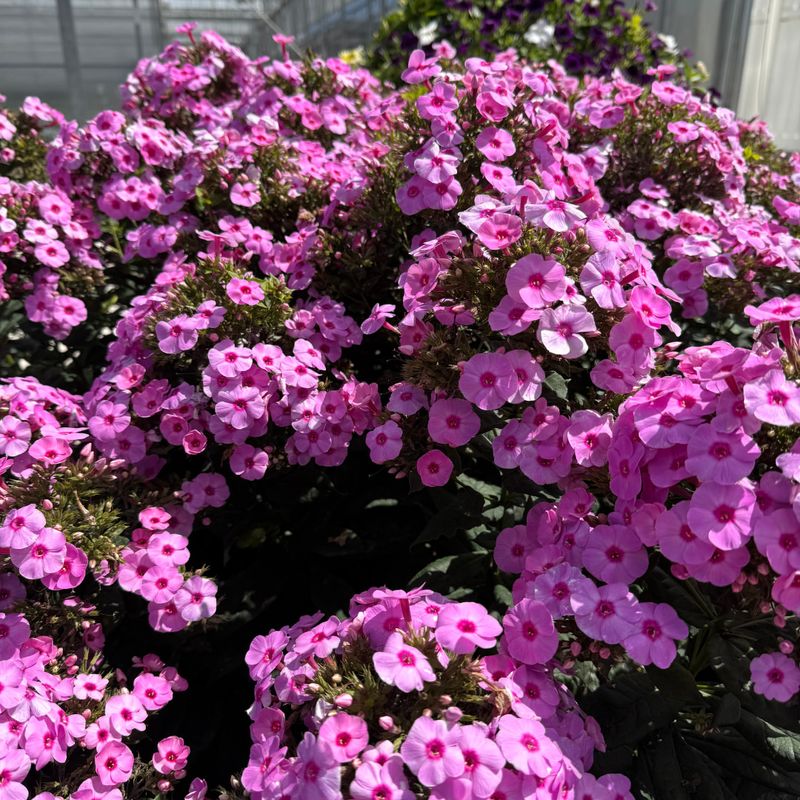
Garden phlox is a true Ohio garden workhorse, producing tall clusters of fragrant flowers in shades of pink, purple, white, and coral from July through August, long after most spring bloomers have wrapped up for the year. Phlox paniculata can reach three to four feet in height, giving it enough presence to stand out even in a border filled with bold plants.
Planted near peonies, it keeps the bed looking lively and colorful through the heart of summer.
One of the reasons garden phlox pairs so well with peonies is that its bloom time picks up almost exactly where peonies leave off, creating a seamless transition of color in the same bed. The tall, upright habit of phlox also provides a nice vertical element that complements the lower, mounding shape of peony plants once their blooms have faded.
Fragrance is another bonus, as both plants produce wonderful scents that make the garden a pleasure to walk through.
Ohio summers can bring humid conditions that sometimes encourage powdery mildew on phlox foliage. Choosing mildew-resistant cultivars like David or Robert Poore helps avoid this issue.
Space plants eighteen to twenty-four inches apart and water at the base rather than overhead. Full sun and good air circulation are key to keeping garden phlox healthy and blooming reliably each season.
9. Coral Bells With Colorful Foliage Contrast
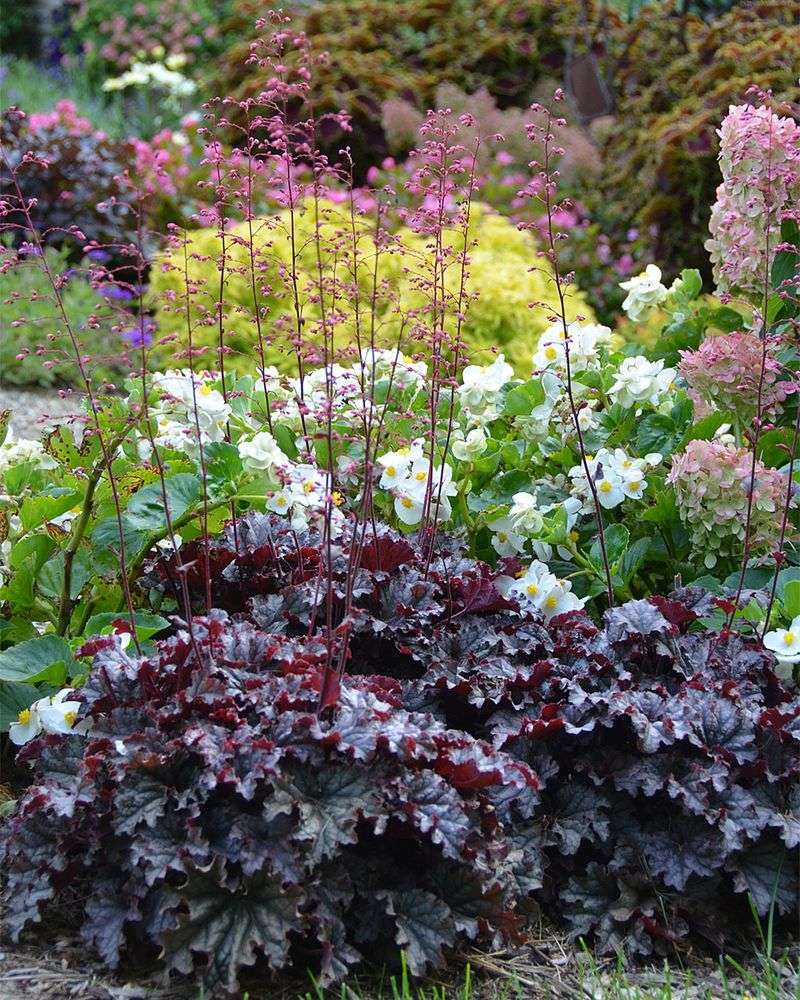
Not every great companion plant earns its spot through flowers alone. Heuchera, commonly called coral bells, is grown primarily for its stunning foliage, which comes in colors ranging from deep burgundy and copper to lime green and silver.
Planted alongside peonies, the richly colored leaves create a dramatic contrast against peony’s glossy, dark green foliage and brightly colored blooms, making both plants look more vivid by comparison.
Coral bells form tidy, low-growing mounds about one to two feet tall, which makes them ideal for edging the front of a peony border without blocking sightlines or competing for space. In summer, they send up slender stems topped with tiny, airy flowers that attract hummingbirds and small bees, adding pollinator value without a lot of fuss.
The foliage holds its color from spring through fall, providing interest even during the weeks when peonies are not in bloom.
In Ohio, heuchera grows well in part shade to full sun, though leaf color is often most vivid with some afternoon shade during the hottest months. Well-drained soil amended with compost suits it perfectly.
Space plants about twelve to fifteen inches apart and keep them at least a foot from peony crowns. Dividing clumps every three years or so keeps coral bells looking fresh and full throughout the growing season.
10. Ornamental Grasses For Movement And Texture
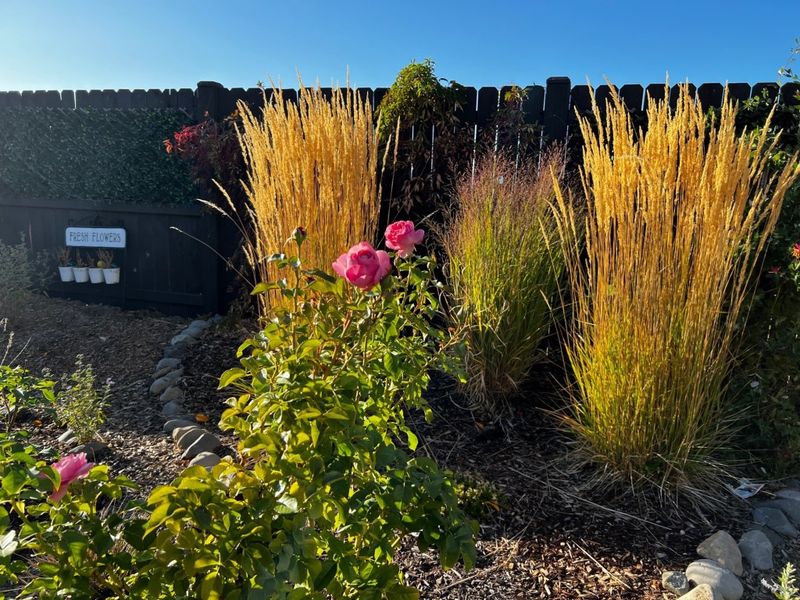
There is something quietly satisfying about watching ornamental grasses sway in a summer breeze, and that gentle movement is exactly what a peony bed needs once the spring blooms are gone. Feather reed grass, Calamagrostis x acutiflora Karl Foerster, is one of the best choices for Ohio gardens, growing into neat, upright clumps four to five feet tall with feathery plumes that emerge in early summer and turn golden as the season progresses.
Planted behind or beside peonies, feather reed grass provides a strong vertical backdrop that makes the peony mounds look intentional and well-framed throughout the growing season. The contrast between the fine, linear texture of grass foliage and the broad, rounded leaves of peonies is visually interesting in a way that keeps the garden looking dynamic even without flowers present.
As fall arrives, the golden grass plumes add warm color that bridges the gap between summer and the first frosts.
Karl Foerster is well suited to Ohio’s climate, tolerating both heat and cold without complaint. It grows in full sun to part shade and adapts to a range of soil types, including the clay soils common in many Ohio yards.
Space clumps about twenty-four inches from peony crowns to give both plants room to develop fully. Cut grass back to about four inches in late winter before new growth begins each spring.