Best Places To See Winter-Blooming Flowers In Virginia
When most people think of flowers, they picture sunny spring days and warm summer breezes.
But Virginia surprises garden lovers with stunning blooms that brave the cold winter months, painting the landscape with unexpected color when everything else seems dormant.
From cheerful witch hazels to elegant camellias, these hardy plants prove that beauty doesn’t have to wait for warm weather.
Lewis Ginter Botanical Garden
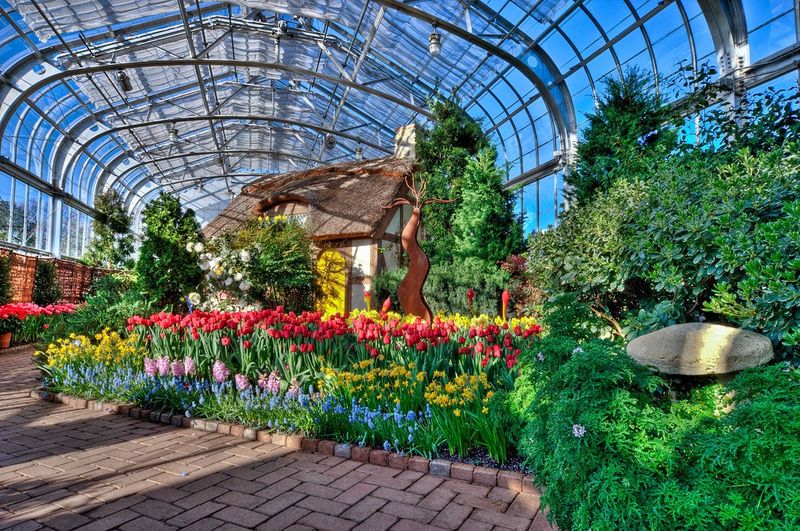
Richmond’s treasure trove of winter blooms welcomes visitors year-round with spectacular displays that defy the season.
Located at 1800 Lakeside Avenue in Richmond, this 50-acre wonderland transforms into a magical winter garden when temperatures drop.
Camellias steal the show during winter months, their glossy petals ranging from pure white to deep crimson.
The garden’s Conservatory stays toasty warm, housing tropical plants that bloom regardless of outdoor conditions.
Witch hazels add their spidery yellow and orange flowers to bare branches, creating an almost otherworldly appearance against winter’s gray skies.
Winter jasmine cascades over walls with bright yellow star-shaped blooms that seem impossibly cheerful.
The garden staff carefully plans displays to ensure something’s always flowering, even in January and February.
Walking paths wind through different garden rooms, each offering unique winter surprises.
Admission fees support ongoing conservation and education programs.
Bundle up and bring your camera because these winter blooms photograph beautifully against snow or frost.
The garden café serves hot cocoa and seasonal treats, making your visit even more enjoyable on chilly days.
Norfolk Botanical Garden

Spread across 175 acres at 6700 Azalea Garden Road in Norfolk, this coastal garden benefits from milder winter temperatures that encourage early blooming.
Maritime influences create a microclimate where plants flower weeks before their inland cousins.
Hellebores, nicknamed Christmas roses, nod their elegant heads throughout the winter garden beds.
These tough perennials come in shades of white, pink, purple, and even green, blooming happily through snow and ice.
Early-flowering camellias begin their show in November and continue through March, their waxy blooms resisting cold damage remarkably well.
The garden’s collection includes hundreds of varieties, each with unique flower forms and colors.
Paperwhite narcissus naturalize throughout the grounds, popping up with fragrant white clusters that signal winter’s approach.
Winter honeysuckle perfumes the air with its sweet scent, though its small cream-colored flowers often go unnoticed.
Tram tours operate year-round, offering narrated rides through the entire property without freezing your toes.
The garden hosts special winter events celebrating cold-season blooms.
Membership provides unlimited visits and exclusive previews of new plantings.
Meadowlark Botanical Gardens
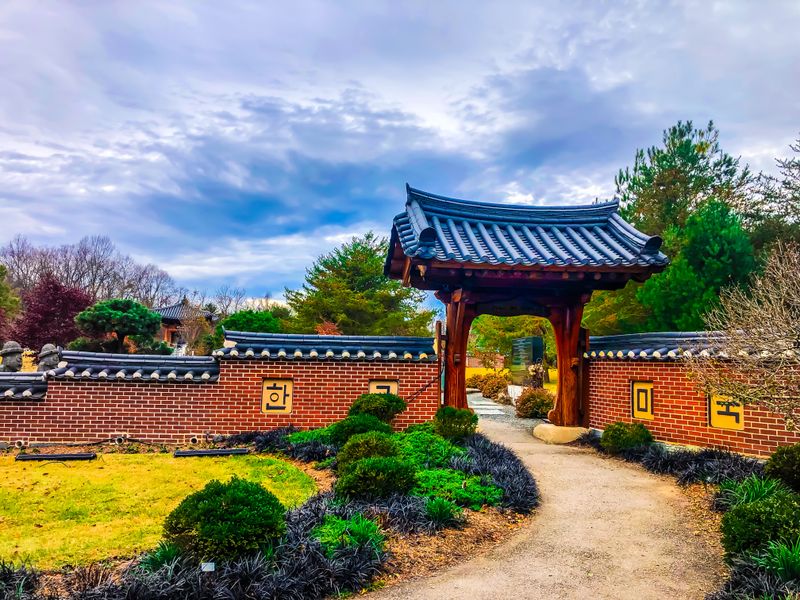
Northern Virginia’s gem sits at 9750 Meadowlark Gardens Court in Vienna, offering 95 acres of cultivated beauty that doesn’t sleep through winter.
The gardens specialize in plants adapted to the region’s sometimes harsh cold snaps.
Mahonia, also called Oregon grape holly, produces cheerful yellow flower clusters starting in late winter, followed by blue berries that birds adore.
Its evergreen foliage adds year-round structure to garden beds.
Cornelian cherry dogwood trees surprise visitors with tiny yellow blooms appearing on bare branches as early as February.
These flowers emerge before leaves, creating clouds of gold against winter’s brown landscape.
The Korean rhododendron ‘PJM’ breaks dormancy early, covering itself with lavender-pink blooms that can withstand late frosts.
Winter daphne contributes intensely fragrant pink flowers that perfume entire garden sections.
Three lakes connected by streams remain beautiful even when partially frozen, reflecting winter-blooming plants along their shores.
Elevated boardwalks allow exploration without muddy boots.
The visitor center provides trail maps highlighting winter interest areas.
Educational programs teach gardeners how to create four-season landscapes at home.
Parking is free, making multiple visits throughout winter easy and affordable.
Blandy Experimental Farm And State Arboretum
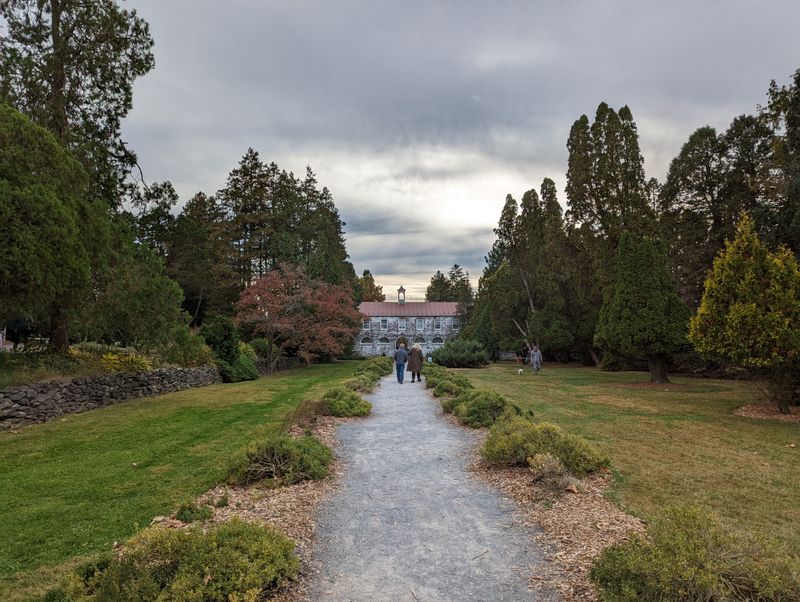
Nestled in the Shenandoah Valley at 400 Blandy Farm Lane in Boyce, this 700-acre research facility doubles as a public garden showcasing cold-hardy plants.
University of Virginia manages this living laboratory where scientists study plant adaptation to climate extremes.
Witch hazel collections here rank among the nation’s finest, with dozens of cultivars blooming from December through March.
Their ribbon-like petals unfurl on warm winter days and curl protectively when temperatures plummet.
Early bulbs like snowdrops and winter aconites carpet woodland areas, their tiny flowers pushing through frozen ground with determination.
These diminutive blooms signal that spring preparations have begun underground.
The arboretum tests new winter-flowering varieties for landscape suitability, meaning visitors see plants not yet available in nurseries.
Research plots demonstrate how different species perform in valley microclimates.
Self-guided walking trails remain open dawn to dusk year-round, with no admission fees required.
The native plant trail showcases Virginia’s own winter-blooming species.
Quarterly newsletters highlight what’s currently flowering and upcoming bloom times.
Photography enthusiasts find endless subjects among the experimental plantings.
Dress in layers because valley temperatures can fluctuate dramatically during winter days.
Green Spring Gardens

Alexandria’s hidden sanctuary at 4603 Green Spring Road preserves a historic estate surrounded by 31 acres of demonstration gardens.
Fairfax County Parks manages this property, focusing on sustainable gardening practices that work in local conditions.
Lenten roses, a hellebore variety, bloom prolifically here from January onward, their downturned flowers requiring visitors to crouch for proper appreciation.
Colors range from pristine white to almost black, with spotted and streaked varieties adding interest.
Fragrant wintersweet shrubs produce waxy yellow flowers on bare stems, their spicy-sweet perfume carrying across the entire garden.
Just a few branches brought indoors will scent your whole house.
The demonstration beds show homeowners exactly which plants will bloom during Virginia winters, with labels providing care instructions and bloom times.
Raised beds allow close inspection without stepping on frozen ground.
Master gardeners staff the greenhouse and horticulture center, answering questions about achieving winter blooms in home landscapes.
Free classes teach winter garden design principles.
The historic house hosts art exhibits featuring botanical themes.
A gift shop sells unusual cold-hardy plants propagated from garden specimens.
Parking fills quickly on mild winter weekends when cabin fever drives gardeners outdoors.
Maymont Park

Richmond’s beloved Victorian estate at 1700 Hampton Street combines formal gardens with natural landscapes, creating diverse habitats for winter-blooming plants.
The 100-acre property was gifted to the city by Major and Mrs. James Dooley in 1925.
The Italian Garden’s sheltered position protects tender camellias from harsh winds, allowing varieties that wouldn’t survive in exposed locations.
Stone walls absorb daytime heat and release it at night, moderating temperature extremes.
Japanese apricot trees bloom in late winter, their pink and white flowers appearing before leaves and filling the air with almond-like fragrance.
These blooms inspired centuries of Asian poetry and paintings.
Winter heath covers ground in the English Garden with tiny bell-shaped flowers in pink and white, blooming continuously from November through April.
Bees emerge on warm days to collect their scarce nectar.
The estate’s microclimate, created by the James River’s proximity, extends the growing season at both ends.
Mansion tours reveal how Victorian gardeners forced winter blooms indoors.
Nature center staff lead winter wildflower walks, pointing out native species that bloom before trees leaf out.
Admission is free, though donations support ongoing restoration projects.
The carriage collection and historic mansion add cultural enrichment to your garden visit.
Oatlands Historic House And Gardens
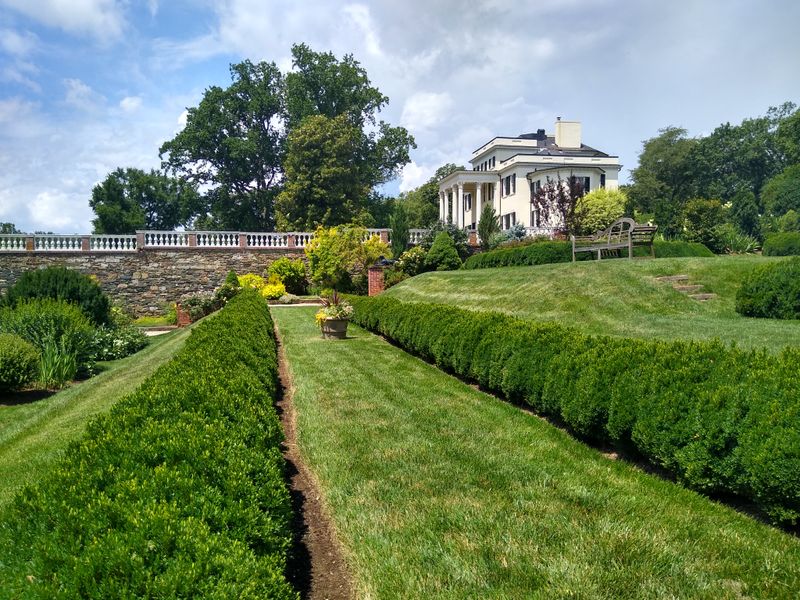
Leesburg’s antebellum estate at 20850 Oatlands Plantation Lane preserves four acres of terraced formal gardens established in the early 1800s.
The National Trust for Historic Preservation maintains this property, balancing historical accuracy with horticultural excellence.
Ancient boxwoods, some over 150 years old, provide evergreen structure that makes winter-blooming flowers stand out dramatically.
Their dark foliage creates perfect backdrops for lighter-colored blooms.
Edgeworthia, called paperbush, produces clusters of fragrant tubular flowers in late winter, their butter-yellow blooms emerging from fuzzy gray buds.
This shrub was once grown for papermaking in Asia.
The walled garden’s protected environment allows experimentation with borderline-hardy plants that might not survive in open locations.
Microclimates within the terraces create distinct planting zones.
Heritage roses selected for winter interest include varieties with persistent hips that provide color and bird food.
Some antique roses bloom sporadically through mild winters.
Guided tours explain how 19th-century gardeners extended blooming seasons using cold frames and glass cloches.
The estate’s greenhouse displays Victorian forcing techniques.
Special events celebrate winter gardening traditions from different historical periods.
The gift shop offers heirloom seeds and period-appropriate garden tools.
Seasonal admission fees vary, with discounts for National Trust members.
Virginia Tech Hahn Horticulture Garden
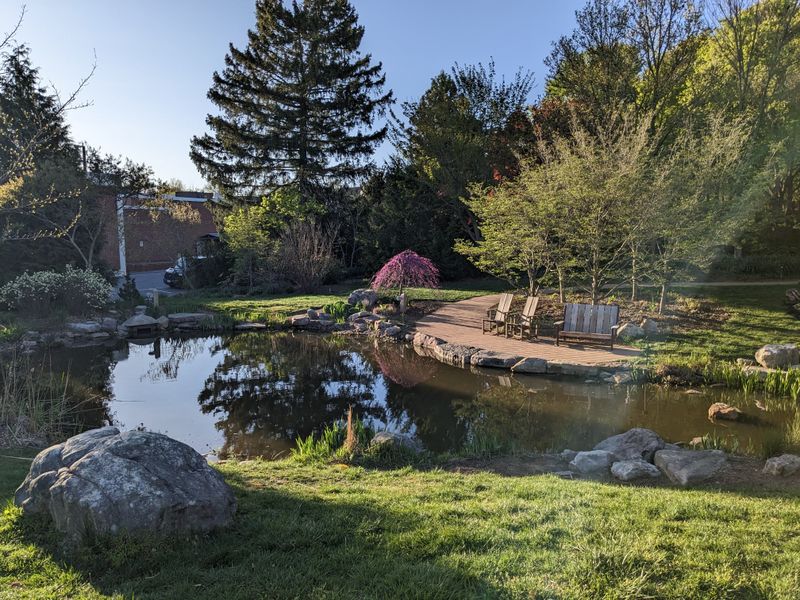
Blacksburg’s university garden at 426 Alumni Mall serves as both research facility and public showcase, testing plants for performance in mountain climates.
Virginia Tech’s Department of Horticulture uses these six acres to evaluate new varieties before recommending them to gardeners.
Elevation and mountain weather create challenging conditions that prove which winter bloomers truly deserve garden space.
Plants succeeding here will thrive almost anywhere in Virginia.
Winterberry hollies line paths with brilliant red berries that persist through snow and ice, providing crucial winter food for migrating birds.
Female plants need male pollinators nearby to produce berries.
The perennial borders include every hellebore variety that survives zone 6 winters, creating a living catalog for comparison shopping.
Labels note bloom times, hardiness ratings, and cultural requirements.
Graduate students conduct research on extending bloom seasons through breeding and selection, with experimental plants on display.
Visitors witness horticultural science in action.
The garden remains open daily year-round with free admission and parking.
Interpretive signs explain research projects and plant identification.
University events sometimes close sections temporarily, so check the website before visiting.
The nearby campus offers dining options and additional attractions.
Mountain views provide stunning backdrops for garden photography throughout winter months.