9 Bold Houseplants With Oversized Leaves Perfect For Georgia Homes
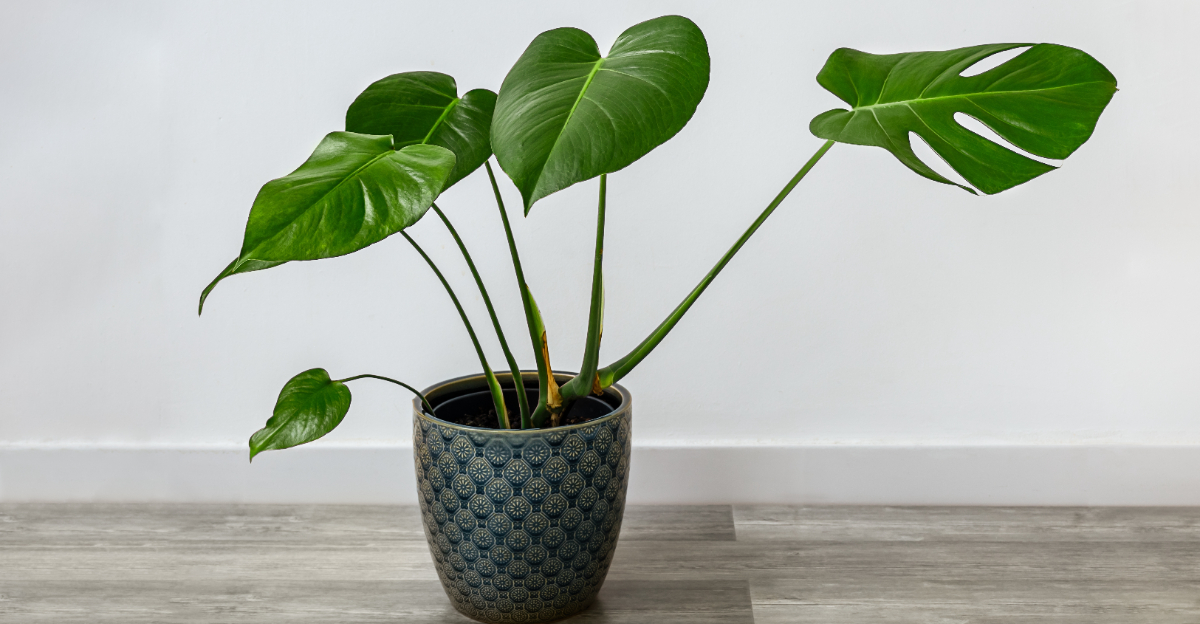
If your Georgia home feels like it needs something bold and alive, oversized houseplants can completely change the energy of a room without a full redesign.
You have probably noticed how one large, dramatic leaf can draw the eye faster than any piece of furniture ever could.
In a state where humidity hangs in the air for much of the year and bright windows are common, many big-leaf plants actually feel right at home indoors. The right plant does not just sit in a corner, it owns it.
Oversized foliage creates instant impact and makes a space feel grounded and intentional. In Georgia homes, these statement plants often grow fuller and more confident thanks to the naturally humid indoor air.
When you choose the right bold plant, it becomes the focal point without you constantly adjusting or worrying over it.
1. Monstera Deliciosa Produces Massive Split Leaves Indoors
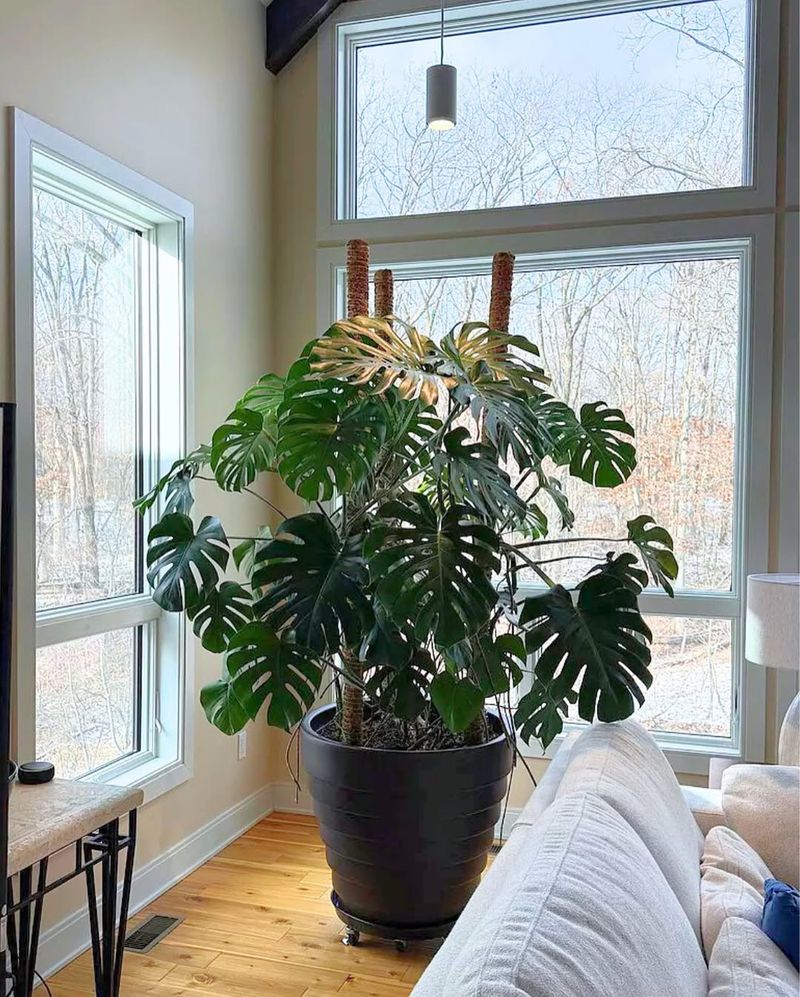
A mature Monstera deliciosa instantly turns any Georgia room into a tropical retreat. The iconic split leaves can grow up to three feet wide, creating dramatic shadows on your walls and filling empty corners with lush greenery.
Georgia’s naturally humid summers help this plant thrive without constant misting, though you’ll want to keep it near a bright window away from direct afternoon sun.
The fenestrations, or natural holes in the leaves, develop as the plant matures, giving each leaf a unique sculptural quality that becomes more impressive over time.
Place your Monstera in a room with indirect light and watch it climb using aerial roots that attach to moss poles or nearby supports.
Watering once a week during warm Georgia months keeps the soil evenly moist without turning soggy, which helps prevent root problems from overwatering.
Water once a week during warm Georgia months to keep the soil evenly moist without turning soggy and causing root issues. In spring and summer, this plant grows quickly and can produce a new leaf every few weeks in the right conditions.
Expect your Monstera to reach six to eight feet tall indoors, making it perfect for high-ceilinged Georgia homes with plenty of vertical space.
2. Fiddle Leaf Fig Grows Tall With Bold, Glossy Foliage
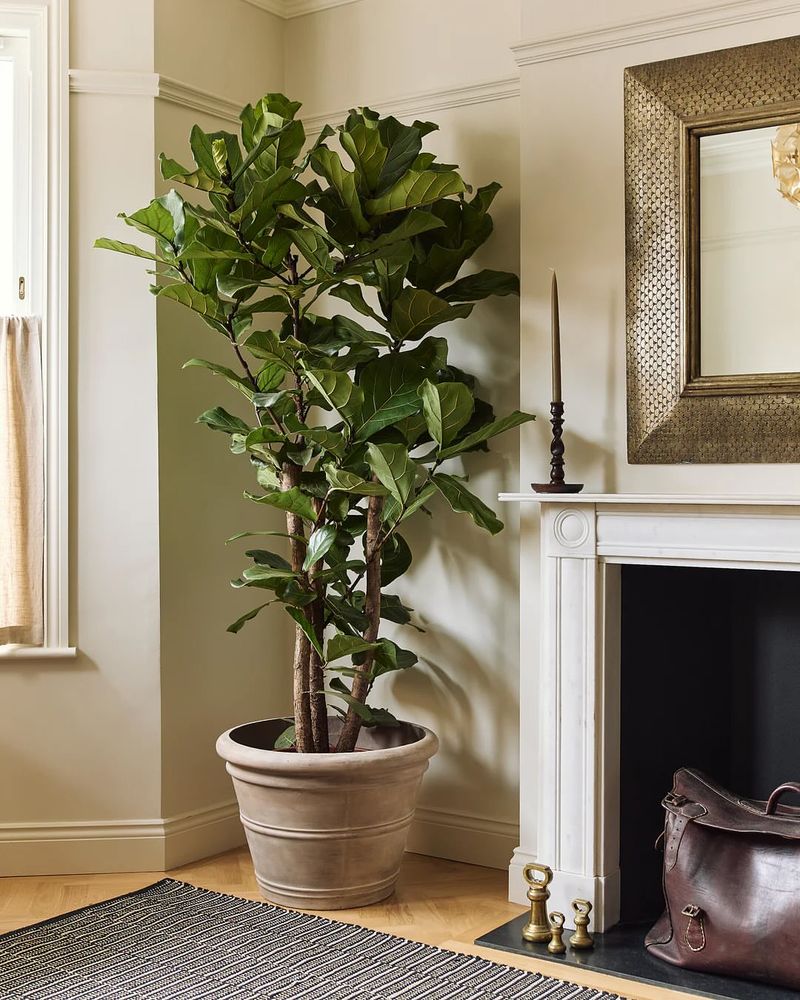
Few houseplants command attention quite like a Fiddle Leaf Fig standing tall in a Georgia living room with its violin-shaped leaves catching the light.
Each leaf can measure up to 15 inches long and features a thick, waxy texture that reflects light beautifully throughout the day.
These trees prefer consistent conditions, so finding the right spot in your Atlanta or Macon home and leaving them there prevents stress and leaf drop.
Bright, filtered light from east or west-facing windows provides the perfect balance, avoiding the harsh midday Georgia sun that can scorch those gorgeous leaves.
The trunk develops a beautiful woody texture as it matures, adding architectural interest even before you consider the dramatic foliage above.
Water deeply when the top two inches of soil feel dry, usually every seven to ten days depending on indoor humidity. Fiddle Leaf Figs can grow six to ten feet tall indoors, creating a strong focal point that draws the eye upward and makes ceilings look higher.
Rotate your plant a quarter turn each week so all sides receive equal light exposure, promoting balanced growth and preventing the tree from leaning.
Georgia homes with stable temperatures between 65 and 75 degrees provide ideal conditions for these tropical beauties to flourish year-round.
3. Bird Of Paradise Forms Large Paddle-Shaped Leaves In Bright Rooms
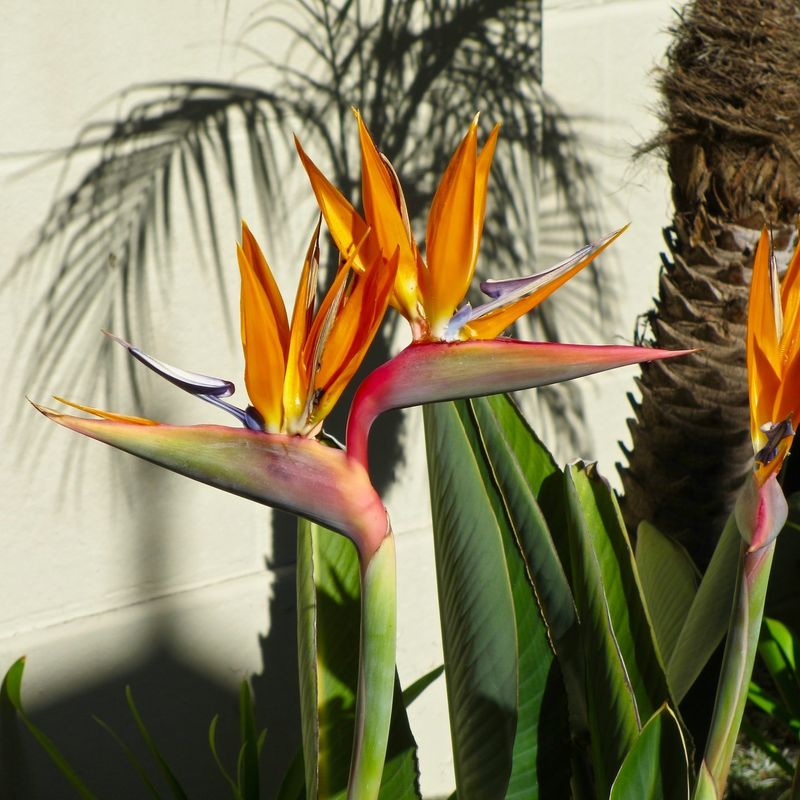
Imagine bringing the tropics into your Georgia sunroom with a Bird of Paradise that unfurls massive paddle-shaped leaves reaching toward the ceiling.
Each leaf can span two feet wide and three feet long, creating a bold tropical canopy that transforms bright spaces into exotic retreats.
The leaves emerge tightly rolled and gradually open over several days, providing an exciting display of natural growth that never gets old to watch.
Bright, direct sunlight for at least six hours daily keeps this plant compact and encourages the dense foliage that makes it so impressive.
Georgia’s warm climate means you can even move your Bird of Paradise outdoors during summer months, giving it a boost of natural light and fresh air.
Water thoroughly when the soil surface dries out, usually twice weekly during hot Georgia summers and less frequently in cooler months.
The plant naturally splits its leaves in response to wind, giving them a slightly tattered look that adds character rather than signaling poor health. Expect your Strelitzia reginae to reach five to six feet tall indoors, and sometimes taller with the right care and space.
Fertilize monthly during the growing season with a balanced liquid fertilizer to support the production of those magnificent oversized leaves that make this plant unforgettable.
4. Alocasia Polly Brings Dramatic Veined Leaves To Humid Spaces
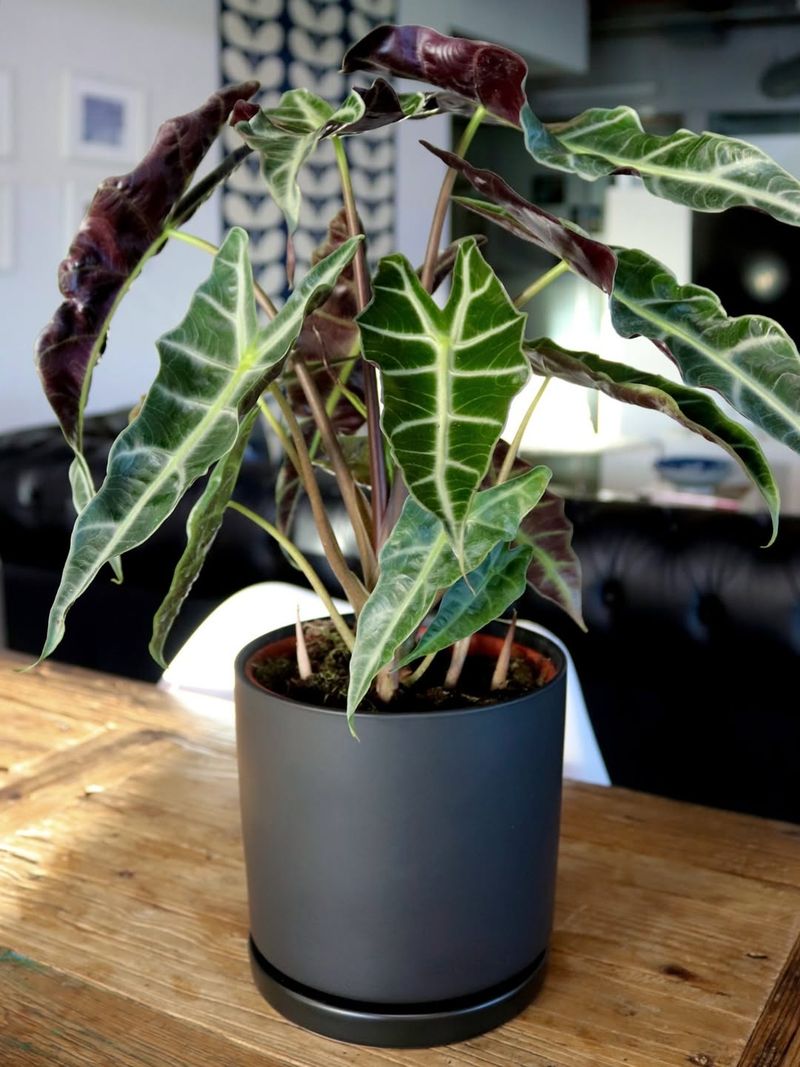
Dark, arrow-shaped leaves with striking white veins make Alocasia Polly one of the most dramatic small-space options for Georgia plant lovers.
The deep green leaves and bright veining create an almost painted look that makes each leaf feel like a natural work of art. This compact variety grows to about two feet tall, making it ideal for tabletops, shelves, or bathroom counters where humidity runs higher.
Georgia bathrooms provide excellent growing conditions, as the steam from showers mimics the tropical environments where Alocasias naturally thrive.
Bright, indirect light keeps the foliage vibrant without fading the distinctive white veins that make this plant so eye-catching.
Keep the soil consistently moist but not waterlogged, checking every few days and watering when the top inch feels slightly dry to the touch.
The leaves point upward and outward, creating a symmetrical rosette pattern that adds structure and formality to casual spaces.
Expect some leaf loss in winter when growth slows, but new leaves will emerge strongly once spring arrives in Georgia. Grouping your Alocasia with other tropical plants helps create a more humid microclimate that benefits the entire collection.
Wipe the leaves gently to remove dust and keep those stunning veins visible, enhancing the plant’s already impressive appearance in your home.
5. Philodendron Selloum Expands With Deeply Lobed Tropical Foliage
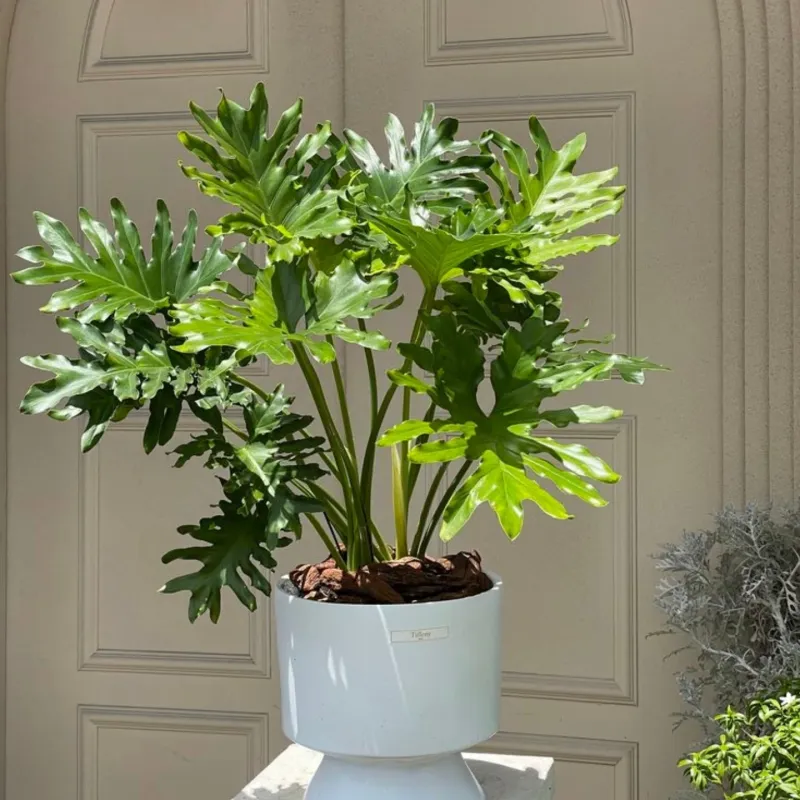
Deeply cut leaves that spiral outward from a central trunk give Philodendron Selloum an almost prehistoric appearance that commands attention in any Georgia home.
Each leaf can measure up to three feet across with dramatic lobes that create intricate shadow patterns on walls and floors throughout the day.
The plant grows outward rather than upward, spreading four to six feet wide and creating a lush presence in corners or beside furniture. It thrives in medium to bright indirect light, making it well suited for east or north-facing windows in Georgia homes.
The thick, sturdy stems support the weight of those massive leaves without staking, giving the plant a self-supporting structure that looks natural and unforced.
Water when the top two inches of soil dry out, typically once weekly during warm months and less frequently when temperatures drop in winter.
This Philodendron tolerates Georgia’s indoor conditions remarkably well, adapting to varying humidity levels without showing signs of stress or browning leaf tips.
As the plant matures, it forms a short trunk that lifts the foliage and adds vertical interest, and fertilizing every six weeks in spring and summer supports steady new leaf growth that emerges pale green and darkens over time.
The architectural quality of this plant makes it perfect for modern Georgia homes where bold, sculptural elements complement clean design lines.
6. Calathea Orbifolia Shows Off Wide, Striped Statement Leaves
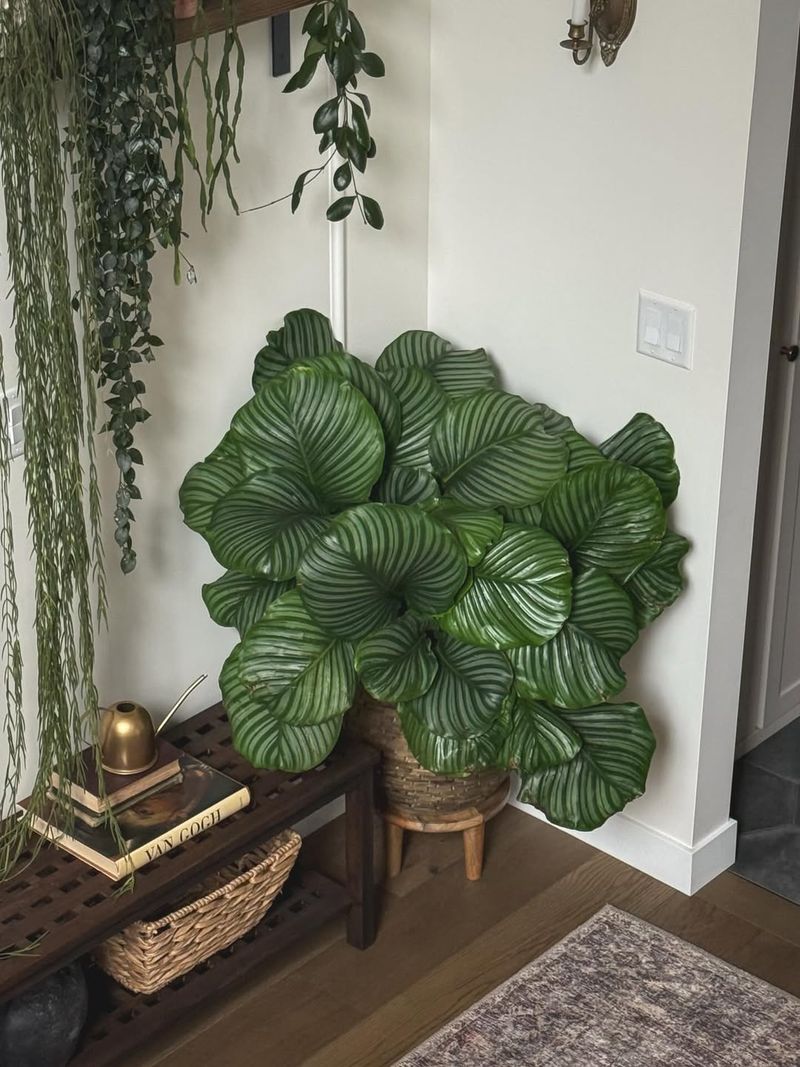
Round, silvery-striped leaves make Calathea orbifolia a standout in Georgia homes without overwhelming smaller areas. Each leaf can grow up to a foot wide, delivering bold coverage while the plant keeps a compact footprint ideal for apartments or cozy rooms.
The stripes run parallel across the leaves in alternating bands of light and dark green, creating a naturally decorative pattern that never looks repetitive.
Georgia’s naturally humid climate during summer months provides ideal conditions, though you might need to increase humidity during dry winter heating seasons.
Place your Calathea in medium, indirect light away from harsh afternoon sun that can fade the stripes or brown the edges. Keep the soil evenly moist but not soggy, watering with room-temperature water every few days to maintain steady moisture around the roots.
The leaves perform a fascinating daily movement called nyctinasty, folding upward at night and reopening each morning as light increases.
This natural behavior creates ever-changing visual interest, making your plant feel alive and responsive to its environment in your Georgia home.
Use filtered or distilled water if your tap water contains high levels of chlorine or fluoride, which can cause brown spots on the sensitive foliage.
Expect your Calathea to reach about two feet tall and wide, creating a perfectly proportioned display that fits beautifully on plant stands or side tables.
7. Rubber Plant Develops Thick, Oversized Leaves With Minimal Fuss
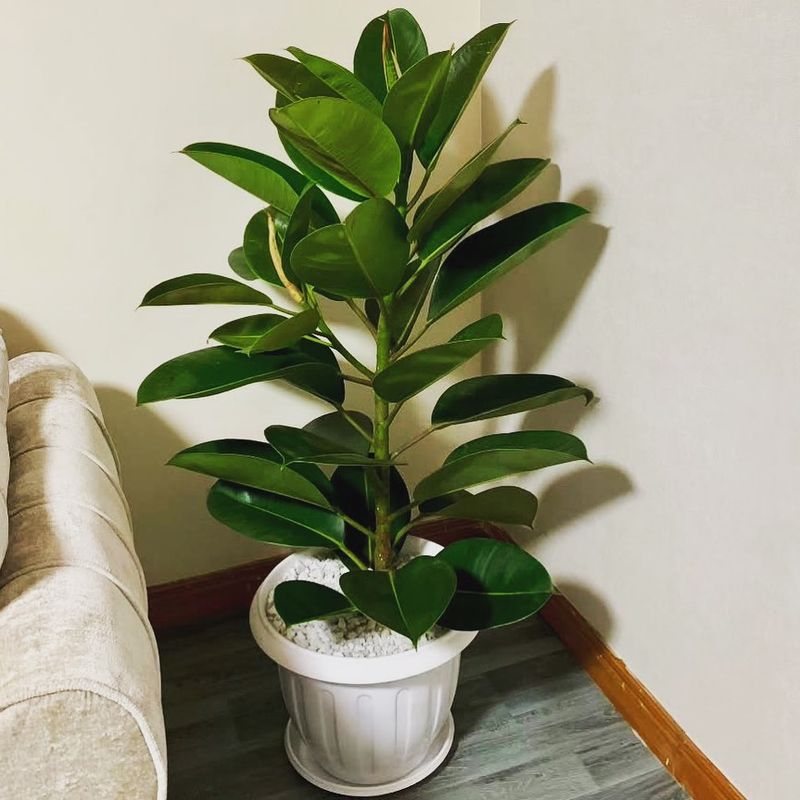
Thick, waxy leaves in shades of deep green or burgundy make Rubber Plants one of the most low-maintenance options for busy Georgia homeowners who want maximum impact with minimal effort.
Each leaf can measure eight to twelve inches long with a glossy surface that reflects light beautifully and stays naturally clean longer than many other houseplants.
The upright growth habit creates a tree-like form that adds height and structure to rooms without requiring the floor space of spreading plants.
Bright, indirect light keeps growth compact and deepens the rich color of burgundy varieties in neutral Georgia interiors. Water when the top inch dries, about every seven to ten days, and let excess drain to avoid root issues.
This plant tolerates occasional neglect better than constant attention, making it perfect for travelers or anyone with an unpredictable schedule.
New leaves emerge from the top of the plant encased in a red sheath that eventually dries and falls away, revealing the glossy new foliage underneath.
Rubber Plants can grow quite tall indoors, reaching six to ten feet if given adequate space and light in your Georgia home.
Prune the top growth to encourage branching and create a fuller, bushier shape rather than a single tall stem with leaves only at the top.
Wipe the large leaves monthly with a damp cloth to remove dust and keep that impressive glossy shine that makes this plant so attractive.
8. Elephant Ear Adds Huge Heart-Shaped Leaves Indoors
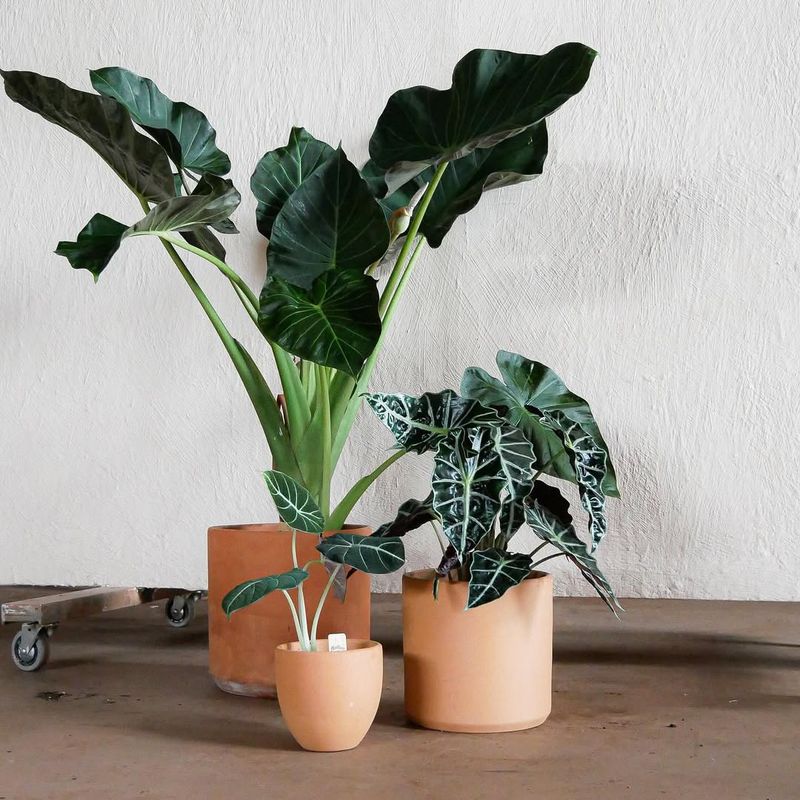
Massive heart-shaped leaves that can reach two feet long bring instant drama to Georgia homes, making Elephant Ear plants the ultimate statement piece for plant enthusiasts.
The leaves emerge rolled into tight spears that gradually unfurl over several days, creating anticipation as each new leaf reveals its impressive size.
Bright, indirect light helps these plants produce huge leaves that grow quickly in warm months. In Georgia’s humid summers, growth speeds up and leaves get noticeably larger than in winter.
Keep the soil consistently moist, watering every few days during active growth periods when the plant is producing new leaves and expanding existing ones.
Long petioles lift the leaves to different heights, creating a layered, jungle-like canopy. Some varieties have deep purple or nearly black leaves that contrast beautifully with lighter walls in modern Georgia homes.
Expect your Elephant Ear to reach three to five feet tall indoors, though some varieties can grow even larger with optimal care and space.
Fertilize every two weeks during spring and summer with a balanced liquid fertilizer to fuel the rapid growth that makes these plants so impressive.
The large leaf surface area means this plant transpires heavily, naturally increasing humidity in your room and benefiting other tropical plants nearby.
9. Dwarf Banana Plant Creates Broad, Lush Foliage In Sunny Spots
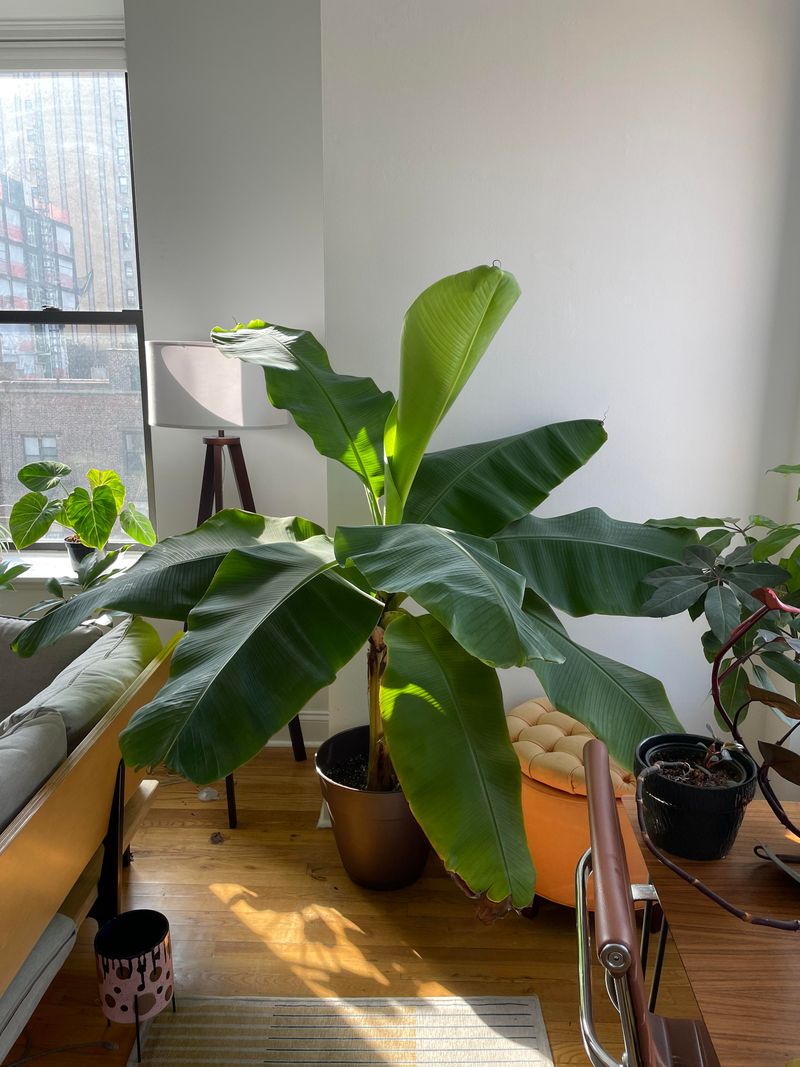
Broad tropical leaves up to two feet wide bring a jungle feel to bright Georgia sunrooms and south-facing windows where many plants struggle. The foliage rises from a central pseudostem in a spiral pattern, creating a fountain-like shape that adds movement indoors.
Dwarf varieties stay compact at four to six feet tall, making them manageable for indoor growing while still providing that impressive tropical scale that larger banana plants offer outdoors.
Georgia’s warm climate means you can transition your Dwarf Banana outdoors during summer, giving it a boost of natural sunlight that promotes vigorous growth and larger leaves.
Water generously during active growth, keeping the soil consistently moist and never allowing it to dry out completely between waterings.
The fast growth rate means you’ll see new leaves emerging regularly during warm months, with each successive leaf growing larger than the previous one.
Bright, direct sunlight for several hours daily keeps the plant compact and prevents the weak, stretched growth that occurs in insufficient light.
Feed weekly with diluted fertilizer in spring and summer to support rapid growth and big, bold leaves. The leaves naturally split along the veins, creating a slightly ragged look that adds to the tropical feel.
Expect older leaves to yellow and brown from the bottom up as new growth emerges at the top, which is completely natural and keeps the plant looking fresh.