12 Bulbs You Can Still Plant In Winter In California To Kick-Start A Gorgeous Spring Garden
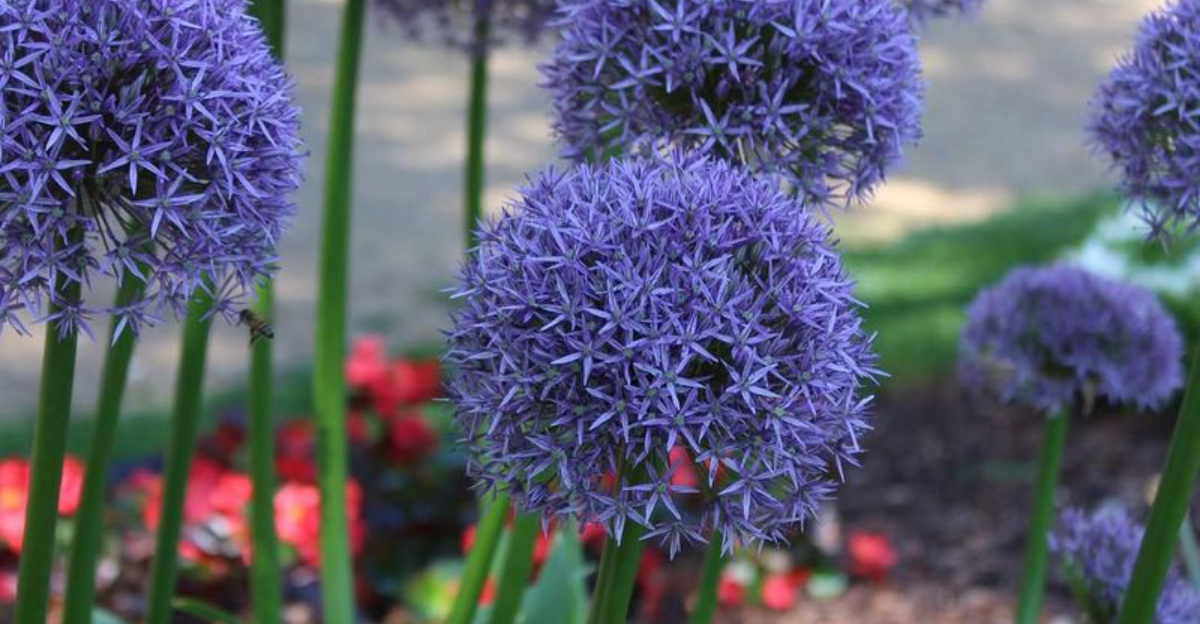
Winter doesn’t have to put California gardens on pause.
While much of the country waits for thawed ground and warmer days, California’s mild winter climate offers a rare advantage: the chance to plant certain bulbs while winter is still in full swing.
Across the state, gardeners are using the cooler months to get a head start on spring, slipping bulbs into the soil while temperatures remain moderate and rainfall does some of the work for them.
These winter-planted bulbs don’t just tolerate the season—they benefit from it.
The chill helps trigger strong root development, setting the stage for healthier growth and earlier, more vibrant blooms once days begin to lengthen.
From coastal areas to inland valleys, timing winter planting correctly can mean the difference between an average spring display and a garden that bursts into color ahead of schedule.
For anyone eager to see flowers sooner rather than later, winter planting offers a simple way to stay productive in the garden year-round.
Below are 12 bulbs you can still plant in winter in California to jump-start a stunning spring garden and make the most of the state’s unique growing conditions.
1. Daffodils
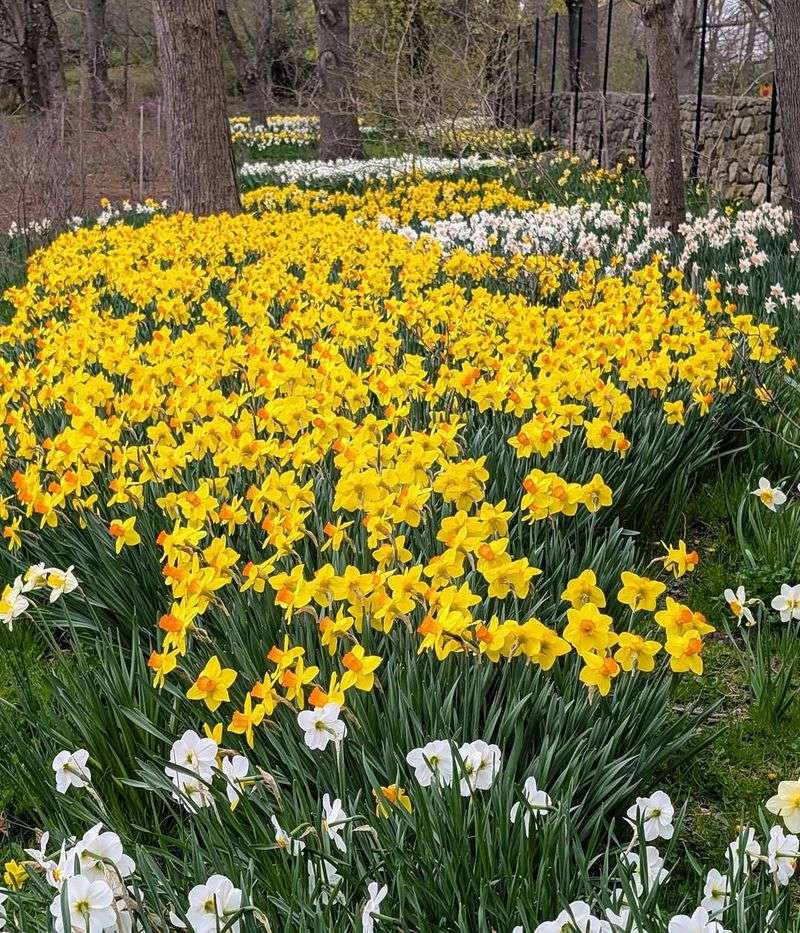
Daffodils bring cheerful yellow and white blooms that signal spring has truly arrived, making them essential for any California garden design.
These hardy bulbs adapt wonderfully to California’s climate, requiring minimal water once established and thriving in various soil types throughout the state.
Plant them about six inches deep in well-draining soil, spacing each bulb roughly four to six inches apart for optimal growth patterns.
Most California gardeners find December and January ideal planting months, giving bulbs time to develop strong root systems before warmer weather arrives.
Daffodils naturally resist deer and gophers, which makes them particularly valuable for California properties where wildlife often damages other garden plants.
They multiply readily over years, creating larger flower clusters that require minimal maintenance beyond occasional watering during extended dry periods.
Choose varieties like Carlton or Ice Follies that perform exceptionally well in California’s Mediterranean climate and return reliably each spring season.
Your daffodils will bloom from February through April depending on your specific location within California’s diverse climate zones across regions.
2. Tulips
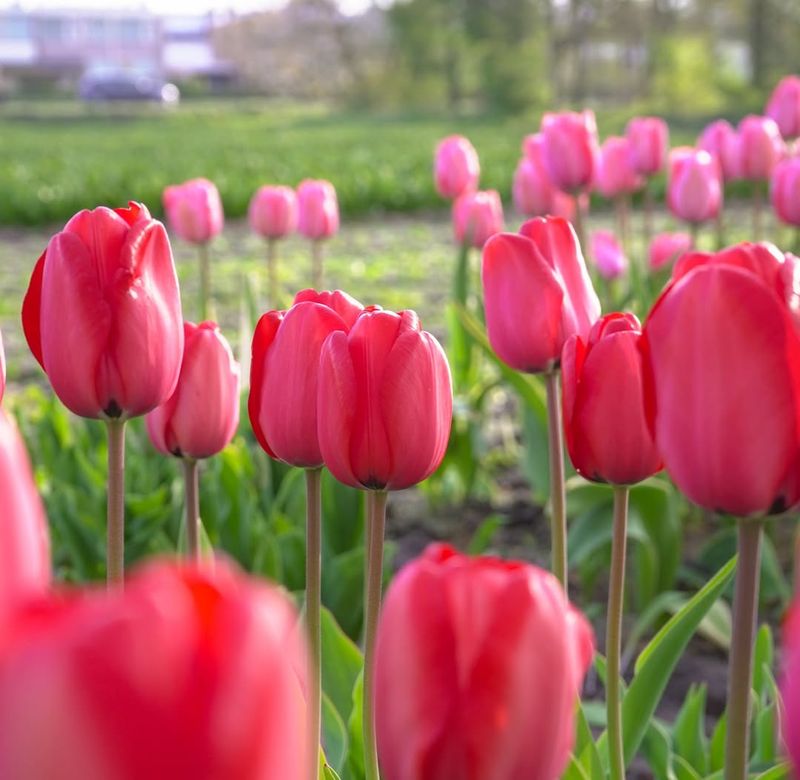
Tulips create stunning displays with their cup-shaped blooms in nearly every color imaginable, from deep purples to soft pastels and vibrant reds.
California gardeners must pre-chill tulip bulbs in the refrigerator for six to eight weeks before planting since our mild winters lack sufficient cold.
Store bulbs in paper bags away from fruits that produce ethylene gas, which can damage the developing flower embryos inside each bulb.
After chilling, plant tulips in January or early February, placing them about six inches deep in soil enriched with compost materials.
Select sunny locations with excellent drainage since tulips dislike wet feet and can rot quickly in soggy soil conditions common during rainy winters.
Varieties like Red Impression and Pink Impression work beautifully in California gardens, offering reliable blooms and strong stems that resist wind damage.
Water moderately after planting, then reduce watering as flowers emerge since California’s spring rains usually provide adequate moisture for healthy growth.
Many California gardeners treat tulips as annuals, replanting fresh bulbs each year for consistently spectacular spring flower displays throughout their landscapes.
3. Ranunculus
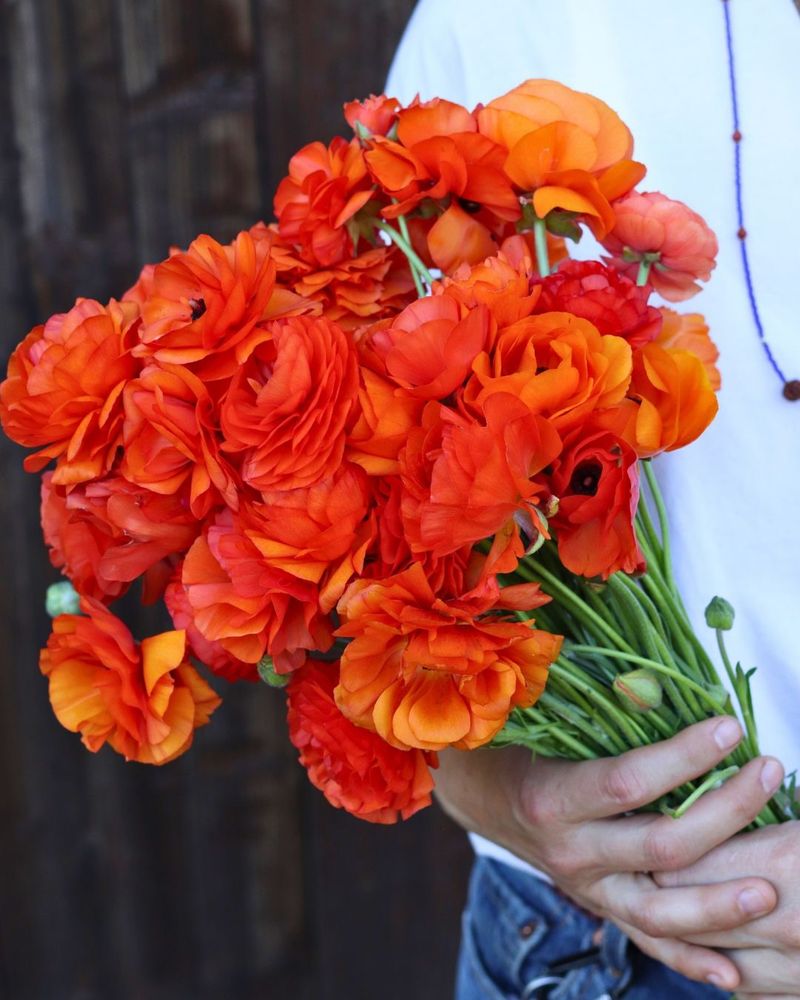
Ranunculus produces rose-like blooms with layers of delicate petals that create breathtaking bouquets and make excellent cut flowers for indoor arrangements.
These claw-shaped corms thrive in California’s coastal and inland valleys, preferring our cool, mild winters that allow them to establish properly.
Soak the dried corms in room-temperature water for three to four hours before planting, which helps them rehydrate and begin growing.
Plant corms with claws pointing downward about two inches deep, spacing them four to six inches apart in well-prepared garden beds.
November through January represents the ideal planting window for California gardeners, allowing ranunculus to develop strong root systems before flowering begins.
They prefer full sun in coastal areas but appreciate afternoon shade in hotter inland regions where temperatures can climb unexpectedly high.
Ranunculus blooms from March through May, producing multiple flowers per corm that last remarkably long when cut and placed in vases.
Colors range from soft pastels to bold, saturated hues that add incredible visual interest to any California garden or floral arrangement design.
4. Anemones
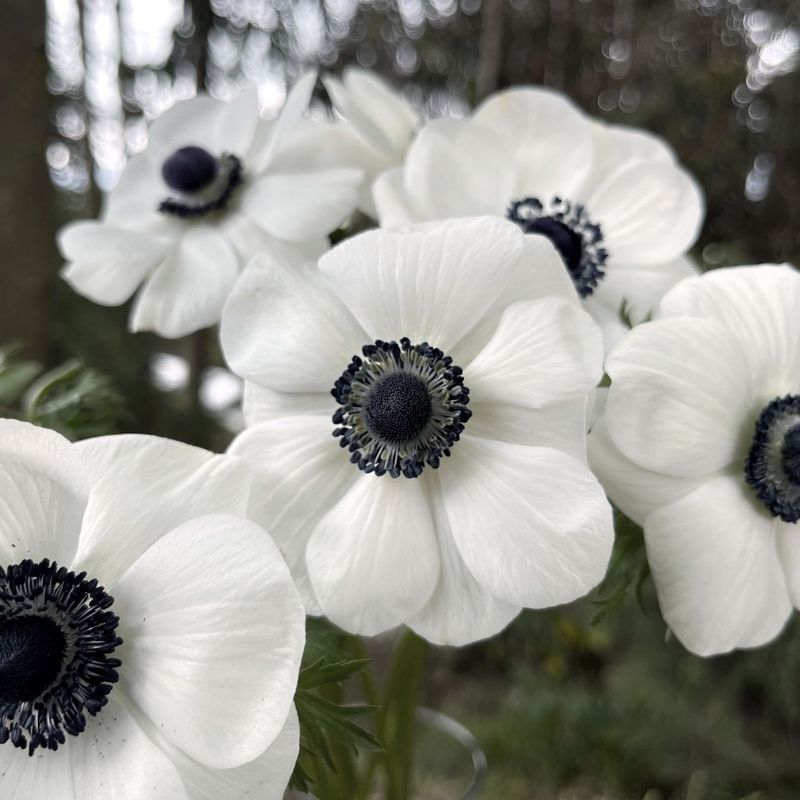
Anemones feature papery petals surrounding dark centers that create striking contrast, making them favorites among California gardeners seeking unique spring blooms.
Like ranunculus, anemone corms benefit from soaking in water for several hours before planting, which jumpstarts their growth in garden soil.
Plant corms about two inches deep with the pointed end facing upward, though they’ll often correct themselves if planted incorrectly underground.
Space corms four to six inches apart in areas receiving full sun along the coast or partial shade in warmer inland valleys.
December and January work perfectly for planting anemones in most California regions, giving them adequate time to establish before spring arrives.
These flowers bloom prolifically from February through April, producing stems perfect for cutting that last over a week in water when properly maintained.
Anemones prefer slightly acidic soil enriched with organic matter, which helps retain moisture while still providing the drainage they require for health.
Colors include deep purples, bright reds, soft pinks, and pure whites that mix beautifully in garden beds or container arrangements throughout properties.
5. Freesias
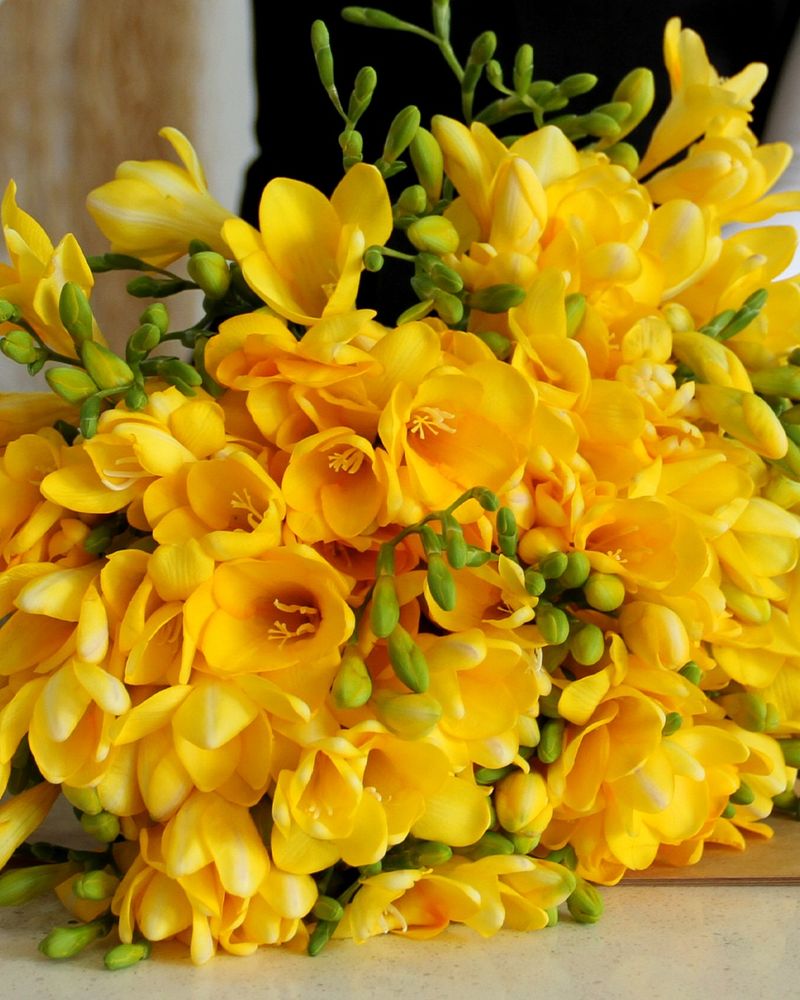
Freesias offer intensely fragrant blooms on graceful arching stems, filling California gardens with sweet perfume that attracts butterflies and delights garden visitors.
These South African natives adapted perfectly to California’s Mediterranean climate, thriving in conditions similar to their homeland’s growing season patterns.
Plant freesia corms about two inches deep and three inches apart in well-draining soil during November, December, or early January months.
They prefer full sun in coastal regions but tolerate light afternoon shade in areas where summer heat becomes intense and challenging.
Freesias bloom from late February through April, producing multiple flowers per stem in colors ranging from yellow and orange to pink and purple.
Their fragrance intensifies during warm afternoons, creating sensory experiences that make gardens feel more inviting and peaceful for outdoor enjoyment time.
Cut freesia stems when the first flower opens, and remaining buds will continue opening indoors, extending your enjoyment of their beautiful blooms.
California gardeners often plant freesias near patios, walkways, or windows where their delightful fragrance can be appreciated throughout the spring flowering season.
6. Crocus
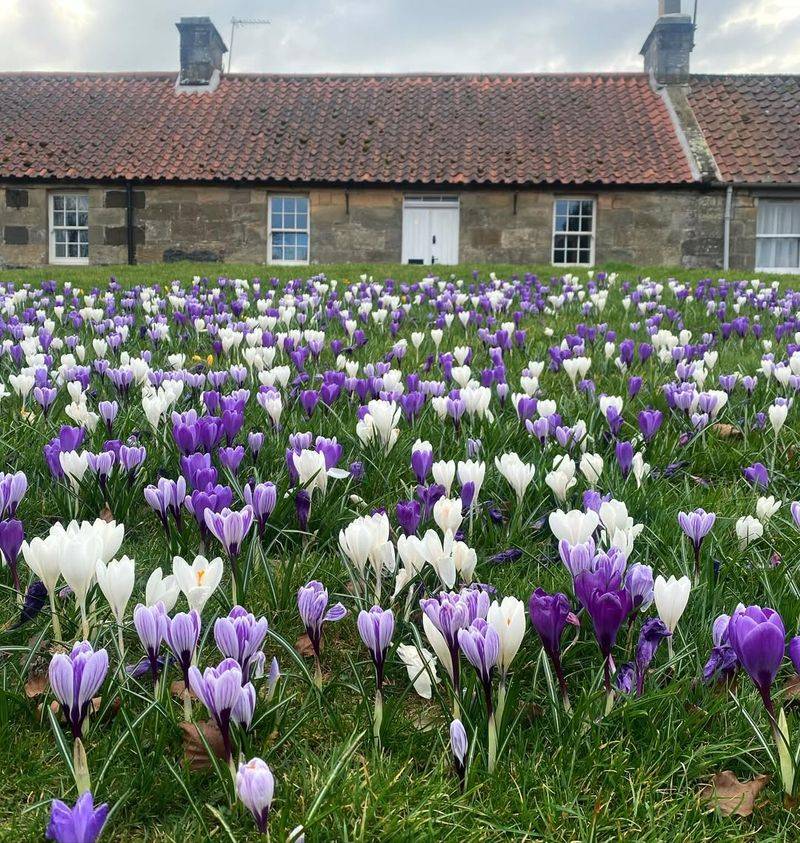
Crocus bulbs produce charming cup-shaped flowers that often bloom in late winter, sometimes appearing even before other spring bulbs begin their growth.
These compact plants work wonderfully for edging pathways, filling rock gardens, or naturalizing in lawn areas where early color is desired most.
Plant crocus corms about three inches deep and two to three inches apart in locations receiving full sun during winter and spring.
California’s mild climate allows crocus to bloom as early as January in southern regions, though February is more typical throughout most areas.
Crocus flowers close at night and during cloudy weather, then reopen when sunshine returns, creating an interactive element in garden landscapes.
Colors include purple, yellow, white, and striped varieties that create cheerful displays despite their small size and delicate appearance throughout properties.
Plant crocus in large groups of twenty or more bulbs for maximum visual impact, as single specimens often get lost among larger plants.
These bulbs naturalize readily in California gardens, multiplying over years to create expanding carpets of color that require virtually no maintenance effort.
7. Hyacinths
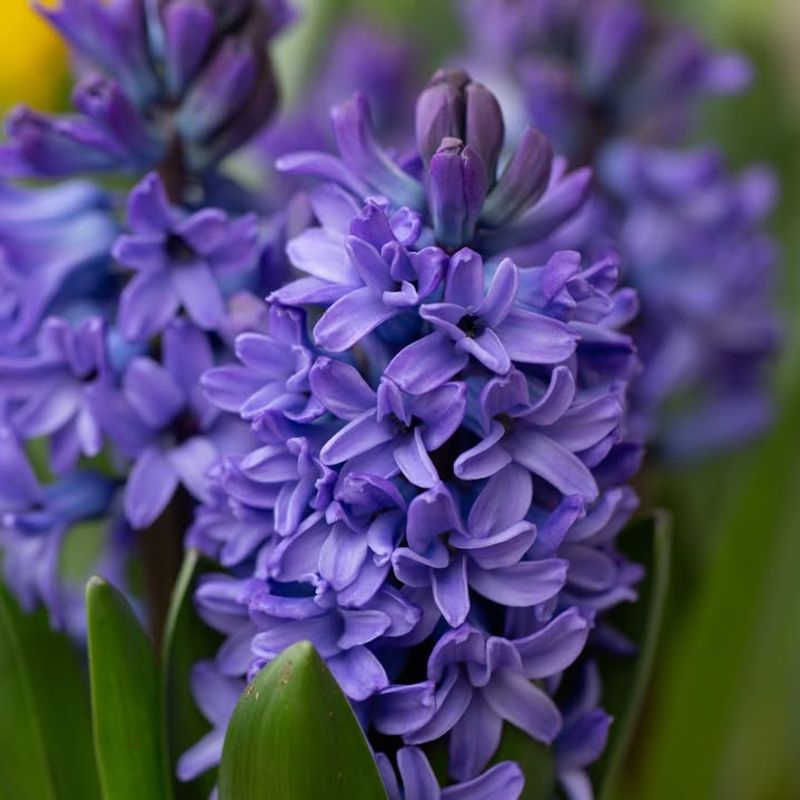
Hyacinths produce densely packed flower spikes that release powerful, sweet fragrance capable of perfuming entire garden sections with their intoxicating scent.
These bulbs perform best in California when pre-chilled in the refrigerator for six to eight weeks before planting in garden beds.
Store them in paper bags away from produce, then plant in January or early February about six inches deep in soil.
Space bulbs six to eight inches apart in areas receiving full sun, though they tolerate light shade in hotter inland regions.
Hyacinths bloom in March and April, producing flowers in shades of pink, purple, white, yellow, and blue that complement other spring bulbs.
Their sturdy stems rarely require staking, even in windy locations, making them reliable choices for exposed garden areas that challenge other flowers.
Plant hyacinths near entryways, patios, or outdoor seating areas where their remarkable fragrance can be appreciated by family members and visitors.
After blooming, allow foliage to yellow naturally before removing it, which helps bulbs store energy for potential blooming in following seasons.
8. Iris
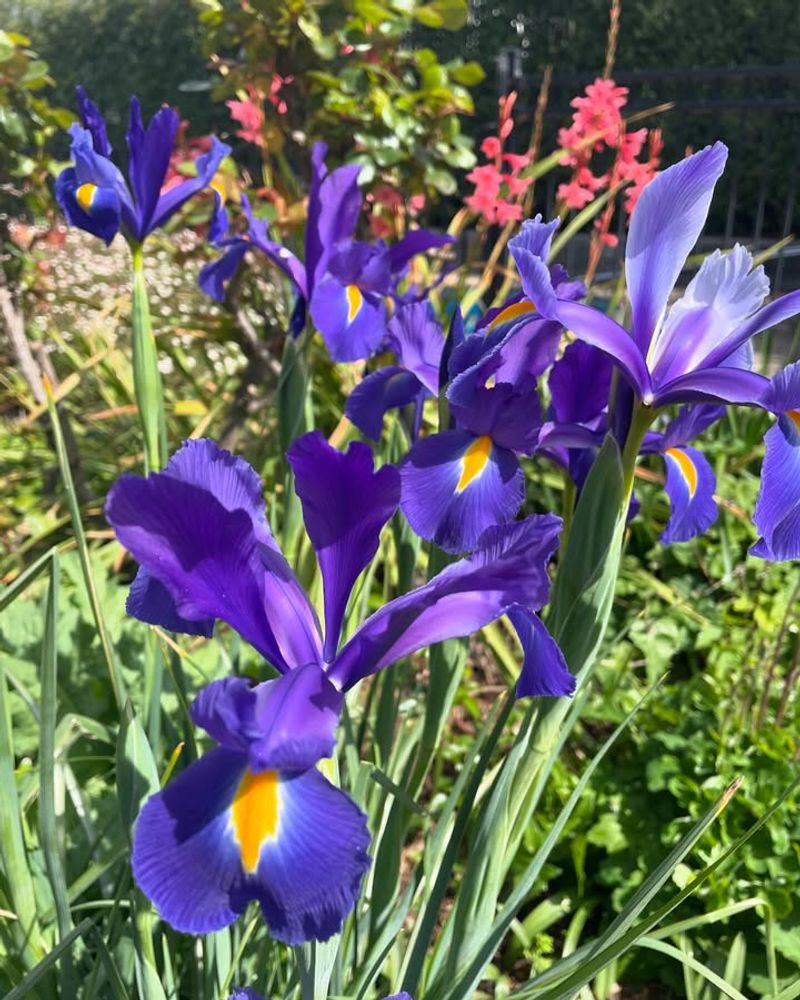
Iris bulbs create elegant flowers with distinctive three-petaled blooms that add sophistication and vertical interest to California garden designs throughout spring.
Dutch iris varieties work particularly well in California, requiring less chilling than bearded iris types and adapting readily to our climate.
Plant iris bulbs about four inches deep and four inches apart in well-draining soil during November, December, or January for best results.
They prefer full sun but tolerate partial shade, making them versatile choices for various garden locations across different property microclimates.
Iris blooms appear in March and April, featuring colors like deep purple, bright yellow, white, and bicolor combinations that create stunning displays.
Their tall stems make excellent cut flowers that last over a week indoors when stems are recut and water is changed regularly.
Plant iris bulbs in groups of odd numbers for more natural-looking arrangements that blend seamlessly into existing garden beds and landscapes.
California’s dry summers suit iris perfectly since they prefer drying out after blooming, unlike many plants that require consistent moisture year-round.
9. Alliums
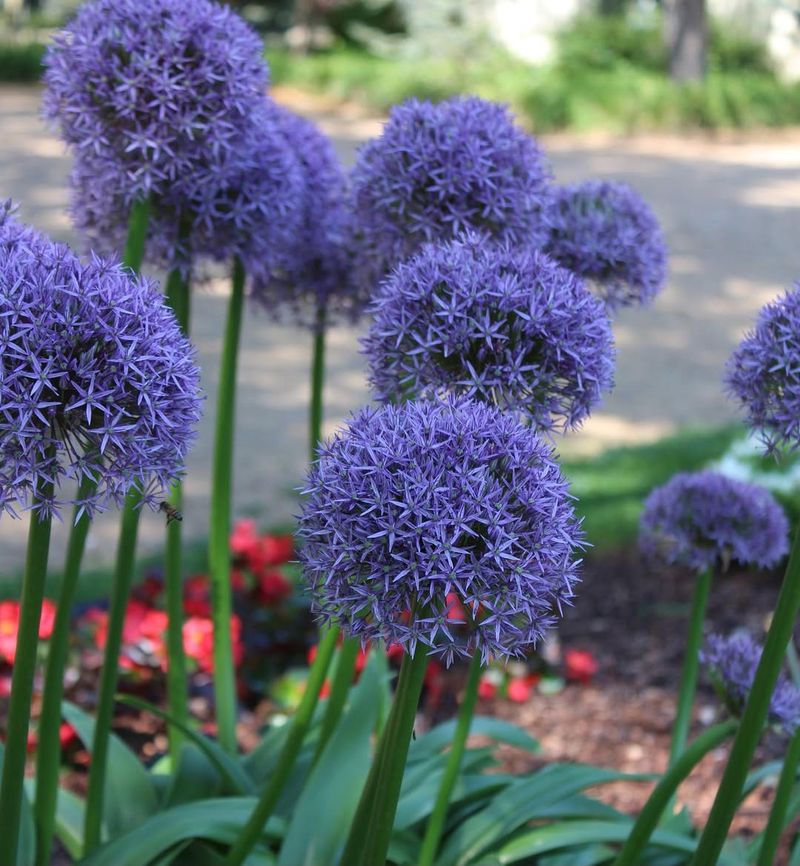
Alliums produce dramatic globe-shaped flower clusters atop tall stems, creating architectural elements that add height and structure to California garden compositions.
These ornamental onions resist deer and gophers naturally due to their pungent scent, making them practical choices for California properties with wildlife.
Plant allium bulbs about six inches deep and six to eight inches apart in well-draining soil during December or January months.
They require full sun for best flowering and stem strength, though they tolerate light shade in areas receiving intense afternoon sun exposure.
Allium blooms appear from April through June depending on variety, with flower colors ranging from purple and pink to white and yellow.
Their spherical blooms attract beneficial pollinators like bees and butterflies, supporting healthy garden ecosystems while providing visual interest throughout flowering periods.
Allium foliage often yellows before flowers fully open, so plant them behind lower-growing perennials that camouflage aging leaves effectively.
After flowers fade, the dried seed heads remain attractive for weeks, adding continued interest to garden beds throughout late spring and summer.
10. Sparaxis
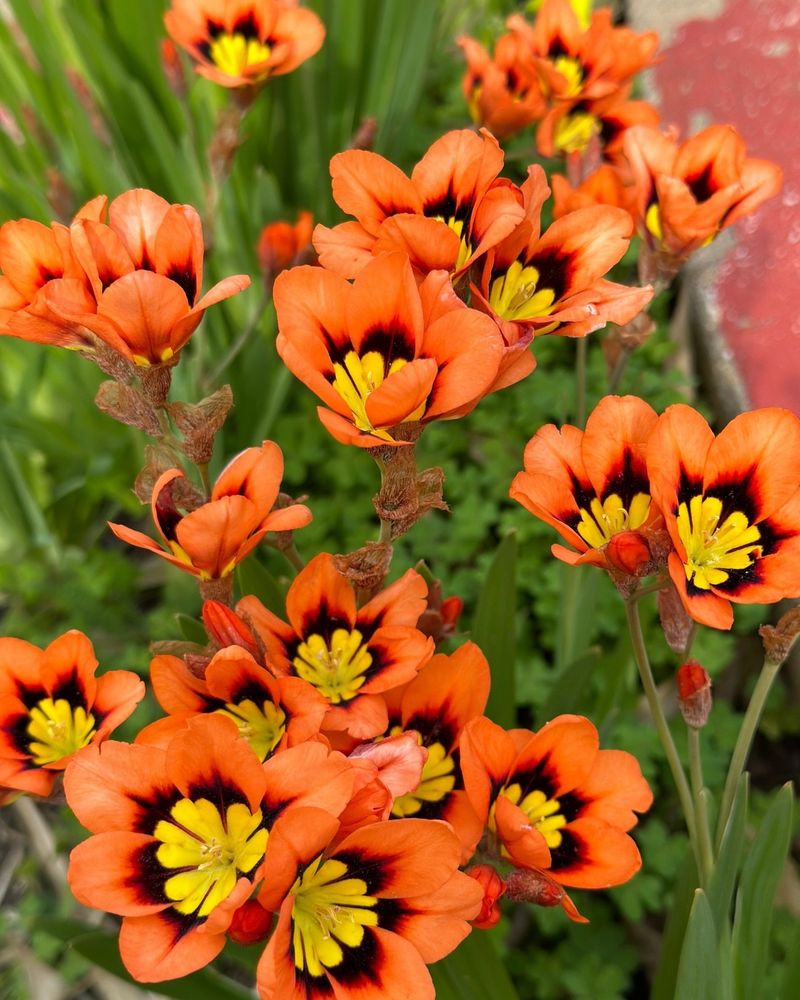
Sparaxis, commonly called harlequin flowers, produces vibrant star-shaped blooms with contrasting centers that create eye-catching displays in California gardens during spring.
These South African natives thrive in California’s climate, requiring minimal water once established and tolerating our dry summer conditions perfectly.
Plant sparaxis corms about three inches deep and three inches apart in well-draining soil during November, December, or early January.
They prefer full sun and warm locations, making them ideal for southern-facing garden beds that receive maximum sunlight throughout the day.
Sparaxis blooms from March through May, producing flowers in brilliant combinations of red, orange, yellow, pink, and purple with darker centers.
Their relatively short stems make them perfect for front borders, rock gardens, or container plantings where height isn’t necessary or desired.
These cheerful flowers multiply readily in California gardens, forming larger clumps over years that provide increasingly impressive displays with minimal maintenance.
Allow foliage to dry naturally after blooming, which helps corms store energy for robust flowering in subsequent growing seasons across your property.
11. Muscari
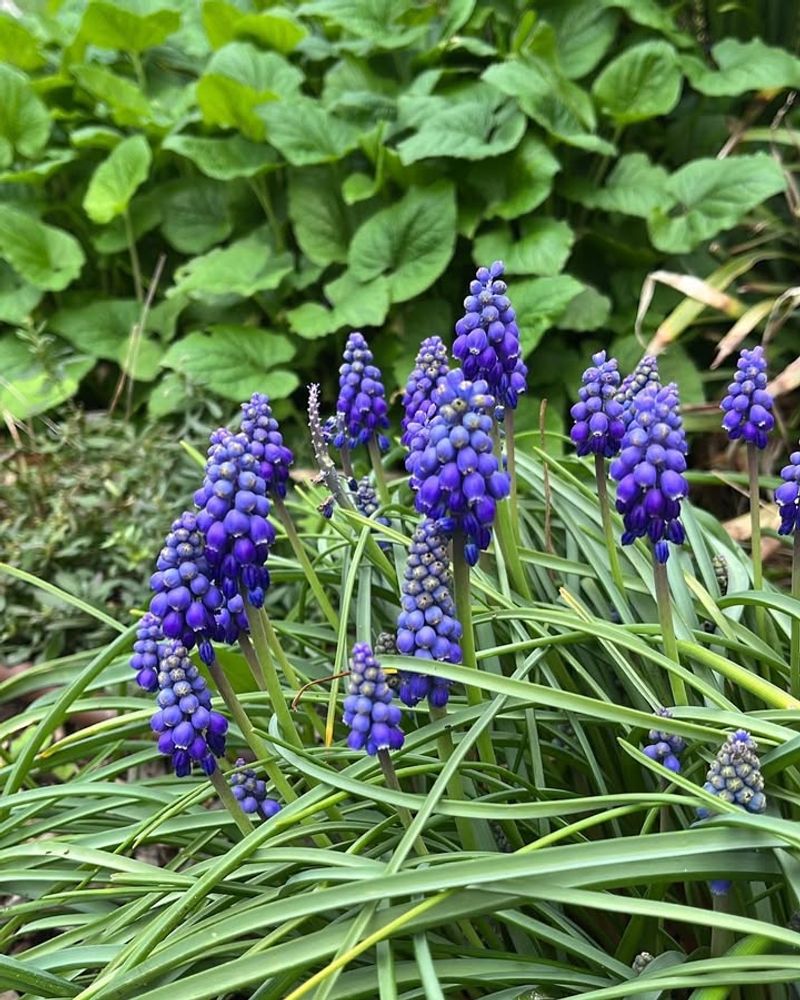
Muscari, known as grape hyacinths, produces charming spikes of tiny bell-shaped flowers that resemble clusters of grapes on compact stems.
These reliable bulbs naturalize beautifully in California gardens, spreading gradually to create carpets of blue that complement larger spring bulbs perfectly.
Plant muscari bulbs about three inches deep and two to three inches apart in areas receiving full sun to partial shade.
November through January represents the ideal planting window, allowing bulbs adequate time to establish roots before spring flowering begins across regions.
Muscari blooms appear from February through April, with most varieties producing deep blue flowers, though white and pink forms are available.
Their sweet, subtle fragrance attracts early-season pollinators like bees that emerge during California’s warm winter days seeking nectar sources and pollen.
These low-maintenance bulbs require virtually no care once established, tolerating California’s dry summers without supplemental watering or special attention needed.
Plant muscari under deciduous trees or shrubs where they’ll receive winter sun but summer shade, creating ideal conditions for long-term success.
12. Leucojum
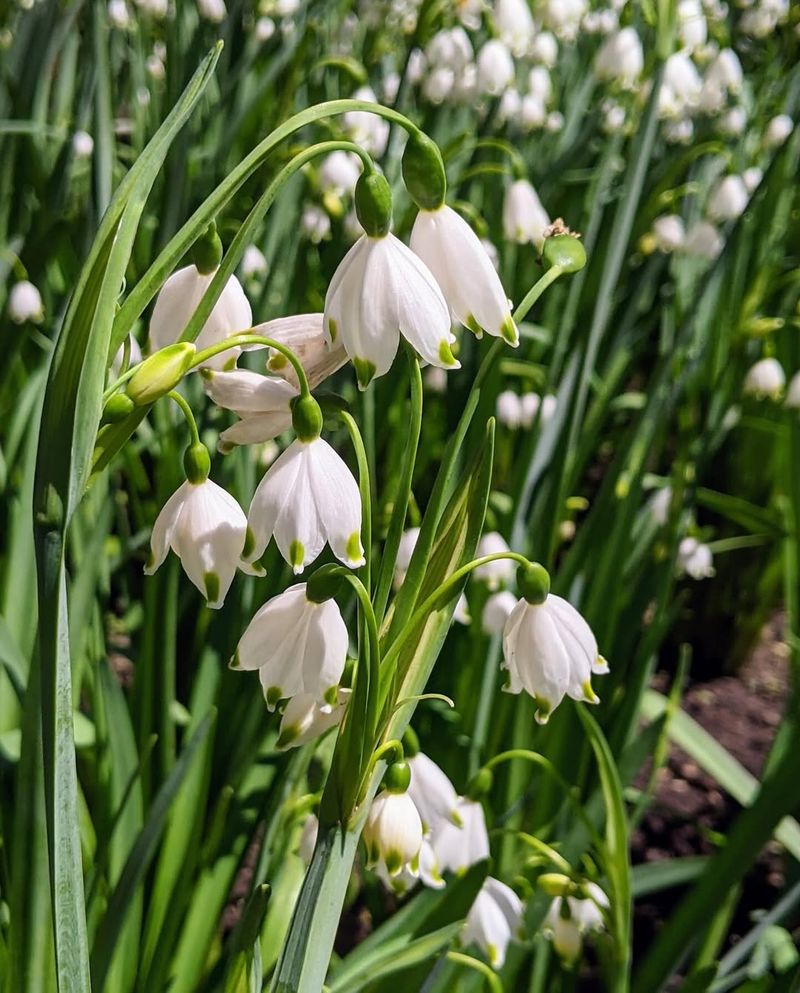
Leucojum, commonly called snowflakes, produces delicate white bell-shaped flowers with distinctive green spots that add elegant charm to California spring gardens.
These underutilized bulbs deserve more attention from California gardeners since they naturalize readily and return reliably year after year with minimal care.
Plant leucojum bulbs about four inches deep and four inches apart in well-draining soil during November, December, or early January.
They prefer partial shade, making them excellent choices for locations under deciduous trees or on north-facing sides of buildings and structures.
Leucojum blooms from February through April, producing nodding flowers on stems that sway gracefully in spring breezes throughout garden landscapes and beds.
Unlike many bulbs, leucojum tolerates more moisture than others, making them suitable for areas that remain slightly damp during California’s rainy season.
These bulbs multiply slowly but steadily, forming expanding clumps that rarely require dividing unlike more aggressive spreaders in garden settings across properties.
Plant leucojum in woodland-style gardens or naturalized areas where their subtle beauty can be appreciated up close without competing with showier flowers.