10 Cacti And Agaves To Plant In April In Arizona For Strong Root Growth
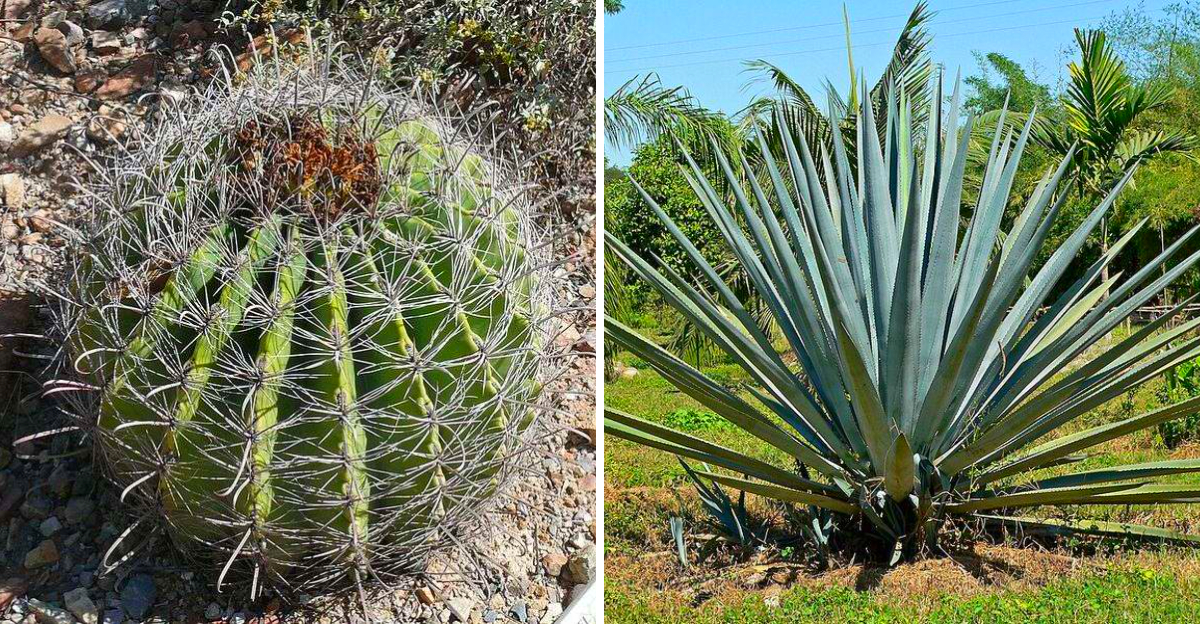
April in Arizona is the perfect time to give your cacti and agaves a strong start. With warming soil and longer days, roots can spread and anchor before the intense summer heat arrives.
From the low deserts of Phoenix and Tucson to higher-elevation spots like Prescott, April provides an ideal window for heat- and drought-tolerant succulents to establish without stress.
Planting now lets your desert garden build strength and resilience, setting the stage for bold, sculptural forms and vibrant seasonal blooms.
By giving your plants a head start, you ensure a landscape that thrives and showcases the rugged beauty unique to Arizona.
1. Saguaro Cactus Adds Iconic Desert Structure
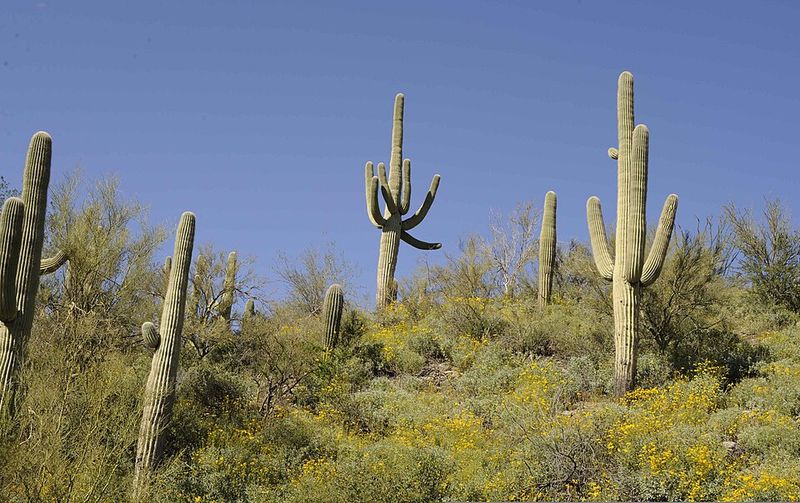
Few sights in the American Southwest match the towering silhouette of a young saguaro taking root in Arizona soil.
Native to the Sonoran Desert, Carnegiea gigantea is a slow grower, often adding only an inch or so per year in its early life, but April planting gives it the best chance to establish roots before summer heat peaks.
Saguaros need full sun and extremely well-drained, rocky or sandy soil. In the Phoenix area and lower Sonoran zones, they perform especially well when planted in south or east-facing slopes.
Young plants benefit from light afternoon shade in their first season to reduce transplant stress.
When planting, mark the north-facing side of the cactus and maintain that same orientation in the new location to reduce sunburn risk. Water deeply once after planting, then allow the soil to dry completely before watering again.
Roots spread wide rather than deep, so avoid planting near walkways or structures. Saguaros attract pollinators including bats, white-winged doves, and bees when they bloom in late spring, typically May through June.
Their creamy white flowers and red fruits are a true ecological gift to Arizona wildlife.
2. Barrel Cactus Brings Bold Heat-Tolerant Form
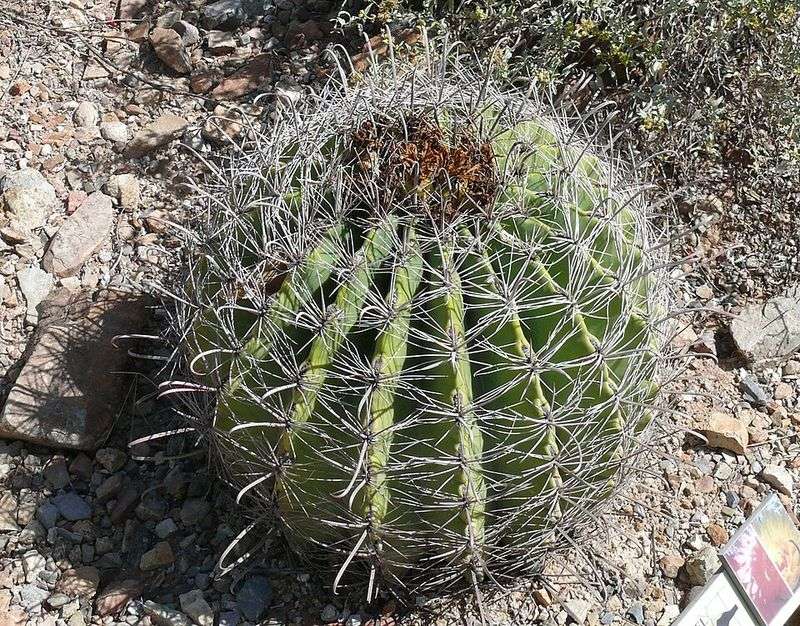
Squat, ribbed, and surprisingly tough, the barrel cactus earns its place in Arizona gardens through sheer staying power.
Species in the Ferocactus genus, particularly Ferocactus wislizeni, the fishhook barrel cactus, are well-adapted to the low desert heat of southern Arizona and the Phoenix metro area.
April is an excellent time to plant them because warming soil encourages root spread before summer stress arrives.
Barrel cacti thrive in full sun with well-drained, gritty soil. Mixing native desert soil with coarse pumice or decomposed granite helps prevent moisture from sitting around roots.
These plants grow slowly and rarely need supplemental water once established, making them a practical and low-maintenance landscape choice.
Their distinctive hooked central spines and bold cylindrical shape make them strong focal points in xeriscape designs.
Ferocactus wislizeni typically blooms in late summer to fall, producing bright yellow or orange flowers near the crown that attract native bees.
In cooler Arizona elevations such as Prescott, barrel cacti may need more frost protection in winter, so choosing the right species for your elevation matters.
Space them at least three feet from foot traffic areas to avoid accidental spine contact.
3. Prickly Pear Produces Colorful Pads For Pollinators
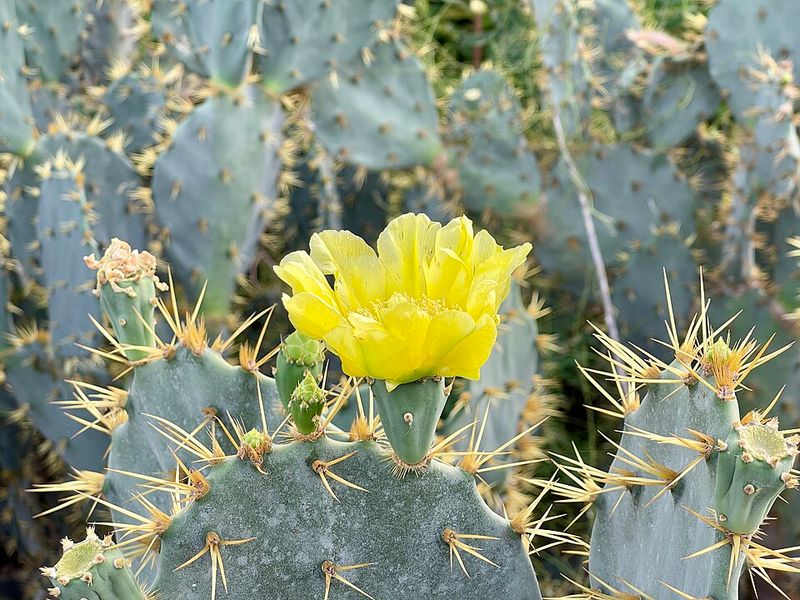
Walk through almost any Arizona neighborhood in spring and you are likely to spot prickly pear glowing with color along fences and in front yards.
Opuntia species are among the most versatile and widely planted cacti in the state, and April is a prime window to get them established.
Their flat, paddle-shaped pads root quickly in warm soil, and new growth often appears within weeks.
Prickly pear tolerates a wide range of well-drained soils and handles both full sun and partial sun with ease. In the low desert, Engelmann prickly pear, Opuntia engelmannii, is a common and reliable choice.
Planting from a pad cutting is straightforward: allow the cut end to callous for a week before placing it shallowly in dry, sandy soil.
The blooms, which arrive from late spring into early summer, are spectacular. Shades of yellow, orange, pink, and red attract native bees, hummingbirds, and butterflies.
Ripe fruits, called tunas, are edible and enjoyed by wildlife and people alike. Prickly pear works well as a natural barrier planting, in mass groupings, or as a standalone accent.
At higher Arizona elevations, cold-hardy varieties of Opuntia hold up well through winter with minimal care.
4. Cholla Offers Sculptural Stems And Tough Growth
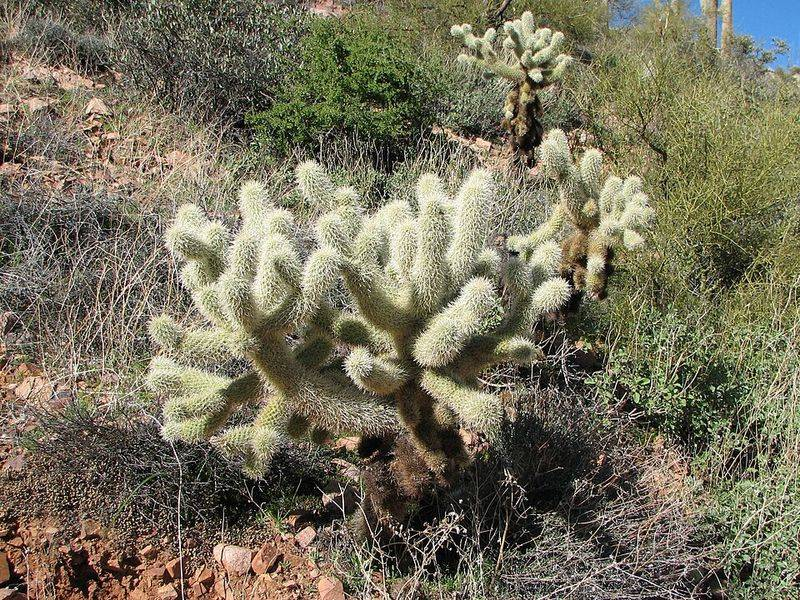
There is something almost otherworldly about a cholla cactus lit up by the Arizona afternoon sun, its spines catching the light like tiny golden needles.
Cylindropuntia species, including the chain-fruit cholla and teddy bear cholla, are naturally adapted to the Sonoran Desert and root well when planted in April as soil temperatures warm into the 60s and 70s.
These cacti prefer full sun and fast-draining, coarse soil with low organic content. Avoid amending the planting hole with compost or moisture-retaining materials, as chollas are prone to root problems in overly rich or wet conditions.
When handling, use thick gloves and long tongs, as the barbed spines attach easily to skin and clothing.
Cholla segments that fall to the ground naturally take root, which gives you a sense of how readily they establish. After planting, a single deep watering followed by a dry period encourages roots to reach deeper into the soil profile.
Chollas provide nesting sites for cactus wrens and other desert birds, making them a meaningful addition to wildlife-friendly Arizona gardens.
Their intricate branching structure adds year-round sculptural interest, especially in minimalist rock gardens or open desert-style landscapes where negative space is part of the design.
5. Hedgehog Cactus Adds Compact Form And Blooms
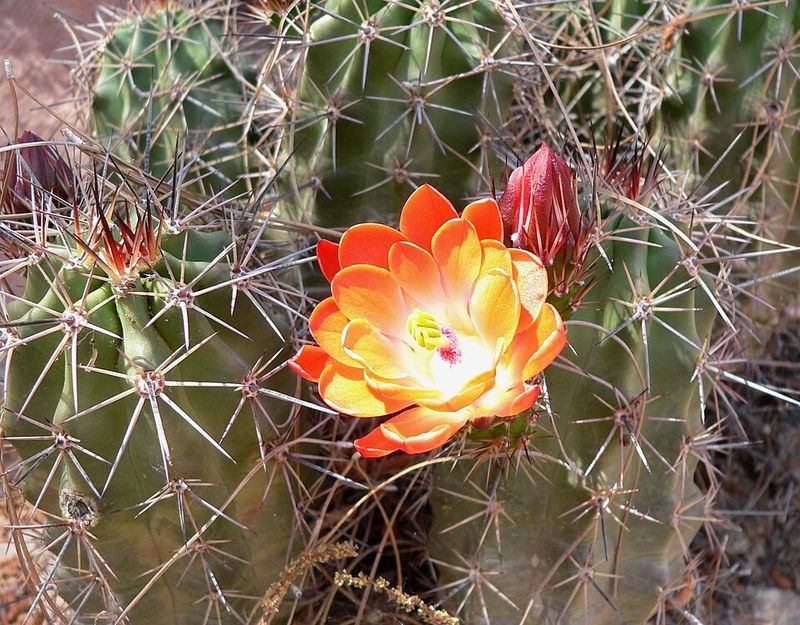
Among Arizona’s native cacti, the hedgehog cactus is one of the most rewarding for home gardeners who want reliable spring color without a lot of fuss.
Echinocereus triglochidiatus and related species form dense, low-growing clusters that fit neatly into small spaces, container gardens, and rock gardens across the state. April planting lets roots anchor before the season shifts to intense summer heat.
Hedgehog cacti thrive in full sun and rocky, well-drained soil with low nutrient content.
They are more cold-tolerant than many desert cacti, which makes them suitable across a wider range of Arizona elevations, including mid-elevation communities like Prescott and even some parts of northern Arizona.
Avoid overwatering at all costs, as excess moisture is the most common cause of root problems in this species.
The blooms are genuinely stunning. Bright magenta, red, or orange flowers appear in March through May, depending on elevation and microclimate, and attract hummingbirds and native bees in impressive numbers.
Plants grow slowly but steadily, eventually forming attractive mounded clusters. Their compact size makes them easy to incorporate into borders alongside agaves or ornamental gravel.
For a small Arizona garden that needs both structure and seasonal color, few native cacti deliver as consistently as the hedgehog.
6. Agave Parryi Forms Rosettes That Handle Heat
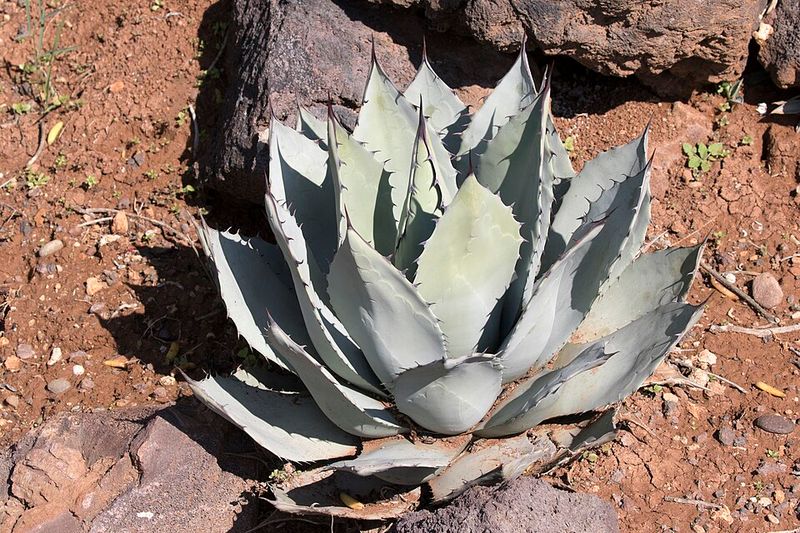
Symmetry is rare in the desert, but Agave parryi delivers it naturally.
The Parry agave forms tight, globe-shaped rosettes of blue-gray leaves tipped with sharp spines, and its architectural form makes it one of the most sought-after agaves in Arizona landscaping.
April is a smart time to plant because roots settle in quickly during the warm spring weeks before monsoon season and intense heat follow.
Parry agave is notably cold-hardy compared to many agave species, performing well not just in the Phoenix area but also in higher-elevation Arizona communities like Prescott and Sedona. It prefers full sun to light shade and well-drained, slightly rocky soil.
Avoid heavy clay and spots where water pools after rain, as saturated soil can cause root stress.
Water the plant deeply once after planting, then back off and let the soil dry before the next irrigation. Established plants need very little supplemental water, especially in areas that receive seasonal monsoon rainfall.
Agave parryi blooms once in its lifetime, sending up a tall stalk with yellow flowers that attract orioles, bees, and hummingbirds. After flowering, the main rosette fades, but offsets, called pups, often remain and continue growing.
This natural cycle keeps the plant going for years in Arizona gardens.
7. Agave Americana Creates Dramatic Focal Points
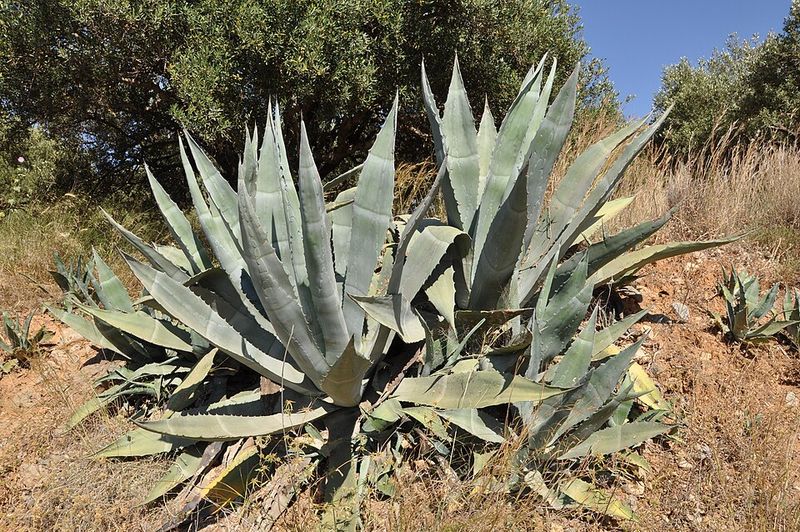
Bold, massive, and impossible to ignore, Agave americana earns every square foot it occupies in an Arizona garden. Commonly called the century plant, this species can spread up to ten feet wide with thick, arching blue-green leaves edged with sharp teeth.
Planting in April gives the roots several warm weeks to anchor into the soil before summer temperatures push into triple digits across the low desert.
Century plants do best in full sun and well-drained soil, and they are remarkably forgiving once established. In the Phoenix and Tucson areas, they grow vigorously with minimal supplemental irrigation.
Adding coarse gravel or decomposed granite around the base helps maintain soil drainage and reduces weed competition. Leave plenty of space around each plant to account for mature spread.
Agave americana is monocarpic, meaning it blooms once and then the main plant fades. The bloom stalk, which can reach 15 to 30 feet tall, is one of the most dramatic sights in Arizona spring and summer landscapes.
Bats, orioles, and bees feed on the flowers and nectar. Offsets that form around the base carry on after the parent plant.
For large Arizona landscapes, open slopes, or bold entryway plantings, few plants match the commanding presence of this agave.
8. Ocotillo Sends Tall Stems Skyward
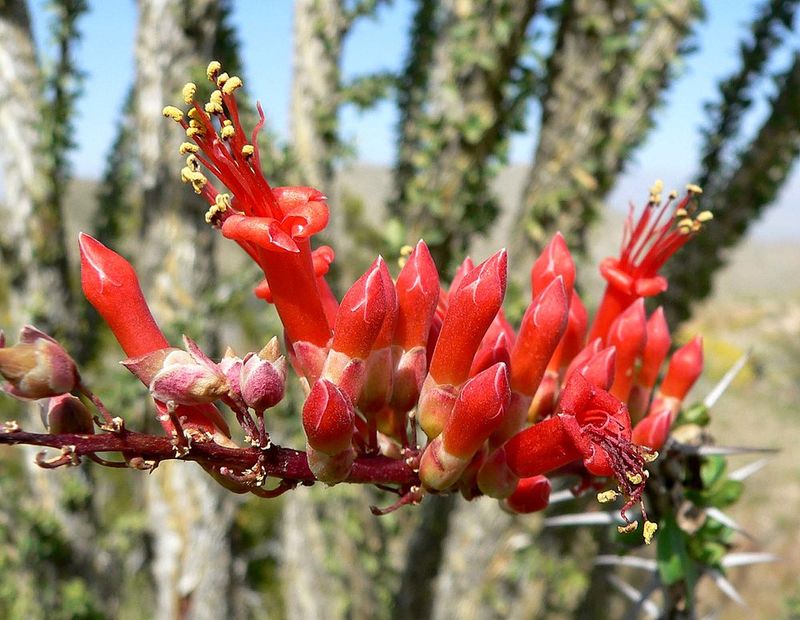
Standing in a dry Arizona wash in April, you might notice clusters of flame-red flowers flickering at the tips of long, whip-like stems – that is ocotillo doing what it does best.
Fouquieria splendens is technically not a cactus, but it behaves like one in many ways and fits naturally into Arizona desert gardens.
Its tall, arching stems can reach ten to fifteen feet and leaf out quickly after rain or irrigation.
Ocotillo roots establish best in April when soil is warm and dry cycles are predictable. Plant in full sun with extremely well-drained, rocky or sandy soil.
The roots are sensitive to prolonged moisture, so avoid low spots or areas where irrigation runoff collects. When planting from a bare-root or collected specimen, mark the original north-facing orientation and maintain it to reduce stress.
After planting, water lightly to settle the soil, then hold off for a couple of weeks to encourage roots to reach outward in search of moisture. Ocotillo may appear dormant and leafless for weeks after transplanting, which is normal.
Red tubular flowers, which appear from March through June, are a top nectar source for hummingbirds migrating through Arizona.
As a living fence, privacy screen, or vertical accent, ocotillo adds energy and movement that few other desert plants can match.
9. Maguey Agave Produces Strong Roots And Shape
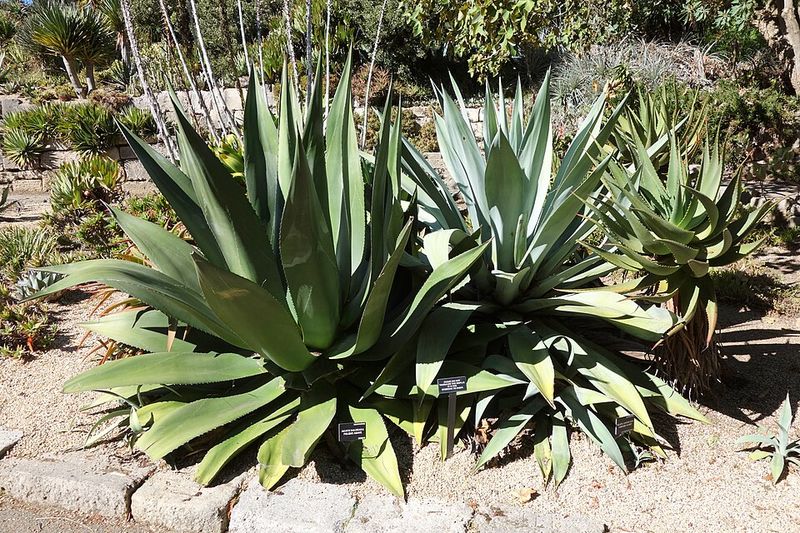
Gardeners who want serious root depth and structural impact from a single plant should take a close look at maguey, Agave salmiana.
This large, robust agave species produces thick, fleshy leaves that fan out into an impressive rosette, and its root system is known for anchoring deeply and broadly into desert soils.
April planting takes advantage of warming ground temperatures that encourage rapid root spread.
Maguey grows best in full sun with coarse, well-drained soil. In Arizona’s low desert regions, it handles the heat well and needs only occasional deep watering once established.
Mixing native soil with gravel or pumice when backfilling the planting hole supports drainage and reduces the risk of root stress during monsoon season when heavy rain can saturate the ground quickly.
This agave is widely grown across Mexico and the southwestern United States for its cultural and culinary significance, with traditional uses including production of pulque and other beverages.
In Arizona gardens, it serves as a commanding landscape anchor, erosion control plant, or dramatic container specimen when young.
Growth is moderate compared to Agave americana but still substantial. Expect the rosette to eventually reach six to eight feet wide.
Maguey is monocarpic, blooming once with a tall stalk before the central rosette fades and offsets carry on.
10. Blue Agave Adds Striking Foliage And Heat Tolerance
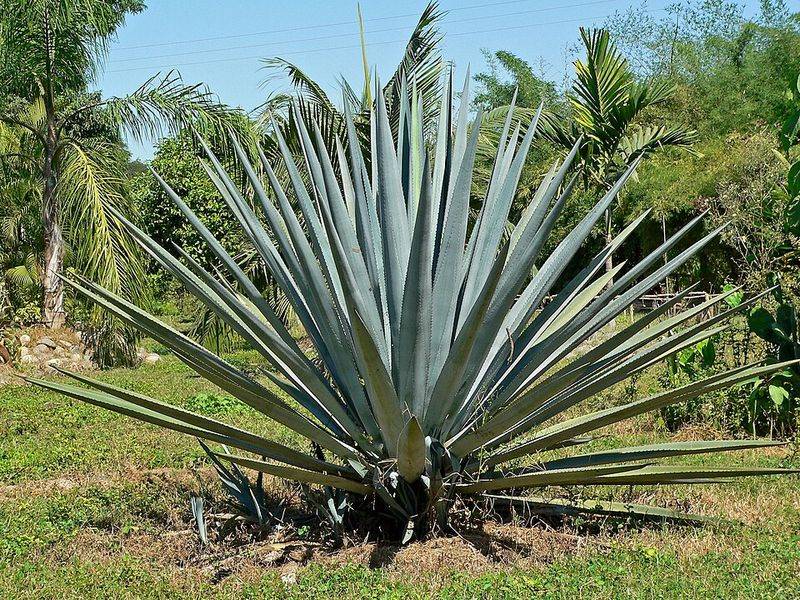
Made famous by the tequila industry, Agave tequilana brings more than a good story to Arizona gardens – it brings genuinely striking foliage and strong heat tolerance that suits the state’s intense summer climate.
The narrow, rigid, blue-gray leaves radiate outward in a clean rosette form that looks sharp in modern desert landscapes and low-water garden designs.
April is a well-suited planting month as the soil warms and root growth accelerates.
Blue agave prefers full sun and fast-draining soil. In the Phoenix metro area and southern Arizona, it performs well with minimal supplemental irrigation after the first season.
Amending the planting area with coarse sand or decomposed granite helps prevent moisture from pooling around the root crown, which is one of the main concerns with this species in heavier soils.
Water deeply once after planting, then reduce frequency as the plant settles in. Young blue agave plants may benefit from light afternoon shade during their first Arizona summer to ease the transition, especially in the low desert.
The blue-gray color contrasts beautifully with red gravel, dark lava rock, and other desert plants like palo verde or brittlebush.
While it is monocarpic and blooms only once, the years of bold, sculptural foliage it provides make it a genuinely rewarding addition to any Arizona xeriscape.