8 Cactus Landscaping Ideas You Can Use In Your Arizona Yard
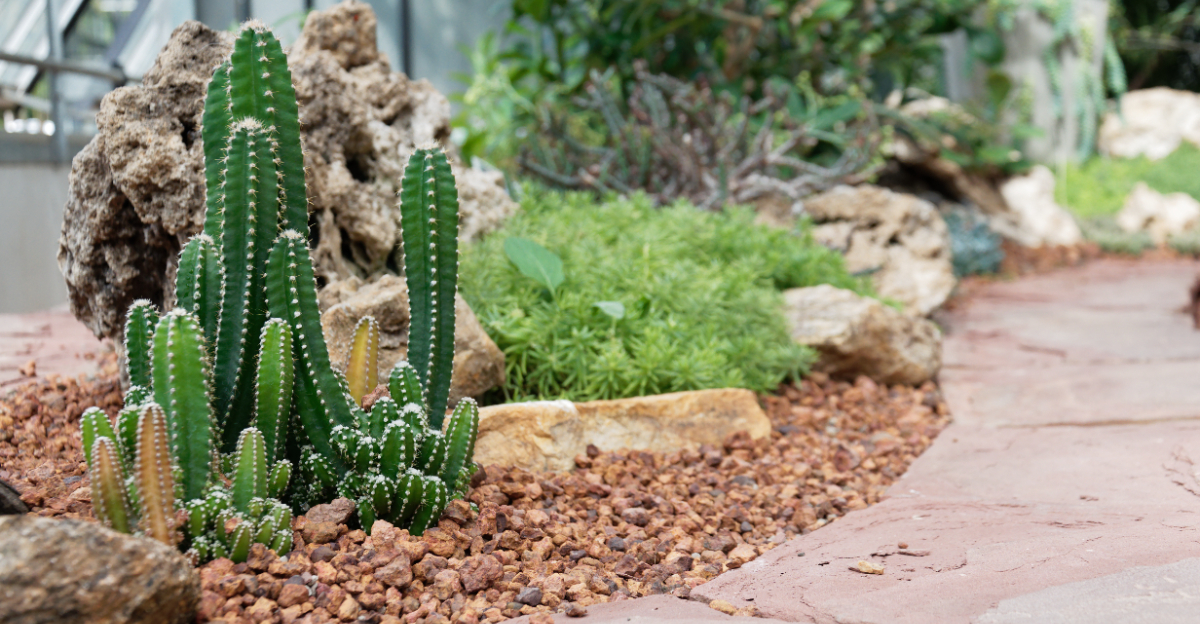
Cactus landscaping is everywhere in Arizona, but it doesn’t always get used to its full potential.
Many yards rely on the same predictable layouts, which makes everything start to look the same.
When chosen and placed with intention, cacti can bring structure, texture, and personality to a yard. They handle heat, bright sun, and dry conditions without demanding constant care.
These cactus landscaping ideas show how Arizona yards can feel bold, balanced, and visually interesting without feeling harsh or repetitive.
1. Create A Gravel-Based Cactus Bed For Clean Lines
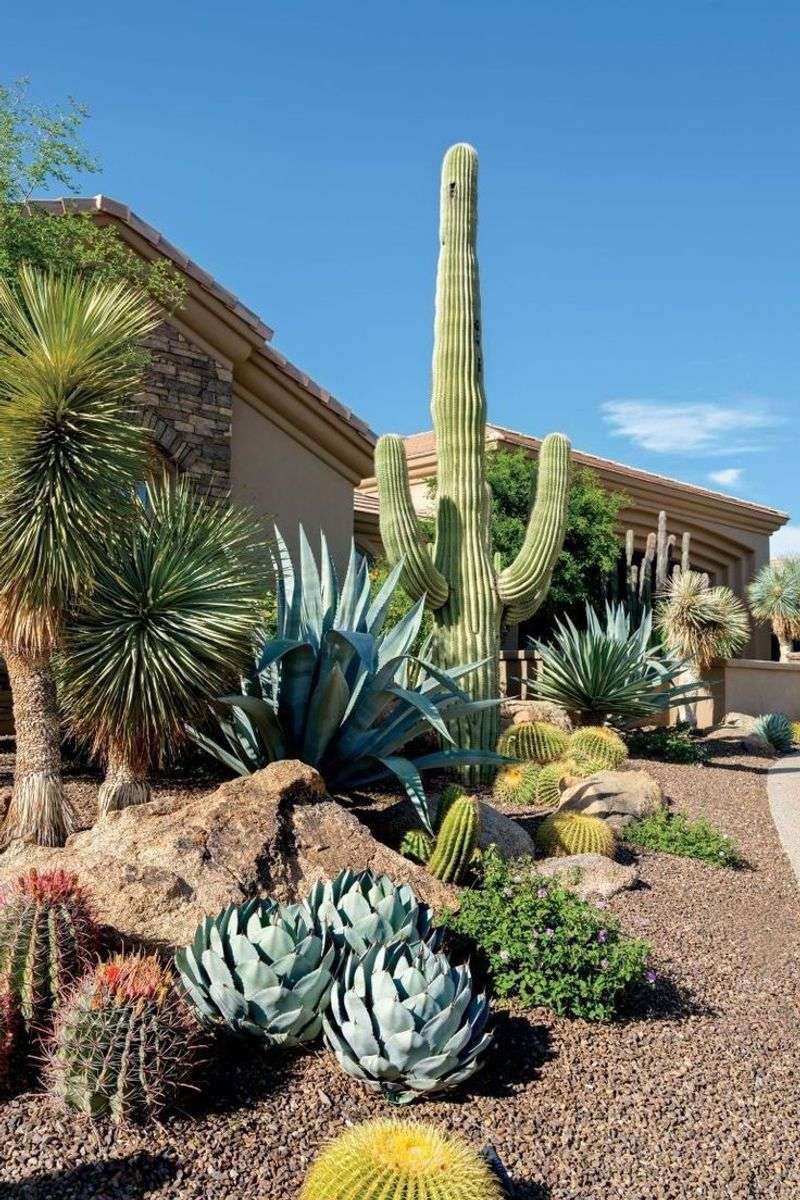
Gravel creates the perfect foundation for desert plants because it mimics their natural habitat while keeping maintenance incredibly low.
Your Arizona landscape benefits from this approach since gravel reflects heat, helps control weeds, and never needs watering or mowing like traditional grass.
Choosing the right gravel size matters more than you might think. Smaller pebbles between half an inch and three-quarters of an inch work best because they settle evenly and stay in place during monsoon rains that sweep across the Southwest.
Border edging keeps everything looking sharp and prevents gravel from spilling into pathways or neighboring areas.
Metal or stone borders work beautifully in Arizona yards and last for years without breaking down under the sun.
Spacing your cacti properly within the gravel bed gives each plant room to grow without crowding. Most desert species spread wider than they grow tall, so leaving three to four feet between plants prevents future problems.
Weed barrier fabric underneath the gravel reduces maintenance significantly.
This layer blocks unwanted growth while still allowing water to drain through to the soil below.
Color choices for gravel range from natural tan and brown to decorative white or red.
Lighter colors reflect more heat, which can benefit plants during Arizona’s brutal summer months.
Installing a gravel bed takes less time than you’d expect. One weekend is usually enough to clear the area, lay fabric, and spread gravel for a medium-sized garden space.
Maintenance stays minimal year-round. Occasional raking keeps the surface looking fresh, and adding a thin layer of new gravel every few years maintains the clean appearance.
Cost remains reasonable compared to other landscaping options. Gravel costs less than sod, requires no irrigation system, and the cacti themselves need replacement far less often than traditional plants.
Your property value increases with professional-looking desert landscaping.
Buyers in Arizona specifically seek homes with water-wise yards that match the regional aesthetic.
2. Use Barrel Cactus As Natural Focal Points
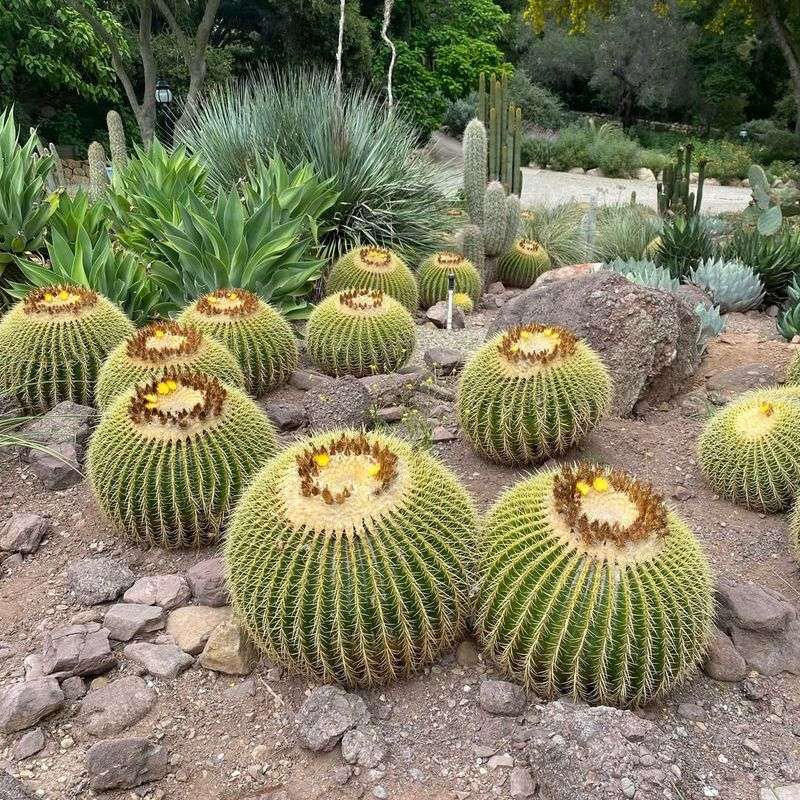
Barrel cacti command attention wherever you place them because their rounded shapes and bright golden spines catch the eye instantly.
These Southwest natives grow slowly but reach impressive sizes over time, making them perfect anchors for your landscape design.
Positioning matters when you want maximum visual impact.
Placing a barrel cactus near your home’s entrance or at a pathway junction naturally draws visitors toward that spot.
Size variety gives you flexibility in design choices.
Young barrels work well in smaller spaces, while mature specimens that reach three feet across make bold statements in larger Arizona yards.
Golden barrel cacti specifically bring warm color that contrasts beautifully with gray-green desert plants around them. Their bright yellow spines practically glow when backlit by morning or evening sun.
Grouping barrel cacti in odd numbers creates more interesting visual arrangements than even-numbered plantings. Three or five specimens clustered together feel natural rather than overly planned.
These plants require almost no care once established in Arizona soil.
Their water needs stay extremely low, and they handle temperature swings from freezing nights to scorching afternoons without complaint.
Pairing barrels with flat rocks or boulders enhances their sculptural quality. The contrast between smooth stone and spiny sphere creates texture that makes your landscape more dynamic.
Height variation adds depth when you combine barrel cacti with taller columnar species behind them. This layering technique makes your yard feel fuller without overcrowding.
Barrel cacti bloom with yellow or orange flowers in late spring when conditions align properly.
These colorful crowns add an unexpected bonus to their already striking appearance.
Long-term investment value stays high because these plants live for decades and require minimal replacement. Your Arizona landscape continues looking great year after year with virtually no ongoing expense.
3. Mix Prickly Pear With Low-Growing Ground Covers
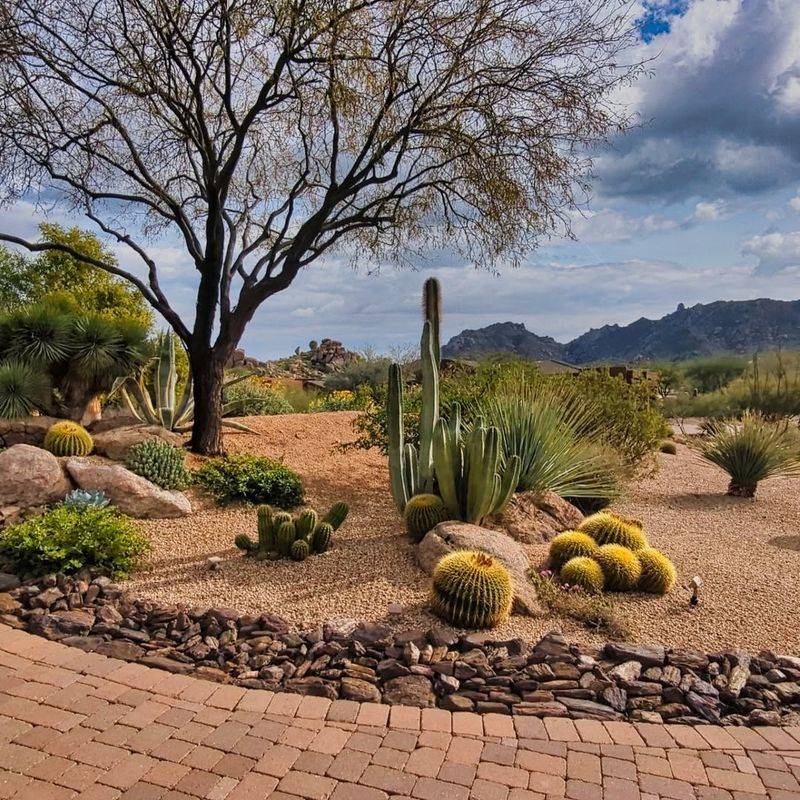
Prickly pear cacti bring vertical interest while ground covers fill horizontal space, creating layers that make your Arizona yard feel complete.
This combination uses different plant heights to build visual depth that flat landscapes simply cannot match.
Ground covers prevent bare soil from showing between larger plants.
Desert species like trailing lantana or damianita spread across open areas while requiring minimal water throughout the year.
Prickly pear pads grow in distinctive shapes that add architectural elements to your design. Their flat, rounded segments stack in ways that look almost deliberately artistic.
Color timing works in your favor when you pair these plants thoughtfully. Many ground covers bloom in spring while prickly pears flower in late spring, extending the season of visual interest.
Root systems occupy different soil depths, so these plants don’t compete for resources.
Ground covers spread shallow roots near the surface while prickly pear roots reach deeper into Arizona soil.
Texture contrast between smooth prickly pear pads and delicate ground cover foliage creates visual excitement.
Your eye naturally moves between these different surfaces, making the landscape more engaging.
Maintenance stays simple because both plant types evolved for harsh desert conditions. Neither requires frequent trimming, and both thrive on neglect better than they do on constant attention.
Wildlife benefits from this planting combination. Birds nest in prickly pear while beneficial insects visit ground cover flowers, supporting the local ecosystem right in your yard.
Erosion control improves significantly when ground covers fill gaps between larger plants. Their spreading growth holds soil in place during Arizona’s intense monsoon storms.
Scale flexibility lets you adapt this approach to any yard size.
Small spaces work with compact prickly pear varieties and tight ground covers, while larger properties can accommodate sprawling combinations.
4. Frame Entryways With Statement Cactus Plants
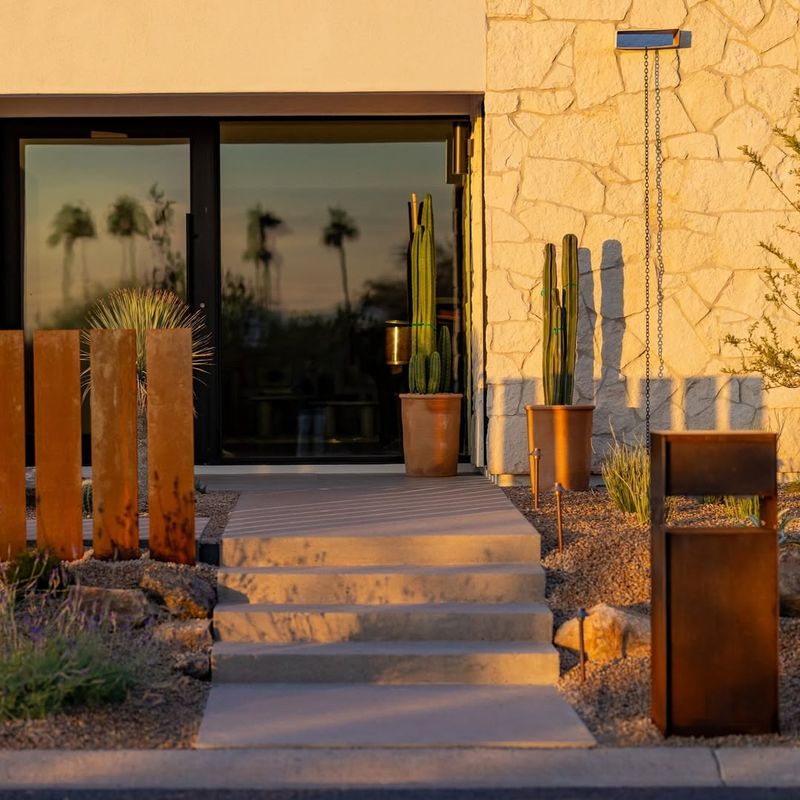
Your front entrance sets the tone for your entire property, and statement cacti create immediate impact that visitors remember.
Tall, architectural species transform ordinary doorways into memorable entries that reflect Arizona’s unique character.
Symmetry works powerfully when you place matching cacti on both sides of your door. This balanced approach feels intentional and polished rather than random or accidental.
Saguaro cacti make ultimate statement pieces if your budget allows, though younger specimens work perfectly for most homeowners.
Even six-foot saguaros command attention and grow taller as years pass.
Organ pipe cacti offer another excellent option with their multiple vertical stems rising from a single base. These plants fill more horizontal space than saguaros while still providing impressive height.
Container planting gives you flexibility if your entryway has concrete or pavement.
Large decorative pots let you position statement cacti exactly where you want them without permanent installation.
Lighting enhances the dramatic effect after dark. Uplights positioned at the base of your entry cacti cast shadows upward, creating nighttime visual interest that welcomes guests.
Scale matters when selecting plants for this prominent position.
Your cacti should feel substantial enough to balance your doorway without overwhelming the architectural features of your Arizona home.
Complementary plantings around the base of statement cacti soften the overall look. Low-growing succulents or decorative rocks fill space without competing for attention.
Property value increases when your entrance makes a strong first impression. Real estate professionals consistently note that distinctive landscaping helps homes sell faster in competitive Arizona markets.
Long-term maintenance stays minimal because established cacti need little care.
Your statement entrance continues looking impressive year after year without constant work or replacement.
5. Pair Cactus With Natural Stone And Boulders
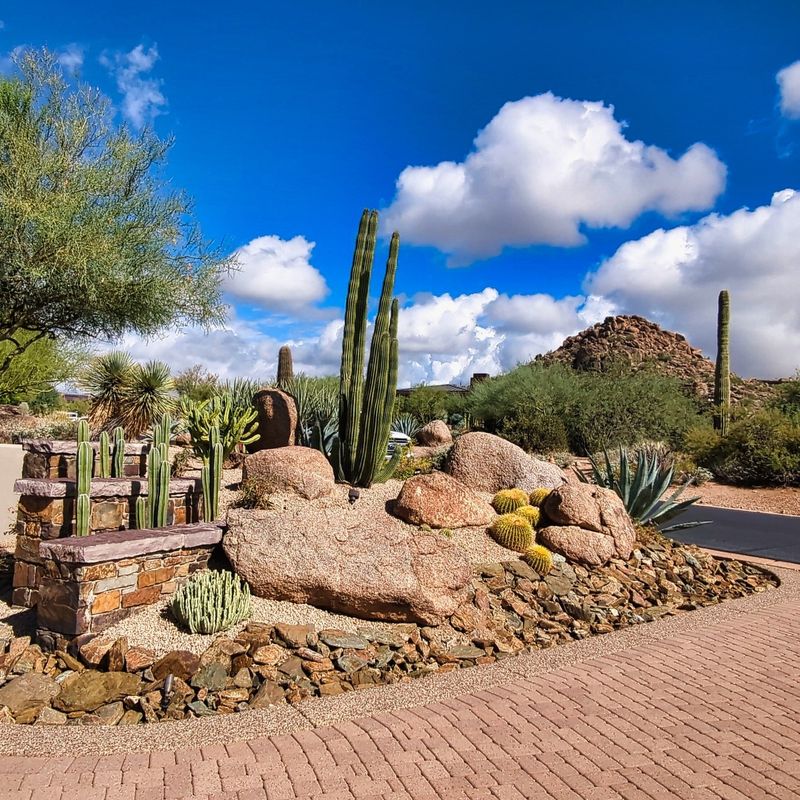
Stone and cactus evolved together in Arizona deserts, so pairing them in your yard creates landscapes that feel authentically regional.
The combination looks natural because it mirrors what exists in wild spaces throughout the Southwest.
Boulder placement should look random even though you plan it carefully. Odd-numbered groupings and varied sizes create arrangements that appear as if nature placed them rather than human hands.
Color coordination between stone and cacti enhances overall harmony.
Tan or gray boulders complement the blue-green tones common in many desert plant species.
Rocks provide practical benefits beyond aesthetics.
They anchor soil on slopes, create microclimates that protect plant roots, and absorb heat during the day to release it slowly at night.
Size variation in your stone selection adds visual interest.
Mixing large boulders with smaller rocks creates texture that makes your landscape more dynamic and engaging.
Partially burying boulders makes them look more natural than stones simply sitting on the surface. This technique mimics how rocks settle into desert soil over time.
Cacti planted near rocks benefit from the stones’ presence.
Boulders provide wind protection and create slight shade that reduces water stress during Arizona’s most intense heat.
Pathways become more interesting when you incorporate stones between planted areas. Flat stepping stones or crushed rock paths connect different sections of your yard while maintaining the desert theme.
Maintenance requirements stay low because neither stones nor cacti need ongoing care. Your landscape remains attractive through all seasons without constant intervention.
Cost effectiveness makes this approach accessible.
Natural stone costs less than manufactured materials, and cacti require no expensive irrigation systems to stay healthy in Arizona conditions.
6. Design Raised Beds For Better Drainage
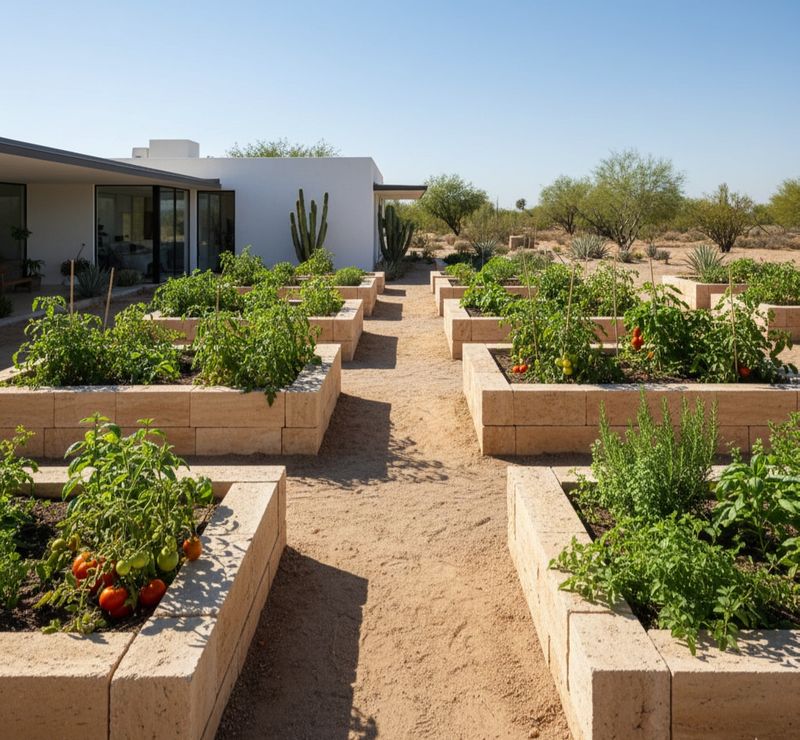
Raised beds solve drainage problems that plague many Arizona yards where clay soil or poor grading causes water to pool.
Elevating your cacti ensures roots never sit in standing moisture that would harm desert plants.
Building materials range from stacked stone to railroad ties, each creating different visual effects.
Stone walls blend naturally with desert landscapes, while wood adds warmth and texture to your outdoor space.
Height choices depend on your specific drainage needs and aesthetic preferences. Beds raised twelve to eighteen inches typically provide enough elevation for healthy cactus growth.
Soil amendments become easier to control in raised beds. You can create the perfect sandy, fast-draining mix that cacti prefer without trying to modify your entire yard’s native soil.
Accessibility improves when beds sit higher off the ground. Tending your plants requires less bending and kneeling, making maintenance more comfortable as you age.
Multiple raised beds at different heights create terraced effects that add dimension to flat Arizona lots.
This layering technique makes properties feel larger and more interesting.
Weed control becomes simpler because you define clear boundaries between planted areas and pathways. Gravel or mulch between beds prevents unwanted growth from spreading.
Root protection increases in raised beds because you control the soil composition completely.
Cacti establish faster and grow healthier when their roots never encounter problematic clay layers.
Visual impact strengthens when raised beds create focal points at different elevations. Your eye naturally travels through the landscape, discovering new views and plantings.
Investment returns remain strong because raised beds last for decades with minimal upkeep.
The initial construction effort pays off through years of improved plant performance and reduced maintenance.
7. Group Different Heights For Visual Balance
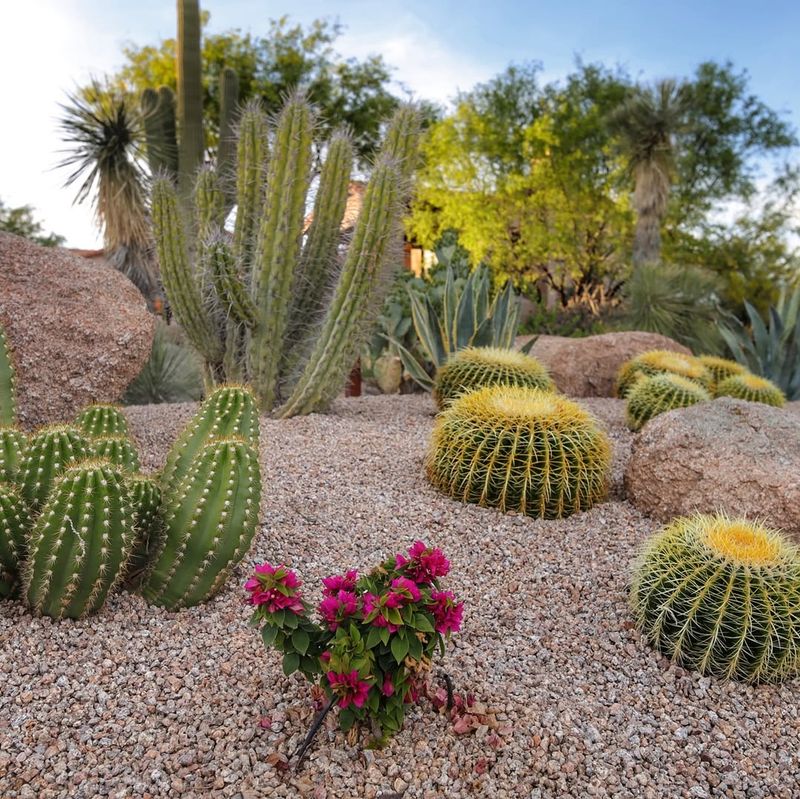
Layering plants by height creates depth that transforms flat spaces into dynamic landscapes worth exploring.
Your Arizona yard gains professional polish when you arrange cacti from tall to short in thoughtful compositions.
Background positions work best for your tallest specimens like saguaros or organ pipes. These vertical elements anchor the entire design and draw the eye upward.
Middle-ground plants should reach roughly half the height of your tallest cacti.
Barrel cacti, hedgehog cacti, and medium prickly pears fill this zone perfectly.
Foreground areas need low-growing species that don’t block views of taller plants behind them. Small clustering cacti or spreading ground covers complete the layered effect.
Triangular arrangements using three different heights feel naturally balanced. Your eye finds these compositions pleasing without understanding exactly why they work so well.
Repetition of height patterns throughout your yard creates rhythm that unifies the overall design.
Repeating the tall-medium-low sequence in multiple areas makes your Arizona landscape feel cohesive.
Spacing between height layers allows each plant to receive adequate light and air circulation.
Crowding plants too closely creates competition and reduces the visual impact of individual specimens.
Seasonal changes become more noticeable in layered plantings. Different cacti bloom at various times, and height variation ensures you notice flowers at every level.
Maintenance access improves when you can reach plants without stepping over or around others.
Proper spacing between height layers lets you tend each cactus comfortably.
Property appeal increases significantly when your landscape shows thoughtful design rather than random placement.
8. Light Up Cactus Shapes With Subtle Night Lighting
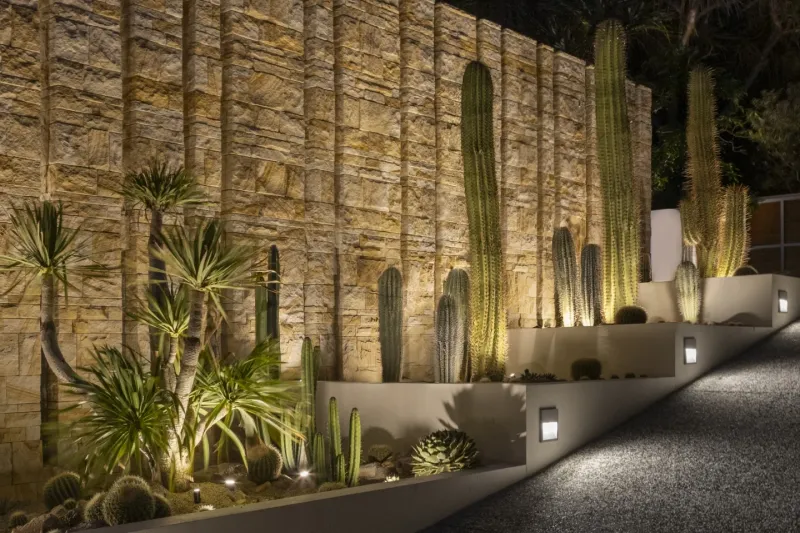
Nighttime transforms cactus shapes into dramatic silhouettes when you add strategic lighting to your Arizona landscape. Well-placed fixtures create evening visual interest that extends your enjoyment of outdoor spaces beyond daylight hours.
Uplighting works best for tall cacti because fixtures positioned at ground level cast light upward along the plant’s form. This technique emphasizes the natural architecture of saguaros and columnar species.
LED fixtures provide energy-efficient options that last for years without replacement.
These lights stay cool to the touch, which matters when placing them near plants in hot Arizona climates.
Warm color temperatures between 2700K and 3000K create inviting glows that feel more natural than harsh white light. Your yard feels welcoming rather than overly bright or commercial.
Fixture placement requires careful thought to avoid glare while maximizing plant illumination. Positioning lights slightly to the side rather than directly in front creates depth and shadow.
Solar-powered options eliminate wiring concerns and reduce ongoing electricity costs.
These fixtures charge during Arizona’s abundant sunny days and activate automatically after dark.
Accent lighting on statement pieces draws attention to your most impressive cacti. Highlighting one or two key plants creates focal points that anchor your nighttime landscape.
Path lighting serves dual purposes by illuminating walkways while showcasing nearby plantings. Low-voltage fixtures along pathways keep your yard safe and attractive after sunset.
Timer controls or smart systems let you manage when lights activate and how long they stay on. Automated scheduling means your Arizona landscape looks perfect every evening without manual effort.
Property security improves as a bonus benefit of landscape lighting. Well-lit yards discourage unwanted visitors while creating beautiful nighttime curb appeal that neighbors notice.