California Firewise Front Yard Ideas That Feel Soft And Welcoming
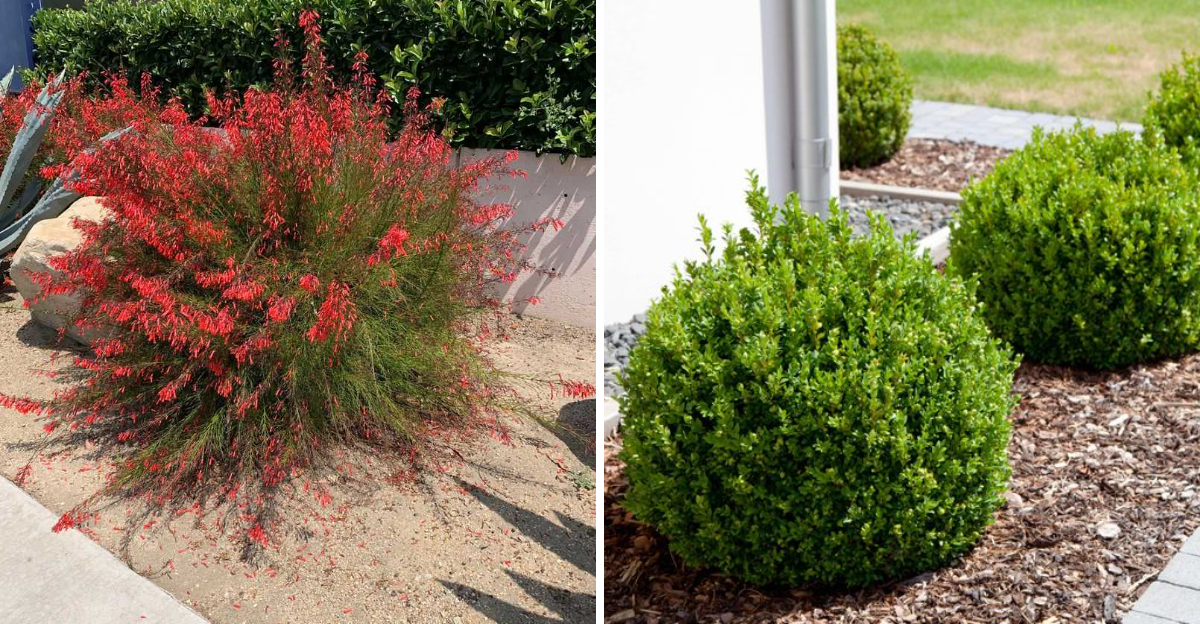
Many California homeowners hear the word “firewise” and immediately picture the same thing. Gravel. Rocks. A yard that looks like it gave up. That picture is wrong, and it has been wrong for a long time.
The most beautiful front yards in fire-prone California neighborhoods share something that most people never notice at first glance. Something in how the plants are arranged. Something in the materials between them. Something in the way the whole space breathes.
The truth is that the same principles that reduce fire risk also happen to produce yards that feel more open, more intentional, and more genuinely welcoming than a typical densely planted front yard ever could.
Nobody told you that part, right? But it changes everything about how you approach your outdoor space.
1. Start With A Clean Stone Border Near The House
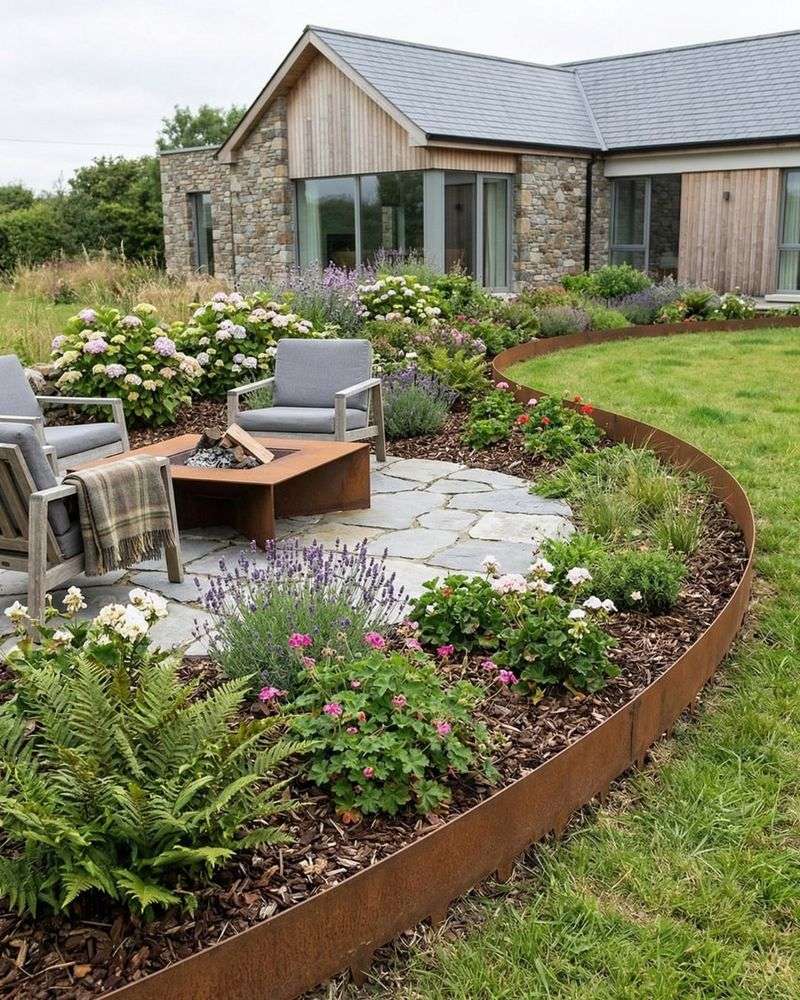
The five feet closest to your house are the most important five feet in your entire front yard. Most homeowners treat that space as an afterthought.
A strip of mulch. Some random plants pressed against the siding. Maybe a forgotten hose reel. But in California firewise design, that zone is where everything either holds or falls apart.
However, the thinking is simple. Keep noncombustible materials right at the foundation, and you create an ember-resistant edge that gives your home a fighting chance during a fire event.
Stone, gravel, pavers, concrete, and decomposed granite all work beautifully here. The best part? They also look genuinely polished.
A clean stone ribbon along the foundation reads as intentional design, not a safety compromise. Try flat stepping stones laid in a row. Tuck in a few rounded boulders. Spread a tidy gravel strip in warm tan or soft gray.
Small moves, big visual payoff. You could say it is the foundation of good design, in every sense.
Keep this zone free of wood mulch, dry leaf litter, and plants pressed against the siding. Debris accumulates fast, especially in the fall. Sweep or blow it clear regularly.
Once the stone border is in place, maintenance becomes minimal. No watering. No pruning. Just a quick cleanup pass every few weeks.
Plants come back into the picture just beyond this zone, softening the hardscape and adding life to the edges.
Think of the stone border as the calm frame that makes every planted element beyond it look more purposeful. It grounds the whole design without saying a word.
2. Use Gravel Paths To Add Calm Garden Flow
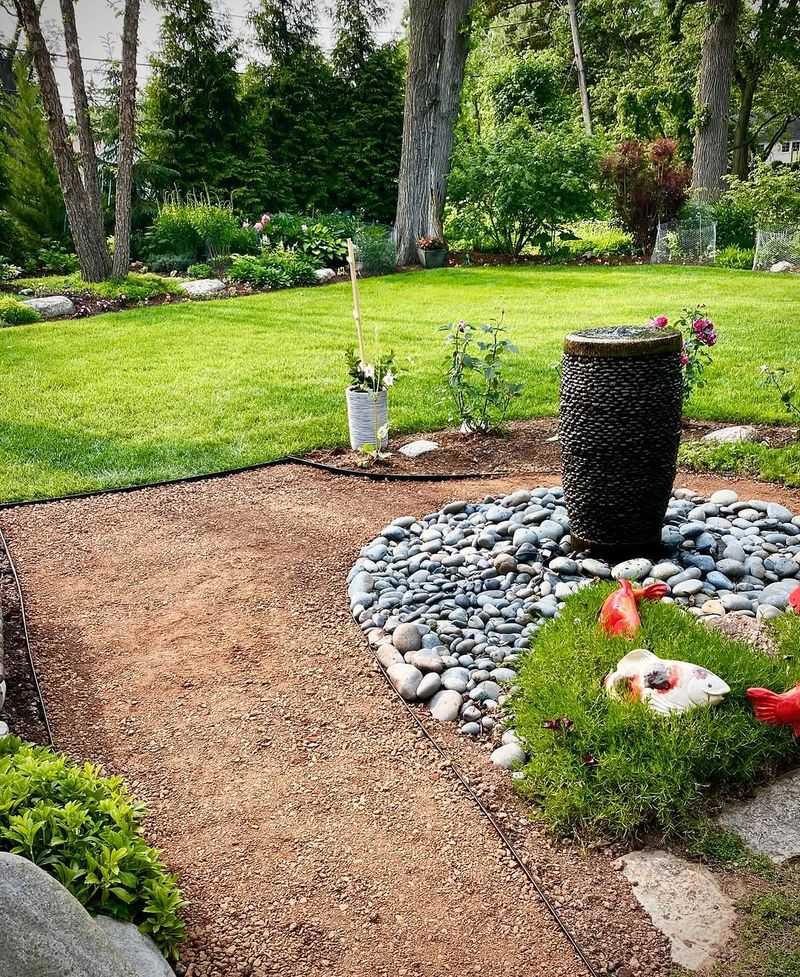
A gravel path does not just connect two points. It tells a story. It slows people down. It guides the eye across the yard. It creates a sense of movement through the space that feels natural and unhurried.
From a pure design standpoint, a well-placed path transforms a front yard from a flat surface into something that actually invites exploration.
From a firewise standpoint, it does something equally valuable. Paths made of decomposed granite, pea gravel, or stepping stones add noncombustible surface area throughout the yard.
They interrupt the continuous vegetation that can carry fire from one plant to the next. Every foot of gravel path is one less foot of connected fuel load. Both things are true at once. Beautiful and strategic. The best kind of design always works on two levels.
Your California Garden Changes Every Week. Your Plan Should Too.
Gardening in California changes quickly throughout the season. Every Friday you’ll receive a simple weekly plan showing exactly what to plant, prune, fertilize, harvest, and protect so you never miss the right timing.
Curved paths feel more relaxed than straight ones. A gentle arc from the driveway to the front door gives visitors something to experience, not just navigate.
One maintenance note worth taking seriously. Keep paths clear of leaf litter and plant debris.
Dry organic material on gravel becomes a fire hazard fast, especially on hot, windy days. A quick pass with a leaf blower once or twice a month handles it easily.
A gravel path that stays clean and clear is one of the hardest-working elements in a firewise front yard. It earns its place on every level.
3. Plant Low Green Islands Beyond Zone Zero
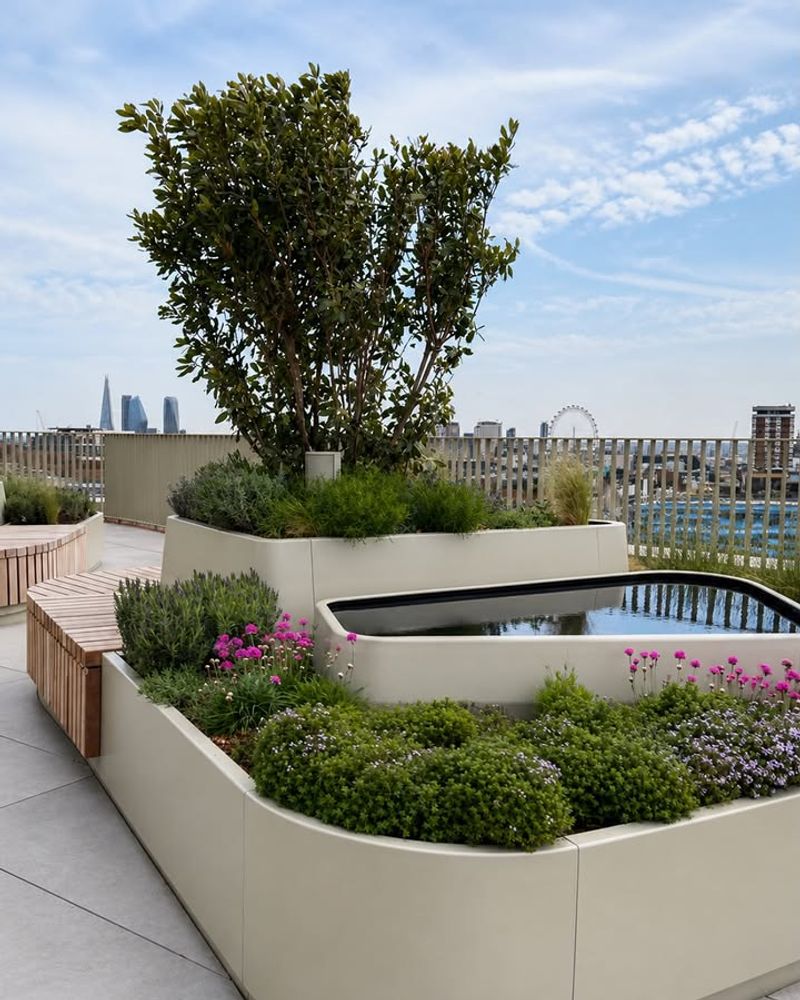
Past that five-foot noncombustible edge, the front yard opens up. And this is where things get genuinely interesting. The instinct for most gardeners is to fill space with plants. More coverage, more color, more lush.
In a firewise California yard, that instinct needs a small but important adjustment. The goal is not to fill space. It is to place plants thoughtfully within it. Think islands, not oceans.
Small groupings of low shrubs separated by gravel, stone, or open paths create a layered garden feel without the dense fuel load. Each island is its own moment. The space between them is part of the design, not a gap waiting to be filled.
A rounded cluster of compact sage, ornamental grass, or a low-growing native shrub edged with clean gravel looks purposeful and soft at the same time.
The contrast between the living plant material and the surrounding open ground gives each grouping room to breathe visually.
Drip irrigation keeps these islands healthy and moisture-rich through dry California summers. Well-watered plants are generally less prone to igniting than dry, stressed ones. That is a practical benefit that also keeps your yard looking its best.
Prune each island regularly. Remove dry or spent growth promptly. Keep sizes manageable. An island that stays tidy stays safe, and a yard full of well-tended islands looks like it was designed with real intention.
4. Choose Firewise Plants With Soft Rounded Shapes
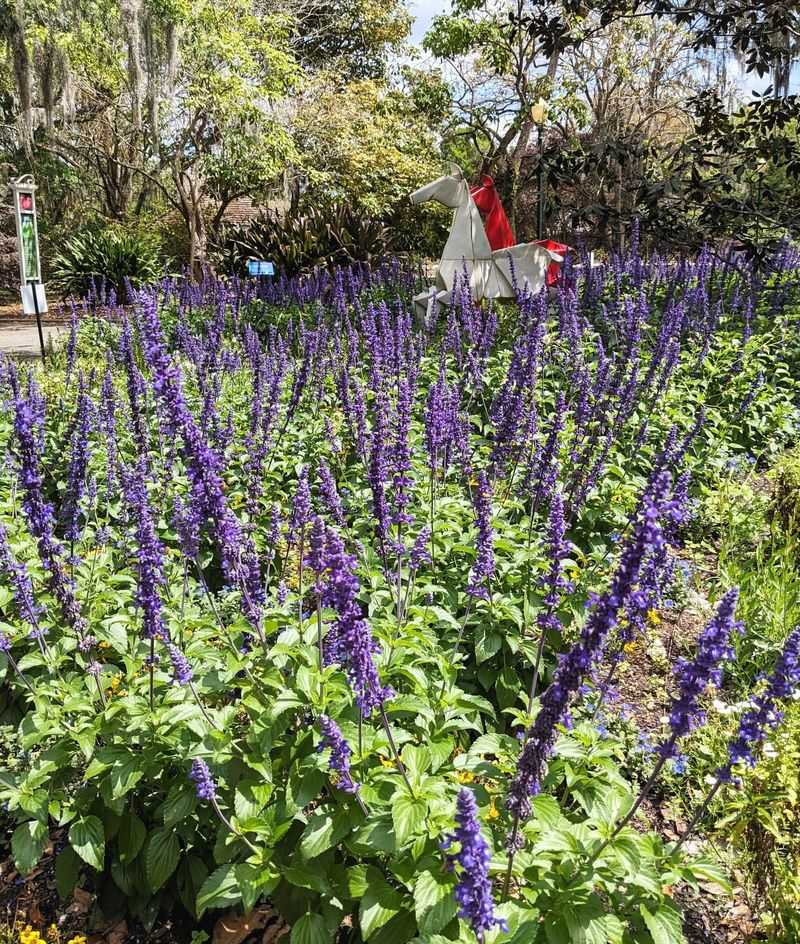
Shape is doing more work in your front yard than you probably realize. A plant with a rounded, mounding form reads as calm and welcoming. A spiky, jagged, or aggressively upright plant reads as tense.
That difference is subtle but real, and it adds up across an entire yard. The good news for California gardeners is that many of the most firewise-friendly plants also happen to be the ones with the softest silhouettes.
However, there’s one thing worth stating clearly before going further. No plant is fireproof. Plant selection is one piece of the puzzle, and an important one. But placement, spacing, moisture content, and maintenance carry equal weight.
A well-chosen plant in the wrong spot, poorly maintained, still creates risk. That said, certain traits come up repeatedly in firewise guidance as more favorable. High moisture content in the leaves.
Lower resin and oil levels. A tidy, compact growth habit. A mature size that stays manageable without constant intervention.
Lavender, salvia, ceanothus, and toyon check multiple boxes while also delivering those soft, rounded shapes that make a yard feel genuinely inviting. A clump of Cleveland sage has a gentle, billowy quality.
A low drift of creeping rosemary hugs the ground with quiet elegance. Neither one looks like a safety measure. Both happen to be one.
Repeat the same plant in two or three spots across the yard. That repetition creates visual rhythm and makes the whole design feel intentional rather than random.
Round it out with your local UC Cooperative Extension recommendations for your specific region. What works beautifully in the Bay Area may differ from what thrives in Southern California. Consult locally, plant wisely, and let the shapes do their quiet work.
5. Space Shrubs For An Airy Front Yard Look
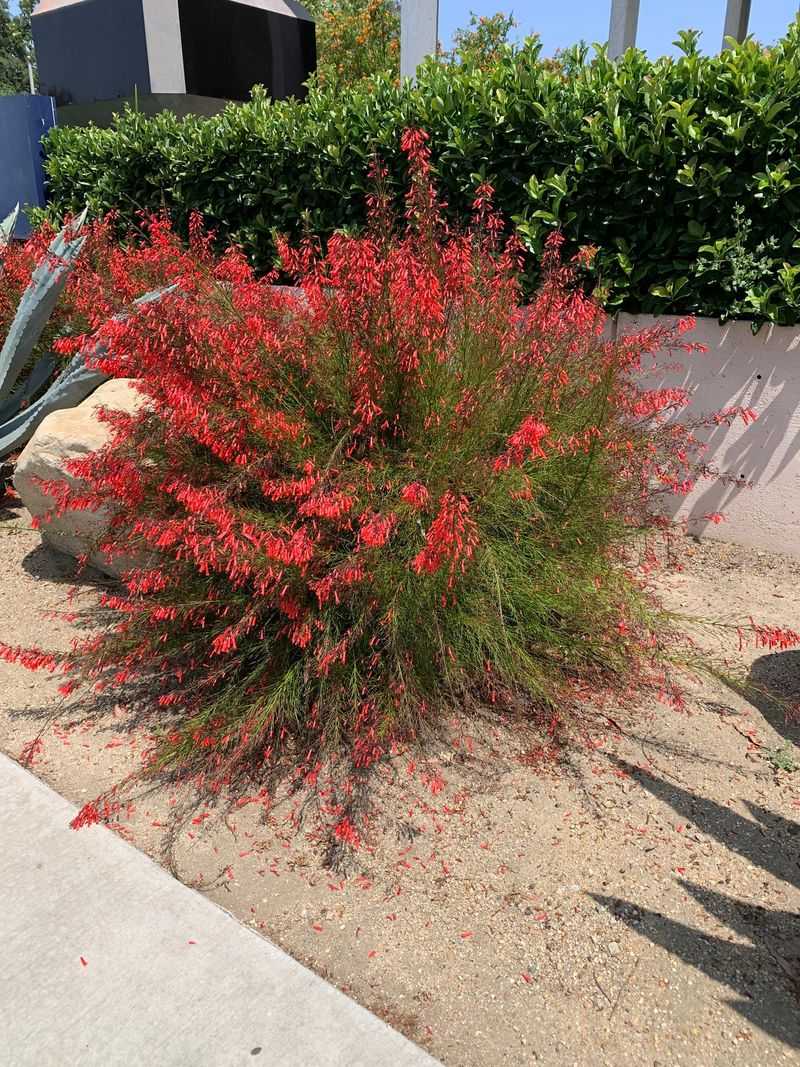
Crowded shrubs are a problem that shows up twice. Once in the design. Once in the fire risk assessment.
When shrubs grow together into a continuous mass near a home, they stop being individual plants and start being a connected fuel source. The plants do not have to be dry to create risk. Healthy, living shrubs crowded together still form a bridge that fire can use.
Luckily, spacing solves both problems at once. Open gaps between shrubs make the yard feel larger, calmer, and more deliberate.
Each shrub becomes its own focal point rather than part of an undifferentiated green wall. The eye has somewhere to travel. The design has room to breathe.
UC Master Gardener guidance suggests leaving gaps between shrubs at least equal to the mature spread of each plant.
For smaller shrubs, that is two to three feet. For larger ones, the gap grows accordingly. It feels generous when plants are young, but it’s exactly right once they reach full size.
Pruning matters just as much as spacing. Remove lower branches to raise the canopy slightly. That small change reduces the chance of ground-level fire climbing up into the shrub. Clear dry leaves and twigs from the base regularly.
These are not dramatic tasks. They are quick habits that compound into real protection over time. Spread out, stand apart, and let every shrub shine on its own terms.
6. Layer Groundcovers For A Lush Carpet Effect

Gravel is practical. Stone is clean. But nothing makes a front yard feel alive quite like a sweep of soft groundcover stretching between pavers and along path edges.
Groundcovers bring a lushness to a landscape that hard materials simply cannot replicate. They add color, texture, and that low, quiet fullness that makes a yard feel genuinely finished.
The great news is that plenty of low-growing groundcovers work beautifully in California firewise landscapes, as long as placement and maintenance are handled thoughtfully.
However, placement is the key word here. Groundcovers belong away from the immediate home edge.
Closer to the street, along path borders, and between planting islands is where they shine. In those spots, they add softness and welcome without raising concerns about proximity to the structure.
Dymondia, creeping thyme, gazania, and low-growing native yarrow are proven performers in California gardens. They stay compact, they look polished, and they respond well to regular maintenance. That last point matters more than most people expect.
Left untended, groundcovers become dry and overgrown. Dry and overgrown is the opposite of what a firewise yard needs.
Regular trimming and consistent watering during dry spells keep groundcovers looking fresh and keep fuel load low.
A well-tended groundcover planting is genuinely one of the best-looking things in a California front yard. Lush without being dense. Inviting without being risky. The ground cover story has a very happy ending.
7. Add Succulents For Sculptural Green Texture
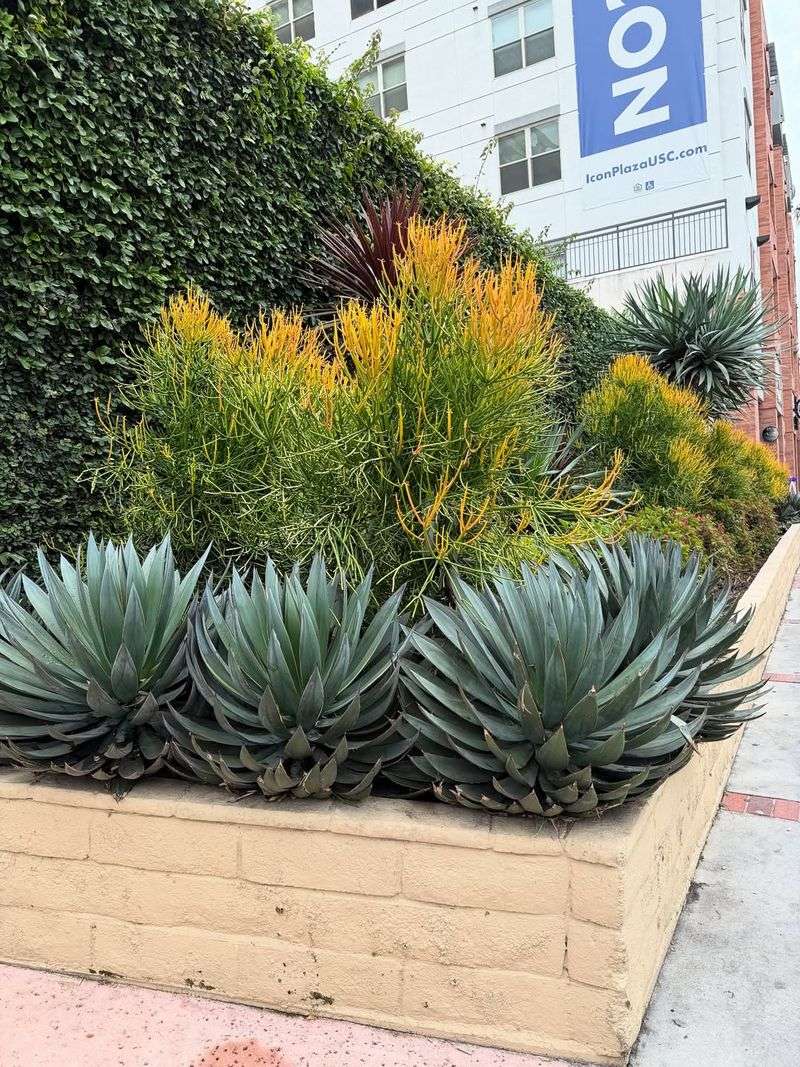
Succulents make a yard look like someone with real design instincts lives there. Bold geometric shapes. Fleshy, water-storing leaves.
Rosettes that seem almost too perfect to be real. Succulents bring a sculptural quality to a front yard that is genuinely difficult to achieve with any other plant group.
In California, where dry summers and water bills go hand in hand, they have become a front-yard staple for very good reasons.
However, one clarification is worth making before going further. Succulents are not fireproof. No plant is. Every plant can ignite under the right conditions.
What succulents do offer is relatively high moisture content in their leaves, which is one of the traits firewise guidance points to as favorable. That is an advantage, not a guarantee.
Placement, spacing, and maintenance still matter as much as plant selection. With that said, succulents reward thoughtful design in a way few other plants do.
Group them in clusters rather than scattering them randomly across the yard. Repetition creates rhythm.
Try placing the same species in two or three spots to tie the design together visually. Within each cluster, mix sizes.
That way, each plant gets to read clearly as its own sculptural moment. The effect is striking without being busy.
Remember to keep succulents tidy. Dry material around a succulent is the one thing that undercuts both the look and the safety of the planting.
Stay on top of it, and your succulent clusters will remain one of the most visually compelling features in the entire yard.
8. Frame The Walkway With Well-Kept Planting Beds
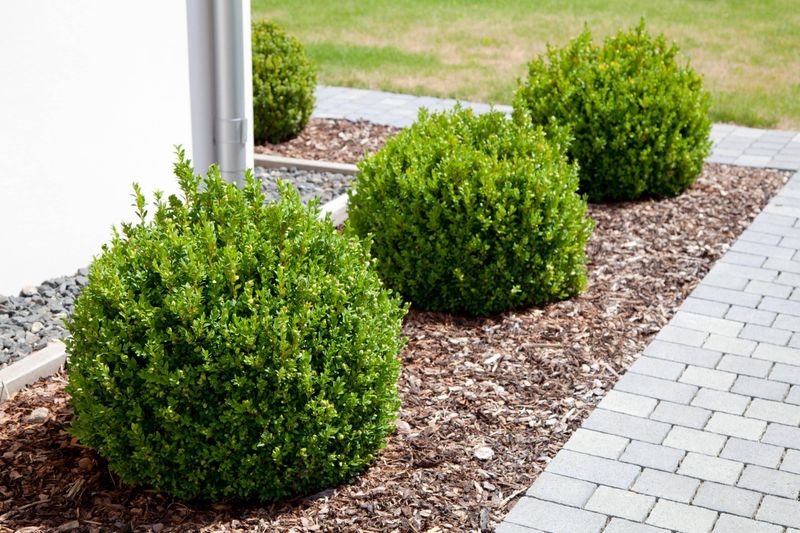
Your front walkway is the opening line of your yard’s first impression. Make it count. The path from the street to your front door is the first thing every visitor experiences. It sets the tone for everything that follows.
A well-framed walkway with tidy, low planting beds on either side communicates something immediately. Someone cares about this space.
That signal is more powerful than most homeowners realize, and it costs very little to achieve.
Keep beds along the walkway lower and more compact than plantings elsewhere in the yard. Tall plants leaning over the path create a crowded, slightly unkempt feeling that works against the welcoming quality you are after.
Low plants with soft textures do the opposite. Compact salvia, ornamental grasses, or low native shrubs frame the path without crowding it.
Repeat the same plant on both sides of the walkway. Symmetry is one of the simplest design tools available, and it works every time.
Two matching groupings signal intention. They tell the eye that this entry was designed rather than assembled.
Maintenance is the quiet secret behind every great entry bed. Trim plants back from the walkway edge regularly. The path should always feel clear and easy to walk.
Remove dry leaves, spent blooms, and debris from the bed surface promptly. Accumulated dry material is exactly what firewise landscaping works to minimize, and it also just looks neglected.
Skip wood mulch near the home. Decomposed granite or gravel as a bed topper keeps the look clean and aligns with California firewise guidance. The path to great curb appeal, it turns out, runs right through your front walkway.