California Gardeners Are Replacing Invasive Plants With These Natives This Spring
More California gardeners are rethinking their spring planting, and the reasons go far beyond just saving water.
From the coastal yards of San Diego to the sun-baked Central Valley, there is a growing movement to pull out invasive species and replace them with plants that actually belong here.
Invasive plants do more than just hog resources; they crowd out local wildlife and push into our precious natural areas.
In contrast, California natives have spent thousands of years adapting to our unique soils and unpredictable rainfall.
By choosing plants that work with the land instead of against it, you can create a beautiful, wildlife-friendly space that truly thrives in our climate.
1. California Lilac Brings Color With Less Water
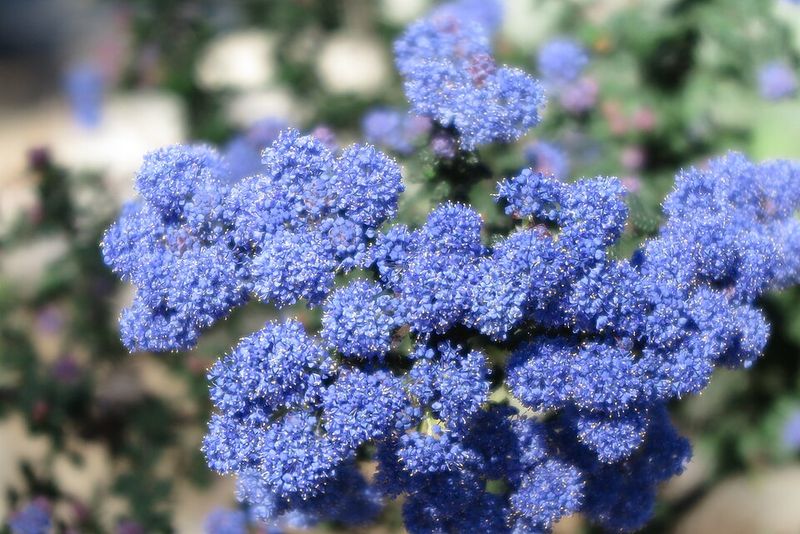
Few sights in a California spring garden are as striking as a California Lilac covered in deep blue or violet flower clusters.
Known botanically as Ceanothus, this native shrub has become one of the most popular swaps for water-hungry ornamentals like English lavender or non-native butterfly bush.
It brings bold seasonal color without the irrigation demands that strain California’s limited water supply.
Ceanothus grows in a wide range of forms, from low ground covers to tall screening shrubs, so it fits many yard layouts. Most varieties prefer full sun and fast-draining soil, and they can struggle if overwatered once established.
Coastal California gardens tend to support a broader range of cultivars, while inland gardeners often do well with heat-tolerant selections like Ceanothus ‘Ray Hartman.’
Pollinators go absolutely wild for the blooms. Bees, butterflies, and even hummingbirds visit regularly during the flowering season, which typically runs from late winter through spring.
Once established, most Ceanothus varieties need little to no supplemental watering through California’s dry summers.
Replacing a thirsty shrub with this native can meaningfully reduce outdoor water use while adding genuine seasonal drama to the garden.
2. Manzanita Adds Structure And Year Round Interest
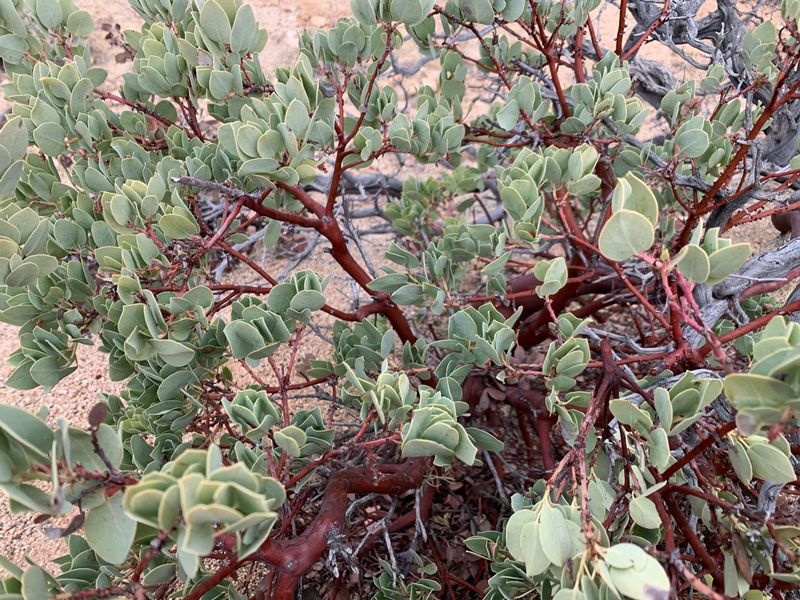
Walk through any California chaparral and you will almost certainly encounter manzanita, with its unmistakable smooth, reddish-brown bark and twisting branching structure.
Gardeners who have grown tired of high-maintenance ornamental shrubs that need constant pruning and watering are increasingly turning to this California native for its year-round visual interest and tough-as-nails constitution.
Manzanita belongs to the genus Arctostaphylos, and California is home to dozens of species and cultivars ranging from creeping ground covers to multi-stemmed shrubs several feet tall.
The sculptural bark alone makes it a standout in any landscape design, even when the plant is not actively flowering.
Small, bell-shaped flowers appear from late winter into early spring, providing an early nectar source for pollinators emerging after cooler months.
Most manzanita varieties thrive in full sun with well-drained, low-nutrient soil. They are notably drought-tolerant once established and rarely need fertilizing.
Overwatering is one of the most common mistakes gardeners make with this plant, especially in heavy clay soils common in parts of inland California.
Replacing non-native shrubs like privets or photinias with a well-chosen manzanita can give a California garden structure, wildlife value, and beauty across every season without demanding much in return.
Your California Garden Changes Every Week. Your Plan Should Too.
Gardening in California changes quickly throughout the season. Every Friday you’ll receive a simple weekly plan showing exactly what to plant, prune, fertilize, harvest, and protect so you never miss the right timing.
3. Toyon Supports Wildlife With Bright Seasonal Berries
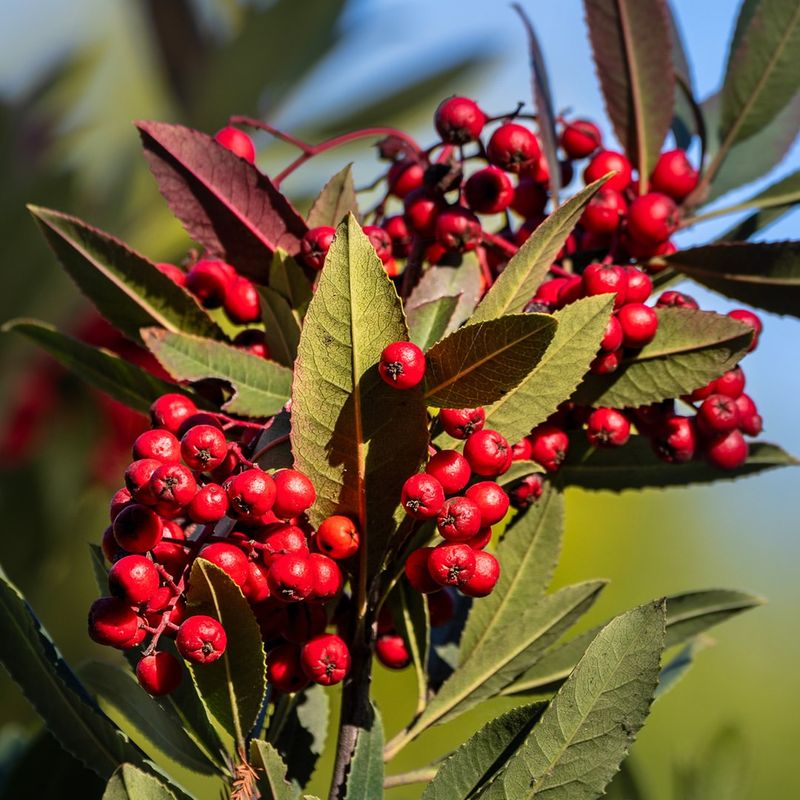
Hollywood’s name may actually trace back to this plant. Toyon, also called California Holly or Heteromeles arbutifolia, once grew so abundantly in the hills above Los Angeles that early settlers named the area for it.
Today, it is making a well-deserved comeback in California home gardens as a reliable native that gives back to local ecosystems in a big way.
Toyon produces clusters of bright red berries from late fall through winter, creating a vivid focal point during months when many plants look bare. Those berries are not just decorative.
Cedar waxwings, American robins, mockingbirds, and other birds depend on them as a food source during the lean winter season. Planting toyon is essentially setting out a bird feeder that restocks itself every year.
In terms of care, toyon is straightforward. It handles full sun to partial shade and tolerates a range of California soil types, including the heavy clay soils found across many parts of the state.
Established plants need very little supplemental water once the rainy season ends.
Toyon can grow into a large screening shrub or small tree, making it especially useful along property edges where gardeners want privacy without the water bills that come with non-native hedging plants.
4. Coyote Brush Fills Space With Tough Native Growth
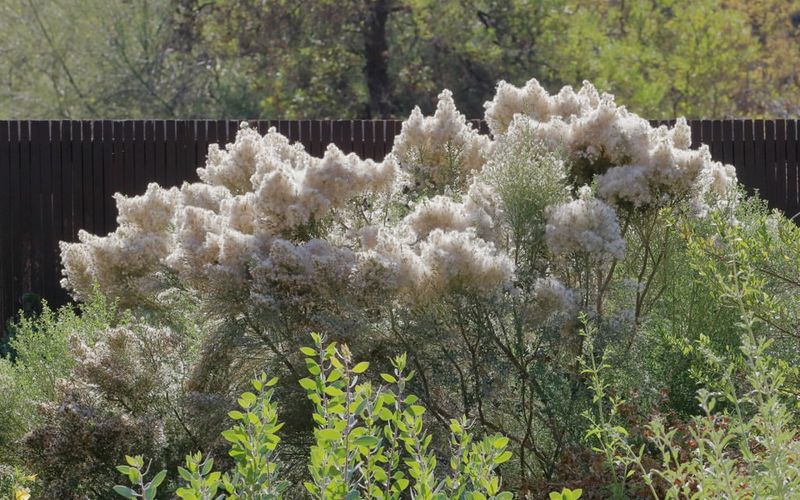
Gardeners dealing with slopes, erosion-prone areas, or large open spaces that need coverage without a lot of fuss have a reliable option in coyote brush.
Baccharis pilularis is one of California’s most adaptable native shrubs, growing naturally from coastal bluffs to inland foothills.
It spreads readily, roots deeply, and holds soil in place, which makes it especially practical in yards where erosion has been a problem.
The low-growing cultivar ‘Twin Peaks’ is widely used as a ground cover and stays under two feet tall while spreading several feet wide.
It is not a showy plant in the traditional sense, but its fine-textured green foliage provides a clean, natural look throughout the year.
Female plants produce fluffy white seed heads in fall that add a soft seasonal texture to the garden.
Coyote brush tolerates drought, coastal winds, and poor soils that would challenge most ornamental plants.
It works well in both coastal and inland California gardens, though it may need slightly more water in hotter inland areas during the first year of establishment.
Replacing invasive ground covers like ice plant or English ivy with coyote brush gives California slopes a native look while actively supporting native insects that use the plant for shelter and food.
5. California Fuchsia Adds Late Season Color
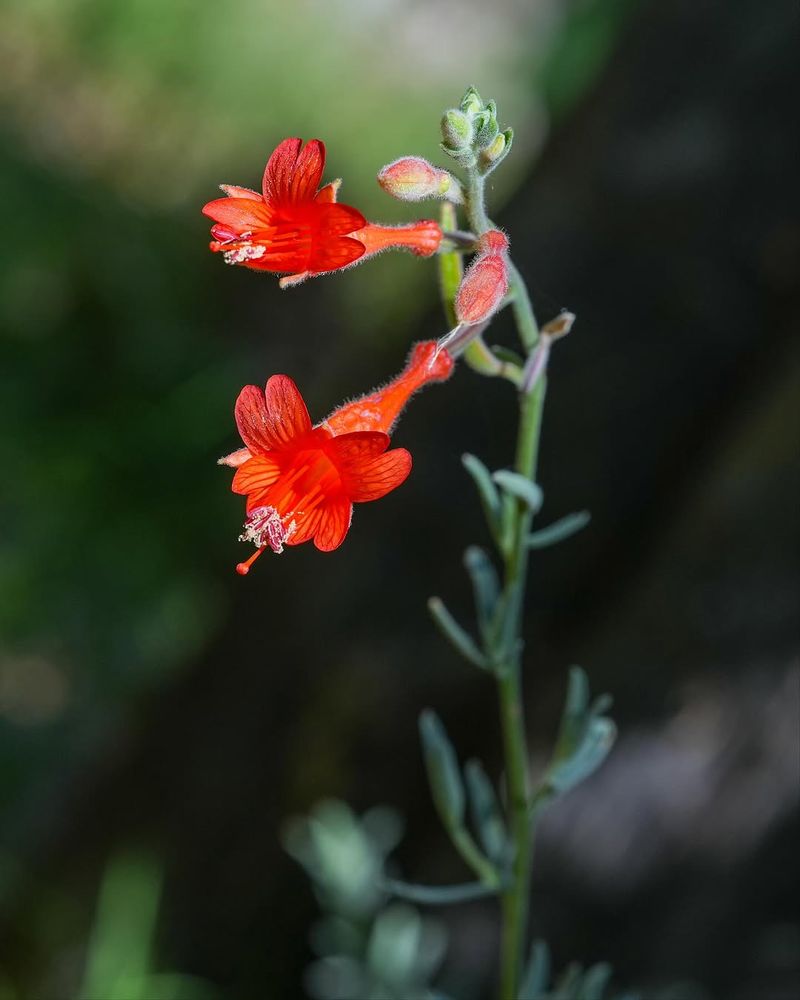
Most California gardens hit a color slump in late summer and fall when the heat has worn everything down and rain is still months away.
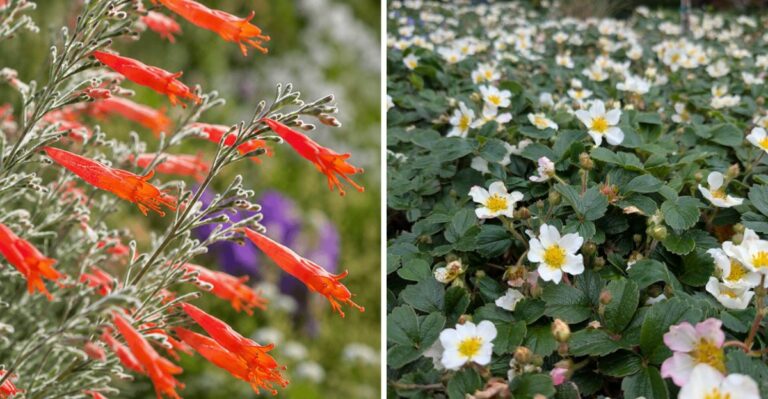
California Fuchsia, known botanically as Epilobium canum, is one of the few native plants that actually thrives in that gap, erupting in a blaze of tubular orange-red flowers precisely when the rest of the garden looks exhausted.
Hummingbirds are strongly drawn to those vivid blooms, and a well-placed California Fuchsia can turn a quiet corner of the yard into a regular hummingbird stop from late summer all the way into fall.
The silvery-green foliage is attractive even when the plant is not in bloom, giving it value across more than just its flowering window.
California Fuchsia spreads by underground runners, which means it can fill in an area fairly quickly. In smaller gardens, some light management helps keep it in bounds.
It grows well in full sun with excellent drainage and handles dry California summers without complaint once it has settled in.
Gardeners replacing non-native salvias or tropical fuchsias with this plant often find it outperforms those options in terms of drought resilience, while still delivering the late-season color that makes a garden feel alive heading into autumn.
6. Cleveland Sage Thrives In Heat And Dry Conditions
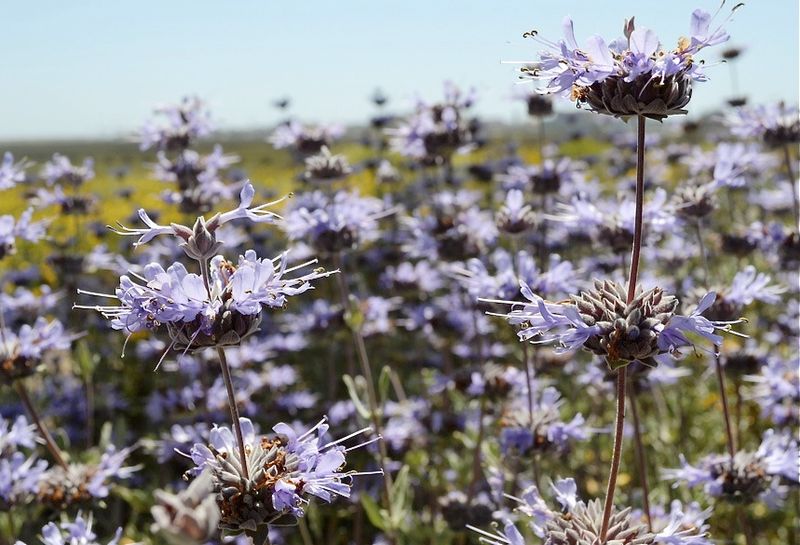
On a hot California afternoon, brushing against Cleveland Sage releases one of the most distinctive aromas in the native plant world.
Salvia clevelandii is native to Southern California and Baja California, and it has earned a devoted following among gardeners who want a plant that handles serious heat and drought while still looking polished and attracting pollinators in impressive numbers.
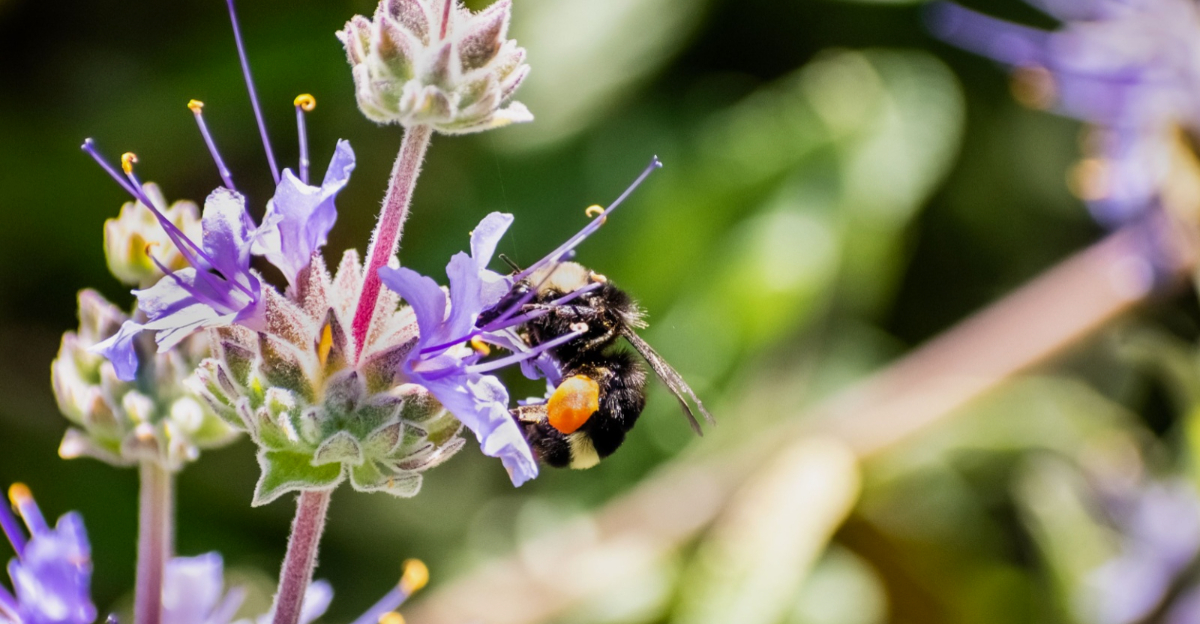
The flower spikes rise above the gray-green foliage in whorled rings of blue-purple blooms, typically appearing from late spring through early summer.
Bees are particularly enthusiastic visitors, and the plant is considered one of the better native options for supporting bee populations in Southern California gardens.
The aromatic leaves also tend to deter deer browsing, which is a notable benefit in foothill and rural communities across the state.
Cleveland Sage does best in full sun with fast-draining soil and minimal summer water once established. It can struggle in heavy clay or in spots that stay wet after irrigation, so placement matters.
Gardeners swapping out non-native ornamental sages or rosemary will find Cleveland Sage performs comparably in terms of structure and seasonal interest, while offering stronger regional ecological value.
A light trim after flowering helps keep the plant looking tidy and encourages fresh growth heading into the cooler months.
7. Deer Grass Adds Movement With Low Water Needs
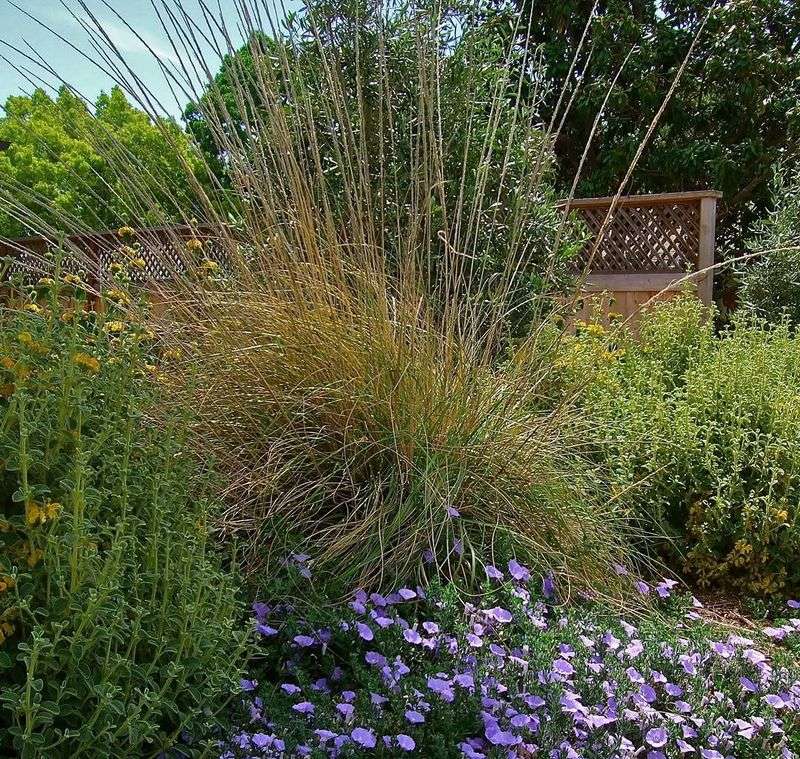
There is something quietly beautiful about a well-placed ornamental grass that moves with every breeze, and deer grass delivers that quality with very little ask from the gardener.
Muhlenbergia rigens is a native bunchgrass found naturally in California’s foothills, chaparral edges, and open woodlands.
In garden settings, it brings a soft, flowing texture that contrasts nicely with the broader leaves of native shrubs.
Deer grass forms dense clumps of narrow, arching green foliage and sends up slender, reddish-tan seed stalks in late summer and fall.
Those seed stalks can reach four feet or more in height, adding vertical interest during a season when many plants have gone quiet.
Birds sometimes visit to pick at the seeds, adding another small wildlife benefit to an already useful plant.
This grass handles full sun and dry conditions well once established, making it a natural fit for low-water California landscapes. It tolerates a range of soil types, including the rocky or sandy soils common in foothill gardens.
Gardeners replacing non-native fountain grass, which is considered invasive in many parts of California, with deer grass make a straightforward upgrade.
The two plants fill a similar visual role in the landscape, but deer grass stays put instead of spreading into surrounding wild areas.
8. California Buckwheat Supports Pollinators And Dry Gardens
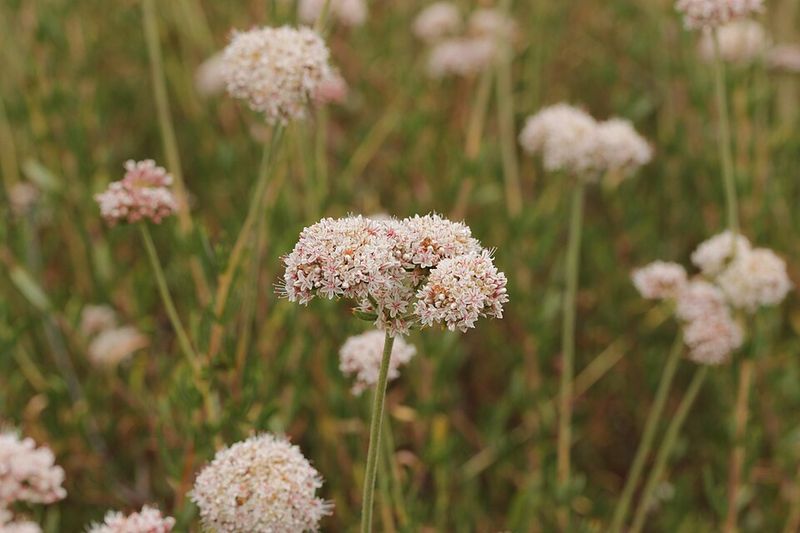
Spend an afternoon near a blooming California Buckwheat and you will quickly understand why pollinator gardeners love it so much.
Eriogonum fasciculatum hums with activity when it flowers, attracting an impressive variety of native bees, butterflies, and other beneficial insects.
It is widely considered one of the most ecologically valuable native plants a California gardener can choose.
The flowers start out white or pale pink and gradually shift to rusty red as they age and set seed. That color transition means the plant offers visual interest across a long season, from late spring through fall.
Even after the flowers fade, the dried seed heads hold their reddish-brown color and continue providing food for birds through the winter months.
California Buckwheat grows naturally across a wide range of habitats, from coastal scrub to dry inland slopes, and it adapts well to garden conditions that reflect those environments.
It prefers full sun and excellent drainage and can handle significant summer drought once its root system is established.
Gardeners replacing invasive plants like French broom or non-native ornamental grasses with California Buckwheat often notice a rapid increase in native bee activity around their yards.
Few plants offer such a clear, visible connection between a simple planting choice and a measurable boost in local biodiversity.
9. Sticky Monkey Flower Brings Color To Tough Spots
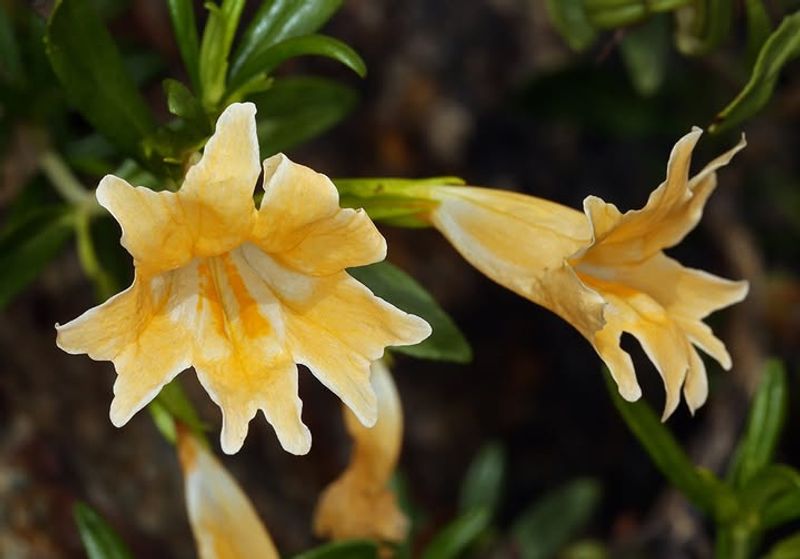
Bright orange flowers in a spot that gets baked by the California sun and rarely sees a hose? Sticky Monkey Flower, now classified as Diplacus aurantiacus, handles that scenario with ease.
This native shrub is named for the slightly sticky texture of its dark green leaves, and it grows naturally on dry slopes and rocky outcrops throughout much of California, which tells you a lot about its resilience.
The tubular orange flowers, which can also appear in shades of yellow, cream, or red depending on the population, are magnets for hummingbirds and native bees.
Flowering typically runs from spring through early summer, and plants that get some afternoon shade in hotter inland areas may continue blooming longer into the season.
The contrast between the vivid blooms and the deep green foliage is genuinely striking.
Sticky Monkey Flower grows well in full sun to partial shade and prefers well-drained soil with little to no summer water once established. It fits naturally into slopes, rock gardens, and dry border plantings where other ornamentals tend to struggle.
Gardeners replacing non-native plants like lantana or bougainvillea in tough, dry spots will find this native fills a similar visual role while actively supporting California’s native pollinators and wildlife rather than simply looking decorative.
10. Yarrow Spreads Easily In Low Water Landscapes
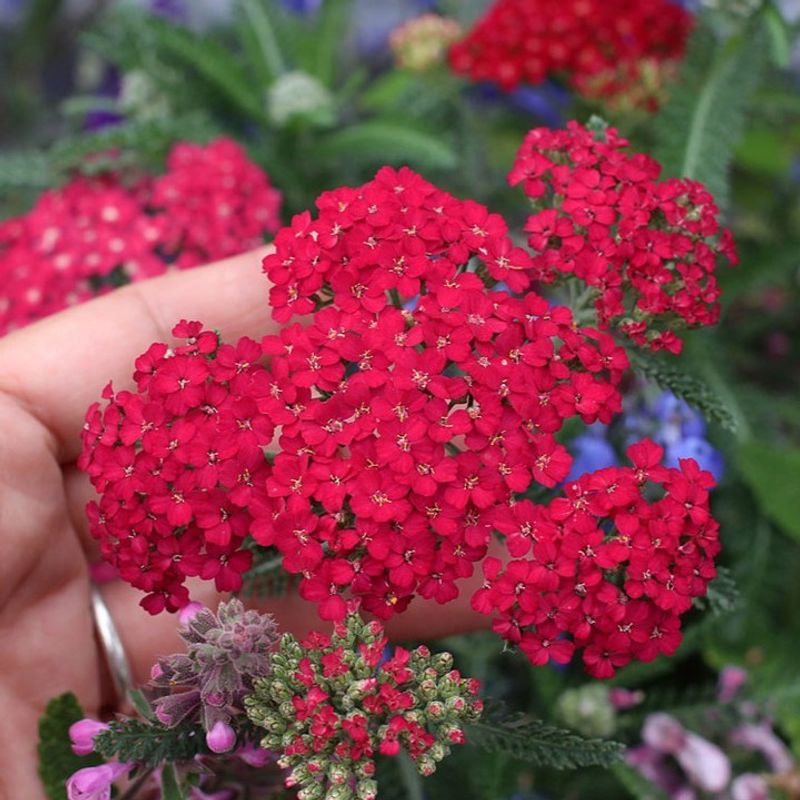
Yarrow has a reputation as one of the easiest native plants to establish in a California garden, and that reputation is well earned.
Achillea millefolium grows naturally across much of North America, including many parts of California, and it has been used by gardeners for generations thanks to its adaptability, flat-topped flower clusters, and willingness to spread into bare ground without much encouragement.
The flowers come in white, yellow, and various shades of pink depending on the cultivar, and they bloom from spring into summer.
Flat flower heads make excellent landing pads for small native bees, wasps, and beneficial insects that help keep garden pest populations in check naturally.
Cutting the spent flower stalks back after the first bloom often encourages a second flush of flowers later in the season.
Yarrow handles full sun and dry conditions well once it is settled in, and it spreads gradually through underground stems to fill gaps in a low-water garden.
In some situations, that spreading habit requires a little management to prevent it from moving into spaces where other plants are growing.
Gardeners replacing invasive ground covers or bare mulched areas with yarrow gain a plant that actively builds soil health, supports pollinators, and brings seasonal color without demanding the irrigation that most non-native flowering plants require in California’s dry climate.