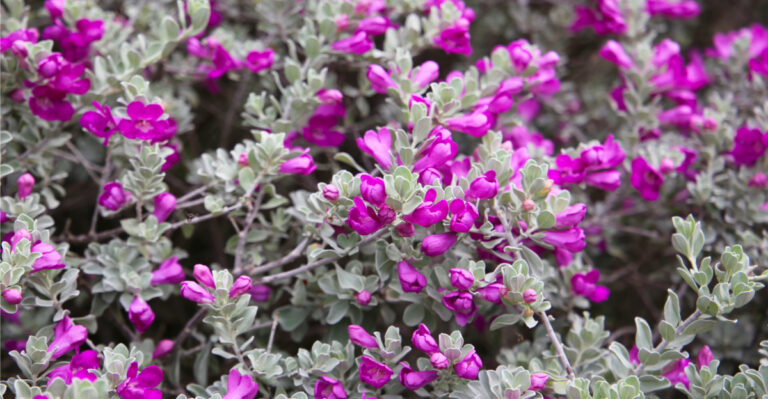
California Groundcovers That Choke Out Weeds On Slopes And Hills
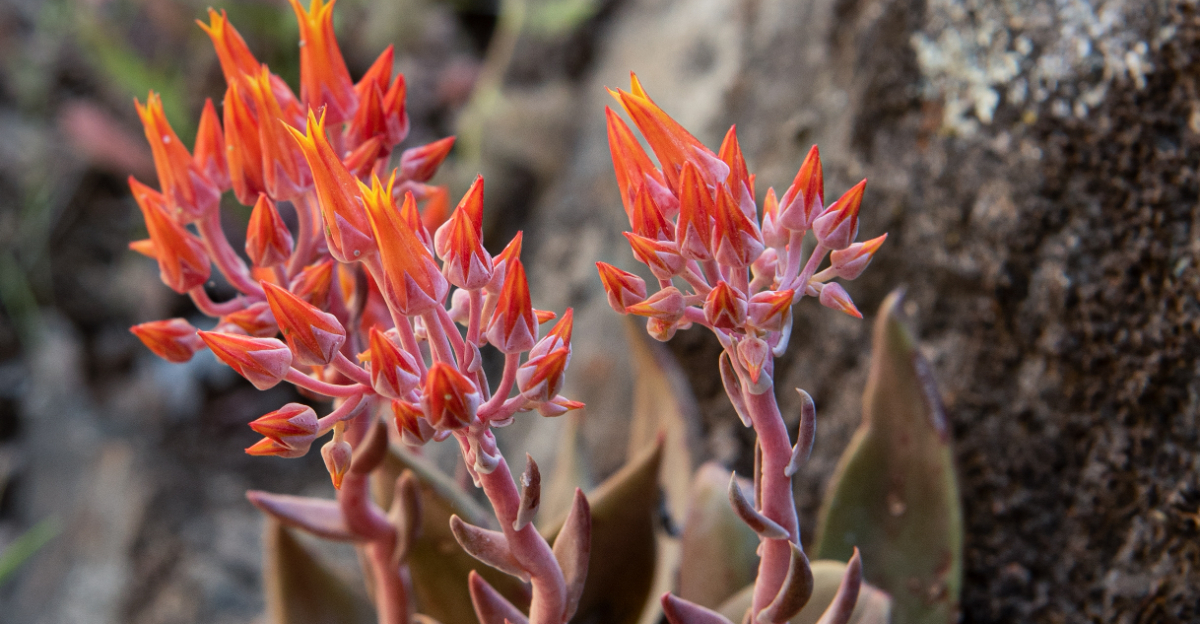
Slopes and hills are some of the hardest spots to manage in a California yard. Mowing is difficult, erosion is a real concern, and weeds take over fast because nothing is there to stop them.
Bare hillsides also lose moisture quickly, which makes the weed problem even worse over time. The smartest solution is not more herbicide or more mulch.
It is planting something that spreads on its own and does not give weeds room to move in. California has a strong lineup of groundcovers built exactly for this kind of terrain.
They root deeply enough to hold soil in place, spread wide enough to block sunlight from reaching weed seeds, and once they are established, they need very little from you. The right groundcover turns a high maintenance slope into one of the lowest maintenance spots in your entire yard.
1. Redwood Sorrel
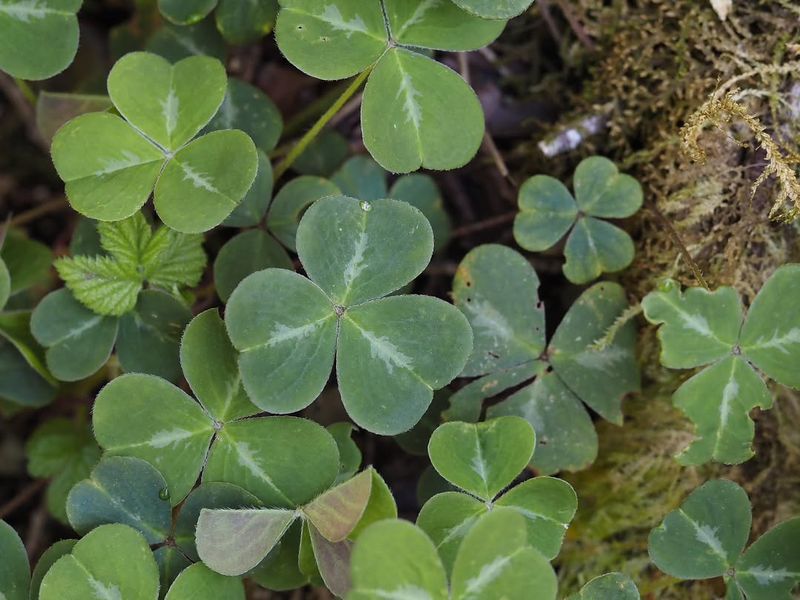
Few plants handle deep shade as gracefully as Redwood Sorrel. Native to the forests of California and the Pacific Northwest, this low-growing beauty thrives under tree canopies where most other groundcovers simply refuse to grow.
Its clover-shaped leaves fold downward at night and in bright light, which is a fun little quirk that makes it easy to identify.
On slopes and hills, Redwood Sorrel spreads steadily through underground rhizomes, forming a thick, weed-blocking carpet that is hard to beat. Once established, it fills in gaps quickly and leaves very little room for weeds to sneak through.
It works best in shaded or partially shaded areas, making it a perfect partner for large trees or north-facing hillsides.
Watering needs are low once the plant gets settled in. During the first season, give it some extra moisture to help the roots get established.
After that, it can often survive on rainfall alone in many parts of the state.
The plant grows only about six inches tall, so it stays neat and tidy without much pruning. Pale pink or white flowers appear in spring and add a delicate touch to the forest floor look.
Deer tend to leave it alone, which is a big bonus in areas where deer browsing is a problem.
For anyone dealing with a shaded slope covered in weeds, Redwood Sorrel is one of the most reliable and low-maintenance solutions available. It is truly a hardworking plant with a quiet, beautiful presence.
2. Wild Ginger
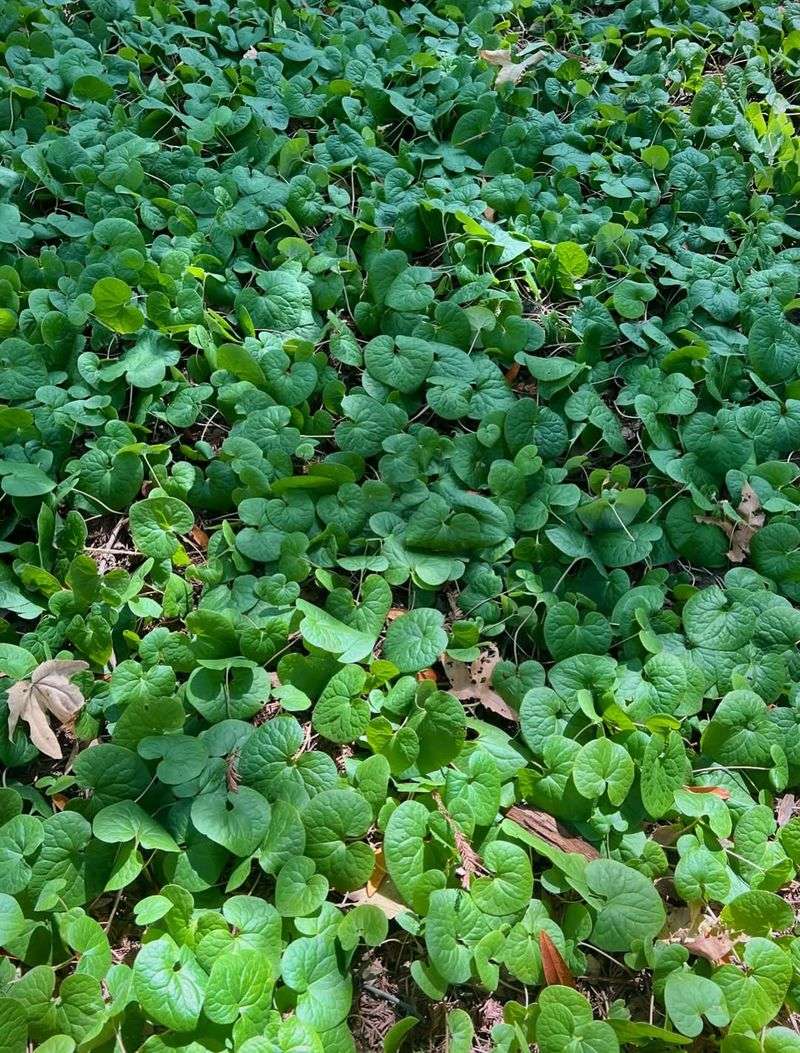
There is something almost prehistoric about Wild Ginger. Its large, glossy, heart-shaped leaves grow so densely that weeds barely stand a chance underneath them.
Native to shaded, moist habitats, this plant has been quietly holding hillsides together long before anyone thought to plant it in a garden.
Wild Ginger spreads slowly but steadily through underground rhizomes. Patience is key with this one.
During the first year or two, growth may seem slow, but once it gets established, it forms a lush, nearly impenetrable mat that smothers weed seeds before they can sprout. The wait is absolutely worth it.
One of the most interesting things about Wild Ginger is its flower. Small, brownish-purple blooms hide beneath the leaves close to the ground in spring.
Most people never even notice them, but pollinators and curious gardeners who look closely are in for a treat.
This groundcover prefers moist, well-drained soil and partial to full shade. It works beautifully under oak trees, along shaded pathways, or on north-facing slopes where other plants struggle.
Regular watering during dry months helps it stay lush and healthy.
Wild Ginger also has a pleasant spicy scent when the leaves are crushed, which adds a sensory bonus to the garden. While it is not the same species used in cooking, it shares a family resemblance with culinary ginger.
For shaded slopes, it is one of the most charming and functional native groundcovers.
3. Threeleaf Foamflower
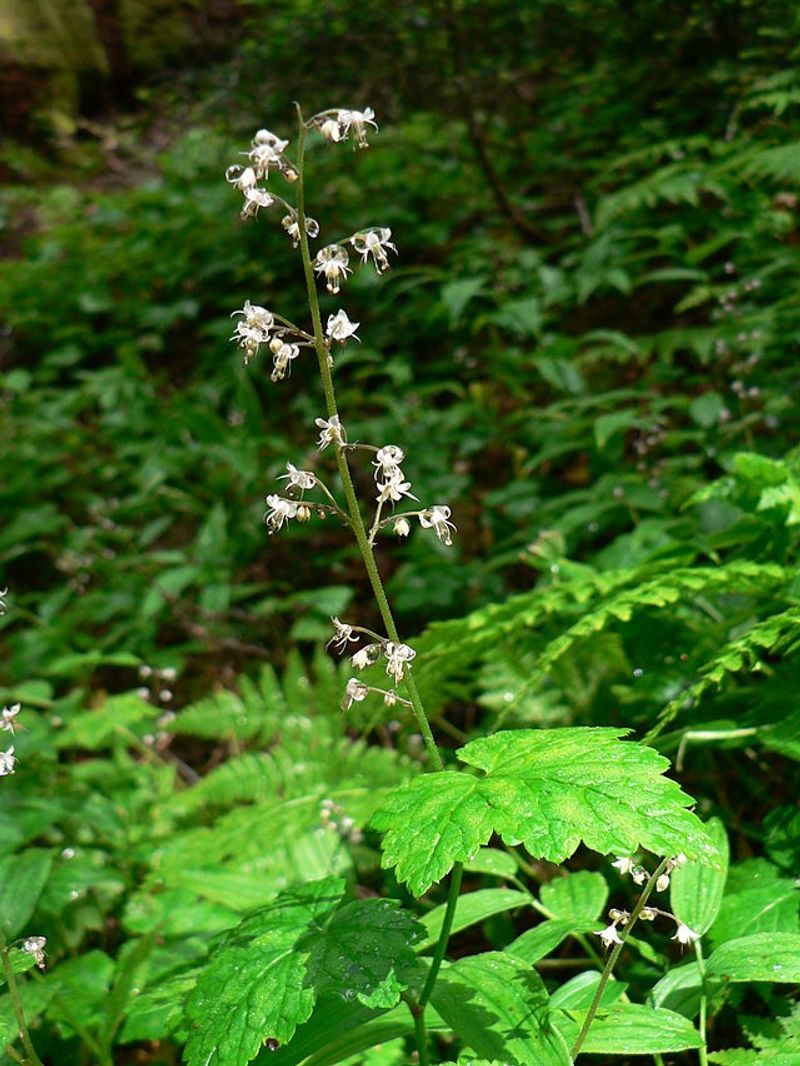
Threeleaf Foamflower earns its name in the most delightful way. Each spring, it sends up slender stems topped with frothy clusters of tiny white flowers that look like little puffs of foam floating above the foliage.
It is one of those plants that makes a slope look like a carefully designed woodland garden without much effort at all.
Threeleaf Foamflower spreads through stolons, which are above-ground runners similar to those of strawberry plants. Over time, it weaves together into a thick, weed-suppressing mat that covers bare soil effectively.
On slopes, this spreading habit is especially useful because it fills in bare spots that could otherwise become launching pads for weeds.
The leaves are attractive even when the plant is not blooming. They are lobed and slightly maple-shaped, with a rich green color that holds up well through most of the year.
In some conditions, the leaves develop reddish or bronze tones that add extra visual interest.
Threeleaf Foamflower grows best in partial to full shade with consistent moisture. It pairs beautifully with Redwood Sorrel and Wild Ginger for a layered, naturalistic planting on a wooded hillside.
Planting all three together creates a diverse groundcover community that is very effective at blocking weeds.
Hummingbirds and native bees visit the flowers regularly, making this plant a strong supporter of local wildlife.
4. Broadleaf Stonecrop
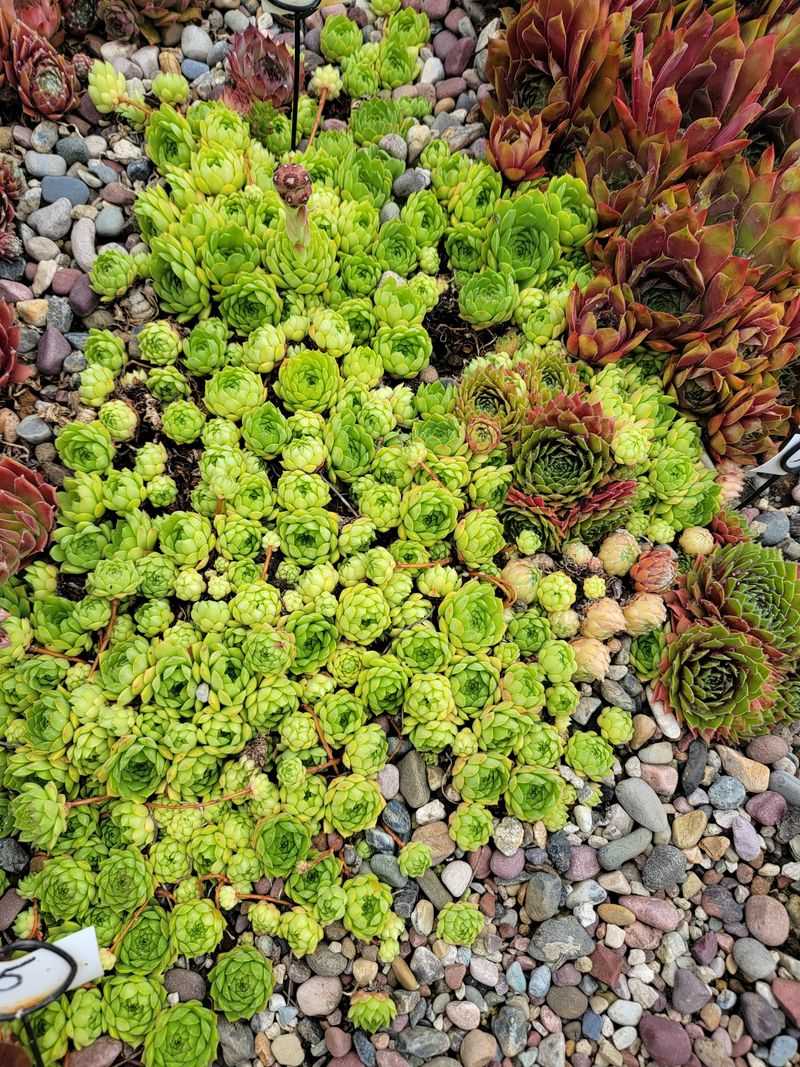
Tough as nails and surprisingly pretty, Broadleaf Stonecrop is a native succulent that thrives where most plants would struggle. Rocky outcrops, dry slopes, and sun-baked hillsides are where this plant feels right at home.
Its thick, fleshy leaves store water, allowing it to push through long dry spells without missing a beat.
Bright yellow flowers appear in late spring and early summer, creating a cheerful burst of color across the slope. The blooms attract native bees and butterflies, turning what could be a bare, weedy hillside into a buzzing little ecosystem.
After flowering, the plant stays low and green, continuing to suppress weeds through the summer.
Broadleaf Stonecrop spreads gradually to form low mats that cling tightly to the soil. On steep slopes, this tight growth habit is extremely valuable because it helps hold the ground in place during heavy rains.
The shallow but dense root system works together with the mat-forming foliage to reduce erosion significantly.
Full sun and well-drained, even rocky soil are what this plant loves most. Overwatering is the one thing to avoid, as soggy soil can cause problems for succulents.
In a typical garden, natural rainfall is often enough to keep it healthy once it gets established.
Broadleaf Stonecrop is also deer-resistant, which makes it an even smarter choice for slopes in rural or suburban areas where deer roam freely. It is a compact, no-fuss native that punches well above its weight when it comes to weed suppression and erosion control.
5. Oregon Stonecrop
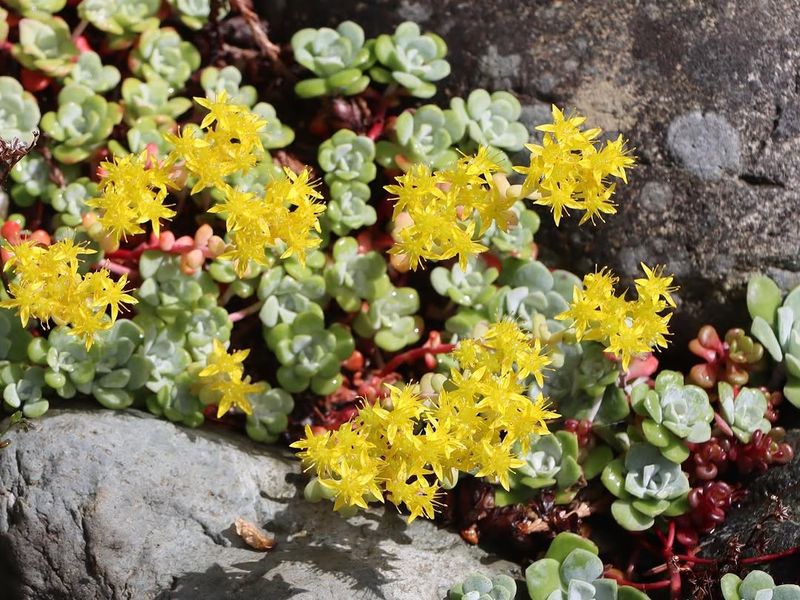
Among native succulents, Oregon Stonecrop stands out for its striking blue-green rosettes and its remarkable ability to spread across dry, rocky slopes without any fuss. It is a close relative of Broadleaf Stonecrop but tends to have a slightly more compact, tidy appearance that works well in both wild and cultivated garden settings.
Star-shaped yellow flowers rise above the foliage in late spring, drawing in pollinators and adding a warm, sunny energy to the hillside. The contrast between the cool blue-green leaves and the golden flowers is visually stunning.
Even without the blooms, the rosette pattern of the leaves gives the planting a structured, almost geometric look.
On slopes, Oregon Stonecrop is particularly effective at forming dense patches that crowd out annual weeds. Because it is a succulent, it stays evergreen through dry summers without needing supplemental irrigation once established.
That drought tolerance is one of its most valuable traits for low-maintenance hillside plantings.
Well-drained soil and full sun are the main requirements. Sandy, gravelly, or rocky soils are actually preferred, making this plant an ideal choice for hillsides that are too dry or rocky for other groundcovers.
It does not compete well in heavy clay, so amending the soil with sand or gravel before planting can help it thrive.
Deer and rabbits tend to avoid it, and it rarely needs pruning or fertilizing. For gardeners who want a nearly self-sufficient groundcover that handles tough slope conditions with ease, Oregon Stonecrop is a genuinely excellent option.
6. Roseflower Stonecrop
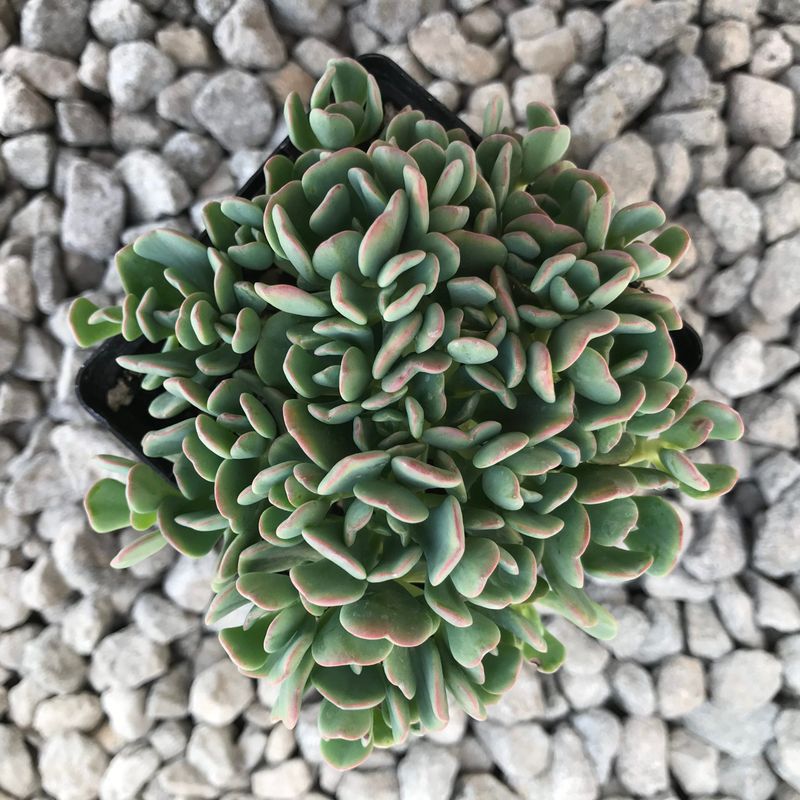
Not every groundcover gets to be beautiful and bulletproof at the same time, but Roseflower Stonecrop manages both with ease. This native succulent produces lovely pink to rose-colored flowers that bloom in summer, long after many other native plants have finished their show.
That late-season color is a rare and welcome gift on a hillside planting.
The fleshy, rosette-shaped leaves are similar to those of other stonecrops but have a slightly warmer green tone that complements the pink flowers beautifully. Like its stonecrop relatives, this plant stores water in its leaves, which gives it a serious edge during hot, dry summers.
Established plants can go weeks without water and still look great.
Roseflower Stonecrop spreads to form a low, weed-suppressing mat that clings closely to the ground. On steep or rocky hillsides, this tight growth keeps soil in place and prevents bare patches where weeds love to move in.
The plant is particularly useful in areas that are too steep or dry for regular maintenance.
Full sun and excellent drainage are non-negotiable for this plant. It performs best in sandy or rocky soil and will struggle in areas that stay wet.
Planting it on a south-facing slope with fast-draining soil gives it the best possible conditions to thrive and spread.
Birds and native bees are attracted to the flowers, adding ecological value to what is already a very practical plant.
7. Sierra Stonecrop
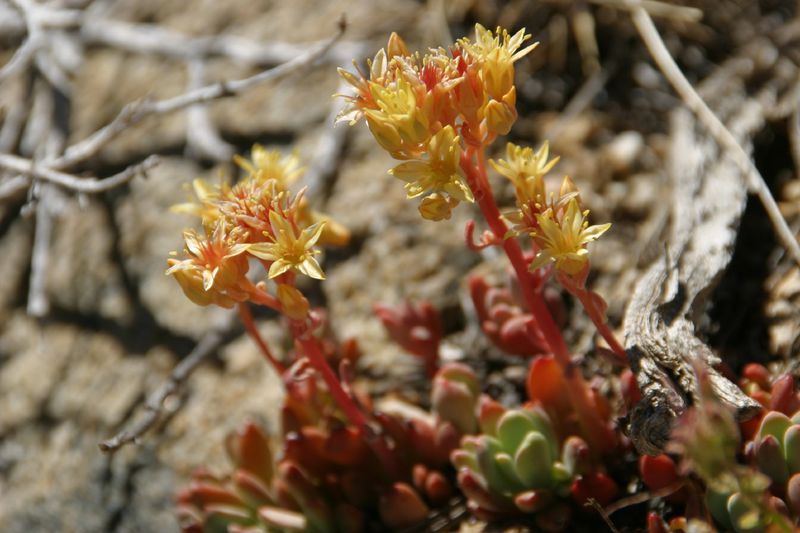
High-elevation gardening has its own set of challenges, and Sierra Stonecrop was practically built to meet them. Native to the rocky, exposed slopes of the Sierra Nevada mountain range, this tough little succulent handles temperature swings, poor soil, and intense sun better than almost anything else you can plant on a hillside.
Clusters of small yellow flowers appear in summer, brightening up rocky terrain that might otherwise look barren. The flowers attract native pollinators, including bumblebees that are especially active at higher elevations.
After the blooms fade, the compact succulent foliage continues to cover the ground and block weed growth through the rest of the growing season.
What makes Sierra Stonecrop particularly impressive is its ability to root in nearly bare rock. It often grows in shallow soil pockets on cliff faces and boulder fields, which means it can absolutely handle the kind of thin, rocky soil that frustrates most gardeners.
Its roots grip the ground tightly, making it a reliable erosion-control plant on steep or unstable slopes.
In garden settings at lower elevations, Sierra Stonecrop still performs well as long as drainage is excellent and the site gets full sun. It does not like heat combined with moisture, so avoid planting it in low spots where water collects.
A raised bed or rocky slope is ideal.
This plant is virtually maintenance-free once established. No pruning, no fertilizing, and minimal watering are needed.
For rugged, high-sun slopes where other plants fail, Sierra Stonecrop is a dependable and underappreciated native groundcover.
8. Coast Dudleya
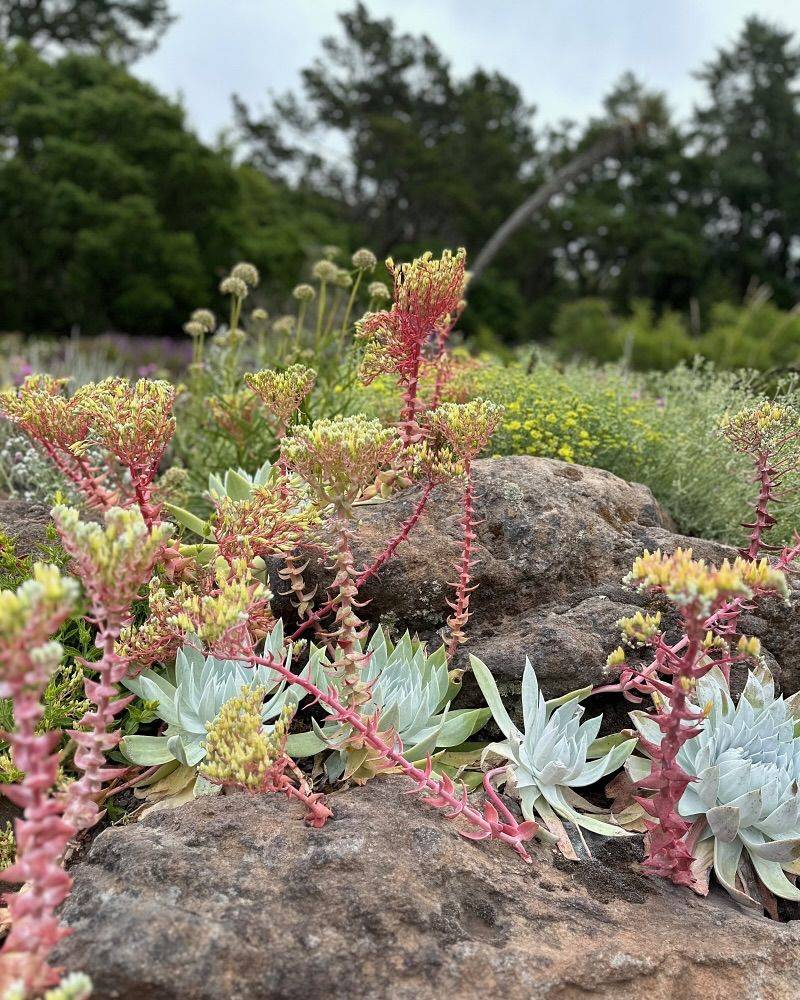
Coast Dudleya is one of the most iconic native succulents, and for good reason. Its chalky white or silvery rosettes are stunning in person, and they have a sculptural quality that makes even a simple slope look like a designed garden.
Found naturally on coastal bluffs and rocky hillsides from Baja California to central California, this plant is perfectly adapted to the state’s dry, sun-drenched conditions.
Red to orange tubular flowers appear on tall stalks in spring and early summer, drawing hummingbirds with impressive regularity. Watching hummingbirds hover over a slope full of blooming Dudleya is one of those simple garden joys that never gets old.
The flowers are especially vibrant against the pale foliage, creating a striking visual contrast.
As a groundcover on slopes, Coast Dudleya works best when planted in masses. Individual plants form tight rosettes that slowly offset and multiply over time, gradually filling in the hillside.
The dense clustering of rosettes effectively shades the soil and prevents weed seeds from germinating.
This plant is extremely drought-tolerant and actually prefers to stay dry during summer. Overwatering is the most common mistake gardeners make with Dudleya.
In a typical coastal climate, rainfall alone is usually enough to keep it healthy and happy.
Coast Dudleya is also a protected plant, which means it is important to source it from reputable native plant nurseries rather than collecting it from the wild. When planted responsibly, it is one of the most beautiful and ecologically valuable groundcovers available for slopes.
9. Canyon Liveforever
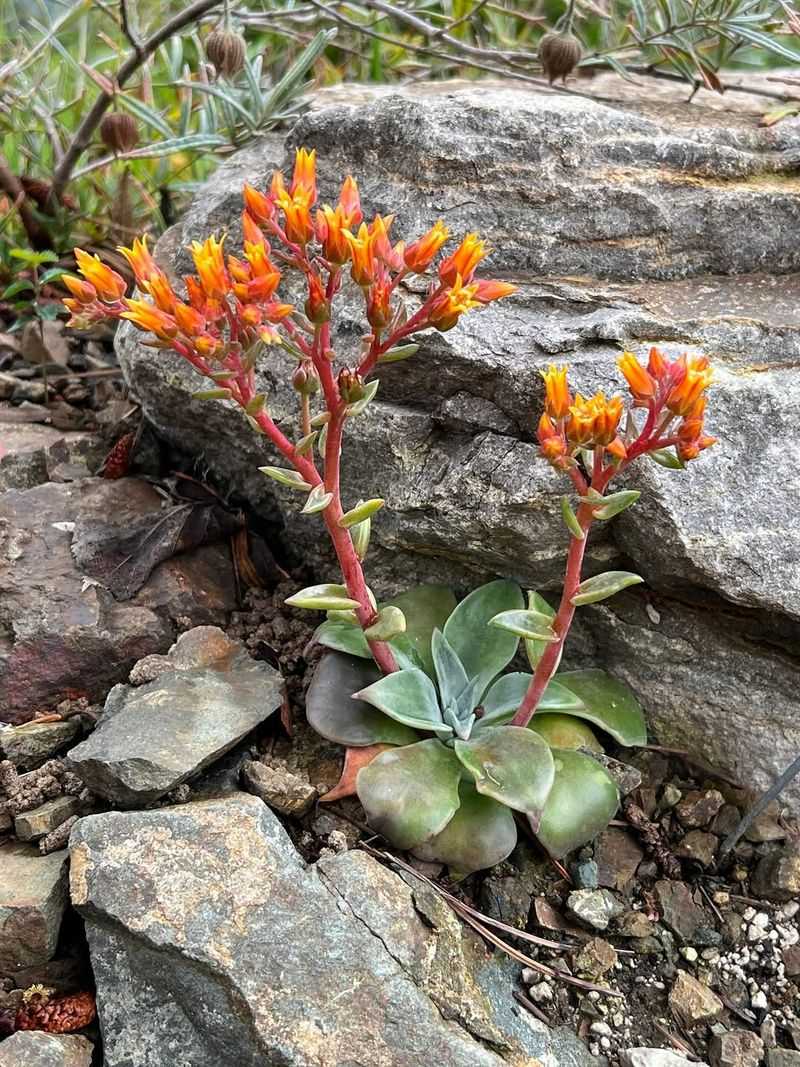
With a name like Canyon Liveforever, you already know this plant means business. Dudleya cymosa, as it is known scientifically, grows naturally on dry canyon walls and rocky slopes throughout California.
It clings to almost vertical surfaces with ease, which tells you everything you need to know about its toughness and root strength.
Brilliant red to orange flowers bloom in spring, erupting from the center of each rosette on tall, arching stems. The color is intense and eye-catching, especially when dozens of plants bloom together across a hillside.
Hummingbirds are absolutely wild about these flowers, and a slope planted with Canyon Liveforever becomes a reliable hummingbird feeding station every spring.
The rosettes themselves are green and compact, staying low to the ground between bloom cycles. Over time, each plant produces offsets that cluster around the base, slowly expanding the mat and increasing weed suppression.
The more densely planted the slope, the faster it fills in and the more effective it becomes at blocking weeds.
Canyon Liveforever thrives in full sun to partial shade with excellent drainage. Rocky or sandy soil is preferred, and summer drought is not a problem at all.
In fact, summer dryness is part of its natural cycle, and extra watering during hot months can actually cause issues.
Sourcing this plant from a native plant nursery ensures you get locally adapted stock that will perform best in your specific region. For rugged, sun-exposed slopes where beauty and resilience both matter, Canyon Liveforever is a truly exceptional choice.