California Plants That Turn Any Yard Into A Pollinator Haven
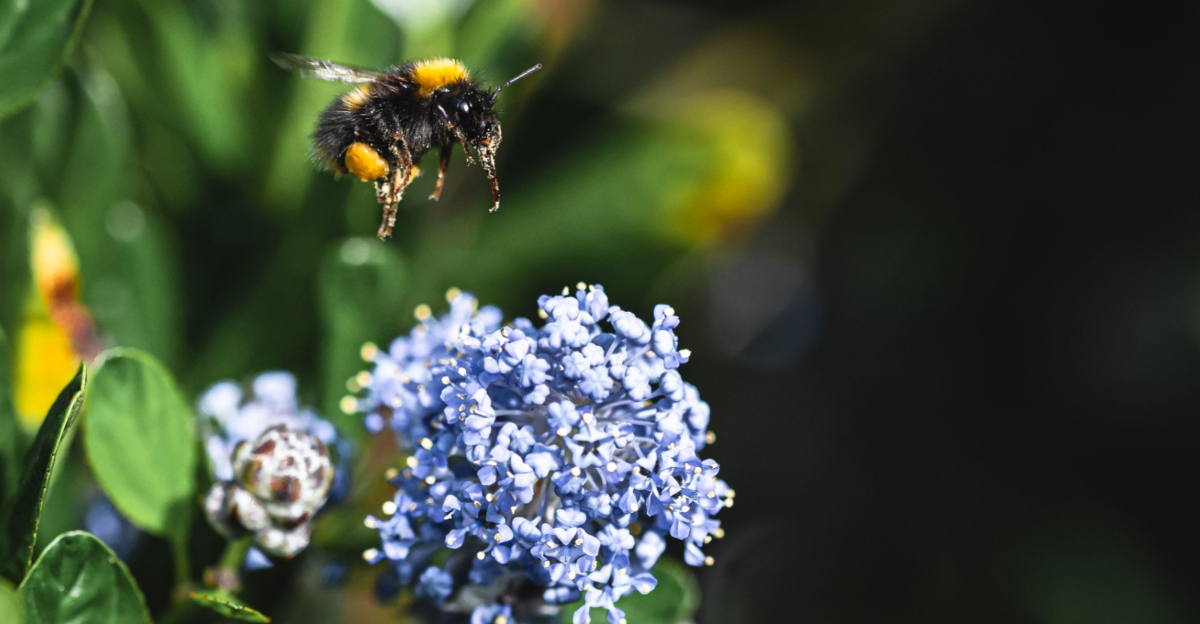
Step into a California garden this spring and you will notice a quiet, buzzing energy even before the rest of the yard wakes up.
Native bees dance between early buds, hummingbirds stake their claim on nectar-rich blooms, and the first butterflies of the season are taking flight.
But what is the secret to turning your yard into a sanctuary that pulses with life?
It starts with planting the specific natives that feed these pollinators exactly when they need it most.
From coastal slopes to inland foothills, our unique climate makes California the perfect canvas for a thriving wildlife haven.
By choosing the right bloomers, you can turn any corner of your space into a vital, five-star rest stop.
Ready to transform your landscape into a buzzing masterpiece? Here are eight native powerhouses to get you started.
1. California Poppy Brings Orange Blooms And Nectar
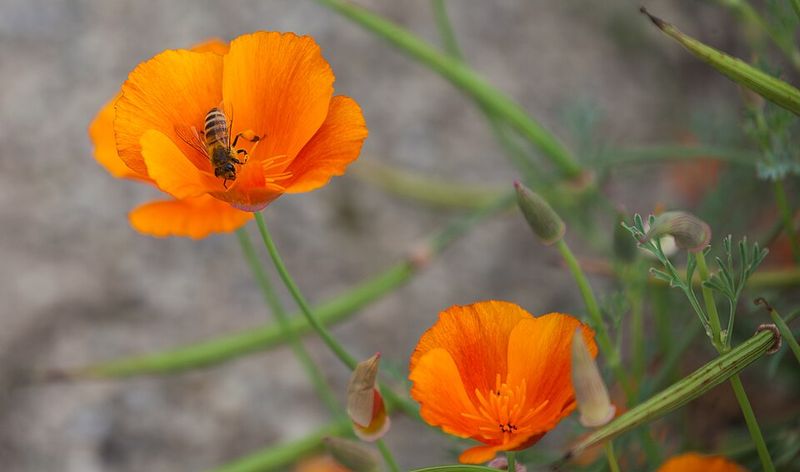
Few wildflowers capture the spirit of California quite like the state flower in full bloom. The California poppy (Eschscholzia californica) opens its silky orange cups on warm spring mornings, inviting native bees to collect pollen from its bright, accessible blooms.
Honeybees and native sweat bees are frequent visitors, drawn in by the generous supply of pollen packed inside each flower.
One of its most appealing traits for California gardeners is how little it asks in return. It thrives in poor, sandy, or rocky soils where other plants struggle, and once established, it needs very little supplemental water.
Full sun is essential, making it an ideal candidate for dry, exposed slopes or sunny borders throughout California’s inland valleys and coastal foothills.
Scatter seeds in fall and let winter rains do the work. By late winter and into spring, patches of orange will spread across bare soil, creating a naturalistic carpet that pollinators visit repeatedly.
California poppies self-sow readily, so a single planting often returns year after year without much effort.
Combine them with blue phacelia or purple lupine for a layered, multicolored bed that extends the bloom season and offers pollinators a broader range of foraging options throughout the garden.
2. Ceanothus Adds Blue Flowers And Busy Bees
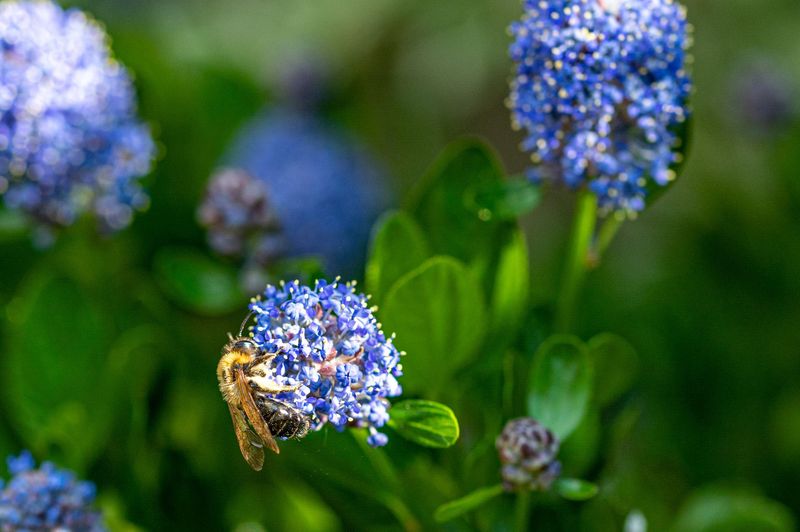
Walk past a blooming ceanothus in spring and the hum of bees is almost impossible to miss.
Commonly called California lilac, this native shrub produces dense clusters of small blue, violet, or white flowers that overflow with nectar and pollen, drawing in bumble bees, native mining bees, and honeybees in impressive numbers.
The floral display typically peaks from late winter through mid-spring, providing crucial early-season forage when many other plants have yet to bloom.
Ceanothus is one of the most ecologically valuable shrubs available to California gardeners. It fixes nitrogen in the soil, supports dozens of native bee species, and provides shelter for beneficial insects within its branching structure.
Most species prefer full sun and well-drained soils, making them well-suited to California’s Mediterranean climate conditions where summer drought is common.
Once established, ceanothus requires minimal irrigation and actually prefers dry summers, so avoid overwatering after the first year or two.
Use it as a backdrop in a pollinator border, a slope stabilizer on dry hillsides, or a freestanding specimen shrub in a native garden.
Pairing it with California buckwheat or sticky monkeyflower extends blooming across the seasons. Dozens of ceanothus species and cultivars exist, so California gardeners can find one suited to nearly any yard size or style.
3. California Fuchsia Offers Red Flowers For Hummingbirds
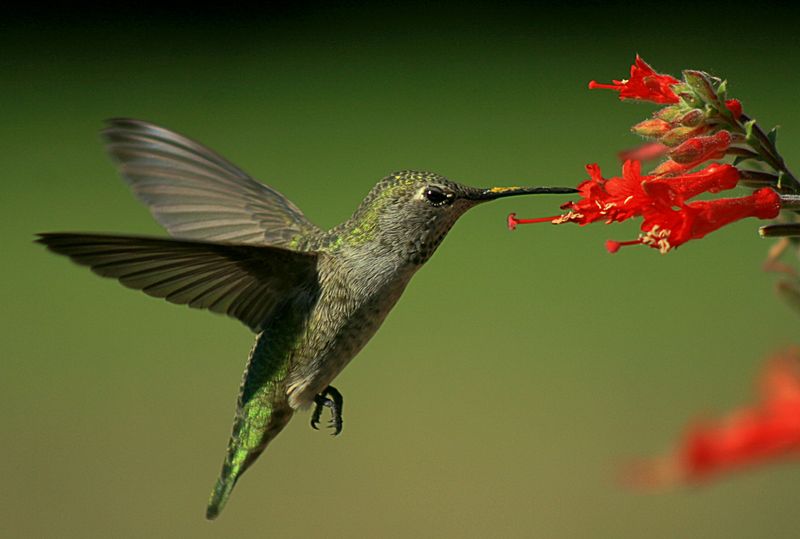
Late summer in California can feel like a quiet time for pollinators, but a planting of California fuchsia changes that entirely.
Epilobium canum bursts into vivid scarlet bloom just as many other native plants are winding down, making it one of the most valuable late-season nectar sources in any California pollinator garden.
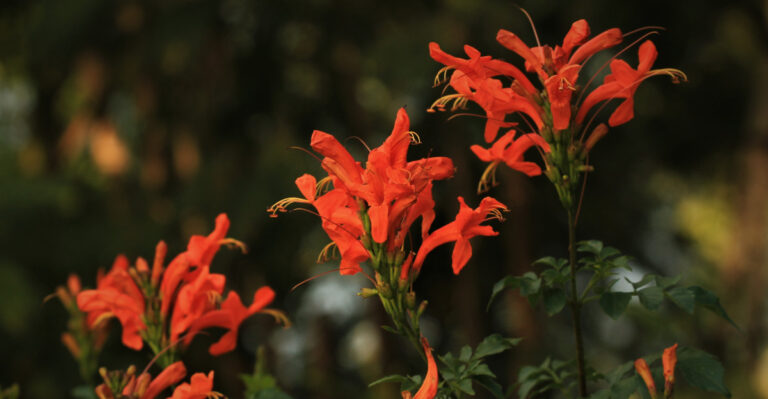
Hummingbirds are its most devoted visitors, and the tubular red flowers are shaped almost perfectly to accommodate a hummingbird’s long bill.
Beyond hummingbirds, native bumblebees and sphinx moths also visit the blooms, adding movement and variety to the late-season garden.
The plant spreads by rhizomes and forms low, spreading mats of silvery-gray foliage that look attractive even when not in bloom.
It handles full sun and dry, rocky, or gravelly soils exceptionally well, making it a natural fit for California’s hot inland gardens and dry coastal slopes.
Established plants need very little water during summer, which aligns well with California’s drought patterns and water conservation goals. Cut stems back in late winter to encourage fresh growth and a fuller bloom display the following season.
Use California fuchsia along sunny borders, in rock gardens, or cascading over retaining walls where its spreading habit can be appreciated.
Pairing it with black sage or yarrow creates a layered planting that supports pollinators from spring all the way through the first autumn rains.
4. Black Sage Provides Purple Flowers And Nectar
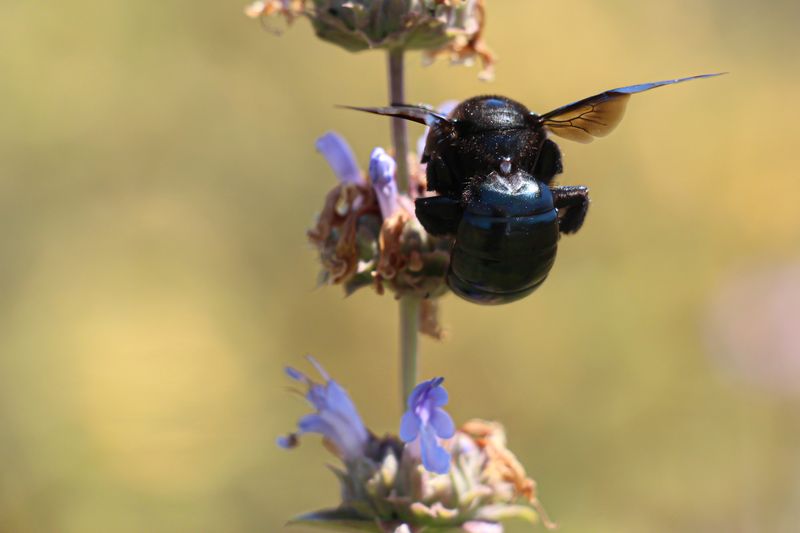
The fragrance alone is enough to make black sage (Salvia mellifera) a standout in any California native garden.
Rub a leaf between your fingers and a sharp, resinous scent fills the air, a quality that has made this chaparral native beloved by gardeners and ecologically important to dozens of bee species.
In spring, whorls of pale lavender to purple flowers rise on tall spikes, attracting native bumblebees, digger bees, and honeybees that return to the blooms day after day.
Black sage is one of the most important honey plants in Southern California, historically valued by beekeepers for the high-quality nectar it produces.
Its ecological reach extends beyond bees as well, with small butterflies and beneficial flies visiting the flowers regularly.
It grows best in full sun with excellent drainage, thriving in the rocky, dry hillside conditions common across much of California.
Once established, black sage is highly drought-tolerant and fits naturally into low-water California landscapes. Avoid summer irrigation once roots are well set, since excess moisture can shorten the plant’s lifespan.
Prune lightly after flowering to maintain a tidy shape and encourage fresh growth for the following season.
In a layered pollinator planting, black sage pairs beautifully with ceanothus, California buckwheat, and sticky monkeyflower, creating a multi-shrub habitat that provides food and shelter for pollinators across a long stretch of the California bloom calendar.
5. Sticky Monkeyflower Shows Orange Flowers For Pollinators
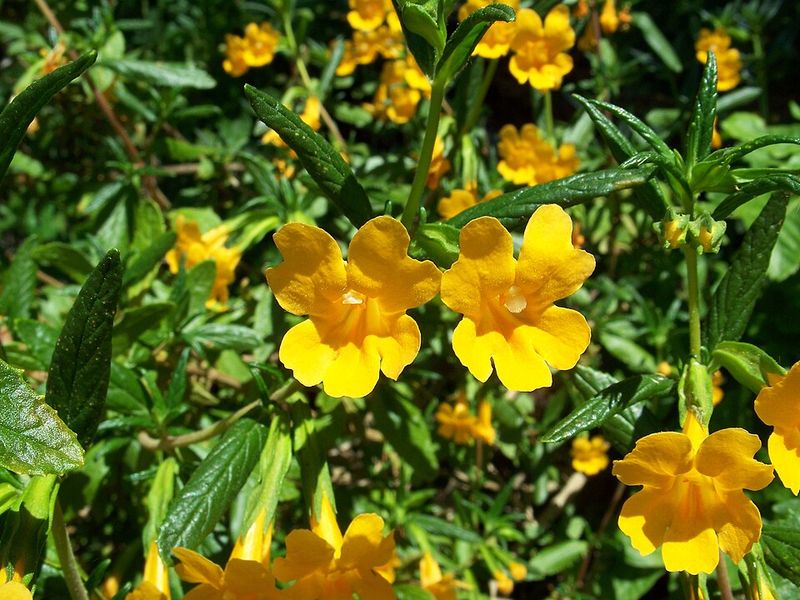
Something about the cheerful, apricot-orange blooms of sticky monkeyflower (Diplacus aurantiacus) makes a California garden feel genuinely alive.
This evergreen shrub blooms heavily from spring through summer, sometimes extending into early fall depending on the California microclimate and available moisture.
The tubular flowers are well-shaped for hummingbirds, which probe them regularly for nectar, while native bees collect both pollen and nectar from the open blooms.
Sticky monkeyflower grows naturally on dry slopes, roadsides, and chaparral edges throughout much of California, which tells you a lot about its preferences.
It thrives in full sun to light shade, tolerates a wide range of well-drained soils, and handles California’s dry summers with minimal supplemental water once established.
The sticky, resinous leaves are part of what makes it so drought-adapted, reducing water loss during hot, dry spells.
In a garden setting, it works well as a medium-height shrub in a pollinator border, on a dry slope, or as part of a layered native planting alongside sages, buckwheat, and California poppies.
Flower color can range from pale yellow to deep orange or brick red depending on the variety, giving gardeners options for color coordination.
Cutting plants back by about a third after the main bloom flush often encourages a second wave of flowers, extending the nectar supply for pollinators well into summer and supporting a more consistent foraging habitat across the season.
6. California Buckwheat Adds Pink Flowers And Long-Lasting Nectar
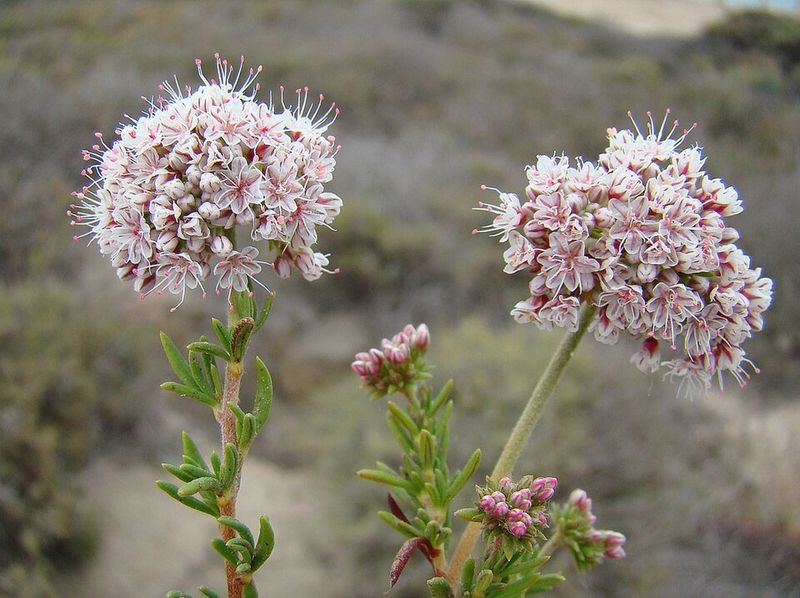
If there is one plant that earns its place in a California pollinator garden through sheer reliability, it is California buckwheat (Eriogonum fasciculatum).
Bloom clusters open as white to soft pink in late spring, then slowly deepen to rusty red as the season progresses, providing visual interest and nectar across a remarkably long window.
Native bees, honeybees, skippers, and small butterflies visit the flowers repeatedly from late spring well into fall.
California buckwheat is also an important larval host plant for several native butterfly species, including the Acmon blue and the square-spotted blue, adding another layer of ecological value beyond nectar production.
Its low, spreading form and fine-textured foliage make it an attractive ground-level element in layered native plantings, where it fills space between taller shrubs and provides foraging habitat at multiple heights.
Adaptable and forgiving, it tolerates poor, sandy, or rocky soils and thrives in full sun with very little water once established, fitting comfortably into California’s water-wise gardening approach.
Avoid clay-heavy soils with poor drainage, which can stress the plant over time.
Leave the dried flower heads in place through fall and winter, as they provide seed for birds and add warm russet tones to the garden.
Pair it with black sage, California fuchsia, and ceanothus in a layered design that gives pollinators something to visit from early spring all the way through the cooler months of the California growing season.
7. Redbud Brings Magenta Flowers And Early Bees
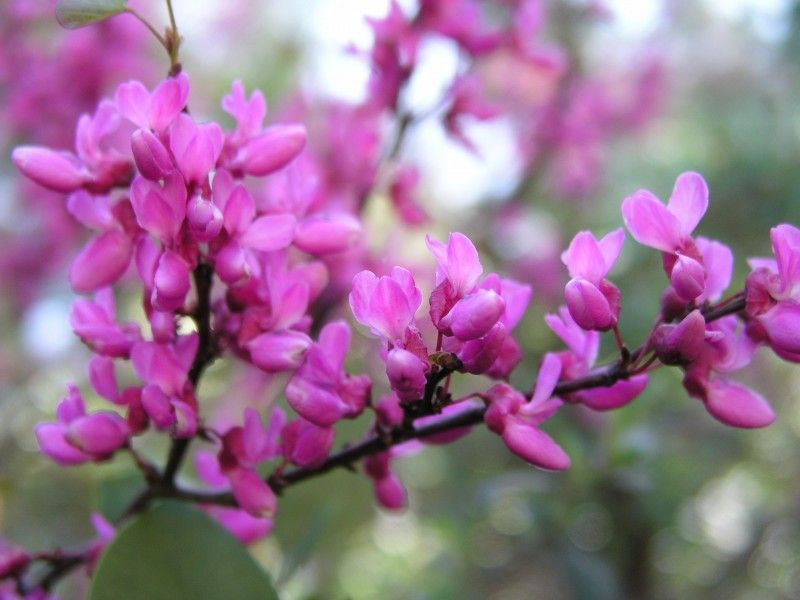
Before most California gardens have fully woken up from winter, the western redbud (Cercis occidentalis) is already putting on a show.
Clusters of bright magenta-pink flowers coat the bare branches in late winter to early spring, creating one of the most striking floral displays in the California native plant palette.
Native bumblebees emerging from winter dormancy rely on these early blooms as a critical nectar and pollen source when little else is available.
Beyond its value as an early-season pollinator resource, redbud is a multi-season ornamental plant worth celebrating. After the flowers fade, heart-shaped blue-green leaves emerge, followed by flat seed pods that turn burgundy-red in fall.
Birds forage on the seeds through winter, adding another dimension of wildlife value to this compact, multi-branched tree or large shrub.
Western redbud is native to California’s foothills and inner coast ranges, where it grows in well-drained, rocky or loamy soils in full sun to partial shade.
It handles summer drought well once established, needing only occasional deep watering during the hottest California months.
Use it as a small specimen tree, a focal point in a native border, or as part of a layered habitat planting alongside ceanothus and California buckwheat.
Its early bloom time makes it a keystone plant for supporting queen bumblebees and solitary native bees at the very start of the California pollinator season, setting the table for the months of activity ahead.
8. Yarrow Features Flat Flowers And Butterfly-Friendly Pollen
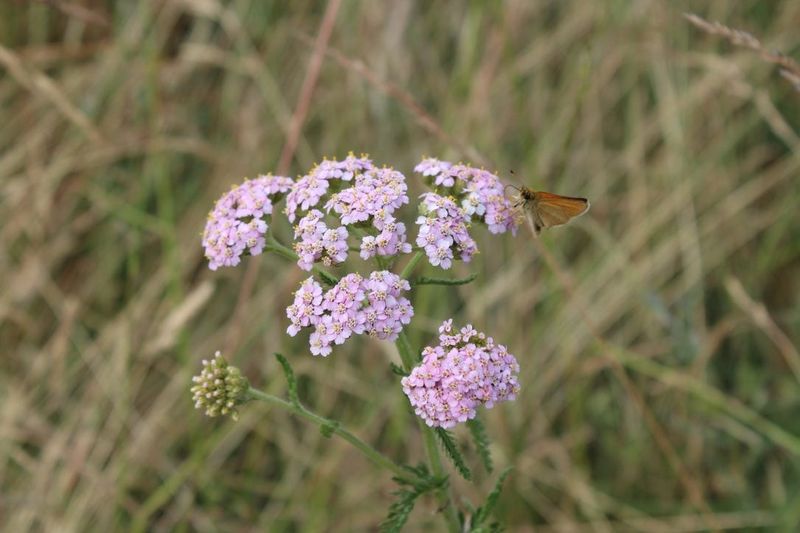
Flat-topped flower clusters have a special appeal in the pollinator world, and yarrow (Achillea millefolium) is one of the best examples of why that shape works so well.
The wide, open flower heads act as landing platforms for butterflies, which need stable footing to feed.
Painted ladies, skippers, and cabbage whites are frequent visitors, along with native bees and beneficial predatory insects that help keep garden pest populations in balance.
California’s native yarrow is a tough, adaptable perennial that blooms from late spring through summer, with some plants reblooming in fall if cut back after the first flush.
It grows in full sun and tolerates a wide range of soils, from sandy coastal conditions to heavier inland clay, though it prefers good drainage.
Once established, it needs very little supplemental irrigation, fitting easily into California water-conscious garden designs.
Feathery, finely divided gray-green foliage stays attractive even when the plant is not in bloom, adding texture to borders and native beds year-round. Yarrow spreads gradually by rhizomes, filling gaps between larger shrubs in a layered planting design.
Use it as a low-to-mid-height element alongside taller plants like black sage or ceanothus to create a varied structure that supports pollinators at multiple levels.
Leaving seed heads in place after bloom provides food for small birds and adds natural texture to the California garden through fall and into early winter.