9 Clear Signs A Beaver Has Been Active Near Your Michigan Backyard Pond Without You Noticing
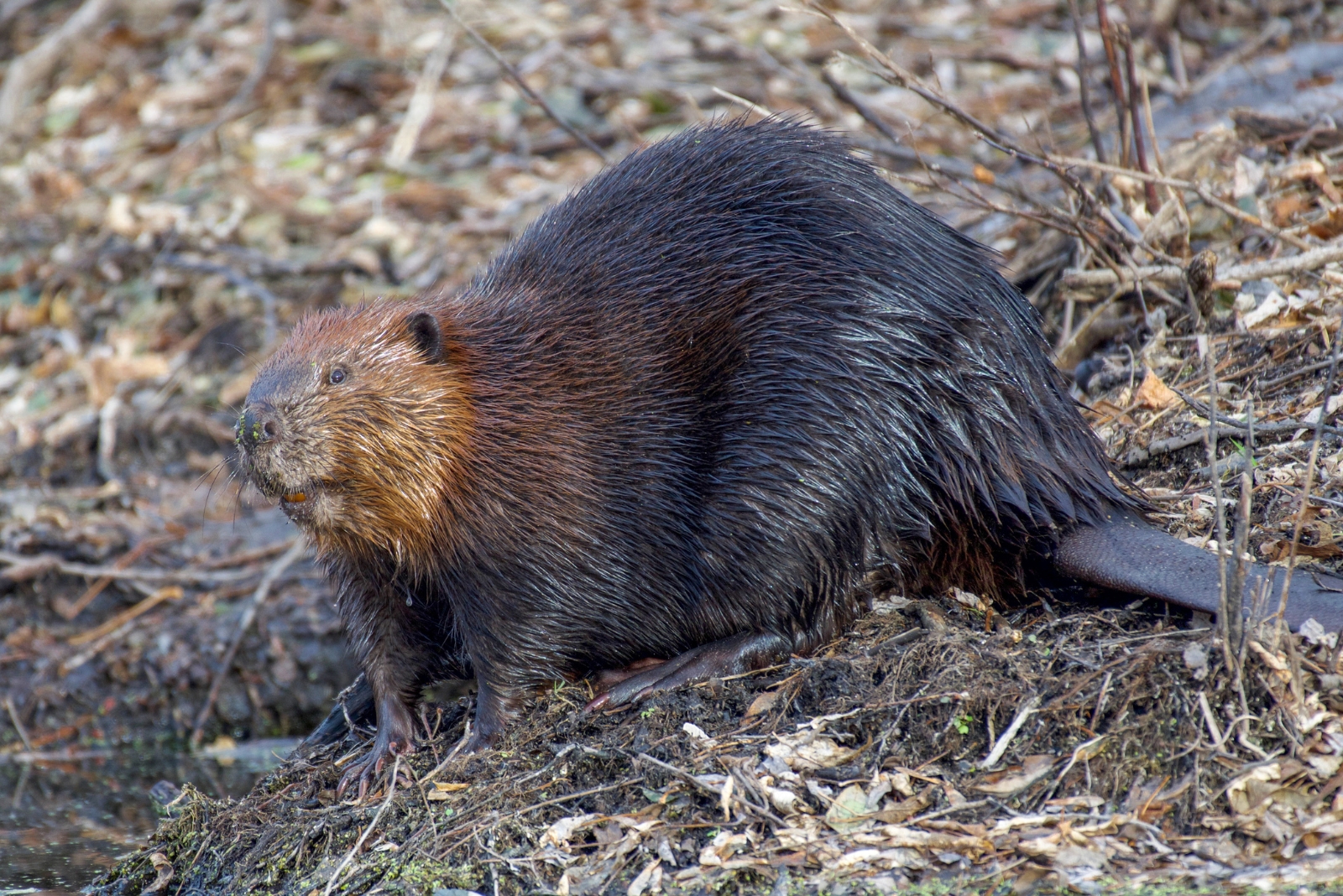
Beavers are nature’s engineers, and they’re more common in Michigan than most homeowners realize.
These industrious rodents can transform a peaceful backyard pond into their personal construction site without making much noise or fuss.
You might think you’d notice a beaver moving in, but these nocturnal creatures are surprisingly stealthy workers.
Recognizing the subtle clues they leave behind can help you understand what’s happening around your pond and decide whether you need to take action before significant changes occur.
1. Gnawed Tree Trunks With Hourglass Shapes
Beavers have incredibly strong teeth that never stop growing, which means they need to chew constantly to keep them filed down.
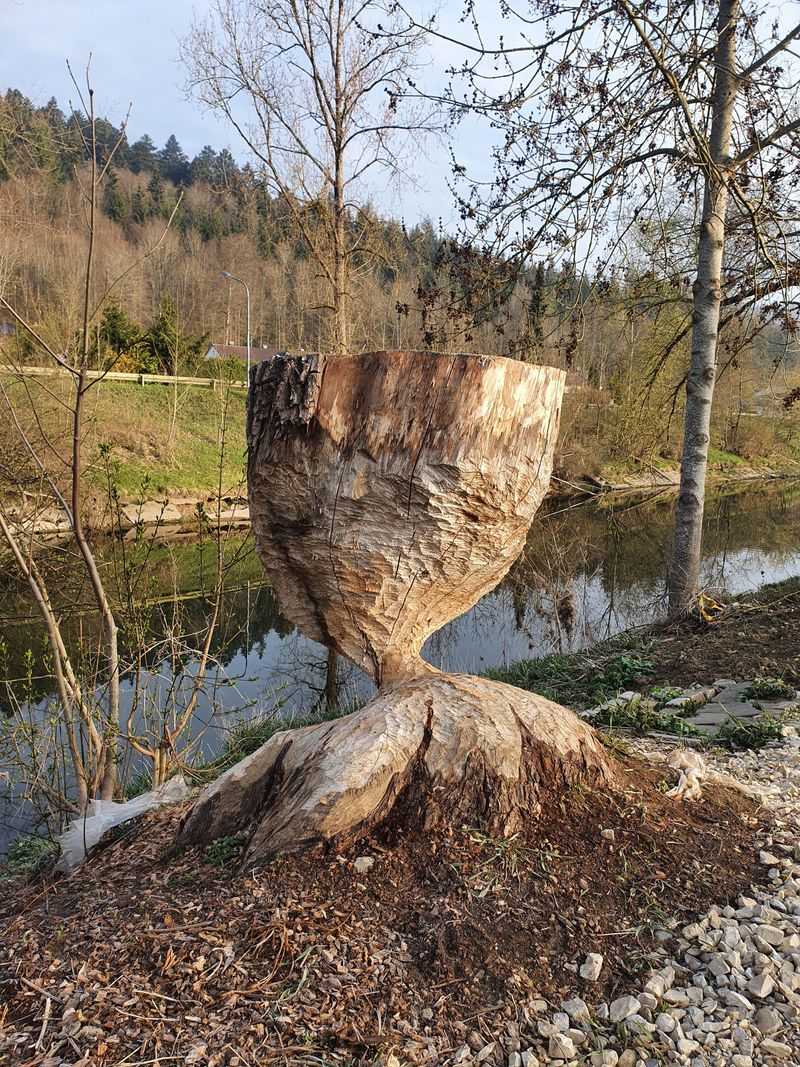
When a beaver starts working on a tree near your Michigan pond, it creates a very distinctive pattern that looks like an hourglass or a sharpened pencil point.
The gnaw marks appear as parallel grooves running around the trunk, and they’re usually about two to three feet off the ground.
Fresh gnawing shows bright, clean wood that contrasts sharply with the darker bark, making it fairly easy to spot during daylight hours.
If you notice trees with this characteristic shape around your property, a beaver has definitely been working in your area.
The wood chips scattered at the base of these trees are another giveaway that shouldn’t be ignored.
Beavers typically target softer woods like willow, aspen, birch, and poplar, which are common throughout Michigan’s landscape.
Some homeowners mistake these marks for storm damage or disease, but the clean, angled cuts are unmistakable once you know what to look for.
Checking the trees closest to your pond’s edge should be your first step in confirming beaver presence.
Even partially gnawed trees indicate that beavers are testing the area for future projects.
2. Mysterious Stumps With Pointed Tops
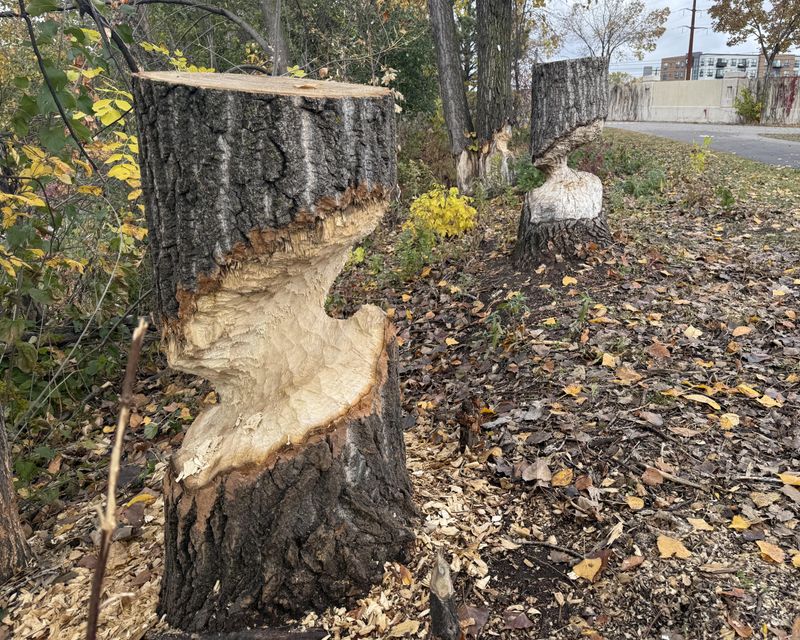
Walking around your pond one morning, you might discover that a tree has completely disappeared overnight, leaving only a pointed stump behind.
This is one of the most dramatic signs of beaver activity, though it often happens so quietly that homeowners are genuinely shocked.
Beavers work primarily at night, which is why you can miss the entire process even if you’re home.
The stumps they leave behind look like giant sharpened pencils, with the wood carved at a steep angle from multiple directions.
Unlike stumps created by human cutting, which are flat across the top, beaver stumps have this unmistakable cone shape.
You’ll also notice that the surrounding area is usually littered with large wood chips and bark fragments.
In Michigan, beavers are especially active during fall as they prepare for winter, making this the prime season for discovering these stumps.
Sometimes the felled tree itself will be missing entirely because beavers drag it into the water for food or building materials.
Other times, you’ll find the trunk lying nearby, stripped of its branches and smaller limbs.
The stump’s freshness can tell you how recently the beaver visited—bright, moist wood means very recent activity.
3. Floating Branches And Stripped Bark In The Water

Have you noticed branches floating in your pond that look like they’ve been peeled clean?
Beavers don’t just cut down trees for fun—they actually eat the bark and softer cambium layer underneath.
After harvesting branches, they’ll often float them in the water while they strip away the nutritious bark, leaving behind pale, naked wood.
These stripped branches can accumulate along the edges of your Michigan pond or float in clusters near the shore.
The bark itself sometimes washes up in piles, creating what looks like natural debris but is actually beaver leftovers.
Fresh branches will still have some green leaves attached, while older ones appear dried and weathered.
Beavers are surprisingly wasteful eaters, often leaving partially eaten branches scattered around their feeding areas.
If you see a concentration of these stripped branches in one particular spot, that’s likely a beaver feeding station.
Some homeowners initially think these branches fell naturally during storms, but the clean stripping pattern tells a different story.
Looking closely at the ends of these branches, you’ll often see the same tooth marks found on standing trees.
This floating evidence is especially common in spring and summer when beavers are most active and feeding heavily.
4. Unusual Mud And Stick Piles Along The Shore
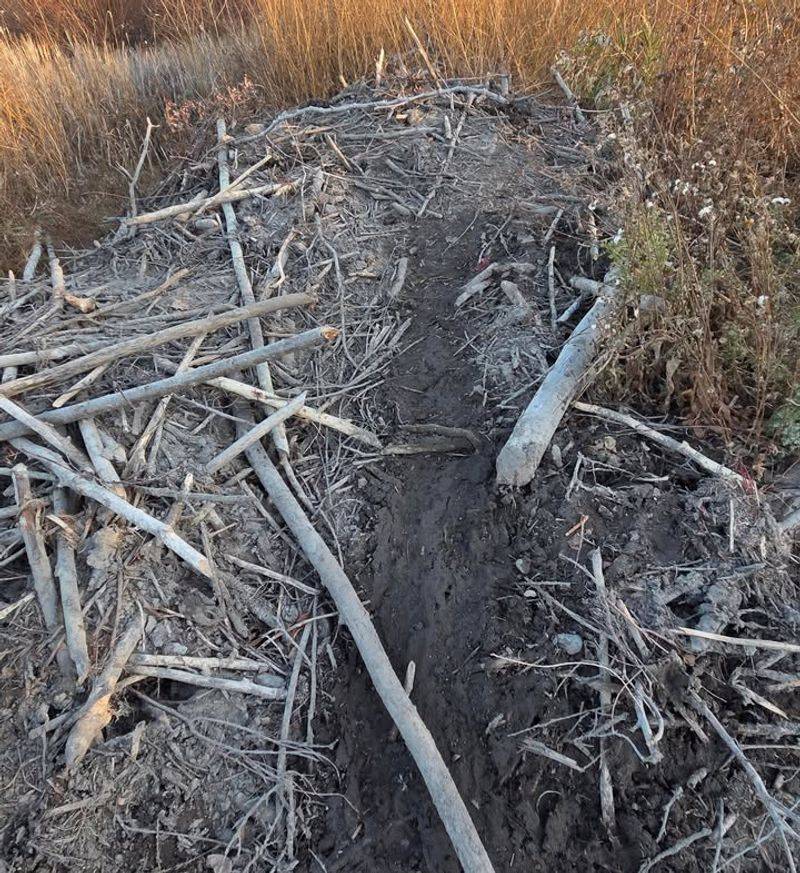
Beavers are famous for building dams and lodges, but even before these major structures appear, you might notice smaller construction projects.
Piles of sticks mixed with mud along your pond’s shoreline are often the first building signs that beavers leave behind.
These piles might look random at first, but they’re actually carefully placed as potential dam foundations or lodge starts.
In Michigan’s backyard ponds, beavers don’t always build full-scale lodges, but they do create smaller shelters or bank dens.
The mud used in these piles comes from the pond bottom and has a distinctive, packed appearance quite different from natural sediment.
Sticks in these piles are usually similar sizes, cut to specific lengths that beavers can easily transport and manipulate.
Sometimes you’ll see these piles appearing gradually over several weeks as the beaver tests different locations.
Fresh piles will have wet mud and green wood, while older constructions dry out and become more compact.
Even small piles indicate serious beaver interest in your property, suggesting they’re planning to stay long-term.
Homeowners often overlook these early warning signs, thinking they’re just natural debris accumulation from wind or water movement.
Paying attention to any organized-looking stick and mud combinations can help you catch beaver activity early.
5. Sliding Trails Through Mud Or Vegetation
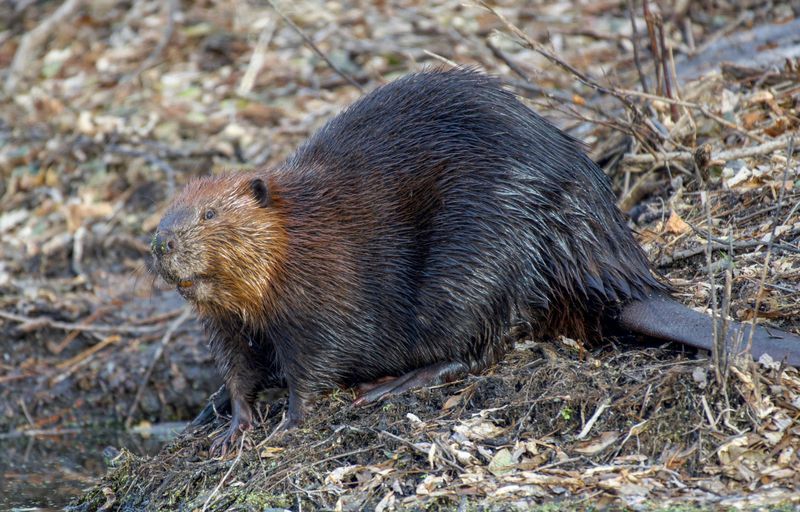
Beavers have short legs and heavy bodies, which means they don’t walk gracefully across land—they waddle and slide.
Over time, their repeated trips between water and feeding areas create smooth, worn trails that look like small slides.
These trails are typically about a foot wide and run perpendicular to the shoreline, heading straight into the water.
The vegetation along these paths gets completely flattened, and the soil becomes packed and smooth from constant use.
In muddy areas around Michigan ponds, you’ll see these trails very clearly, sometimes with visible tail drag marks down the center.
Beavers use the same pathways repeatedly, which makes these trails more pronounced over time.
During wet seasons, the trails can become quite muddy and obvious, while in drier periods they might just look like flattened grass.
Sometimes you’ll find small piles of droppings along these trails, though beaver scat is usually deposited in water.
These pathways often lead to specific trees the beaver is working on or to areas where they’ve cached food.
Following a trail can help you discover other signs of beaver activity you might have missed.
The trails are especially noticeable in early morning when dew makes the flattened vegetation stand out against surrounding growth.
6. Changes In Water Level Without Explanation
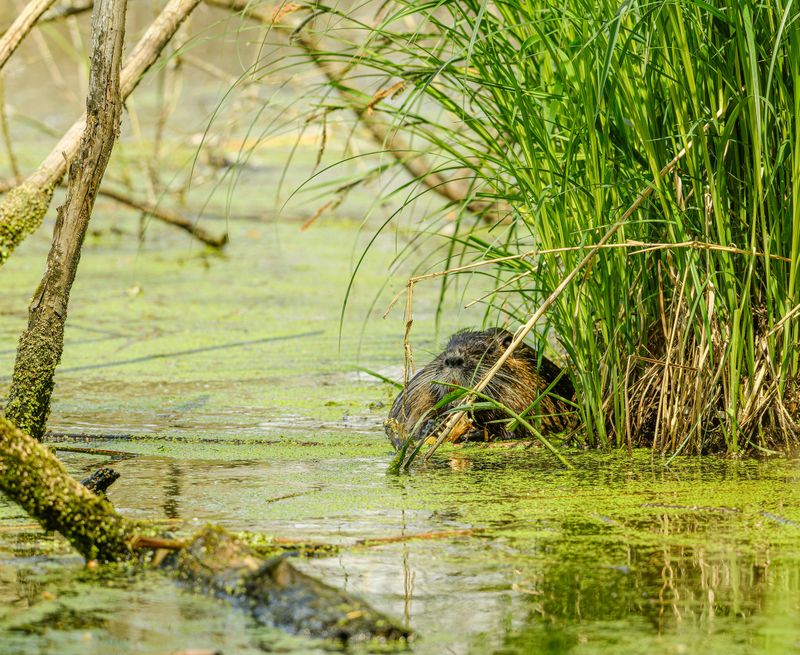
One morning you might notice your pond seems fuller than usual, even though it hasn’t rained recently.
Beavers are expert water managers, and even a small dam or blockage they create can significantly alter water levels.
Sometimes these dams are built in drainage areas or culverts rather than across the main pond, making them hard to spot.
The water level changes can be gradual, rising just an inch or two per week, which makes them easy to miss initially.
In Michigan, where seasonal water fluctuations are normal, beaver-caused changes might blend in with natural patterns at first.
You might notice that areas previously dry are now consistently wet, or that your pond’s edge has expanded into your lawn.
These changes happen because beavers instinctively want to deepen the water to protect their food caches and travel routes.
Even without a visible lodge, beavers will manipulate water levels to suit their needs and increase their safety.
If your pond has an outlet stream, check it carefully for any stick and mud accumulations that might be restricting flow.
Neighbors downstream might also mention changes in their water levels, which could indicate beaver activity affecting your shared watershed.
Monitoring your pond’s water level regularly can help you catch these subtle but significant changes early.
7. Fresh Wood Chips Scattered On The Ground

Imagine walking around your Michigan pond and finding piles of wood chips that weren’t there yesterday—that’s classic beaver evidence.
When beavers gnaw through trees and branches, they create enormous amounts of wood chips that scatter around the work site.
These chips are usually quite large, sometimes several inches long, and have a fresh, clean appearance when recently made.
The chips often form a circular pattern around the base of the tree being worked on, spreading out several feet in all directions.
Fresh chips have a bright color and might still smell like fresh-cut wood, while older chips fade to gray and blend with the soil.
Unlike wood chips from human activities, beaver chips are irregular in shape and show the distinctive marks of rodent teeth.
You’ll find these chips most abundantly around trees that are actively being cut or have recently fallen.
Sometimes wind and rain scatter the chips, making them less obvious, but concentrations near the water’s edge are telltale signs.
During active periods, beavers can produce impressive amounts of chips in just a single night of work.
Checking for new chips regularly helps you monitor ongoing beaver activity and predict which trees might be targeted next.
Some homeowners actually follow chip trails to discover beaver activity they hadn’t noticed before.
8. Webbed Footprints In Soft Mud Or Sand
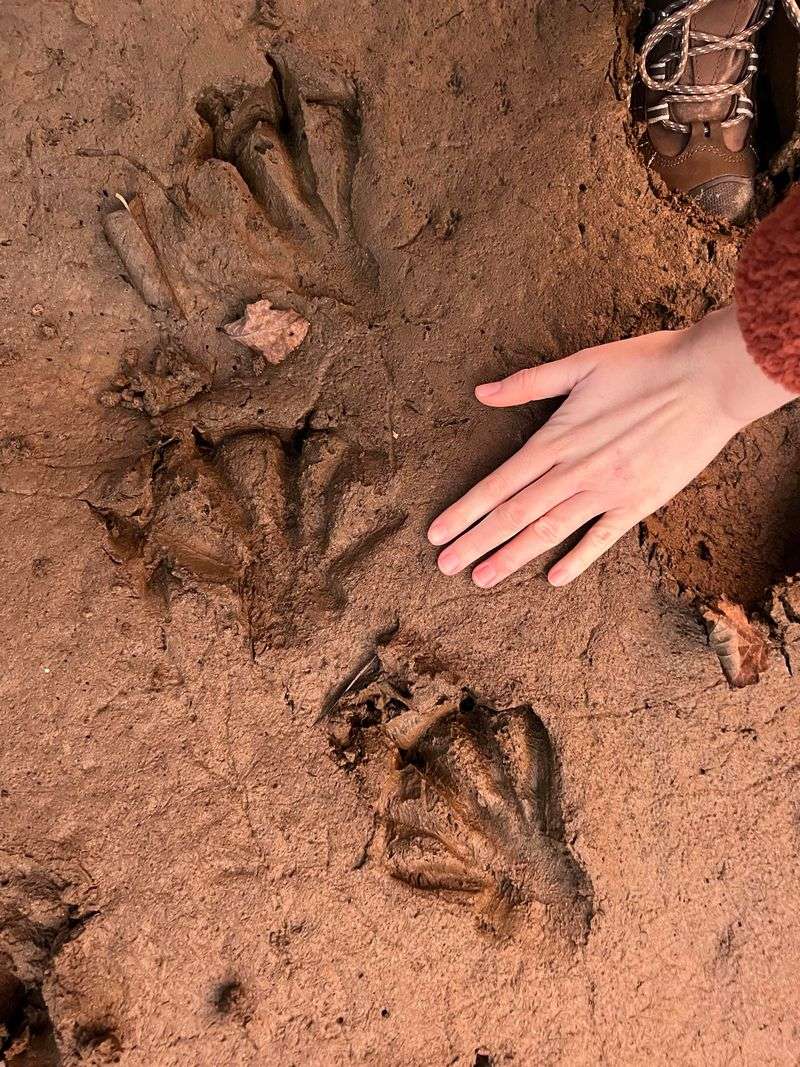
Beavers have very distinctive footprints that are surprisingly easy to identify once you know what to look for.
Their hind feet are large and webbed, leaving prints that look somewhat like small duck feet but with visible toe marks.
These hind prints can be four to six inches long, making them quite noticeable in soft mud around your Michigan pond.
The front feet are much smaller and look almost hand-like, with five distinct toes that often show claw marks.
Typically, you’ll see the tracks in pairs or clusters where the beaver entered or exited the water.
Fresh tracks have sharp, clear edges, while older ones become fuzzy and eroded by weather and water movement.
The best time to spot these tracks is early morning after beavers have been active during the night.
Muddy shorelines, sandy beaches, or soft soil near feeding areas are prime locations for finding these prints.
Sometimes you’ll also see tail drag marks between the footprints, creating a distinctive pattern that confirms beaver presence.
Following the tracks can lead you to other activity areas you might not have discovered otherwise.
Taking photos of any tracks you find can help you confirm identification and track activity patterns over time.
9. Distinct Scent Marks On Mud Mounds
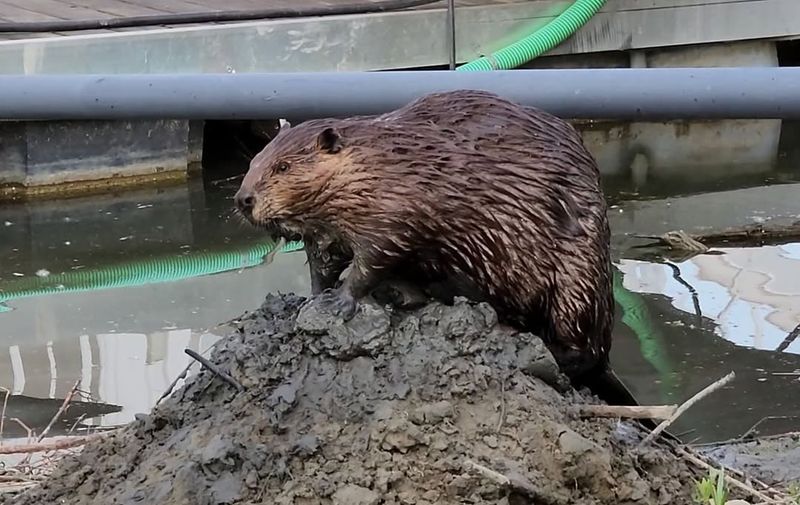
Beavers communicate with each other through scent marking, creating small mud mounds that serve as territorial signposts.
These mounds are usually six to twelve inches high and located prominently along the shoreline where other beavers will notice them.
The beaver deposits a substance called castoreum on these mounds, which has a musky, distinctive odor that humans can sometimes detect.
While you might not always smell the castoreum, the mounds themselves are visual clues that beavers are actively claiming your Michigan pond as their territory.
These scent mounds look different from random mud piles because they’re deliberately shaped and positioned in conspicuous locations.
Fresh mounds have a cone or dome shape and might include sticks, grass, or other vegetation mixed into the mud.
Beavers refresh these mounds regularly, so finding several around your pond indicates ongoing, active presence rather than just a passing visitor.
The mounds are typically placed at territory boundaries or near lodge entrances, helping beavers define their living space.
In spring, when beavers are most territorial, you’ll likely find more of these mounds appearing around your property.
Some people describe the castoreum scent as similar to vanilla or leather, though it can be quite strong up close.
Spotting these communication stations confirms that beavers consider your pond their home.